
Image: Common Thyme Pests and Organic Control Methods
Published: January 18, 2026 at 4:53:58 PM UTC
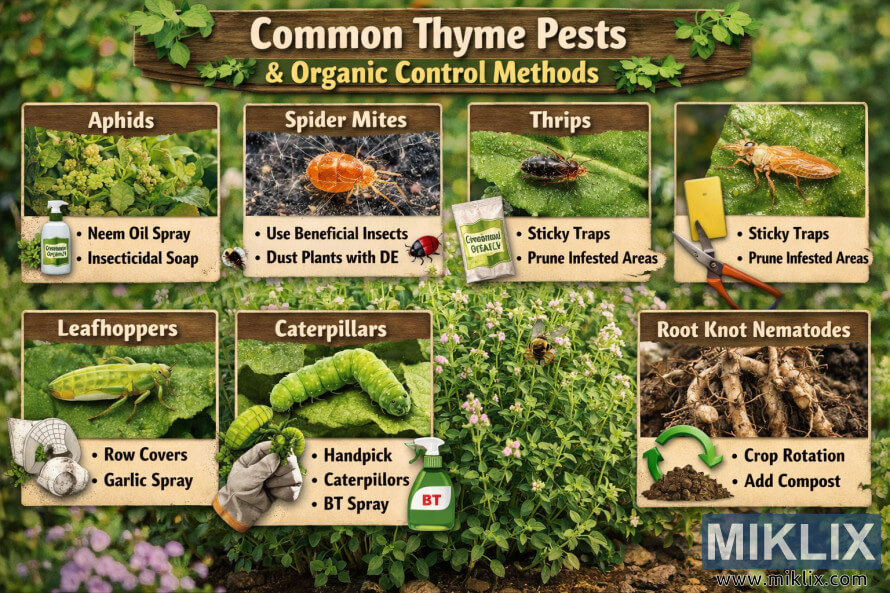
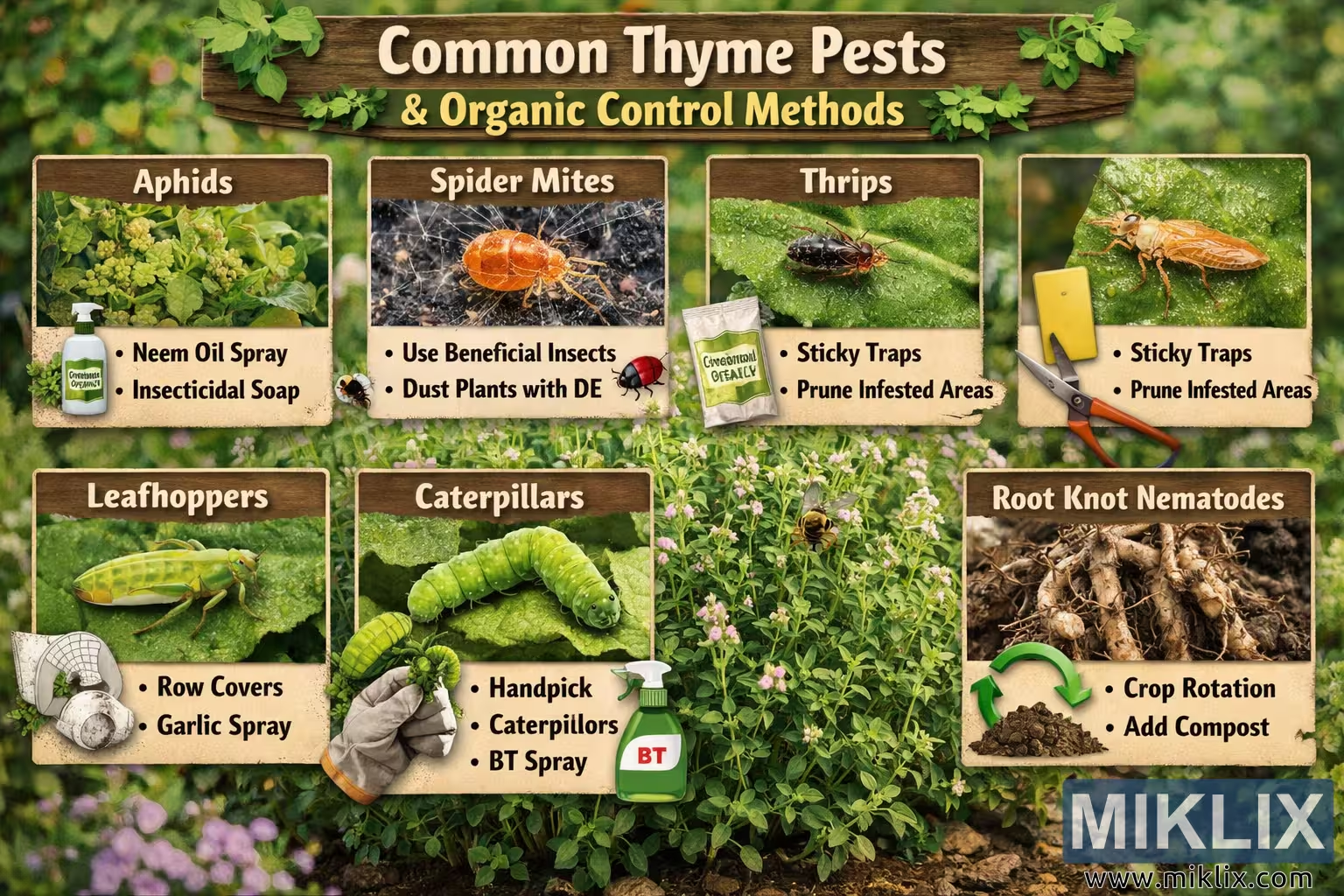
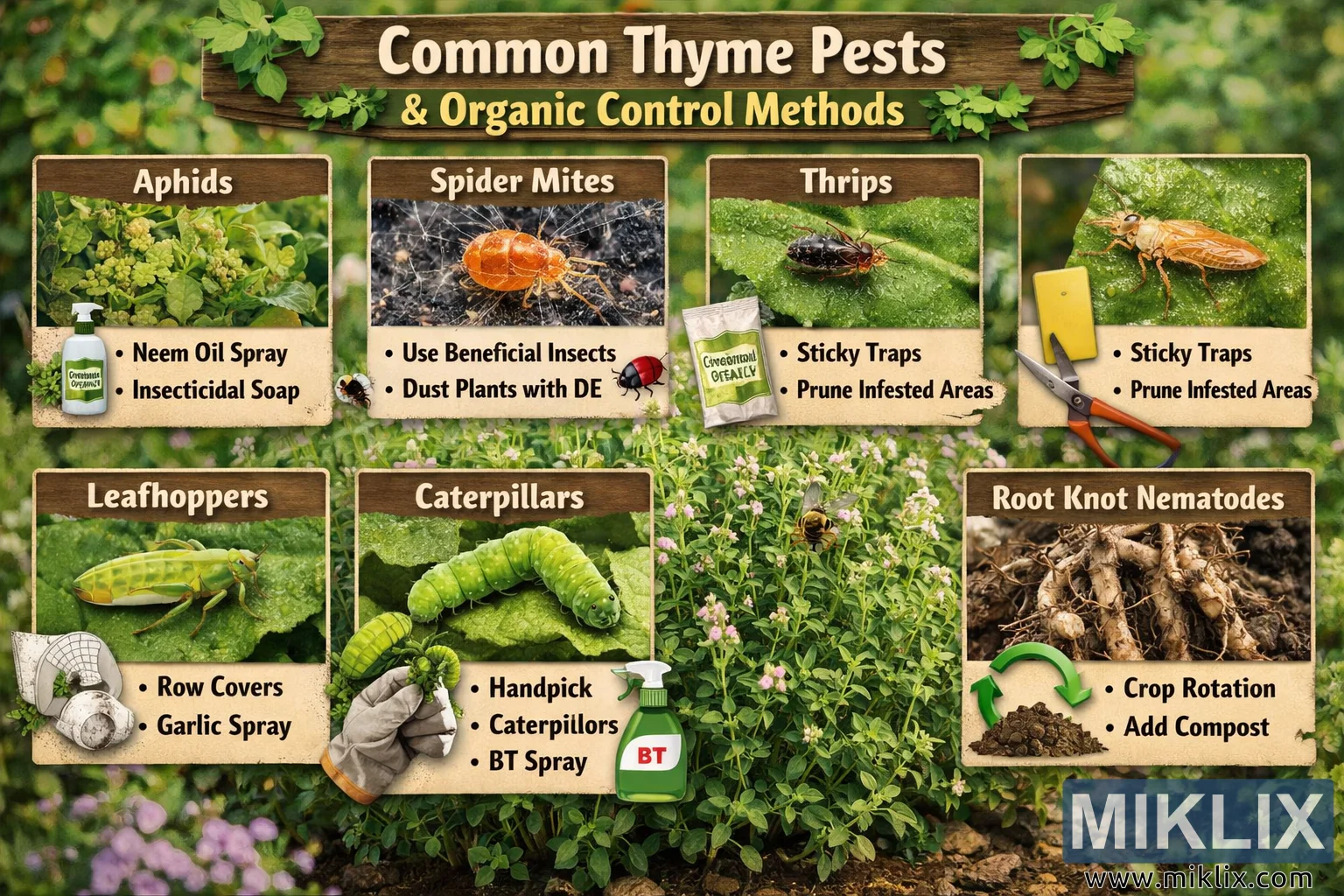
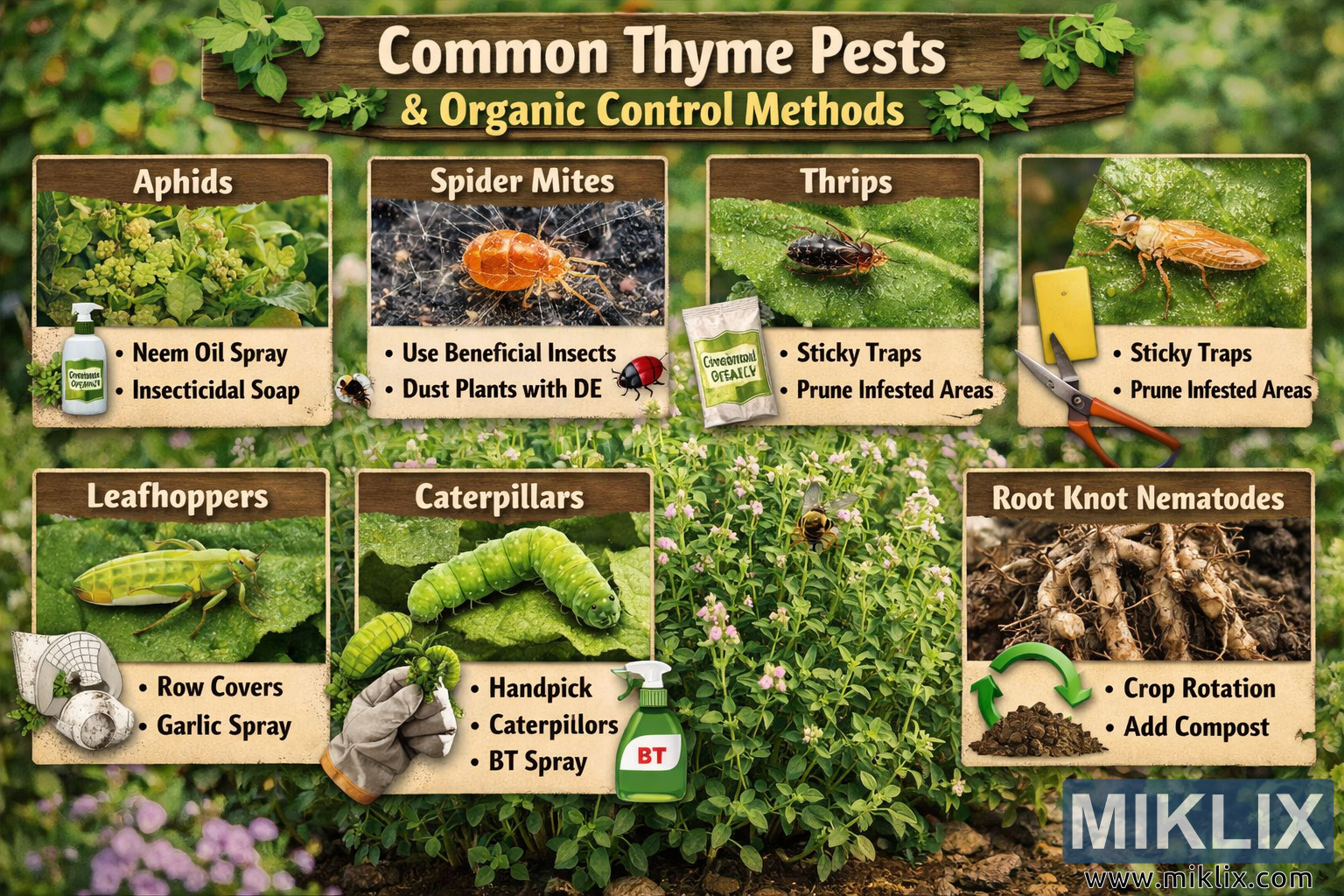
Educational infographic illustrating common thyme pests and effective organic control methods, including neem oil, beneficial insects, crop rotation, and handpicking, designed for home gardeners and sustainable herb care.
Available versions of this image
The image files available for download below are less compressed and higher resolution - and as a result of that, higher quality - than the images embedded in articles and pages on this website, which are more optimized for file size in order to reduce bandwidth consumption.
Regular size (1,536 x 1,024)
Large size (3,072 x 2,048)
Very large size (4,608 x 3,072)
Extra large size (6,144 x 4,096)
Comically large size (1,048,576 x 699,051)
- Still uploading... ;-)
Image description
The image is a detailed, colorful educational infographic presented in a wide, landscape orientation, focusing on common pests that affect thyme plants and organic methods to control them. The background shows a healthy thyme garden with dense green foliage and small pink-purple flowers, creating a natural gardening context. At the top center, a rustic wooden sign framed with green thyme sprigs displays the title “Common Thyme Pests & Organic Control Methods” in bold, easy-to-read lettering, setting an approachable and practical tone.
Below the header, the infographic is organized into multiple rectangular panels, each dedicated to a specific pest. Each panel combines a close-up visual of the pest or its damage, a label naming the pest, and bullet-pointed organic control solutions. The panels are arranged neatly across the image, giving the layout a balanced and structured appearance that makes the information easy to scan.
One panel labeled “Aphids” shows a cluster of small, pale green aphids crowded on tender thyme stems and leaves. Beneath the image, organic solutions such as neem oil spray and insecticidal soap are listed, accompanied by small illustrated icons of a spray bottle to reinforce the message visually. Another panel labeled “Spider Mites” features a magnified view of a reddish-orange mite on a leaf surface with fine webbing visible, emphasizing the pest’s small size and destructive nature. The recommended controls include encouraging beneficial insects and dusting plants with diatomaceous earth, illustrated with a small packet and friendly ladybug icons.
The “Thrips” panel shows a slender, dark insect resting on a leaf, paired with suggestions like using sticky traps and pruning infested areas. Nearby, a similar visual style is used for another pest panel, reinforcing consistency across the infographic. The “Leafhoppers” section displays a bright green leafhopper perched on a leaf, with organic controls such as row covers and garlic spray shown using simple, recognizable symbols like netting and garlic bulbs.
In the “Caterpillars” panel, a plump green caterpillar is shown feeding on foliage, highlighting visible plant damage. The control methods emphasize handpicking caterpillars and using BT (Bacillus thuringiensis) spray, illustrated with a gloved hand and a labeled spray bottle. Finally, the “Root Knot Nematodes” panel shifts perspective to the soil, showing thyme roots with swollen, knotted galls. Organic solutions such as crop rotation and adding compost are listed, accompanied by arrows and soil imagery to suggest long-term soil health practices.
Overall, the infographic combines realistic imagery, soft natural colors, and clear text to communicate practical gardening knowledge. The visual style is friendly and informative, making it suitable for home gardeners, educational materials, or sustainable agriculture resources focused on organic herb care.
The image is related to: A Complete Guide to Growing Thyme From Planting to Harvest