
A Complete Guide to Growing Thyme From Planting to Harvest
Published: January 18, 2026 at 4:53:58 PM UTC
Thyme is one of the most versatile and rewarding herbs you can grow in your garden. With its aromatic leaves, attractive flowers, and culinary versatility, this Mediterranean native brings both beauty and flavor to any garden space.
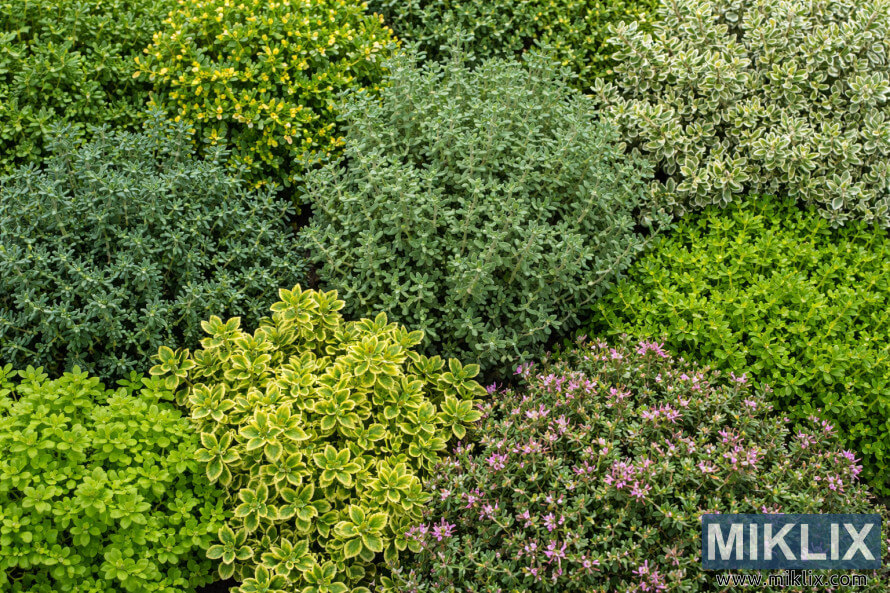
Click or tap the image for more information and higher resolutions.
Whether you're a seasoned gardener or just starting out, growing thyme offers a simple yet satisfying experience that yields benefits throughout the seasons. In this comprehensive guide, we'll walk you through everything you need to know about growing thyme successfully, from selecting the right varieties to harvesting and storing your bounty.
Thyme Varieties: Choosing the Right Type for Your Garden
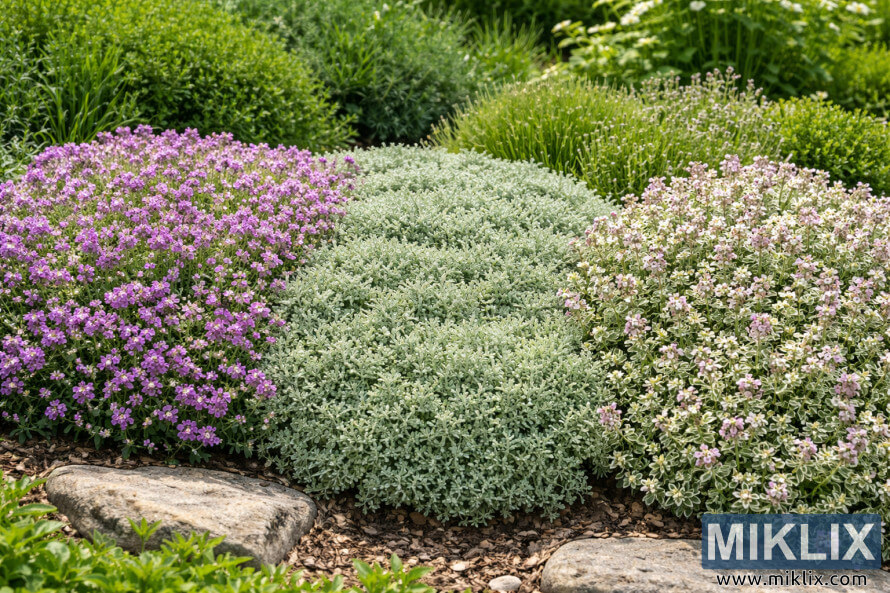
Common thyme varieties (from left to right): Common thyme, lemon thyme, creeping thyme, and woolly thyme
With over 50 varieties available, thyme offers something for every garden and culinary preference. Each type brings its own unique flavor profile, growth habit, and ornamental value.
Culinary Thyme Varieties
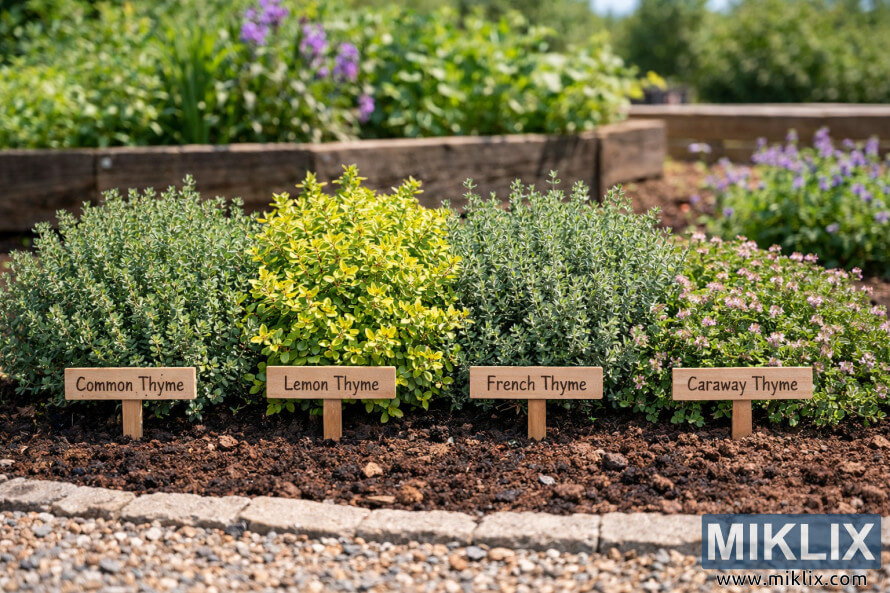
- Common Thyme (Thymus vulgaris) - The classic culinary variety with strong flavor, perfect for cooking. Grows 6-12 inches tall with tiny gray-green leaves.
- Lemon Thyme (Thymus citriodorus) - Features a bright citrus aroma and flavor, excellent for fish dishes and teas. Grows similar to common thyme but with a distinctive lemon scent.
- French Thyme - Often considered the best culinary variety with a subtle, less medicinal flavor than common thyme.
- Caraway Thyme - Offers a unique caraway-like flavor, ideal for meat dishes and breads.
Click or tap the image for more information and higher resolutions.
Ornamental Thyme Varieties
- Creeping Thyme (Thymus serpyllum) - Low-growing ground cover that spreads between stepping stones or over walls. Produces abundant flowers that attract pollinators.
- Woolly Thyme (Thymus pseudolanuginosus) - Features fuzzy, gray leaves forming a dense mat. More ornamental than culinary.
- Silver Thyme - Attractive variegated leaves with silver edges, combining beauty and flavor.
Click or tap the image for more information and higher resolutions.
Choosing the Perfect Location for Growing Thyme
Thyme thrives in conditions that mimic its Mediterranean origins. Selecting the right location is crucial for healthy growth and abundant harvests.
Sunlight Requirements
Thyme loves sunshine and performs best in full sun locations that receive at least 6-8 hours of direct sunlight daily. In hotter climates, light afternoon shade can be beneficial during the most intense summer months. When growing thyme indoors, place pots near south-facing windows for maximum light exposure.
Soil Conditions
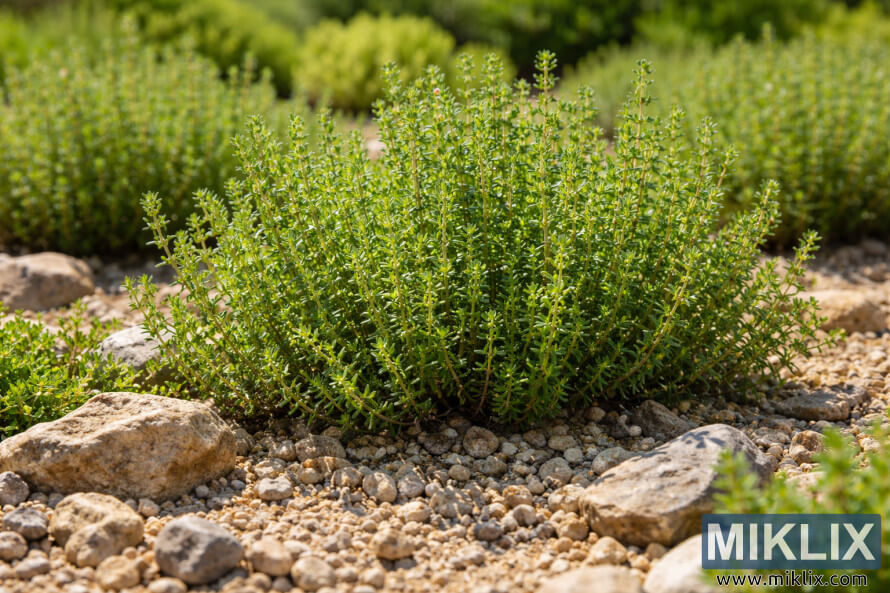
Well-drained soil is absolutely essential for growing thyme successfully. This herb despises wet feet and can quickly succumb to root rot in soggy conditions. The ideal soil for thyme has the following characteristics:
Ideal Soil Properties
- Sandy or loamy texture
- Excellent drainage
- pH between 6.0-8.0 (slightly alkaline preferred)
- Low to moderate fertility
Soil Amendments
- Add coarse sand or fine gravel to improve drainage
- Incorporate limestone chips in acidic soils
- Use minimal organic matter (too rich soil reduces flavor)
- Consider adding crushed eggshells for calcium
Pro Tip: If your garden has heavy clay soil, consider growing thyme in raised beds or containers where you can control the soil composition. Adding 25% horticultural grit to your potting mix will create the perfect growing environment.
Click or tap the image for more information and higher resolutions.
Planting Methods: Seeds, Cuttings, or Transplants?
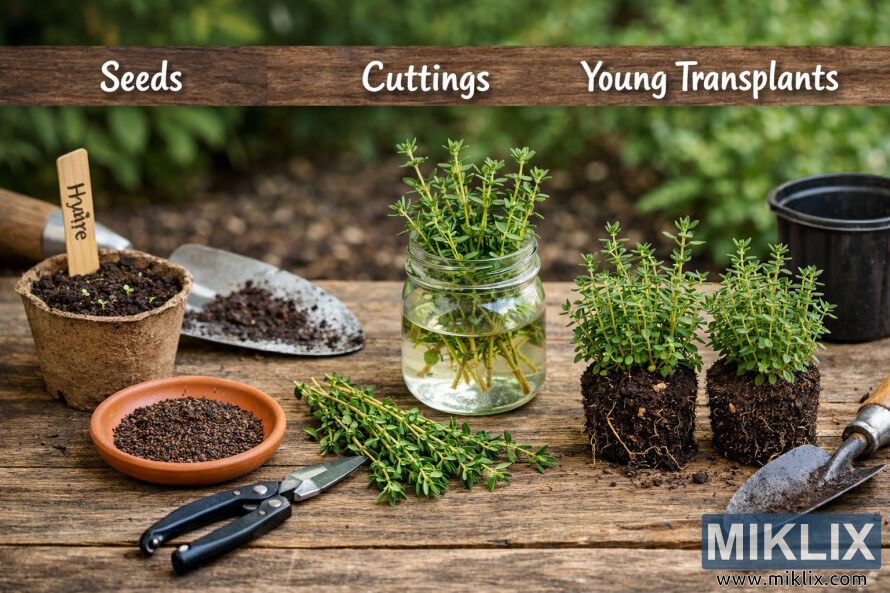
Three ways to start thyme: seeds (left), cuttings (center), and transplants (right)
There are three main methods for starting thyme in your garden, each with its own advantages and challenges. Let's explore each approach to help you decide which is best for your situation.
| Method | Difficulty | Time to Harvest | Cost | Best For |
| Seeds | Challenging | 10-12 months | Low | Patient gardeners, large plantings |
| Cuttings | Moderate | 4-6 months | Very low | Propagating existing plants |
| Transplants | Easy | 2-3 months | Moderate | Beginners, quick results |
Growing Thyme from Seeds
Starting thyme from seeds requires patience as germination can be slow and uneven. However, it allows you to grow varieties that might not be available as transplants.
- Start seeds indoors 6-10 weeks before the last spring frost date.
- Use a seed-starting mix with good drainage and barely cover the tiny seeds.
- Maintain soil temperature around 70°F (21°C) for optimal germination.
- Keep soil lightly moist but never soggy.
- Expect germination in 14-28 days.
- Provide bright light once seedlings emerge.
- Transplant outdoors after hardening off and when soil temperatures reach 70°F.
Propagating Thyme from Cuttings
Taking cuttings is an excellent way to propagate thyme, especially from established plants with desirable characteristics. This method produces plants identical to the parent.
- In spring or early summer, cut 3-4 inch stems from new, non-woody growth.
- Remove leaves from the bottom 1-2 inches of each cutting.
- Dip the cut end in rooting hormone (optional but helpful).
- Insert cuttings into a mix of equal parts perlite and peat moss.
- Keep the medium lightly moist and place in bright, indirect light.
- Roots should develop within 4-6 weeks.
- Transplant to individual pots once roots are established.
Planting Thyme Transplants
Purchasing young thyme plants from a garden center is the quickest and easiest way to start growing thyme. Look for healthy plants with vibrant foliage and no signs of stress.
When to Plant: Plant thyme outdoors 2-3 weeks after the last spring frost date, when soil temperatures have warmed to at least 70°F. In warmer climates (zones 8-10), fall planting is also successful.
Click or tap the image for more information and higher resolutions.
Step-by-Step Planting Instructions
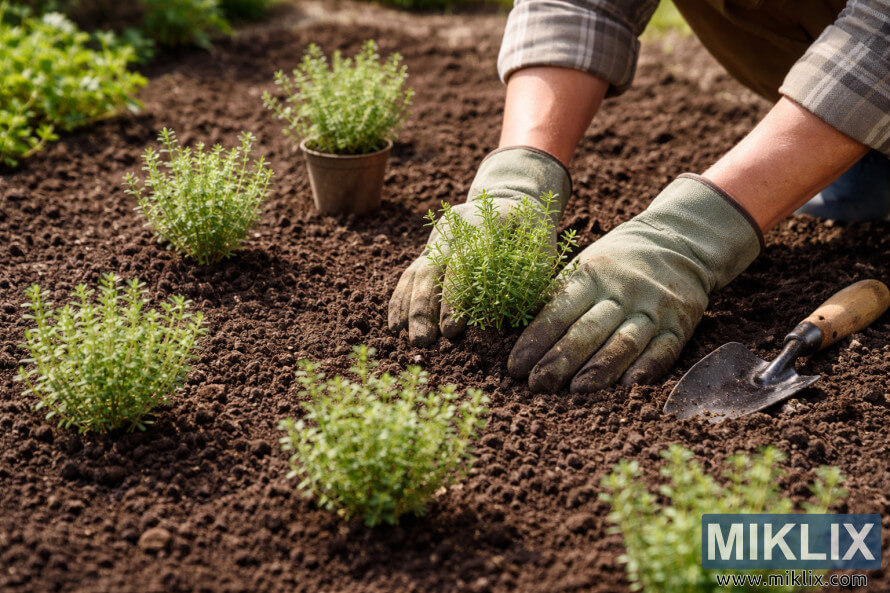
Planting thyme at the proper depth and spacing ensures healthy growth
Planting in Garden Beds
- Prepare the soil: Ensure excellent drainage by incorporating sand or fine gravel. For clay soils, consider creating a raised bed.
- Spacing: Plant thyme 12-24 inches apart, depending on the variety. Creeping varieties need more space to spread.
- Planting depth: Set plants at the same depth they were growing in their containers.
- Watering: Water thoroughly after planting, then allow the soil to dry between waterings.
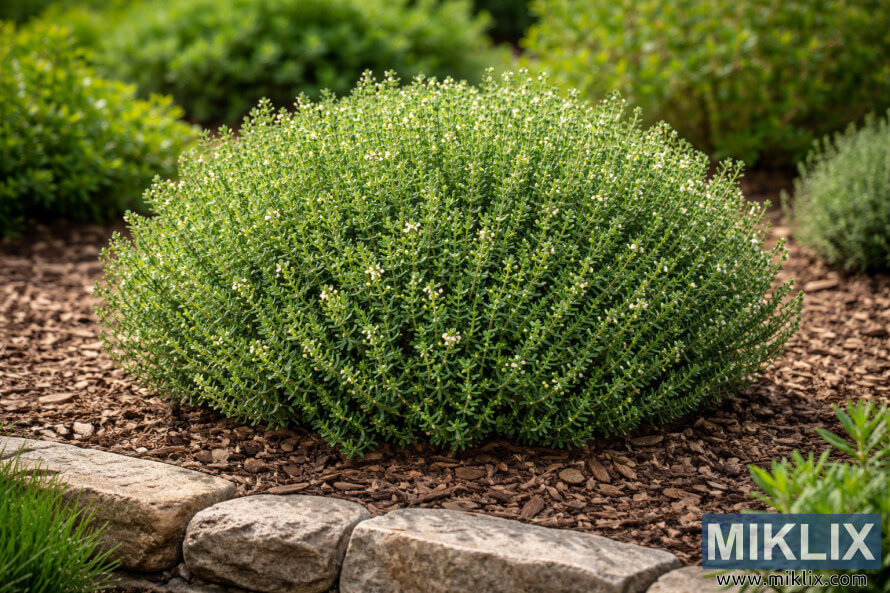
- Mulching: Apply a thin layer of gravel or crushed stone around plants to keep stems off damp soil and suppress weeds.
Container Planting
- Choose the right container: Select a pot at least 8 inches deep with ample drainage holes.
- Prepare the potting mix: Use a well-draining potting soil mixed with 25% perlite or coarse sand.
- Planting: Plant thyme at the same depth as it was growing previously.
- Spacing: Allow 8-12 inches between plants in larger containers.
- Watering: Water thoroughly but allow the soil to dry out between waterings.
Click or tap the image for more information and higher resolutions.
Seasonal Planting Guide
| ½ | Activity | Notes |
| Early Spring | Start seeds indoors | 6-10 weeks before last frost date |
| Mid-Spring | Take cuttings from existing plants | When new growth appears |
| Late Spring | Plant outdoors | 2-3 weeks after last frost date |
| Summer | Continue planting transplants | Provide extra water during establishment |
| Fall | Plant in zones 8-10 | 6-8 weeks before first frost |
Care and Maintenance: Keeping Your Thyme Thriving
Once established, thyme is remarkably low-maintenance, but a few key care practices will ensure your plants remain healthy and productive for years.
Watering
Thyme prefers dry conditions and is drought-tolerant once established. Overwatering is the most common cause of problems when growing thyme.
- Water deeply but infrequently, allowing soil to dry completely between waterings.
- Reduce watering in fall to help plants harden off for winter.
- Container plants may need more frequent watering, especially in hot weather.
- Water at the base of plants to keep foliage dry and prevent disease.
Fertilizing
Thyme actually performs better in lean soil with minimal fertilization. Too much fertility results in rapid, floppy growth with reduced flavor.
- Apply a light application of compost around plants in early spring.
- For container plants, use a half-strength application of balanced organic fertilizer in spring.
- Avoid high-nitrogen fertilizers which promote leafy growth at the expense of flavor.
Click or tap the image for more information and higher resolutions.
Pruning and Harvesting
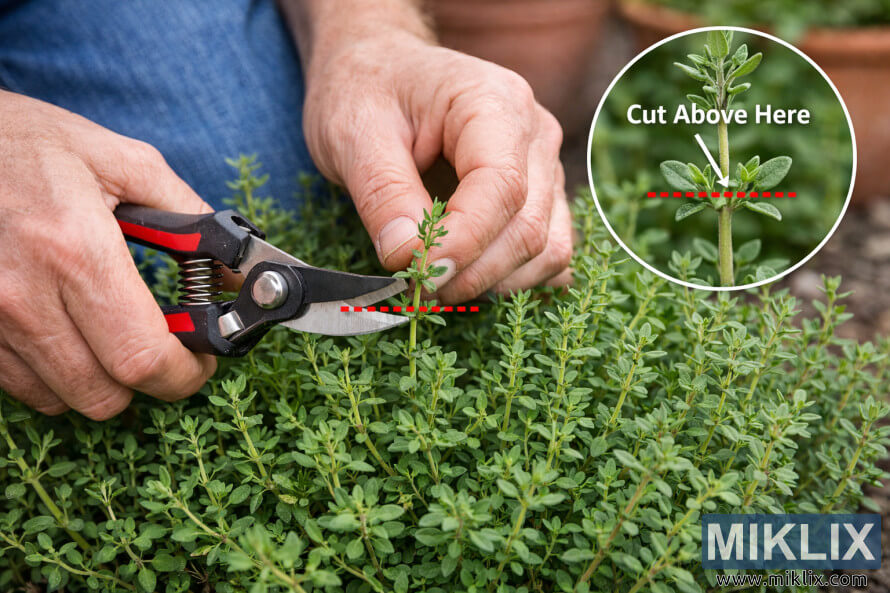
Proper pruning encourages bushy growth and prevents woody stems
Regular pruning keeps thyme plants compact, prevents woodiness, and stimulates fresh growth. Fortunately, pruning and harvesting go hand in hand.
- Light pruning: Trim stems regularly throughout the growing season to encourage bushiness.
- Major pruning: After flowering, cut plants back by up to one-third.
- Avoid woody stems: Never cut into the woody parts of stems as they won't regrow.
- Spring cleanup: Remove any winter-damaged growth in early spring.
Important: Always leave at least 5 inches of growth when pruning thyme plants to ensure they have enough energy to regrow. Never cut into the woody stems, as they won't produce new growth.
Click or tap the image for more information and higher resolutions.
Common Pests and Diseases: Organic Solutions
Thyme is naturally pest-resistant thanks to its aromatic oils, but a few problems can occasionally arise. Here's how to identify and address them using organic methods.
Pests
- Spider Mites: Tiny pests that cause stippled, yellowing leaves. Most common in hot, dry conditions.
- Aphids: Small insects that cluster on new growth and can distort leaves.
- Whiteflies: Small white insects that fly up when plants are disturbed.
Organic Pest Control
- Spray plants with a strong stream of water to dislodge pests.
- Apply insecticidal soap or neem oil for persistent infestations.
- Introduce beneficial insects like ladybugs or lacewings.
- Maintain good air circulation around plants.
Diseases
- Root Rot: Caused by overwatering or poor drainage, leads to yellowing leaves and wilting.
- Botrytis (Gray Mold): Fuzzy gray growth on stems and leaves in humid conditions.
- Powdery Mildew: White powdery coating on leaves in humid weather.
Organic Disease Prevention
- Ensure excellent drainage and avoid overwatering.
- Space plants properly for good air circulation.
- Apply a thin layer of gravel mulch to keep foliage off damp soil.
- Remove and destroy any infected plant material.
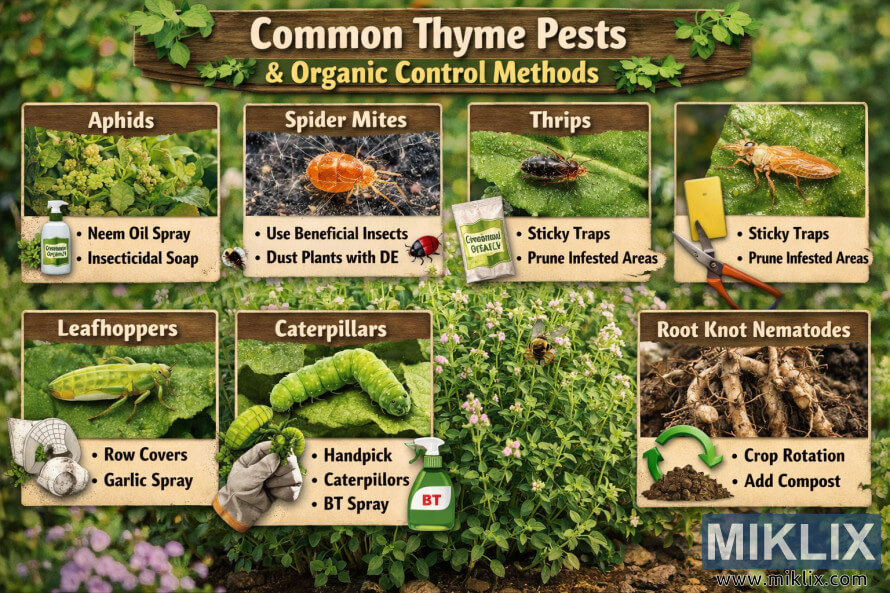
Click or tap the image for more information and higher resolutions.
Harvesting and Storage: Preserving Your Thyme
Harvesting and preserving thyme: cutting, bundling, drying, and storing
One of the joys of growing thyme is having fresh herbs available whenever you need them. Proper harvesting techniques ensure continued growth and maximum flavor.
When to Harvest
- Harvest thyme throughout the growing season once plants are established.
- For the best flavor, harvest in the morning after dew has dried but before the heat of the day.
- Harvest just before flowering for maximum essential oil content and flavor.
- You can harvest up to one-third of the plant at one time without stressing it.
Harvesting Techniques
- Use clean, sharp scissors or pruning shears to avoid damaging the plant.
- Cut stems 5-6 inches from the top, just above a growth node or set of leaves.
- Harvest from multiple areas of the plant rather than taking all stems from one section.
- Never strip a plant completely—always leave at least two-thirds of the foliage.
Storage Methods
Fresh Storage
For short-term use (1-2 weeks):
- Wrap stems loosely in damp paper towel
- Place in perforated plastic bag
- Store in refrigerator crisper drawer
- Alternatively, place stems in water like a bouquet
Drying
For long-term storage (up to 1-2 years):
- Hang small bundles upside down in a warm, dark place
- Spread stems on drying screens
- Use a food dehydrator at lowest setting
- Store dried leaves in airtight containers
Freezing
Preserves flavor well for 3-6 months:
- Wash and dry stems thoroughly
- Remove leaves from stems
- Freeze whole leaves in freezer bags
- Or chop and freeze in ice cube trays with water or olive oil
Flavor Tip: Don't wash thyme until you're ready to use it, as washing removes some of the essential oils that give thyme its distinctive flavor.
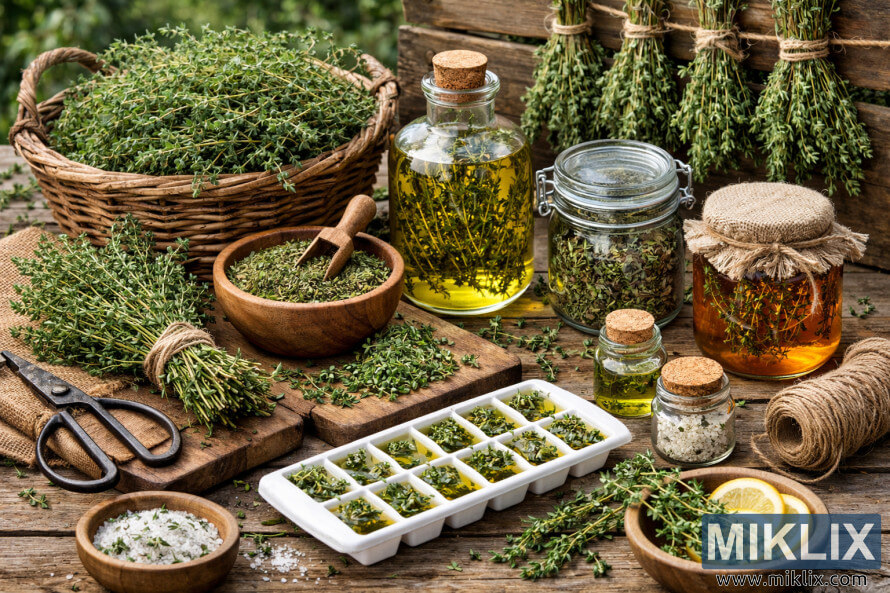
Click or tap the image for more information and higher resolutions.
Overwintering and Perennial Care
Proper winter protection helps thyme survive harsh conditions
Thyme is a hardy perennial in USDA zones 5-9, but proper winter care ensures your plants emerge strong and healthy in spring. In colder regions, some protection may be necessary.
Winter Protection
- After the ground freezes, apply a light mulch of pine needles or evergreen boughs (not heavy leaves or straw).
- In zones 5-6, consider planting thyme near a south-facing wall for additional warmth.
- Avoid cutting back plants in fall—the top growth helps protect the crown.
- For container plants in cold regions, move pots to a protected location or cold frame.
Spring Renewal
Thyme benefits from some attention in early spring to encourage vigorous growth for the new season:
- Remove winter mulch once danger of hard frost has passed.
- Trim away any winter-damaged or dead growth.
- Apply a light top-dressing of compost around (not on) the plant crown.
- Divide older plants if they've become woody or overgrown (see below).
Dividing and Rejuvenating
Thyme plants typically need dividing or replacement every 3-4 years as they become woody and less productive. Early spring is the ideal time for this task.
- Dig up the entire plant, preserving as much of the root system as possible.
- Cut or pull the plant into smaller sections, ensuring each division has both roots and shoots.
- Discard the woody center portions that show little new growth.
- Replant the divisions in freshly prepared soil.
- Water thoroughly and keep soil consistently moist until new growth appears.
Renewal Tip: If your thyme has become too woody to divide effectively, take several cuttings from the younger, outer portions of the plant to start fresh plants before discarding the old one.
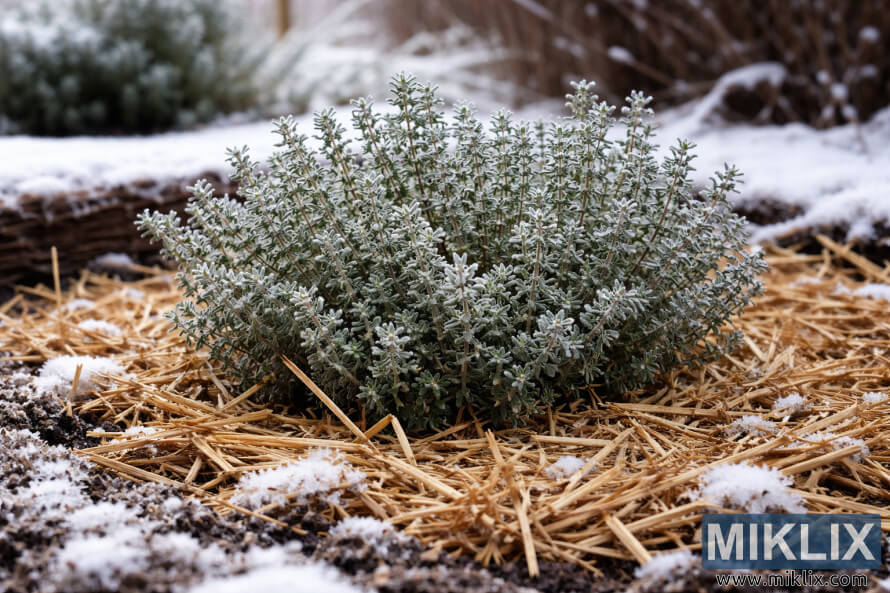
Click or tap the image for more information and higher resolutions.
Companion Planting with Thyme
Thyme thrives alongside compatible herbs and vegetables
Thyme makes an excellent companion plant in the garden, offering benefits to neighboring plants while receiving advantages in return. Its strong aroma can deter certain pests, while its low-growing habit makes it a perfect ground cover around taller plants.
Good Companions for Thyme
- Cabbage Family: Thyme repels cabbage worms and other brassica pests.
- Tomatoes: Thyme deters tomato hornworms and improves growth and flavor.
- Eggplant: Thyme helps protect against garden pests that target eggplants.
- Strawberries: Thyme's spreading habit suppresses weeds around strawberry plants.
- Rosemary: Both herbs enjoy similar growing conditions.
- Lavender: Creates a beautiful and fragrant Mediterranean garden combination.
Plants to Avoid Near Thyme
- Basil: Requires more water and richer soil than thyme.
- Mint: Too aggressive and will outcompete thyme.
- Cilantro: Needs cooler conditions and more moisture.
- Plants that create dense shade: Thyme needs full sun to thrive.
Creative Companion Planting Ideas
- Plant thyme between stepping stones where its fragrance is released when walked upon.
- Use as an aromatic border around vegetable beds to deter pests.
- Combine with other Mediterranean herbs in a dedicated herb spiral.
- Plant near beehives to flavor honey and attract pollinators.
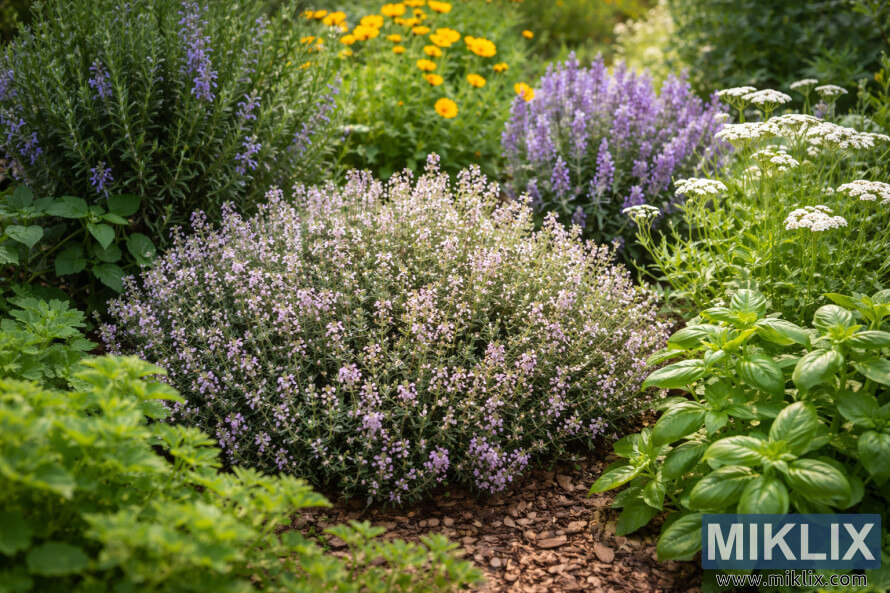
Click or tap the image for more information and higher resolutions.
Troubleshooting Common Growing Problems
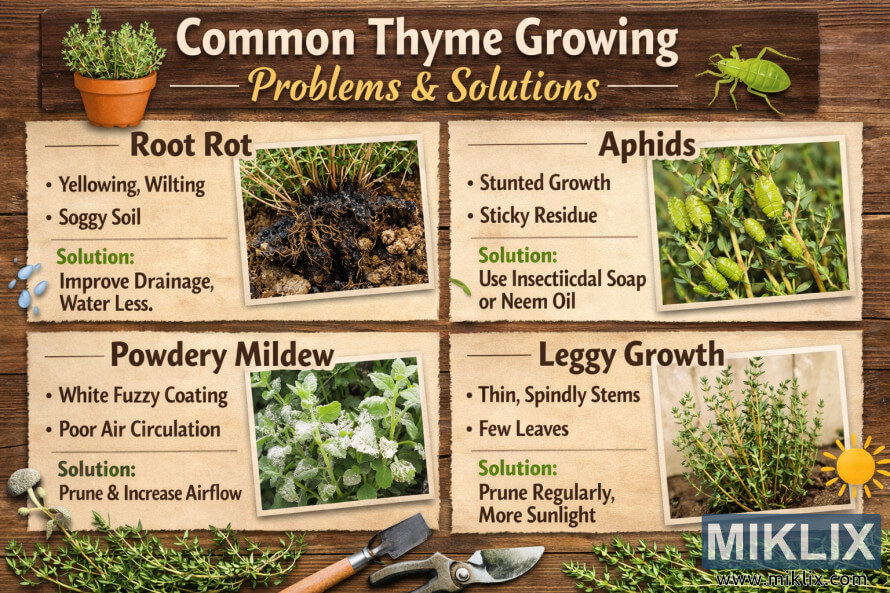
Identifying and solving common thyme growing issues
Even with proper care, thyme plants can sometimes develop problems. Here's how to identify and address the most common issues:
Why is my thyme turning yellow?
Cause: The most common cause of yellowing thyme is overwatering or poor drainage, leading to root stress.
Solution: Allow soil to dry completely between waterings. If planted in the ground, improve drainage by adding sand or gravel. For container plants, ensure pots have adequate drainage holes and consider repotting in fresh, well-draining soil.
Why is my thyme growing leggy with sparse leaves?
Cause: Insufficient light causes thyme to stretch toward available light sources, resulting in leggy, weak growth.
Solution: Move plants to a location with at least 6 hours of direct sunlight daily. If growing indoors, use a grow light to supplement natural light. Prune leggy growth to encourage bushier development.
Why has my thyme stopped growing and producing new leaves?
Cause: Thyme plants become woody and less productive with age, typically after 3-4 years.
Solution: Take cuttings from younger portions of the plant to start fresh plants. Replace the old plant with these new starts, or divide the plant if it still has sections with vigorous growth.
Why did my thyme die over winter?
Cause: Winter damage can occur from extreme cold, fluctuating temperatures, or excessive moisture around the crown.
Solution: Ensure proper winter protection with light mulch after the ground freezes. In very cold regions, grow cold-sensitive varieties in containers that can be moved to protected locations. Choose varieties suited to your hardiness zone.
Why does my thyme have few flowers and attract few pollinators?
Cause: Excessive pruning, particularly before flowering season, removes potential flower buds.
Solution: Allow some portions of your thyme plants to flower each year. Reduce harvesting for a few weeks before the typical flowering period. Plant several thyme plants so you can harvest from some while allowing others to flower.
Click or tap the image for more information and higher resolutions.
Conclusion: Enjoying the Fruits of Your Labor
Growing thyme rewards gardeners with an abundant harvest of this versatile herb that enhances countless dishes. From its aromatic leaves to its bee-friendly flowers, thyme brings multiple benefits to both the garden and the kitchen.
With the proper growing conditions—full sun, well-drained soil, and minimal watering—thyme thrives with little maintenance. Regular harvesting keeps plants bushy and productive, while proper winter care ensures years of continued growth.
Whether you're growing thyme in containers on a sunny windowsill or as part of a larger herb garden, the techniques covered in this guide will help you achieve success. Remember that thyme improves with age (at least for the first few years), developing deeper flavor as plants mature.
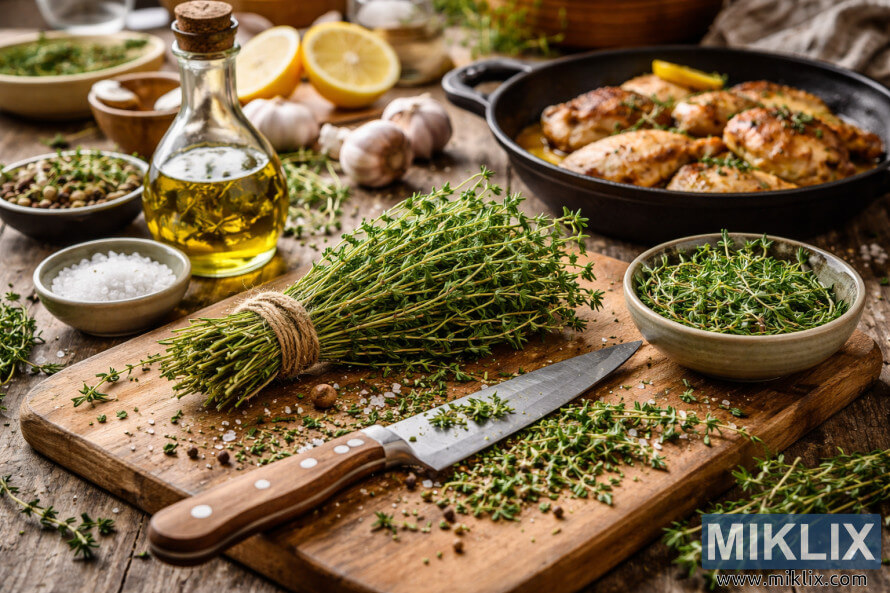
As you enjoy the fruits of your labor, experiment with different culinary uses for your homegrown thyme. From classic meat dishes to vegetable roasts, soups, and even desserts, this herb's distinctive flavor adds a touch of Mediterranean sunshine to your cooking year-round.
Click or tap the image for more information and higher resolutions.
Further Reading
If you enjoyed this post, you may also like these suggestions:
- The Ultimate Guide to Growing Mint at Home
- A Guide to Growing Aloe Vera Plants at Home
- Growing You Own Garlic: A Complete Guide