
Image: Common Thyme Growing Problems and Solutions
Published: January 18, 2026 at 4:53:58 PM UTC
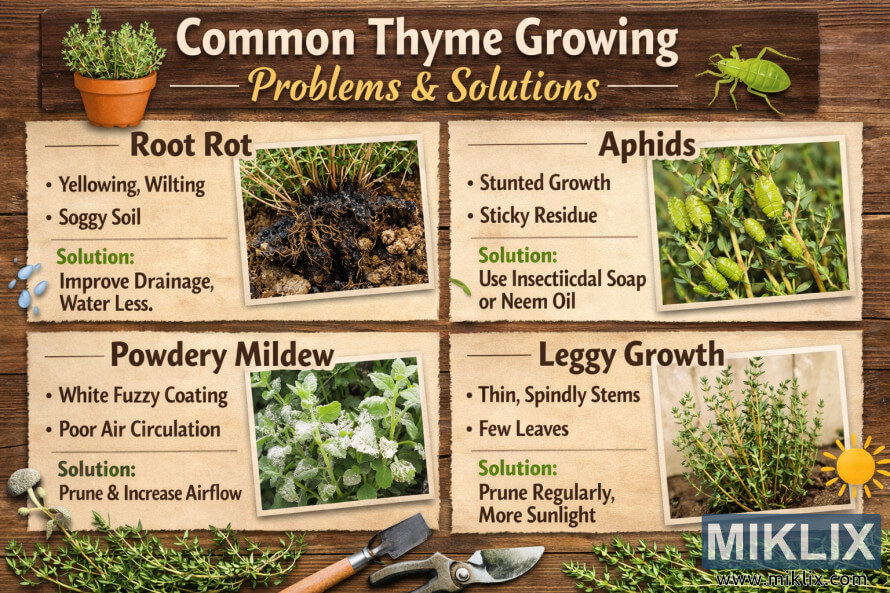
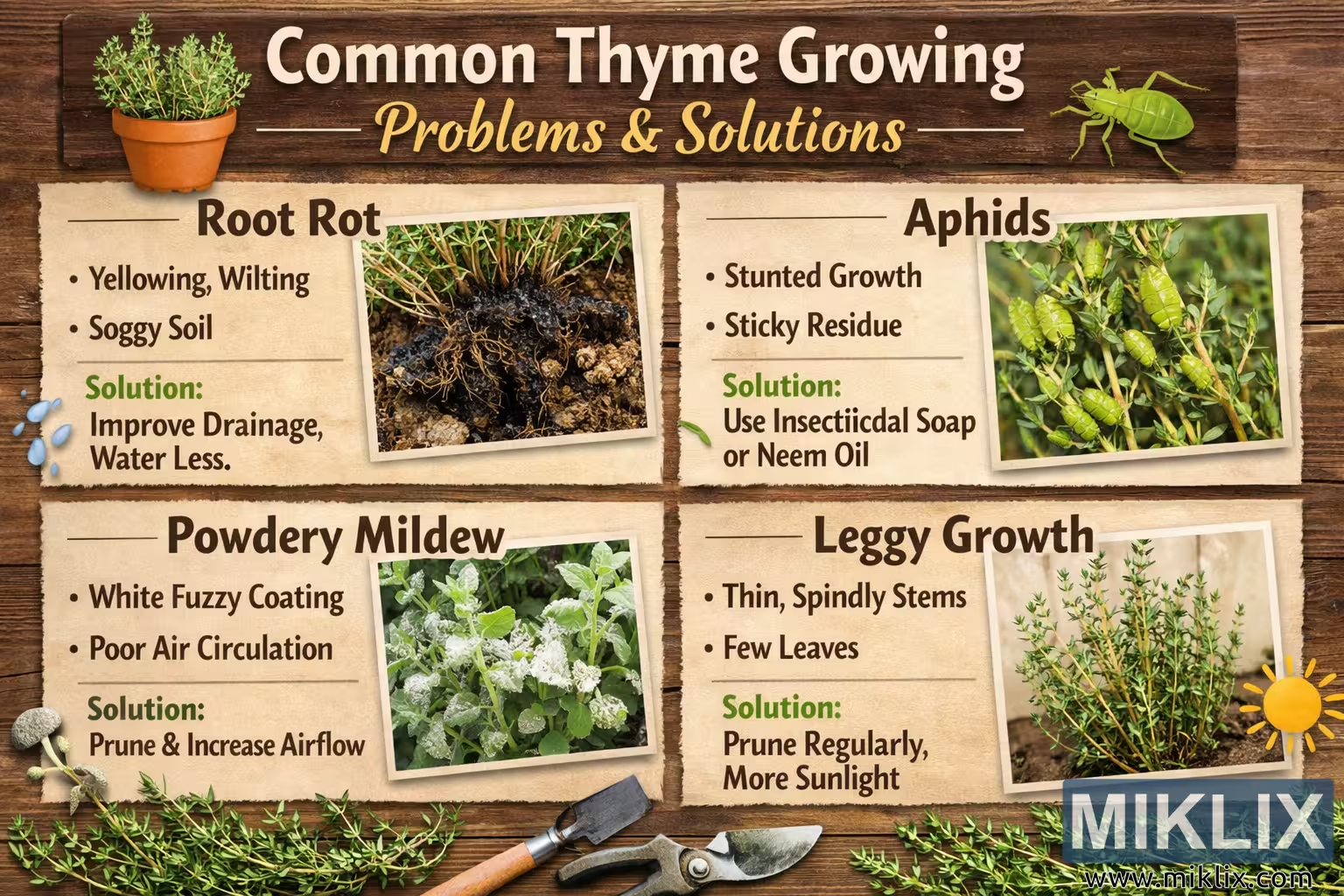
Informative infographic explaining common thyme growing problems and solutions, including root rot, aphids, powdery mildew, and leggy growth, with visual examples and practical care tips.
Available versions of this image
The image files available for download below are less compressed and higher resolution - and as a result of that, higher quality - than the images embedded in articles and pages on this website, which are more optimized for file size in order to reduce bandwidth consumption.
Regular size (1,536 x 1,024)
Large size (3,072 x 2,048)
Very large size (4,608 x 3,072)
Extra large size (6,144 x 4,096)
Comically large size (1,048,576 x 699,051)
- Still uploading... ;-)
Image description
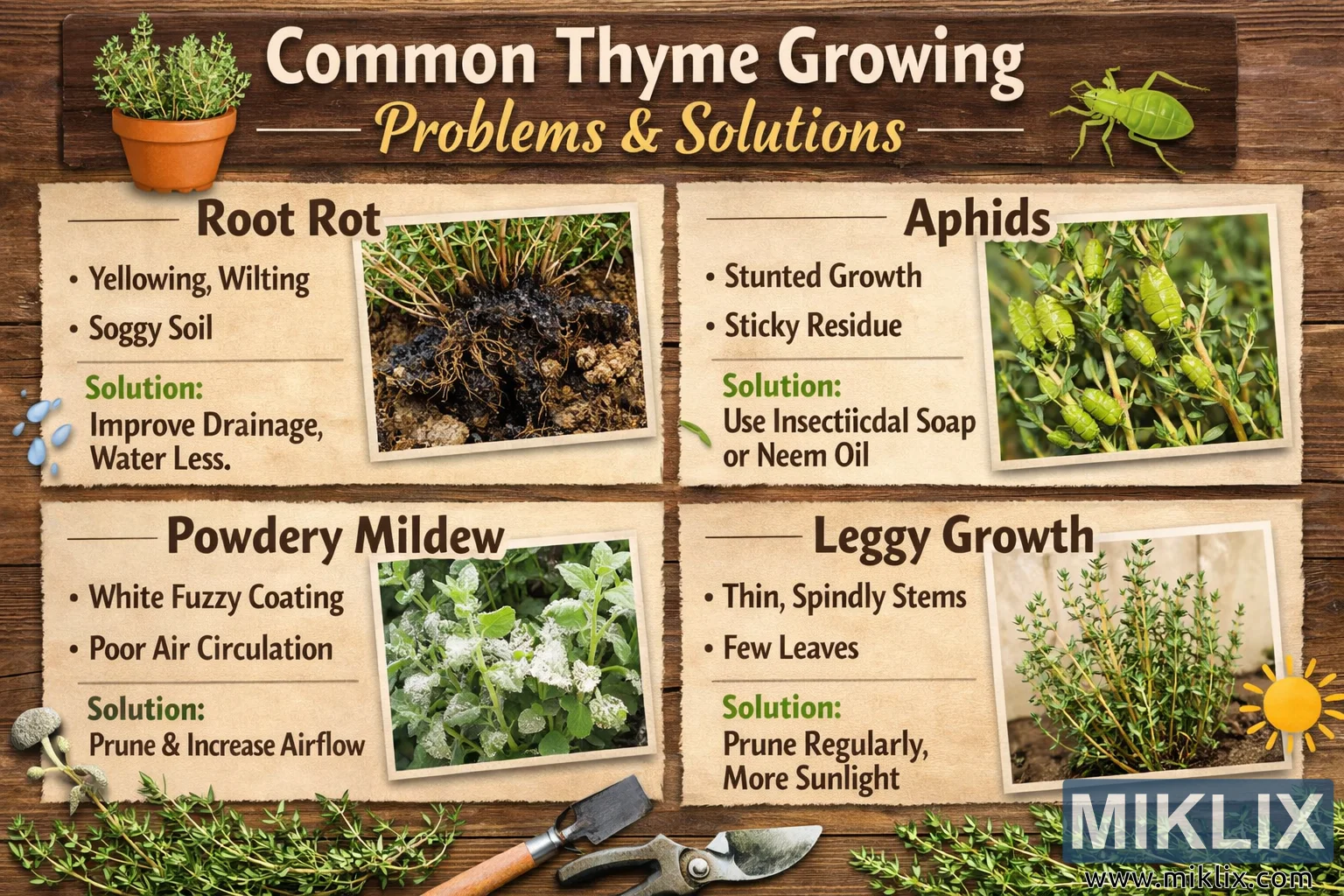
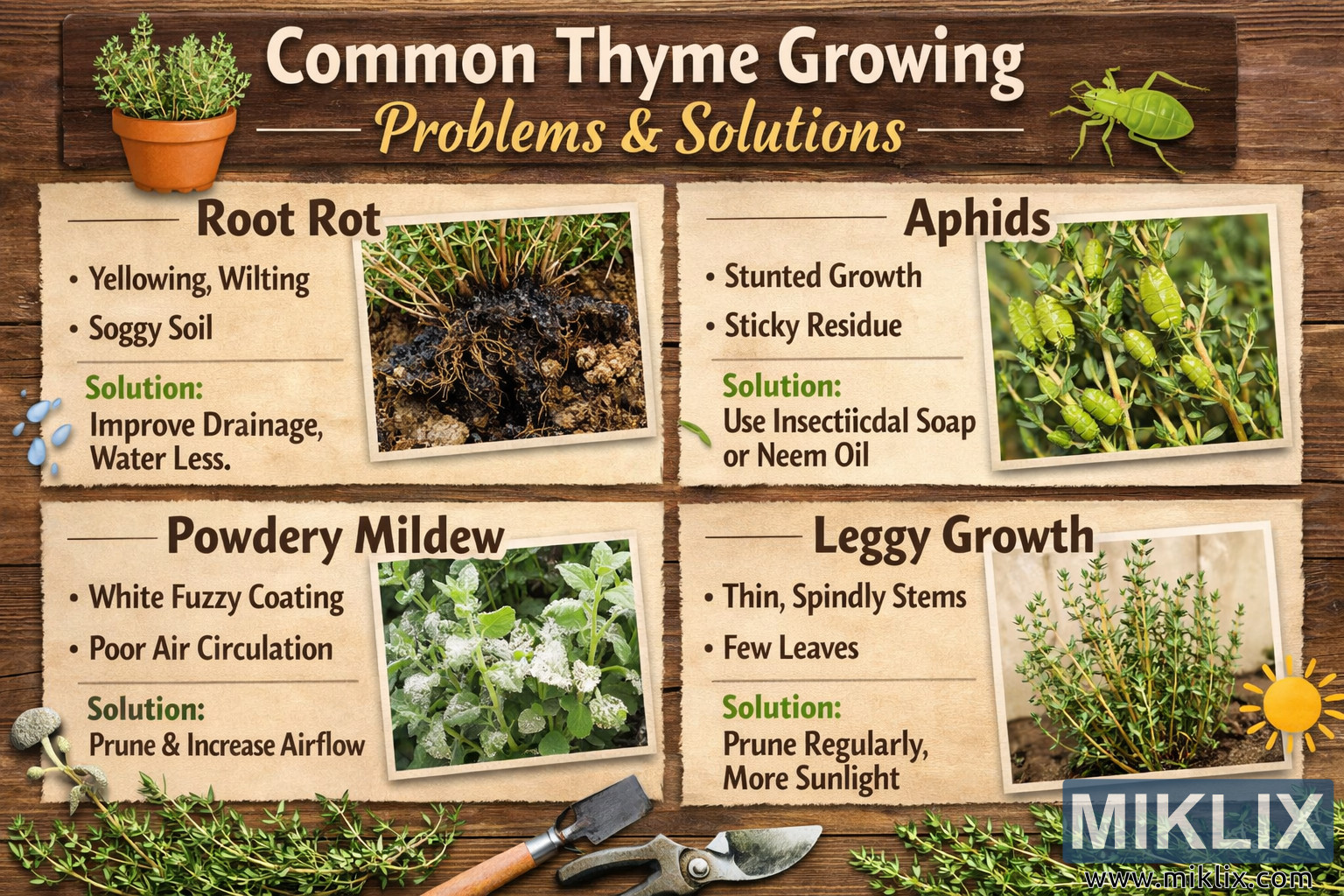
The image is a wide, landscape-oriented educational infographic titled "Common Thyme Growing Problems & Solutions." It is designed with a rustic gardening aesthetic, featuring a wooden tabletop background that creates a warm, natural feel associated with herb gardening. At the top center, the title is prominently displayed in large, decorative lettering, with the words "Common Thyme Growing" in bold cream-colored text and "Problems & Solutions" highlighted beneath it in a contrasting, handwritten-style font. Small illustrated elements, such as a potted thyme plant on the left and a green insect on the right, visually frame the title and reinforce the gardening theme. The main body of the infographic is divided into four rectangular sections arranged in a two-by-two grid, each section resembling a paper card pinned or placed on the wooden surface. Each card focuses on a specific common problem encountered when growing thyme, pairing concise text with a clear photographic example. The top-left section addresses "Root Rot." It includes bullet points describing symptoms such as yellowing leaves, wilting, and soggy soil. A close-up photograph shows dark, decaying roots in overly wet soil, visually illustrating the issue. Below the symptoms, a highlighted "Solution" line explains that improving drainage and reducing watering can prevent or resolve the problem. The top-right section covers "Aphids." The text lists symptoms like stunted growth and sticky residue on leaves. The accompanying image shows green aphids clustered on thyme stems and leaves. The solution recommends using insecticidal soap or neem oil to control the pests. The bottom-left section focuses on "Powdery Mildew." Symptoms are described as a white, fuzzy coating on leaves caused by poor air circulation. The photo depicts thyme leaves dusted with a pale, powdery substance. The solution suggests pruning the plant and increasing airflow to reduce humidity and fungal growth. The bottom-right section discusses "Leggy Growth." The symptoms include thin, spindly stems and sparse leaves, illustrated by a photo of an elongated thyme plant with stretched stems. The solution advises pruning regularly and providing more sunlight. Decorative gardening tools, thyme sprigs, small stones, and soil details are scattered along the bottom edge, adding visual interest and reinforcing the practical, hands-on gardening message. Overall, the infographic is clear, balanced, and informative, combining text and imagery to help gardeners quickly identify thyme growing problems and apply straightforward solutions.
The image is related to: A Complete Guide to Growing Thyme From Planting to Harvest