
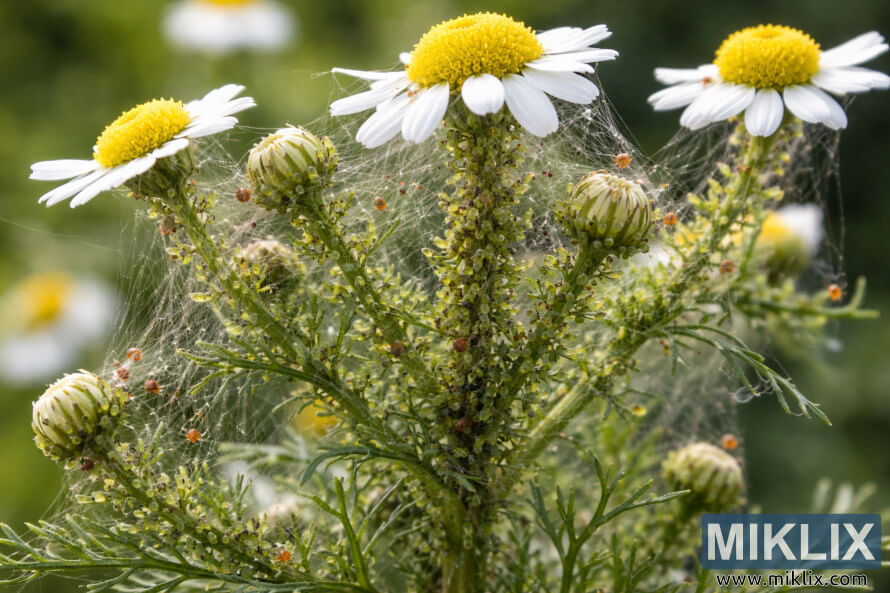
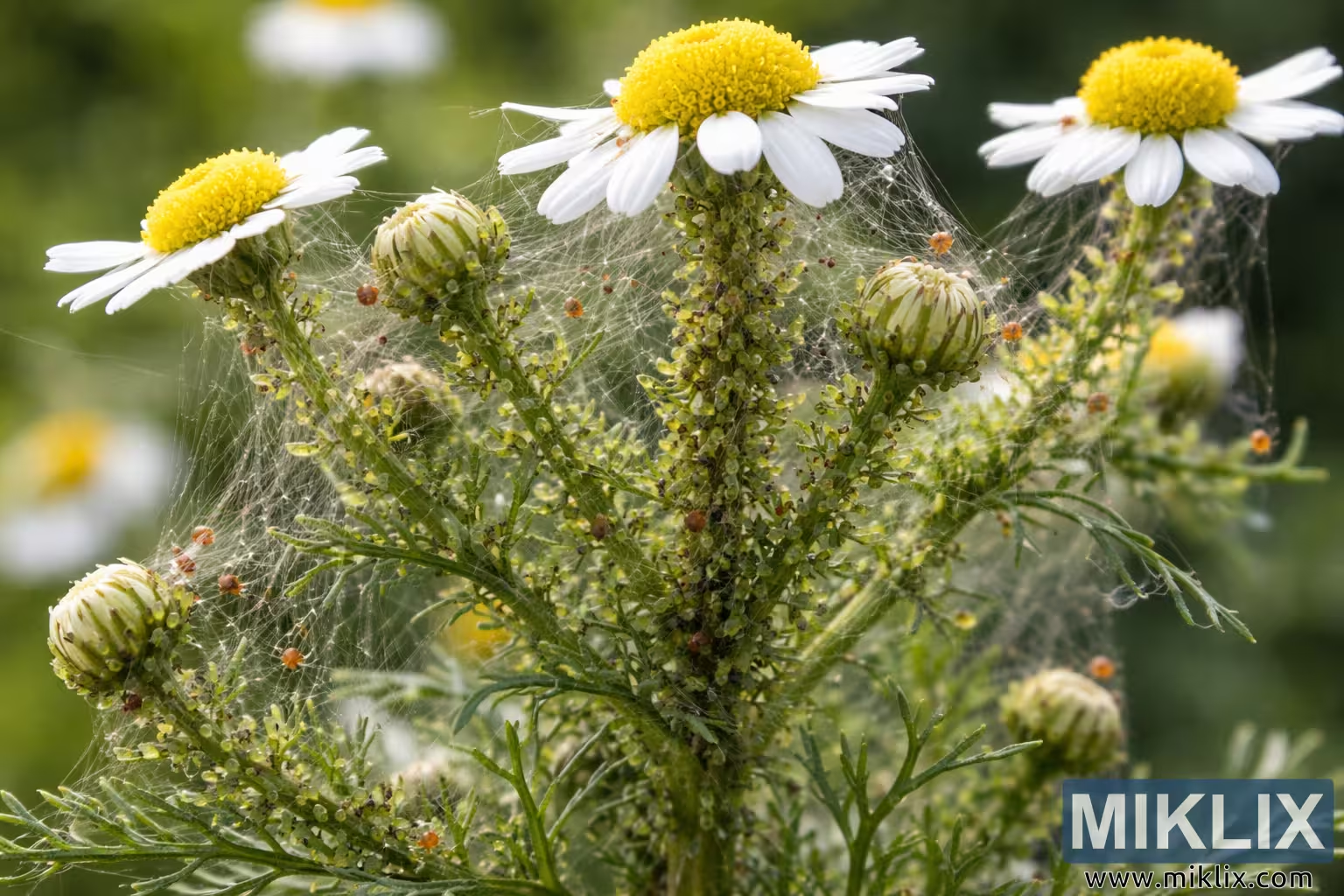
Image: Chamomile Plant Severely Infested with Aphids and Spider Mites
Published: January 28, 2026 at 4:59:42 PM UTC
Detailed macro image of a chamomile plant suffering from aphid and spider mite infestation, showing insect clusters, webbing, and plant stress symptoms.
Available versions of this image
The image files available for download below are less compressed and higher resolution - and as a result of that, higher quality - than the images embedded in articles and pages on this website, which are more optimized for file size in order to reduce bandwidth consumption.
Regular size (1,536 x 1,024)
Large size (3,072 x 2,048)
Very large size (4,608 x 3,072)
Extra large size (6,144 x 4,096)
Comically large size (1,048,576 x 699,051)
- Still uploading... ;-)
Image description
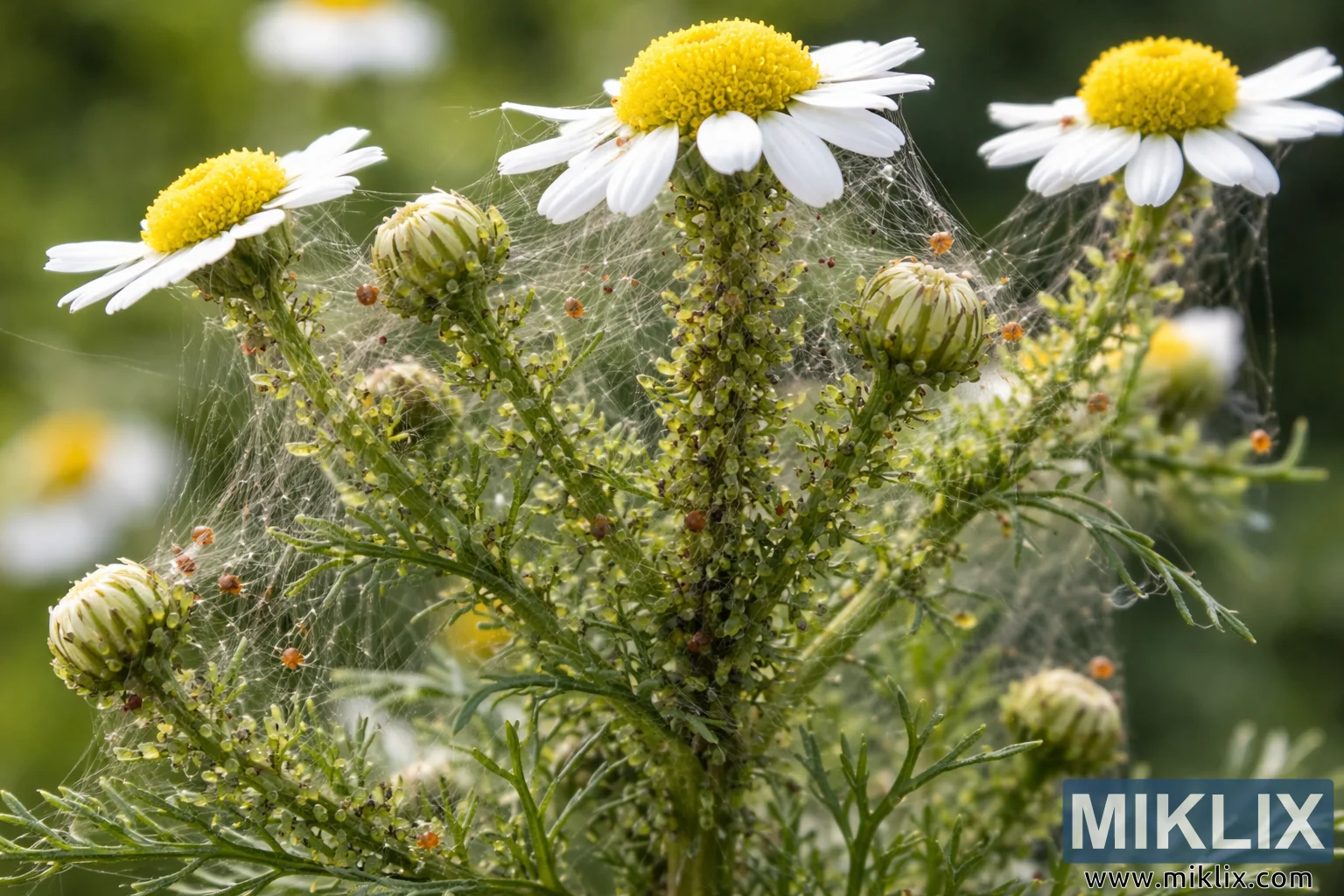
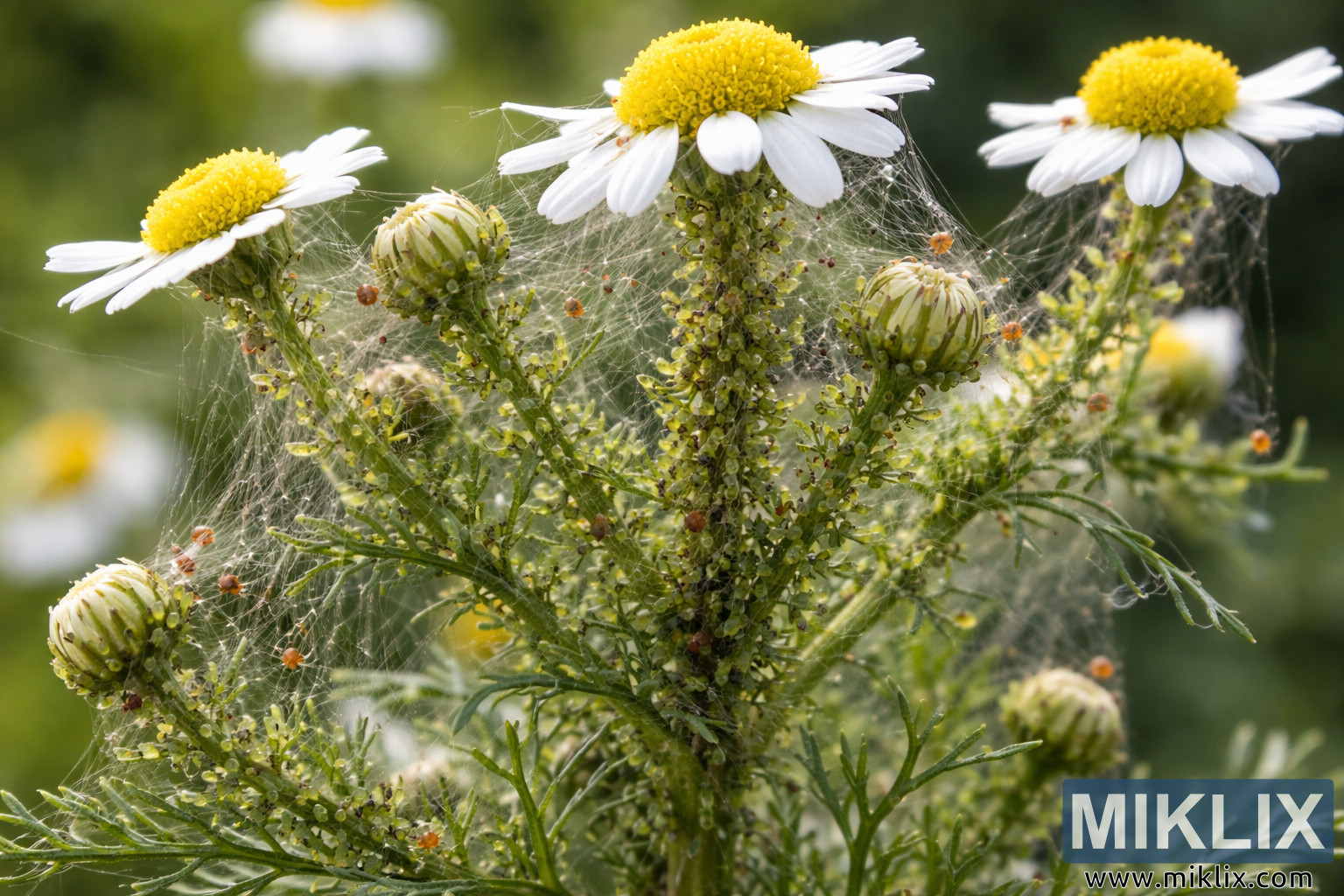
The image is a high-resolution, landscape-oriented close-up photograph of a chamomile plant experiencing a severe infestation of aphids and spider mites. Several chamomile flower heads dominate the composition, with bright white petals radiating around dense, golden-yellow centers. Some flowers are fully open, while others remain partially closed as green, rounded buds. The plant’s slender, branching stems and fine, feathery leaves are clearly visible, rendered in sharp detail against a softly blurred green background that suggests an outdoor garden or field setting in natural daylight. Covering much of the plant is an intricate network of spider mite webbing, stretched between stems, leaves, and flower heads. The silk threads catch the light, forming delicate, gauze-like layers that envelop the plant and give it a neglected, unhealthy appearance. Along the stems and clustered around the bases of the flowers are hundreds of aphids, predominantly pale green, with some appearing yellowish or slightly translucent. They are densely packed, especially along the vertical stems and the undersides of leaves, creating textured, uneven surfaces where plant tissue would normally be smooth. Individual aphids are visible with elongated bodies and tiny legs, some appearing to be feeding, while others cluster motionlessly. Scattered among the aphids are tiny spider mites, barely visible but identifiable by their presence within the webbing and by small reddish-brown specks dotting the silk strands. The infestation appears advanced, with webbing spanning multiple flower heads and trapping debris and pollen. The chamomile plant shows signs of stress, including slightly curled leaves, crowded buds, and areas where growth seems stunted or overwhelmed by pests. Despite the damage, the flowers remain visually striking, creating a strong contrast between the beauty of the chamomile blossoms and the destructive impact of the infestation. The overall impression is both scientifically informative and visually dramatic, highlighting the complex interaction between plant life and insect pests in a natural environment.
The image is related to: A Guide to Growing Chamomile in Your Own Garden