
A Guide to Growing Chamomile in Your Own Garden
Published: January 28, 2026 at 4:59:42 PM UTC
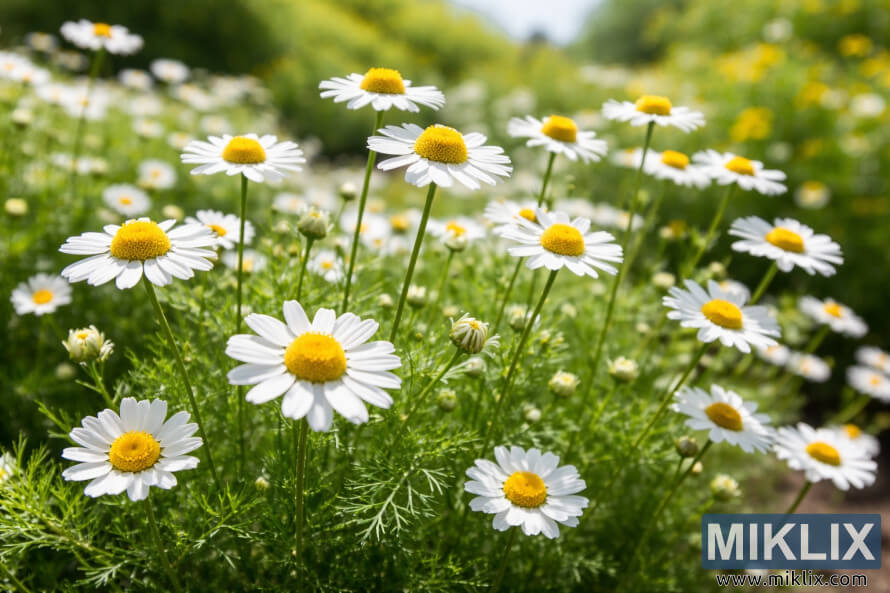
With its delicate, daisy-like flowers and soothing fragrance, chamomile is a versatile herb that deserves a place in every garden. Whether you're looking to brew your own calming tea, create natural remedies, or simply enjoy its ornamental beauty, growing chamomile at home offers numerous rewards.
Click or tap the image for more information and higher resolutions.
This gentle herb not only provides a continuous harvest of aromatic flowers but also attracts beneficial insects to your garden while requiring minimal care. In this comprehensive guide, we'll walk through everything you need to know to successfully grow, maintain, and harvest your own chamomile plants.
Choosing Your Chamomile
Before you begin your chamomile growing journey, it's important to understand that there are two main types of chamomile, each with distinct characteristics and growing habits.
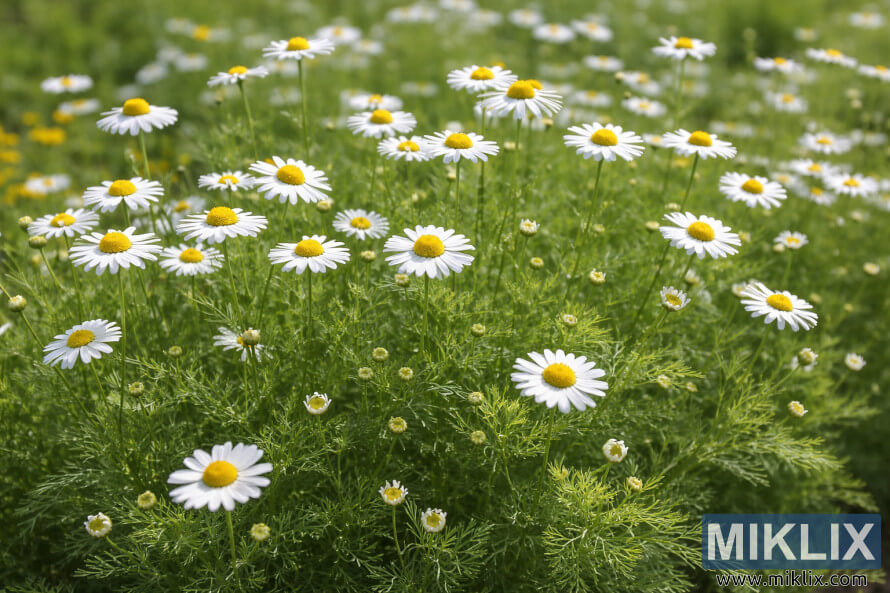
German Chamomile (Matricaria recutita)
German chamomile features delicate, feathery foliage and daisy-like flowers
- Annual plant that often self-seeds
- Grows taller (up to 24 inches)
- Hollow, branched stems
- More abundant flowers
- Sweet, apple-like fragrance
- Preferred variety for making tea
Click or tap the image for more information and higher resolutions.
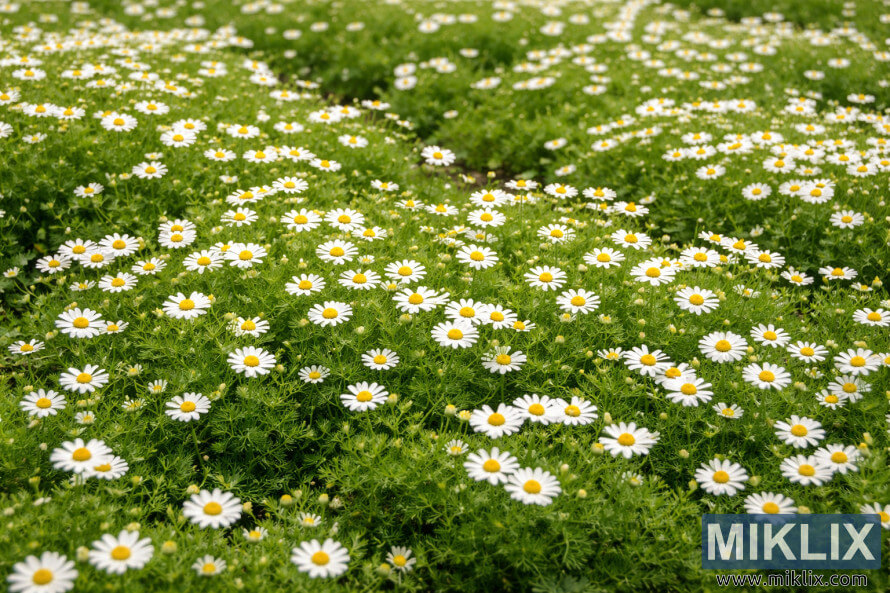
Roman Chamomile (Chamaemelum nobile)
Roman chamomile forms a low-growing perennial ground cover
- Perennial that returns year after year
- Low-growing (only 3-12 inches tall)
- Solid stems that creep along the ground
- Fewer but larger flowers
- Stronger, more bitter taste
- Often used as aromatic ground cover or lawn
For most home gardeners interested in harvesting flowers for tea, German chamomile is the preferred choice due to its more abundant blooming and sweeter flavor. However, if you're looking for a perennial ground cover with lovely scent, Roman chamomile might be the better option. Both varieties are easy to grow and offer similar benefits to your garden ecosystem.
Click or tap the image for more information and higher resolutions.
When to Plant Chamomile
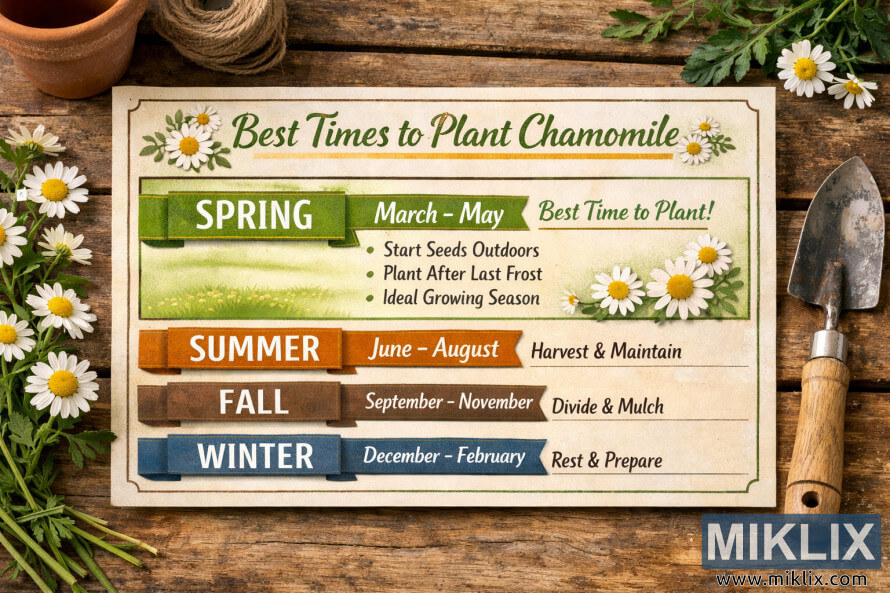
Timing is crucial for successfully establishing chamomile in your garden. For best results, follow these seasonal guidelines:
Chamomile growing calendar showing optimal planting and harvesting times
- Spring planting: The most common time to plant chamomile is in spring after all danger of frost has passed. Soil temperatures should be at least 55-60°F (13-15°C) for optimal germination.
- Summer planting: In cooler climates, you can continue planting through early summer, though plants may not flower as abundantly in their first season.
- Fall planting: In warmer regions (zones 8-10), you can plant chamomile in early fall for winter and spring blooms.
- Indoor starting: For an earlier harvest, start seeds indoors 6-8 weeks before your last frost date, then transplant outdoors when temperatures warm.
Click or tap the image for more information and higher resolutions.
Where to Plant Chamomile
Chamomile is adaptable but thrives in specific conditions. Consider these factors when choosing a planting location:
Light Requirements
Chamomile performs best in full sun (6+ hours daily) in cooler climates. In hot regions, providing afternoon shade will prevent wilting and extend the flowering period. The plants can tolerate partial shade but may grow leggier and produce fewer flowers.
Soil Preferences
These adaptable plants prefer well-draining soil with moderate fertility. While chamomile can tolerate poor soil conditions, it grows best in soil with a pH between 5.6 and 7.5. Avoid heavy clay soils that retain too much moisture, as this can lead to root rot.
Spacing Considerations
German chamomile plants should be spaced 8-12 inches apart to allow for good air circulation. Roman chamomile, which spreads horizontally, needs 12-18 inches between plants to accommodate its creeping growth habit.
Garden Location
Chamomile makes an excellent companion plant for many vegetables and herbs. Consider planting it near cabbage, onions, or cucumbers, as it may help repel certain pests. It also grows well in dedicated herb gardens, flower beds, or containers.
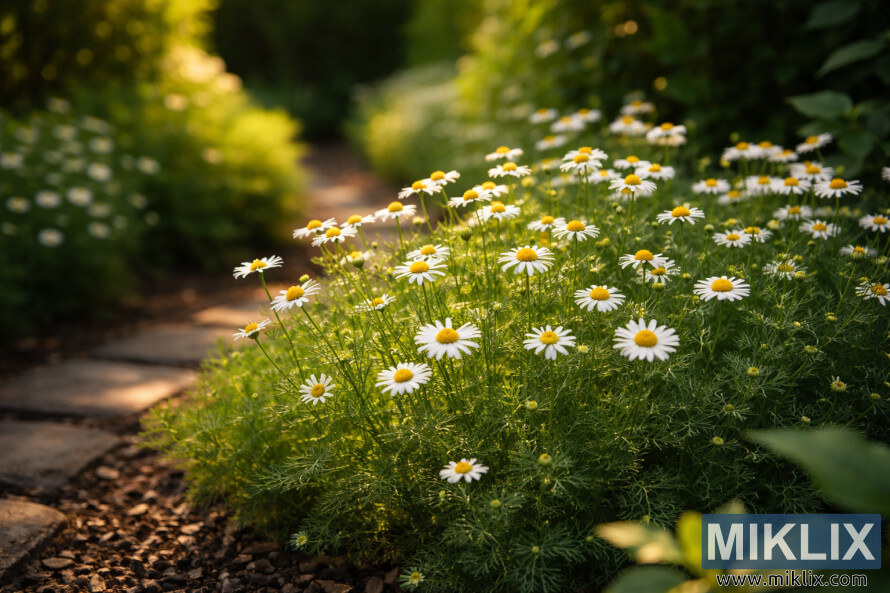
Click or tap the image for more information and higher resolutions.
How to Plant Chamomile
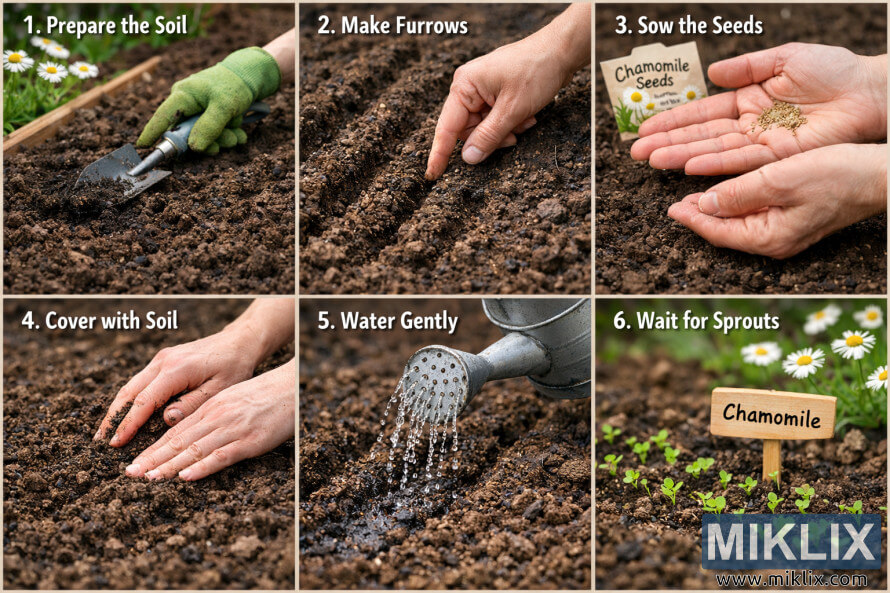
Chamomile seeds should be scattered on the soil surface rather than buried deeply
Direct Sowing Seeds
Chamomile seeds are tiny and need light to germinate, so they should be scattered on the soil surface rather than buried:
- Prepare the soil by removing weeds and incorporating compost.
- Moisten the soil before sowing.
- Scatter seeds thinly across the prepared area.
- Press seeds gently into the soil without covering them.
- Keep the soil consistently moist until germination, which typically occurs in 7-14 days.
- Once seedlings reach 2-3 inches tall, thin them to the recommended spacing.
Click or tap the image for more information and higher resolutions.
Transplanting Seedlings
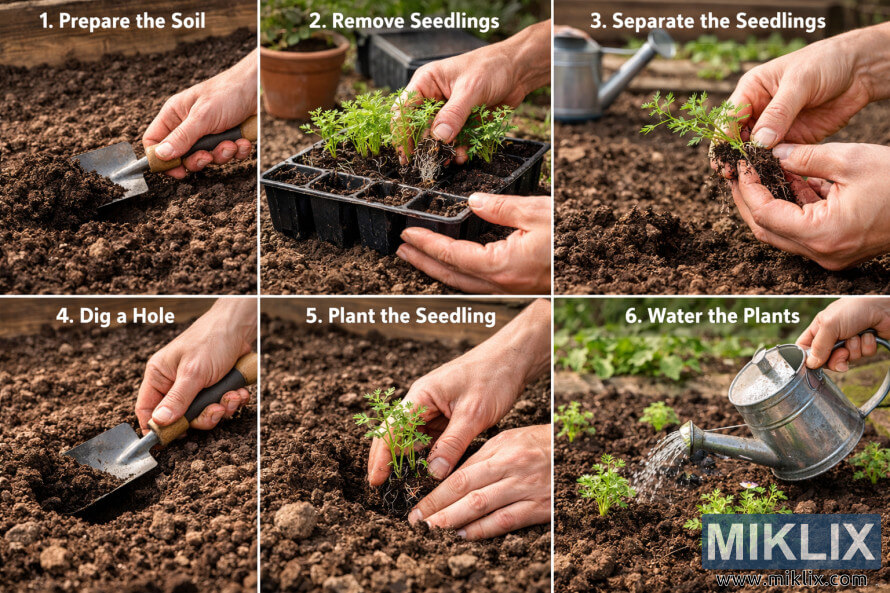
Whether you've started seeds indoors or purchased young plants, follow these steps for successful transplanting:
- Harden off indoor-grown seedlings by gradually exposing them to outdoor conditions over 7-10 days.
- Prepare the planting area by loosening soil and adding compost.
- Dig holes slightly larger than the root ball of each plant.
- Remove plants carefully from their containers, disturbing the roots as little as possible.
- Place plants at the same depth they were previously growing.
- Backfill with soil and firm gently around the base.
- Water thoroughly after planting to help establish roots.
Click or tap the image for more information and higher resolutions.
Container Planting
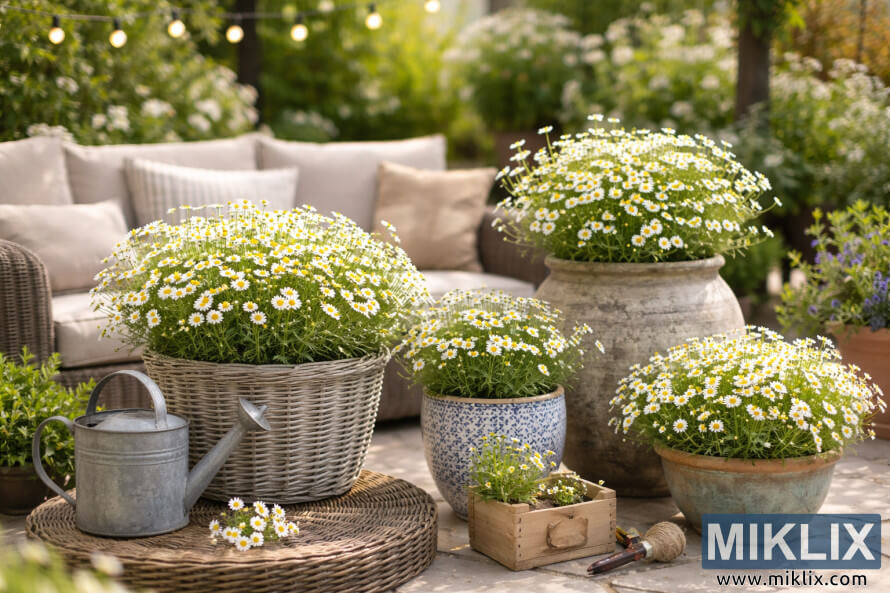
Chamomile adapts well to container growing, making it perfect for patios, balconies, or small spaces:
Chamomile thrives in containers, making it perfect for small spaces
- Choose containers at least 8 inches deep with drainage holes.
- Use high-quality potting mix rather than garden soil.
- Plant 1-2 German chamomile plants per 12-inch pot, or 3-4 plants for Roman chamomile to create a cascading effect.
- Place containers where they'll receive adequate sunlight.
- Monitor soil moisture more frequently, as containers dry out faster than garden beds.
Click or tap the image for more information and higher resolutions.
Care and Maintenance
One of chamomile's greatest attributes is its relatively low maintenance nature. However, providing proper care will ensure healthier plants and more abundant harvests.
Watering
Chamomile has moderate water needs and becomes quite drought-tolerant once established:
- New plants: Keep soil consistently moist (but not soggy) until plants are established.
- Established plants: Water when the top inch of soil feels dry to the touch.
- Frequency: In average conditions, once or twice per week is typically sufficient.
- Method: Water at the base of plants to keep foliage dry and prevent disease.
- Container plants: Check more frequently as they dry out faster than in-ground plants.
Watering Tip: To check soil moisture, insert your index finger about an inch into the soil near the plant. If it feels dry at that depth, it's time to water. If it still feels moist, wait another day or two.
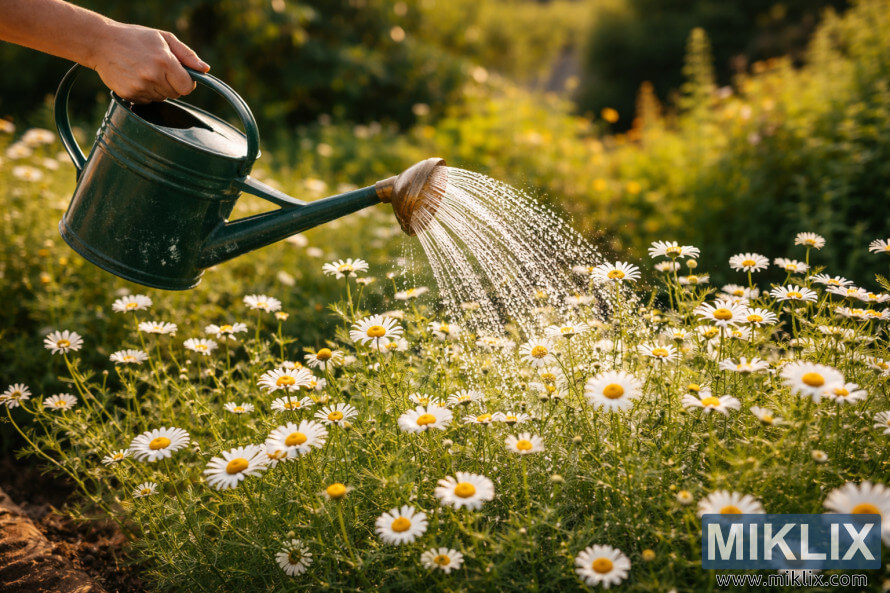
Click or tap the image for more information and higher resolutions.
Feeding
Chamomile generally doesn't require heavy fertilization and often performs better in moderately fertile soil:
Garden Beds
- Incorporate compost into the soil before planting.
- Apply a thin layer of compost around plants in early spring.
- If growth seems slow, apply a balanced organic fertilizer at half the recommended strength.
- Avoid high-nitrogen fertilizers, which promote leafy growth at the expense of flowers.
Container Plants
- Use a high-quality potting mix with slow-release fertilizer included.
- Apply a diluted liquid organic fertilizer monthly during the growing season.
- Stop fertilizing in late summer to prepare plants for dormancy.
- Refresh potting soil annually for perennial Roman chamomile.
Weeding and Thinning
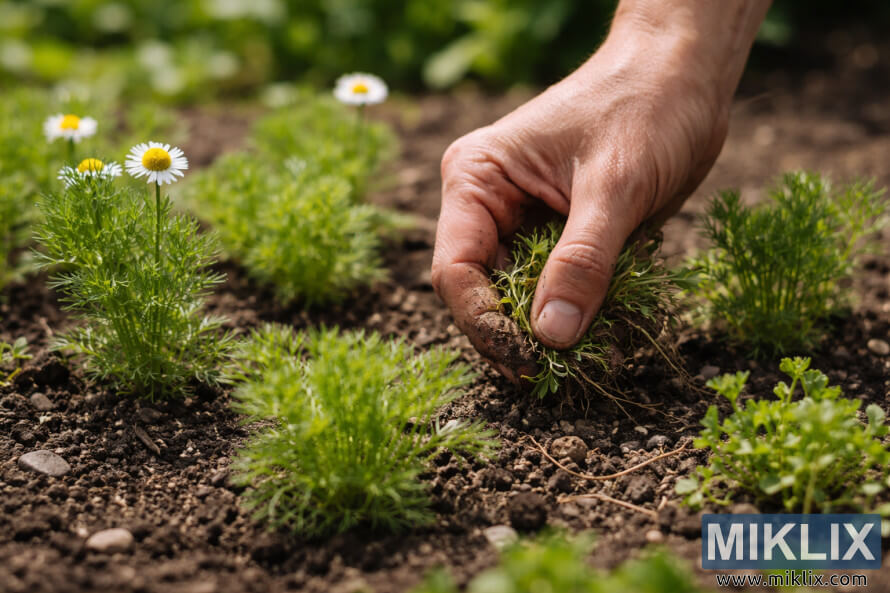
Regular weeding helps young chamomile plants establish without competition
Keeping the growing area clear of weeds is especially important for young chamomile plants:
- Weed regularly but gently to avoid disturbing chamomile's shallow roots.
- Apply a thin layer of organic mulch (like straw or shredded leaves) to suppress weeds and retain moisture.
- Thin seedlings to proper spacing once they reach 2-3 inches tall.
- Remove the weakest seedlings, leaving the strongest to mature.
Click or tap the image for more information and higher resolutions.
Supporting and Pruning
Some maintenance may be needed to keep plants looking their best and producing abundantly:
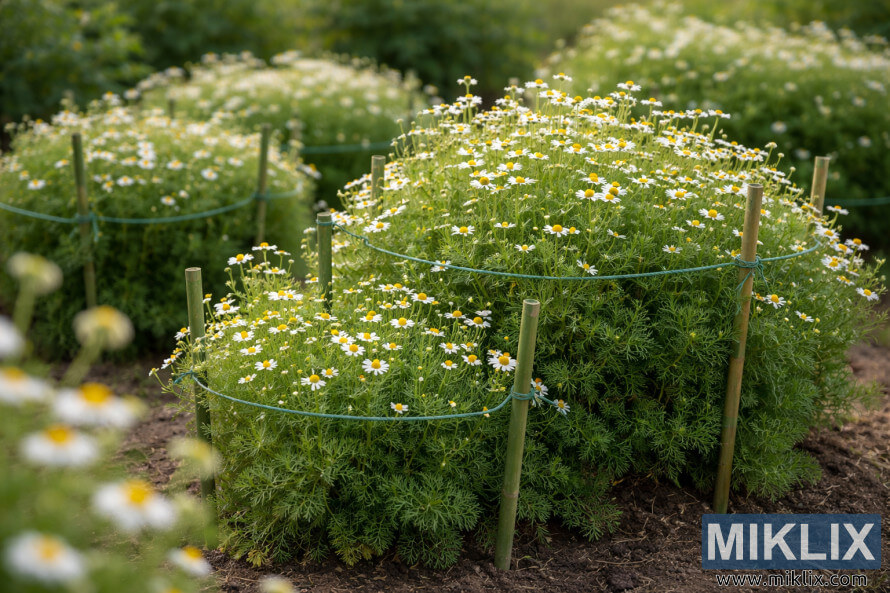
Taller German chamomile may need light support when heavy with flowers
- Support: German chamomile can become top-heavy when flowering. Consider placing small stakes or a circular plant support around plants if they begin to flop.
- Deadheading: Remove spent flowers regularly to encourage continued blooming.
- Pruning: If plants become leggy, trim them back by about one-third to promote bushier growth.
- End-of-season care: Cut German chamomile to the ground after flowering completes. Trim Roman chamomile lightly to maintain its shape.
Click or tap the image for more information and higher resolutions.
Harvesting and Drying
Harvesting chamomile at the right time ensures the best flavor and medicinal properties in your dried flowers.
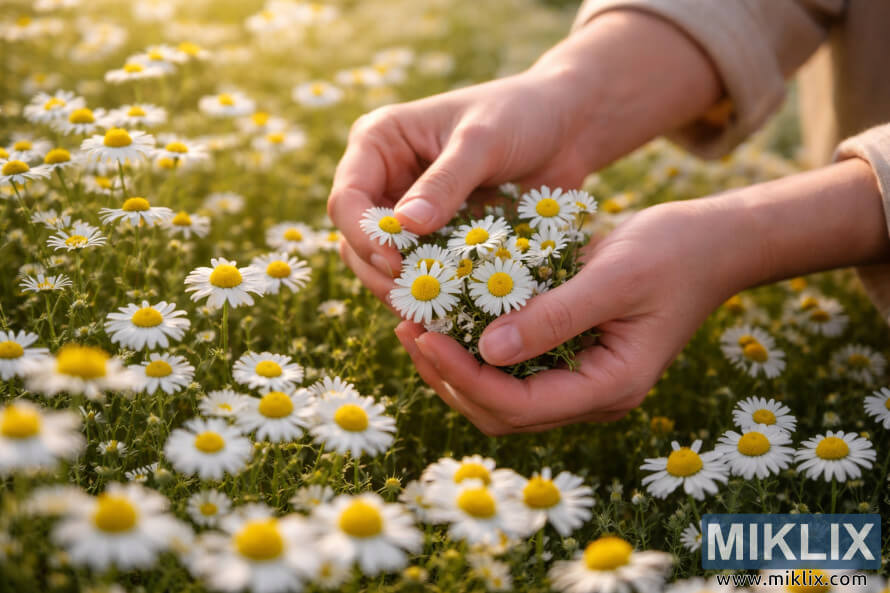
Harvest chamomile flowers when petals are horizontal and centers are fully developed
When to Harvest
Timing is crucial for harvesting chamomile flowers:
- Begin harvesting when flowers are fully open with petals that are horizontal (not pointing upward or drooping downward).
- The yellow center should be full and domed.
- Harvest in the morning after dew has dried but before the heat of the day.
- Most plants begin flowering about 6-8 weeks after planting.
- The flowering period typically lasts 3-4 months with regular harvesting.
How to Harvest
Proper harvesting technique preserves the plant's energy and encourages more blooms:
Individual Flowers
- Pinch or snip flower heads just below the flower head.
- Collect flowers in a basket or other container.
- Harvest every few days as new flowers open.
- Regular harvesting stimulates more flower production.
Mass Harvesting
- For larger harvests, use clean scissors or pruning shears.
- Cut stems with multiple flowers about 2-3 inches below the flowers.
- Separate flowers from stems after harvesting if drying.
- Perform a final harvest before the first frost.
Click or tap the image for more information and higher resolutions.
Drying Methods
Properly dried chamomile retains its flavor, aroma, and beneficial properties for months:
Air Drying
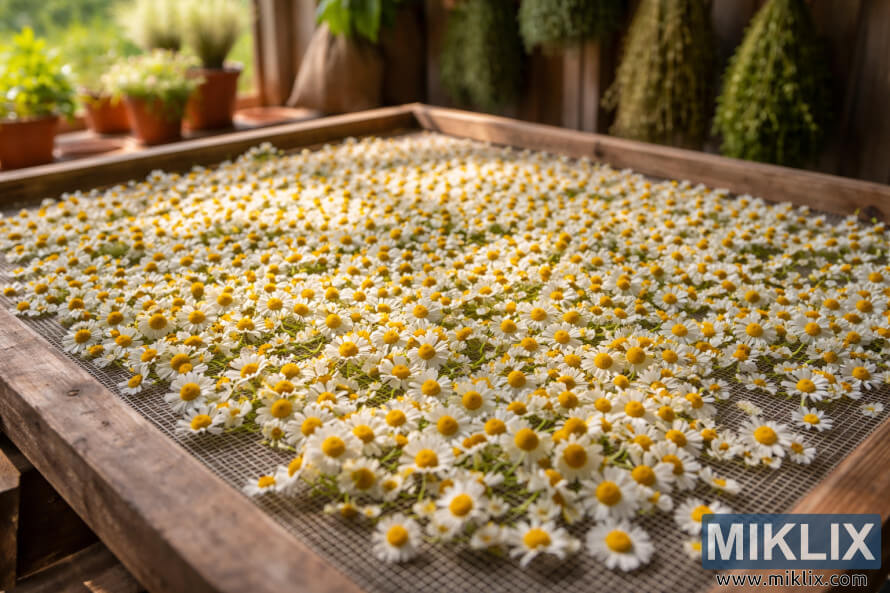
- Spread flowers in a single layer on a screen or parchment paper.
- Place in a warm, dry location with good air circulation.
- Keep out of direct sunlight to preserve color and potency.
- Turn flowers occasionally to ensure even drying.
- Drying takes 1-2 weeks, depending on humidity.
Dehydrator Method
- Arrange flowers in a single layer on dehydrator trays.
- Set temperature to lowest setting (95-115°F).
- Check frequently to prevent over-drying.
- Flowers are ready when completely dry but not brittle.
- This method typically takes 12-24 hours.
Oven Drying
- Use only if other methods aren't available.
- Set oven to lowest temperature (preferably below 150°F).
- Spread flowers on a parchment-lined baking sheet.
- Leave oven door slightly ajar for moisture to escape.
- Check every 30 minutes until completely dry.
Click or tap the image for more information and higher resolutions.
Storing Dried Chamomile
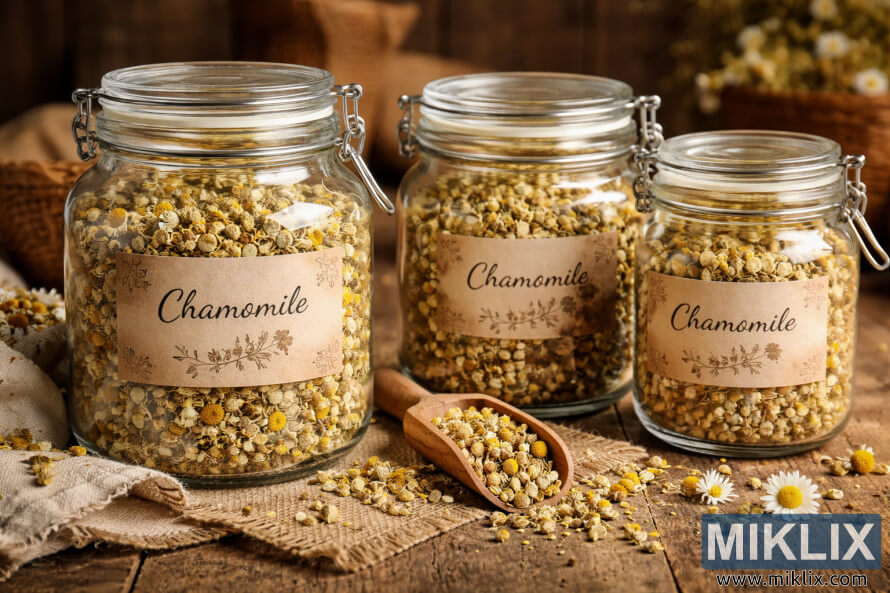
Proper storage preserves the quality of your dried chamomile for up to a year:
Store dried chamomile in airtight glass containers away from light
- Ensure flowers are completely dry before storing to prevent mold.
- Store in airtight glass containers rather than plastic.
- Label containers with the date of harvest.
- Keep in a cool, dark place like a pantry or cupboard.
- Check occasionally for any signs of moisture or mold.
- Use within one year for best flavor and potency.
Click or tap the image for more information and higher resolutions.
Common Pests and Problems
While chamomile is generally resistant to many garden problems, it can occasionally face challenges. Here's how to identify and address common issues:
Pests
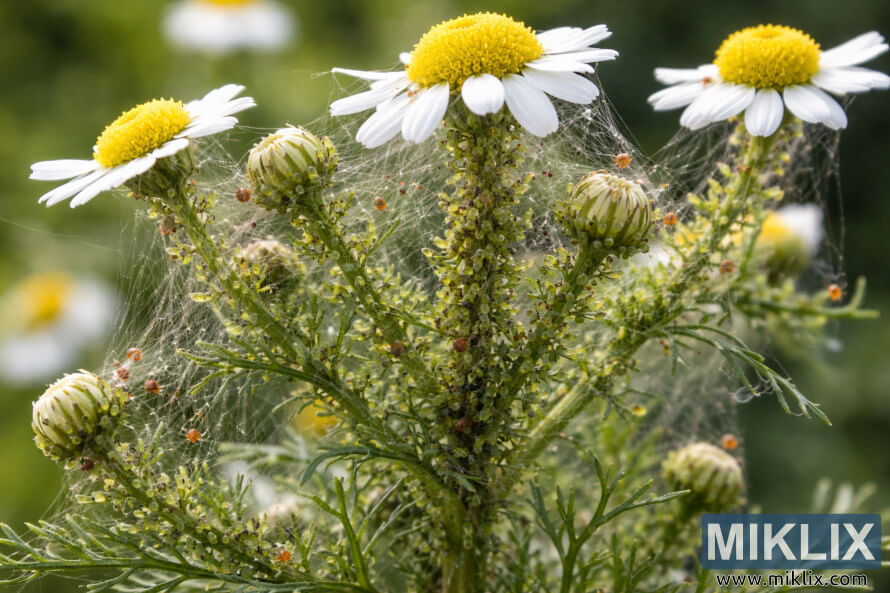
Aphids
These small, soft-bodied insects may cluster on stems and the undersides of leaves, causing distortion and weakening plants.
Solution: Spray plants with a strong stream of water to dislodge aphids. For persistent infestations, apply insecticidal soap or neem oil according to package directions.
Spider Mites
These tiny pests cause stippling on leaves and may create fine webbing. They thrive in hot, dry conditions.
Solution: Increase humidity around plants by misting regularly. Apply insecticidal soap or neem oil for serious infestations.
Click or tap the image for more information and higher resolutions.
Diseases
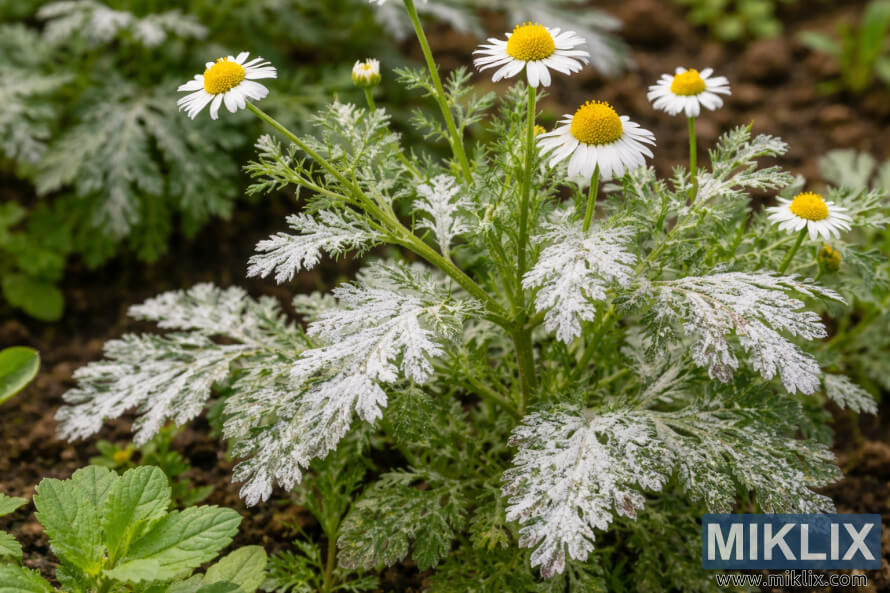
Powdery Mildew
This fungal disease appears as a white, powdery coating on leaves and stems, usually during humid weather.
Solution: Improve air circulation by thinning plants and avoid overhead watering. Remove affected leaves and apply an organic fungicide if necessary.
Root Rot
Excessive moisture can cause roots to rot, leading to wilting despite moist soil.
Solution: Ensure proper drainage and avoid overwatering. For container plants, check that pots have adequate drainage holes.
Click or tap the image for more information and higher resolutions.
Environmental Issues
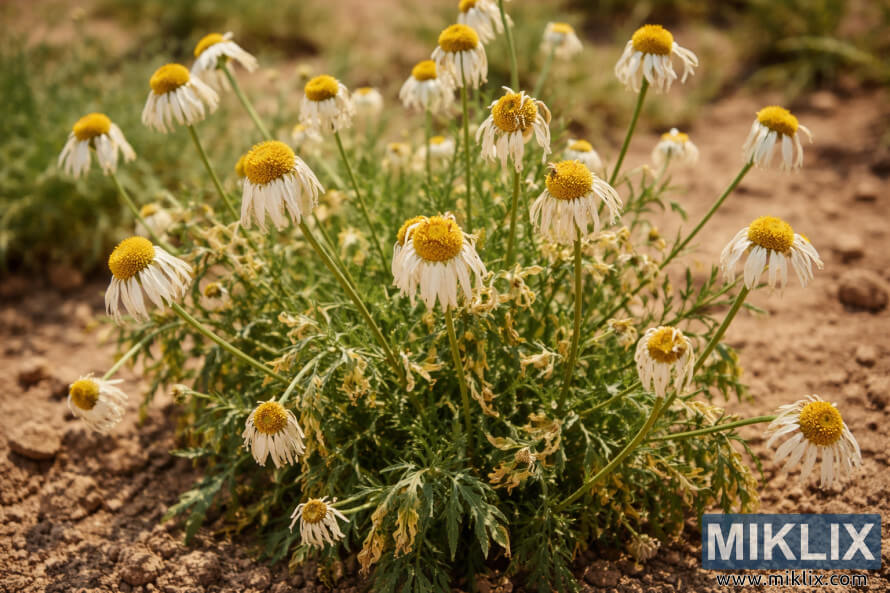
Heat stress can cause chamomile flowers to droop and wilt
Heat Stress
During hot weather, chamomile may wilt or produce fewer flowers.
Solution: Provide afternoon shade in hot climates, mulch to keep roots cool, and ensure consistent watering during heat waves.
Leggy Growth
Insufficient light can cause plants to become stretched and floppy.
Solution: Ensure plants receive at least 6 hours of sunlight daily. Prune leggy growth to encourage bushier habit.
Poor Flowering
Sometimes plants produce lush foliage but few flowers.
Solution: Avoid high-nitrogen fertilizers, ensure adequate sunlight, and regularly harvest flowers to stimulate more blooms.
Prevention Tip: Many chamomile problems can be prevented with proper spacing for good air circulation, consistent but not excessive watering, and regular monitoring to catch issues early.
Click or tap the image for more information and higher resolutions.
Using Your Homegrown Chamomile
After successfully growing and harvesting your chamomile, it's time to enjoy the fruits of your labor. Here are some of the most popular ways to use your homegrown chamomile:
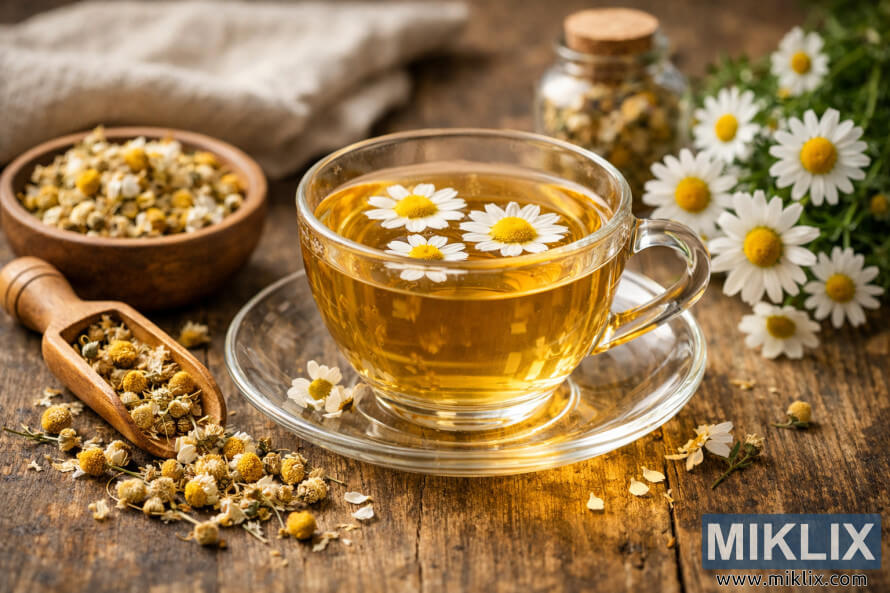
Making Chamomile Tea
The most popular use for chamomile is brewing a soothing cup of tea:
Basic Chamomile Tea Recipe
- Use 1-2 tablespoons of dried chamomile flowers (or 2-3 tablespoons of fresh flowers) per cup of water.
- Bring water to a boil, then remove from heat.
- Add chamomile flowers to a tea infuser or teapot.
- Pour hot water over the flowers.
- Cover and steep for 5 minutes (for mild flavor) or up to 10 minutes (for stronger tea).
- Strain and enjoy plain or with honey and lemon.
Chamomile Iced Tea
- Brew chamomile tea at double strength (twice the flowers).
- Allow to cool to room temperature.
- Add ice cubes and optional sweetener.
- Garnish with lemon slices and fresh mint.
- Store refrigerated for up to 3 days.
Click or tap the image for more information and higher resolutions.
Other Culinary Uses
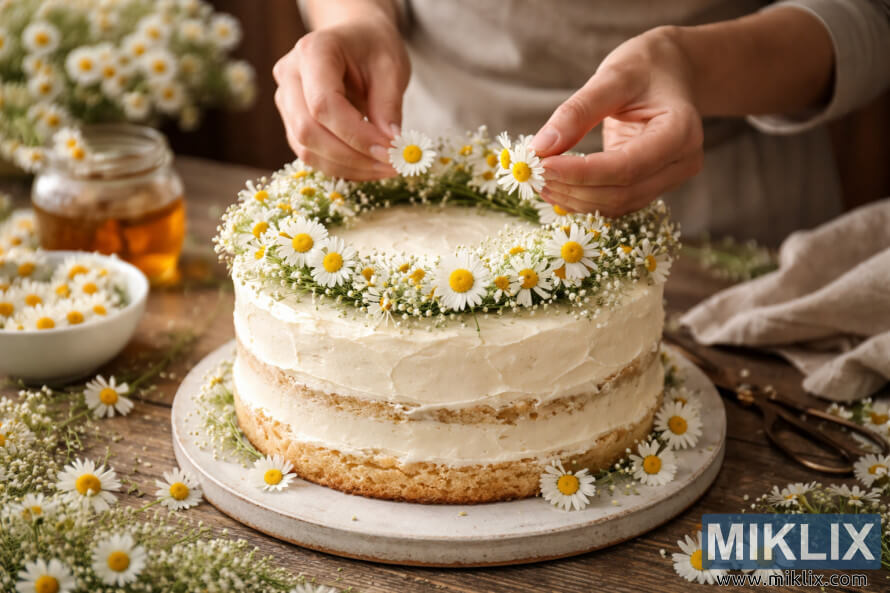
Fresh chamomile flowers make beautiful and edible decorations for desserts
- Baking: Add dried chamomile to cookies, scones, or cake batters for a subtle floral flavor.
- Honey infusion: Steep dried flowers in warm honey for several weeks to create chamomile-infused honey.
- Salads: Sprinkle fresh chamomile flowers in green salads for color and mild flavor.
- Garnish: Use fresh flowers to decorate desserts, cocktails, or other dishes.
- Herbal vinegar: Infuse white wine vinegar with dried chamomile for use in dressings and marinades.
Click or tap the image for more information and higher resolutions.
Wellness Applications
Chamomile has been used traditionally for various wellness purposes:
Always consult with a healthcare professional before using chamomile or any herb for medicinal purposes, especially if you have allergies to plants in the daisy family, are pregnant or nursing, or are taking medications.
Relaxation and Sleep
- Drink chamomile tea 30-45 minutes before bedtime.
- Create chamomile sachets to place under your pillow.
- Add dried flowers to a warm bath for a relaxing soak.
Skin Care
- Make a strong chamomile tea, cool it, and use as a facial toner.
- Create a chamomile compress for irritated skin by soaking a cloth in cooled tea.
- Add chamomile-infused oil to homemade balms and salves.
Conclusion
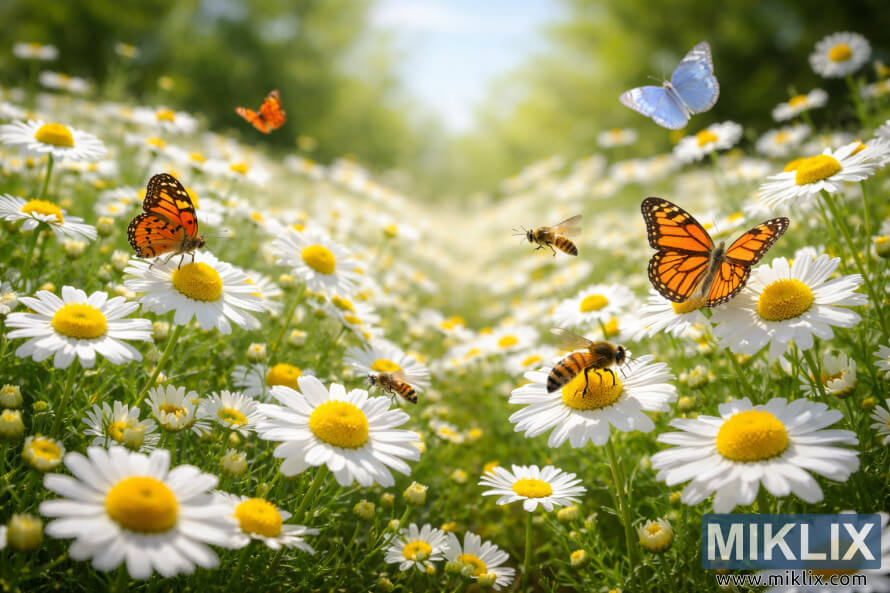
Growing chamomile in your garden offers a wealth of rewards beyond its charming appearance. From the calming cups of tea that help you unwind after a long day to its ability to attract beneficial insects and complement neighboring plants, chamomile truly earns its place in any garden.
Remember that growing chamomile is a journey rather than a destination. Each season brings new learning opportunities as you observe how this versatile herb responds to your unique garden conditions. Don't be afraid to experiment with different growing locations, companion plants, or harvesting techniques to discover what works best in your environment.
Whether you've chosen the annual German chamomile for its abundant tea flowers or the perennial Roman chamomile for its aromatic ground cover, you've added a plant that connects you to thousands of years of herbal tradition while providing practical benefits for your modern life. As you sip your first cup of tea made from flowers you've grown yourself, you'll understand why this humble herb has been cherished by gardeners and herbalists throughout history.
Click or tap the image for more information and higher resolutions.
Frequently Asked Questions
How long does it take for chamomile to grow from seed to flower?
German chamomile typically takes 6-8 weeks from seed to first flower when grown in optimal conditions. The plants will continue to produce flowers throughout the growing season, often for 3-4 months. Roman chamomile may take slightly longer to establish but will return year after year as a perennial.
Can I grow chamomile indoors?
Yes, chamomile can be grown indoors in containers, though it may not flower as prolifically as outdoor plants. Place pots in a south-facing window that receives at least 6 hours of direct sunlight daily. If natural light is insufficient, supplement with grow lights. Indoor plants may need more frequent watering and benefit from occasional misting to increase humidity.
Will chamomile come back every year?
Roman chamomile (Chamaemelum nobile) is a perennial that will return year after year in zones 4-9. German chamomile (Matricaria recutita) is an annual, but it self-seeds readily, often returning on its own the following year if flower heads are allowed to go to seed. In warmer climates, German chamomile may continue growing through mild winters.
Is chamomile safe for everyone to consume?
While chamomile is generally considered safe for most people, those with allergies to plants in the Asteraceae family (including ragweed, chrysanthemums, marigolds, and daisies) may experience allergic reactions. Pregnant women should consult their healthcare provider before consuming chamomile tea, as it has traditionally been used to stimulate menstruation. Always consult with a healthcare professional before using chamomile medicinally, especially if you take medications or have existing health conditions.
How many chamomile plants do I need for regular tea drinking?
For a regular tea drinker, 3-5 German chamomile plants should provide enough flowers for daily consumption. Each plant can produce hundreds of flowers over a growing season. If you plan to dry and store flowers for year-round use, consider planting 8-10 plants. Remember that each flower is harvested individually, so more plants mean less time spent harvesting to achieve the same quantity.
Further Reading
If you enjoyed this post, you may also like these suggestions:
- A Complete Guide to Growing Ginger at Home
- The Complete Guide to Growing Basil: From Seed to Harvest
- How to Grow Rosemary: Your Complete Growing Guide