
Image: Common Pest Problems on Chive Plants and Organic Solutions
Published: January 29, 2026 at 8:54:44 PM UTC
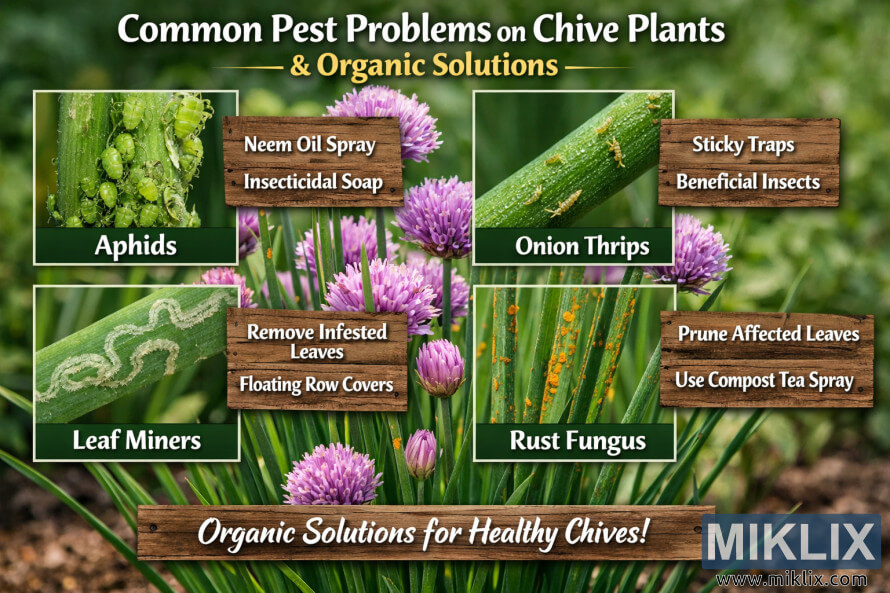
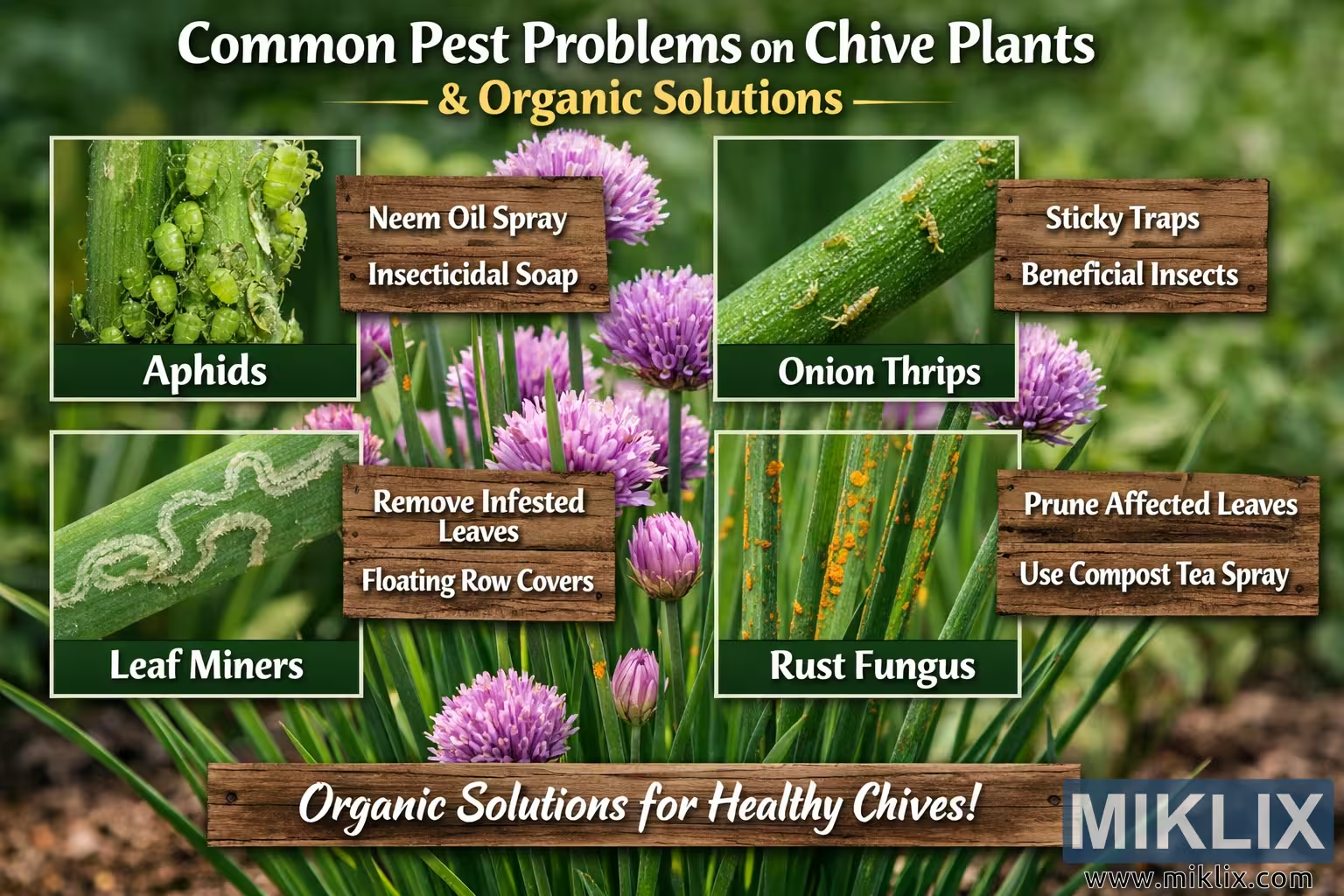
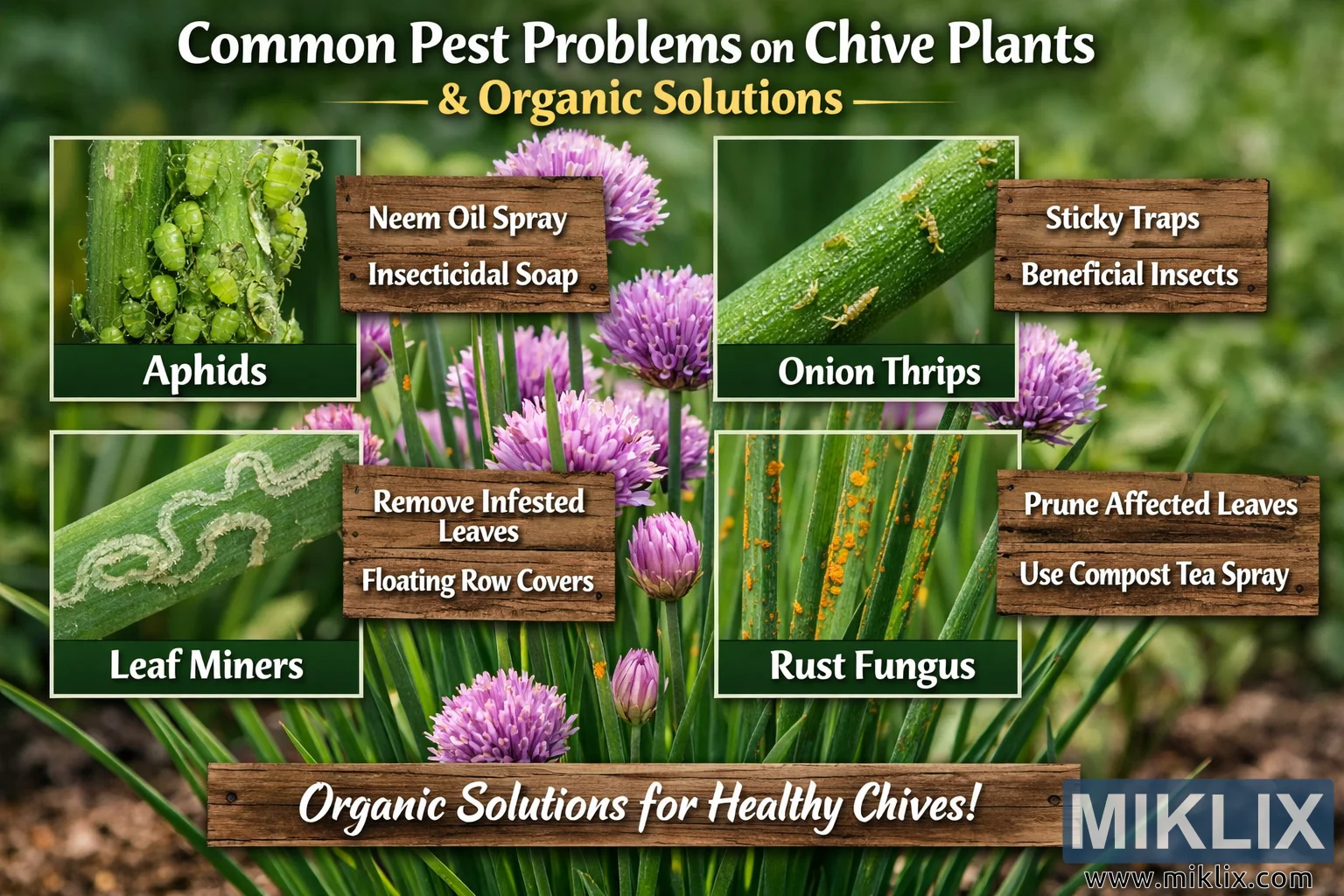
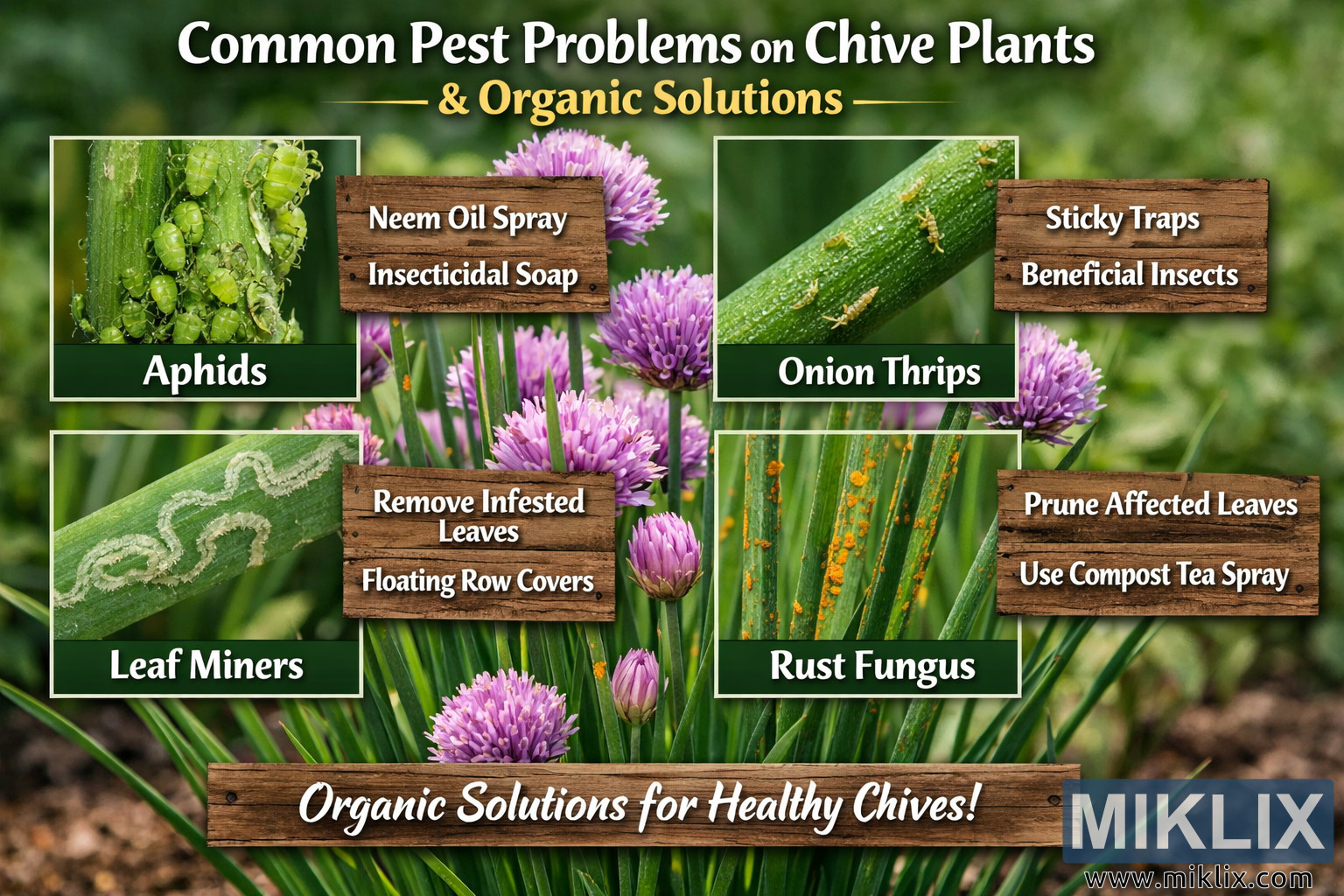
Educational garden infographic illustrating common chive plant pests and organic control methods such as neem oil, sticky traps, pruning, and compost tea.
Available versions of this image
The image files available for download below are less compressed and higher resolution - and as a result of that, higher quality - than the images embedded in articles and pages on this website, which are more optimized for file size in order to reduce bandwidth consumption.
Regular size (1,536 x 1,024)
Large size (3,072 x 2,048)
Very large size (4,608 x 3,072)
Extra large size (6,144 x 4,096)
Comically large size (1,048,576 x 699,051)
- Still uploading... ;-)
Image description
The image is a high-resolution, landscape-oriented educational infographic focused on common pest problems affecting chive plants and practical organic solutions to manage them. The background features a lush, sunlit garden scene filled with healthy green chive leaves and vibrant purple chive blossoms in full bloom, creating a natural and inviting gardening atmosphere. The overall color palette is dominated by fresh greens, soft purples, and earthy browns, reinforcing the organic and eco-friendly theme.
At the top center of the image, a bold title reads "Common Pest Problems on Chive Plants & Organic Solutions," displayed in clear, easy-to-read lettering. The title is visually anchored against the blurred garden backdrop, ensuring strong contrast and legibility.
The infographic is divided into four main sections, each highlighting a specific pest issue commonly found on chives. Each section includes a close-up photographic image of the pest damage, a label identifying the pest, and a rustic wooden sign listing recommended organic control methods.
The first section focuses on aphids, shown as clusters of small green insects densely packed along a chive stem. The accompanying wooden sign lists organic treatments such as neem oil spray and insecticidal soap, emphasizing gentle but effective pest control.
The second section highlights onion thrips, depicted as tiny, slender insects on a chive leaf surface. The suggested solutions include the use of sticky traps and beneficial insects, promoting natural biological control.
The third section addresses leaf miners, illustrated by pale, winding trails within the chive leaves where larvae have tunneled. The organic remedies shown recommend removing infested leaves and using floating row covers to prevent future infestations.
The fourth section covers rust fungus, characterized by orange-brown spots scattered along the chive leaves. The wooden sign advises pruning affected leaves and applying compost tea spray to improve plant health and resistance.
At the bottom of the image, a wide wooden banner reinforces the message with the phrase "Organic Solutions for Healthy Chives!" The overall layout is clean, well-balanced, and visually engaging, making the image suitable for educational use in gardening blogs, websites, presentations, or printed materials aimed at home gardeners and organic farming enthusiasts.
The image is related to: A Guide to Growing Chives in Your Own Garden