
A Guide to Growing Chives in Your Own Garden
Published: January 29, 2026 at 8:54:44 PM UTC
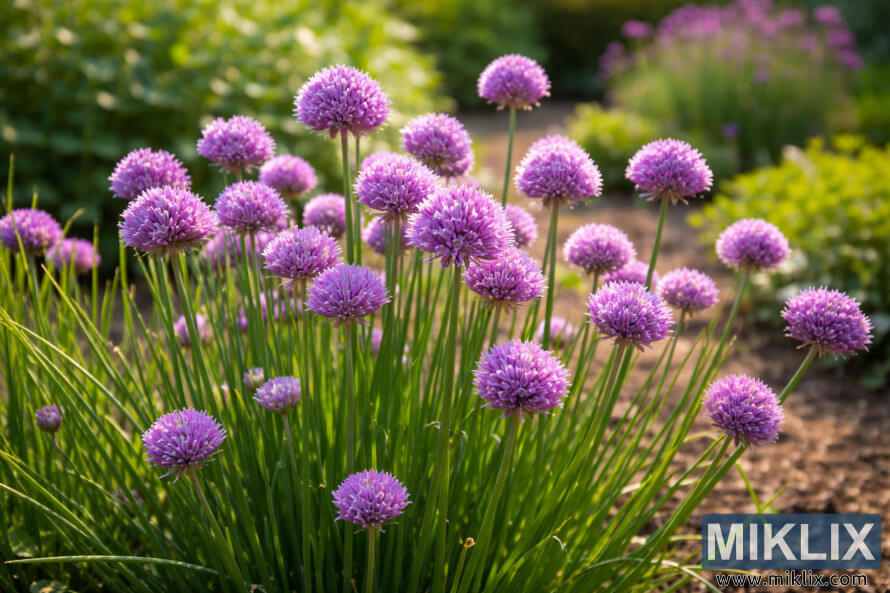
Chives are one of the most rewarding herbs you can grow in your garden. These perennial plants offer a mild onion flavor that enhances countless dishes, while their beautiful purple blooms add visual interest to any garden space.
Click or tap the image for more information and higher resolutions.
Whether you're a seasoned gardener or just starting out, chives are remarkably easy to grow and maintain. In this comprehensive guide, we'll walk you through everything you need to know to successfully grow, harvest, and use chives from your own garden.
About Chives: A Versatile Garden Herb
Chives (Allium schoenoprasum) are cool-season, cold-tolerant perennial herbs that belong to the onion family. These hardy plants grow in clumps, producing slender, hollow green leaves that reach 10-15 inches in height. In late spring and early summer, they develop beautiful spherical flowers in shades of purple or pink that are not only ornamental but also edible.
There are two main varieties of chives that home gardeners commonly grow:
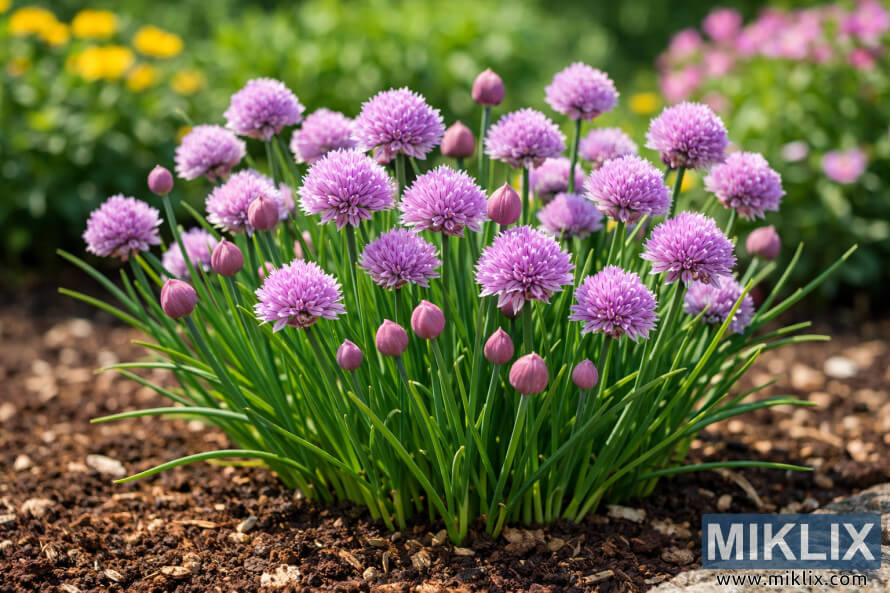
Common Chives (Allium schoenoprasum)
These feature tubular, blue-green leaves with a mild onion flavor. Their purple, pink, or occasionally white flowers bloom in late spring. Common chives are extremely cold-hardy, surviving in zones 3-9, making them suitable for most North American gardens.
Click or tap the image for more information and higher resolutions.
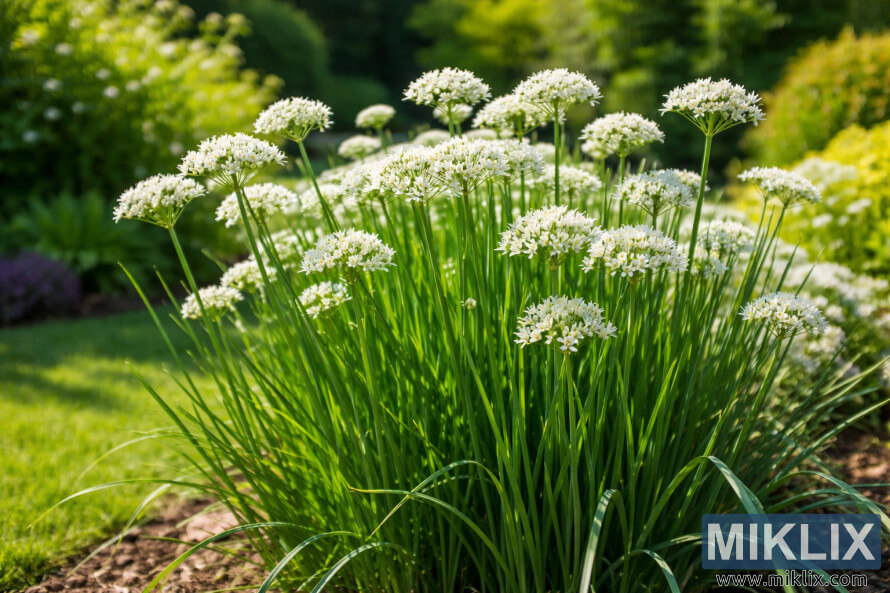
Garlic Chives (Allium tuberosum)
Also known as Chinese chives, these have flat, wider leaves with a distinct garlic flavor. They produce white star-shaped flowers later in the summer. Garlic chives are slightly less cold-hardy (zones 4-9) but equally easy to grow in most regions.
Beyond their culinary uses, chives offer several benefits in the garden. They act as excellent companion plants, deterring pests like aphids and Japanese beetles from vulnerable vegetables. Their early spring growth provides a welcome splash of green when many other plants are just waking up, and their flowers attract beneficial pollinators to your garden.
Click or tap the image for more information and higher resolutions.
Getting Started: Seeds vs. Divisions
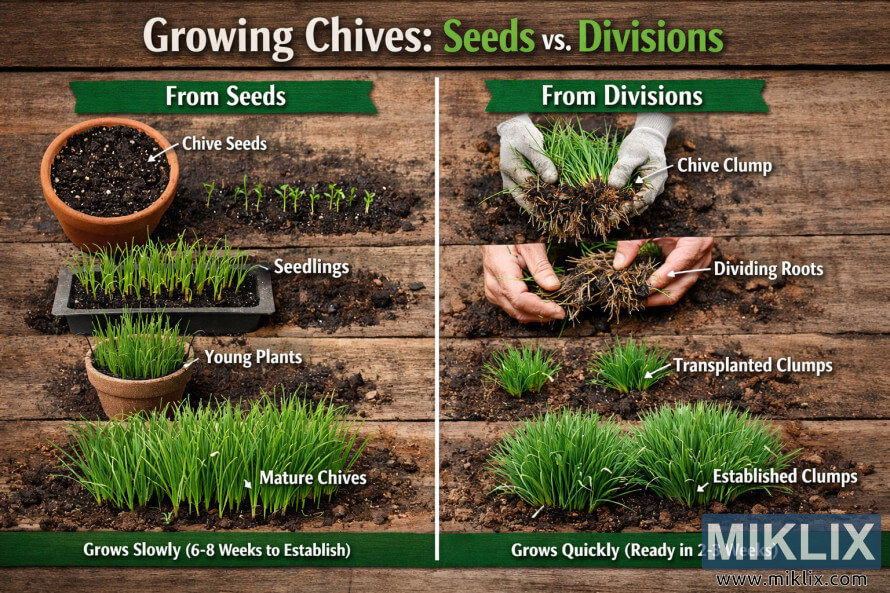
When starting your chive garden, you have two main options: growing from seed or planting divisions/transplants. Each method has its advantages, and your choice may depend on your timeline and gardening experience.
Growing from Seed
- More economical option
- Greater variety selection
- Takes longer to establish (60-90 days to harvest)
- Best started indoors 6-8 weeks before last frost
- Can be direct-sown after danger of frost has passed
- Seeds remain viable for 2-3 years
Growing from Divisions/Transplants
- Faster establishment (30 days to first harvest)
- Easier for beginners
- Can divide existing plants every 3-4 years
- Available at garden centers in spring
- Can be shared among gardening friends
- Maintains characteristics of parent plant
The ideal planting times for chives are early spring (4-6 weeks before the last frost) or early fall (in milder climates). As cool-season perennials, they establish best when temperatures are moderate rather than during the heat of summer.
Click or tap the image for more information and higher resolutions.
Site and Soil Requirements
Creating the right growing environment is crucial for healthy, productive chives. While these herbs are quite adaptable, they'll thrive when given optimal conditions.
Light Requirements
Chives grow best in full sun (6+ hours of direct sunlight daily) but will tolerate partial shade, especially in hotter climates where afternoon shade can be beneficial. In very hot regions, providing some protection from intense afternoon sun can prevent leaf scorching during summer months.
Soil Preferences
For optimal growth, chives prefer:
- Well-draining soil that doesn't stay soggy
- Moderately fertile soil with plenty of organic matter
- Slightly acidic to neutral pH (6.0-7.0)
- Consistent moisture without waterlogging
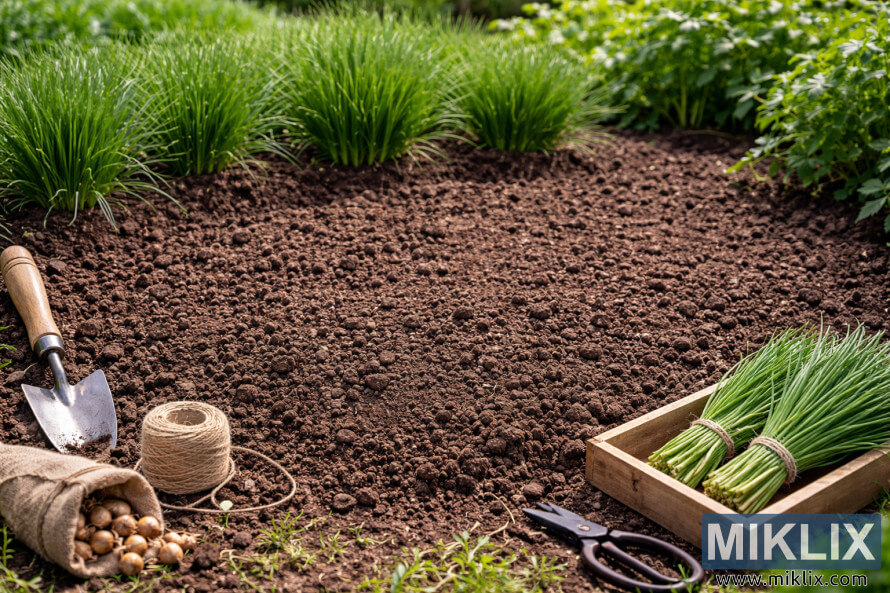
Preparing Your Soil
Before planting, improve your garden soil by incorporating:
- 4-6 inches of well-aged compost or organic matter
- A light application of balanced organic fertilizer
- Amendments to adjust pH if necessary (based on soil test results)
If your native soil is heavy clay or very sandy, raised beds or containers can provide better growing conditions for chives. Container growing is also an excellent option for those with limited space or who want to bring plants indoors during winter in colder regions.
Click or tap the image for more information and higher resolutions.
Planting Instructions
Whether you're starting from seed or planting divisions, proper planting technique will help ensure successful establishment of your chives.
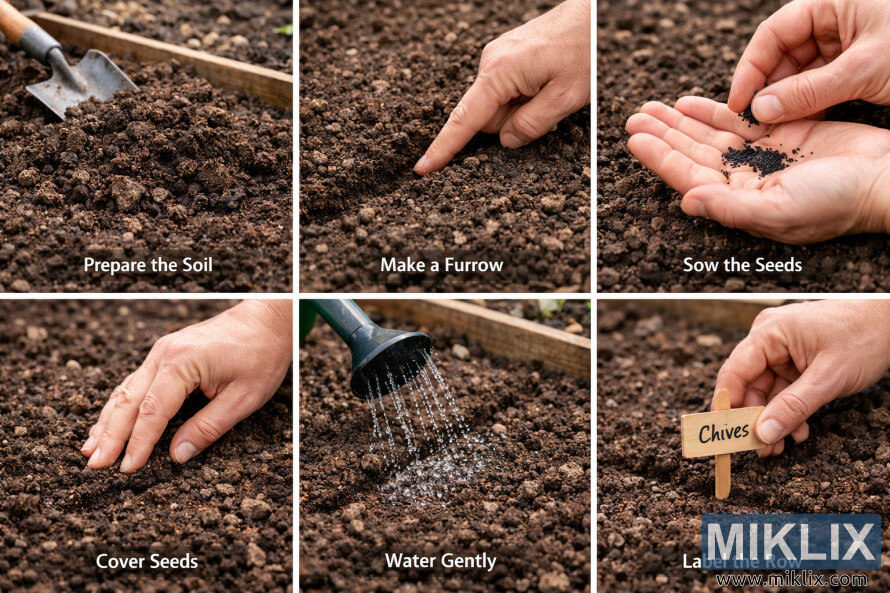
Planting Chive Seeds
- Prepare your garden bed by loosening soil to a depth of 6-8 inches.
- Sow seeds no more than ¼ inch deep in rows or scattered in patches.
- Space seeds about 2 inches apart initially.
- Cover lightly with soil and water gently but thoroughly.
- Keep soil consistently moist until germination, which typically takes 10-14 days.
- Once seedlings reach 2-3 inches tall, thin them to stand 4-6 inches apart.
Planting Divisions or Transplants
- Dig holes approximately 4-6 inches deep and wide.
- Space holes 8-12 inches apart to allow mature plants room to spread.
- Place the division or transplant in the hole, keeping the crown at soil level.
- Backfill with soil, firming gently around the plant.
- Water thoroughly after planting to eliminate air pockets.
- Apply a thin layer of mulch around (but not touching) the plant stems.
For container planting, choose pots at least 6-8 inches deep with drainage holes. A single chive plant can start in a 6-inch pot, while multiple plants need larger containers with 8-12 inches between them.
Click or tap the image for more information and higher resolutions.
Care & Maintenance
One of the greatest advantages of growing chives is their relatively low maintenance requirements. With just a few simple care practices, your chive plants will thrive for years.
Watering
Chives prefer consistent moisture but don't like soggy conditions. Follow these watering guidelines:
- Water when the top inch of soil feels dry to the touch
- Provide approximately 1 inch of water per week (including rainfall)
- Water at the base of plants to keep foliage dry
- Increase watering during hot, dry periods
- Reduce watering in fall as plants prepare for dormancy
Fertilizing
Chives aren't heavy feeders and too much fertilizer can actually reduce their flavor. For best results:
- Apply a light application of balanced organic fertilizer in early spring
- Side-dress with compost once per season
- Avoid high-nitrogen fertilizers that promote leaf growth at the expense of flavor
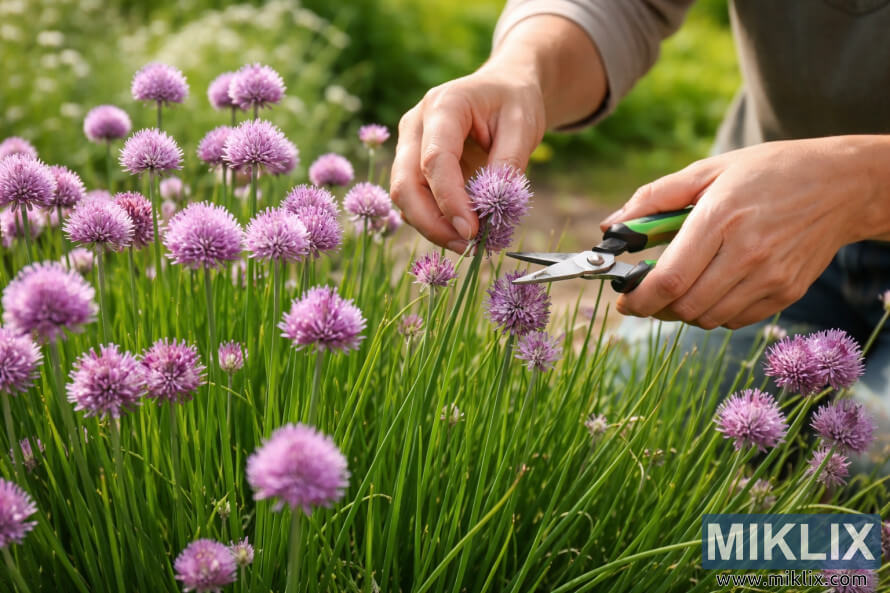
Deadheading and Dividing
To maintain healthy, productive plants:
- Remove flower heads after blooming unless you want them to self-seed
- Divide established clumps every 3-4 years in early spring
- Replant divisions 8-12 inches apart
- Share extra divisions with friends or expand your herb garden
Click or tap the image for more information and higher resolutions.
Winter Care
In most growing zones, chives are reliably perennial with minimal winter protection:
- Apply a light mulch around plants after the ground freezes
- In containers, move pots to a protected location or bury in garden soil
- Cut back foliage after it dies back naturally in fall
- Expect new growth to emerge early in spring
Harvesting & Using Chives
Harvesting chives properly ensures continued growth and the best flavor for your culinary creations.
When to Harvest
You can begin harvesting chives once the plants reach about 6 inches in height:
- First harvest typically occurs 30 days after transplanting or 60 days after seeding
- Harvest throughout the growing season as needed
- For best flavor, harvest in the morning after dew has dried
- Flowers can be harvested when fully open but still vibrant in color
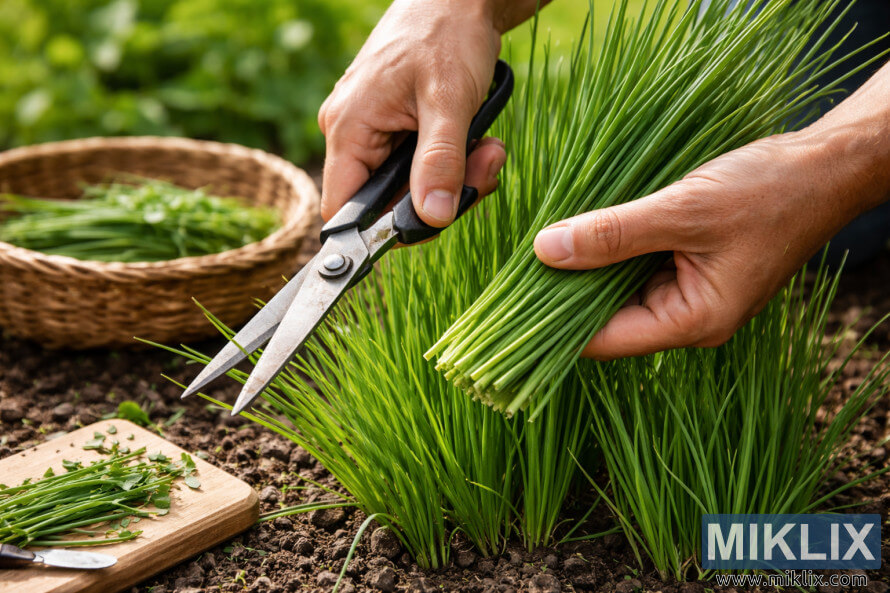
How to Harvest
The proper harvesting technique encourages continued growth:
- Use clean, sharp scissors or garden shears
- Cut leaves 1-2 inches above soil level
- Harvest from the outside of the clump inward
- Take no more than one-third of the plant at once
- Allow plants to regrow before harvesting again
Click or tap the image for more information and higher resolutions.
Using Fresh Chives
Chives are best used fresh for maximum flavor:
- Add to dishes at the end of cooking to preserve flavor
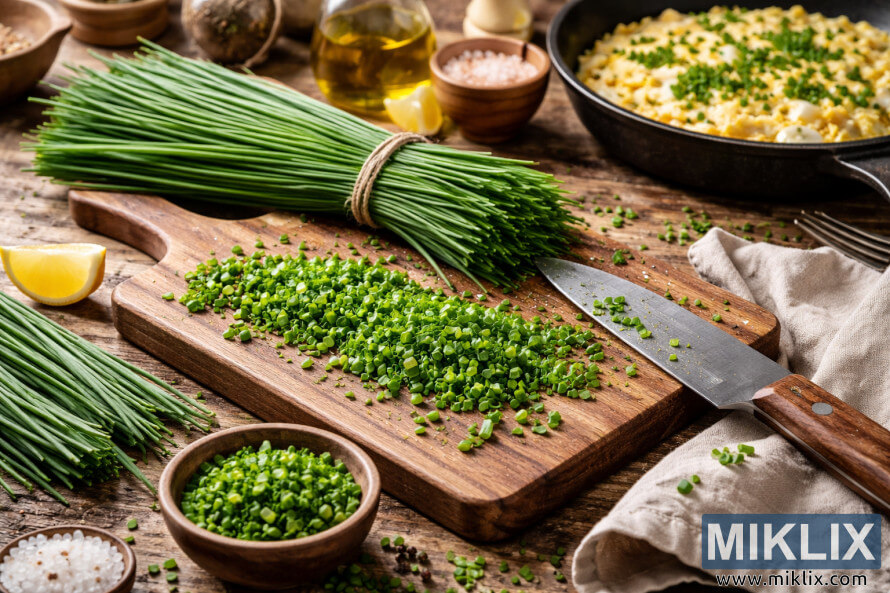
- Sprinkle over eggs, potatoes, soups, and salads
- Mix into butter, cream cheese, or sour cream for herb spreads
- Use flowers as edible garnishes or in herb vinegars
Preserving Chives
To enjoy chives year-round:
- Freeze: Chop fresh chives and freeze in ice cube trays with water or oil
- Dry: While flavor diminishes when dried, it's possible in a dehydrator at low temperature
- Infuse: Place flowers in vinegar for a beautiful purple-tinted, flavored vinegar
Common Problems & Solutions
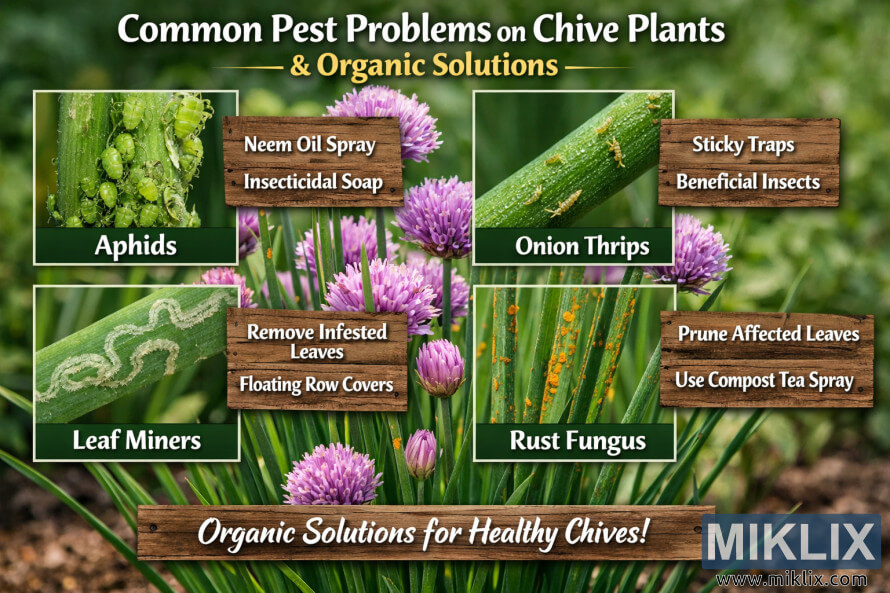
While chives are generally trouble-free, they can occasionally face challenges. Here's how to identify and address common issues:
Pest Problems
- Aphids: Small green or black insects that cluster on new growth. Control with a strong spray of water or insecticidal soap.
- Thrips: Tiny insects that cause stippling on leaves. Use neem oil or introduce beneficial predators.
- Onion Flies: Lay eggs at the base of plants. Prevent with row covers during egg-laying season.
Disease Issues
- Downy Mildew: Appears as yellow spots on leaves. Improve air circulation and avoid overhead watering.
- Rust: Orange-brown pustules on leaves. Remove affected foliage and ensure proper spacing.
- Root Rot: Caused by overwatering. Ensure well-draining soil and proper watering practices.
Growing Challenges
- Leggy Growth: Indicates insufficient light. Move to a sunnier location.
- Reduced Flavor: Often caused by over-fertilization or heat stress. Reduce fertilizer and provide afternoon shade in hot climates.
- Spreading Too Much: Remove flower heads before they set seed to prevent self-sowing.
- Declining Growth: Plants may need division if they've been growing in the same spot for 3-4 years.
Organic Pest Control Tip: Interplant chives with carrots, tomatoes, or roses to help repel pests from these companion plants. Chives themselves act as a natural pest deterrent in the garden!
Click or tap the image for more information and higher resolutions.
Companion Planting with Chives
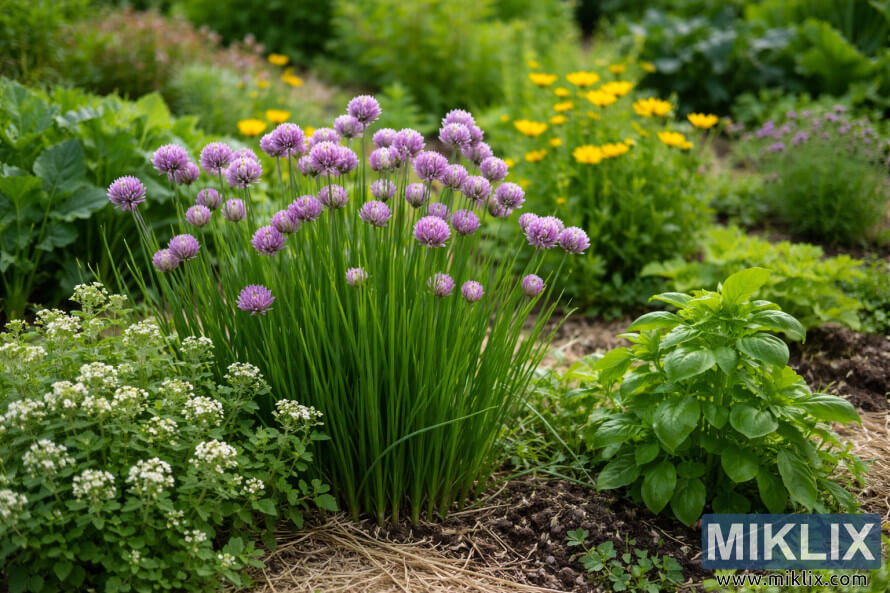
Chives aren't just valuable for their culinary uses—they make excellent companion plants in the garden. Their natural compounds help deter certain pests and can improve the growth and flavor of neighboring plants.
Good Companions for Chives
Consider planting chives near these garden favorites:
Vegetables
- Tomatoes
- Carrots
- Beets
- Lettuce
- Peas
- Broccoli
Fruits
- Strawberries
- Apple trees
- Grapes
Ornamentals
- Roses
- Marigolds
- Nasturtiums
Chives help repel aphids, Japanese beetles, and carrot flies, making them particularly valuable near plants susceptible to these pests. Their flowers also attract beneficial pollinators and predatory insects that help control garden pests naturally.
Plant chives around the perimeter of garden beds or interspersed among vegetables to create a natural pest barrier while adding beauty with their purple blooms.
Click or tap the image for more information and higher resolutions.
Growing Chives in Containers
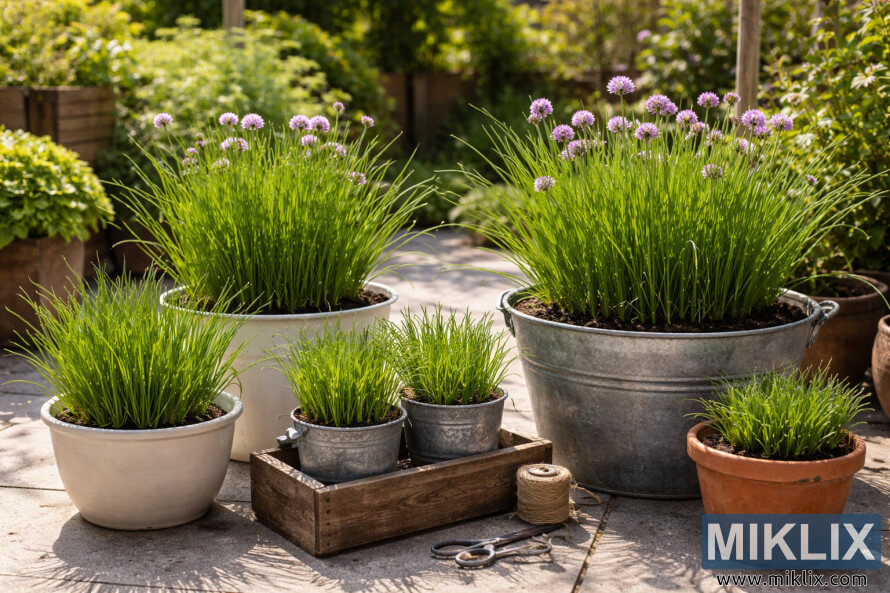
Container growing is an excellent option for chives, especially if you have limited space or want to bring plants indoors during winter months. Chives adapt well to pot culture and can thrive for years with proper care.
Container Selection
- Choose pots at least 6-8 inches deep with drainage holes
- Terra cotta, ceramic, or plastic containers all work well
- A 6-inch pot can accommodate a single plant
- Larger containers can hold multiple plants spaced 6-8 inches apart
Potting Medium
Use a high-quality potting mix that provides:
- Good drainage while retaining adequate moisture
- Sufficient organic matter for nutrients
- Lightweight texture that won't compact over time
Container Care Tips
- Check moisture more frequently than garden-grown plants
- Fertilize lightly once in spring with diluted liquid fertilizer
- Move containers to follow optimal sunlight through seasons
- Protect from extreme heat by providing afternoon shade
- In winter, move containers to a protected location or insulate
Container-grown chives can be particularly convenient for kitchen gardens, allowing you to place them near your cooking area for easy harvesting. They also make attractive additions to mixed herb containers or ornamental plantings on patios and balconies.
Click or tap the image for more information and higher resolutions.
Conclusion: Enjoy Your Chive Harvest
Growing chives is a rewarding experience that offers both culinary and ornamental benefits to your garden. These hardy perennials require minimal care while providing years of fresh harvests, beautiful blooms, and natural pest protection for neighboring plants.
Whether you choose to grow chives from seed or divisions, in garden beds or containers, their adaptability makes them an excellent choice for gardeners of all experience levels. Their early spring emergence, summer flowers, and reliable regrowth make them a garden staple that you'll enjoy season after season.
As you harvest your chives throughout the growing season, experiment with different culinary uses to appreciate their mild onion flavor in various dishes. Don't forget to enjoy their beautiful purple blooms, both in the garden and as edible garnishes for special meals.
With the guidance provided in this article, you're well-equipped to successfully grow, maintain, and harvest chives in your own garden. Happy growing!
Click or tap the image for more information and higher resolutions.
Further Reading
If you enjoyed this post, you may also like these suggestions:
- A Complete Guide to Growing Ginger at Home
- A Complete Guide to Growing Your Own Oregano
- The Complete Guide to Growing Basil: From Seed to Harvest