
Image: Growth Comparison of Direct Sown vs Transplanted Dill Seedlings
Published: January 31, 2026 at 6:39:11 PM UTC
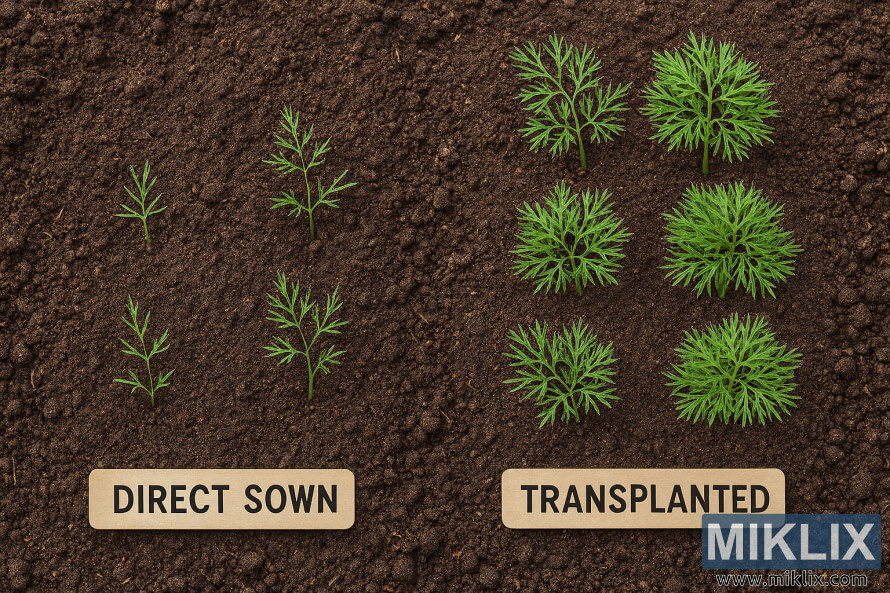
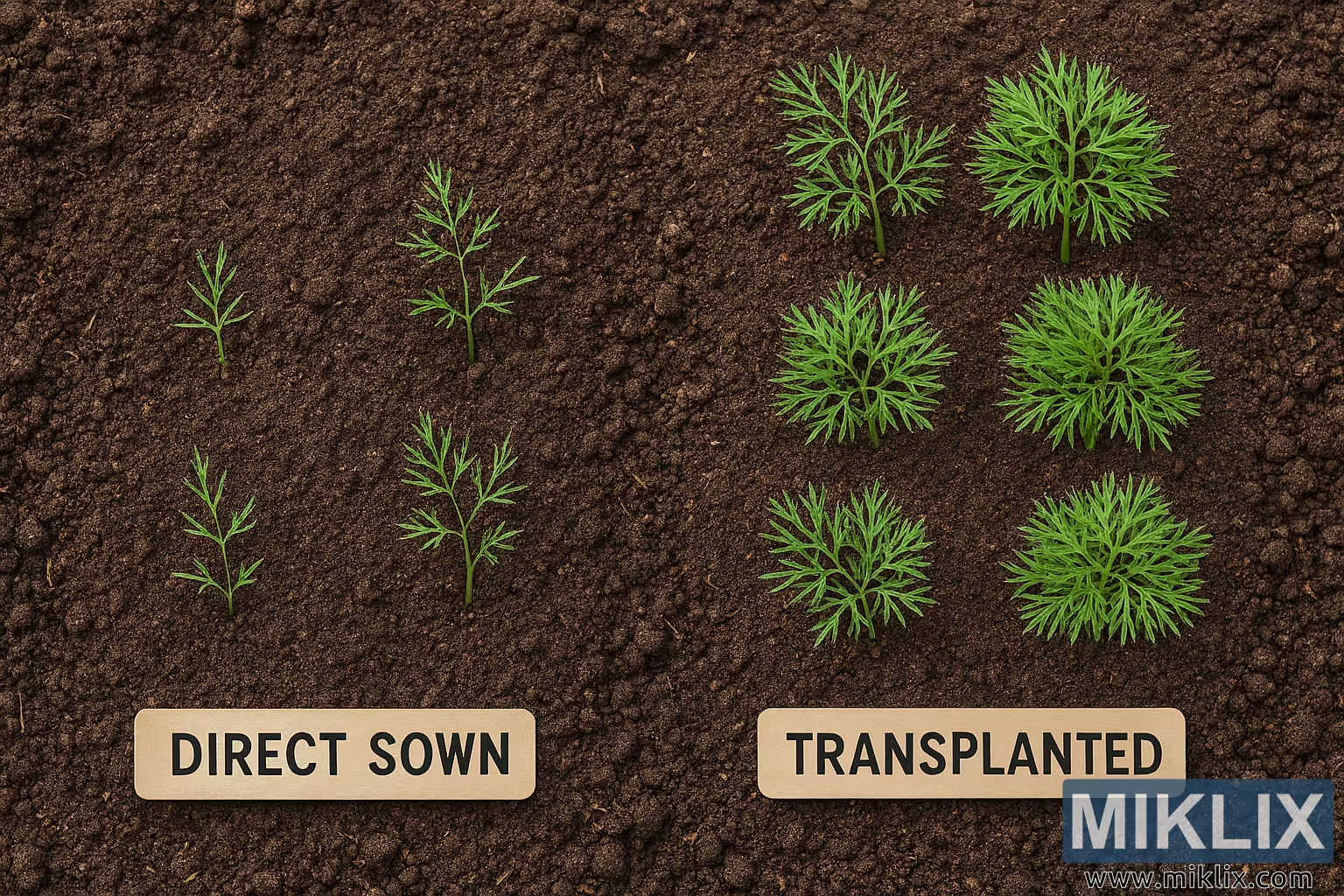
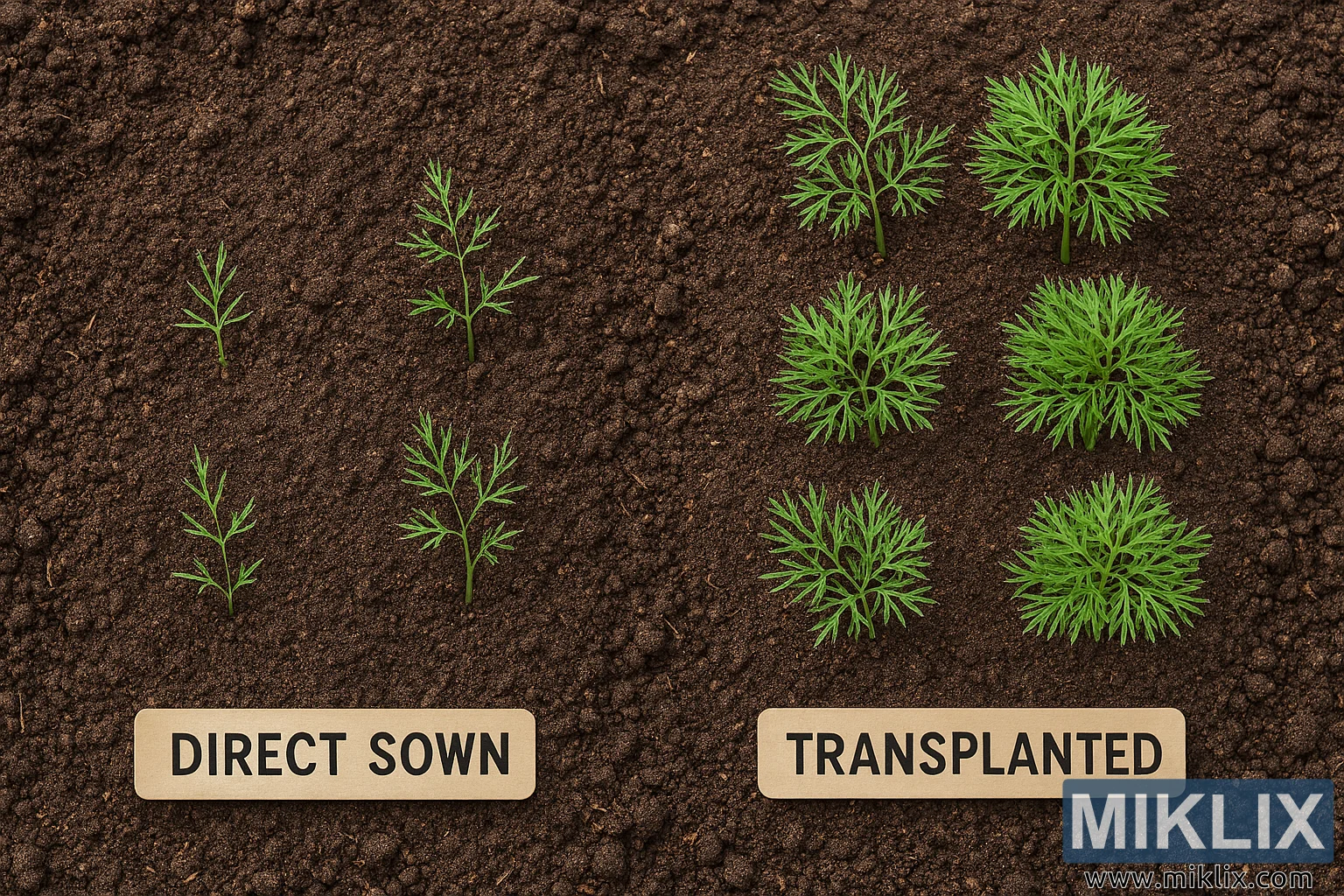
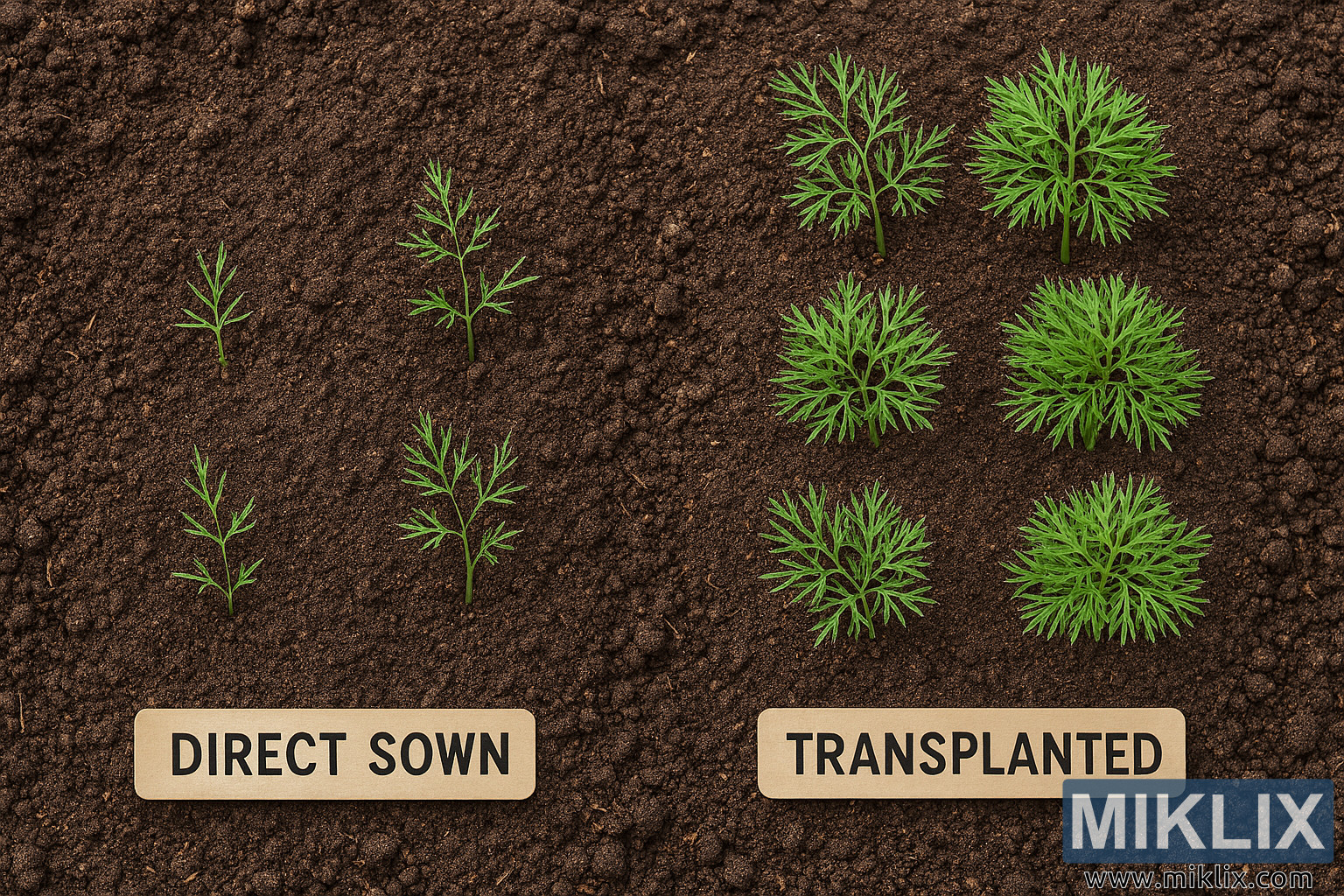
Visual comparison of dill seedlings grown by direct sowing versus transplanting, highlighting differences in size and foliage density.
Available versions of this image
The image files available for download below are less compressed and higher resolution - and as a result of that, higher quality - than the images embedded in articles and pages on this website, which are more optimized for file size in order to reduce bandwidth consumption.
Regular size (1,536 x 1,024)
Large size (3,072 x 2,048)
Very large size (4,608 x 3,072)
Extra large size (6,144 x 4,096)
Comically large size (1,048,576 x 699,051)
- Still uploading... ;-)
Image description
This high-resolution landscape photograph presents a clear horticultural comparison between two methods of cultivating dill seedlings: direct sowing and transplanting. The image is divided into two equal sections, each labeled with beige tags bearing bold black text: "DIRECT SOWN" on the left and "TRANSPLANTED" on the right. These labels are placed at the bottom of each section, providing immediate clarity on the cultivation method depicted.
The soil across both sections is dark brown, slightly clumpy, and textured with small pebbles and organic matter, suggesting a realistic garden bed environment. The lighting is natural and evenly distributed, casting soft shadows that enhance the visibility of the soil texture and the delicate structure of the dill plants.
In the "DIRECT SOWN" section, four dill seedlings are spaced apart and appear at varying stages of early growth. These plants are smaller, with thin, feathery leaves that are bright green but sparse. Their stems are slender, and the overall foliage is minimal, indicating slower development and less vigor. The gaps between the seedlings reveal ample exposed soil, emphasizing the limited spread and density of the direct sown plants.
Conversely, the "TRANSPLANTED" section showcases four dill seedlings that are noticeably larger and more robust. These plants have bushier, denser foliage with multiple branches of feathery, bright green leaves. The stems are thicker, and the overall appearance is more mature and vigorous. Although the seedlings are evenly spaced, their foliage nearly touches, creating a lush and thriving visual impression.
The top-down perspective of the photograph allows for a detailed comparison of plant size, leaf density, and spatial distribution. The composition is symmetrical and clean, with each section occupying equal visual weight. The contrast between the two methods is stark and informative, making the image an effective educational tool for illustrating the impact of cultivation technique on early plant development.
Overall, the image captures the essence of horticultural experimentation and provides a compelling visual narrative about the advantages and limitations of direct sowing versus transplanting dill seedlings. It is ideal for use in gardening guides, educational materials, and agricultural presentations.
The image is related to: A Guide to Growing Dill in Your Own Garden