
A Guide to Growing Dill in Your Own Garden
Published: January 31, 2026 at 6:39:11 PM UTC
Dill is one of the most rewarding herbs you can grow in your garden. With its feathery blue-green foliage and distinctive aroma, this versatile herb adds flavor to countless dishes—from the classic dill pickles to delicate fish preparations, creamy salads, and savory sauces.
Click or tap the image for more information and higher resolutions.
What makes dill particularly appealing for home gardeners is how quickly it grows and how generously it produces. Within just 8 weeks of planting, you can be harvesting fresh dill leaves for your kitchen, and with the right approach, you'll enjoy a continuous supply throughout the growing season.
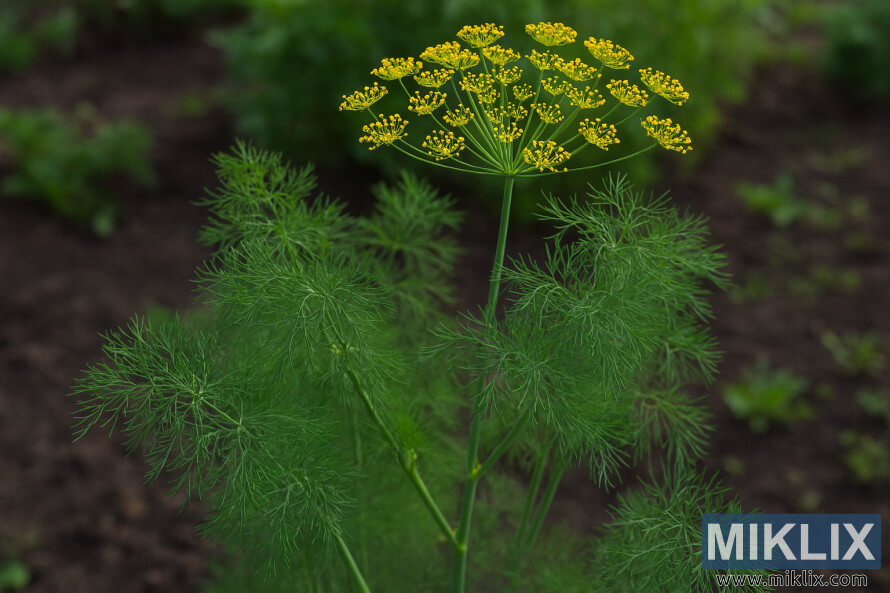
Dill's distinctive feathery foliage and yellow flower umbels make it both functional and ornamental in the garden
Understanding Dill: A Versatile Garden Herb
Dill (Anethum graveolens) is an annual herb in the Apiaceae family, related to parsley, carrots, and fennel. Native to the Mediterranean and southern Russia, dill has been cultivated for thousands of years for both culinary and medicinal purposes. The entire plant is usable—the feathery leaves (often called "dill weed"), the flowers, and the seeds all have distinct flavors and applications in cooking.
Growing up to 2-4 feet tall when mature, dill creates a beautiful vertical element in any garden with its delicate, fern-like foliage. The plant produces small yellow flowers in umbrella-shaped clusters called umbels, which later develop into aromatic seeds. Beyond its culinary value, dill also attracts beneficial insects like butterflies, bees, and predatory wasps that help control garden pests.
Getting Started with Growing Dill
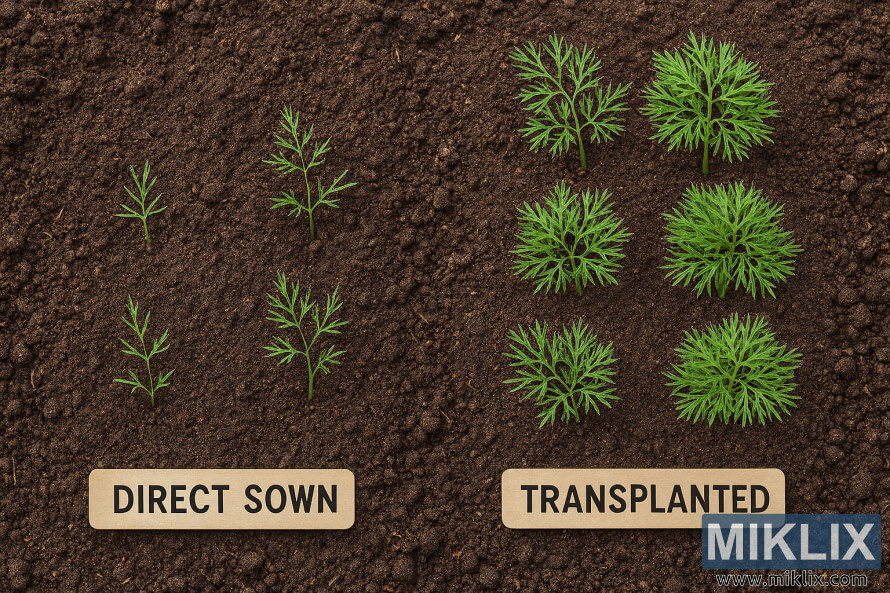
Direct sowing is the recommended method for planting dill due to its taproot
When to Plant Dill
Timing is crucial for successful dill cultivation. As a cool-season herb that prefers mild temperatures, dill grows best when planted at specific times:
- Spring planting: Sow seeds 2-3 weeks after the last spring frost when soil temperatures reach at least 60°F (15°C)
- Summer planting: In hot climates, dill may bolt (flower prematurely) during peak summer heat
- Fall planting: In zones 8-11, you can plant a fall crop 6-8 weeks before the first expected frost
- Succession planting: For continuous harvest, sow new seeds every 2-3 weeks throughout the growing season
Choosing the Ideal Location
Dill thrives in specific growing conditions that mimic its native environment:
Sunlight Requirements
- Full sun (6-8 hours daily) is ideal for robust growth
- In very hot southern climates, light afternoon shade can prevent premature bolting
- Insufficient sunlight results in leggy, weak plants with reduced flavor
Soil Preferences
- Well-draining soil is essential to prevent root rot
- Moderately fertile soil with pH 5.5-6.7
- Sandy loam or amended clay soil with added compost
- Avoid heavy, waterlogged soils that can damage dill's taproot
Click or tap the image for more information and higher resolutions.
Planting Methods for Dill
Direct Sowing (Recommended Method)
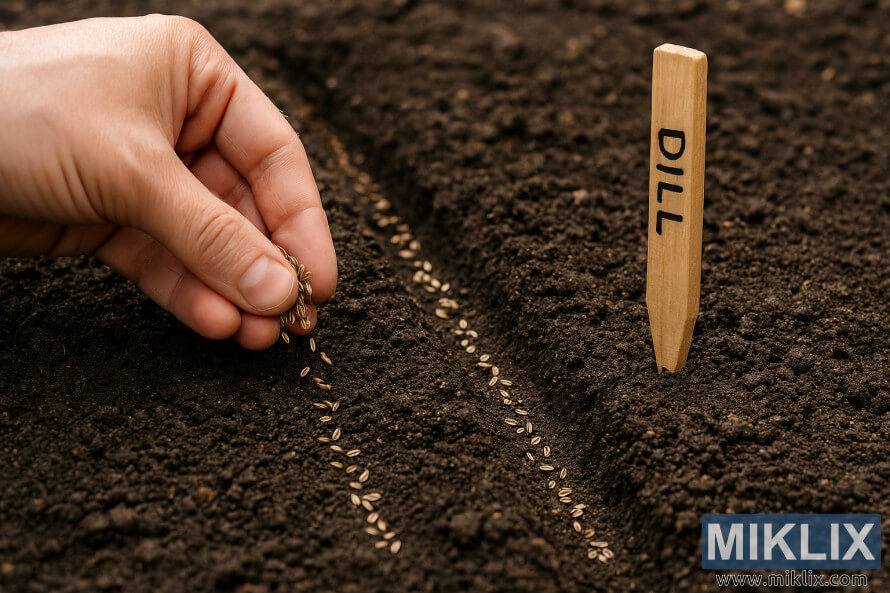
Dill develops a long taproot that doesn't transplant well, making direct sowing the preferred planting method:
- Prepare the soil by removing weeds and breaking up any clumps
- Create shallow furrows about ¼ inch deep and 12-18 inches apart
- Mix dill seeds with fine sand for more even distribution
- Sow seeds thinly along the furrows and cover lightly with soil
- Water gently but thoroughly using a fine spray
- Seedlings should emerge in 7-14 days, depending on soil temperature
- Once seedlings reach 2-3 inches tall, thin them to 9-12 inches apart
Starting Seeds Indoors
While not ideal due to dill's sensitive taproot, you can start seeds indoors if your growing season is short:
- Use biodegradable pots or deep cell trays to minimize root disturbance
- Fill containers with seed-starting mix and moisten thoroughly
- Plant 2-3 seeds per pot, ¼ inch deep
- Place in a warm location (65-70°F) with good light
- Transplant outdoors when seedlings are 2-3 inches tall, being extremely careful not to disturb the roots
- Harden off seedlings by gradually exposing them to outdoor conditions over 7-10 days
Container Growing
Dill can thrive in containers, making it accessible even for gardeners with limited space:
- Choose containers at least 12 inches deep to accommodate dill's taproot
- Ensure containers have adequate drainage holes
- Use high-quality potting mix with added compost
- Consider compact varieties like 'Fernleaf' or 'Dukat' for container growing
- Place containers in a location receiving 6-8 hours of sunlight
- Monitor soil moisture closely as containers dry out faster than garden beds
Click or tap the image for more information and higher resolutions.
Care and Maintenance
Watering Guidelines
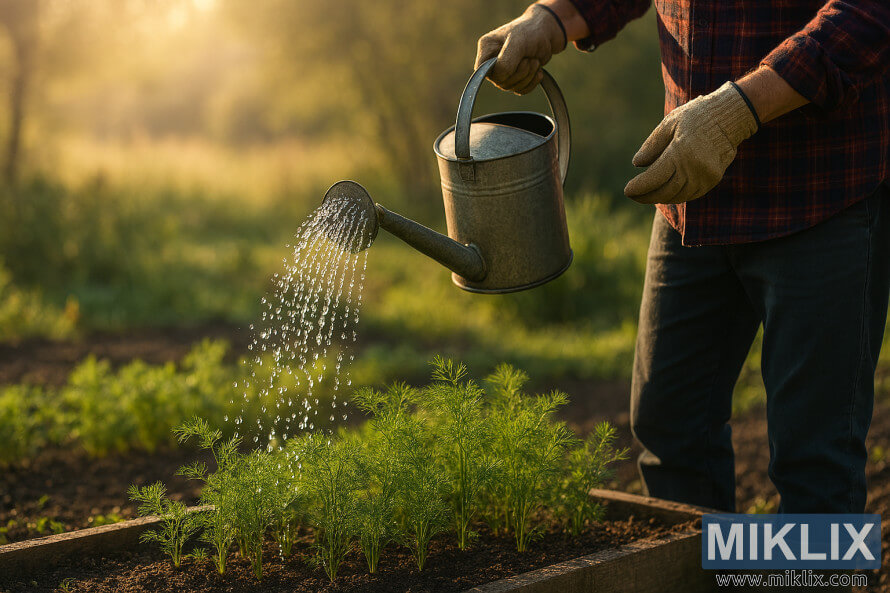
Proper watering is crucial for healthy dill growth. The goal is to maintain consistent soil moisture without waterlogging:
- Water deeply when the top inch of soil feels dry to the touch
- Provide approximately 1-1.5 inches of water per week, adjusting for rainfall
- Water at the base of plants to keep foliage dry and prevent fungal issues
- Mulch around plants with a thin layer of organic material to retain moisture
- Increase watering during hot, dry periods to prevent premature bolting
- Container-grown dill may need daily watering in hot weather
Fertilizing
Dill is a light feeder and typically doesn't require heavy fertilization:
- Prepare soil before planting with compost or well-rotted manure
- Avoid high-nitrogen fertilizers which can reduce essential oil content and flavor
- If growth seems slow, apply a balanced, diluted organic fertilizer once monthly
- For container-grown dill, feed with half-strength liquid fertilizer every 4-6 weeks
Supporting Tall Varieties
Mature dill plants, especially taller varieties like 'Mammoth,' can reach 3-4 feet in height and may require support:
- Install stakes or a small trellis when plants reach about 1 foot tall
- Gently tie stems to supports using soft garden twine
- Place container-grown dill in locations protected from strong winds
- Consider planting dill near a fence or other structure for natural support
Click or tap the image for more information and higher resolutions.
Companion Planting with Dill
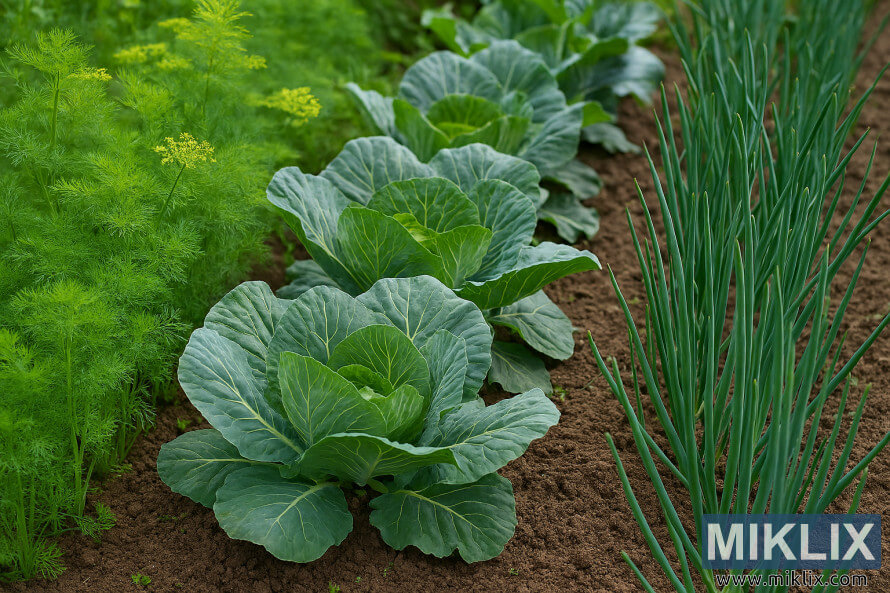
Dill makes an excellent companion for cabbage family plants and onions
Strategic companion planting can enhance dill's growth while benefiting neighboring plants. Dill attracts beneficial insects like ladybugs, hoverflies, and parasitic wasps that help control garden pests.
Good Companions
- Cabbage family (broccoli, Brussels sprouts, cauliflower)
- Onions and garlic
- Lettuce
- Cucumbers (especially for pickling)
- Corn
- Asparagus
Poor Companions
- Carrots (can cross-pollinate and reduce yields)
- Tomatoes (mature dill can inhibit growth)
- Fennel (competes for similar resources)
- Umbellifers like parsley and cilantro (similar pests)
Pollinator Magnet: Allow some dill plants to flower to attract beneficial insects like bees, butterflies, and predatory wasps to your garden. The yellow flower umbels are particularly attractive to pollinators and can increase yields of nearby fruiting vegetables.
Click or tap the image for more information and higher resolutions.
Popular Dill Varieties
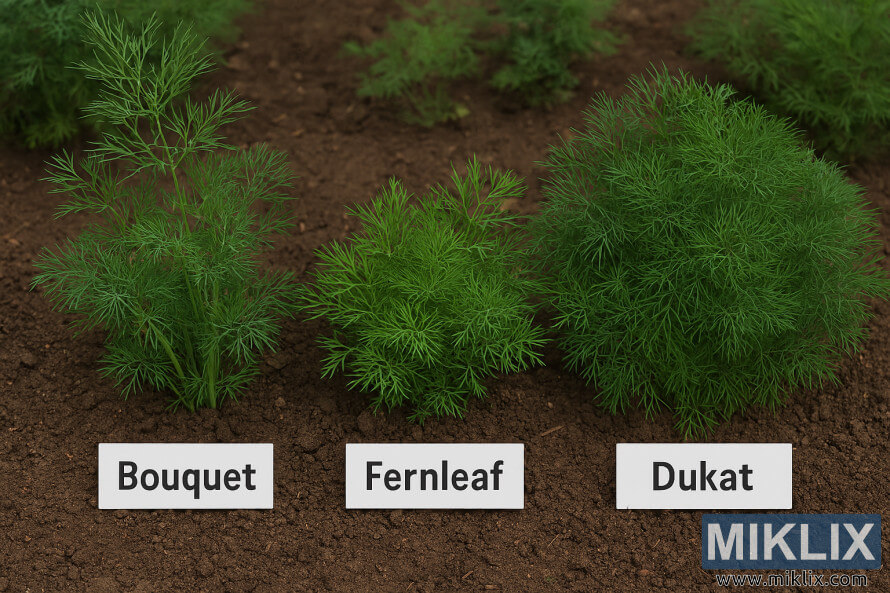
Popular dill varieties: 'Bouquet' (left), 'Fernleaf' (center), and 'Dukat' (right)
Several dill varieties are available to home gardeners, each with unique characteristics suited to different growing conditions and culinary uses:
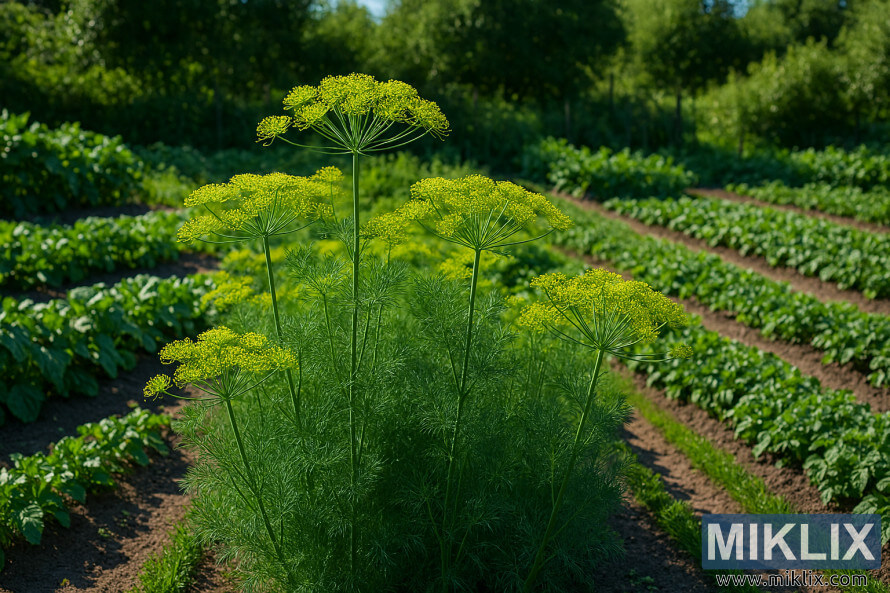
'Bouquet'
A tall, traditional variety reaching 3-4 feet in height. Produces abundant seeds and is excellent for both leaf and seed production. Preferred by commercial growers and ideal for pickling.
- Height: 36-48 inches
- Days to maturity: 60-75
- Best use: Seeds for pickling
Click or tap the image for more information and higher resolutions.
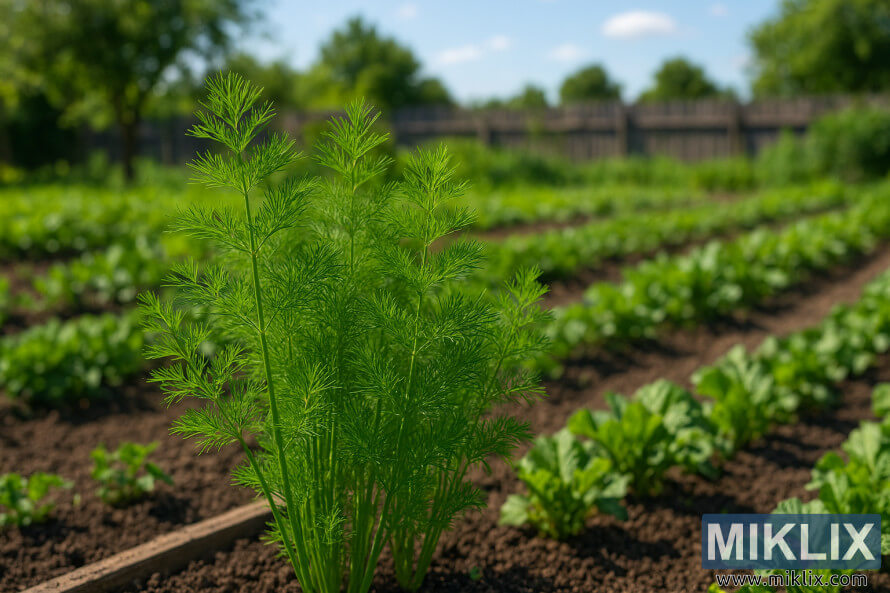
'Fernleaf'
A compact, bushy variety growing only 18-24 inches tall. Slow to bolt and produces more leaves than traditional varieties. Perfect for containers and small gardens. All-America Selections winner.
- Height: 18-24 inches
- Days to maturity: 45-60
- Best use: Fresh leaves
Click or tap the image for more information and higher resolutions.
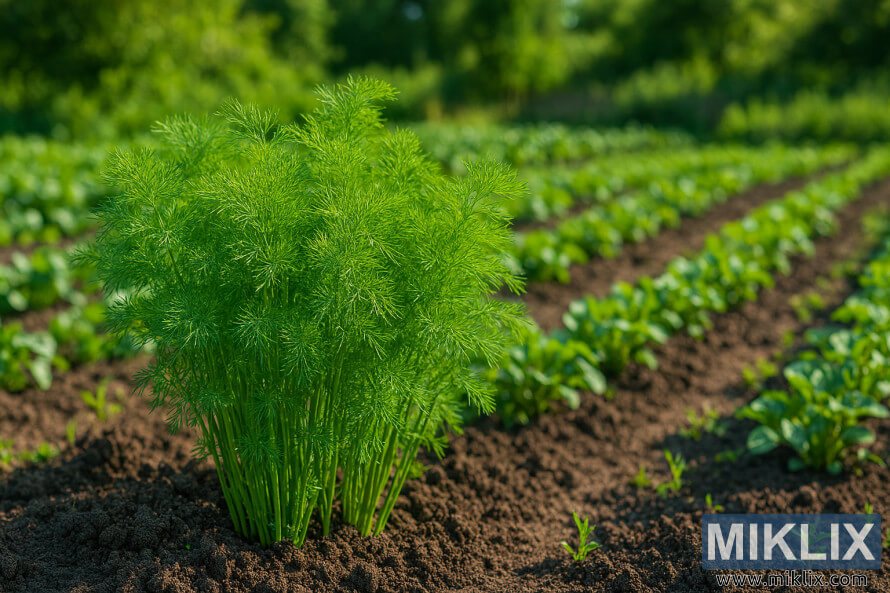
'Dukat' (Tetra)
Prized for its high essential oil content and superior flavor. Produces abundant blue-green foliage and is slower to bolt than other varieties. Excellent choice for fresh culinary use.
- Height: 24-36 inches
- Days to maturity: 50-65
- Best use: Fresh culinary leaves
Click or tap the image for more information and higher resolutions.
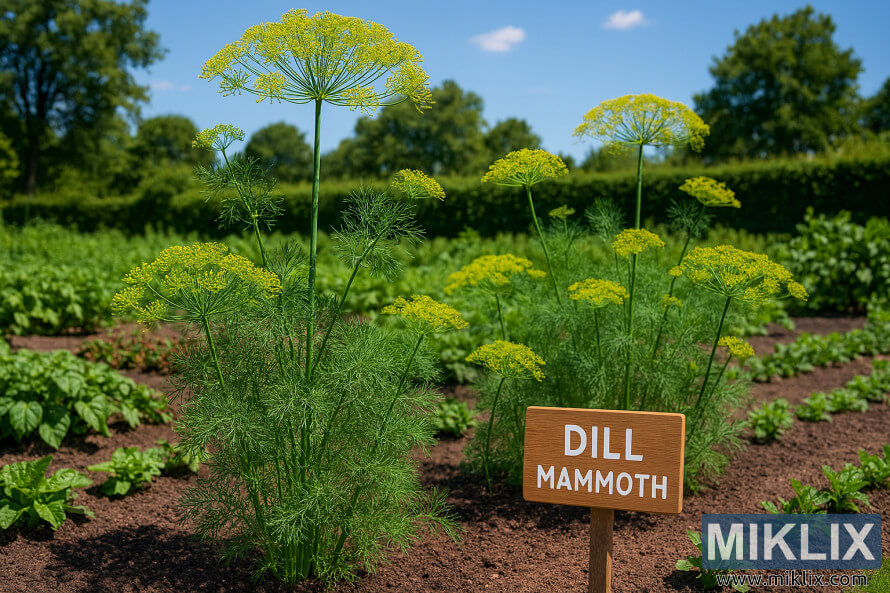
'Mammoth'
The tallest dill variety, reaching up to 5 feet in height. Produces large seed heads and abundant foliage. Great choice for gardeners who want to harvest both leaves and seeds in quantity.
- Height: 48-60 inches
- Days to maturity: 70-85
- Best use: Dual-purpose (leaves and seeds)
Click or tap the image for more information and higher resolutions.
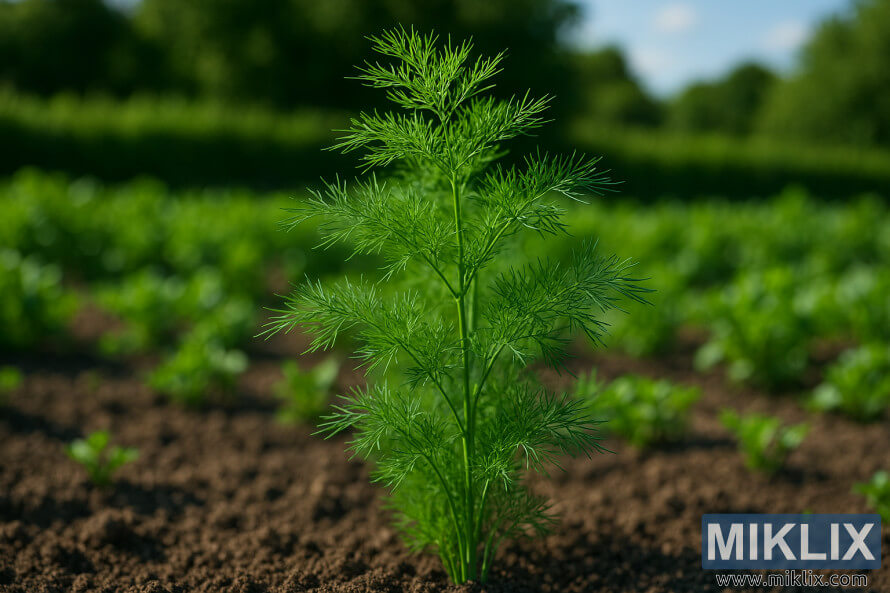
'Superdukat'
An improved version of 'Dukat' with even higher essential oil content. Produces straight, uniform plants with excellent leaf production and outstanding flavor. Germinates quickly and grows rapidly.
- Height: 24-36 inches
- Days to maturity: 45-60
- Best use: Premium culinary leaves
Click or tap the image for more information and higher resolutions.
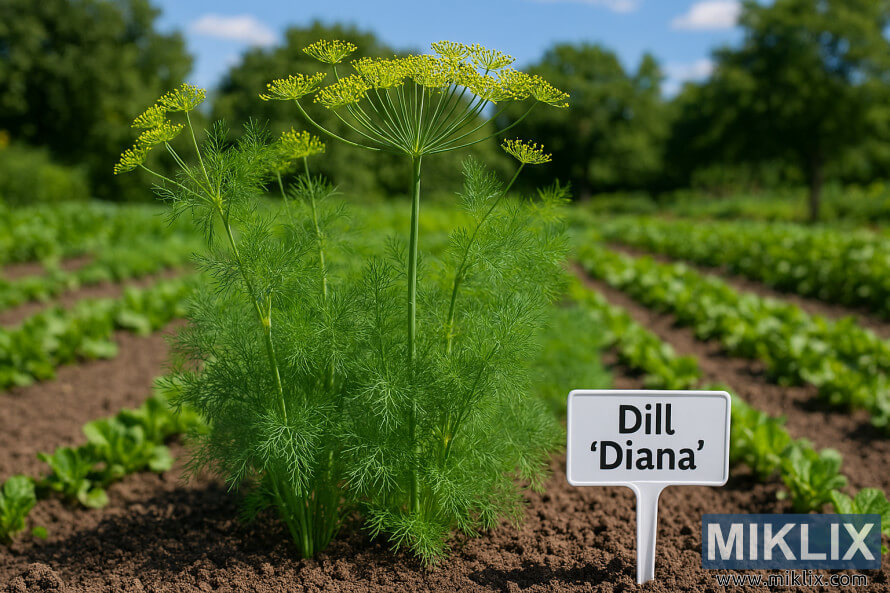
'Diana'
A dwarf variety with compact growth habit, making it ideal for container gardening and small spaces. Slow to bolt and produces tender, flavorful leaves throughout the growing season.
- Height: 12-18 inches
- Days to maturity: 45-55
- Best use: Container growing
Click or tap the image for more information and higher resolutions.
Harvesting and Using Dill
When and How to Harvest
Knowing when and how to harvest dill ensures you'll get the best flavor and maintain plant productivity:
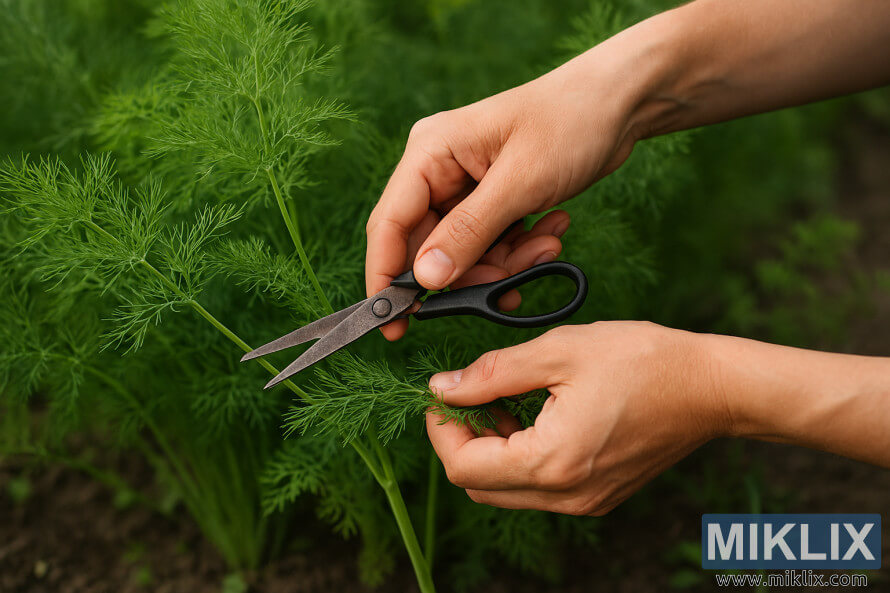
Harvesting Leaves (Dill Weed)
- Begin harvesting when plants reach 8-10 inches tall, typically 6-8 weeks after planting
- Snip outer leaves first, cutting stems near the base
- Harvest in the morning after dew has dried but before the day heats up
- Take no more than one-third of the plant at once to ensure continued growth
- Regular harvesting encourages bushier growth and delays flowering
Harvesting Seeds
- Allow some plants to flower if you want to harvest seeds
- Watch for seed heads to turn brown (2-3 weeks after flowering)
- Cut entire seed heads with 6 inches of stem attached
- Hang upside down in a paper bag in a warm, dry location
- Seeds will fall into the bag as they dry (usually within 1-2 weeks)
- Store dried seeds in airtight containers
Click or tap the image for more information and higher resolutions.
Preserving Dill
Fresh dill has the best flavor, but several preservation methods can extend your harvest:
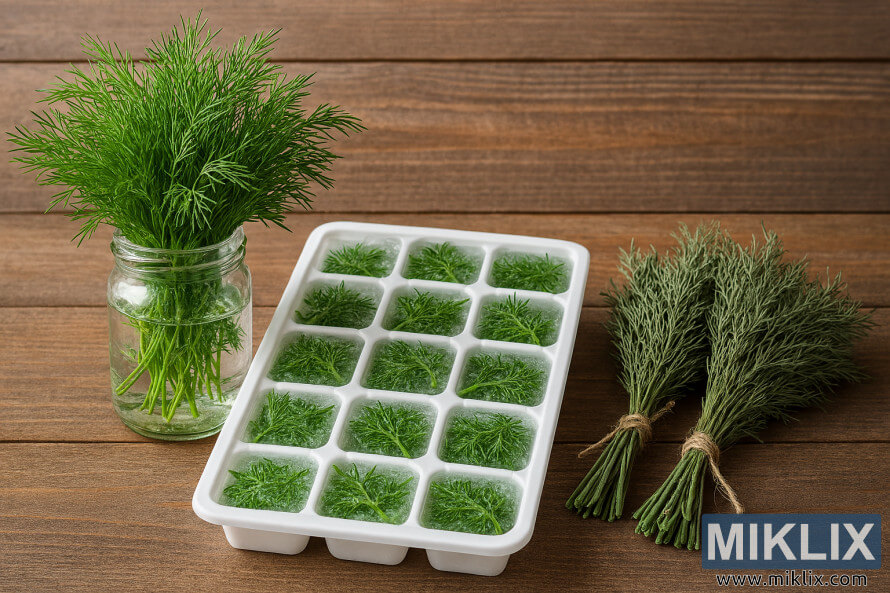
Freezing
The best method for preserving dill's flavor:
- Wash and pat dry fresh dill
- Chop or leave in sprigs
- Place in freezer bags or freeze in ice cube trays with water or olive oil
- Use frozen dill directly in cooked dishes without thawing
Drying
Good for long-term storage but some flavor loss occurs:
- Tie stems in small bundles
- Hang upside down in a warm, dark, well-ventilated area
- Once completely dry, remove leaves from stems
- Store in airtight containers away from light
Fresh Storage
For short-term preservation of fresh-cut dill:
- Trim stem ends and place in a jar with water (like a bouquet)
- Cover loosely with a plastic bag
- Refrigerate for up to one week
- Change water every 2-3 days
Click or tap the image for more information and higher resolutions.
Common Problems and Solutions
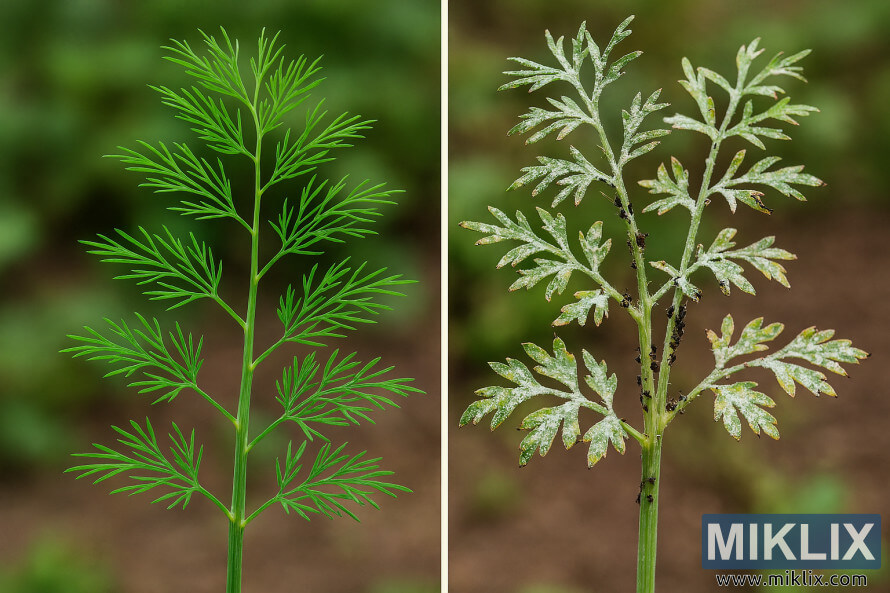
Healthy dill (left) compared to plants affected by aphids and early powdery mildew (right)
Pest Management
While dill is relatively pest-resistant and even repels some insects, it can occasionally face these challenges:
| Pest | Signs | Organic Solutions |
| Aphids | Clusters of tiny insects on stems and undersides of leaves; sticky residue; curling leaves | Spray with strong water jet; introduce ladybugs; apply insecticidal soap; plant nasturtiums nearby as trap plants |
| Caterpillars | Chewed leaves; visible caterpillars (note: some may be beneficial swallowtail butterfly larvae) | Handpick; plant extra dill for butterflies; use Bacillus thuringiensis (Bt) for severe infestations |
| Spider Mites | Fine webbing; stippled, yellowing leaves; tiny moving dots visible with magnification | Increase humidity; spray with water; apply neem oil or insecticidal soap |
Disease Prevention
Proper spacing, air circulation, and watering practices help prevent most dill diseases:
Powdery Mildew
- Symptoms: White powdery coating on leaves
- Prevention: Proper spacing; avoid overhead watering
- Treatment: Remove affected leaves; spray with diluted milk solution (1:10 ratio) or commercial fungicide
Root Rot
- Symptoms: Wilting despite moist soil; yellowing; soft, brown roots
- Prevention: Well-draining soil; avoid overwatering
- Treatment: Difficult to treat; remove affected plants and avoid replanting in same location
Click or tap the image for more information and higher resolutions.
Managing Bolting
Bolting (premature flowering) is a common challenge with dill, especially during hot weather:
- Causes: High temperatures; long daylight hours; root disturbance; water stress
- Prevention: Plant in cooler seasons; provide afternoon shade in hot climates; maintain consistent soil moisture; succession plant every 2-3 weeks
- Management: Once bolting begins, it cannot be reversed; harvest remaining leaves quickly or allow plant to produce seeds for collection
Dill as a Self-Seeder: If you allow some dill plants to flower and set seed, they will often self-seed readily. This volunteer dill can provide you with free plants for the next growing season. To manage this, either allow seeds to fall where you want new plants to grow or collect seed heads before they shatter to control placement.
Frequently Asked Questions
Why does my dill plant look leggy with sparse foliage?
Leggy dill with sparse foliage is usually caused by insufficient sunlight. Dill requires at least 6-8 hours of direct sun daily to develop properly. Other causes include overcrowding (inadequate thinning) or excessive nitrogen fertilizer, which promotes stem growth at the expense of foliage. Ensure proper spacing of 9-12 inches between plants and place in a full-sun location for bushier growth.
Can I grow dill indoors year-round?
Yes, dill can be grown indoors year-round, though it presents some challenges. Use a deep container (at least 12 inches) with drainage holes and high-quality potting mix. Place in your brightest window, ideally south-facing, or use grow lights positioned 6 inches above plants for 12-14 hours daily. Indoor dill tends to be somewhat leggier than outdoor plants. Choose compact varieties like 'Fernleaf' or 'Diana' for better results indoors.
How can I save dill seeds for planting next season?
To save dill seeds, allow some plants to flower and develop seed heads. When the seed heads turn brown (but before they shatter), cut them with several inches of stem attached and place them upside down in a paper bag in a warm, dry location. The seeds will fall into the bag as they dry completely, usually within 1-2 weeks. Store dried seeds in an airtight container in a cool, dark place. Properly stored dill seeds remain viable for 2-3 years, though germination rates decrease over time.
Click or tap the image for more information and higher resolutions.
Conclusion: Enjoying Your Dill Harvest
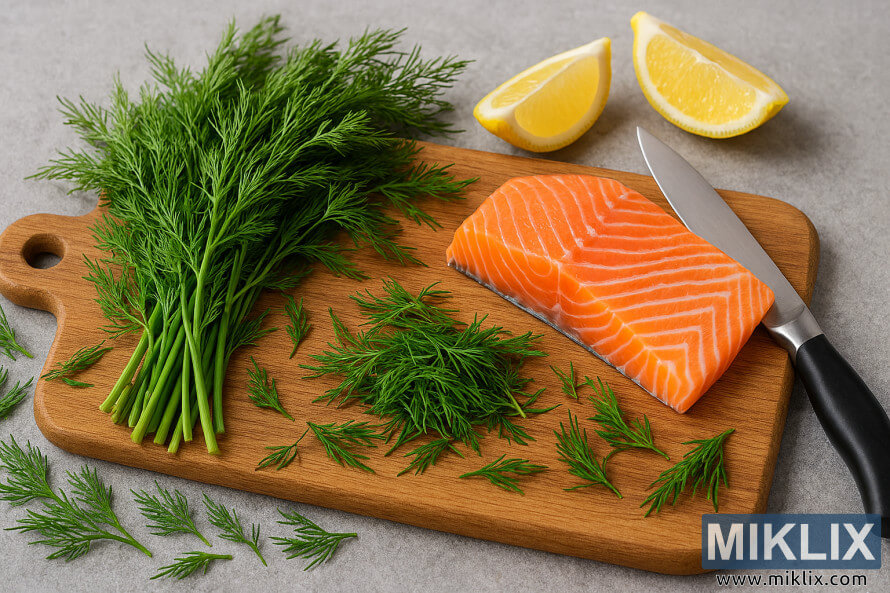
Fresh garden dill elevates the flavor of fish, pickles, and many other dishes
Growing dill in your garden rewards you with an aromatic herb that enhances countless dishes while adding beauty to your garden landscape. With its minimal care requirements and quick growth, dill is an excellent choice for both beginning and experienced gardeners.
By following the guidelines in this article—providing full sun, well-draining soil, consistent moisture, and regular harvesting—you'll enjoy a bountiful supply of fresh dill throughout the growing season. Whether you're using the feathery leaves to flavor fish dishes, adding the flowers to salads, or collecting seeds for pickling and baking, home-grown dill offers superior flavor that store-bought simply can't match.
Remember that dill is not just a culinary asset but also a valuable companion plant that attracts beneficial insects to your garden. By incorporating dill into your garden planning, you're creating a more balanced ecosystem while growing a versatile herb that has been prized for thousands of years.
Click or tap the image for more information and higher resolutions.
Further Reading
If you enjoyed this post, you may also like these suggestions:
- A Guide to the Best Chili Varieties to Grow Yourself
- A Guide to Growing Your Own Sage
- A Complete Guide to Growing Ginger at Home