
Image: Three Dill Preservation Methods
Published: January 31, 2026 at 6:39:11 PM UTC
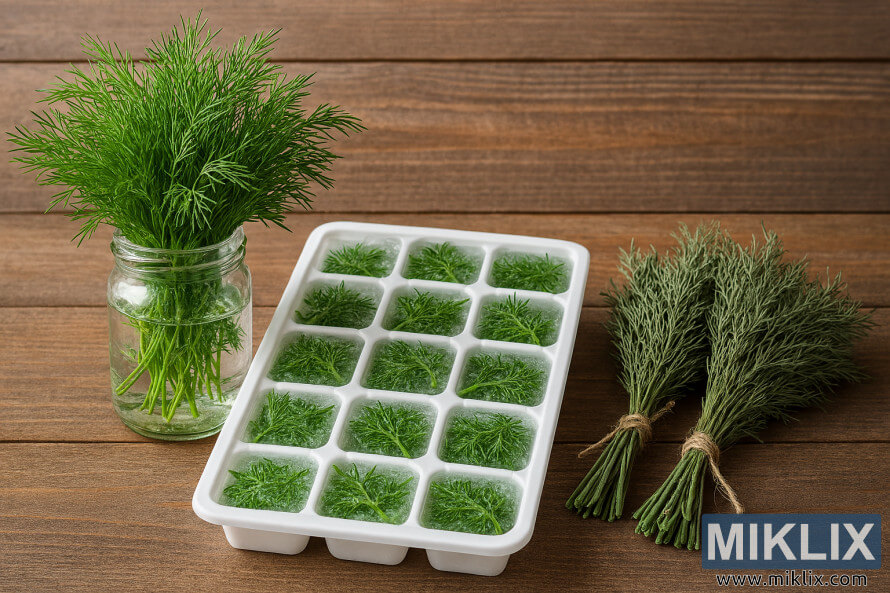
Explore three dill preservation techniques—fresh in water, frozen in ice cubes, and dried bundles—captured in a high-resolution rustic kitchen setting.
Available versions of this image
The image files available for download below are less compressed and higher resolution - and as a result of that, higher quality - than the images embedded in articles and pages on this website, which are more optimized for file size in order to reduce bandwidth consumption.
Regular size (1,536 x 1,024)
Large size (3,072 x 2,048)
Very large size (4,608 x 3,072)
Extra large size (6,144 x 4,096)
Comically large size (1,048,576 x 699,051)
- Still uploading... ;-)
Image description
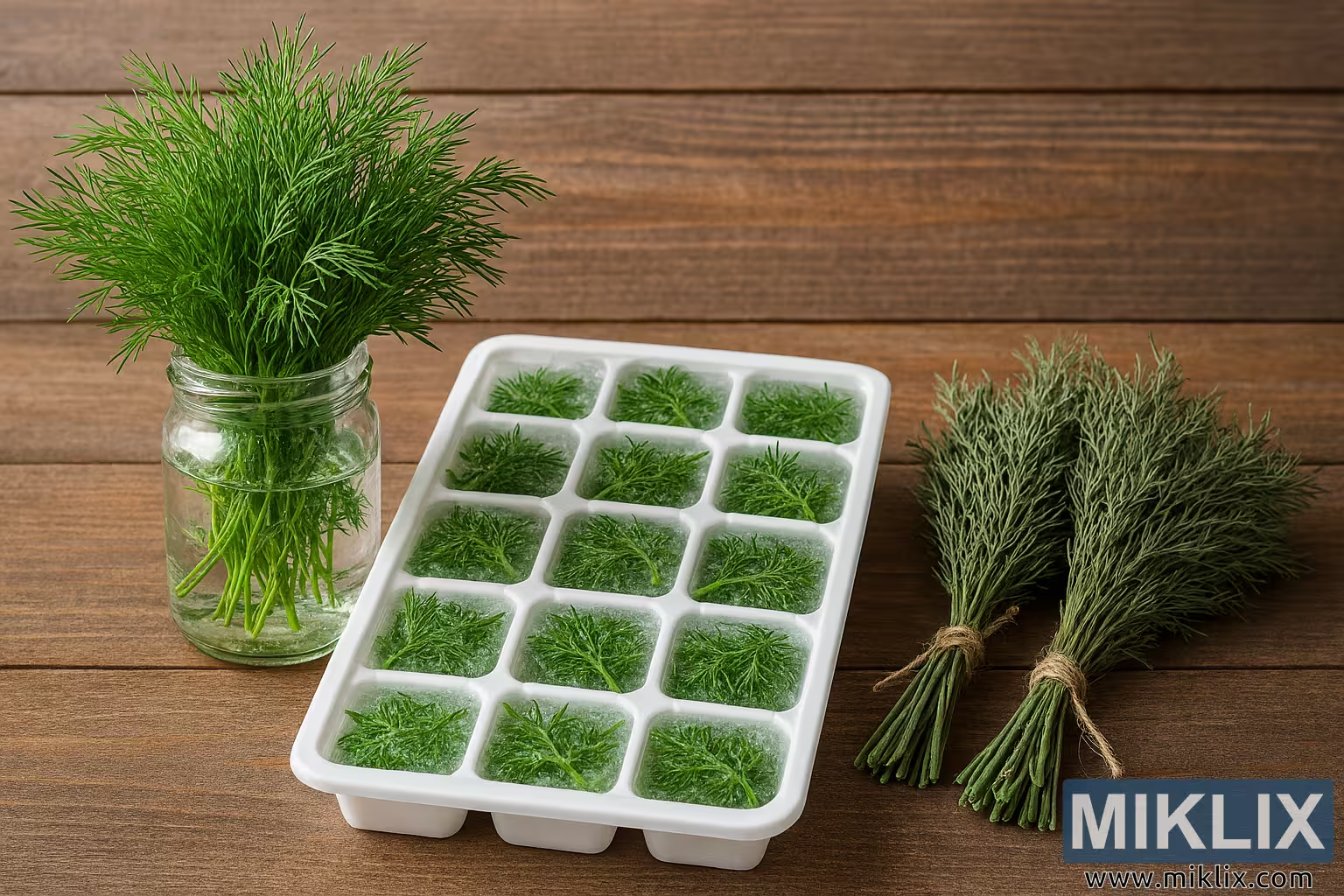
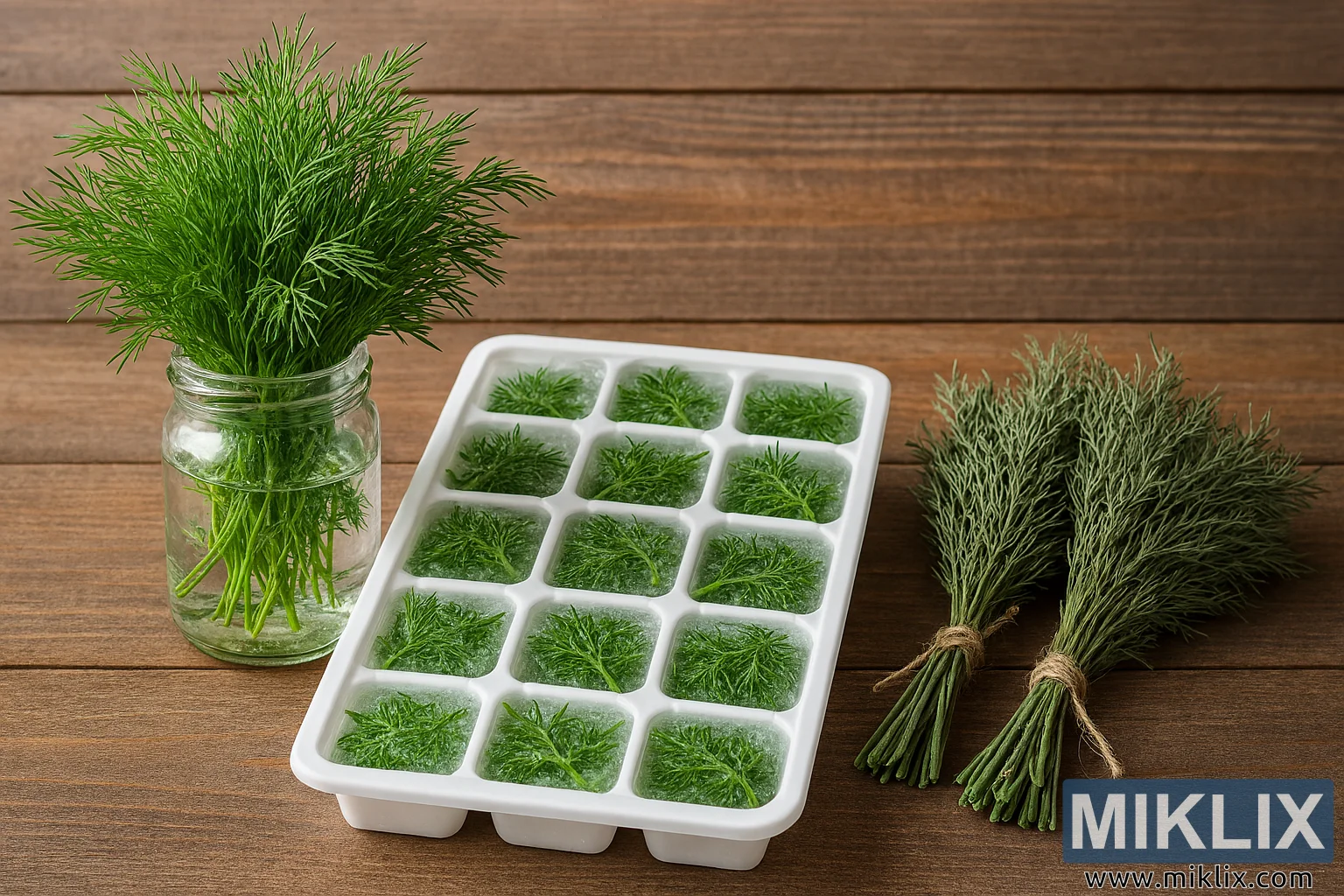
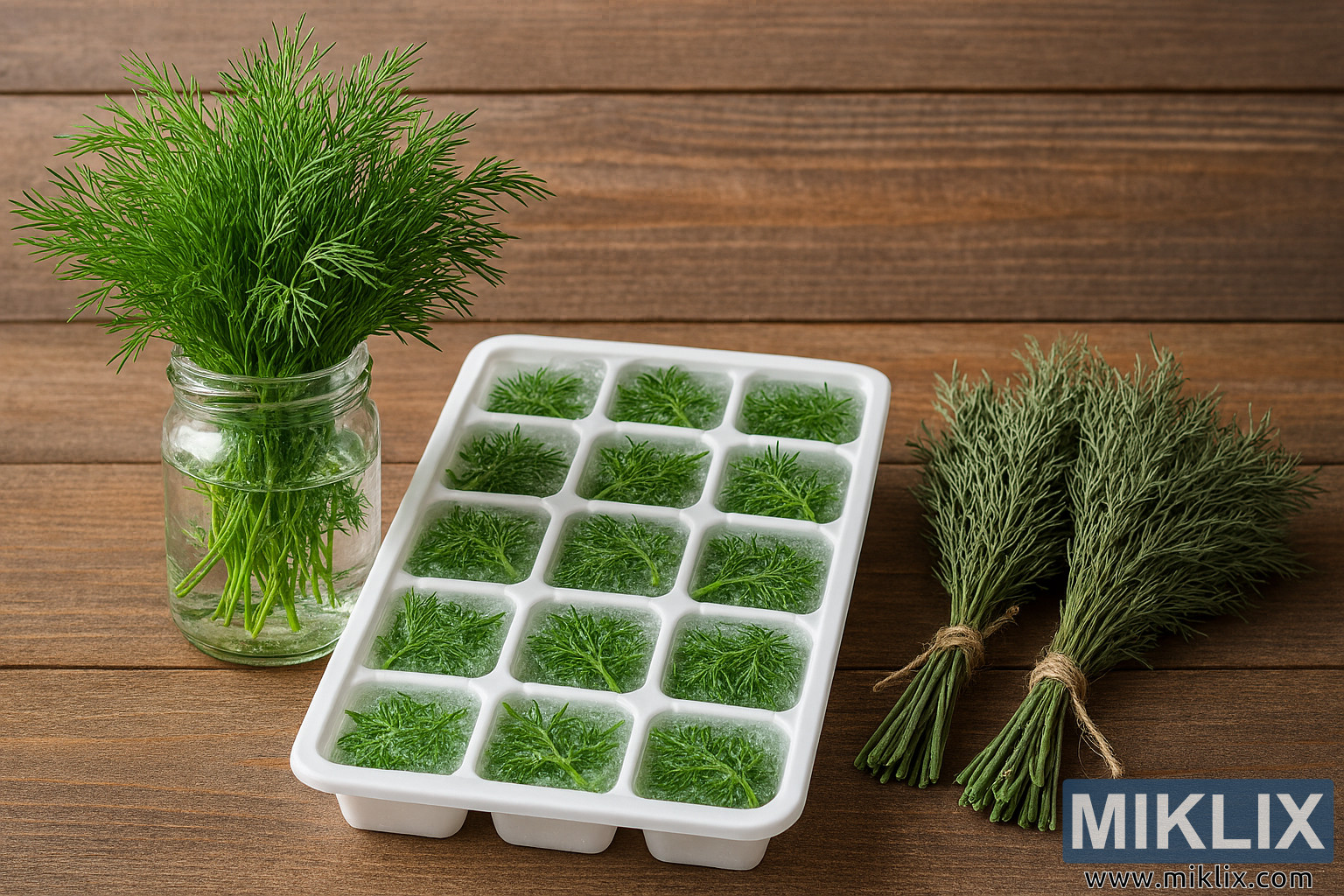
A high-resolution landscape photograph showcases three distinct methods of preserving dill, arranged side by side on a rustic wooden surface. On the left, a clear glass jar holds a vibrant bunch of fresh dill submerged in water. The dill’s feathery green fronds fan outward above the rim, while the slender stems are partially immersed in the water, which contains small air bubbles clinging to the glass and stems. The jar’s transparency reveals the submerged portion of the dill, and the fresh herb appears lush and aromatic, with a vivid green hue that contrasts beautifully against the warm brown tones of the wood.
In the center of the image, a white plastic ice cube tray is filled with frozen dill. Each of the twelve compartments contains sprigs of dill encased in clear ice, preserving their bright green color and delicate texture. The ice cubes glisten slightly under soft natural light, and the tray’s smooth surface and rounded edges add a clean, modern touch to the composition. The frozen dill appears well-preserved, with the ice acting as a protective barrier that maintains its freshness.
To the right, two bundles of dried dill rest directly on the wooden surface. The dried fronds are darker and more compact than the fresh and frozen versions, with a muted green tone that suggests careful dehydration. Each bundle is tied at the base with natural twine, knotted simply and left with slightly frayed ends. The bundles are arranged parallel to each other, with their tips pointing toward the right edge of the frame. The dried dill has a textured, slightly brittle appearance, emphasizing its transformation from fresh to preserved.
The background consists of horizontal wooden planks with visible grain patterns and knots, adding warmth and rustic charm to the scene. The lighting is soft and diffused, casting gentle shadows and highlighting the varied textures of the dill in its different forms. The composition is balanced and educational, offering a clear visual comparison of preservation techniques: hydration, freezing, and drying. Each method is presented with clarity and realism, making the image ideal for culinary, gardening, or educational use.
The image is related to: A Guide to Growing Dill in Your Own Garden