
Image: Healthy vs Diseased Dill Plant Comparison
Published: January 31, 2026 at 6:39:11 PM UTC
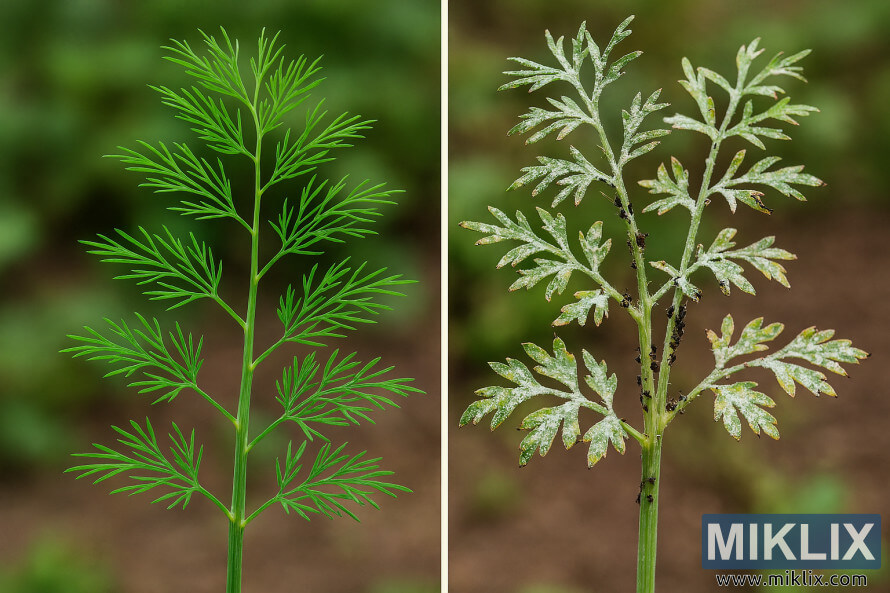
High-resolution image showing a healthy dill plant next to one suffering from aphids and powdery mildew, ideal for gardening education and plant health awareness.
Available versions of this image
The image files available for download below are less compressed and higher resolution - and as a result of that, higher quality - than the images embedded in articles and pages on this website, which are more optimized for file size in order to reduce bandwidth consumption.
Regular size (1,536 x 1,024)
Large size (3,072 x 2,048)
Very large size (4,608 x 3,072)
Extra large size (6,144 x 4,096)
Comically large size (1,048,576 x 699,051)
- Still uploading... ;-)
Image description
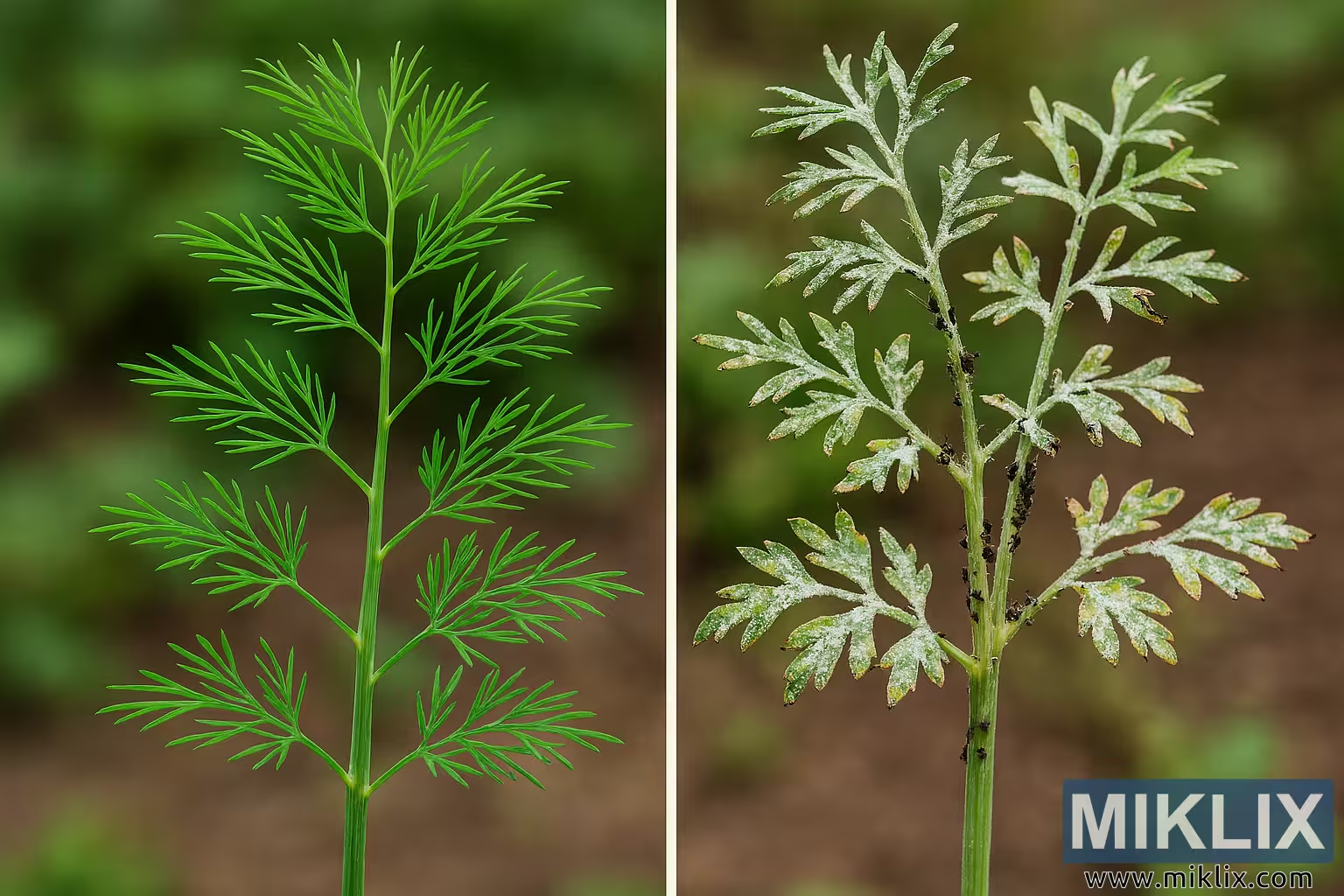
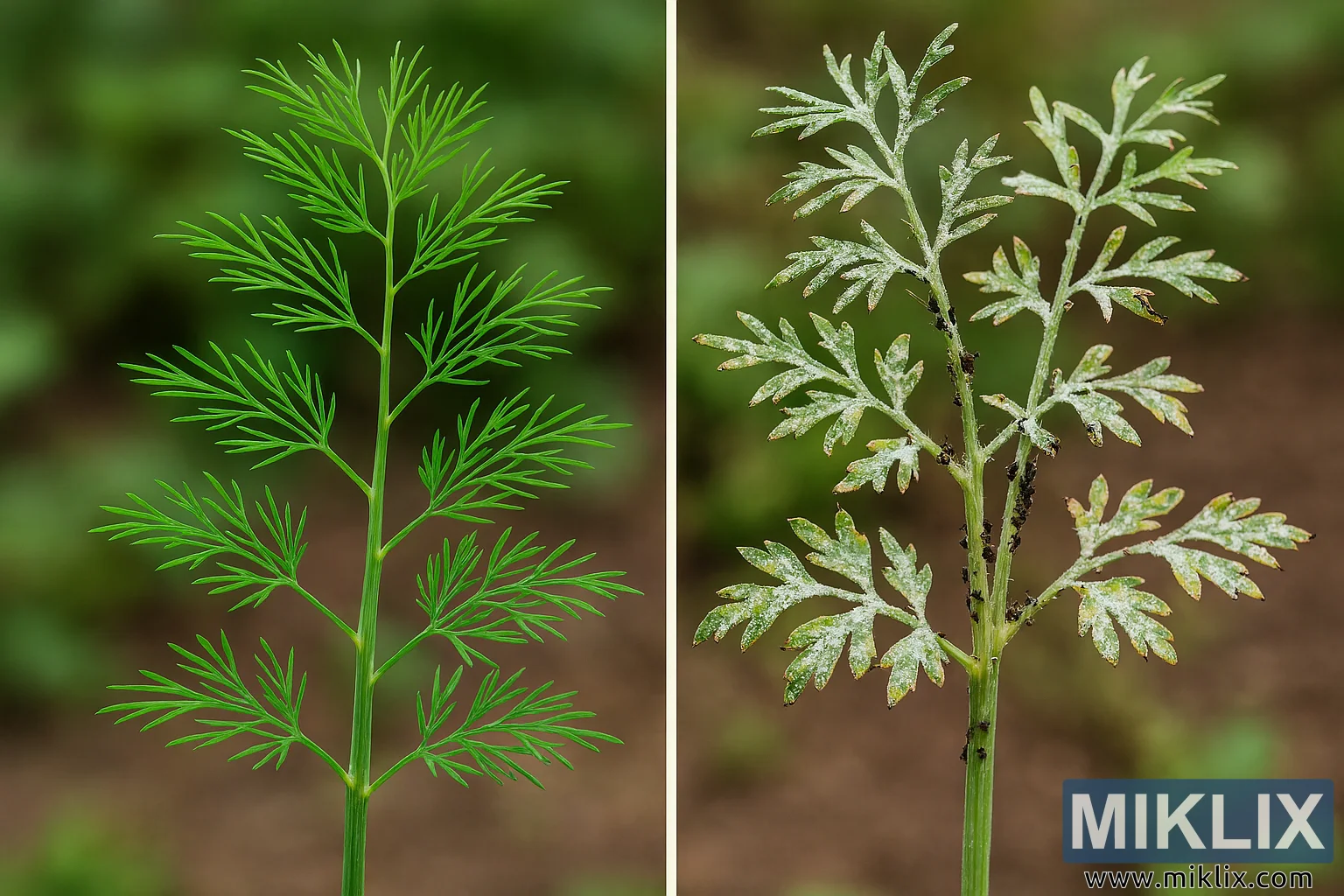
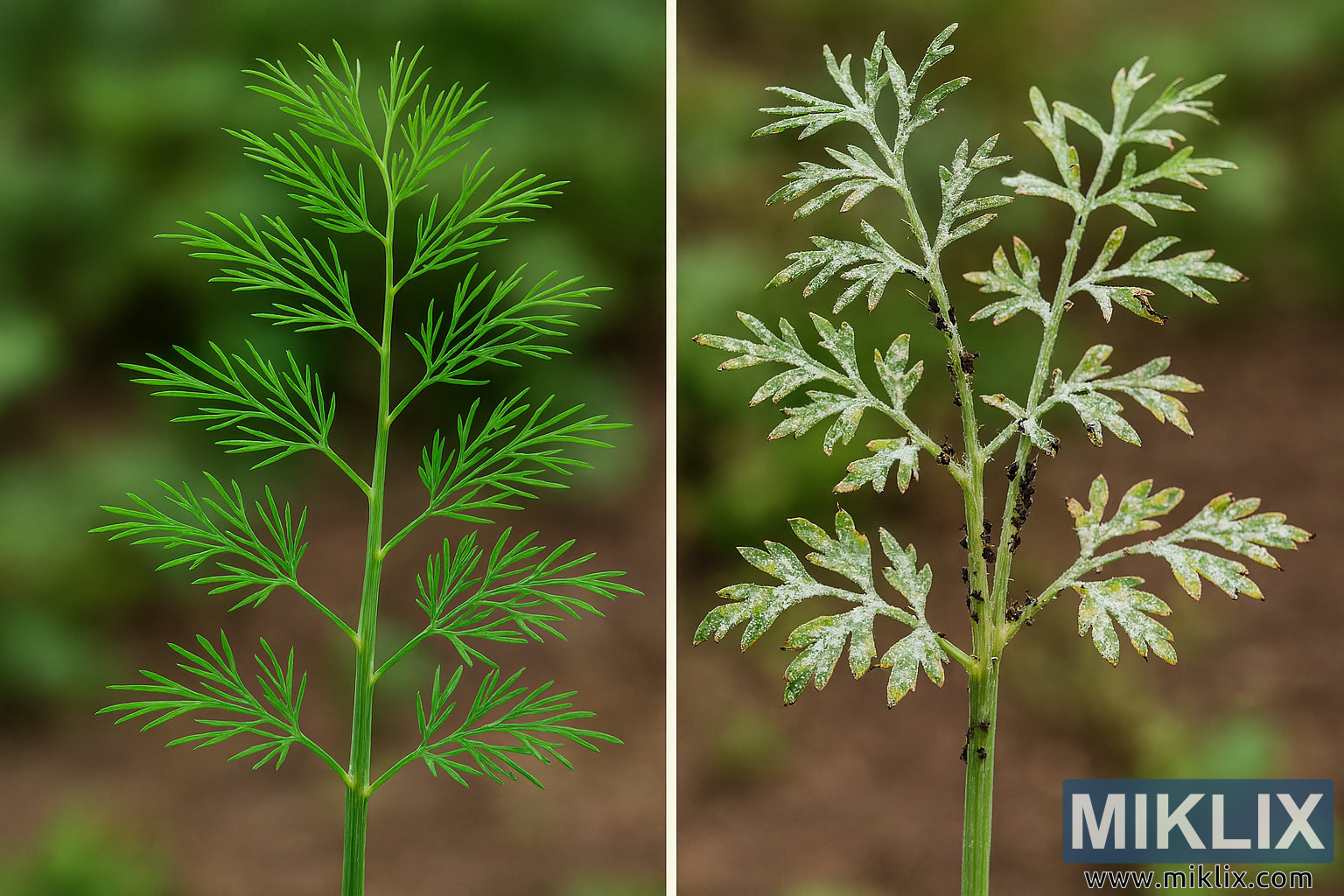
This high-resolution landscape image presents a clear, side-by-side comparison of two dill plants (Anethum graveolens), designed to illustrate the visual differences between a healthy specimen and one suffering from common afflictions such as aphid infestation and powdery mildew.
On the left side of the image, the healthy dill plant stands tall and vibrant. Its central stem is smooth, green, and upright, supporting a dense array of feathery, thread-like leaves. These leaves are a rich, uniform green and fan out symmetrically in an alternating pattern. The foliage is lush and finely divided, with each leaflet branching delicately from the main stem, showcasing the plant’s optimal health and vigor. The lighting is natural and even, enhancing the vivid green tones and the intricate texture of the leaves. The background is softly blurred, composed of green foliage and brown soil, suggesting a well-maintained garden environment.
In contrast, the right side of the image features a dill plant visibly affected by aphids and powdery mildew. The central stem, though similarly slender, appears slightly discolored and is speckled with clusters of small, black aphids. These pests are concentrated near the base of the leaflets and along the stem, visibly disrupting the plant’s integrity. The leaves are pale green to yellowish, with many showing signs of curling and wilting. A white, powdery substance—indicative of powdery mildew—is present on the leaf surfaces, particularly on the upper portions. This fungal infection gives the leaves a dusty appearance and contributes to their unhealthy texture and coloration. The overall structure of the plant is less upright and more sparse, with noticeable gaps in the foliage. The background on this side mirrors the left, maintaining consistency in setting and lighting, but the plant’s condition starkly contrasts with its healthy counterpart.
A thin, vertical white line divides the two plants, emphasizing the visual and health-related differences. The composition is symmetrical and balanced, with both plants occupying equal space in the frame. The image is sharply focused on the plants, while the background remains softly out of focus, ensuring that the viewer’s attention is drawn to the detailed comparison. This educational visual is ideal for illustrating plant health diagnostics, pest identification, and the impact of fungal diseases in gardening and horticultural contexts.
The image is related to: A Guide to Growing Dill in Your Own Garden