
Image: Close-Up of Thick Brown Licorice Roots in Soil
Published: March 14, 2026 at 10:02:10 PM UTC
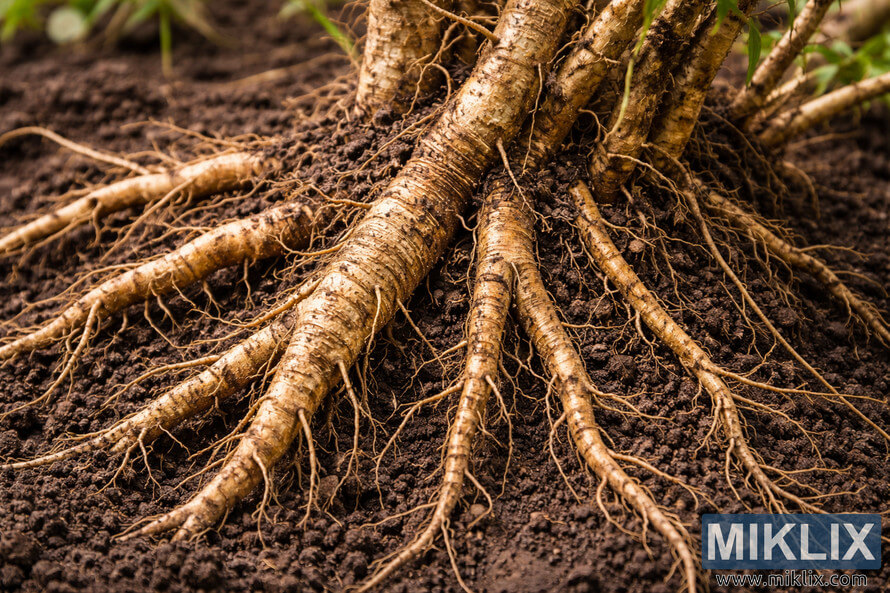
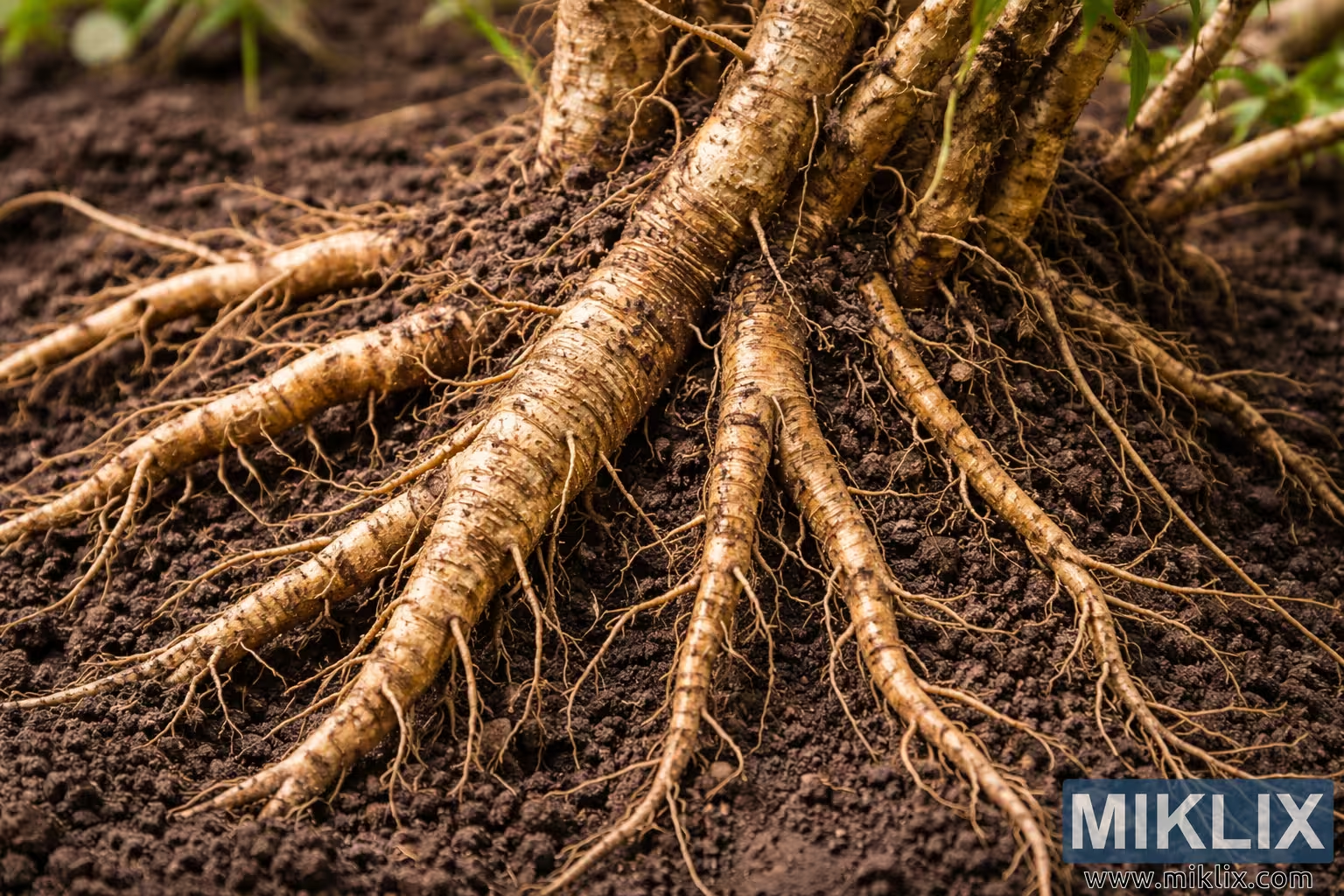
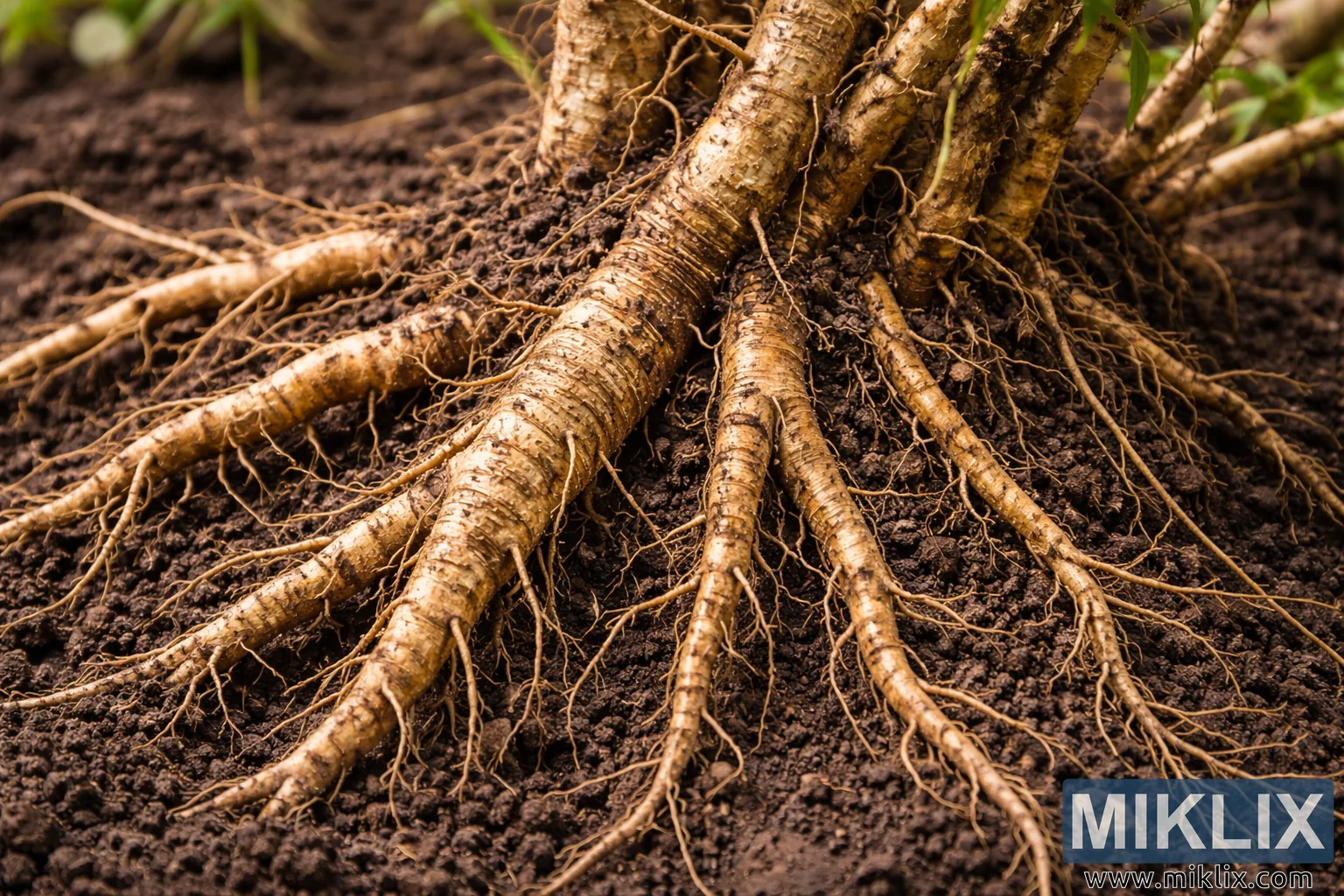
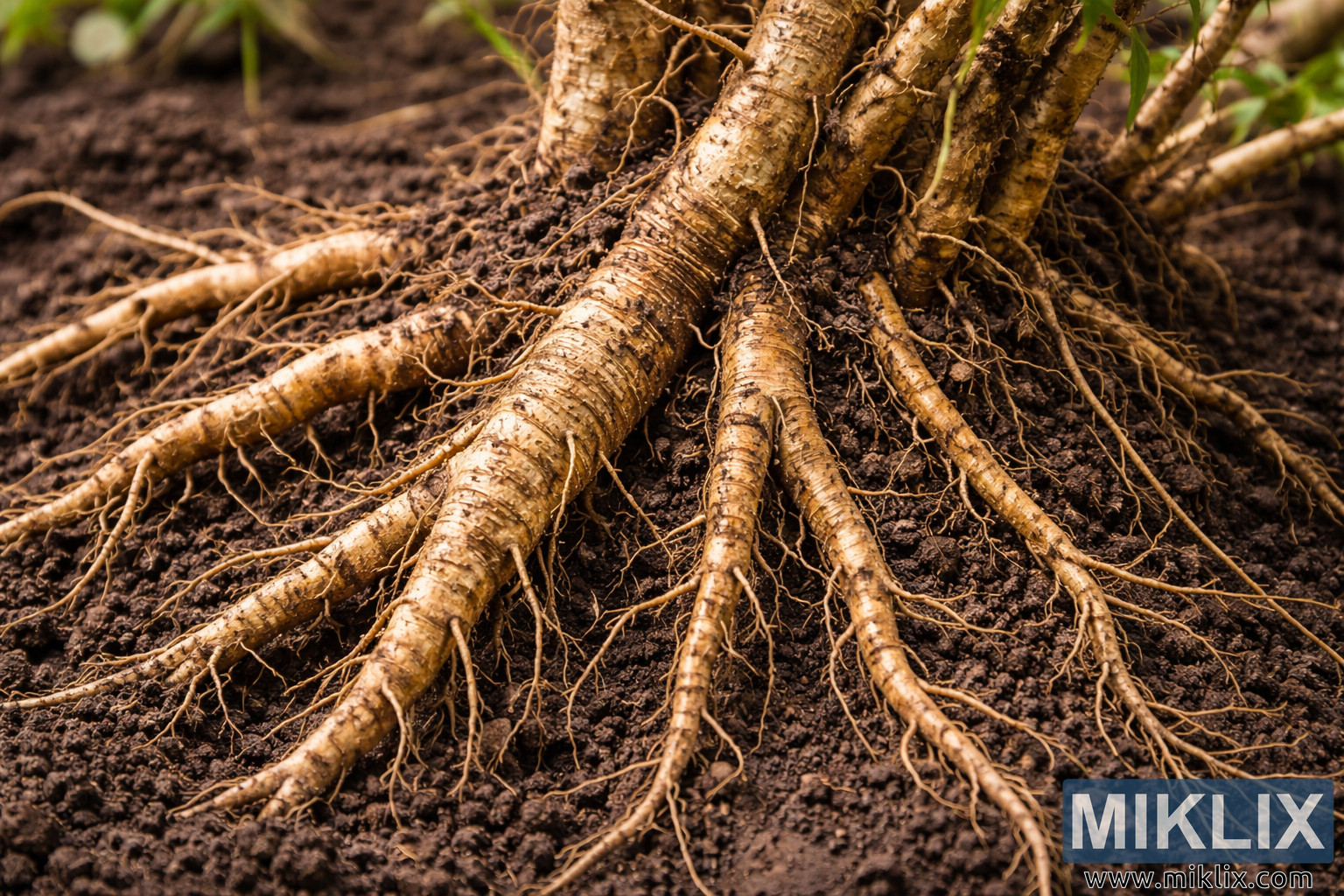
Detailed close-up photograph of a licorice plant root system showing thick brown roots and fine root fibers in rich soil.
Available versions of this image
The image files available for download below are less compressed and higher resolution - and as a result of that, higher quality - than the images embedded in articles and pages on this website, which are more optimized for file size in order to reduce bandwidth consumption.
Regular size (1,536 x 1,024)
Large size (3,072 x 2,048)
Very large size (4,608 x 3,072)
Extra large size (6,144 x 4,096)
Comically large size (1,048,576 x 699,051)
- Still uploading... ;-)
Image description
This high-resolution close-up photograph focuses on the exposed root system of a licorice plant, highlighting the thick, woody roots that spread outward from the base of the plant. The image captures a dense cluster of light to medium brown roots emerging from the central crown, where the underground structure begins to branch and extend into the surrounding soil. Several major roots are prominently visible, each with a smooth yet slightly ridged surface that reflects the natural growth patterns of the plant. Their cylindrical shapes taper gradually as they extend away from the center, forming a radial pattern across the dark, textured earth.
The soil surrounding the roots appears rich and slightly moist, clinging in small clumps to parts of the root surface and filling the spaces between the larger root structures. The dark brown soil contrasts strongly with the lighter, warm tones of the licorice roots, making the branching network stand out clearly. Fine, hairlike feeder roots extend from the larger primary roots, creating a delicate web of thin strands that spread through the soil in search of nutrients and water. These smaller roots vary in thickness and length, some tightly hugging the larger roots while others stretch outward into the surrounding ground.
The main roots are thick and woody, showing subtle variations in color ranging from golden tan to deeper brown hues. Slight ridges and natural markings run along their length, emphasizing their mature, fibrous structure. In several places the roots appear freshly unearthed, with traces of damp soil still adhering to their surfaces. The lighting in the photograph enhances the texture of both the roots and the soil, casting gentle shadows that define the contours and depth of the underground network.
Near the top edge of the image, the base of the plant is visible where multiple roots converge before continuing upward toward the unseen stems and foliage above ground. This convergence point gives the impression of strength and structural support, illustrating how the root system anchors the plant firmly in the soil. The overall composition draws attention to the intricate architecture beneath the surface, revealing how the thick primary roots branch into smaller secondary and tertiary roots that collectively form a complex subterranean structure.
The photograph emphasizes natural detail and botanical realism, presenting the licorice root system as both a functional part of the plant and a visually compelling subject. The close perspective allows viewers to appreciate the organic textures, branching patterns, and earthy colors that characterize this underground network. The image conveys the resilience and depth of the licorice plant’s roots, showcasing the robust, woody structures that store nutrients and support the plant’s growth over time.
The image is related to: Growing Licorice: Complete Guide to Cultivating This Remarkable Herb at Home