
Image: Before and After Pruning of a Hazelnut Tree
Published: January 11, 2026 at 1:58:30 PM UTC
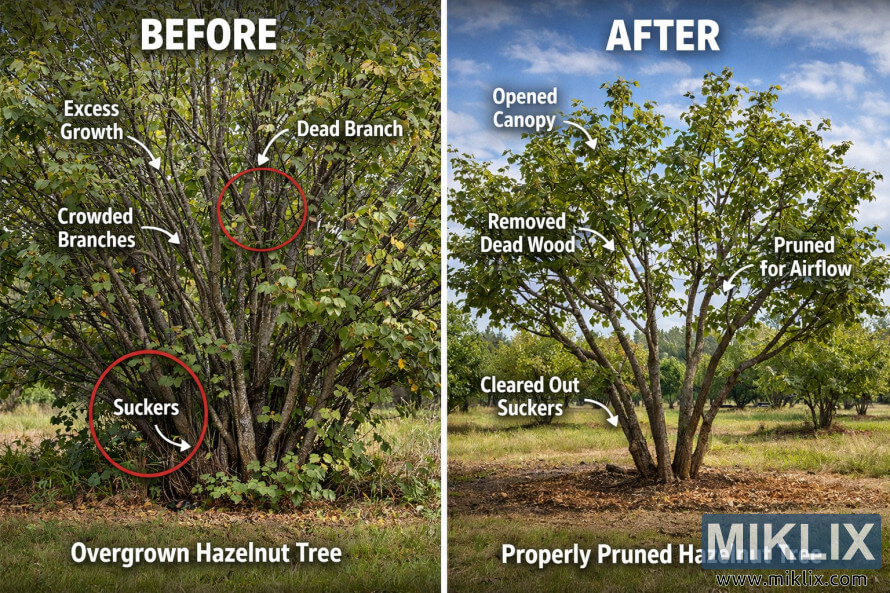
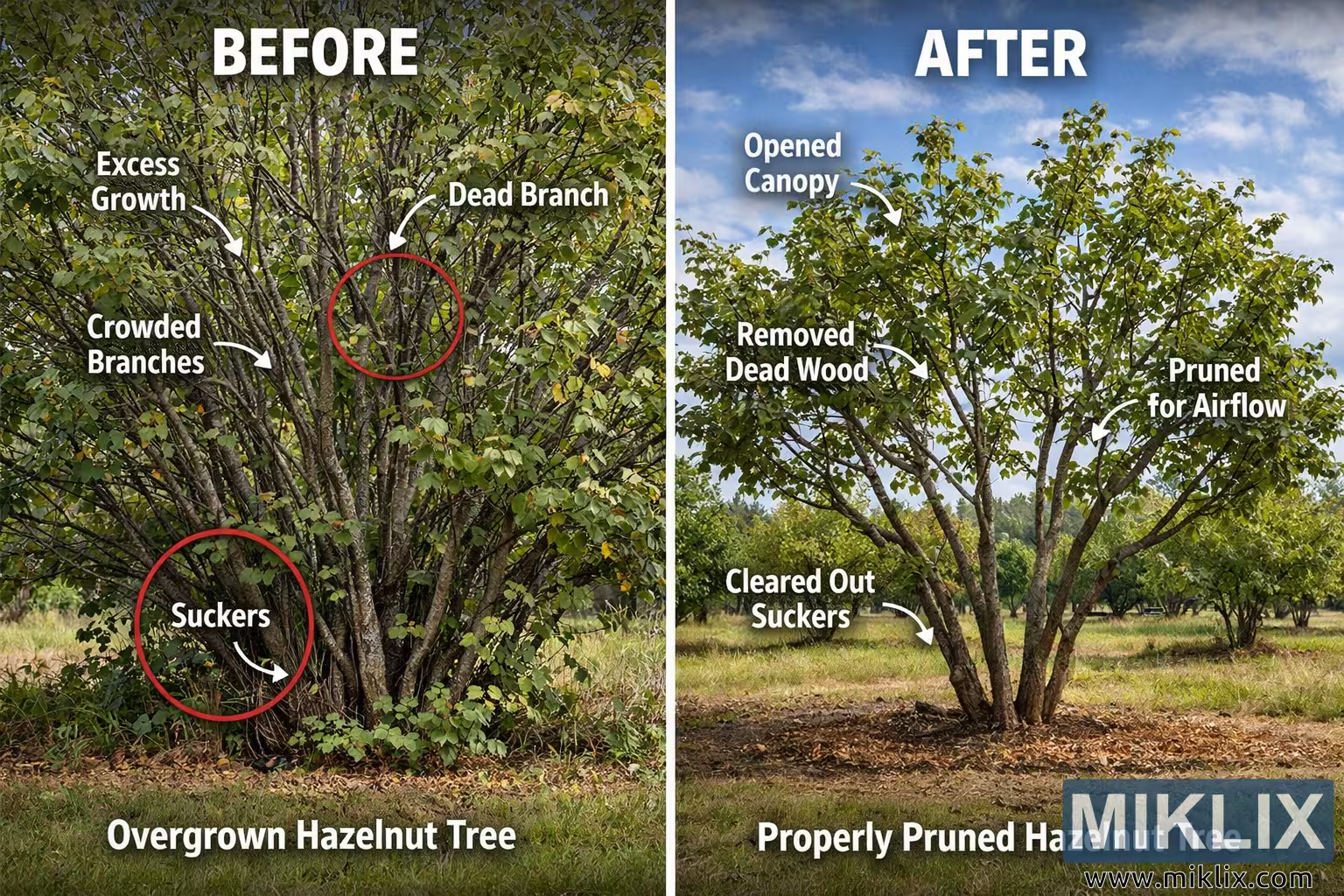
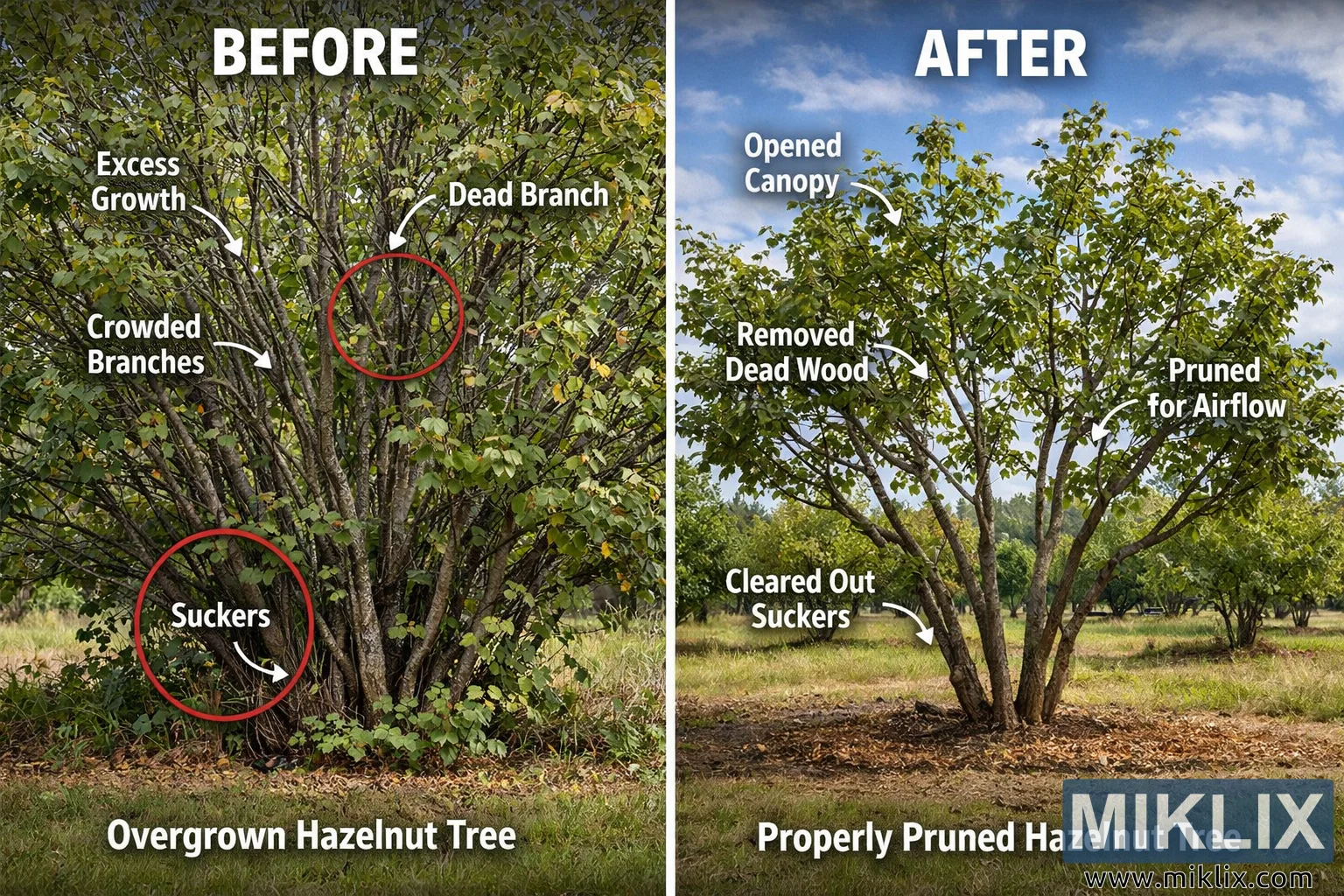
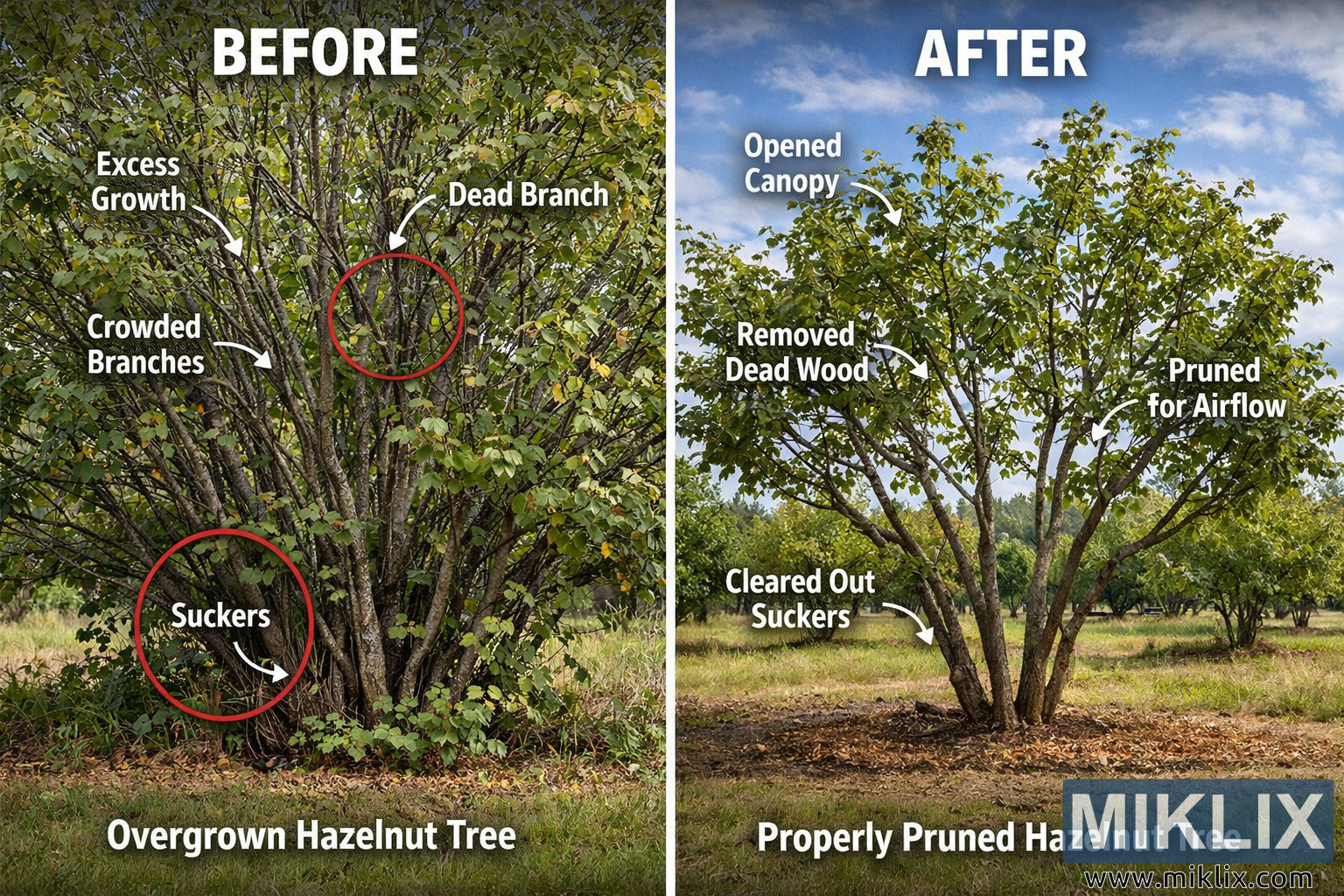
Educational comparison image demonstrating proper hazelnut tree pruning techniques, showing before and after results with improved canopy structure, airflow, and tree health.
Available versions of this image
The image files available for download below are less compressed and higher resolution - and as a result of that, higher quality - than the images embedded in articles and pages on this website, which are more optimized for file size in order to reduce bandwidth consumption.
Regular size (1,536 x 1,024)
Large size (3,072 x 2,048)
Very large size (4,608 x 3,072)
Extra large size (6,144 x 4,096)
Comically large size (1,048,576 x 699,051)
- Still uploading... ;-)
Image description
The image is a high-resolution, landscape-oriented educational photograph presented as a clear side-by-side comparison illustrating proper pruning techniques for hazelnut trees. The composition is divided vertically into two equal panels labeled "BEFORE" on the left and "AFTER" on the right, allowing direct visual comparison of tree structure, canopy density, and overall orchard management results.
In the left panel, the "before" example shows an overgrown hazelnut tree with a dense, cluttered appearance. Numerous thin trunks and branches emerge from the base, creating a crowded multi-stem form. The canopy is thick and tangled, with overlapping branches blocking light penetration into the interior of the tree. Several problem areas are highlighted with arrows and annotations, including excessive vegetative growth, crowded branches rubbing against one another, visible dead branches within the canopy, and vigorous basal suckers growing from the base of the trunk. Red circles emphasize the dead wood and suckers, drawing attention to areas that require corrective pruning. The overall impression is of poor airflow, limited sunlight exposure, and inefficient structure that could reduce nut yield and increase disease risk. The background shows an orchard setting with grass and other hazelnut trees, but the focus remains on the dense, unmanaged tree.
In contrast, the right panel presents the "after" result following proper pruning. The hazelnut tree has a much cleaner, more intentional structure with fewer, well-spaced main stems rising from the base. The canopy is open and balanced, allowing light to filter through the branches. Annotations point out the key improvements: an opened canopy, removed dead wood, cleared-out suckers at ground level, and branches pruned to improve airflow. The tree appears healthier, more upright, and visually organized, with stronger scaffold branches and reduced congestion. The ground beneath the tree is clear, emphasizing the absence of unwanted shoots. The surrounding orchard appears brighter and more orderly, reinforcing the benefits of correct pruning practices.
Overall, the image functions as a practical visual guide for growers and gardeners, clearly demonstrating how targeted pruning transforms a hazelnut tree from an overcrowded, inefficient form into a well-managed, productive structure optimized for light, airflow, and long-term health.
The image is related to: A Complete Guide to Growing Hazelnuts at Home