
A Complete Guide to Growing Hazelnuts at Home
Published: January 11, 2026 at 1:58:30 PM UTC
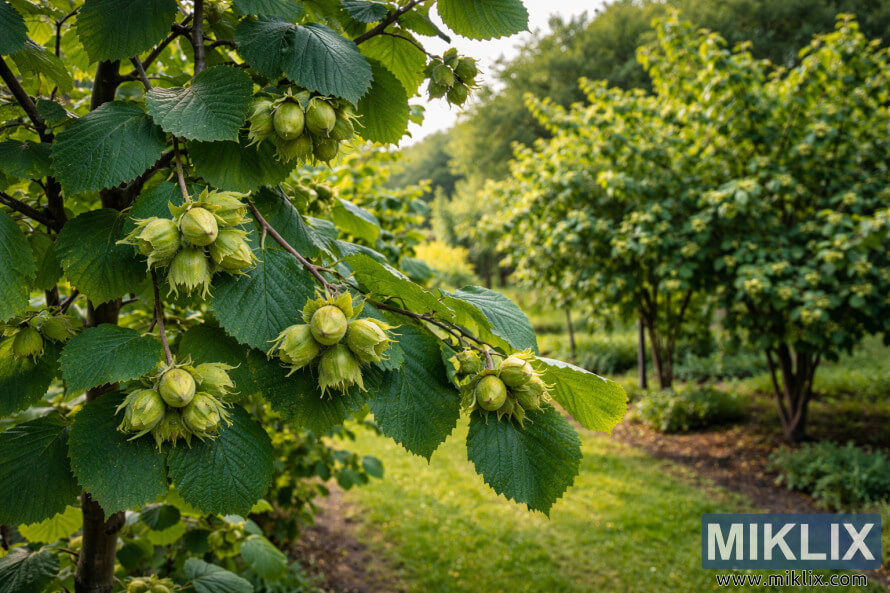
Growing your own hazelnuts can be a rewarding addition to your home garden or small farm. These versatile nut trees not only provide delicious, nutritious harvests but also serve as attractive landscape elements that support local wildlife.
Click or tap the image for more information and higher resolutions.
Whether you have a small backyard or several acres, hazelnuts can thrive with proper care and attention. This comprehensive guide will walk you through everything you need to know about cultivating hazelnuts, from selecting the right varieties to harvesting and processing your bounty.
Benefits of Growing Your Own Hazelnuts
Hazelnuts, also known as filberts, are among the most rewarding nut trees for home cultivation. Unlike many other nut varieties that can take a decade or more to produce, hazelnuts begin bearing within 4-6 years of planting. They're adaptable to various soil conditions and, once established, require minimal maintenance compared to many fruit trees.
These versatile nuts are packed with nutrition, containing healthy fats, protein, fiber, vitamins, and minerals. Growing your own ensures access to fresh, chemical-free nuts that far surpass store-bought options in flavor and nutritional value.
Advantages of Home-Grown Hazelnuts
- Begin bearing nuts in just 4-6 years
- Adaptable to various soil types and conditions
- Can be grown as bushes or single-stem trees
- Provide nutritious, high-value harvests
- Support local wildlife and pollinators
- Require minimal pesticides when proper varieties are selected
- Can be incorporated into permaculture systems
Selecting the Right Hazelnut Varieties
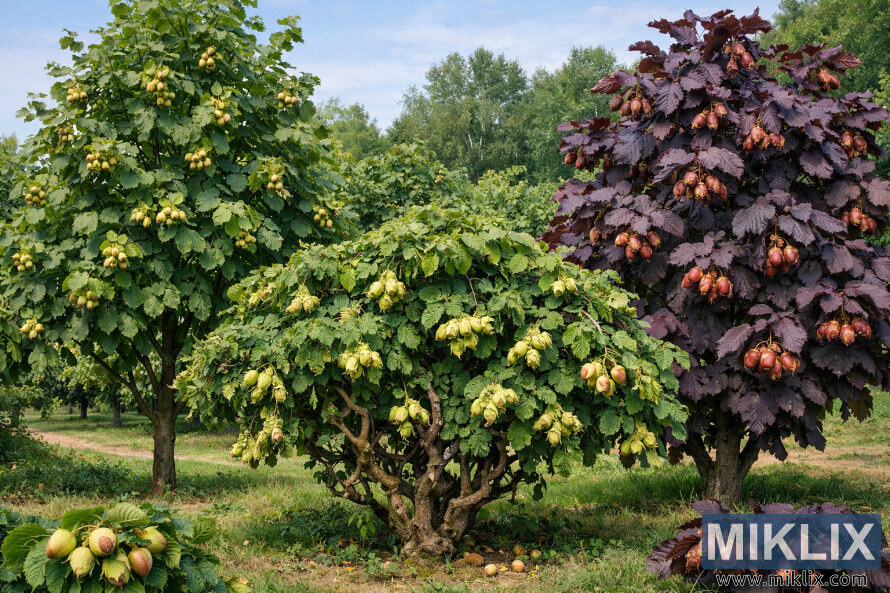
Choosing appropriate hazelnut varieties is crucial for success. The three main types to consider are American hazelnuts (Corylus americana), European hazelnuts (Corylus avellana), and hybrid varieties. Your selection should be based on your climate, available space, and growing objectives.
Click or tap the image for more information and higher resolutions.
| Hazelnut Type | Climate Adaptation | Size | Disease Resistance | Nut Quality |
| American (C. americana) | USDA Zones 4-9, excellent cold hardiness | 8-12 ft tall bush form | High resistance to Eastern Filbert Blight | Smaller nuts, excellent flavor, thicker shells |
| European (C. avellana) | USDA Zones 5-8, prefers milder winters | 14-16 ft tall tree form | Susceptible to Eastern Filbert Blight | Larger nuts, thin shells, commercial quality |
| Hybrids | USDA Zones 4-8, good adaptability | 10-15 ft, variable forms | Moderate to high resistance | Medium to large nuts, good flavor |
Recommended Varieties by Region
Northeast & Midwest
- American varieties and hybrids
- 'Winkler' - hardy hybrid
- 'Grimo' selections
- UMHDI selections
Pacific Northwest
- Blight-resistant European types
- 'Jefferson'
- 'Yamhill'
- 'McDonald'
Southern Regions
- Heat-tolerant hybrids
- Native American varieties
- Selected European types in Zone 7-8
Site Selection and Soil Preparation
Choosing the Perfect Location
Hazelnuts thrive in locations that receive at least 6-8 hours of direct sunlight daily. While they can tolerate partial shade, full sun maximizes nut production. These adaptable plants grow well in a variety of soil types but prefer well-drained loamy soil with a pH between 6.0 and 7.0.
When selecting a planting site, consider the mature size of your chosen varieties. American hazelnuts typically grow 8-12 feet tall in bush form, while European varieties can reach 14-16 feet as single-stem trees. Allow adequate spacing between plants for air circulation and easy harvesting.
Important: Hazelnuts are wind-pollinated, so plant at least two compatible varieties within 50 feet of each other to ensure good pollination and nut production.
Click or tap the image for more information and higher resolutions.
Soil Requirements
- Well-drained soil is essential
- pH between 6.0 and 7.0 (slightly acidic to neutral)
- Loamy soil texture preferred
- Moderate to high organic matter content
- Avoid waterlogged areas or heavy clay without amendments
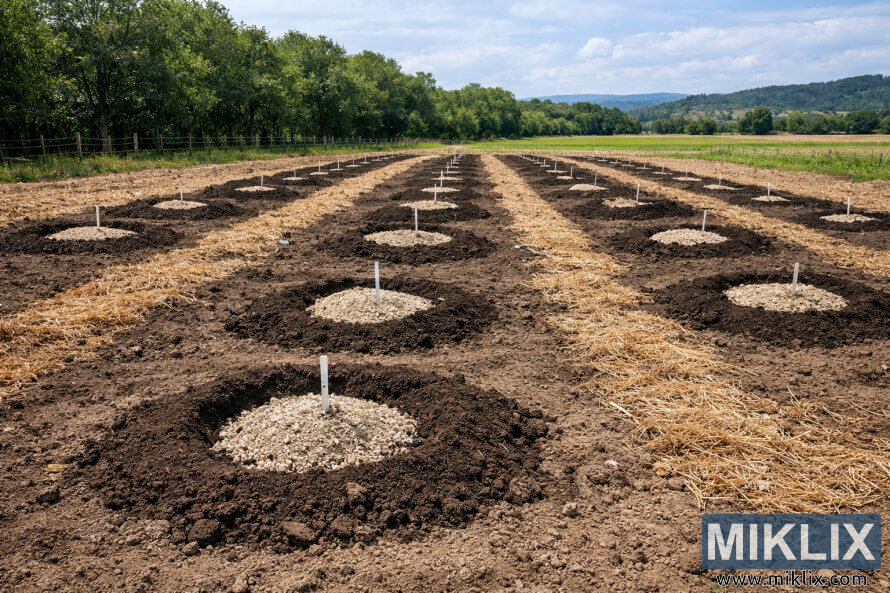
Preparing Your Soil
- Test your soil to determine pH and nutrient levels
- Clear the planting area of weeds and grass
- Add organic matter like compost or aged manure to improve soil structure
- Adjust pH if necessary using lime (to raise) or sulfur (to lower)
- Till amendments into the top 12 inches of soil
- Create a slight mound in areas with poor drainage
Planting Your Hazelnut Trees
When to Plant
The ideal time to plant hazelnuts is during their dormant season. In most regions, this means late fall after leaf drop or early spring before bud break. Fall planting allows roots to establish before winter, while spring planting works well in regions with harsh winters.
Spacing Guidelines
Proper spacing is crucial for healthy growth and optimal production. For bush-form hazelnuts, space plants 4-6 feet apart within rows and 8-10 feet between rows. For tree-form hazelnuts, increase spacing to 15-20 feet between trees in all directions.
If you're creating a hedge, space plants 4-5 feet apart in a single row. For commercial plantings, spacing typically ranges from 12-15 feet between rows to accommodate harvesting equipment.
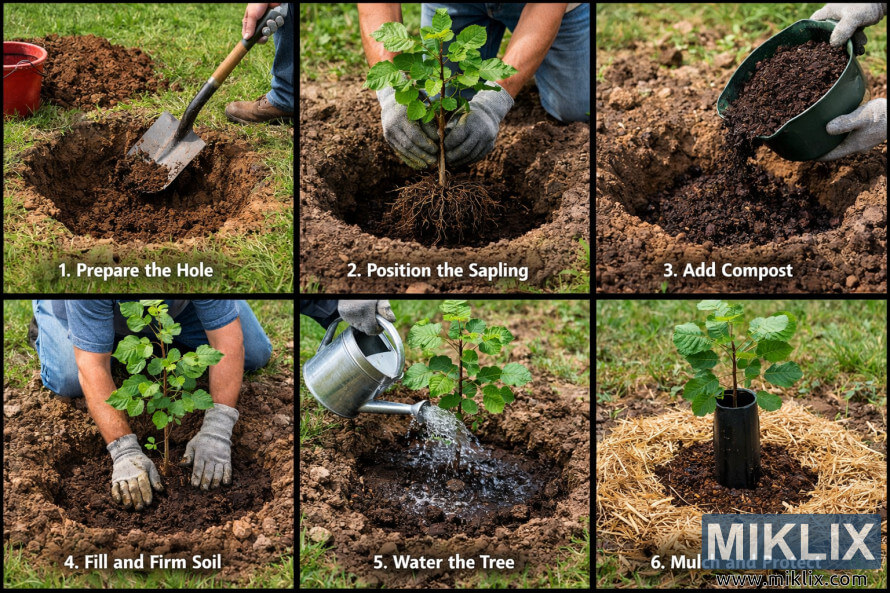
Planting Process
- Dig a hole twice as wide as the root ball and just as deep
- Gently remove the plant from its container
- Loosen any circling roots and spread them outward
- Place the plant in the hole at the same depth it was growing previously
- Backfill with soil, firming gently to eliminate air pockets
- Create a watering basin around the plant
- Water thoroughly to settle the soil
- Apply 2-3 inches of mulch around the plant, keeping it away from the trunk
Pro Tip: If planting bare-root hazelnuts, soak the roots in water for 2-4 hours before planting to rehydrate them. Trim any damaged roots before placing in the planting hole.
Click or tap the image for more information and higher resolutions.
Seasonal Care and Maintenance
Watering
Proper watering is essential, especially during the first two years after planting. Young hazelnuts need consistent moisture to establish strong root systems. Once established, hazelnuts are moderately drought-tolerant but still benefit from regular watering during dry periods.
| Plant Age | Watering Frequency | Amount | Notes |
| First year | Weekly | 5-10 gallons per plant | Critical for establishment |
| Second year | Every 1-2 weeks | 10-15 gallons per plant | Adjust based on rainfall |
| Established (3+ years) | During drought periods | Deep watering as needed | Focus on root zone |
Fertilization
Hazelnuts have relatively modest fertilization needs compared to many fruit trees. Over-fertilization can lead to excessive vegetative growth at the expense of nut production.
Fertilizer Schedule
- Year 1: Apply a balanced organic fertilizer (like 10-10-10) in early spring
- Year 2-3: Apply fertilizer in early spring and again in late spring
- Established plants: Apply fertilizer once yearly in early spring
- Quantity: 1/4 pound per year of age, up to 2 pounds maximum
Organic Alternatives
- Compost: Apply 1-2 inches around the drip line annually
- Aged manure: Apply in fall to break down over winter
- Mulch: Wood chips or leaves improve soil as they decompose
- Cover crops: Plant between rows to fix nitrogen and build soil
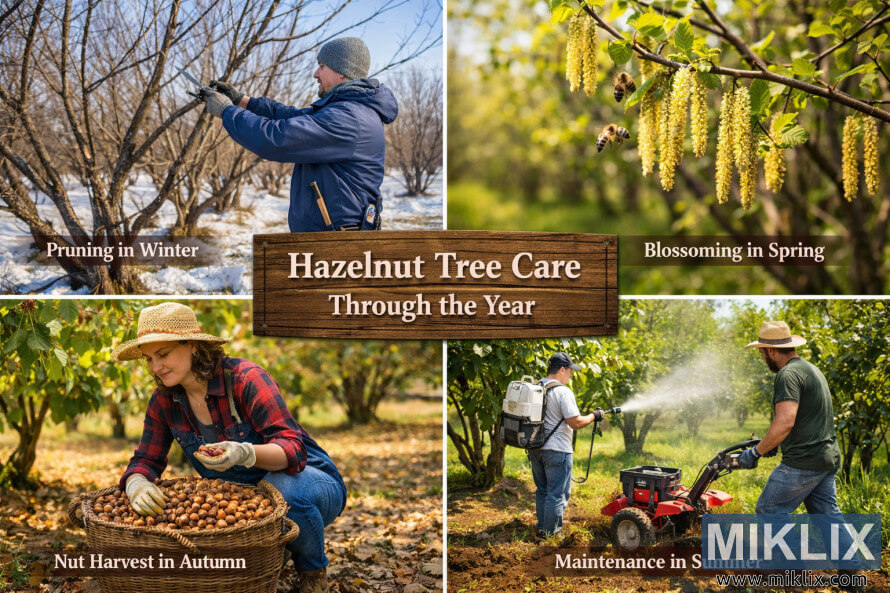
Click or tap the image for more information and higher resolutions.
Pruning
Pruning hazelnuts depends on whether you're growing them as bushes or single-stem trees. In either case, the goal is to maintain an open structure that allows good air circulation and sunlight penetration.
Bush Form Pruning
- Maintain 4-6 main stems per plant
- Remove excess suckers annually
- Prune out dead, diseased, or crossing branches
- Thin interior growth to improve air circulation
- Best done during dormant season
Tree Form Pruning
- Remove all suckers and lower branches
- Maintain a central leader with scaffold branches
- Thin branches to create an open canopy
- Remove any branches growing inward
- Prune in late winter before bud break
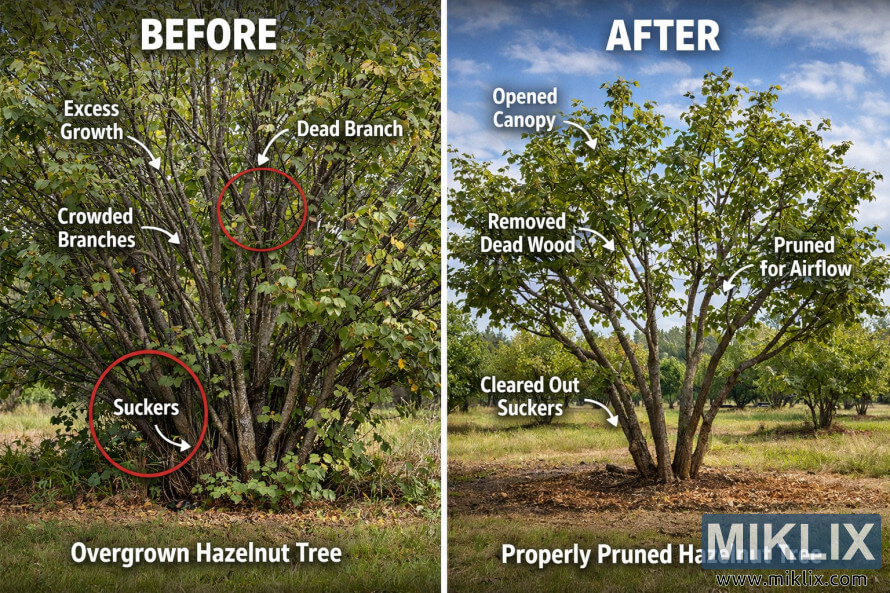
Click or tap the image for more information and higher resolutions.
Managing Pests and Diseases
Hazelnuts can face several pest and disease challenges, but with proper variety selection and management practices, most issues can be effectively controlled. Understanding common problems and their solutions will help you maintain healthy, productive plants.
Common Diseases
| Disease | Symptoms | Prevention | Treatment |
| Eastern Filbert Blight | Black cankers on branches, dieback, dead leaves remaining attached | Plant resistant varieties, maintain good air circulation | Prune out infected branches, apply copper fungicide |
| Bacterial Blight | Leaf spots, shoot dieback, sunken cankers | Avoid overhead irrigation, ensure good drainage | Copper sprays during dormant season |
| Root Rot | Yellowing leaves, stunted growth, wilting | Plant in well-drained soil, avoid overwatering | Improve drainage, reduce irrigation |
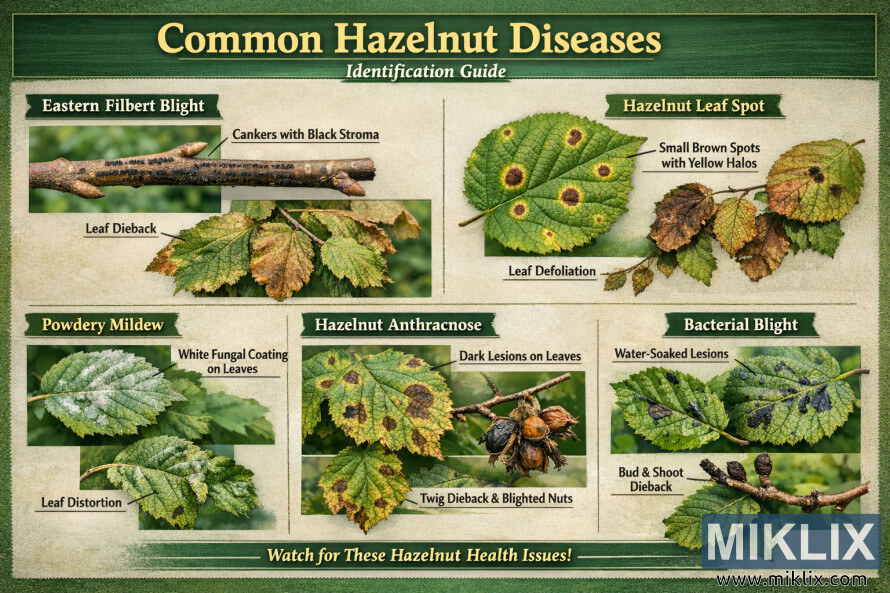
Click or tap the image for more information and higher resolutions.
Common Pests
Insect Pests
- Filbert Worm: Monitor with traps, apply appropriate insecticides if needed
- Filbert Aphid: Encourage beneficial insects, use insecticidal soap
- Hazelnut Weevil: Collect and destroy fallen nuts, apply organic pesticides
- Scale Insects: Use dormant oil sprays, prune affected branches
Animal Pests
- Squirrels: Harvest promptly, use physical barriers
- Birds: Netting, visual deterrents, prompt harvesting
- Deer: Fencing at least 8 feet tall, repellents
- Voles/Mice: Keep area around trunks clear, use guards
Warning: When using any pesticides, even organic ones, always follow label instructions carefully and apply only when necessary to minimize impact on beneficial insects and the environment.
Harvesting and Processing Your Hazelnuts
When to Harvest
Hazelnuts typically ripen in late summer to early fall, depending on your climate and the varieties grown. Watch for these signs of readiness:
- Husks begin to yellow and brown at the edges
- Nuts start falling naturally from the trees
- Kernel turns from white to cream-colored
- Shell changes from green to brown
Harvesting Methods
Hand Harvesting
For home growers with a few trees, hand harvesting is the most practical method. You can either:
- Pick nuts directly from branches when husks begin to brown
- Spread tarps under trees and shake branches to collect falling nuts
- Gather nuts from the ground daily as they fall naturally
Mechanical Harvesting
For larger plantings, mechanical options include:
- Hand-held nut gatherers that roll over fallen nuts
- Specialized nut harvesters for commercial operations
- Modified blueberry harvesters for bush-form hazelnuts
Processing Steps
- Husking: Remove the outer husks if they haven't already separated
- Cleaning: Rinse nuts to remove dirt and debris
- Drying: Spread nuts in a single layer in a warm, dry place with good air circulation for 2-3 weeks
- Curing: Allow nuts to cure for an additional 1-2 weeks to develop flavor
- Cracking: Use a nutcracker or specialized nut-cracking tool to remove shells
- Sorting: Separate kernels from shell fragments
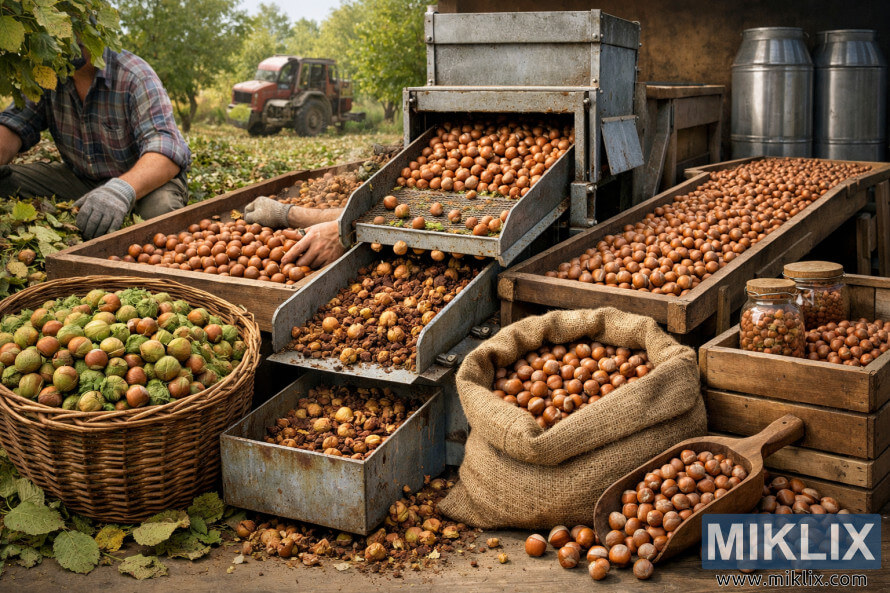
Click or tap the image for more information and higher resolutions.
Storage
Properly stored hazelnuts can maintain their quality for an extended period:
| Storage Method | In-Shell Duration | Shelled Duration | Conditions |
| Room temperature | Up to 4 months | 1-2 months | Cool, dry place in breathable containers |
| Refrigerator | Up to 1 year | 3-6 months | Airtight containers |
| Freezer | 1-2 years | Up to 1 year | Vacuum-sealed or airtight containers |
Troubleshooting Common Challenges
Why aren't my hazelnut trees producing nuts?
Several factors can affect nut production:
- Age: Trees may not produce until 4-6 years old
- Pollination: Ensure you have compatible varieties planted nearby
- Sunlight: Insufficient sun reduces flowering and nut set
- Pruning: Excessive pruning can remove productive wood
- Nutrition: Imbalanced fertilization can reduce yields
How do I control excessive suckering?
American hazelnuts naturally produce many suckers. To control them:
- Regularly prune suckers during the growing season
- Maintain 4-6 main stems per plant
- Mow around plants to control suckers spreading outward
- For tree forms, be vigilant about removing all suckers
Why are my hazelnuts empty or poorly filled?
Empty nuts (blanks) can result from:
- Poor pollination due to incompatible varieties
- Environmental stress during nut development
- Insect damage, particularly from filbert weevils
- Nutrient deficiencies during critical growth periods
- Drought stress during kernel development
How do I protect young trees from winter damage?
Young hazelnuts can be vulnerable to winter injury:
- Apply 2-3 inches of mulch around the base (not touching the trunk)
- Install tree guards to prevent rodent damage
- Avoid late-season fertilization that promotes tender growth
- Consider wrapping trunks in cold regions
- Plant varieties appropriate for your hardiness zone
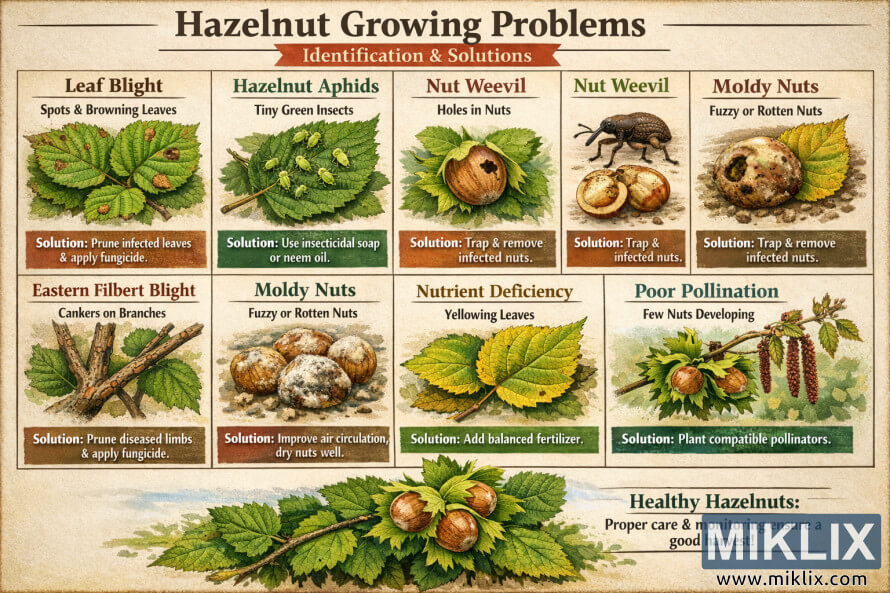
Click or tap the image for more information and higher resolutions.
Conclusion: Enjoying Your Hazelnut Harvest
Growing hazelnuts at home is a rewarding journey that connects you to an ancient food source while providing nutritious harvests for years to come. With proper variety selection, site preparation, and ongoing care, your hazelnut trees can become productive fixtures in your landscape that require relatively little maintenance once established.
Remember that patience is key—while hazelnuts begin producing earlier than many nut trees, it still takes several years to reach full production. Use this time to learn about your trees, observe their growth patterns, and fine-tune your management practices. Each year, you'll gain valuable experience that will help you maximize your harvests in the future.
Whether you're growing hazelnuts for personal enjoyment, to support local wildlife, or as part of a sustainable food system, the skills and knowledge you develop will serve you well in all your gardening endeavors. Happy growing!

Click or tap the image for more information and higher resolutions.
Further Reading
If you enjoyed this post, you may also like these suggestions:
- A Complete Guide to Growing Pistachio Nuts in Your Own Garden
- Growing Almonds: A Complete Guide for Home Gardeners
- A Complete Guide to Growing Walnuts in Your Own Garden