
Image: Hazelnut Growing Problems: Identification and Solutions
Published: January 11, 2026 at 1:58:30 PM UTC
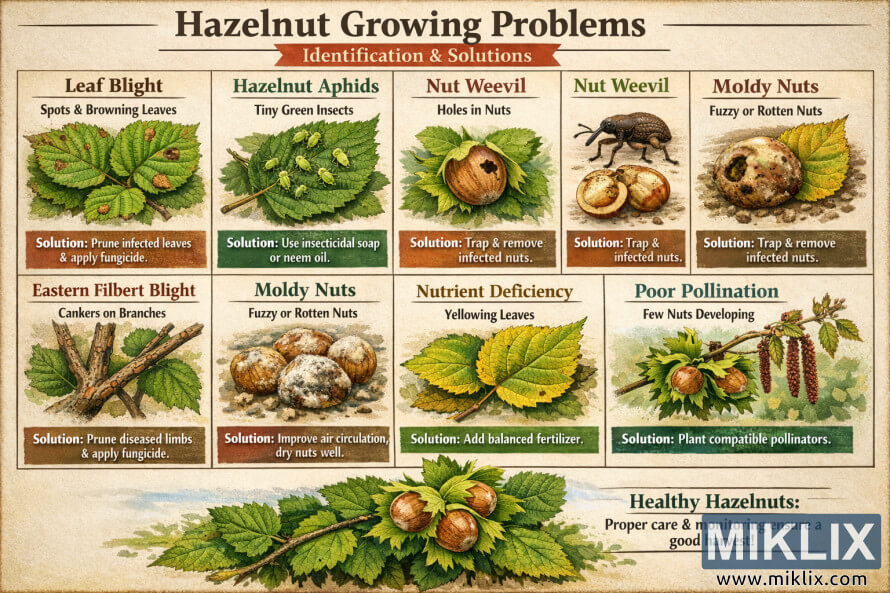
Educational hazelnut growing guide infographic illustrating common diseases, pests, and deficiencies with clear images and practical solutions to help growers identify and resolve hazelnut problems.
Available versions of this image
The image files available for download below are less compressed and higher resolution - and as a result of that, higher quality - than the images embedded in articles and pages on this website, which are more optimized for file size in order to reduce bandwidth consumption.
Regular size (1,536 x 1,024)
Large size (3,072 x 2,048)
Very large size (4,608 x 3,072)
Extra large size (6,144 x 4,096)
Comically large size (1,048,576 x 699,051)
- Still uploading... ;-)
Image description
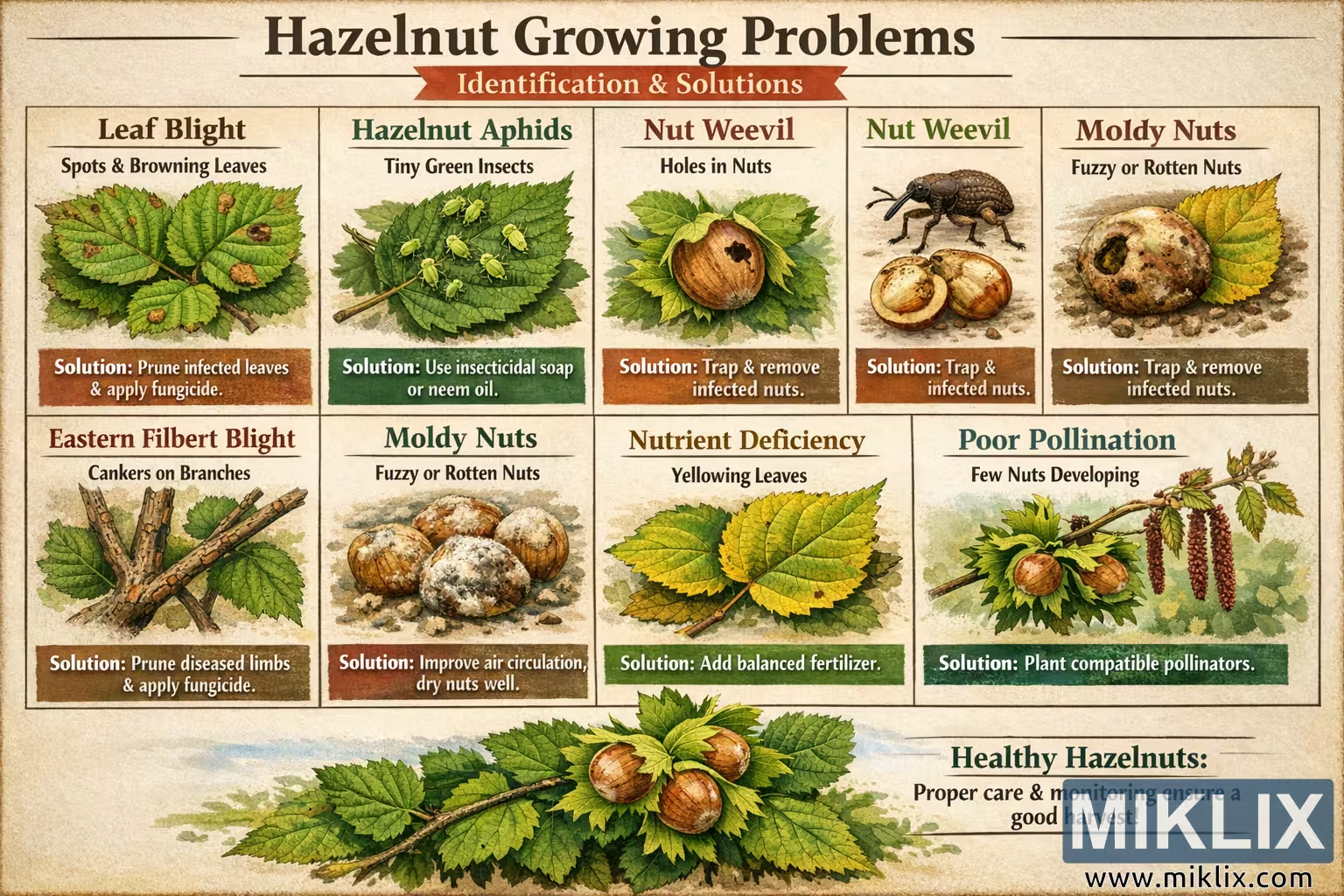
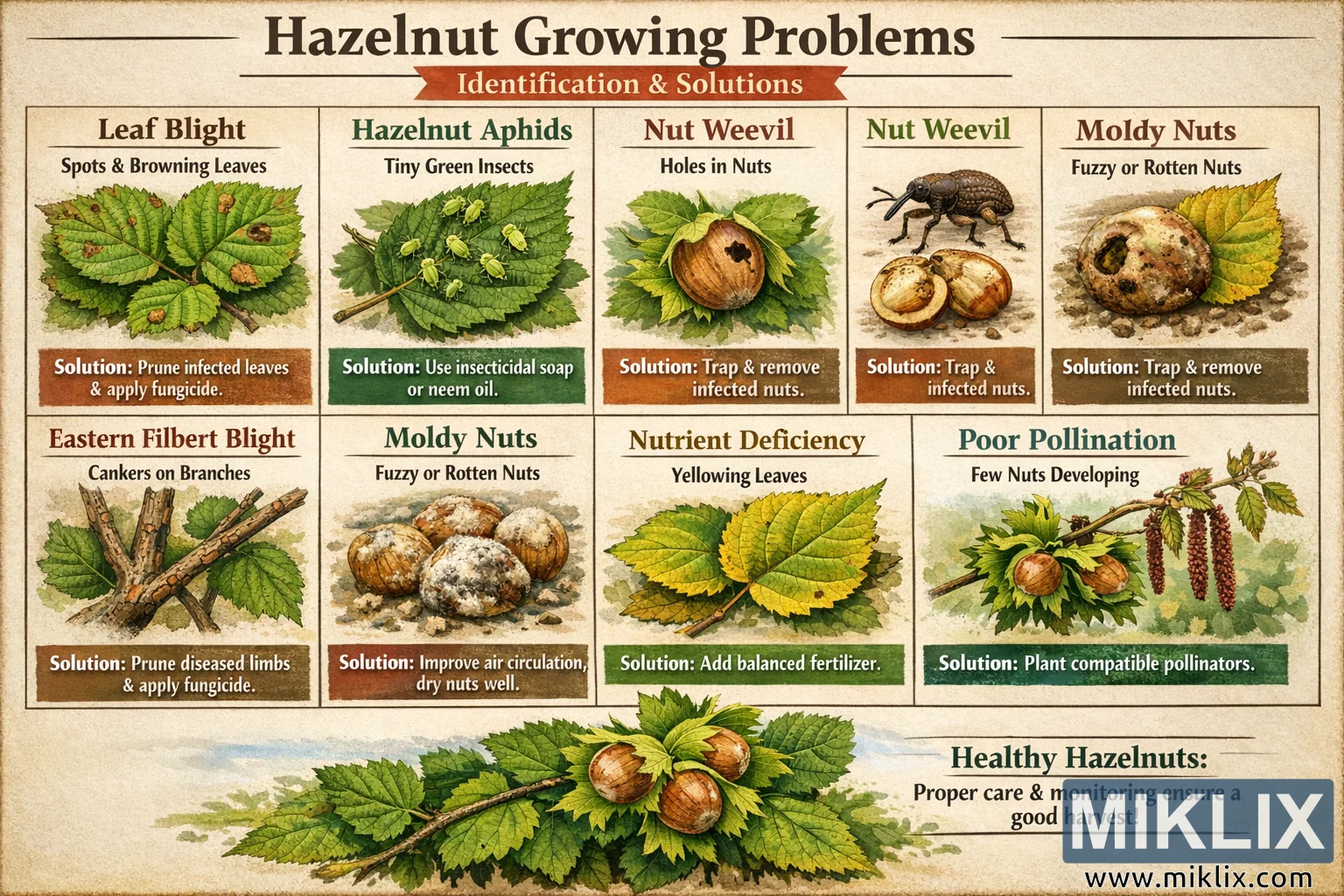
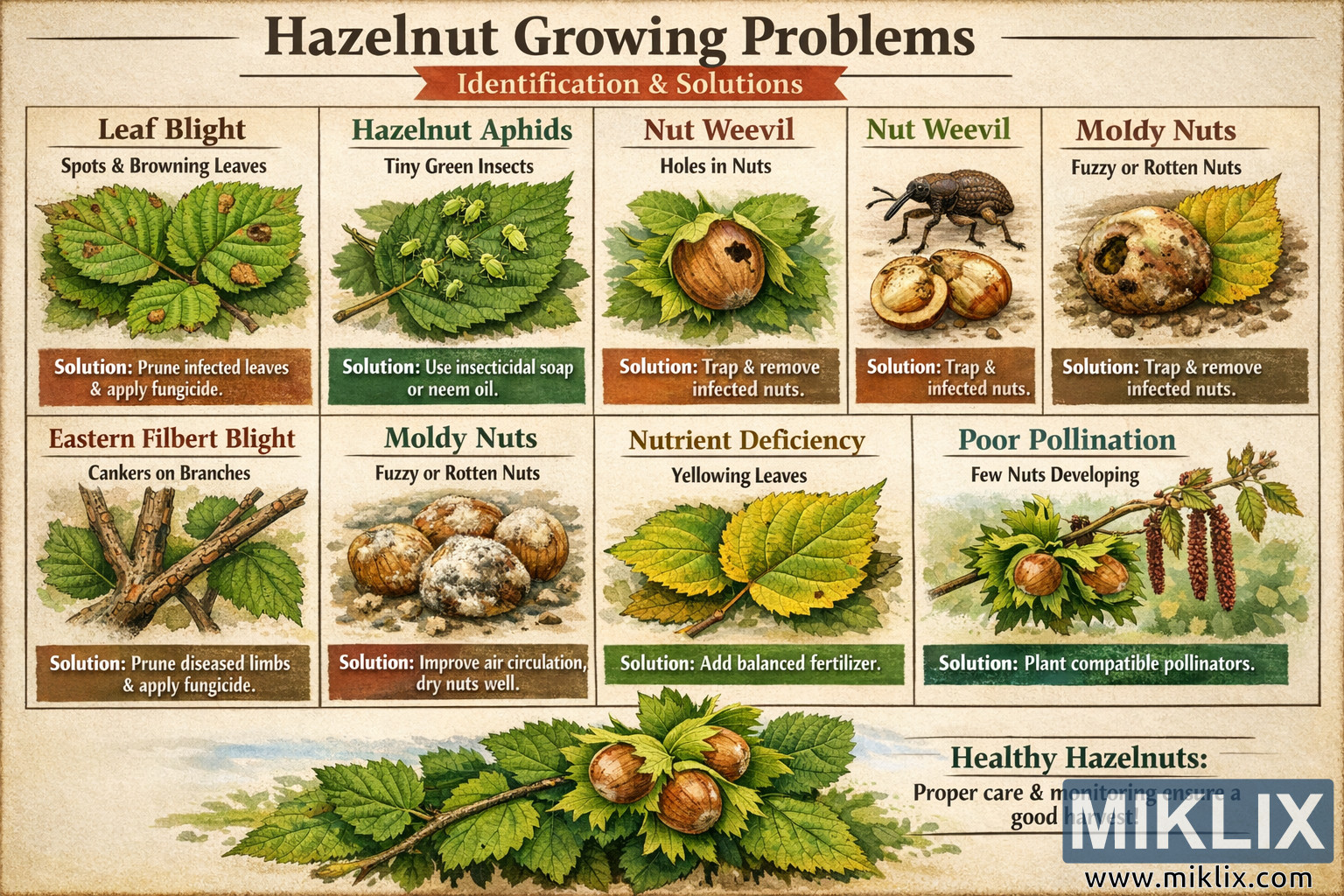
The image is a wide, landscape-oriented educational infographic designed as a visual guide for identifying and resolving common hazelnut growing problems. It has a vintage, botanical illustration style, with warm parchment-like background tones, hand-painted textures, and detailed drawings of hazelnut leaves, branches, nuts, and insects. At the very top center, a large header reads "Hazelnut Growing Problems," followed by a ribbon-style subtitle, "Identification & Solutions," establishing the image as a practical reference for growers.
The main body of the infographic is organized into a clean grid of individual panels, each dedicated to a specific hazelnut issue. Every panel includes a bold problem title, a short descriptive subtitle explaining visible symptoms, an illustrated example, and a clearly labeled solution box at the bottom. The illustrations are realistic and detailed, showing leaf surfaces, nut shells, and pests in a way that supports visual diagnosis.
One panel focuses on Leaf Blight, illustrated with hazelnut leaves covered in brown spots and yellowing edges. The accompanying solution advises pruning infected leaves and applying fungicide. Another panel addresses Hazelnut Aphids, showing clusters of tiny green insects on leaf veins, with a recommended solution of using insecticidal soap or neem oil. Nut Weevil damage is shown through close-up drawings of hazelnuts with visible holes in the shells and a detailed depiction of the weevil itself; the solution emphasizes trapping and removing infected nuts.
Moldy Nuts appear in multiple panels, illustrated as hazelnuts covered in white or gray fuzzy growth, sometimes cracked open to reveal internal rot. The suggested remedies include improving air circulation and ensuring harvested nuts are dried thoroughly. Eastern Filbert Blight is depicted with branches showing dark cankers and damaged bark, paired with guidance to prune diseased limbs and apply fungicide. Nutrient Deficiency is represented by leaves with yellowing between veins, signaling imbalance, and the solution recommends adding a balanced fertilizer.
Another panel highlights Poor Pollination, illustrated by branches with few developing nuts and visible catkins, suggesting inadequate cross-pollination. The solution encourages planting compatible pollinator varieties nearby. Throughout the grid, the solution boxes are color-coded in earthy greens and browns, reinforcing a natural, agricultural theme and making the advice easy to scan.
At the bottom of the infographic, a concluding section shows a healthy hazelnut branch with vibrant green leaves and full, intact nuts. A final message reads, "Healthy Hazelnuts: Proper care & monitoring ensure a good harvest!" This closing visual and text reinforce the overall message that early identification, regular monitoring, and appropriate management practices can prevent losses and promote productive hazelnut orchards. Overall, the image functions as a comprehensive, visually intuitive reference tool for growers, combining diagnostic imagery with straightforward solutions in a clear, accessible layout.
The image is related to: A Complete Guide to Growing Hazelnuts at Home