
Image: Walnut Husk Fly Damage and Walnut Blight Symptoms on Green Walnuts
Published: January 15, 2026 at 9:44:51 PM UTC
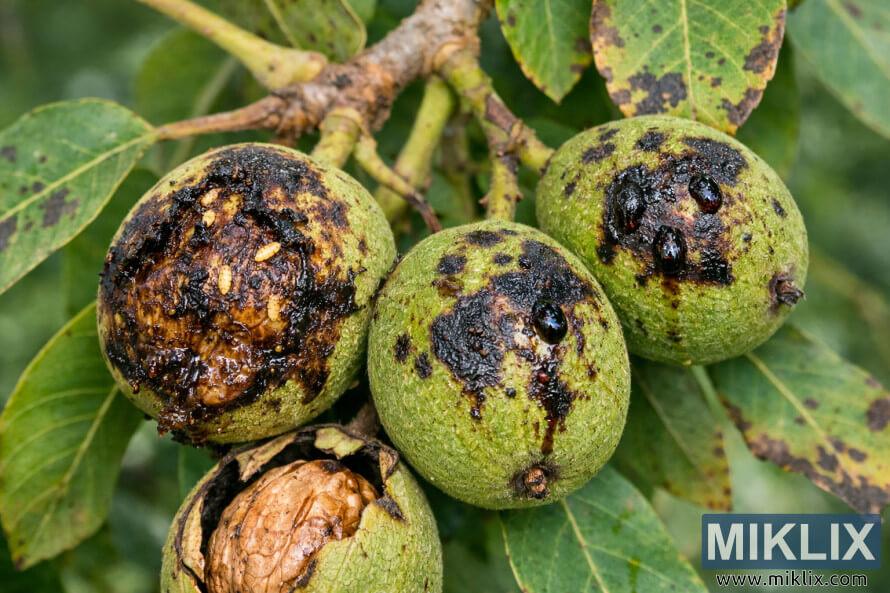
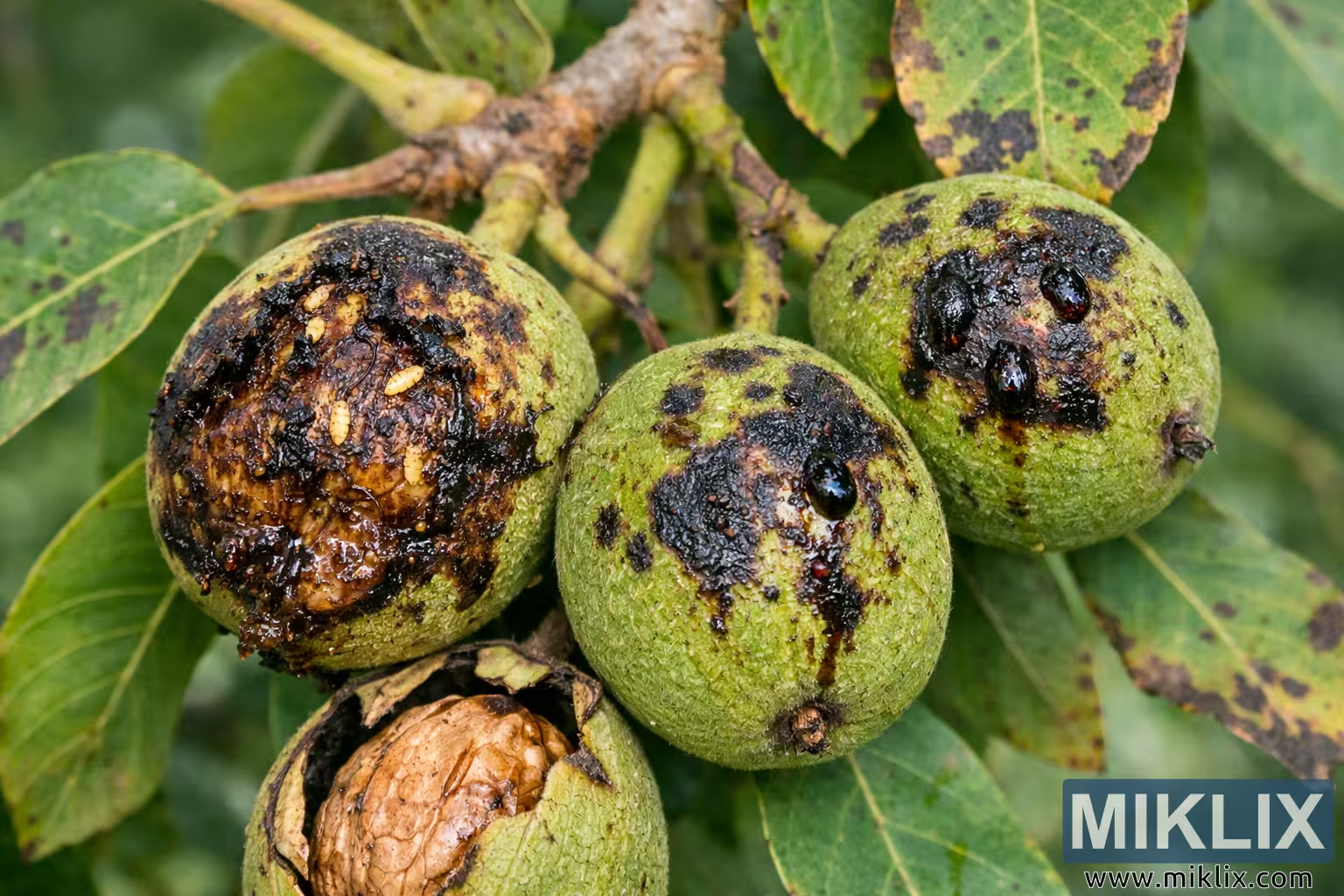
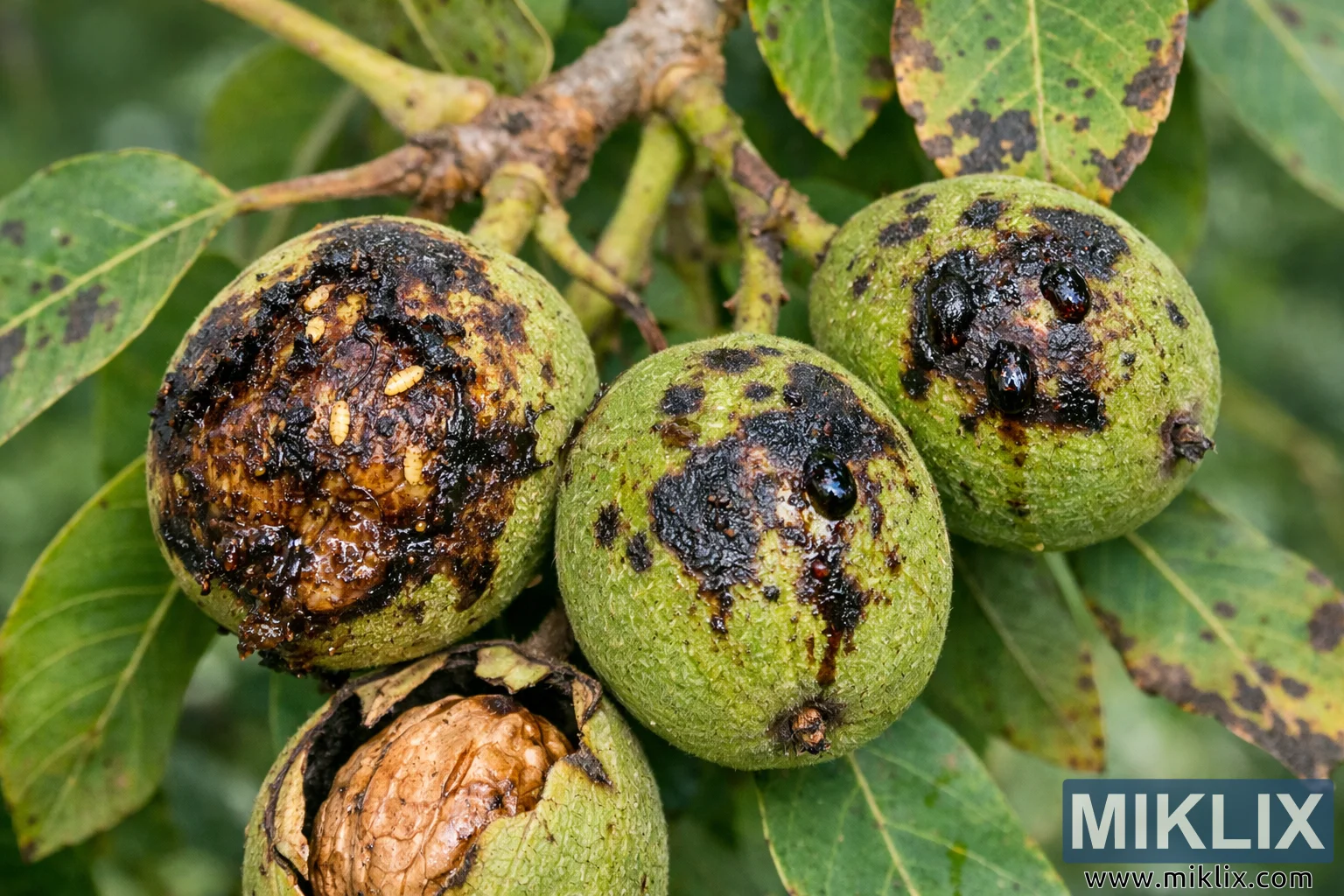
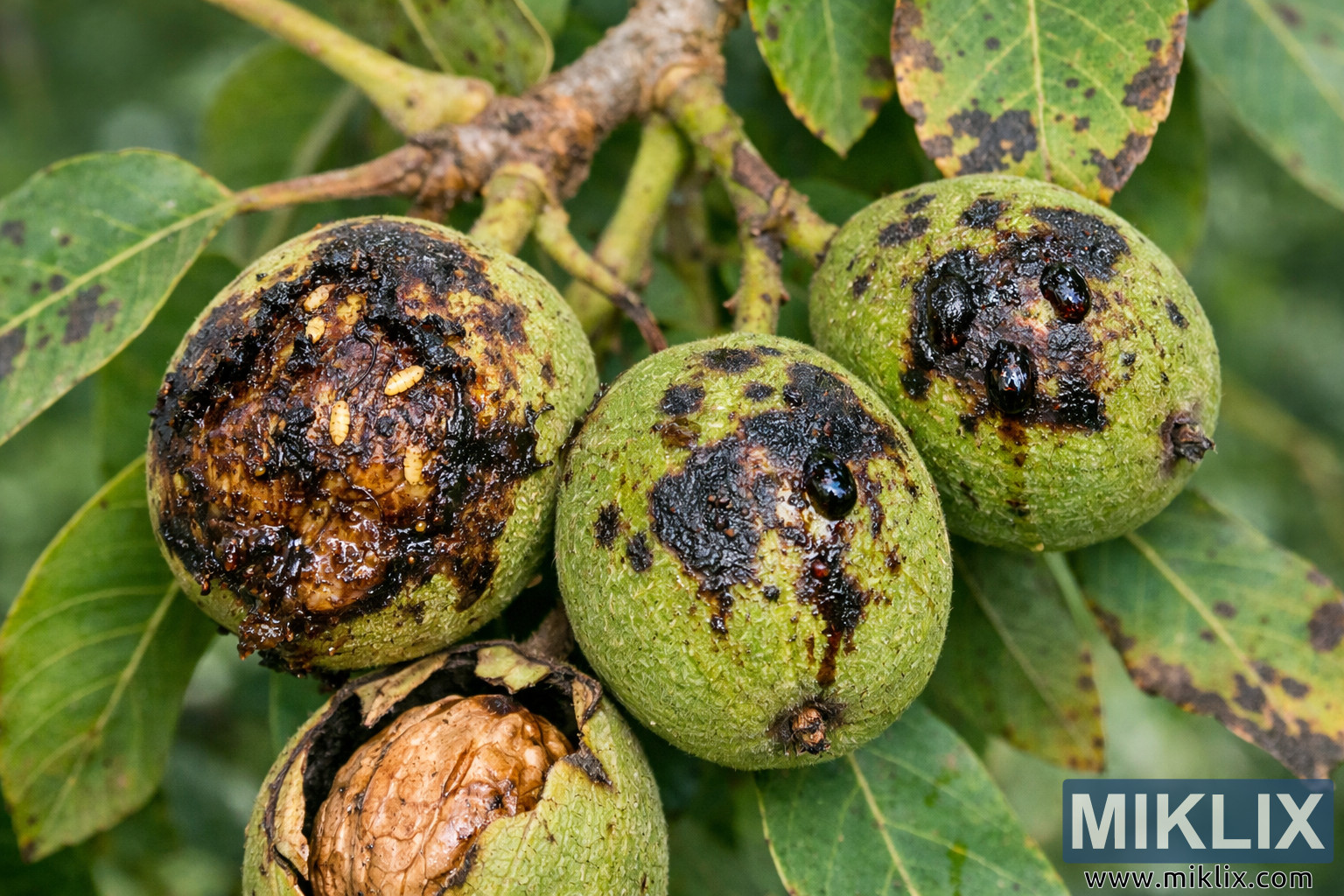
High-resolution image showing common walnut pests and diseases, including walnut husk fly infestation with visible larvae and walnut blight symptoms marked by black lesions on green walnuts.
Available versions of this image
The image files available for download below are less compressed and higher resolution - and as a result of that, higher quality - than the images embedded in articles and pages on this website, which are more optimized for file size in order to reduce bandwidth consumption.
Regular size (1,536 x 1,024)
Large size (3,072 x 2,048)
Very large size (4,608 x 3,072)
Extra large size (6,144 x 4,096)
Comically large size (1,048,576 x 699,051)
- Still uploading... ;-)
Image description
The image depicts a detailed, high-resolution view of common walnut pests and diseases affecting walnuts on the tree, presented in a natural orchard setting. In the foreground, a small cluster of green walnuts hangs from a woody branch, surrounded by broad, pinnate walnut leaves. The leaves themselves show signs of stress, including irregular brown and black spotting, marginal necrosis, and slight curling, which visually reinforces the presence of disease pressure in the canopy. The background is softly blurred, keeping attention focused on the affected fruit and foliage.
The walnut on the left displays severe walnut husk fly damage. Its green husk has partially collapsed and darkened, turning black and brown with a wet, decaying appearance. The tissue appears softened and ruptured, exposing the interior of the husk. Several pale, cream-colored larvae are clearly visible within the decomposing husk tissue, indicating an advanced infestation. The surface is glossy in places due to moisture and breakdown of plant material, giving the husk a slimy texture that contrasts strongly with the otherwise firm, matte green husks of healthier walnuts.
The two walnuts to the right primarily show symptoms consistent with walnut blight. Their husks are marked by distinct, irregular black lesions that appear sunken and water-soaked. In some areas, dark bacterial ooze or residue is visible, forming shiny black patches on the husk surface. The lesions are sharply contrasted against the surrounding green tissue, making them easy to identify. The overall shape of these walnuts remains intact, but the discoloration and spotting indicate internal infection and reduced fruit quality.
Below the cluster, a partially split husk reveals the hard, brown walnut shell inside, suggesting premature husk breakdown often associated with pest damage and secondary infections. The branch supporting the fruit shows natural texture with small nodes and scars, while the leaves around the walnuts display additional blight-related spotting that mirrors the symptoms seen on the fruit.
Overall, the image functions as an educational visual reference, clearly illustrating the difference between insect damage caused by walnut husk fly larvae and bacterial disease symptoms caused by walnut blight. The sharp focus, natural lighting, and realistic color tones make the image suitable for agricultural extension materials, pest management guides, or educational resources focused on walnut production and plant pathology.
The image is related to: A Complete Guide to Growing Walnuts in Your Own Garden