
A Complete Guide to Growing Walnuts in Your Own Garden
Published: January 15, 2026 at 9:44:51 PM UTC
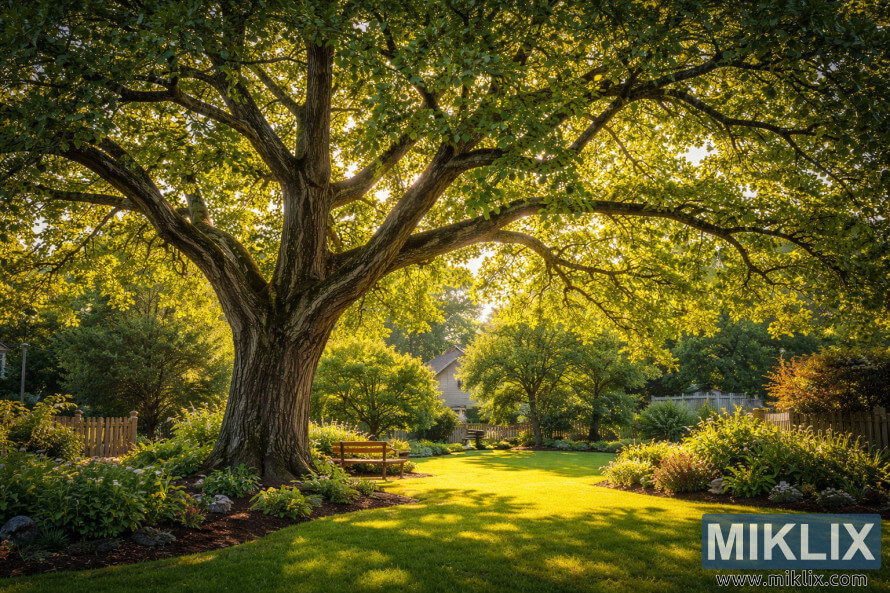
Growing your own walnut trees can be one of the most rewarding long-term garden projects you'll ever undertake. These majestic trees not only provide delicious, nutritious nuts but also create beautiful shade, support wildlife, and can become a legacy for future generations.
Click or tap the image for more information and higher resolutions.
While walnut trees require patience—taking several years before producing their first harvest—the wait is well worth it. This comprehensive guide will walk you through everything you need to know to successfully grow walnuts, from selecting the right variety for your climate to harvesting and storing your bounty.
Choosing the Right Walnut Variety for Your Climate
Selecting the appropriate walnut variety is crucial for success, as different types have varying climate requirements, growth habits, and nut characteristics. The two most common species grown in the United States are English (Persian) walnuts and Black walnuts.
English Walnut (Juglans regia)
- Most commonly grown for commercial nut production
- Thinner shells that are easier to crack
- Milder, sweeter flavor compared to black walnuts
- Less cold-hardy than black walnuts (generally zones 5-9)
- Popular varieties: 'Franquette', 'Chandler', 'Howard', and 'Carpathian'
Black Walnut (Juglans nigra)
- Native to eastern North America
- Extremely hardy (zones 4-9)
- Produces stronger-flavored nuts with thicker, harder shells
- Valuable timber tree with beautiful wood
- Contains more juglone, which can inhibit growth of nearby plants
- Notable varieties: 'Thomas', 'Sparrow', and 'Kwik Krop'
Climate Considerations for Walnut Trees
Cold Climates (Zones 4-5)
- Choose 'Carpathian' English walnuts, specifically bred for cold hardiness
- Black walnuts are naturally more cold-tolerant
- Look for late-flowering varieties to avoid spring frost damage
- Plant on slopes where possible to allow cold air to drain away
Moderate to Warm Climates (Zones 6-9)
- Most English walnut varieties will thrive
- 'Chandler' and 'Howard' perform well in warmer regions
- Ensure adequate winter chill hours for proper dormancy
- Consider heat tolerance during summer months
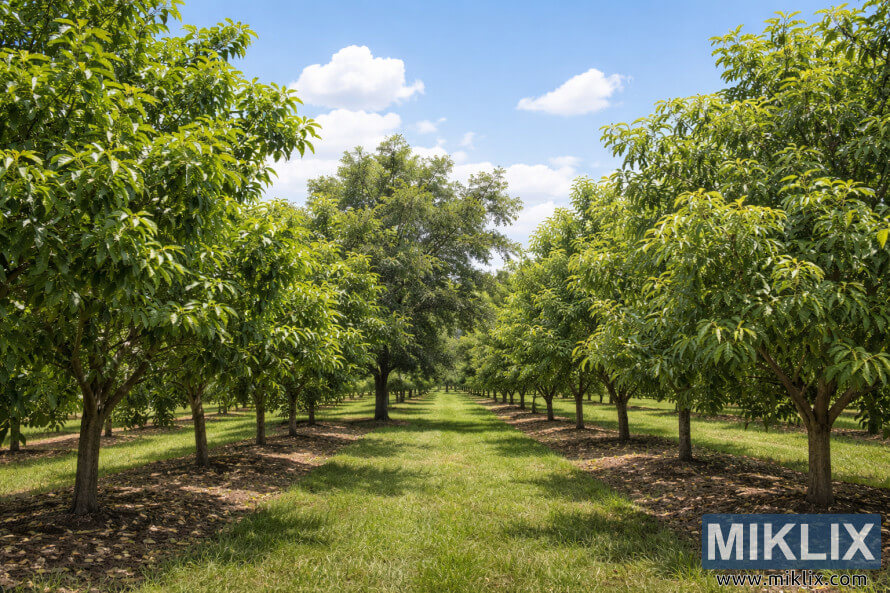
Pro Tip: For most home gardeners, selecting a grafted tree from a nursery will give you a significant head start. Grafted trees typically begin producing nuts in 4-6 years, compared to 8-10+ years for trees grown from seed.
Click or tap the image for more information and higher resolutions.
Finding the Perfect Location and Soil for Your Walnut Trees
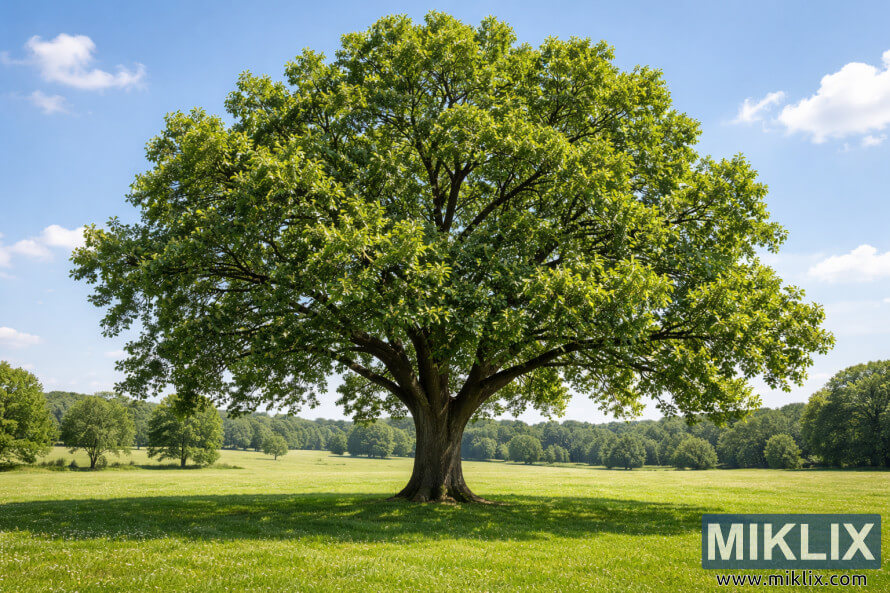
Walnut trees are a long-term investment, so selecting the right planting location is critical. These trees can live for decades and reach heights of 50-70 feet with an equal spread, so planning ahead is essential.
Ideal Growing Conditions
- Sunlight: Walnuts require full sun (at least 6-8 hours daily) to produce good nut crops
- Space: Plant trees 40-60 feet apart to accommodate their mature size
- Protection: Avoid areas with strong prevailing winds that could damage branches
- Drainage: Choose locations with good water drainage; walnut trees hate "wet feet"
- Frost pockets: Avoid low-lying areas where cold air settles, as spring frosts can damage flowers
Soil Requirements for Walnut Trees
Walnuts grow best in deep, fertile, well-drained soil. Before planting, it's worth conducting a soil test to understand your soil's composition and make necessary amendments.
Ideal Soil Characteristics
- Deep soil (at least 6 feet) to accommodate extensive root systems
- Well-drained loamy soil with good moisture retention
- pH between 6.0-7.5 (slightly acidic to neutral)
- Rich in organic matter
Soil Preparation
- Test soil to determine pH and nutrient levels
- Add lime if soil is too acidic (pH below 6.0)
- Incorporate compost or well-rotted manure to improve fertility
- Ensure proper drainage by breaking up compacted soil
Important: Walnut trees, especially black walnuts, produce a substance called juglone that can inhibit the growth of many plants. Avoid planting sensitive species like tomatoes, potatoes, eggplants, peppers, azaleas, and rhododendrons near walnut trees.
Click or tap the image for more information and higher resolutions.
Planting Your Walnut Tree: Seeds vs. Saplings
You can grow walnut trees either from seeds (nuts) or from young saplings purchased from a nursery. Each method has its advantages and challenges.
Growing from Seeds
Starting walnuts from seed requires patience but can be rewarding and cost-effective.
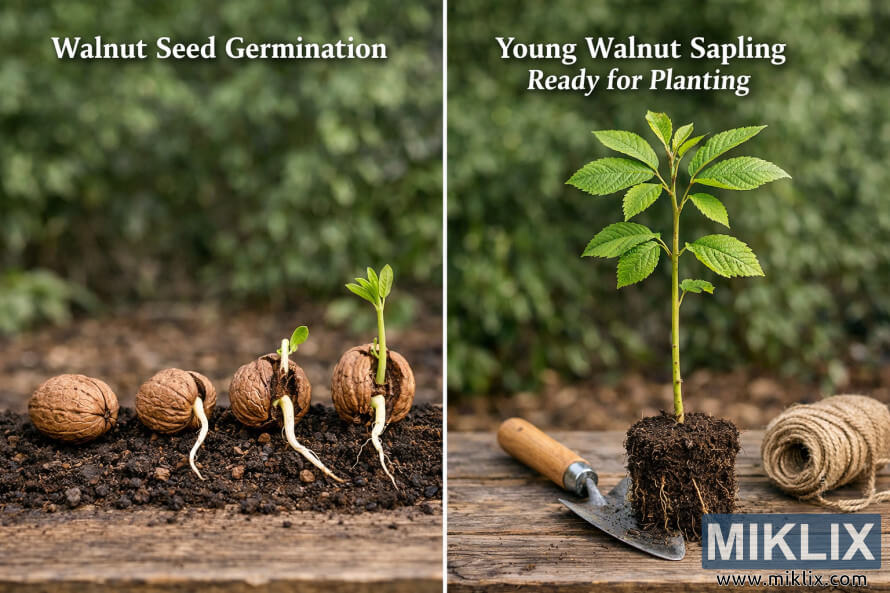
- Collect fresh walnuts in fall when they naturally drop from trees
- Remove the husks (wear gloves to prevent staining) and clean the nuts
- Stratify the seeds by placing them in moist sand or peat moss in a plastic bag and refrigerating for 3-4 months
- Plant stratified nuts in spring, 1-2 inches deep in well-drained soil
- Protect from rodents with hardware cloth or other barriers
- Keep soil consistently moist but not waterlogged
Click or tap the image for more information and higher resolutions.
Planting Saplings
Purchasing young trees from a nursery gives you a significant head start and ensures you're growing a known variety.
- Purchase bare-root or container-grown trees from a reputable nursery
- Plant in late fall or early spring when trees are dormant
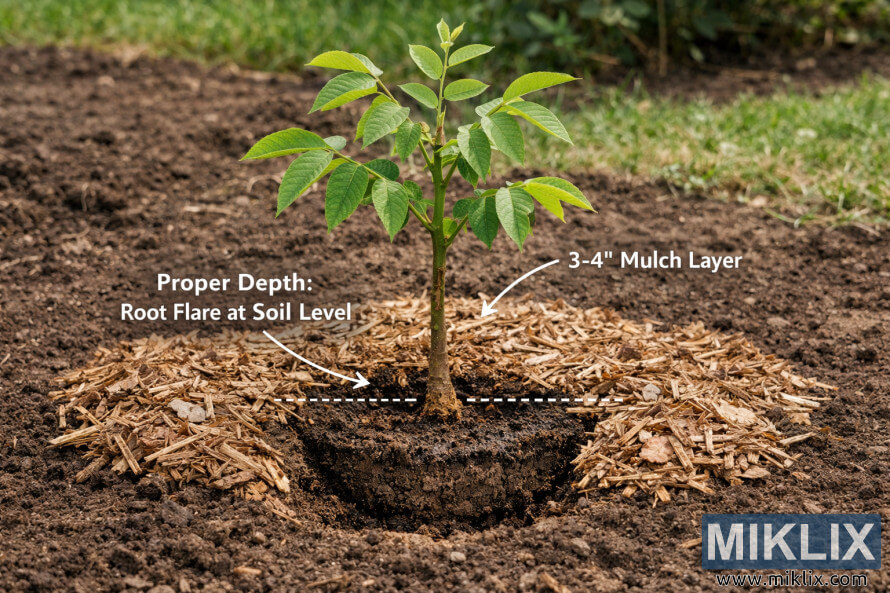
- Dig a hole twice as wide as the root system and just deep enough to accommodate the roots
- Position the tree so the graft union (if present) is 2-3 inches above soil level
- Backfill with soil mixed with compost at a 3:1 ratio
- Water thoroughly and apply 2-3 inches of mulch, keeping it away from the trunk
- Stake the tree if needed to provide support against wind
Click or tap the image for more information and higher resolutions.
Time to Production: Trees grown from seed typically take 8-10+ years to begin producing nuts, while grafted saplings may start producing in 4-6 years. Consider this timeline when deciding which method to use.
Seasonal Care Requirements for Walnut Trees
Proper care throughout the growing season is essential for healthy walnut trees and abundant harvests. Here's a breakdown of seasonal tasks to keep your trees thriving.
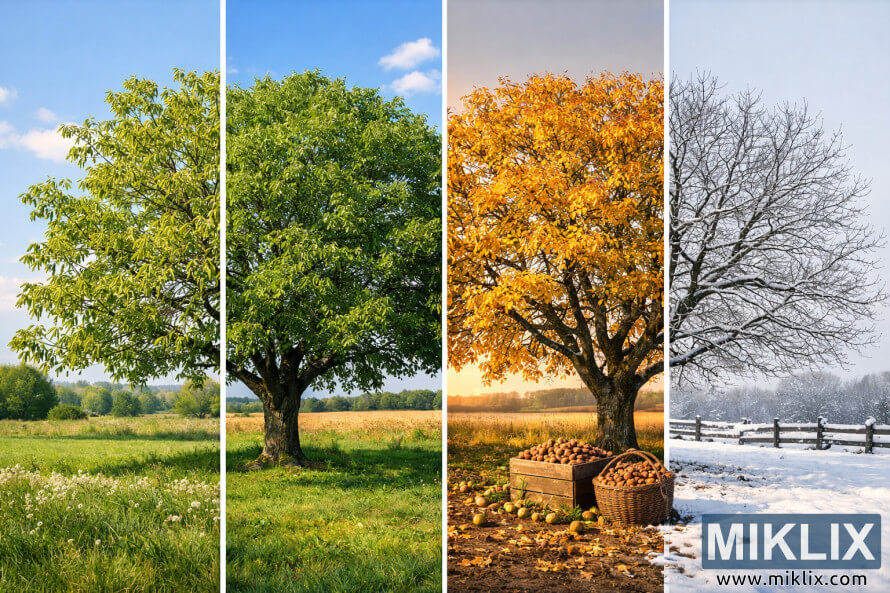
Spring Care (March-May)
- Fertilization: Apply a balanced fertilizer (10-10-10) in early spring as growth begins
- Watering: Begin regular watering as leaves emerge if rainfall is insufficient
- Pest monitoring: Watch for early signs of insect activity, especially aphids
- Weed control: Remove competing vegetation from around young trees
Summer Care (June-August)
- Watering: Provide deep watering (1-2 inches) every 7-10 days during dry periods
- Pest management: Monitor for walnut husk fly and other summer pests
- Thinning: Remove some nuts if the tree is overburdened to improve quality
- Soil maintenance: Maintain mulch layer to conserve moisture and suppress weeds
Fall Care (September-November)
- Harvesting: Collect nuts as they fall naturally or gently shake branches
- Cleanup: Remove fallen leaves and husks to reduce disease pressure
- Watering: Continue watering until the first frost if conditions are dry
- Soil building: Apply compost around the drip line to improve soil for next season
Winter Care (December-February)
- Pruning: Remove dead, damaged, or crossing branches during dormancy
- Protection: Wrap trunks of young trees to prevent sunscald and rodent damage
- Planning: Assess tree performance and plan for next season's care
- Tool maintenance: Clean and sharpen pruning tools for the coming season
Click or tap the image for more information and higher resolutions.
Watering and Fertilizing Your Walnut Trees
Proper watering and fertilization are crucial for developing healthy, productive walnut trees. While established trees are relatively drought-tolerant, they need consistent moisture during key growth periods to produce quality nuts.
Watering Guidelines
Young Trees (1-3 years)
- Water deeply once a week during the growing season
- Apply 5-10 gallons per watering session
- Ensure moisture reaches 18-24 inches deep
- Increase frequency during hot, dry periods
- Reduce in fall to help trees harden off for winter
Established Trees (4+ years)
- Deep watering every 2-3 weeks during dry periods
- Focus on critical periods: spring growth, nut development
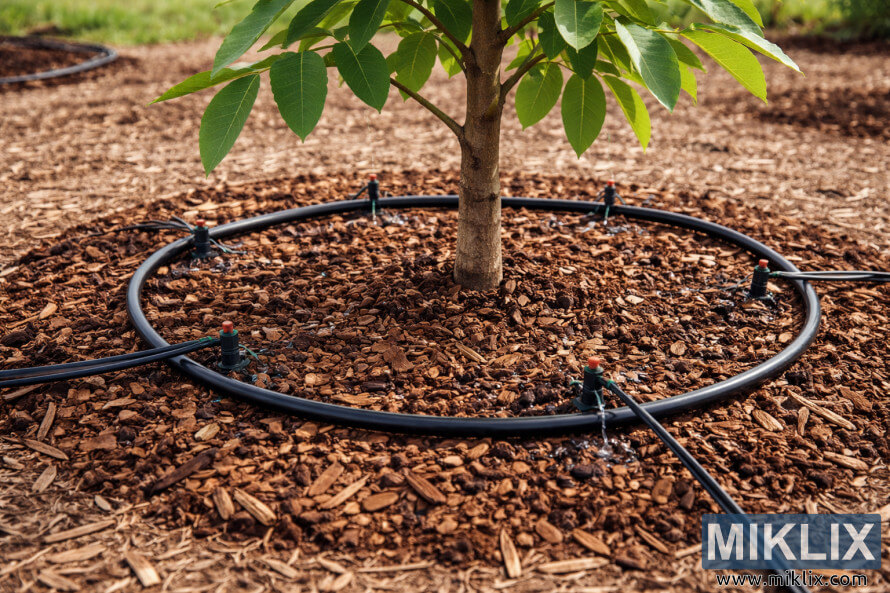
- Apply water at the drip line, not near the trunk
- Aim for slow, deep irrigation rather than frequent light watering
- Adjust based on soil type and weather conditions
Water-Saving Tip: Install a drip irrigation system around your walnut trees to deliver water efficiently directly to the root zone. This reduces water waste and helps prevent foliar diseases by keeping leaves dry.
Click or tap the image for more information and higher resolutions.
Fertilization Program
Walnut trees benefit from regular fertilization, but over-fertilizing can lead to excessive vegetative growth at the expense of nut production.
Young Trees (1-3 years)
- Apply 1/2 pound of balanced fertilizer (10-10-10) per year of tree age in early spring
- Spread fertilizer evenly from 6 inches away from the trunk to slightly beyond the drip line
- Apply a second, lighter application in late spring if growth is slow
- Avoid fertilizing after July to prevent stimulating late growth
Bearing Trees (4+ years)
- Apply 1 pound of balanced fertilizer per inch of trunk diameter
- Distribute fertilizer at the drip line where feeder roots are concentrated
- Consider foliar analysis to identify specific nutrient deficiencies
- Watch for signs of nitrogen deficiency: yellowing leaves, poor growth
- Apply zinc if trees show symptoms of deficiency (small leaves, rosetting)
Soil Testing: Conduct a soil test every 3-5 years to monitor nutrient levels and pH. This allows you to tailor your fertilization program to your soil's specific needs rather than applying nutrients unnecessarily.
Pruning and Training Walnut Trees
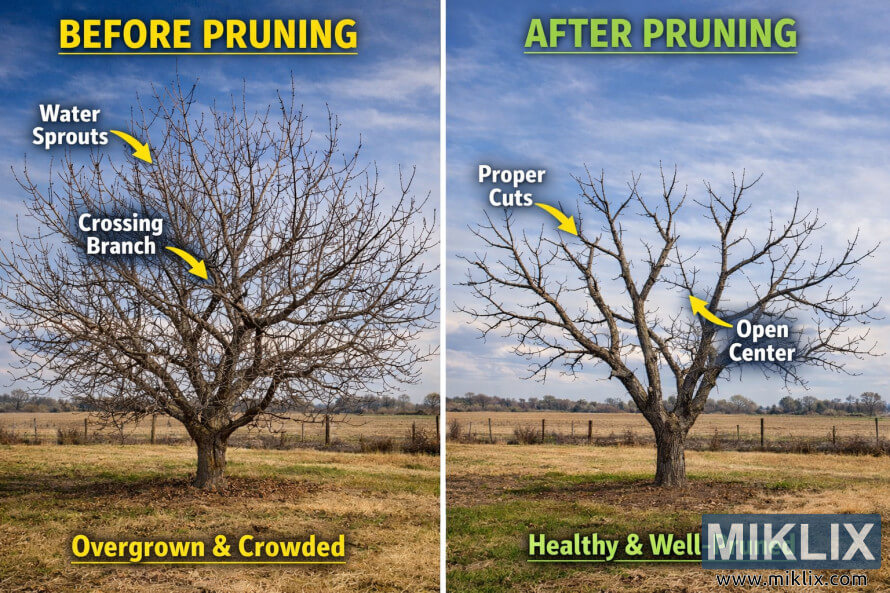
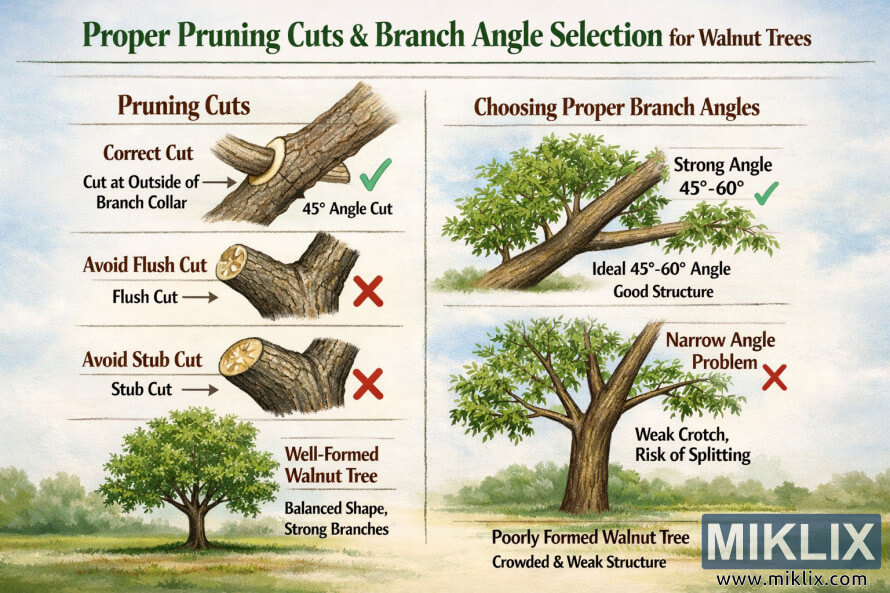
Proper pruning establishes a strong framework for your walnut tree, improves air circulation, and helps maintain productive nut-bearing wood. Most pruning should be done during the dormant season (late winter) to minimize sap flow and reduce disease risk.
Click or tap the image for more information and higher resolutions.
Training Young Trees (Years 1-5)
- Establish a central leader by selecting a strong, upright stem
- Select 4-6 main scaffold branches spaced 8-12 inches apart vertically
- Position scaffolds evenly around the trunk (ideally at 45-90° angles)
- Remove competing leaders and inward-growing branches
- Head back long scaffolds by 1/3 to encourage branching
Pruning Established Trees
- Remove dead, diseased, or damaged wood annually
- Thin out crowded areas to improve light penetration and air circulation
- Remove water sprouts and suckers that drain energy from the tree
- Maintain the tree's height by cutting back to outward-facing branches
- Avoid heavy pruning in a single year; spread major reshaping over several seasons
Click or tap the image for more information and higher resolutions.
Caution: Walnut trees are prone to "bleeding" (sap flow) when pruned in late winter or early spring. While this looks concerning, it's generally not harmful to the tree. To minimize bleeding, prune during the dormant season when sap flow is reduced.
Managing Pests and Diseases in Walnut Trees
Like all fruit and nut trees, walnuts can be affected by various pests and diseases. Early identification and intervention are key to maintaining tree health and nut quality.
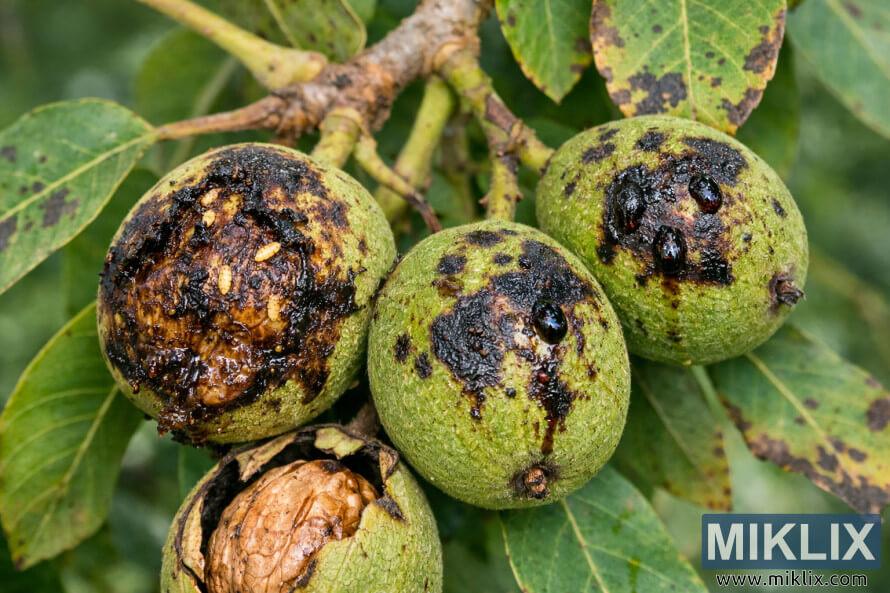
Common walnut problems: (A) Walnut husk fly damage, (B) Walnut blight symptoms, (C) Aphid infestation
Common Walnut Pests
Walnut Husk Fly
- Symptoms: Black, soft spots on the husk; stained shells
- Control: Sticky traps, timely harvest, approved insecticides
- Prevention: Clean up fallen nuts promptly
Aphids
- Symptoms: Curled leaves, sticky honeydew, sooty mold
- Control: Insecticidal soap, neem oil, beneficial insects
- Prevention: Maintain tree vigor, encourage natural predators
Codling Moth
- Symptoms: Worm-like larvae inside nuts, early nut drop
- Control: Pheromone traps, timed sprays, trunk banding
- Prevention: Remove infested nuts, maintain orchard sanitation
Scale Insects
- Symptoms: Small bumps on branches, yellowing leaves
- Control: Horticultural oil, dormant oil sprays
- Prevention: Proper pruning to improve air circulation
Click or tap the image for more information and higher resolutions.
Common Walnut Diseases
Walnut Blight
- Symptoms: Black lesions on leaves, shoots, and nuts
- Control: Copper-based fungicides applied at budbreak
- Prevention: Resistant varieties, proper spacing for airflow
Thousand Cankers Disease
- Symptoms: Yellowing leaves, branch dieback, multiple cankers
- Control: No effective treatment; remove infected trees
- Prevention: Avoid introducing infected wood, maintain tree vigor
Anthracnose
- Symptoms: Brown spots on leaves, premature leaf drop
- Control: Fungicide applications, proper sanitation
- Prevention: Improve air circulation, clean up fallen leaves
Root Rot
- Symptoms: Stunted growth, yellowing foliage, decline
- Control: Improve drainage, avoid overwatering
- Prevention: Plant in well-drained soil, avoid root damage
Integrated Pest Management (IPM): Rather than relying solely on chemical controls, implement an IPM approach that combines cultural practices, biological controls, and targeted treatments only when necessary. This sustainable approach protects beneficial insects and reduces environmental impact.
Harvesting and Processing Your Walnut Crop
After years of patient care, harvesting your own walnuts is incredibly satisfying. Timing is crucial for optimal quality, as is proper processing after harvest.
Click or tap the image for more information and higher resolutions.
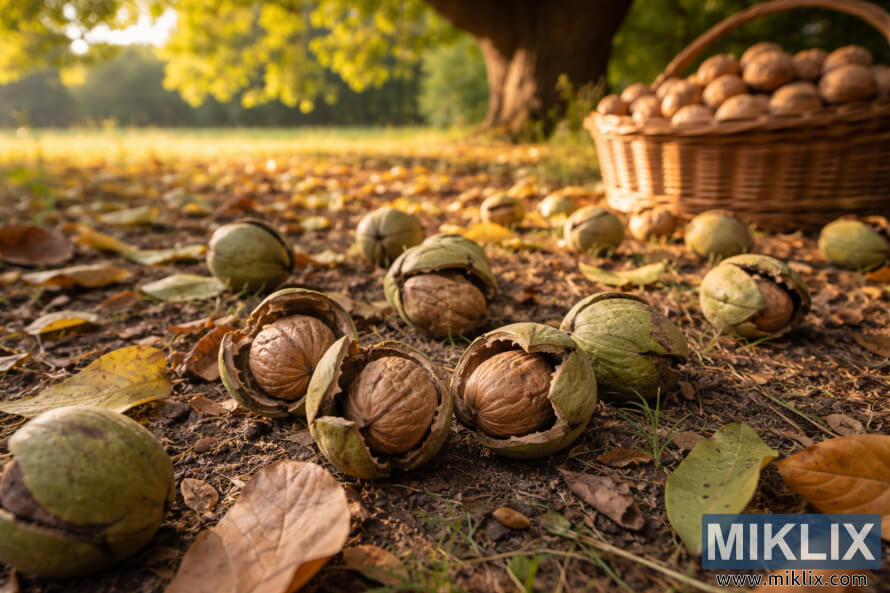
When to Harvest
- Harvest typically occurs in late summer to fall (September-October)
- Watch for naturally falling nuts as the primary indicator of readiness
- Look for husks that are beginning to split and pull away from the shell
- Test a few nuts: if the kernel is plump and the dividing membrane snaps easily, they're ready
Harvesting Methods
- Natural drop method: Collect nuts from the ground as they fall naturally
- Gentle shaking: Use a long pole with a hook to gently shake branches
- Collect frequently (daily if possible) to prevent mold and pest damage
- Wear gloves when handling husks to prevent staining your hands
- Separate nuts from debris and damaged specimens
Click or tap the image for more information and higher resolutions.
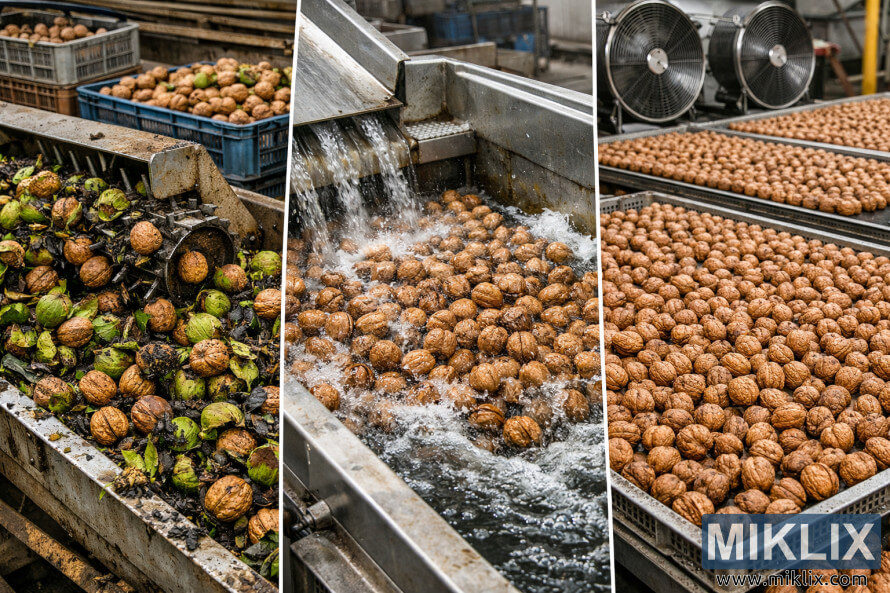
Processing After Harvest
- Remove husks promptly after harvesting
- For naturally split husks: peel by hand (wear gloves)
- For stubborn husks: roll nuts underfoot on a hard surface or use a corn sheller
- Wash the nuts to remove husk residue and tannins
- Use a pressure washer or garden hose with a strong spray
- Add a small amount of non-toxic soap if needed
- Dry thoroughly to prevent mold and preserve quality
- Spread in a single layer on screens or mesh racks
- Place in a warm, dry, well-ventilated area
- Stir or turn nuts daily for even drying
- Drying takes 2-3 weeks; nuts are ready when shells rattle and kernels snap crisply
Important: Never leave freshly harvested walnuts in piles or closed containers, as they can quickly heat up and develop mold. Always spread them out for proper air circulation during the drying process.
Storing Your Walnut Harvest
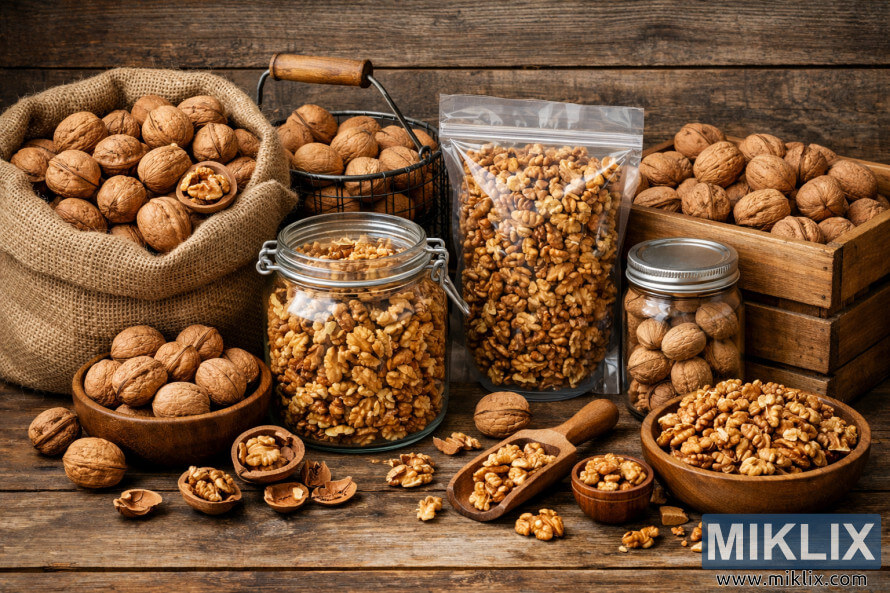
Proper storage is essential to maintain the quality and flavor of your walnuts. When stored correctly, walnuts can remain fresh and delicious for months or even years.
Storage Options
In-Shell Storage
- Keeps nuts fresh longer than shelled nuts
- Store in mesh bags, burlap sacks, or crates
- Keep in a cool, dry, well-ventilated area
- Room temperature: up to 6 months
- Refrigerator: up to 1 year
- Freezer: 2+ years
Shelled Nut Storage
- More convenient for cooking and snacking
- Store in airtight containers to prevent rancidity
- Room temperature: 2-4 weeks
- Refrigerator: up to 6 months
- Freezer: up to 1 year
- Vacuum sealing extends shelf life significantly
Storage Tips for Maximum Freshness
- Keep walnuts away from strong odors, as they can absorb flavors
- Store away from heat sources and direct sunlight
- Label containers with harvest date to track freshness
- For freezer storage, use moisture-proof containers
- Thaw frozen nuts at room temperature before opening containers to prevent condensation
Quality Check: Periodically check stored nuts for signs of spoilage. Discard any that smell rancid, appear moldy, or taste bitter. Good walnuts should have a mild, slightly sweet flavor and crisp texture.
Click or tap the image for more information and higher resolutions.
Sustainable Walnut Growing Practices
Growing walnuts using sustainable methods not only benefits the environment but can also lead to healthier trees and better harvests over the long term.
Water Conservation
- Install efficient drip irrigation or micro-sprinklers
- Use soil moisture sensors to determine when watering is needed
- Apply mulch to reduce evaporation and suppress weeds
- Collect rainwater for supplemental irrigation
- Water during early morning or evening to reduce evaporation
Soil Health Management
- Use compost and organic matter to improve soil structure
- Implement cover crops between trees to prevent erosion
- Practice minimal tillage to preserve soil biology
- Test soil regularly to avoid over-fertilization
- Use organic fertilizers when possible
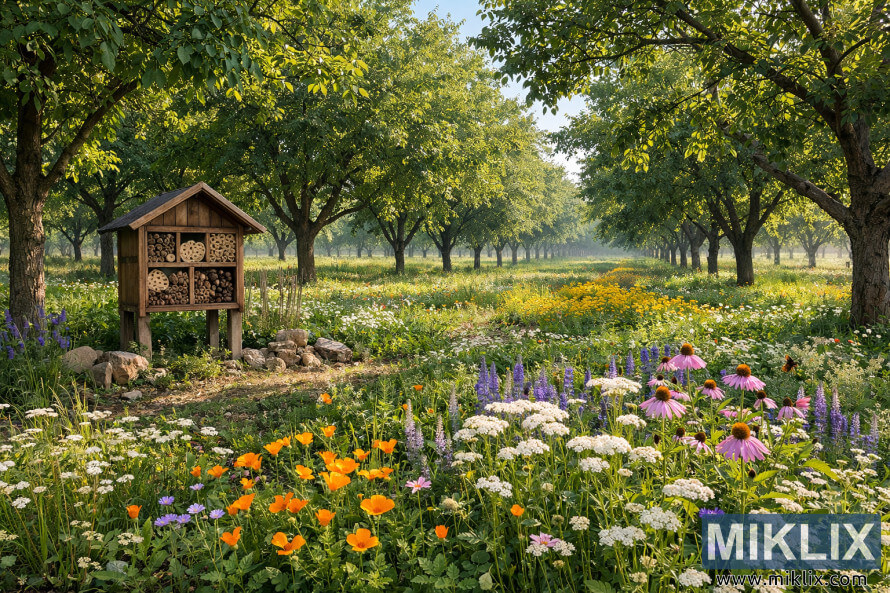
Biodiversity Enhancement
- Plant flowering species to attract beneficial insects
- Install bird and bat houses for natural pest control
- Maintain hedgerows or windbreaks for wildlife habitat
- Avoid broad-spectrum pesticides that harm beneficial organisms
- Leave some areas unmowed to provide habitat diversity
Click or tap the image for more information and higher resolutions.
Frequently Asked Questions About Growing Walnuts
How long does it take for walnut trees to produce nuts?
Grafted walnut trees typically begin producing nuts in 4-6 years, while trees grown from seed may take 8-10+ years before their first harvest. Full production is usually reached when trees are 15-20 years old. Patience is definitely required when growing walnuts!
Can I grow walnuts in containers?
Walnut trees are not well-suited for container growing due to their extensive root systems and large mature size. However, you can start seedlings in large containers for 1-2 years before transplanting to their permanent location. If you have limited space, consider dwarf fruit trees instead.
What plants can I grow near walnut trees?
Many plants are sensitive to juglone, the natural chemical produced by walnut roots. Plants that generally tolerate growing near walnuts include most grasses, beans, carrots, corn, squash, melons, and many ornamentals like daffodils, zinnias, and most native trees. Avoid planting tomatoes, potatoes, eggplants, peppers, asparagus, blueberries, azaleas, and rhododendrons near walnut trees.
How do I protect young walnut trees from deer?
Deer can cause significant damage to young walnut trees. Effective protection methods include installing 6-foot tall fencing around individual trees or the entire growing area, using commercial deer repellents, placing mesh tree guards around trunks, or using motion-activated deterrents. Protection is especially important during the first 5-7 years until trees grow large enough to withstand some browsing.
Do walnut trees need cross-pollination?
Most walnut varieties are self-pollinating, meaning a single tree can produce nuts. However, cross-pollination between different compatible varieties often results in better nut set and higher yields. If space allows, planting at least two different walnut varieties is recommended for optimal production.
Conclusion: Enjoying the Fruits of Your Labor
Growing walnuts requires patience and dedication, but the rewards are substantial. Beyond the delicious, nutritious nuts you'll harvest, walnut trees provide beauty, shade, and habitat for wildlife. They're truly an investment in the future—a legacy that can benefit generations to come.
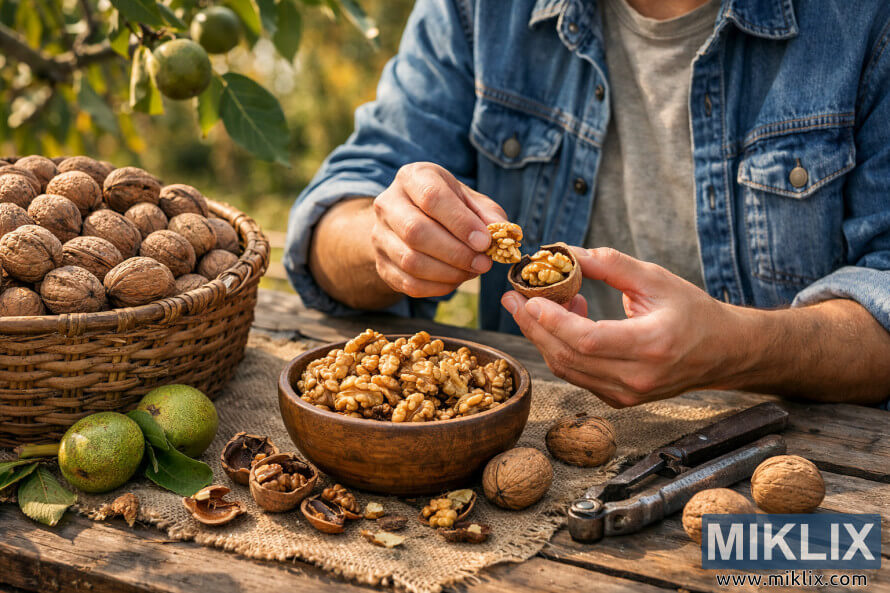
As your trees mature and begin producing, take pride in the sustainable food source you've created. Experiment with different ways to enjoy your harvest: fresh eating, baking, cooking, or sharing with friends and family. There's something uniquely satisfying about cracking open nuts from trees you've nurtured from saplings.
Remember that each growing season brings new learning opportunities. Keep notes on what works well in your specific conditions, and don't be discouraged by occasional setbacks. With proper care and attention, your walnut trees will provide abundance for decades.
Click or tap the image for more information and higher resolutions.
Further Reading
If you enjoyed this post, you may also like these suggestions:
- A Complete Guide to Growing Pistachio Nuts in Your Own Garden
- Growing Almonds: A Complete Guide for Home Gardeners
- A Complete Guide to Growing Hazelnuts at Home