
Image: Hybrid Dogwood with Large White Bracts Exhibiting Disease Resistance
Published: December 10, 2025 at 9:35:15 PM UTC
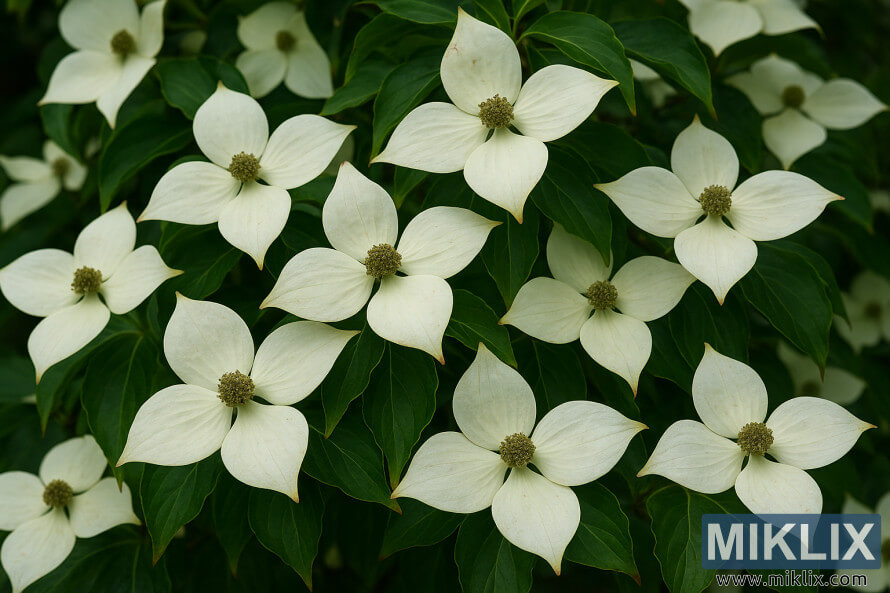
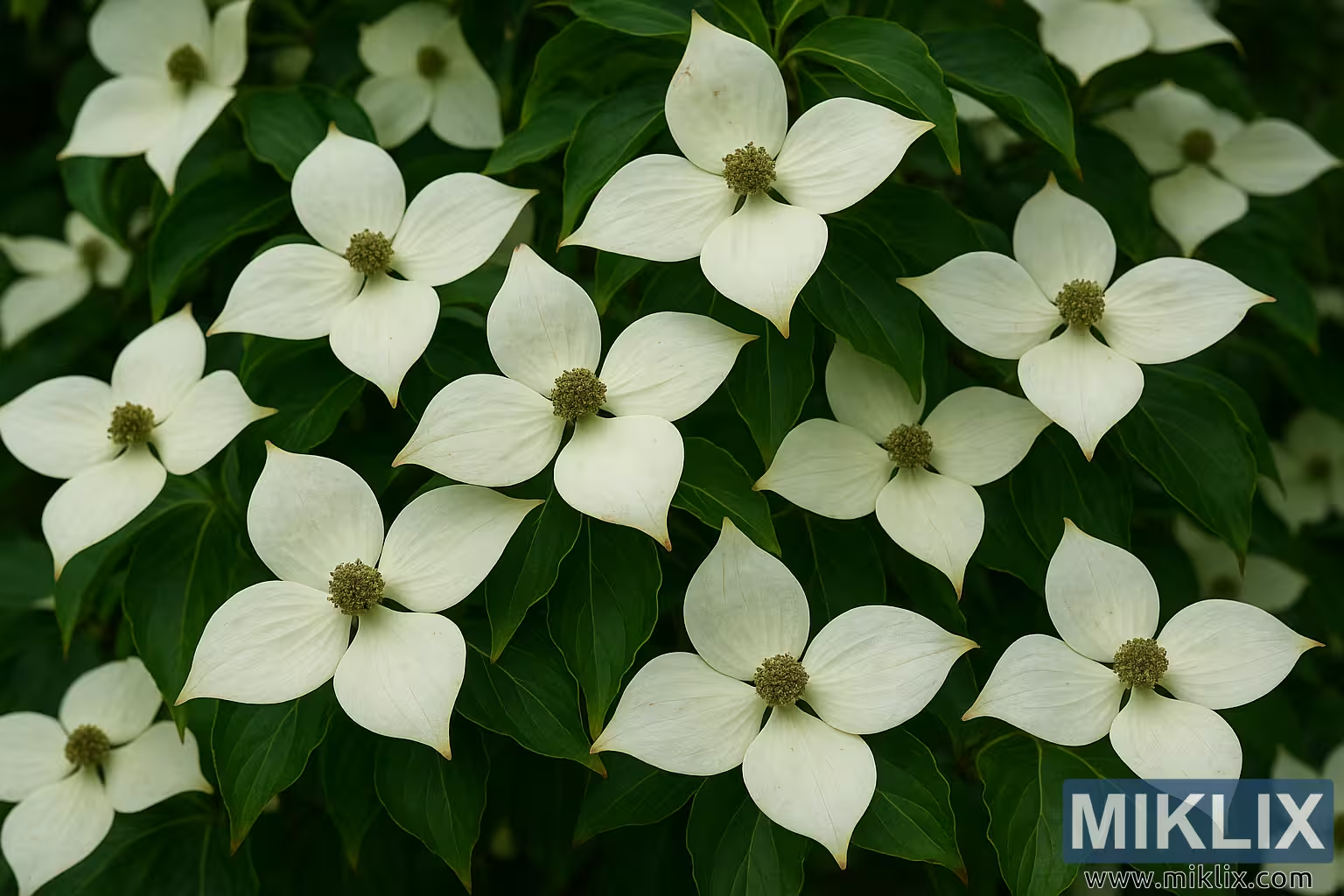
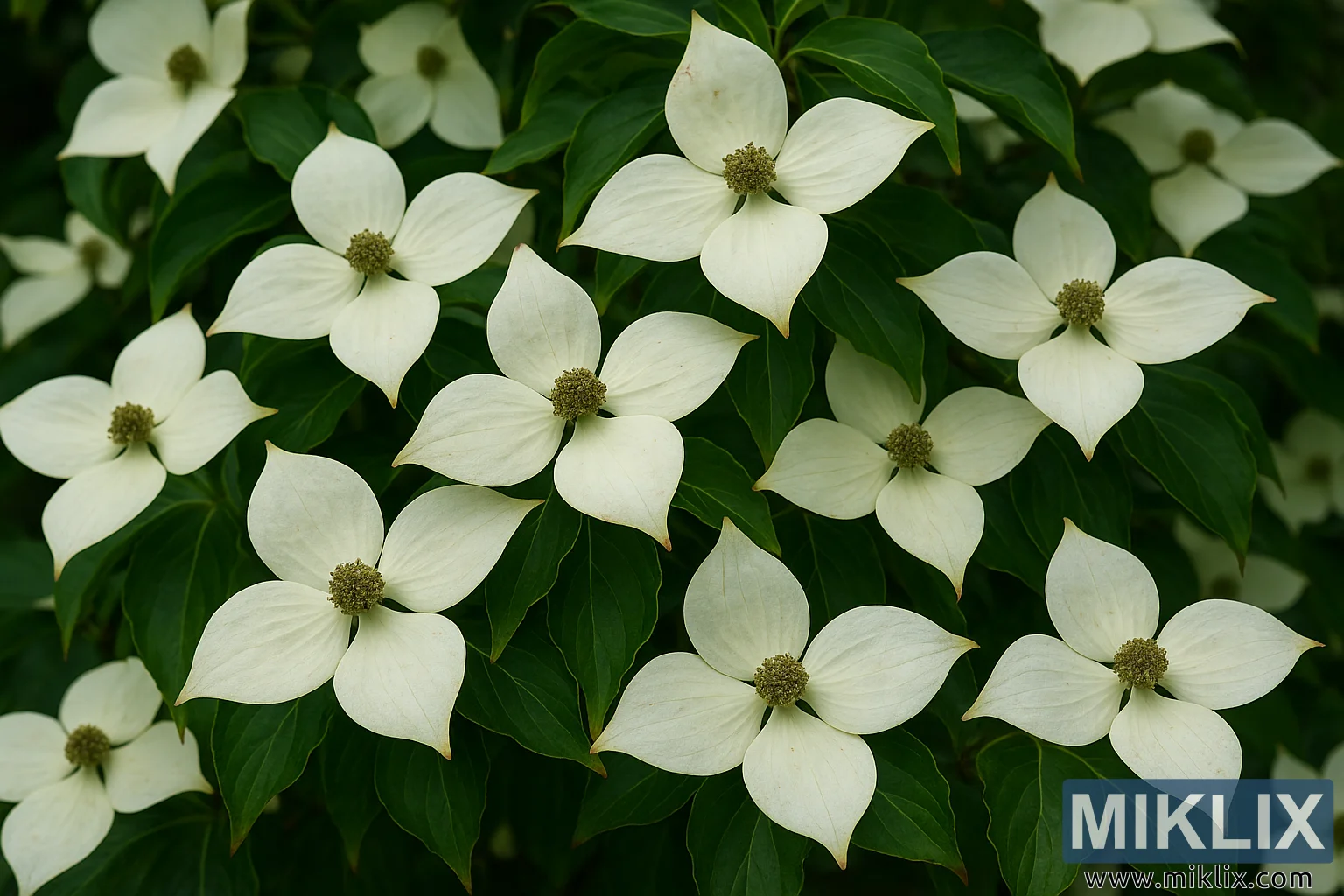
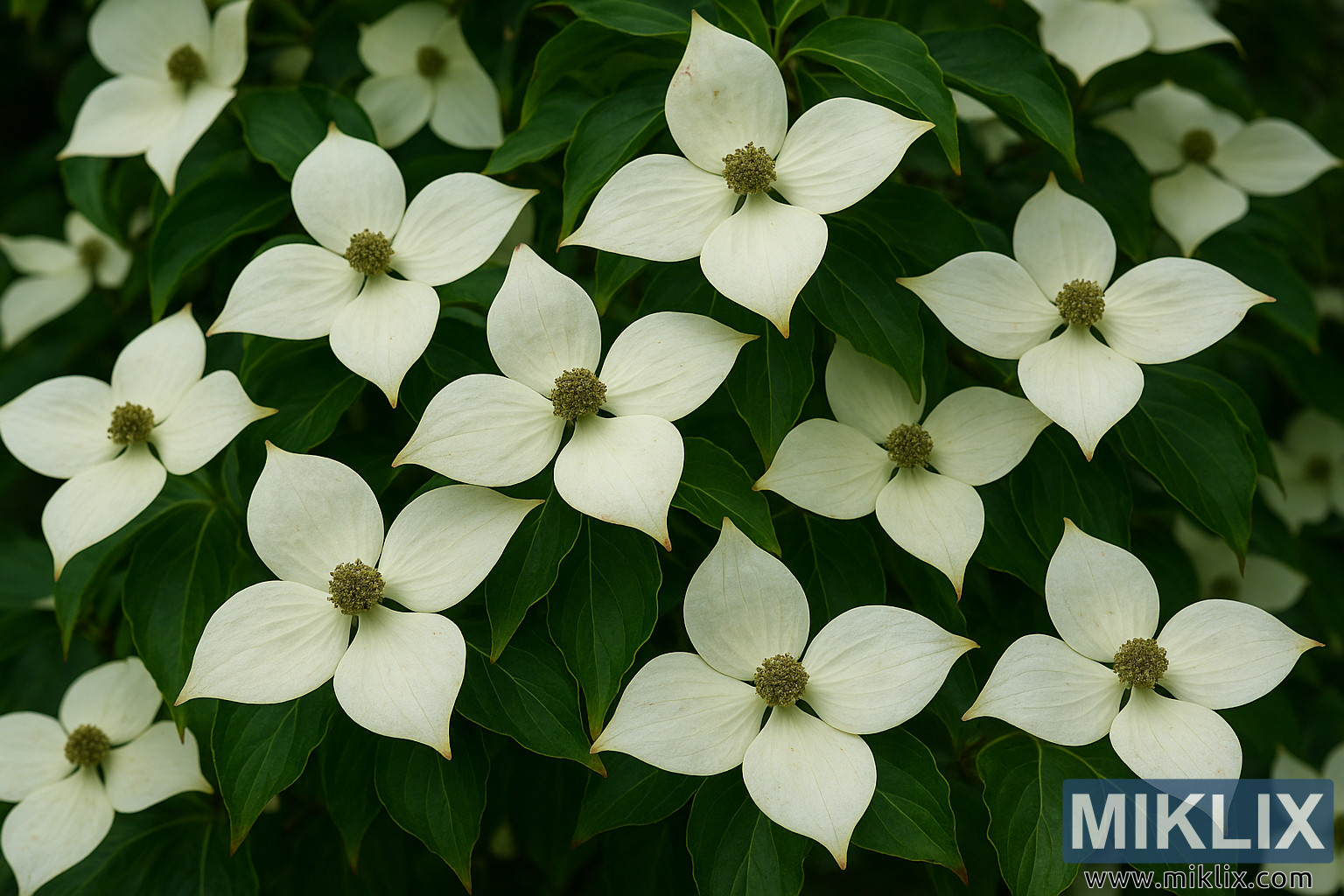
A high-resolution landscape photograph of a hybrid dogwood tree featuring broad white bracts and lush green foliage. The image highlights the plant's disease resistance and striking floral display.
Available versions of this image
The image files available for download below are less compressed and higher resolution - and as a result of that, higher quality - than the images embedded in articles and pages on this website, which are more optimized for file size in order to reduce bandwidth consumption.
Regular size (1,536 x 1,024)
Large size (3,072 x 2,048)
Very large size (4,608 x 3,072)
Extra large size (6,144 x 4,096)
Comically large size (1,048,576 x 699,051)
- Still uploading... ;-)
Image description
This high-resolution landscape photograph captures a stunning hybrid dogwood (Cornus hybrid) in full bloom, exemplifying its renowned combination of ornamental beauty and robust disease resistance. The composition is both botanical and artistic, showing a dense cluster of blossoms surrounded by rich green foliage. Each flower-like structure consists of four large, creamy white bracts—technically modified leaves—that form a cross-like shape around a central cluster of small, true flowers. The bracts are slightly pointed at the tips, with subtle veins that radiate from the center, giving each one a soft texture and a delicate sense of depth. Their white color contrasts beautifully against the dark, glossy green leaves, which have a slightly undulating surface and pronounced venation typical of dogwoods.
The blossoms overlap in an almost quilted pattern, creating a rhythm of white and green across the image. The central flower clusters are made up of tiny, rounded buds in muted tones of pale green and light brown, indicating the beginning of pollination. The background reveals layers of foliage, suggesting the fullness of the tree’s canopy and giving a sense of natural abundance. Light filters gently through the leaves, illuminating the bracts with a diffuse glow that emphasizes their purity and health, while the soft shadows in the recesses between leaves contribute to a balanced, three-dimensional feel.
This image highlights the plant’s vigor and health—characteristics associated with hybrid dogwoods bred for improved resistance to common diseases such as dogwood anthracnose and powdery mildew. Unlike more delicate native species, this hybrid variety maintains unblemished foliage and uniform flower bracts, with no signs of leaf spotting or discoloration. The photograph communicates a quiet elegance, showcasing the hybrid’s horticultural success and visual appeal in a natural garden setting.
Beyond its botanical accuracy, the image possesses an aesthetic serenity often sought in landscape and garden photography. The repetition of the blossoms, the harmony between white and green hues, and the absence of imperfections give it a painterly quality—evoking balance, renewal, and resilience. It could easily serve as a reference for gardeners, horticulturists, or landscape designers studying disease-resistant ornamental trees, as well as for artists and nature photographers appreciating the graceful geometry of flowering dogwoods.
The image is related to: A Guide to the Best Varieties of Dogwood Trees for Your Garden