
A Guide to the Best Varieties of Dogwood Trees for Your Garden
Published: December 10, 2025 at 9:35:15 PM UTC
Few trees rival the native dogwood for beauty when it's loaded with floral bracts in spring. With their elegant form, seasonal interest, and manageable size, dogwood trees make exceptional additions to almost any landscape.
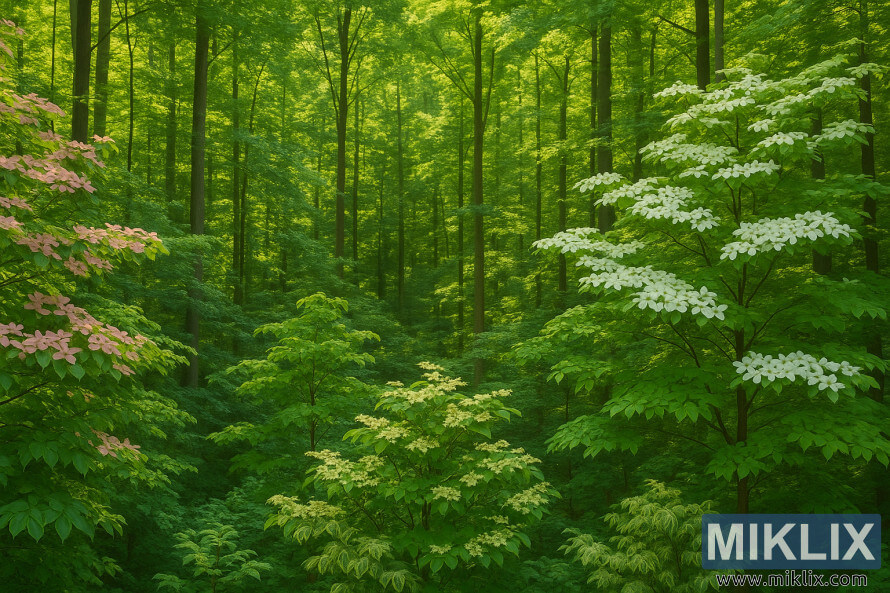
Click or tap the image for more information and higher resolutions.
From the iconic flowering dogwood to the disease-resistant kousa varieties, these versatile trees offer spectacular spring blooms, attractive summer foliage, vibrant fall color, and in some cases, interesting bark or berries in winter. This guide will help you discover the best varieties of dogwood trees for your garden and provide essential care tips to ensure they thrive.
Flowering Dogwood (Cornus florida)
Flowering Dogwood displaying its iconic white bracts in early spring
The flowering dogwood is one of the most beloved native trees in North America and the state tree of Virginia. This small deciduous tree puts on a spectacular show in early spring when its tiny yellowish-green flowers are surrounded by four showy, white, blush, or pink petal-like bracts.
Key Characteristics
- Height and Spread: 15 to 30 feet tall and wide
- Bloom Time: Early spring, before leaves appear
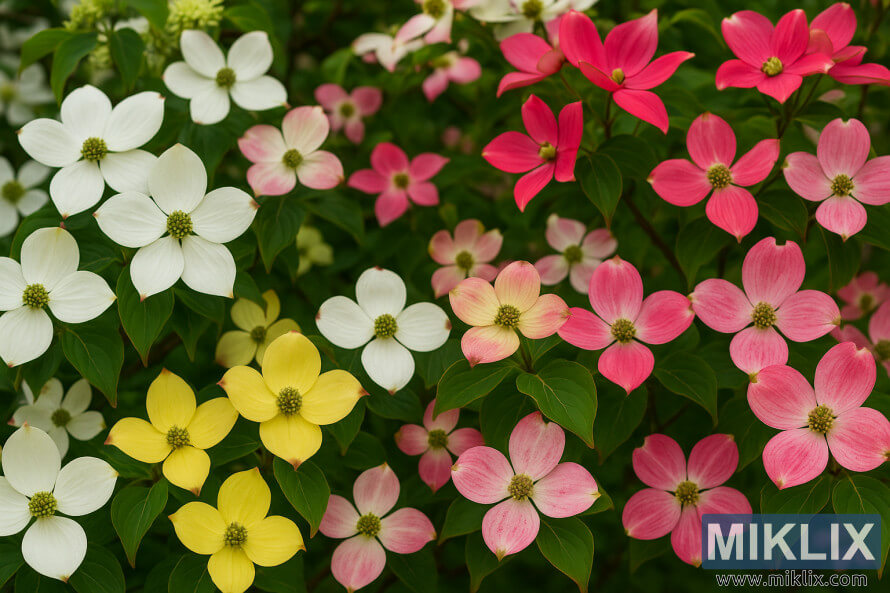
- Flower Color: White, pink, or red bracts
- Fall Foliage: Attractive red to purple
- Growth Habit: Low-branching with a flattish crown
Growing Conditions
- USDA Hardiness Zones: 5 to 9
- Sun Exposure: Morning sun with afternoon shade
- Soil Preference: Rich, well-draining, slightly acidic soil
- Water Needs: Regular watering, especially during establishment
Flowering dogwoods are best used as specimen trees in partially shaded areas of your garden. They create beautiful understory plantings beneath larger deciduous trees and work well in woodland garden settings. While beautiful, they can be susceptible to anthracnose disease, so proper placement and care are essential.
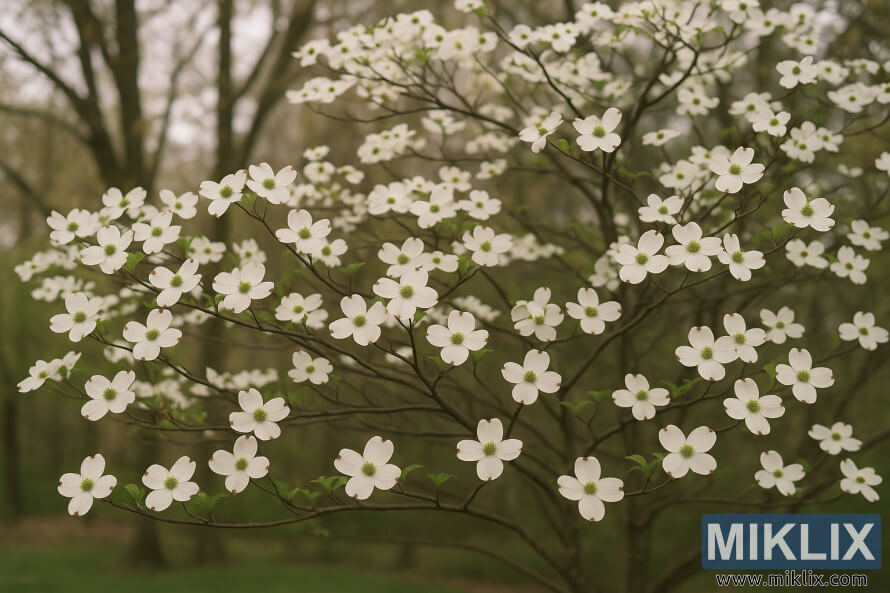
Click or tap the image for more information and higher resolutions.
Kousa Dogwood (Cornus kousa)
Kousa Dogwood with its distinctive pointed bracts and strawberry-like fruits
The Kousa dogwood, also known as Chinese, Korean, or Japanese dogwood, blooms about a month after the flowering dogwood and after its leaves have developed. This small tree offers four-season interest with spring flowers, summer fruits, fall color, and attractive winter bark.
Key Characteristics
- Height and Spread: 15 to 30 feet tall and wide
- Bloom Time: Late spring to early summer
- Flower Color: White or pink bracts that come to a point
- Fruit: Distinctive raspberry-like red fruits in late summer
- Fall Foliage: Purplish-red to scarlet
- Bark: Exfoliating, mottled tan and gray
Growing Conditions
- USDA Hardiness Zones: 5 to 8
- Sun Exposure: Full sun to part shade
- Soil Preference: Moist, well-draining soil
- Disease Resistance: More resistant to anthracnose than Cornus florida
Kousa dogwoods make excellent specimen trees and are more adaptable to various growing conditions than flowering dogwoods. Their horizontal branching pattern creates beautiful structural interest year-round. The exfoliating bark adds winter appeal, making this variety a true four-season performer in the landscape.
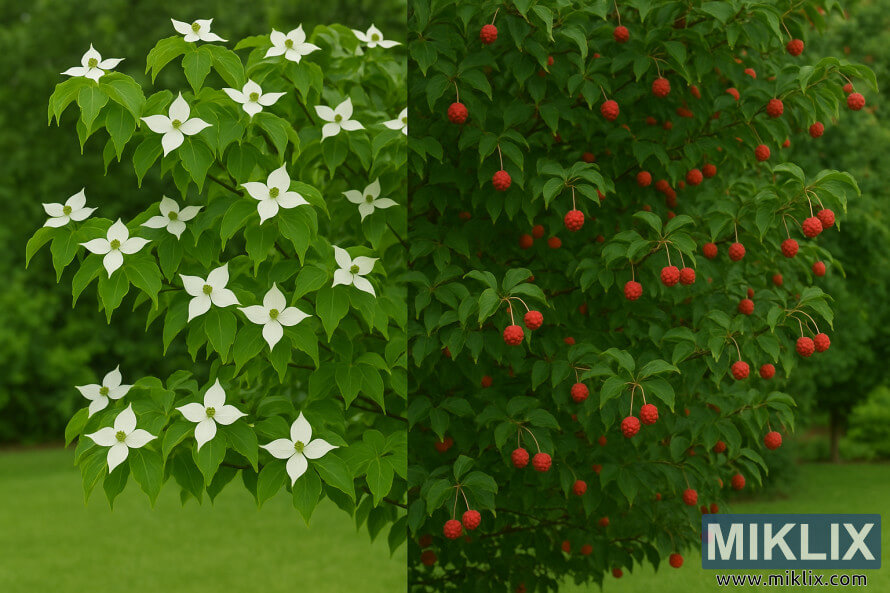
Click or tap the image for more information and higher resolutions.
Red Twig Dogwood (Cornus sericea)
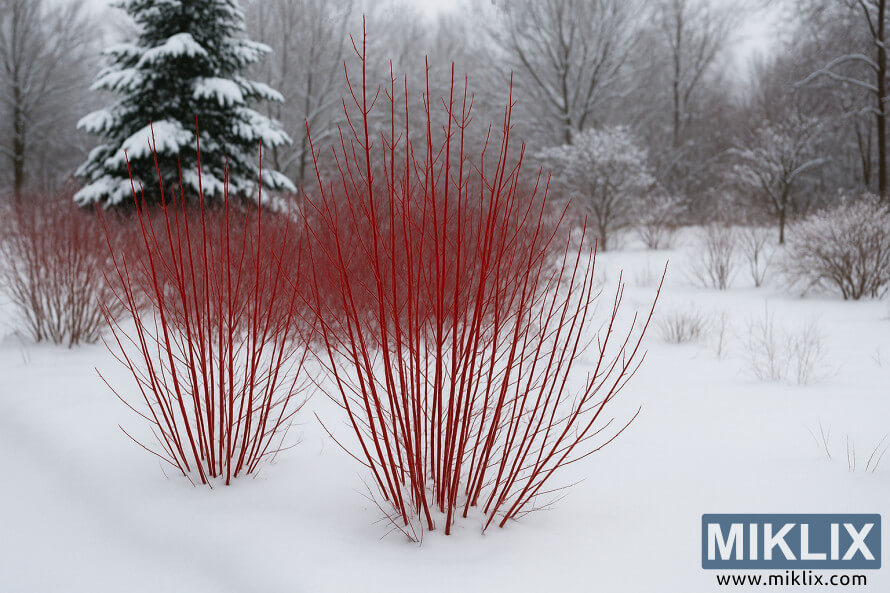
Red Twig Dogwood displaying vibrant red stems in winter
Unlike the tree forms, Red Twig Dogwood (also called Red Osier Dogwood) is a deciduous shrub grown primarily for its colorful winter stems. The bright red branches provide dramatic winter interest, especially against snow or evergreen backdrops.
Key Characteristics
- Height and Spread: 6 to 9 feet tall and wide
- Stem Color: Bright red in winter, especially on new growth
- Flowers: Small white flower clusters in late spring
- Fruit: White berries attractive to birds
- Fall Foliage: Red to purple
Growing Conditions
- USDA Hardiness Zones: 3 to 7
- Sun Exposure: Full sun to part shade
- Soil Preference: Adaptable, tolerates wet conditions
- Maintenance: Prune annually to encourage colorful new growth
Red Twig Dogwood is perfect for winter interest in the landscape. Plant it where its colorful stems can be appreciated against snow or as a backdrop to evergreens. It works well in rain gardens, along streams or ponds, and in naturalized areas. For the best stem color, prune older stems in early spring to encourage vibrant new growth.
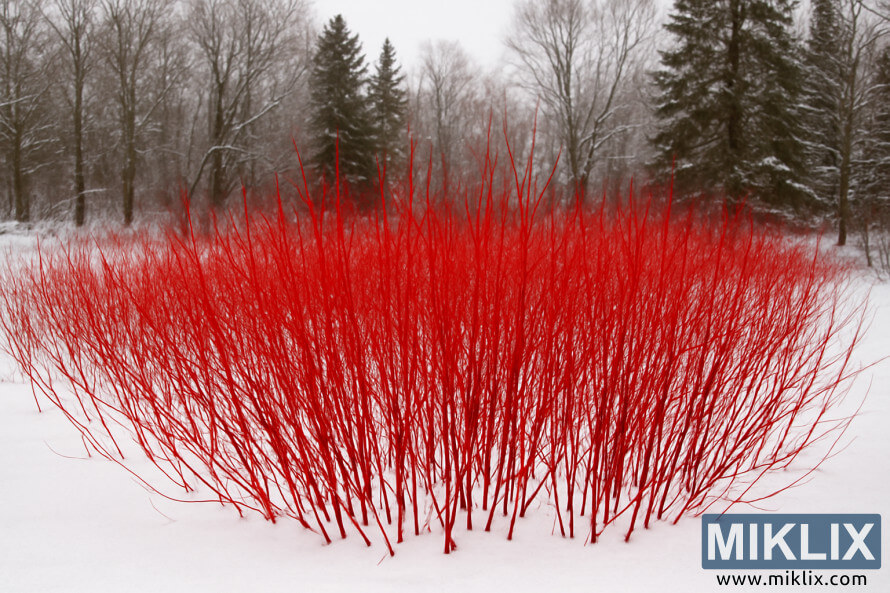
Click or tap the image for more information and higher resolutions.
Pagoda Dogwood (Cornus alternifolia)
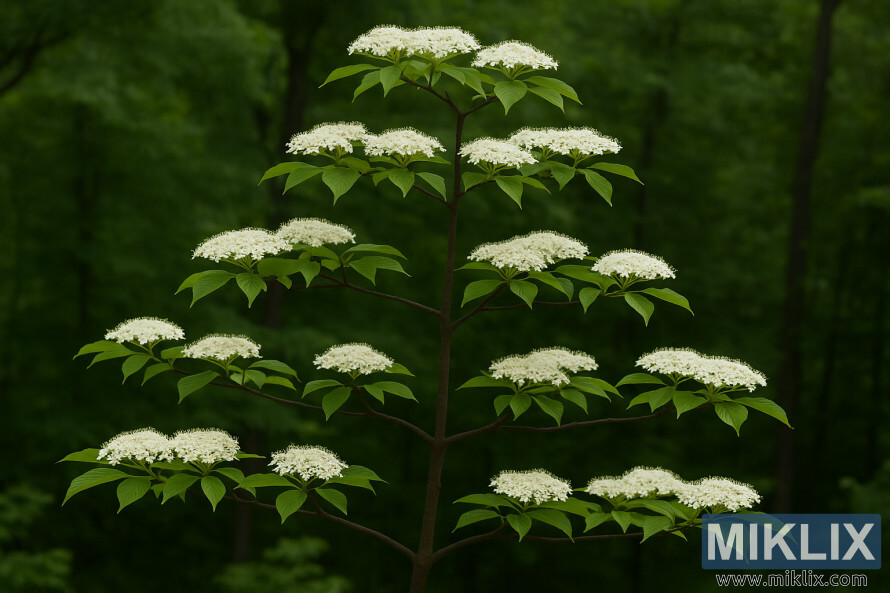
Pagoda Dogwood showing its distinctive tiered branching pattern
Pagoda Dogwood, also known as Alternate-leaf Dogwood, is named for its distinctive horizontal branching pattern that creates a tiered effect reminiscent of a pagoda. This native North American species offers a unique architectural form that adds year-round interest to the landscape.
Key Characteristics
- Height and Spread: 15 to 25 feet tall, 20 to 30 feet wide
- Branching Pattern: Horizontal, tiered layers
- Flowers: Flat clusters of small white blooms in late spring
- Fruit: Small blue-black berries on red stems
- Fall Foliage: Yellow to reddish-purple
- Leaf Arrangement: Alternate (unusual for dogwoods)
Growing Conditions
- USDA Hardiness Zones: 3 to 7
- Sun Exposure: Part shade to shade
- Soil Preference: Rich, moist, well-draining soil
- Climate: Prefers cooler climates
Pagoda Dogwood is ideal for woodland gardens, naturalized areas, and as an understory tree. Its unique branching pattern creates winter interest, while spring flowers and fall color add seasonal appeal. This species is less commonly found in nurseries but is worth seeking out for its distinctive architectural form.
Click or tap the image for more information and higher resolutions.
Cornelian Cherry (Cornus mas)
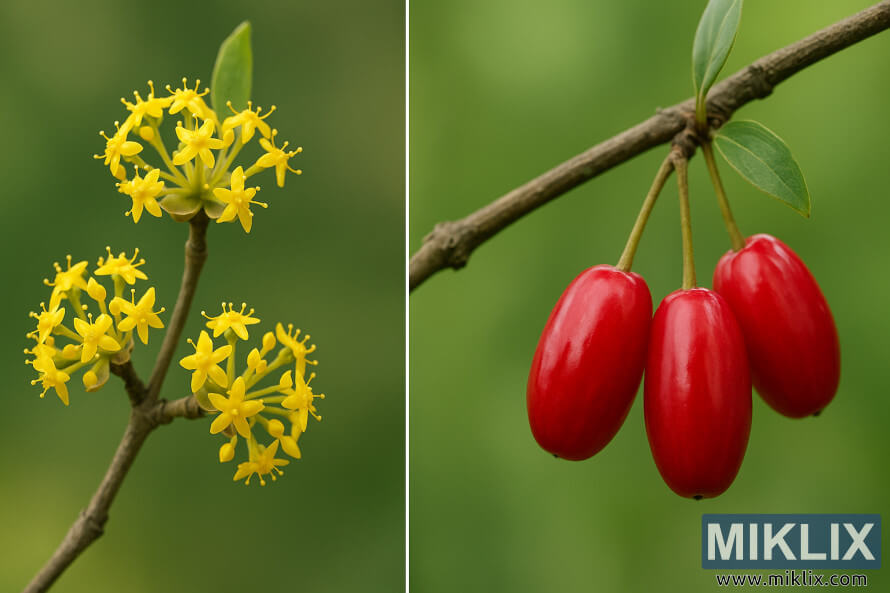
Cornelian Cherry with its distinctive yellow flowers and edible red fruits
Cornelian Cherry is a unique dogwood that produces bright yellow flowers in very early spring, often before any other flowering trees bloom. This large shrub or small tree later develops cherry-like red fruits that are edible and used for jams, jellies, and syrups.
Key Characteristics
- Height and Spread: 15 to 25 feet tall and wide
- Bloom Time: Very early spring (February-March)
- Flower Color: Bright yellow
- Fruit: Edible red drupes resembling cherries
- Fall Foliage: Purplish-red (not as showy as other dogwoods)
- Bark: Exfoliating with age
Growing Conditions
- USDA Hardiness Zones: 4 to 8
- Sun Exposure: Full sun to part shade
- Soil Preference: Adaptable to various soil types
- Drought Tolerance: Good once established
Cornelian Cherry is an excellent choice for early spring color and edible landscaping. Its bright yellow flowers appear when little else is blooming, making it a valuable addition to the garden. Consider planting it where you can enjoy the early blooms and later harvest the fruits for culinary uses.
Click or tap the image for more information and higher resolutions.
Hybrid Dogwood (Cornus x rutgersensis)
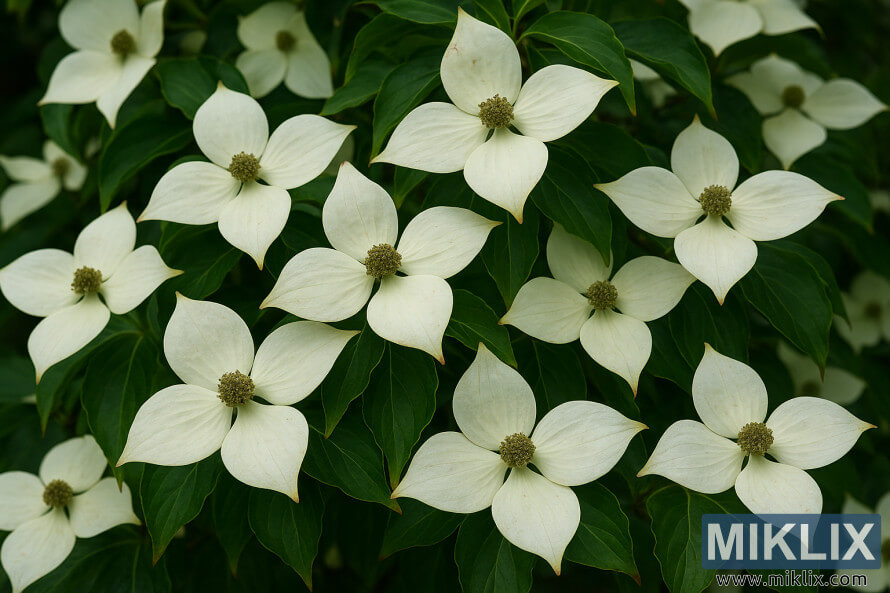
Hybrid Dogwood showing large white bracts and improved disease resistance
Hybrid dogwoods, particularly those in the Rutgers series (Cornus x rutgersensis), were developed by crossing flowering dogwood (Cornus florida) with kousa dogwood (Cornus kousa) to combine the beautiful flowers of the former with the disease resistance of the latter.
Key Characteristics
- Height and Spread: 10 to 20 feet tall and wide
- Bloom Time: Mid-spring (between florida and kousa bloom times)
- Flower Color: White or pink bracts
- Disease Resistance: Excellent resistance to anthracnose and powdery mildew
- Fall Foliage: Red to purple
Growing Conditions
- USDA Hardiness Zones: 5 to 9
- Sun Exposure: Full sun to part shade
- Soil Preference: Well-draining, slightly acidic soil
- Adaptability: More adaptable than pure species
Popular cultivars include 'Stellar Pink' with pink bracts, 'Celestial' with white bracts, and 'Aurora' with large white bracts. These hybrids are excellent choices for gardeners who want the beauty of flowering dogwood but have experienced disease problems in the past. They extend the dogwood blooming season by flowering between the times when florida and kousa typically bloom.
Click or tap the image for more information and higher resolutions.
Comparing Dogwood Varieties
| Variety | Height | Bloom Time | Flower Color | Fall Color | Hardiness Zones | Special Features |
| Flowering Dogwood (C. florida) | 15-30 ft | Early spring | White, pink, red | Red to purple | 5-9 | Native to eastern North America |
| Kousa Dogwood (C. kousa) | 15-30 ft | Late spring | White, pink | Purplish-red | 5-8 | Exfoliating bark, edible fruits |
| Red Twig Dogwood (C. sericea) | 6-9 ft | Late spring | White clusters | Red to purple | 3-7 | Red winter stems |
| Pagoda Dogwood (C. alternifolia) | 15-25 ft | Late spring | White clusters | Yellow to purple | 3-7 | Horizontal branching |
| Cornelian Cherry (C. mas) | 15-25 ft | Very early spring | Yellow | Purplish | 4-8 | Edible fruits, early bloom |
| Hybrid Dogwood (C. x rutgersensis) | 10-20 ft | Mid-spring | White, pink | Red to purple | 5-9 | Disease resistance |
Click or tap the image for more information and higher resolutions.
Planting and Care Tips for Dogwood Trees
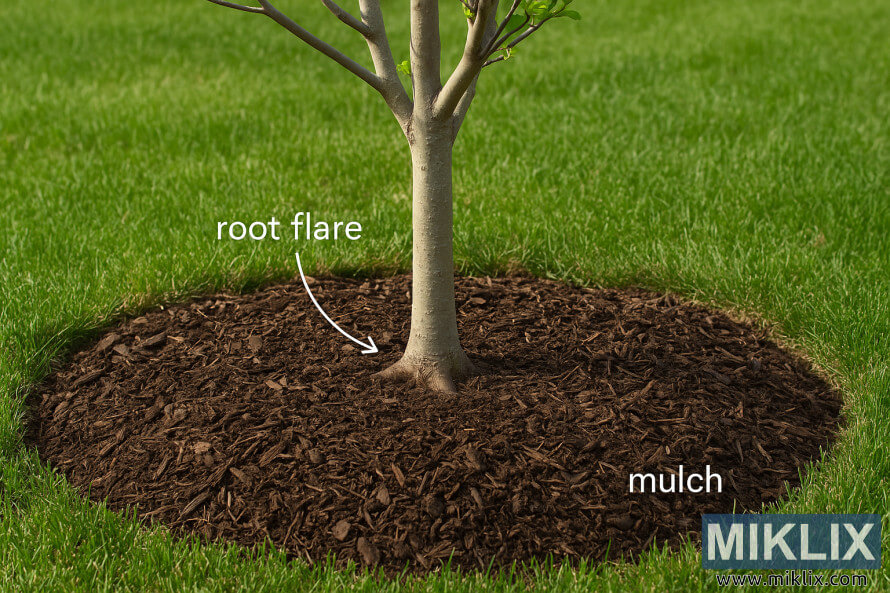
Proper planting technique for dogwood trees showing correct depth and mulching
When to Plant
The best time to plant dogwood trees is in early spring or fall when temperatures are cooler and rainfall is more plentiful. Fall planting (about six weeks before the first frost) gives roots time to establish before winter dormancy.
Soil Preparation
- Test soil pH – most dogwoods prefer slightly acidic soil (5.5-6.5 pH)
- Incorporate organic matter like compost to improve soil structure
- Ensure good drainage – dogwoods dislike wet feet
- Avoid planting in compacted soils
Planting Process
- Dig a hole 2-3 times wider than the root ball but no deeper
- Position the tree so the root flare is slightly above ground level
- Backfill with original soil (don't amend the backfill)
- Water thoroughly after planting
- Apply 2-3 inches of mulch in a circle around the tree, keeping it away from the trunk
Click or tap the image for more information and higher resolutions.
Watering Guidelines
Dogwoods have shallow root systems and require consistent moisture, especially during establishment. Water deeply once or twice a week during the first two growing seasons. Once established, provide supplemental water during drought periods.
Fertilization
Apply a slow-release, balanced fertilizer in spring. Avoid over-fertilizing, which can lead to lush growth susceptible to disease. In fertile soils, dogwoods may not need additional fertilizer.
Pruning
Prune dogwoods minimally and only when necessary to remove dead, damaged, or crossing branches. The best time to prune is in late fall or winter when the tree is dormant. For Red Twig Dogwood, remove about one-third of the oldest stems in early spring to encourage colorful new growth.
Common Problems and Solutions
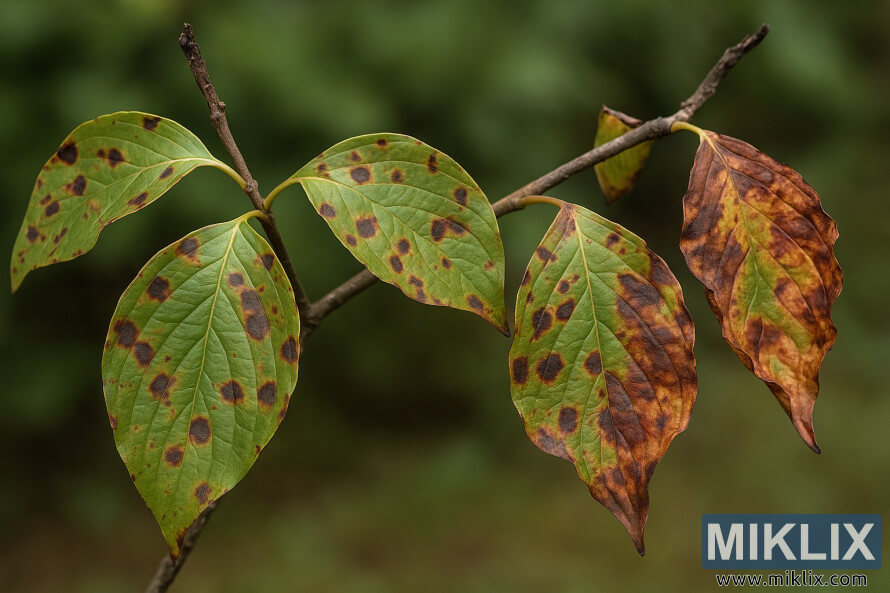
Dogwood anthracnose symptoms showing characteristic leaf spots and twig dieback
Dogwood Anthracnose
This fungal disease is particularly problematic for flowering dogwood (Cornus florida). Symptoms include brown spots on leaves, scorched leaf margins, and twig dieback.
Prevention and Treatment: Plant resistant varieties like Kousa dogwood or Rutgers hybrids. Ensure good air circulation, avoid overhead watering, remove and destroy infected leaves, and apply fungicide in severe cases.
Click or tap the image for more information and higher resolutions.
Powdery Mildew
This appears as a white powdery coating on leaves, typically in late summer. While unsightly, it rarely causes serious harm to established trees.
Prevention and Treatment: Improve air circulation, avoid overhead watering, and consider resistant varieties. Fungicides can be applied if the problem is severe.
Dogwood Borer
This insect pest tunnels under the bark, causing dieback and eventual death if left untreated. Look for sawdust-like frass at entry holes.
Prevention and Treatment: Avoid trunk injuries, wrap young trees to prevent sunscald, and use appropriate insecticides when borers are active.
Environmental Stress
Leaf scorch, wilting, and poor growth can result from improper siting, drought stress, or mechanical damage.
Prevention and Treatment: Plant dogwoods in appropriate locations, maintain consistent moisture, and protect trunks from mechanical damage.
Advantages of Dogwood Trees
- Four-season interest with flowers, foliage, fruit, and bark
- Manageable size for most landscapes
- Attract wildlife including birds and pollinators
- Variety of species to suit different conditions
- Native species support local ecosystems
Challenges of Dogwood Trees
- Some species susceptible to diseases
- Require consistent moisture
- May struggle in full sun, especially in hot climates
- Shallow roots can be damaged by cultivation
- Some varieties can be messy with fruit drop
Landscape Uses for Dogwood Trees
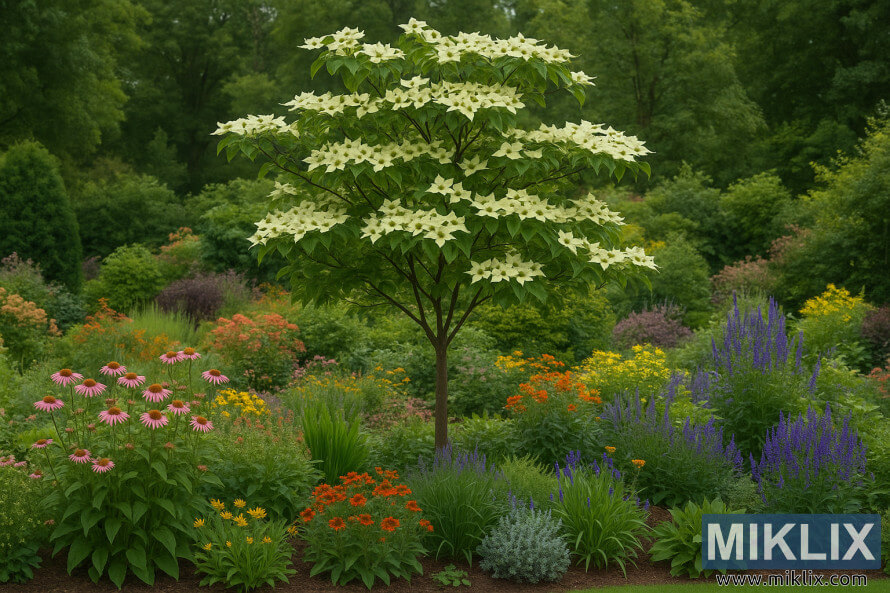
Flowering dogwood serving as a focal point in a mixed border garden
As Specimen Trees
Dogwoods make excellent focal points in the landscape. Plant them where their spring flowers, fall color, and (in some cases) winter features can be appreciated. Allow enough space for their mature spread.
In Woodland Gardens
Many dogwoods are understory trees in their native habitats. They work beautifully in woodland garden settings beneath larger deciduous trees that provide dappled shade.
Mixed Borders
Smaller dogwood varieties can be incorporated into mixed shrub borders. Red Twig Dogwood adds winter interest to mixed plantings when other plants are dormant.
Click or tap the image for more information and higher resolutions.
Foundation Plantings
Smaller dogwood varieties can be used in foundation plantings, providing seasonal interest near the home. Ensure adequate space for mature size.
Wildlife Gardens
Dogwoods provide food and habitat for wildlife. Birds eat the fruits, and the trees provide nesting sites. The flowers attract pollinators in spring.
Rain Gardens
Some dogwood species, particularly Red Twig Dogwood, tolerate periodically wet conditions and can be effective in rain garden designs.
Click or tap the image for more information and higher resolutions.
Recommendations for Different Garden Goals
For Small Gardens
- Kousa Dogwood 'Little Poncho' - A dwarf variety reaching only 8-10 feet
- Flowering Dogwood 'Pygmaea' - Compact form growing to about 6 feet
- Red Twig Dogwood 'Kelseyi' - Dwarf variety reaching only 2-3 feet
For Disease Resistance
- Kousa Dogwood - Naturally resistant to anthracnose
- Hybrid Dogwoods - 'Stellar Pink', 'Celestial', 'Aurora'
- Cornelian Cherry - Generally disease-resistant
For Four-Season Interest
- Kousa Dogwood - Spring flowers, summer fruits, fall color, winter bark
- Red Twig Dogwood - Spring flowers, summer berries, fall color, winter stems
- Variegated Pagoda Dogwood - Interesting branching, variegated leaves, fall color
For Wildlife Gardens
- Flowering Dogwood - Native species with high wildlife value
- Gray Dogwood - White berries attract many bird species
- Red Twig Dogwood - Provides cover and food for wildlife
Click or tap the image for more information and higher resolutions.
Conclusion
Dogwood trees offer exceptional beauty and versatility for home landscapes. Whether you choose the iconic flowering dogwood, the disease-resistant kousa, or one of the many other varieties, these trees reward gardeners with multiple seasons of interest. By selecting the right variety for your conditions and following proper planting and care guidelines, you can enjoy these magnificent trees for many years to come.
Consider your specific garden conditions, space constraints, and aesthetic preferences when selecting from the best varieties of dogwood trees. With options ranging from small trees to shrubs, and features including spring flowers, fall color, winter stems, and architectural form, there's a dogwood perfect for almost any garden setting.
Further Reading
If you enjoyed this post, you may also like these suggestions:
- A Guide to the Best Varieties of Magnolia Trees to Plant in Your Garden
- A Guide to the Best Arborvitae Varieties to Plant in Your Garden
- The Best Maple Trees to Plant in Your Garden: A Guide to Species Selection