
Fermenting Beer with White Labs WLP800 Pilsner Lager Yeast
પ્રકાશિત:
છેલ્લે અપડેટ કરેલ: 21 મે, 2026 એ 04:00:58 PM UTC વાગ્યે
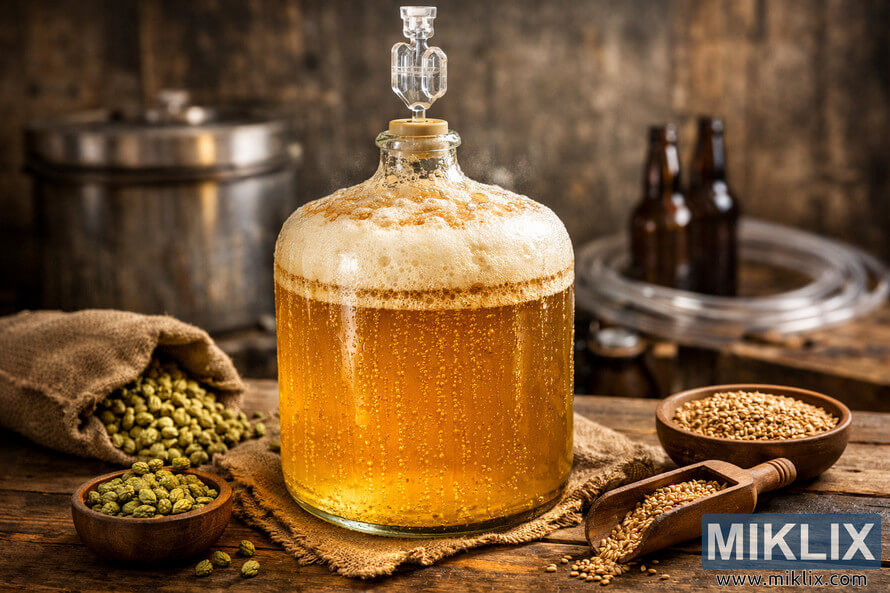
Pilsner brewing starts with crucial decisions that influence the beer's character more than any other step. The choice of yeast dictates fermentation outcomes, clarity, and subtle flavors. Mastering the basics for lagers is essential for achieving a clean, crisp pint.
Fermenting Beer with White Labs WLP800 Pilsner Lager Yeast
વધુ માહિતી અને ઉચ્ચ રિઝોલ્યુશન માટે છબી પર ક્લિક કરો અથવા ટેપ કરો.
Key Takeaways
- White Labs WLP800 Pilsner Lager Yeast excels at producing clean, crisp pilsner profiles when fermented within its recommended range.
- Preparing a proper starter and pitching the right cell count improves attenuation and reduces off-flavors.
- Temperature control and a timely diacetyl rest are essential steps when fermenting with WLP800.
- Cold chain shipping and checking vial viability matter for consistent results.
- This WLP800 review will include practical recipes, troubleshooting, and lagering techniques for homebrewers and pros.
Introduction to Pilsner Lager Yeast and Brewing Basics
Why yeast choice matters in lager brewing
Yeast is pivotal in determining attenuation, ester and sulfur production, flocculation, and final mouthfeel for lagers. Lager strains, specifically Saccharomyces pastorianus, ferment at low temperatures. This suppresses fruity esters, unlike ale yeasts. The right strain minimizes diacetyl risks and may alter the need for a diacetyl rest.
Overview of pilsner style flavor profile
Classic Czech and German pilsners are known for their pale color, crispness, and high attenuation. They have a delicate malt backbone with a cracker-like pilsner malt character and a clean finish. Noble hops, such as Saaz or Hallertau, add firm bitterness and subtle aroma. Bohemian pilsners tend to be slightly malt-forward. German pilsners, on the other hand, emphasize hop presence and a dryer finish, defining the lager flavor profile.
Key brewing terms for beginners
- Attenuation: The percentage of sugars yeast ferments. Higher attenuation yields drier beers.
- Flocculation: How quickly yeast clumps and settles out, affecting clarity.
- Diacetyl: A buttery off-flavor; managed with proper fermentation and rests.
- Diacetyl rest: A warm period near the end of fermentation to let yeast reabsorb diacetyl.
- Lagering: Cold conditioning that refines flavor and improves clarity.
- Original gravity (OG): Wort density before fermentation; predicts alcohol potential.
- Final gravity (FG): Density after fermentation; used to calculate attenuation.
- IBUs: Bitterness units from hops; balance malt sweetness in pilsners.
- Pitch rate: Amount of yeast added per volume and gravity; vital for clean results.
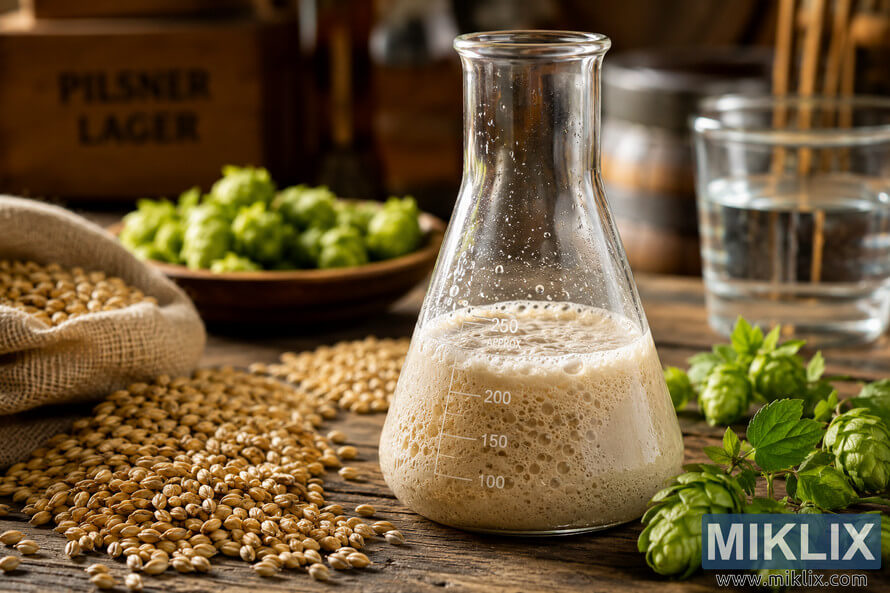
- Starter: A small yeast culture grown to increase cell count for healthy fermentation.
Ensuring yeast health, sufficient oxygenation, and tight temperature control are foundational. Paying close attention to yeast selection is crucial for pilsner brewers. This helps avoid common faults and delivers the classic pilsner character that readers expect.
વધુ માહિતી અને ઉચ્ચ રિઝોલ્યુશન માટે છબી પર ક્લિક કરો અથવા ટેપ કરો.
Profile of White Labs WLP800 Pilsner Lager Yeast
White Labs provides a pilsner-focused culture, essential for brewers aiming at clean, crisp lagers. This introduction delves into the practical traits and brewing behavior of WLP800. It's designed to help you align yeast selection with your recipe goals.
The WLP800 profile emphasizes minimal ester production and a neutral fermentation character. This makes it ideal for brewers who value delicate malt and hop notes. It's perfect for classic pilsner recipes.
- Strain characteristics and attenuation
- WLP800 is a bottom-fermenting lager strain, ideal for traditional pilsner fermentation. It has a moderate to high apparent attenuation, leading to a crisp finish. This supports dry, bright beers. Expect clean sugar conversion with minimal fruity esters.
- Flocculation, temperature range, and alcohol tolerance
- This strain has medium to high flocculation, aiding in beer clarity during lagering. Fining or filtration can enhance clarity further. Fermentation should occur in the cool lager range, typically mid-40s to low-50s °F. A diacetyl rest in the upper 50s °F may be necessary. It tolerates common pilsner strengths around 4–6% ABV, making it reliable for classic gravities.
- How this strain compares to other lager yeasts
- In a lager yeast comparison, WLP800 offers a neutral, pilsner-specific profile. It differs from strains like Wyeast 2124 Bohemian Lager or White Labs WLP830 German Lager in subtle attenuation shifts, ester suppression, and sulfur timelines. Brewers will find WLP800 favors bright, crisp finishes over malty or character-driven results.
When choosing yeast, practical trade-offs are crucial. WLP800 ferments steadily and delivers very clean results. Other lager strains may ferment faster or present different diacetyl or sulfur behaviors. Understanding WLP800's attenuation and White Labs' yeast characteristics helps set realistic expectations for conditioning and clarity during lagering.
વધુ માહિતી અને ઉચ્ચ રિઝોલ્યુશન માટે છબી પર ક્લિક કરો અથવા ટેપ કરો.
Where to buy White Labs WLP800 Pilsner Lager Yeast in the United States
The most reliable way to buy WLP800 USA is through authorized White Labs retailers and well-known homebrew suppliers. It's crucial to choose vendors with clear shipping policies, solid customer feedback, and a history of handling perishable yeast properly.
Trusted online retailers and homebrew shops offer multiple purchase options. White Labs’ own site and authorized distributors sell fresh vials. National sellers such as MoreBeer and Northern Brewer carry the strain. Some specialty shops list WLP800 through Omega Yeast resellers.
- Check vendor reputation and recent customer reviews before ordering.
- Confirm inventory dates to avoid older batches from third-party sellers.
- Ask local brick-and-mortar stores about in-store pickup to minimize transit time.
Cold chain concerns make WLP800 shipping a key factor in your decision. Liquid lager yeast loses viability when exposed to heat. Opt for overnight or refrigerated shipping to protect cell health during transit.
- Verify the retailer offers cold packs or refrigerated boxes for yeast orders.
- Avoid weekend or holiday shipments that could sit in a depot for days.
- When possible, schedule delivery on a weekday with someone available to receive the package.
If a package arrives warm, chill it immediately and run a quick starter or viability check before pitching. Treat warm arrivals cautiously instead of using them straight away.
What to check on the packaging and vial matters for quality control. Inspect the vial label for the WLP800 strain code, production date, and best-before or use-by date. White Labs vials typically list lot numbers and storage instructions.
- Ensure the seal is intact and there are no signs of leakage or contamination.
- Confirm the stated volume and whether the product is a liquid slurry or another format.
- Decide if the package size requires a starter given your batch gravity and pitching needs.
When searching for White Labs retailers, communicate directly with the seller about cold storage practices and shipping cutoffs. Local homebrew shops WLP800 listings can save transit time and reduce the need for special shipping.
વધુ માહિતી અને ઉચ્ચ રિઝોલ્યુશન માટે છબી પર ક્લિક કરો અથવા ટેપ કરો.
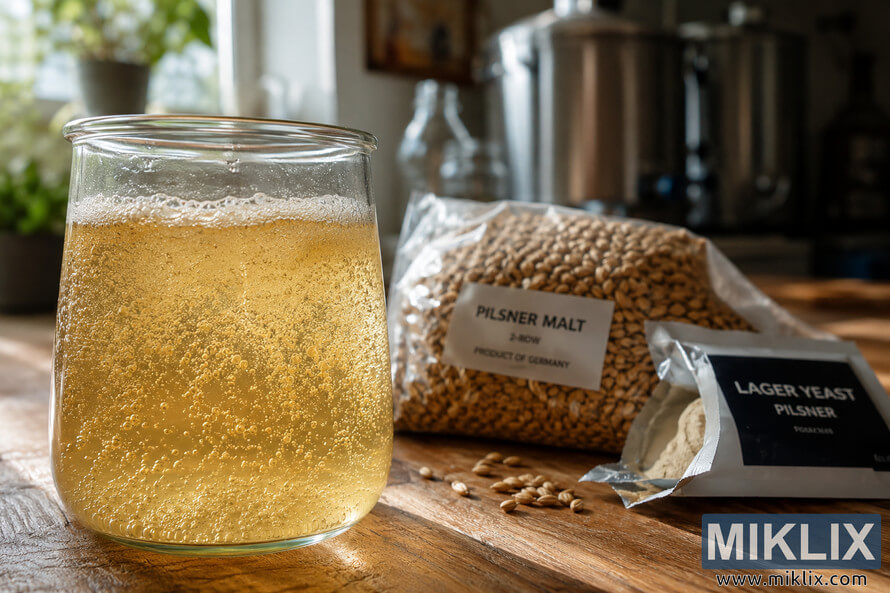
Preparing a Starter for White Labs WLP800 Pilsner Lager Yeast
Brewers aiming for a crisp, clean pilsner benefit from a healthy pitch of White Labs WLP800. Lagers run cooler and ask more of yeast, so planning a starter can shorten lag time and cut off-flavors. Below are practical guidelines for preparing and monitoring a starter that fits homebrew scale batches.
When a starter is necessary for lagers
- For 5+ gallon batches or beers above 1.050 OG, make a starter to reach the recommended cell count.
- A single White Labs vial might work for low-OG, small batches. Making a WLP800 starter reduces risk of underpitching, long lag phases, and off-flavors.
Step-by-step lager yeast starter recipe and volumes
- Sanitize a 1.0–2.0 L flask or growler. Use clean equipment to limit contamination.
- Prepare wort at 1.030–1.040 gravity using light DME. Boil 10–15 minutes to sanitize, then cool to pitching temperature.
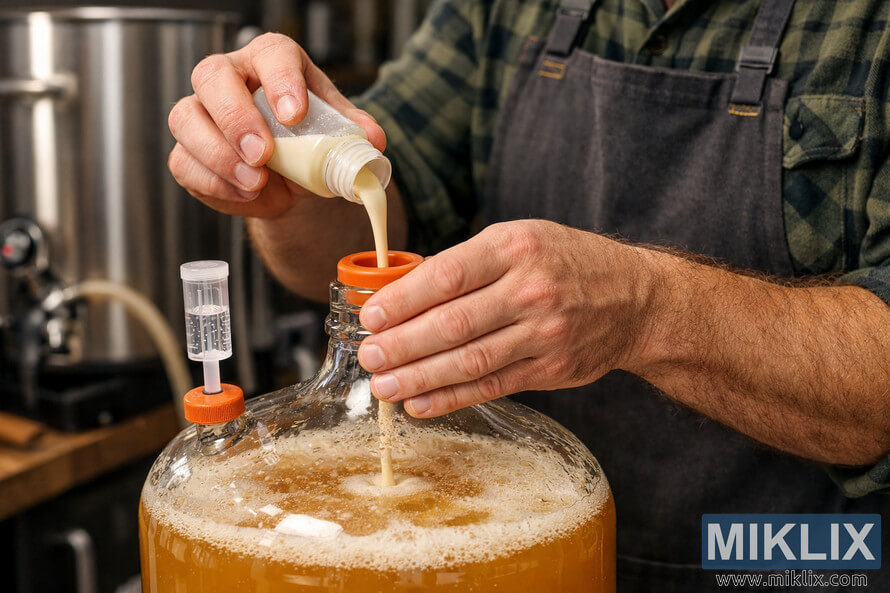
- Aerate wort by shaking or using an oxygen source. Pitch the White Labs vial or harvested slurry.
- Place on a stir plate or swirl the flask several times daily. Expect visible activity within 24–48 hours.
Practical starter volumes: for a standard 5-gallon pilsner at 1.048 OG, aim for a starter size in the 1.5–2 L range when using a single vial. For repitching or lower OG beers, 1–1.5 L often suffices. Higher gravities should scale to 2–4 L. Use online calculators such as Mr. Malty or Brewer’s Friend to refine numbers for your exact batch and gravity.
Monitoring yeast activity and vitality
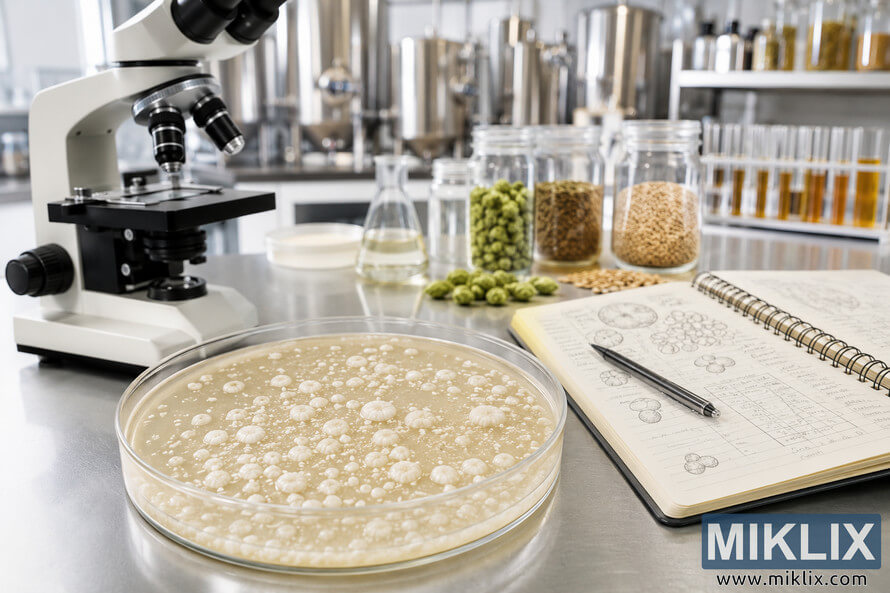
- Watch for krausen or foaming and a dense, creamy yeast slurry. Those signs show healthy yeast propagation WLP800.
- Smell the starter: a fresh, bready or yeasty aroma is normal. Avoid solventy, rotten, or overly acidic odors.
- When possible, check specific gravity. A drop indicates growth and fermentation.
- Cold crash the starter before harvesting. Decant the spent beer to avoid diluting the new batch when repitching.
Keep a log of starter volume for pilsner batches and the timing of peak activity. Consistent records help dial in starter size and timing for repeatable results.
વધુ માહિતી અને ઉચ્ચ રિઝોલ્યુશન માટે છબી પર ક્લિક કરો અથવા ટેપ કરો.
Optimal Fermentation Temperatures for WLP800
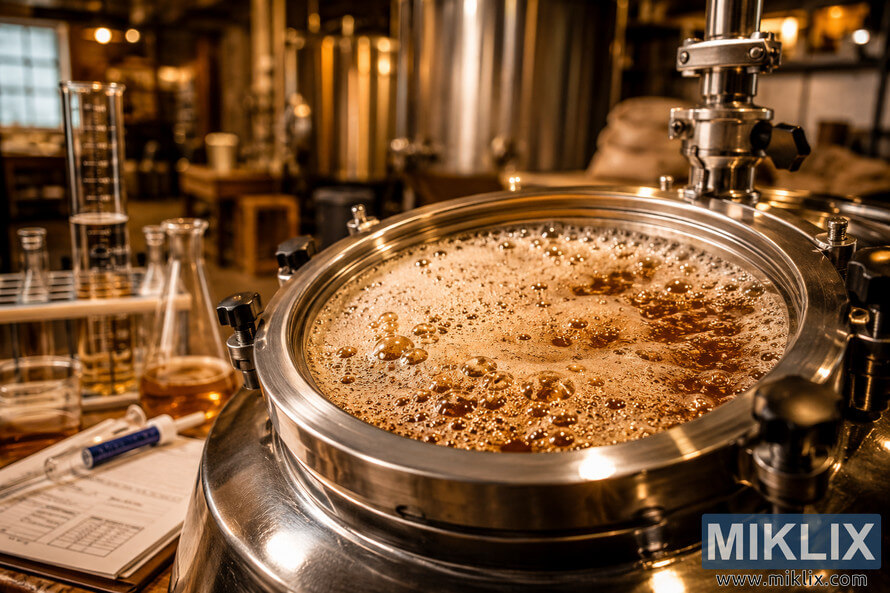
Temperature is crucial for WLP800 fermentation, impacting clarity, aroma, and the clean pilsner taste brewers aim for. Adhere to White Labs’ guidelines and make subtle adjustments based on your recipe, equipment, and desired ester levels.
- For the cleanest flavor, aim for mid-to-high 40s °F (7–9 °C). This temperature range minimizes ester production, preserving the crispness of malt and hop flavors.
- Some brewers start fermentation at 50–54 °F (10–12 °C) to shorten the lag phase. Once fermentation is active, lower the temperature for conditioning.
- Always include a short diacetyl rest by slightly increasing the temperature towards the end of primary fermentation. This step helps the yeast eliminate byproducts before lagering.
Temperature control methods for homebrewers
- Invest in a dedicated chest fridge or a converted upright with a controller from Inkbird or Johnson for reliable temperature control.
- Swamp coolers paired with a thermometer are budget-friendly options. Adding a fermentation wrap and a controller enhances precision.
- Basements or cellars with stable cool temperatures offer passive temperature control. For diacetyl rests, use a fermentation heater wrap or briefly raise the room temperature.
Effects of temperature on flavor and ester production
- Lower temperatures suppress fruity esters, leading to a cleaner, crisper pilsner taste. This is preferred by many lager drinkers.
- Warmer fermentation can increase esters and produce sulfur notes. These can overpower delicate hop and malt flavors.
- Avoid sudden temperature changes. Rapid shifts can stress yeast and lead to off-flavors. Gradual adjustments are key to maintaining yeast health and consistent results.
વધુ માહિતી અને ઉચ્ચ રિઝોલ્યુશન માટે છબી પર ક્લિક કરો અથવા ટેપ કરો.
Pitching Rates and Yeast Health Considerations
Ensuring a proper pitch and maintaining yeast health are crucial for a clean pilsner fermentation. Aim for solid cell counts, steady oxygenation, and sensible nutrient use to avoid off-flavors and sluggish activity. Below are practical steps and signs to watch for when brewing with WLP800.
Calculating the proper pitch rate for a typical pilsner is straightforward with a lager pitching calculator or published targets. For many 5-gallon pilsners at OG ~1.045–1.050, aim for 0.75–1.5 million cells per mL per °P. A single WLP800 vial plus a 1–2 L starter will meet this need for most batches. Increase starter size for higher OG beers or for brewing multiple successive batches.
- Use Mr. Malty or similar tools to convert gravity and volume into target cell counts.
- When in doubt, build a larger starter rather than underpitching.
Recognizing underpitching is key to acting quickly. Signs include long lag time, slow rise in specific gravity, elevated diacetyl, and spicy fusel esters. Overpitching, on the other hand, often shows as an unusually fast ferment and subtler yeast character. Overpitching is rare and typically less harmful than underpitching in lagers.
- If underpitched: make a starter, re-pitch active yeast, oxygenate freshly made wort, and confirm fermentation temperature.
- If overpitched: monitor flavor development and avoid aggressive temperature swings that could mask yeast performance.
Yeast oxygenation before pitching is critical for WLP800 and lager yeast performance. Use pure O2 for lagers or vigorous aeration methods for lower-gravity worts. Avoid adding oxygen after active fermentation begins; post-pitch oxygen risks oxidation and stale flavors.
Use yeast nutrient for lager sparingly. Typical pilsner worts that are well-made rarely need heavy nutrient dosing. For long, high-gravity lagers, add a measured yeast energizer at pitch to support healthy growth. Follow manufacturer dosing and avoid excess that can create unwanted flavors.
Before pitching, confirm the target cell count with a lager pitching calculator, oxygenate wort properly, prepare an appropriately sized starter if needed, and add a modest yeast nutrient for demanding ferments. These steps keep WLP800 healthy and give pilsners a clean, stable fermentation.
Fermentation Timeline and Signs of Progress
The WLP800 fermentation timeline is influenced by several factors, including pitch rate, temperature, and wort gravity. Lagers generally require more time than ales. Expect primary fermentation to last between 7–14 days, assuming optimal conditions. Following this, a brief cleanup period precedes cold conditioning.
Many brewers follow a specific schedule: 10 days of primary fermentation at 48–52 °F, followed by a 2-day diacetyl rest at 58–62 °F. The process concludes with cold crashing and lagering for 4–8+ weeks at 34–38 °F. This approach ensures clarity and flavor development. Adjustments should be made based on OG and target attenuation.
Tracking fermentation progress involves observing visual cues and measuring gravity. Look for krausen formation, foam decline, and yeast settling. Airlock activity and gravity readings are key indicators. Gravity readings are the most reliable metric.
- Use hydrometer or refractometer SG readings for lager to confirm gravity decline.
- Target FG based on the strain’s expected attenuation and your OG to judge completion.
- Consistent gravity over 48–72 hours usually means fermentation is finished.
When assessing SG readings for lager, remember that wort temperature affects hydrometer values. Take corrected measurements and log them daily until they stabilize. Taste and smell are secondary checks for off-flavors before moving to diacetyl rest timing.
Common causes of slow or stuck fermentations include underpitching, low fermentation temperature, lack of oxygen at pitch, or weak yeast. Address these issues gently to avoid abrupt changes.
- Gently raise temperature into the upper end of the safe range to encourage yeast activity.
- If very early in fermentation, provide a measured oxygen dose and rouse yeast by swirling the fermenter.
- Pitch fresh, healthy yeast or a starter if underpitching is suspected.
Stuck fermentation fixes should be data-driven. Confirm stalled SG readings before intervening. Small, controlled steps reduce the risk of off-flavors or infection. Use gravity trends, sensory checks, and patience to decide when to act.
Performing a Diacetyl Rest with WLP800
Diacetyl can manifest as a buttery or butterscotch flavor in lagers. Brewers using White Labs WLP800 must intervene with a brief warming period. This allows yeast to reabsorb the compound. The goal is to maintain a clean beer while preserving the pilsner's character.
When a diacetyl rest is needed
If fermentation was cool or slow, or if you notice buttery flavors, it's time for a diacetyl rest. Low-temperature fermentations often lead to detectable diacetyl. Once primary fermentation is complete, as indicated by gravity readings, warm the beer to aid WLP800 in finishing cleanup reactions.
Temperature and duration recommendations
Warm the beer to about 58–66 °F (14–19 °C) for a brief period. For a WLP800 diacetyl rest, 24–48 hours is typically sufficient. Some batches may require up to 72 hours. Be cautious not to overheat, as this can introduce unwanted esters. After the rest, return the beer to lagering temperatures for further settling.
How to test for diacetyl presence
- Perform a sensory check by warming a small sample. Diacetyl is more obvious when the beer is slightly warm.
- Use diacetyl testing methods when available. Homebrewers rely on taste; labs can use gas chromatography for precise measures.
- Monitor gravity before starting the rest. Do not raise temperatures if primary fermentation is still incomplete without understanding risks.
If diacetyl appears after packaging, prevention is safer than cure. Gentle warming of packaged beer can help in some cases. However, the recommended path is a timely WLP800 diacetyl rest and careful diacetyl testing during conditioning. This ensures diacetyl is removed from WLP800 before it reaches consumers.
Lagering Techniques and Cold Conditioning
After primary fermentation and a proper diacetyl rest, move the beer into a controlled cold phase. This step polishes the flavor. Gentle cooling allows yeast to settle, starting the journey to classic lager clarity and a refined palate.
The transition from active fermentation to cold storage is a meticulous process. Gradually lower the temperature over several days to the target lagering range. This avoids shocking the yeast and prevents off-flavors. Many brewers first cold crash to clear trub, then decide whether to transfer to a secondary or leave the beer in the primary for extended conditioning.
Choose a clarifying method that aligns with your setup and goals. Filtration and centrifugation quickly produce very bright beer. However, extended cold conditioning lager can achieve similar clarity without extra equipment, albeit at a slower pace and with increased storage needs.
Recommended lagering temperatures and durations vary by style and ambition. For pilsner-style lagers fermented with WLP800 lagering in mind, aim for temperatures near 34–38 °F (1–3 °C). Common homebrew timelines range from four to eight weeks for a clean polish. For ultra-bright, silky results, plan for eight to twelve weeks or more.
It's crucial to maintain steady temperatures during storage. Rapid temperature changes can re-suspend yeast and trub, risking oxidation or cloudiness. Consistent cold conditioning lager preserves delicate hop character and allows malt tones to mellow.
Lagering offers clear benefits to flavor and appearance. Cold storage reduces suspended proteins, polyphenols, and yeast, enhancing visual clarity and mouthfeel. The yeast remaining in suspension can reabsorb compounds like diacetyl, softening buttery or solvent notes and smoothing bitterness.
Expect diminishing returns beyond certain timeframes. Each additional month adds smaller gains in clarity and roundness. Balance desired lager clarity against available space and patience to find the best schedule for your cellar.
- Slow cool to lagering temps over several days to prevent thermal shock.
- Cold crash to drop trub before long conditioning when possible.
- For pilsners, aim for 4–8 weeks; extend to 8–12+ weeks for very bright results.
- Keep temperatures stable to avoid re-suspension and oxidation risk.
Water, Mash, and Grain Bill Tips for Pilsner with WLP800
Opting for the right water, mash, and grain choices is key to unlocking WLP800's clean, crisp character. A measured approach to minerals, mash scheduling, and a restrained grain bill is essential. This ensures the yeast can deliver classic pilsner clarity and a subtle noble-hop bite.
Begin with soft or low-mineral water for a traditional Czech or German pilsner. Aim for low bicarbonate and a moderate sulfate boost to enhance hop snap. Target ranges can be Ca 50–100 ppm, SO4 50–150 ppm, and Cl 20–50 ppm. These depend on whether you prefer a drier German style or a slightly rounder Czech finish.
Use gypsum sparingly to raise sulfate, and add calcium chloride only when you want more malt softness. For very hard source water, treat with reverse osmosis or distilled water. This gives you full control over the pilsner water profile.
Mash temperature and enzyme considerations
For a highly fermentable wort, keep mash temps on the lower side. Aim for a mash temp pilsner of about 148–152 °F (64–67 °C). This encourages beta-amylase activity and higher attenuation, suiting WLP800 grain recommendations for clean lagers.
Modern floor-malted pilsner malts are well modified, so skip long protein rests unless using under-modified malts. Single infusion mashes are common and efficient. Consider a short step mash only for traditional profiles or when working with older malts.
Grain bill examples and specialty malt usage
Keep the pilsner grain bill simple. Use 90–100% high-quality Pilsner malt as the base. This allows WLP800 to express delicate malt and hop nuances. For Czech character, add 3–8% Vienna or Munich malt for a touch of breadiness without overpowering the base.
Use minimal specialty malts such as Carahell or a light crystal to adjust head retention or color. Avoid darker or richly caramelized malts that mask the yeast and hop profile. Adjuncts like flaked rice may appear in modern light lagers but keep them small for traditional styles.
- Water: target low bicarbonate and moderate sulfate for hop lift.
- Mash: mash temp pilsner at 148–152 °F for a crisp, fermentable wort.
- Grain bill: principally Pilsner malt with small specialty additions.
- Yeast pairing: follow WLP800 grain recommendations to preserve clarity.
Hopping Schedule and Bitterness Targets for Pilsners
Pilsners are known for their subtle hop profile, allowing malt and yeast to take center stage. Opt for noble hop varieties and carefully plan hop additions. This approach ensures a clean bitterness, delicate flavor, and a refined aroma. It perfectly complements the neutral fermentation characteristics of WLP800.
Choosing noble hops and hop timing
For a traditional pilsner, select hops like Saaz, Hallertau Mittelfrüh, Tettnang, or Spalt. These hops have low alpha acids and impart soft, spicy-herbal notes. Most bitterness comes from early kettle additions. Reserve a small amount for late additions to enhance flavor and aroma subtly.
Step additions during the boil help achieve balanced bitterness without overpowering the yeast. When designing a WLP800 hop schedule, limit late additions. This preserves the crisp, clean finish that this yeast is known for.
IBU targets for different pilsner styles
IBU targets vary by pilsner style and water chemistry. Czech (Bohemian) pilsners typically have 35–45 IBU, with a softer hop presence. German pilsners aim for 35–50 IBU, offering a drier, crisper bitterness.
Adjust IBU targets based on your water profile. Higher sulfate levels enhance dryness and hop bite. This means you might need to lower IBUs if your water is sulfate-rich and you aim for balance.
Dry hopping considerations for clean lager strains
Traditional dry hopping is less common in classic pilsners. It can introduce grassy notes that conflict with the pilsner's pure character. WLP800's clean fermentation makes it an ideal canvas for experimentation.
If you do decide to dry hop, use low rates of 0.25–0.5 oz per gallon. Choose a delicate aroma hop and employ cold-contact, short-duration dry hopping. This method minimizes vegetal compounds while adding a subtle hop enhancement that complements a well-planned WLP800 hop schedule.
- Use Saaz hops pilsner style for authentic Czech character.
- Target pilsner IBU targets based on whether you brew Czech or German styles.
- Keep late additions and dry hop rates low to protect clarity and purity.
Common Fermentation Off-Flavors and Fixes with WLP800
WLP800 off-flavors can emerge during fermentation or post-packaging. This guide helps identify common issues and potential fixes before discarding a batch. Focus on maintaining cleanliness, simplicity, and patience when working with pilsner lagers.
Identifying and remedying sulfur notes
Sulfur in lager often has a rotten egg smell early in fermentation. Many lager strains produce it as they break down sulfate compounds. Most sulfur will dissipate with proper conditioning and cold lagering.
- Allow full lagering time and avoid panicked interventions during early conditioning.
- Check yeast health: oxygenate wort properly and pitch an adequate cell count to reduce prolonged sulfur production.
- If sulfur persists after extended cold conditioning, perform a gentle transfer to let the beer breathe and give yeast one last chance to clean up before packaging.
Preventing and treating diacetyl and phenolic faults
Diacetyl gives a buttery note that many brewers want to avoid. To fix diacetyl WLP800, raise fermentation temperature for a diacetyl rest for 24–72 hours so yeast can reabsorb the compound.
- Maintain a diacetyl rest near the upper end of the strain’s range for the recommended time.
- Ensure viable yeast and avoid underpitching; excess stress can prolong diacetyl production.
- Phenolic faults, like clove or medicinal aromas, typically come from contamination or unintended phenolic yeasts. Tighten sanitation, avoid wild yeast exposure, and control mash pH to limit tannin extraction.
- If phenolics appear, consider filtration, blending with clean beer, or discarding severely affected batches.
Addressing acetaldehyde and other green flavors
Acetaldehyde produces a green apple note that signals incomplete fermentation or premature packaging. Use acetaldehyde remedies before bottling or kegging to prevent off-flavors.
- Confirm stable final gravity over several days before packaging.
- Extend conditioning or lagering time to allow yeast to finish metabolizing intermediate compounds.
- Ensure correct pitch rate and sufficient oxygen at inoculation to promote healthy fermentation and reduce acetaldehyde formation.
Watch for multiple faults at once; a single cause like stressed yeast can create several off-flavors. Careful monitoring, proper oxygenation, and patient conditioning are the best defenses against WLP800 off-flavors.
Packaging Considerations After Fermentation
Post-fermentation, packaging choices significantly impact clarity, carbonation, and shelf life. You must decide between bottle conditioning or kegging and force carbonation for lagers brewed with WLP800. Each method presents unique trade-offs in terms of time, control, and flavor preservation.
Bottle conditioning maintains natural carbonation through yeast activity. This approach is suitable for WLP800 beers but requires warmer temperatures for proper conditioning. A few weeks at 65–70°F are necessary to achieve the desired carbonation and allow yeast to consume priming sugar pilsner blends.
Kegging and force carbonation offer precise control and quicker cold storage. Many brewers opt for force carbonation in kegs to bypass the warm conditioning step, which can cloud a lager. Kegging also minimizes oxidation risks through closed transfers and CO2 purging.
For bottle conditioning, use priming sugar calculators to achieve pilsner carbonation levels between 2.2 and 2.7 CO2 volumes. Calculate the sugar amount based on batch size, residual CO2, and target volumes for a priming sugar pilsner. When kegging, refer to carbonation charts to set the regulator PSI for the desired serving temperature.
- Sanitize bottles, caps, keg seals, and lines thoroughly before any transfer.
- Minimize splashing during filling to reduce oxygen pickup and preserve flavor.
- Purge kegs with CO2 prior to filling and use closed transfers when possible.
Follow lager bottling tips such as filling bottles from the bottom up and keeping headspace minimal. If bottle conditioning, plan a cold-conditioning period after carbonation to clear haze and refine the profile. If force carbonating in a keg, cool the keg to serving temperature quickly, then set PSI and monitor volumes.
Packaging hygiene is as crucial as technique. Replace worn gaskets, inspect seals, and use proper sanitizers. Store finished packages cold and dark to preserve crisp pilsner character and extend shelf life.
Tasting Notes and Recipe Ideas Using White Labs WLP800 Pilsner Lager Yeast
White Labs WLP800 offers a clean, crisp profile, emphasizing Pilsner malt and noble hops. It produces low esters, a medium-light body, and a dry finish. This allows Saaz or Hallertau hops to shine. Early conditioning might introduce a faint sulfur note, which usually disappears during lagering.
The flavor and aroma are subtle, featuring grain, light cracker, and noble-hop spice. The beer's lively, carbonated mouthfeel makes it feel drier than its gravity suggests. Use these tasting notes to judge the balance between malt sweetness and hop bitterness.
- OG target: 1.048 for a classic strength and drinkability.
- FG range: 1.008–1.012 for a crisp finish.
- ABV: about 4.8–5.0% at typical attenuation.
Simple pilsner recipe WLP800 — 5-gallon batch:
- Grain bill: 10–12 lb Pilsner malt. For a Czech pilsner recipe, add 0.5–1 lb Vienna or Carahell for subtle color and malt character.
- Hops: Czech Saaz or German Hallertau. Bitter to 35–40 IBU, with late whirlpool additions of 0.5–1 oz for aroma.
- Mash: 148 °F for a drier finish or 150 °F for slightly more body.
- Fermentation: pitch WLP800 at 48–52 °F. Diacetyl rest 24–48 hours near 60 °F. Lager at 34–38 °F for 4–8 weeks.
When dialing recipes, use WLP800 as a base and tweak mash temp or hop timing to match your target. Keep late hop additions measured to preserve the lager’s clean profile.
Modern pilsner adjuncts can update the style while respecting its roots. Light adjuncts such as flaked rice or corn thin body and raise drinkability when used sparingly. For more hop aroma, boost whirlpool hopping rather than heavy dry hopping to retain crispness.
- Session or hopped-up variants: increase late-hop additions for brighter aroma while keeping bitterness moderate.
- Grain play: small amounts of Vienna or light Munich add warmth that complements noble hops without masking the yeast’s clarity.
- Adjunct guidance: modern pilsner adjuncts should be subtle to avoid overpowering the Pilsner malt and WLP800’s clean fermentation.
Use these ideas to craft a classic Czech pilsner recipe or a contemporary take. Let WLP800 tasting notes guide fermentation and conditioning choices to highlight balance, clarity, and the delicate interplay of malt and hops.
Conclusion
White Labs WLP800 Pilsner Lager Yeast offers a clean ferment that brings out malt and noble hop flavors. It's crucial to follow best practices for a successful brew. This includes using the right pitching rate, maintaining cold fermentation, and a diacetyl rest to avoid buttery notes.
Fermenting with WLP800 requires patience. Keep temperatures steady, oxygenate the wort, and extend cold conditioning for clarity. Use yeast calculators and White Labs technical sheets for precise planning. This ensures optimal cell counts and schedules.
In this pilsner yeast review, WLP800 is ideal for brewers aiming for a neutral, pilsner-focused beer. It highlights the importance of water profile, mash technique, and hop choice. Following best practices ensures crisp, classic pilsners every time.
FAQ
What is White Labs WLP800 Pilsner Lager Yeast best used for?
WLP800 is a bottom-fermenting Saccharomyces pastorianus strain. It's designed for traditional pilsner beers. It produces a clean, crisp profile with low ester production. This makes it ideal for Czech and German-style pilsners, where delicate Pilsner malt and noble-hop character should shine.
What fermentation temperature range should I use with WLP800?
Ferment WLP800 in the classic lager range. Primary fermentation is typically in the mid-to-high 40s °F (7–10 °C). Many brewers ferment a bit warmer—around 50–54 °F (10–12 °C)—to shorten lag time. Then, raise to ~58–62 °F (14–17 °C) for a 24–48 hour diacetyl rest before dropping to lagering temps of 34–38 °F (1–3 °C).
When should I make a starter for a 5‑gallon pilsner using WLP800?
A starter is recommended for most 5‑gallon pilsners. This is especially true at typical pilsner gravities (~1.045–1.050) because lagers need higher viable cell counts. Practical starter sizes are about 1.5–2 L for a single vial pitched to 5 gallons. Increase to 2–4 L for higher OG beers or when using older vials. Use calculators like Mr. Malty to fine-tune cell counts.
How do I calculate proper pitching rates for WLP800?
Use a pitching calculator (Mr. Malty, Brewer’s Friend) and target lager pitching rates. A common guideline is roughly 0.75–1.5 million cells per mL per °P. For many homebrewers, this translates to building a 1–2 L starter from one vial for a standard 5‑gallon pilsner. Scale starters upward for higher OG or multiple batches.
Does WLP800 produce sulfur or diacetyl, and how do I manage those?
Early sulfur notes can occur with lager strains but typically dissipate during lagering. Diacetyl can appear in slow, low-temperature ferments. Perform a diacetyl rest—raise beer to ~58–66 °F for 24–72 hours—after primary fermentation. This allows yeast to reabsorb diacetyl. Proper pitch rates, oxygenation, and time in cold conditioning usually prevent persistent faults.
How long should I lager a pilsner fermented with WLP800?
For a clean, polished pilsner, lagering 4–8 weeks at 34–38 °F is common for homebrewers. For very bright clarity and smoother flavor, extend lagering to 8–12+ weeks. Gradually lower temperature after the diacetyl rest to avoid thermal shock and maintain stable cold conditions. This maximizes clarity and flavor refinement.
Where can I buy WLP800 in the United States and what should I check on delivery?
Buy WLP800 from White Labs’ site, MoreBeer, Northern Brewer, or local homebrew shops. Ensure vendors use refrigerated or overnight shipping, especially in warm weather. On arrival, check the vial label (WLP800), production/use-by date, lot number, seal integrity, and that the yeast is cool. If it arrives warm, chill promptly and consider making a starter to confirm viability.
Do I need special temperature control equipment to brew lagers with WLP800?
Some temperature control is strongly recommended. A dedicated chest fridge or converted upright with a controller (Inkbird or Johnson) offers the best stability. Low-tech options like swamp coolers can work for fermenting in the mid-40s °F range but offer less precision. Use a controllable heat source when you need to perform a diacetyl rest.
What mash temperature and water profile work best with WLP800 for a classic pilsner?
For a crisp, highly fermentable wort, mash between 148–152 °F (64–67 °C). Target soft water with moderate sulfate to emphasize hop crispness and low bicarbonate. Typical mineral targets might be Ca 50–100 ppm, SO4 50–150 ppm, and Cl 20–50 ppm, adjusted with gypsum or calcium chloride as needed. Use Pilsner malt as the base with minimal specialty malts.
How many IBUs should I aim for in Czech vs. German pilsners using WLP800?
Czech (Bohemian) pilsners are often 35–45 IBU with a slightly malt-forward balance. German-style pilsners typically target 35–50 IBU for a crisper hop bitterness. Adjust perceived bitterness with your water profile—higher sulfate enhances dryness and hop bite.
Is dry hopping recommended with WLP800-fermented pilsners?
Dry hopping is uncommon for traditional pilsners and can introduce grassy or vegetal notes. If experimenting, use low rates (0.25–0.5 oz/gal) and do short cold-contact dry hops. This preserves delicate aromas without overwhelming the clean yeast-driven profile.
What are signs of underpitched or stuck fermentation and how do I fix them?
Underpitching shows as long lag time, sluggish fermentation, higher diacetyl, and solventy/fusel notes. Stuck fermentations plateau before expected FG. Remedies include gently raising temperature within the yeast’s range, oxygenating early if still in very early stages, pitching a healthy starter or fresh yeast, and rousing yeast by swirling or agitation. Always confirm gravity trends before major interventions.
Should I bottle condition or force carbonate a lager made with WLP800?
Force carbonation via kegging is preferred for lagers to avoid the warm conditioning required for bottle conditioning and to reduce oxidation risk. Bottle conditioning is possible but requires storing bottles at warmer temps temporarily for yeast activity. This may affect clarity; plan a final cold conditioning period afterward.
How do I test for diacetyl at home?
Warm a small sample to room temperature and taste for buttery or butterscotch notes—diacetyl is more apparent warm. If detected, perform or extend a diacetyl rest (raise to ~58–66 °F for 24–72 hours). Lab analysis (GC) is the only precise method, but sensory checks are the practical homebrewer approach.
What simple 5‑gallon recipe pairs well with WLP800 for a classic pilsner?
A basic recipe: 10–12 lb Pilsner malt, 0.5–1 lb Vienna or Carahell optional for Czech style; hops: Saaz (Czech) or Hallertau—bittering additions to reach 35–40 IBU, with small late whirlpool additions for aroma. Mash at 148–150 °F for a drier finish. Ferment WLP800 at 48–52 °F, diacetyl rest 24–48 hrs at ~60 °F, then lager 4–8 weeks at 34–38 °F.
How should I handle a yeast starter and what indicates it's ready to pitch?
Sanitize your flask, prepare a 1.030–1.040 gravity DME wort, boil 10–15 minutes, cool and aerate, then pitch the vial. Use a stir plate or swirl regularly. Look for visible krausen, active bubbling, dense yeast slurry, and rapid settling after cold-crash. Smell should be bready/yeasty, not solventy. Cold-crash and decant spent wort if repitching to avoid diluting the batch.
What packaging hygiene steps prevent oxidation after fermenting with WLP800?
Sanitize all packaging equipment thoroughly. Minimize splashing during transfers and use closed transfers or purge kegs with CO2 before filling. For bottling, avoid excessive headspace and handle bottles quickly. After carbonation, cold-condition promptly to preserve freshness and clarity.
How does WLP800 compare to other lager strains like Wyeast 2124 or WLP830?
WLP800 is tuned for a neutral, pilsner-focused finish with strong attenuation and low ester production. Compared to Wyeast 2124 Bohemian Lager, WLP800 may produce a slightly cleaner finish; compared to WLP830 German Lager it emphasizes a brighter, crisper pilsner profile rather than a more malt-forward or fuller-bodied character. Differences are subtle; choice depends on desired final beer and handling preferences.
વધુ વાંચન
જો તમને આ પોસ્ટ ગમી હોય, તો તમને આ સૂચનો પણ ગમશે:
- વ્હાઇટ લેબ્સ WLP004 આઇરિશ એલે યીસ્ટ સાથે બીયરને આથો આપવો
- Wyeast 3763 Roeselare Ale Blend સાથે આથો લાવવાનું બીયર
- વાયસ્ટ ૧૨૧૭-પીસી વેસ્ટ કોસ્ટ આઈપીએ યીસ્ટ સાથે બીયરને આથો આપવો