
Hoto: Historical Lavender Illustration with Dried Herbal Bundles
Buga:
An sabunta ta ƙarshe: 4 Yuli, 2026 da 11:07:30 UTC
Explore a beautifully detailed historical illustration of lavender plants traditionally used in herbal medicine, featuring dried lavender bundles, vintage apothecary elements, handwritten botanical notes, and a rustic antique setting.
Historical Lavender Illustration with Dried Herbal Bundles
Sigar da ake da ita ta wannan hoton
Fayilolin hotunan da ake da su don saukewa a ƙasa ba su da matsewa kuma suna da ƙuduri mafi girma - kuma sakamakon haka, inganci mafi girma - fiye da hotunan da aka saka a cikin labarai da shafuka akan wannan gidan yanar gizon, waɗanda aka fi inganta su don girman fayil don rage yawan amfani da bandwidth.
Girman yau da kullun (1,536 x 1,024)

Babban girma (3,072 x 2,048)
Girma mai girma sosai (4,608 x 3,072)
Girman da ya fi girma (6,144 x 4,096)
Girman barkwanci mai girma (1,048,576 x 699,051)
- Har yanzu ana lodawa... ;-)
Bayanin Hoto
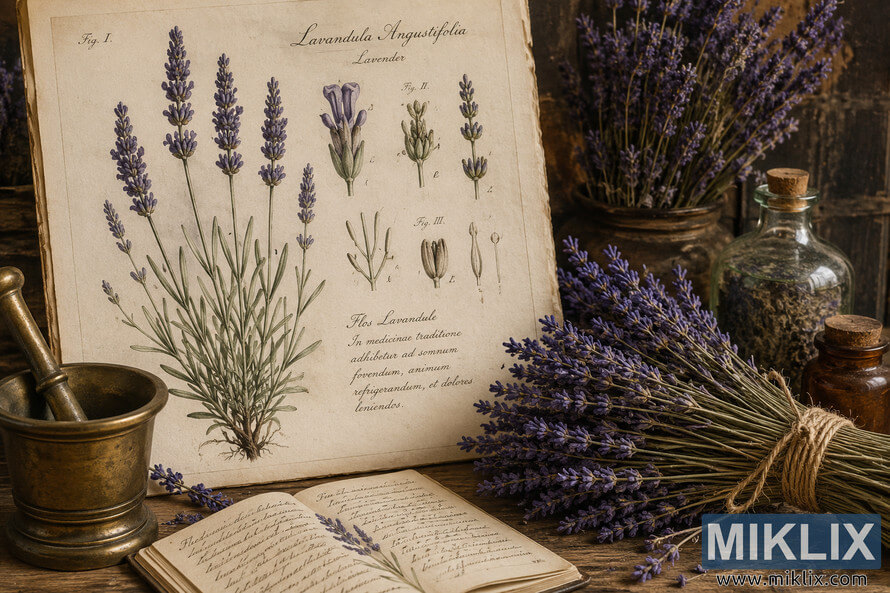
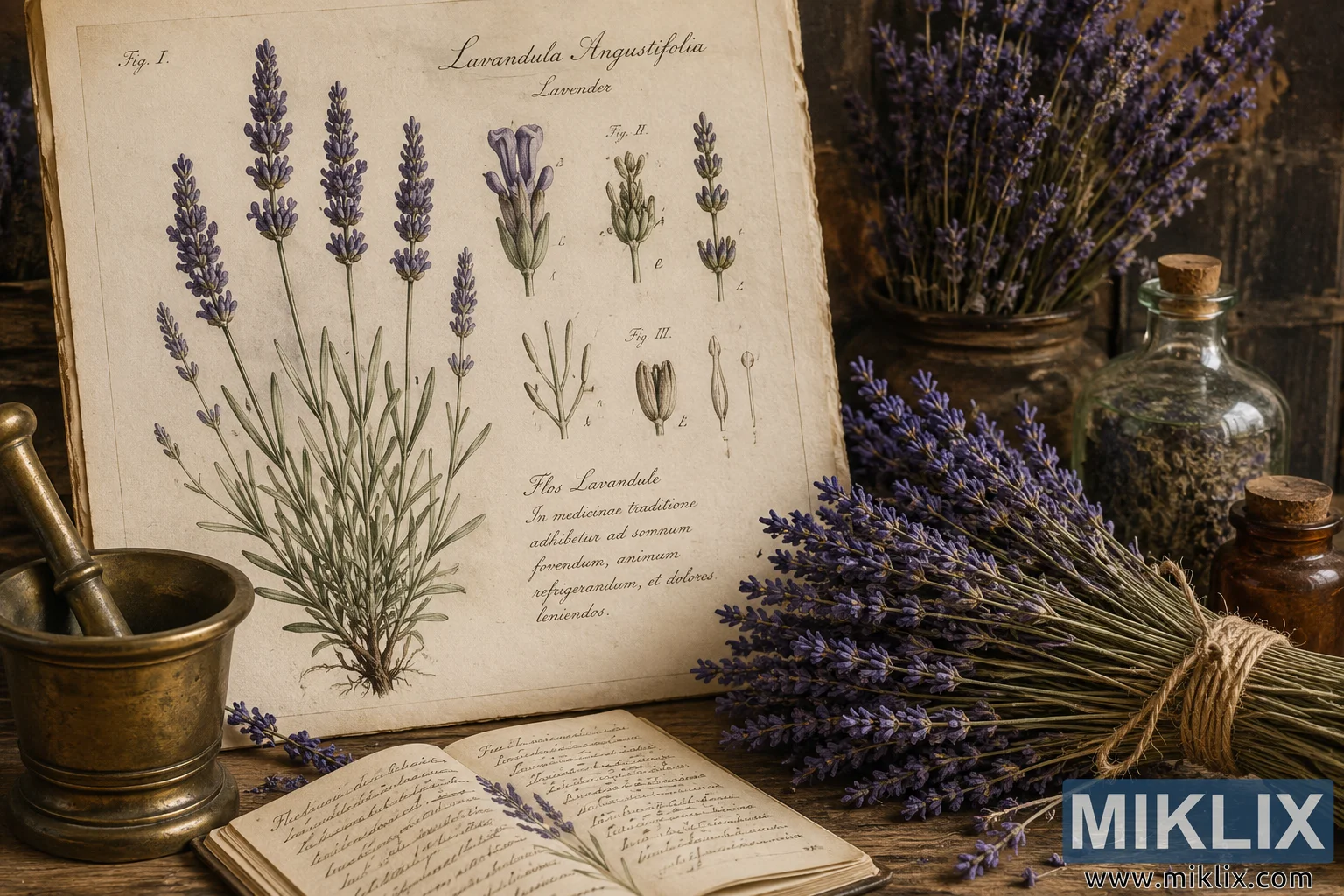
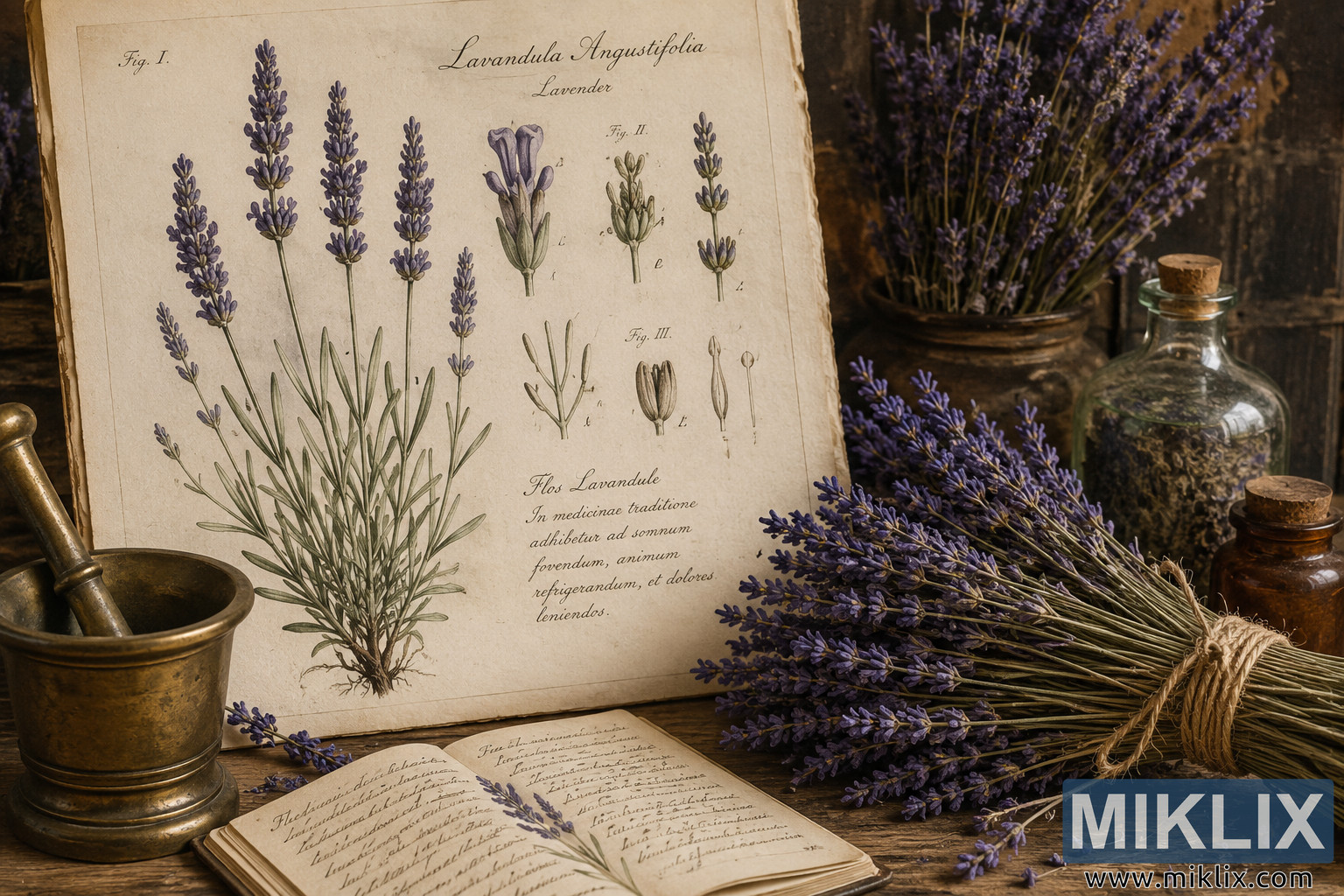
This image presents a richly detailed historical-style botanical composition centered around lavender plants and their traditional medicinal use. The scene is arranged as an antique apothecary still life, combining scientific illustration, herbal preparation tools, and dried botanical materials in a warm rustic environment. Positioned prominently near the center-left of the composition is a large aged botanical illustration sheet depicting lavender plants in multiple stages of growth and anatomical detail. The paper appears weathered and textured, with softly darkened edges and subtle creases that evoke the appearance of a centuries-old herbal manuscript preserved in an herbalist’s workshop.
The botanical illustration itself features carefully rendered lavender stems with slender gray-green leaves and clustered purple blossoms. Additional smaller anatomical sketches display flower structures, seed components, and dissected floral forms commonly found in classical medicinal plant studies. Elegant handwritten script in a historical Latin-inspired style labels the plant and includes notes associated with traditional herbal remedies and botanical observations. The illustration resembles scientific studies from early pharmacological or botanical reference books used by herbal healers, physicians, and naturalists.
Surrounding the illustration are multiple bundles of dried lavender tied neatly with coarse natural twine. The bundles rest across the wooden tabletop and extend toward the foreground, adding texture and depth to the arrangement. Their deep violet blossoms contrast beautifully against the warm brown wood tones and muted parchment colors. Some loose lavender sprigs are scattered naturally around the table surface, reinforcing the handcrafted and authentic atmosphere of the scene.
To the left side of the composition sits an antique brass mortar and pestle with visible signs of age and patina. The metal surface catches the warm ambient light, suggesting years of use in grinding herbs and preparing traditional medicinal mixtures. Nearby, small glass apothecary bottles and jars contain dried herbal ingredients. One clear bottle filled with lavender buds reflects soft highlights from the surrounding light, while darker amber-toned containers contribute to the historical pharmacy aesthetic.
At the bottom foreground lies an open handwritten notebook featuring cursive botanical notes and herbal formulas. The pages display faded ink and carefully scripted writing, suggesting personal observations or medicinal recipes compiled by an herbal practitioner. A delicate lavender sprig rests atop the notebook pages, visually connecting the written records to the physical plant materials throughout the image.
The entire setting is illuminated by warm directional lighting that enters from the left side, producing soft shadows and emphasizing the textures of parchment, dried flowers, aged wood, and metal surfaces. The lighting contributes to an intimate and scholarly atmosphere reminiscent of a historical herbal study or apothecary workspace. The dark wooden background remains softly blurred, allowing the viewer’s attention to remain focused on the lavender illustration and herbal objects while still enhancing the depth and realism of the composition.
The image successfully blends scientific botanical documentation with artistic still-life styling. It evokes themes of traditional medicine, herbal healing, natural remedies, botanical exploration, and historical craftsmanship. Every object within the arrangement contributes to a cohesive visual narrative celebrating lavender’s longstanding role in herbal traditions and medicinal history. The overall mood is calm, educational, nostalgic, and refined, making the image highly suitable for editorial use related to herbal medicine, aromatherapy, botanical history, natural wellness, historical apothecaries, or vintage scientific illustration.
Hoton yana da alaƙa da: A Complete Guide to the Health Benefits of Lavender