
תְמוּנָה: Ideal Fermentation Temperature for Czech Pilsner Yeast
פורסם:
עודכן לאחרונה: 14 באפריל 2026 בשעה 21:08:27 UTC
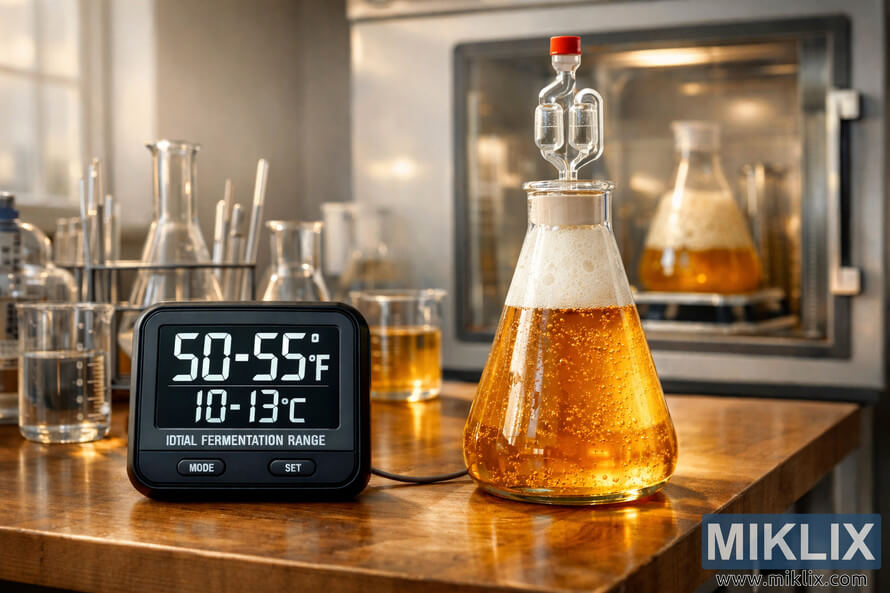
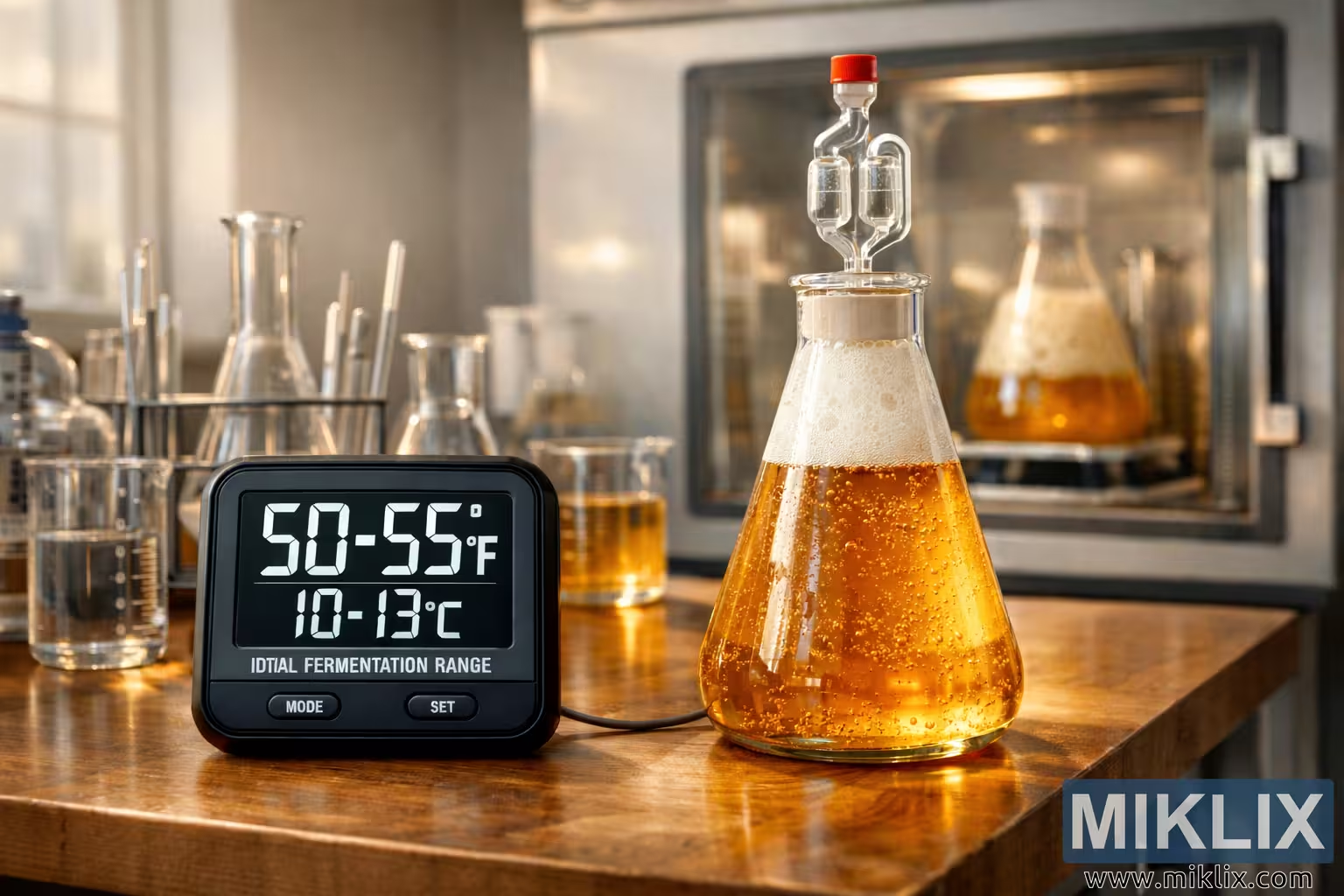
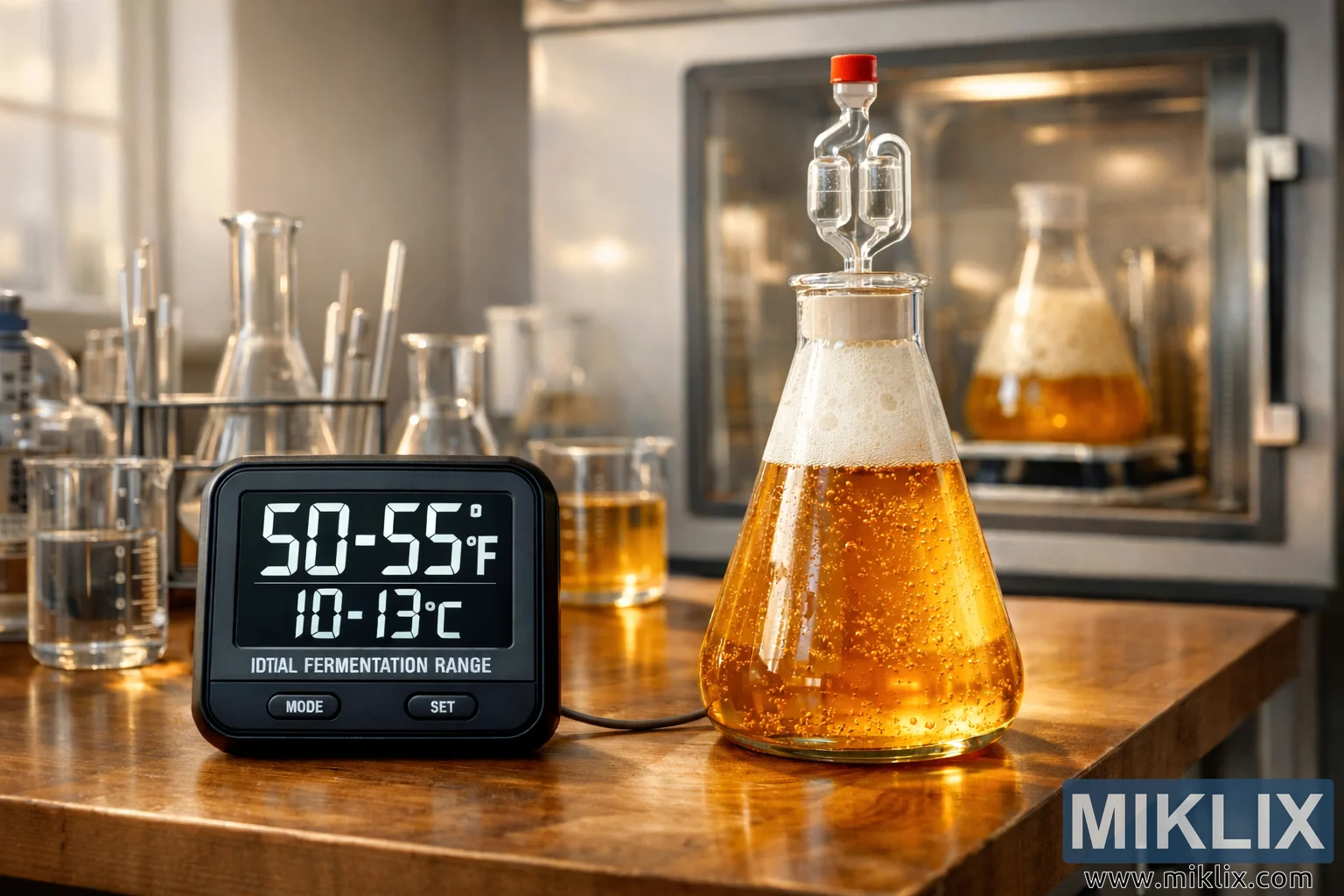
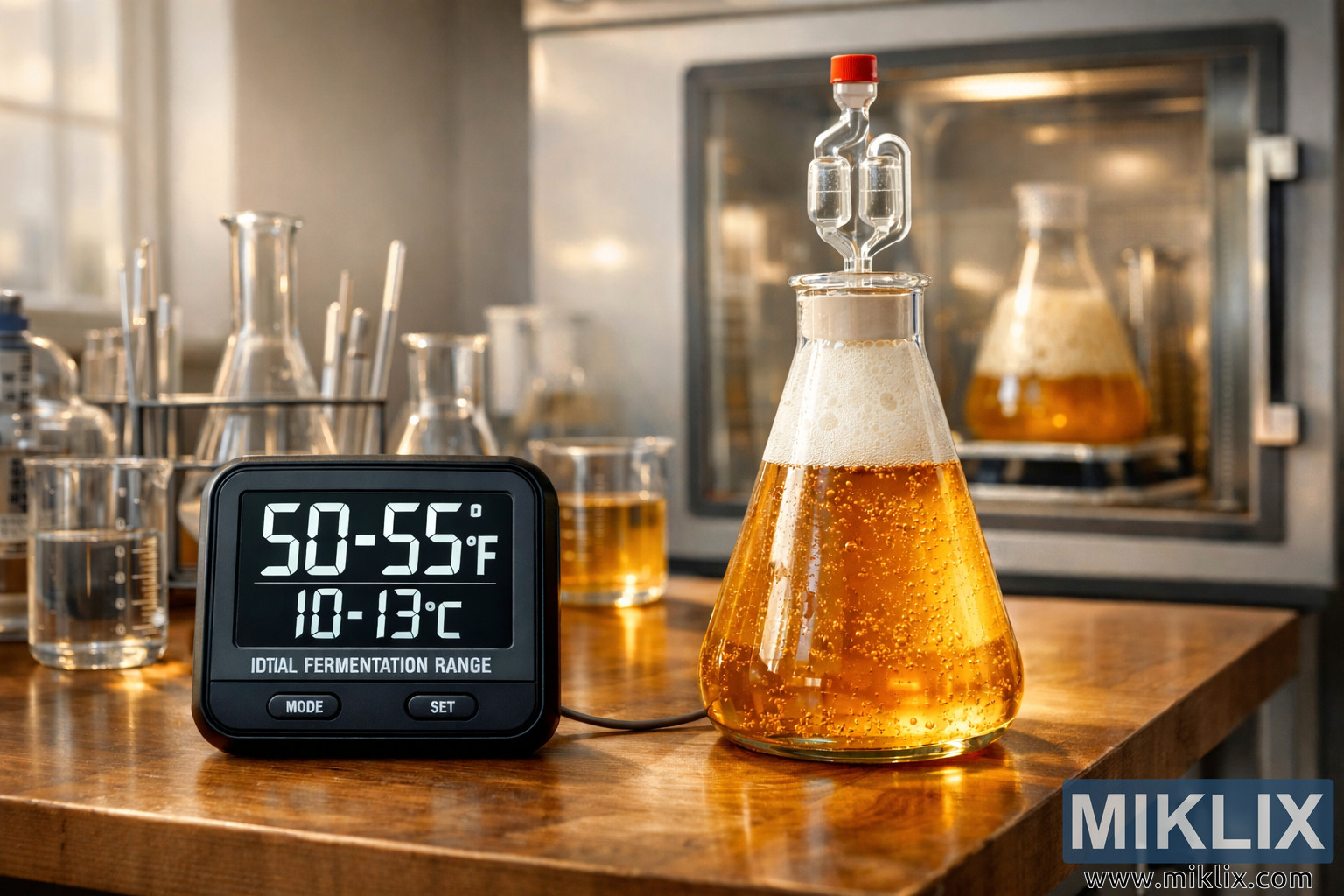
High-resolution laboratory illustration showing the optimal 50–55°F (10–13°C) fermentation temperature for Czech pilsner yeast, featuring a digital thermometer, fermenting flask with airlock, and controlled fermentation chamber.
Ideal Fermentation Temperature for Czech Pilsner Yeast
גרסאות זמינות של תמונה זו
קבצי התמונה הזמינים להורדה להלן דחוסים פחות ובעלי רזולוציה גבוהה יותר - וכתוצאה מכך, באיכות גבוהה יותר - בהשוואה לתמונות המוטמעות במאמרים ובדפים באתר זה, אשר מותאמות יותר לגודל הקובץ על מנת להפחית את צריכת רוחב הפס.
גודל רגיל (1,536 x 1,024)
גודל גדול (3,072 x 2,048)
גודל גדול מאוד (4,608 x 3,072)
גודל גדול במיוחד (6,144 x 4,096)
גודל גדול באופן קומי (1,048,576 x 699,051)
- עדיין מעלה... ;-)
תיאור התמונה
This high-resolution, landscape-oriented image presents a detailed scientific illustration of the ideal fermentation temperature range for Czech pilsner yeast within a clean, professional laboratory setting. The composition is carefully arranged to emphasize precision, temperature control, and the technical aspects of brewing science while maintaining a warm and inviting atmosphere.
In the foreground, positioned prominently on a polished wooden laboratory workbench, a sleek digital thermometer immediately draws the viewer’s attention. Its clear, backlit display reads “50–55°F” on the top line and “10–13°C” beneath it, indicating the optimal fermentation temperature range for Czech pilsner yeast. The numbers are crisp and easy to read, reinforcing the educational and instructional purpose of the scene. The device has a modern, matte-black casing with subtle buttons labeled for mode and set functions, suggesting accuracy and professional-grade equipment.
Next to the thermometer sits a transparent Erlenmeyer flask filled with golden beer in active fermentation. The liquid glows warmly under soft, natural lighting, with fine bubbles rising steadily through the amber-gold body of the beer. A creamy layer of foam forms at the top, signaling vigorous yeast activity. Sealed at the mouth of the flask is a properly shaped S-shaped airlock fitted with a red cap. The airlock is partially filled with clear liquid, visually indicating carbon dioxide release while preventing outside air from entering—an essential component of controlled fermentation.
In the middle ground, neatly arranged glass beakers, graduated cylinders, and pipettes rest on the wooden workbench. Their surfaces catch gentle highlights from the ambient light, producing subtle reflections and adding depth to the scene. The arrangement is orderly and intentional, reinforcing the scientific and methodical nature of temperature-controlled fermentation.
The background features a softly illuminated fermentation chamber with a glass door. Inside, another flask containing golden liquid can be seen resting on a metal shelf. The chamber’s interior lighting creates a warm glow that contrasts with the cooler tones of the surrounding lab environment, visually communicating controlled conditions. The shallow depth of field keeps the primary focus on the foreground thermometer and flask while still allowing the viewer to recognize the specialized equipment behind them.
Overall, the image conveys a balance between brewing artistry and laboratory precision. The warm lighting, polished wood surface, and golden tones of the fermenting beer create an inviting atmosphere, while the digital thermometer and properly configured airlock emphasize accuracy and optimal yeast performance. The scene clearly illustrates the importance of maintaining a 50–55°F (10–13°C) temperature range for achieving clean, crisp fermentation characteristics typical of Czech pilsner yeast.
התמונה קשורה ל: Fermenting Beer with Wyeast 2278 Czech Pils Yeast