
תְמוּנָה: Unripe and Ripe Quince Side-by-Side Comparison
פורסם:
עודכן לאחרונה: 5 במרץ 2026 בשעה 21:48:09 UTC
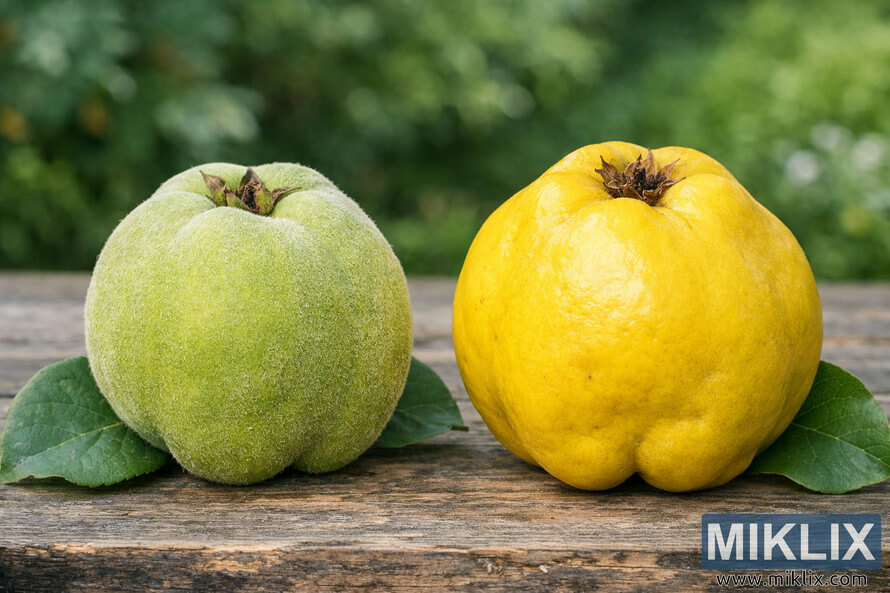
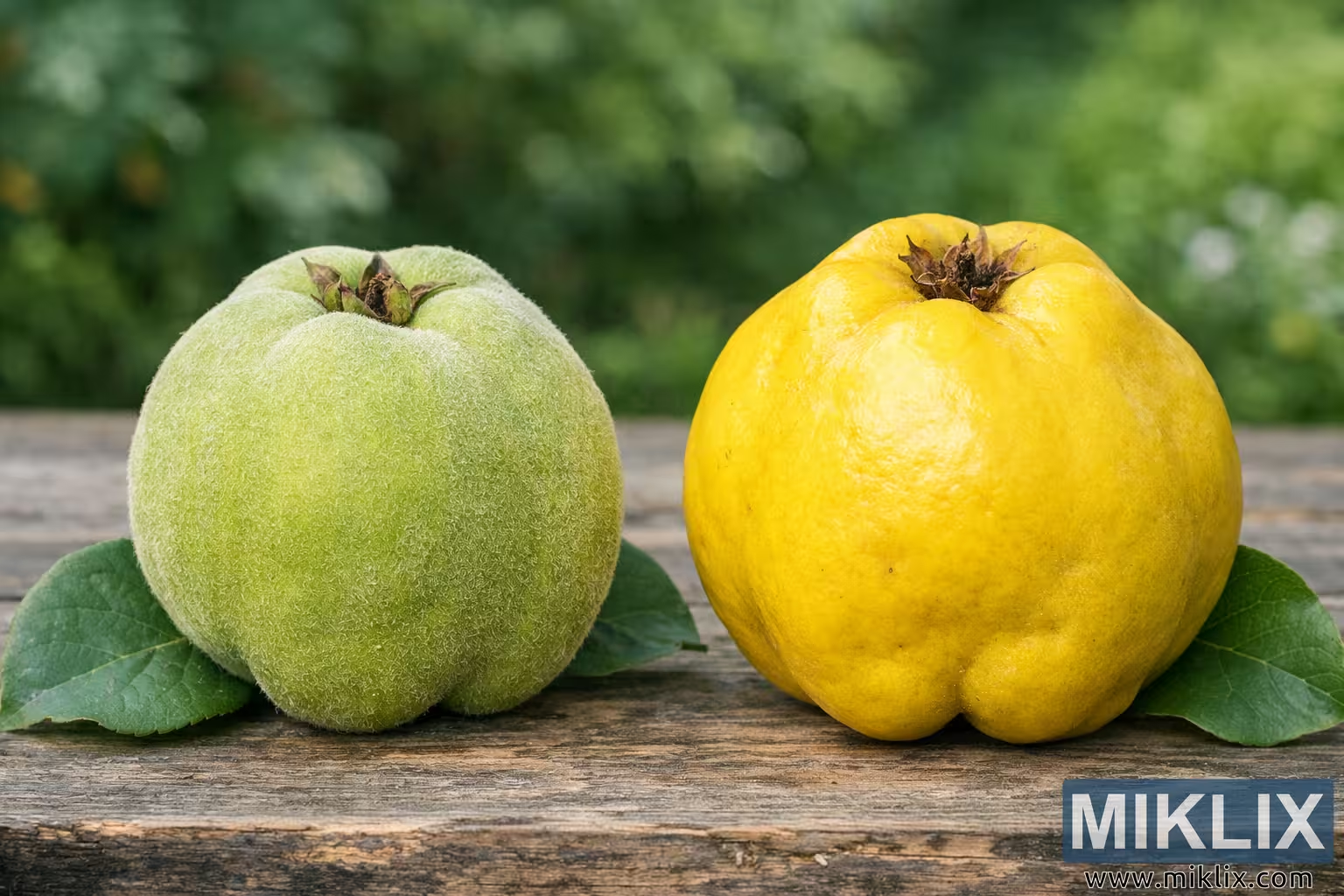
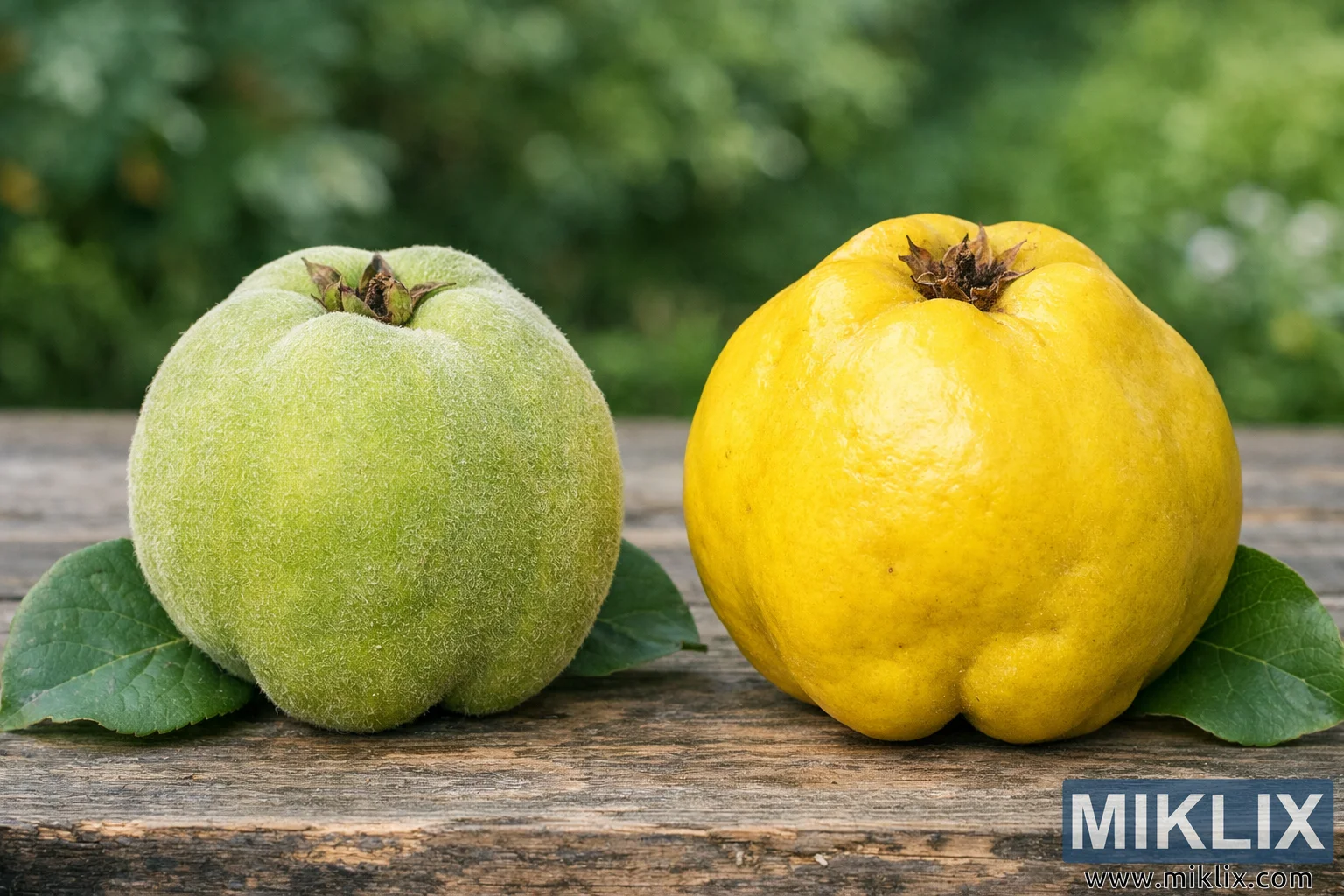
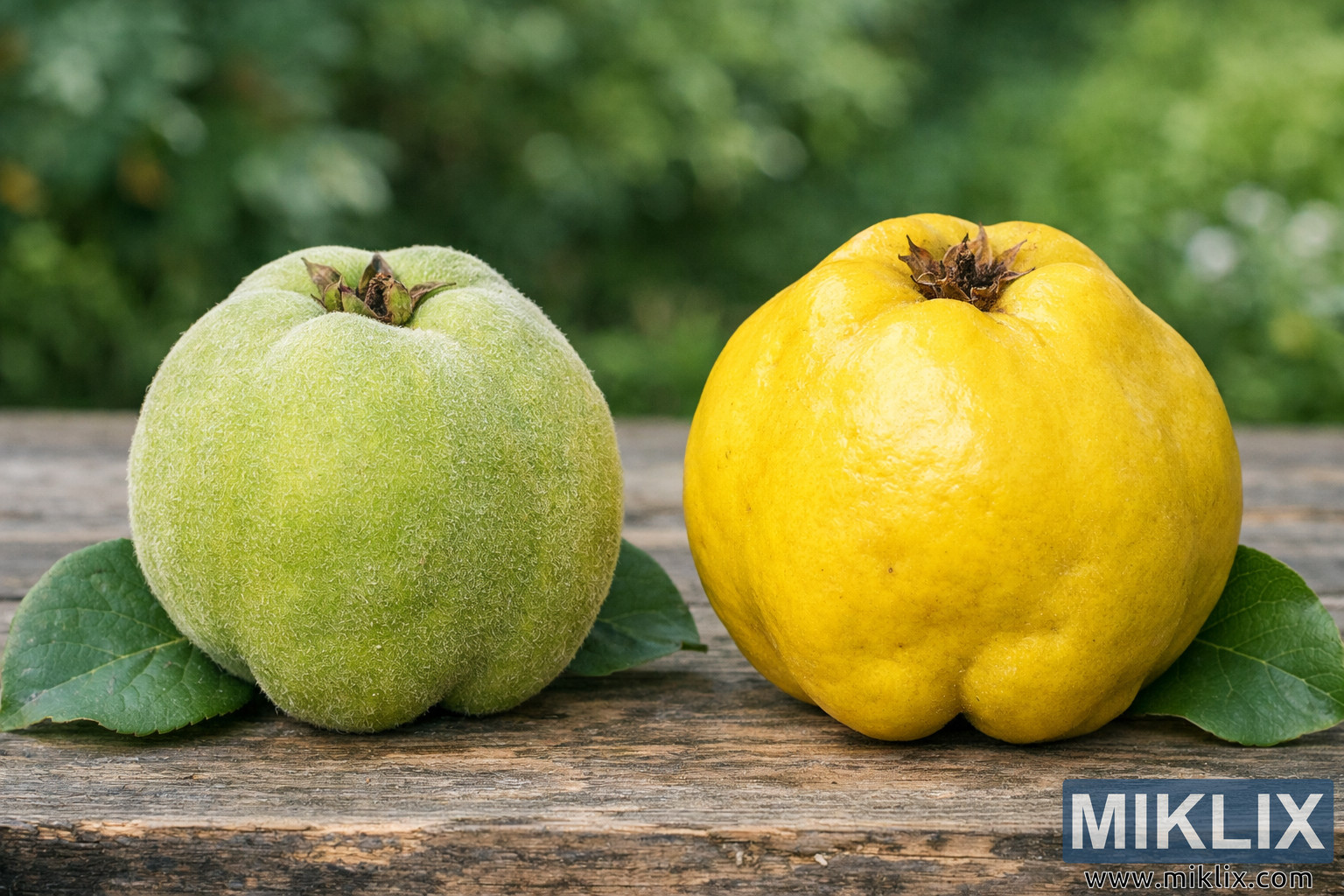
High-resolution landscape image showing a side-by-side comparison of unripe green quinces and ripe golden quinces, including sliced fruit to reveal texture and seeds.
Unripe and Ripe Quince Side-by-Side Comparison
גרסאות זמינות של תמונה זו
קבצי התמונה הזמינים להורדה להלן דחוסים פחות ובעלי רזולוציה גבוהה יותר - וכתוצאה מכך, באיכות גבוהה יותר - בהשוואה לתמונות המוטמעות במאמרים ובדפים באתר זה, אשר מותאמות יותר לגודל הקובץ על מנת להפחית את צריכת רוחב הפס.
גודל רגיל (1,536 x 1,024)
גודל גדול (3,072 x 2,048)
גודל גדול מאוד (4,608 x 3,072)
גודל גדול במיוחד (6,144 x 4,096)
גודל גדול באופן קומי (1,048,576 x 699,051)
- עדיין מעלה... ;-)
תיאור התמונה
A high-resolution landscape photograph presents a detailed side-by-side comparison of unripe and ripe quince fruit arranged on a rustic wooden table. The composition is split visually into two balanced sections, creating a natural contrast between the stages of maturity. On the left side, several unripe quinces rest together, their skin a muted green with subtle hints of pale yellow. Their surfaces appear slightly matte and firm, with a faint fuzz that catches the soft daylight. The fruits are irregularly rounded, with characteristic lumpy contours and pronounced dimples near the stem. The attached leaves are a deep green, slightly curled at the edges, reinforcing the sense of freshness and immaturity.
On the right side, the ripe quinces glow in warm golden-yellow tones. Their skin looks smoother and more luminous, reflecting the natural light streaming in from the side. The fuzz is less visible, and the surface appears denser and more polished. A few fruits are sliced open to reveal their pale cream-colored flesh and a central core filled with glossy brown seeds arranged symmetrically. The cut surfaces show a moist, dense interior texture, hinting at the fruit’s transformation from hard and astringent to aromatic and ready for cooking.
The lighting is soft and directional, likely natural window light, casting gentle shadows that emphasize the three-dimensional form and texture of each fruit. The wooden table beneath them has a weathered grain pattern in neutral brown tones, complementing both the cool green hues of the unripe quinces and the warm golden shades of the ripe ones. The shallow depth of field keeps the foreground fruits in crisp focus while the background fades into a creamy blur, drawing attention to the contrasting colors, textures, and structural details.
Overall, the image clearly illustrates the visual differences between unripe and ripe quince fruit—color shift from green to golden yellow, reduction of surface fuzz, and the internal transformation revealed through the sliced examples—while maintaining a natural, authentic, and inviting aesthetic suitable for educational, culinary, or botanical contexts.
התמונה קשורה ל: Complete Guide to Growing Your Own Quince Trees