
Image: Watercress Nutritional Breakdown Chart Featuring Vitamins and Minerals
Published: July 8, 2026 at 5:30:19 PM UTC
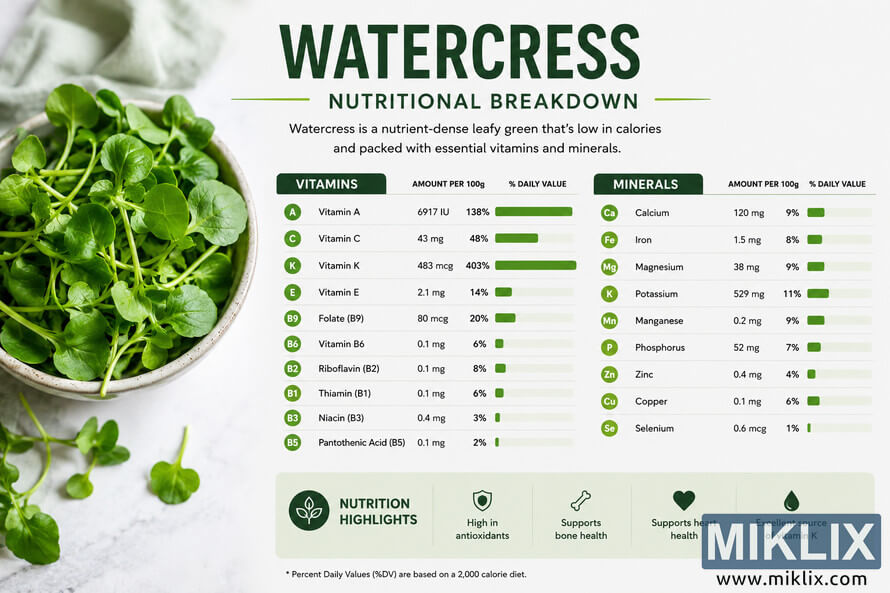
Detailed landscape infographic highlighting the nutritional profile of watercress with a fresh food photograph and comprehensive chart of vitamins, minerals, daily values, and health benefits in a clean green and white design.
Available versions of this image
The image files available for download below are less compressed and higher resolution - and as a result of that, higher quality - than the images embedded in articles and pages on this website, which are more optimized for file size in order to reduce bandwidth consumption.
Regular size (1,536 x 1,024)
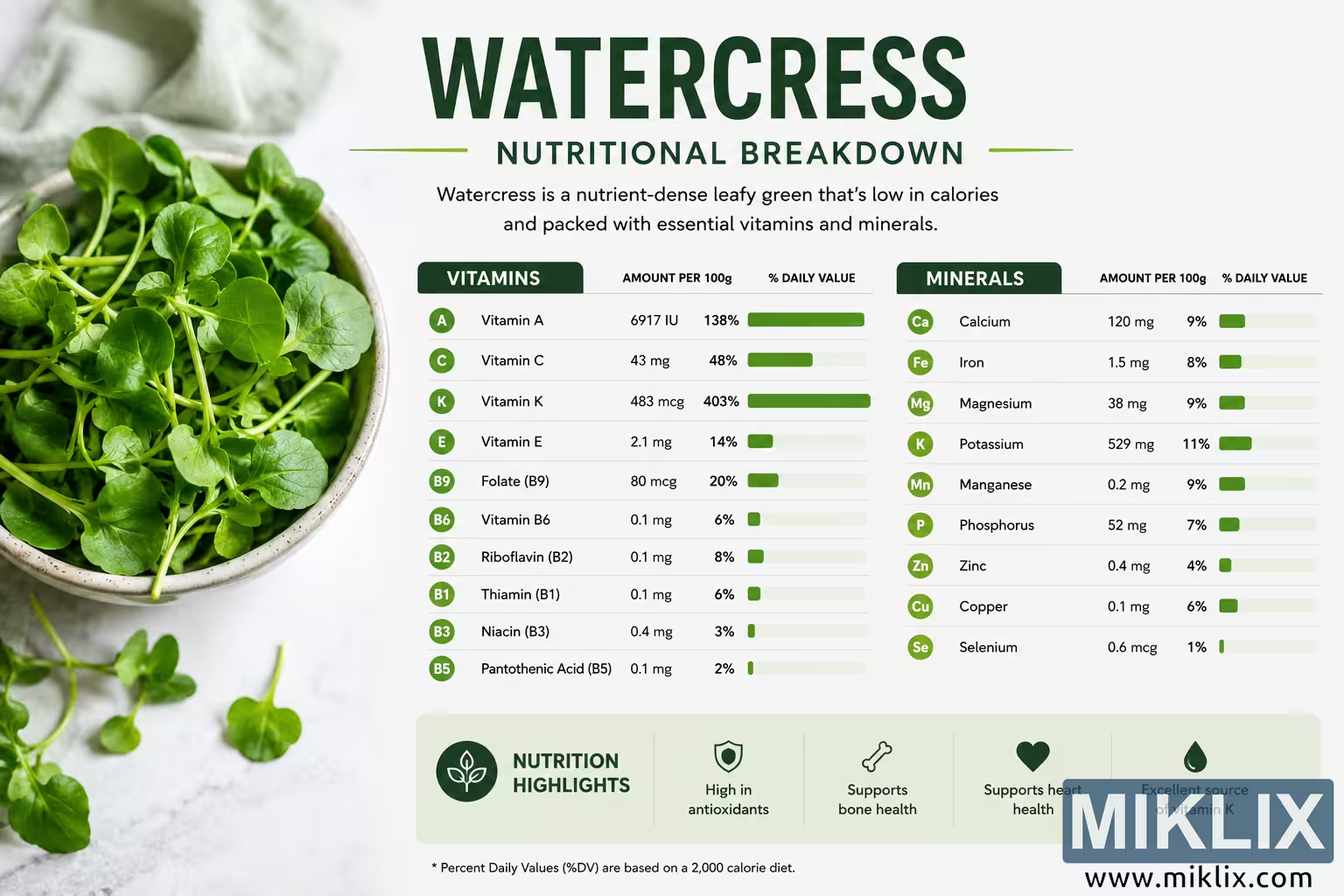
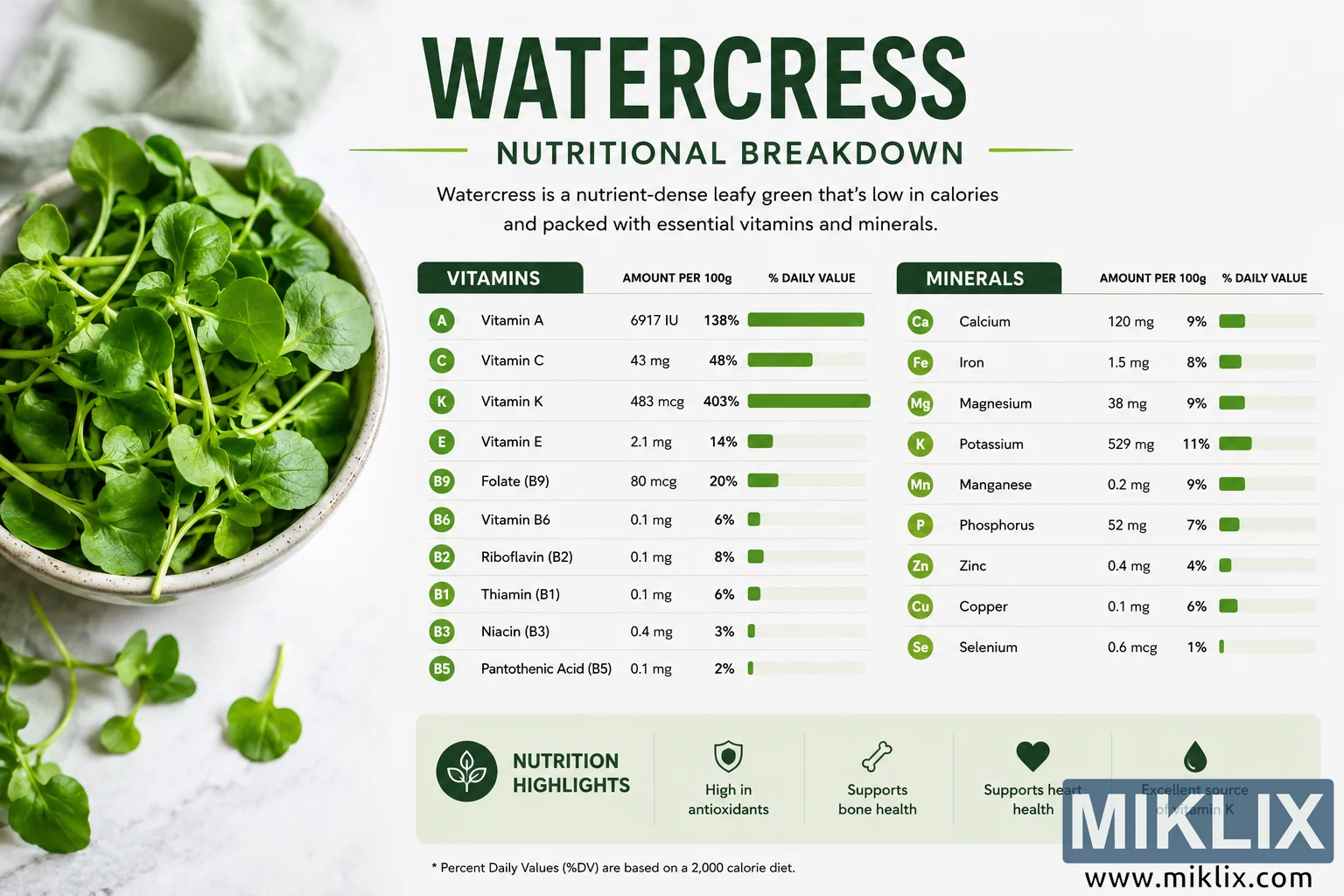
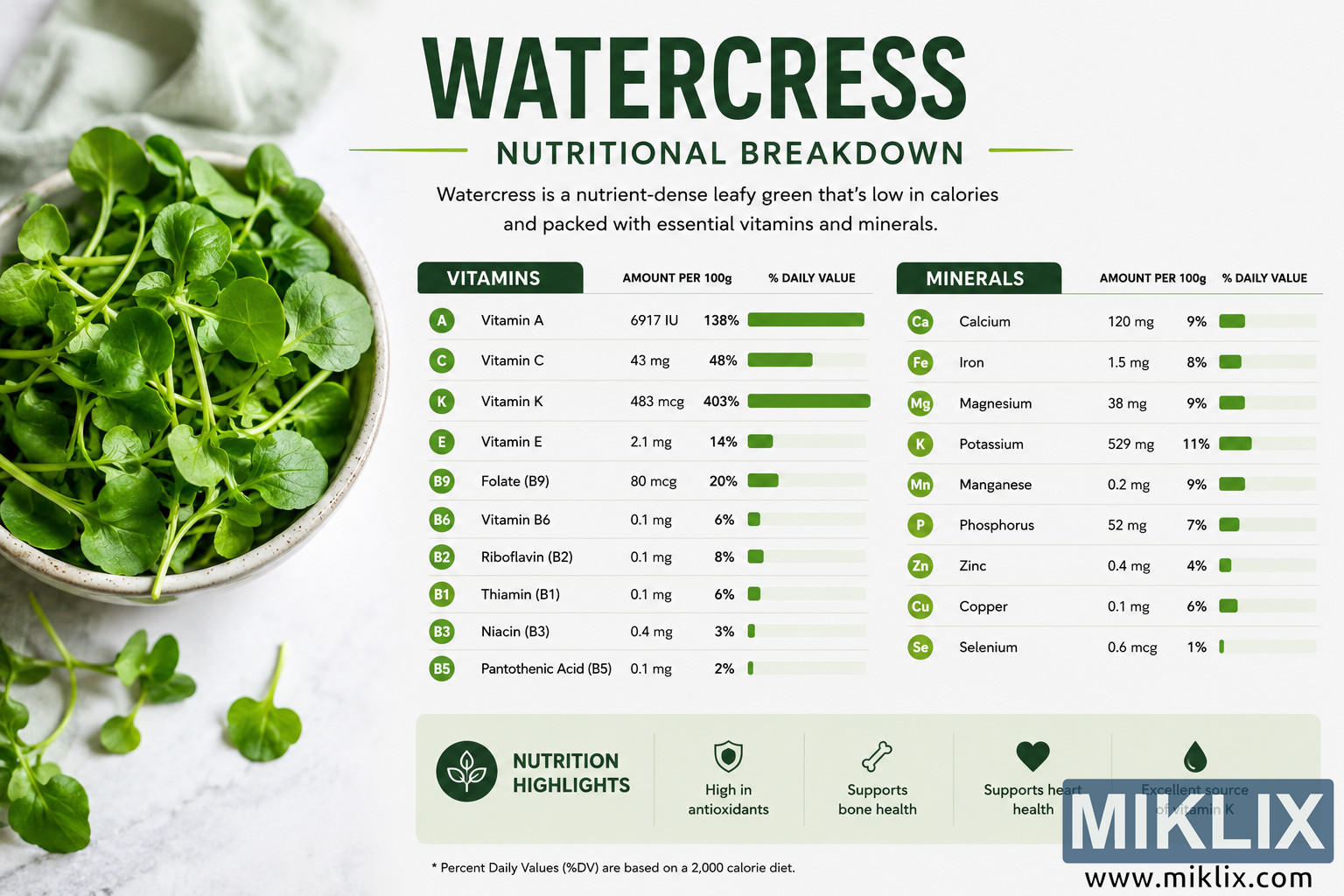
Large size (3,072 x 2,048)
Very large size (4,608 x 3,072)
Extra large size (6,144 x 4,096)
Comically large size (1,048,576 x 699,051)
- Still uploading... ;-)
Image description
This high-resolution landscape infographic presents a visually polished nutritional breakdown of watercress using a clean editorial design with natural green color accents and modern typography. The composition is divided into two major sections. On the left side of the image, a large ceramic bowl filled with vibrant fresh watercress leaves is photographed from a slightly elevated angle. The watercress appears crisp, leafy, and richly green with visible stems and rounded leaves layered naturally within the bowl. The bowl rests on a soft light-gray textured surface that resembles stone or matte marble, contributing to a fresh and healthy culinary atmosphere. Additional scattered watercress leaves appear around the lower portion of the composition to enhance the organic and natural presentation.
The right side of the infographic contains the structured nutritional information panel. At the very top, a bold dark green uppercase headline reads “WATERCRESS,” followed by a secondary subtitle reading “NUTRITIONAL BREAKDOWN.” Beneath the title area is a concise explanatory statement describing watercress as a nutrient-dense leafy green that is low in calories and rich in essential vitamins and minerals. The typography is clean, modern, and highly legible with strong visual hierarchy.
The nutritional data is organized into two parallel columns labeled “VITAMINS” and “MINERALS.” Each section uses green category headers with white uppercase text. Under the vitamins section, rows display several nutrients including Vitamin A, Vitamin C, Vitamin K, Vitamin E, Folate (B9), Vitamin B6, Riboflavin (B2), Thiamin (B1), Niacin (B3), and Pantothenic Acid (B5). Each row includes a nutrient icon or circular label, the amount per 100 grams, the percentage daily value, and a horizontal green progress indicator bar that visually communicates nutritional density.
The minerals section mirrors the same structured format and lists important minerals such as Calcium, Iron, Magnesium, Potassium, Manganese, Phosphorus, Zinc, Copper, and Selenium. Each mineral entry includes measured quantities per 100 grams along with percentage daily value indicators and green horizontal data bars. The overall layout is symmetrical, spacious, and easy to scan, resembling a premium health publication or educational wellness graphic.
At the bottom of the infographic is an additional section titled “Nutrition Highlights.” This footer area contains several simple icon-based callouts presented inside a light green rectangular panel with rounded corners. The callouts emphasize key health benefits associated with watercress, including antioxidant support, bone health support, heart health support, and high vitamin K content. Minimalistic line-style icons such as a shield, heart, droplet, and bone visually reinforce each benefit category.
The entire infographic uses a refined palette dominated by shades of green, white, and soft gray to communicate freshness, wellness, and plant-based nutrition. The image style combines realistic food photography with infographic design elements, creating a professional visual suitable for nutrition articles, wellness blogs, educational resources, recipe websites, health magazines, or dietary presentations. The layout is balanced and uncluttered, with strong use of whitespace, aligned text blocks, subtle shadows, and clean data visualization elements that improve readability while maintaining an elegant contemporary appearance.
The image is related to: A Complete Guide to the Health Benefits of Watercress