
Image: Heart Health Benefits from Rhubarb Antioxidants and Fiber
Published: June 7, 2026 at 7:12:41 PM UTC
Explore the heart health benefits of rhubarb in this visually engaging infographic featuring fresh rhubarb stalks, antioxidant support information, and dietary fiber benefits for cardiovascular wellness and healthy digestion.
Available versions of this image
The image files available for download below are less compressed and higher resolution - and as a result of that, higher quality - than the images embedded in articles and pages on this website, which are more optimized for file size in order to reduce bandwidth consumption.
Regular size (1,536 x 1,024)
Large size (3,072 x 2,048)
Very large size (4,608 x 3,072)
Extra large size (6,144 x 4,096)
Comically large size (1,048,576 x 699,051)
- Still uploading... ;-)
Image description
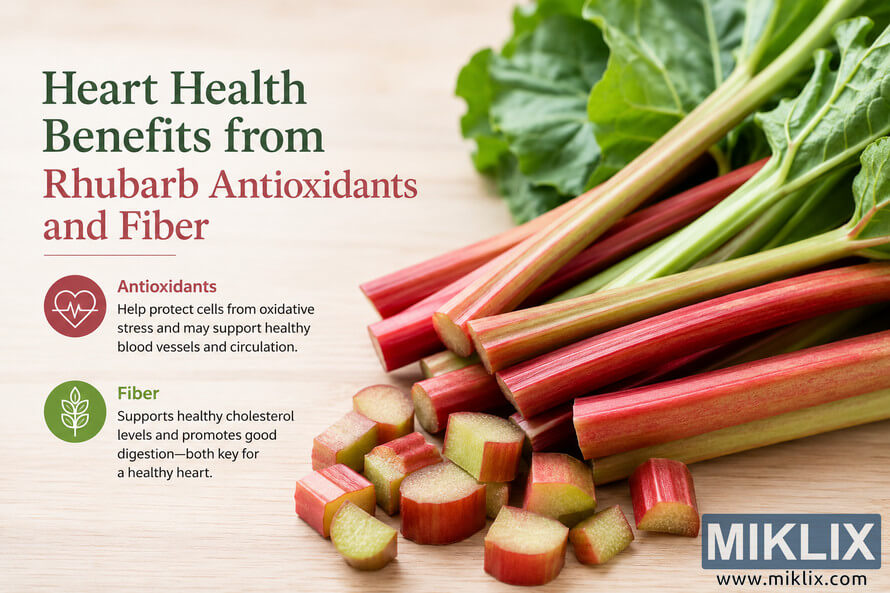
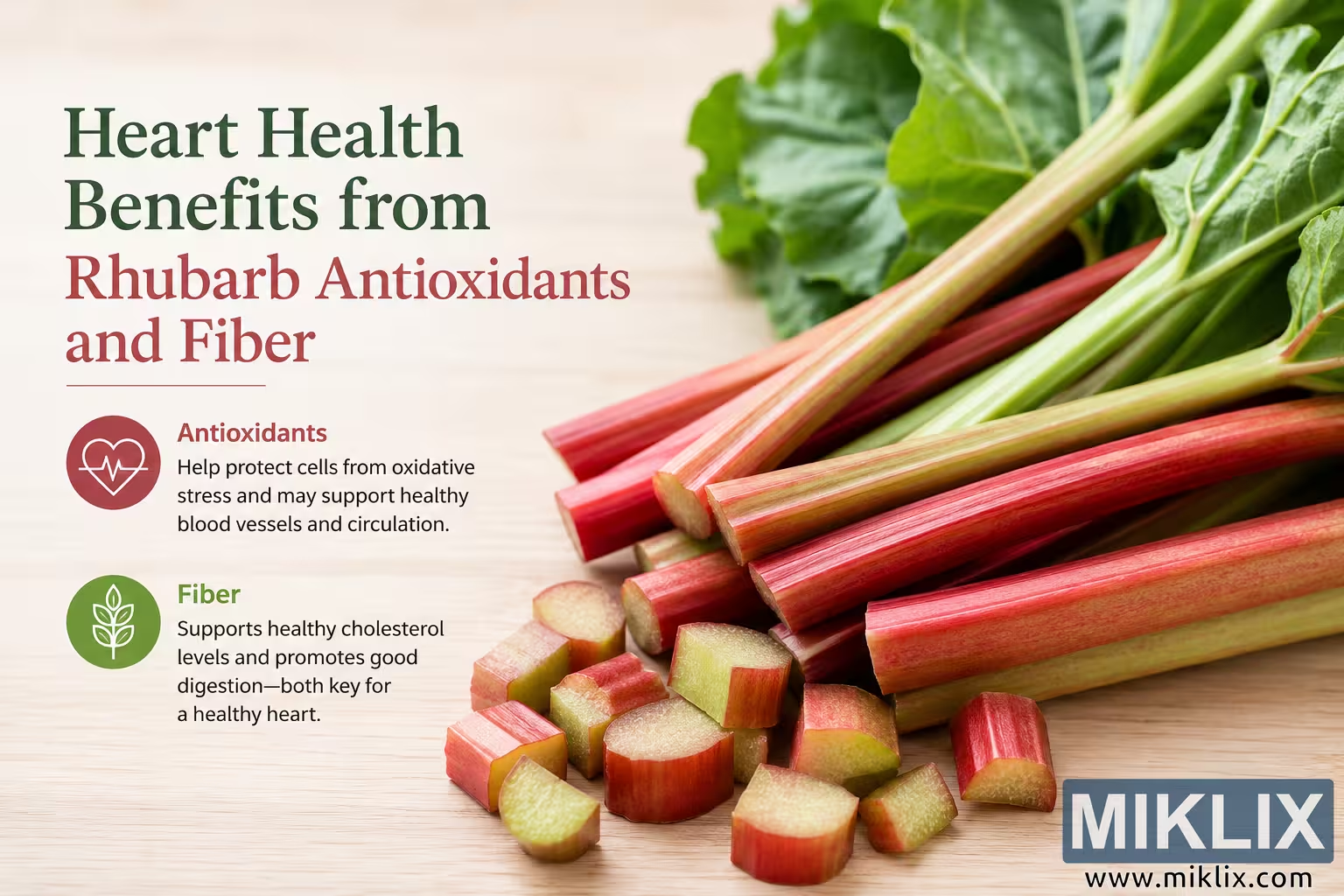
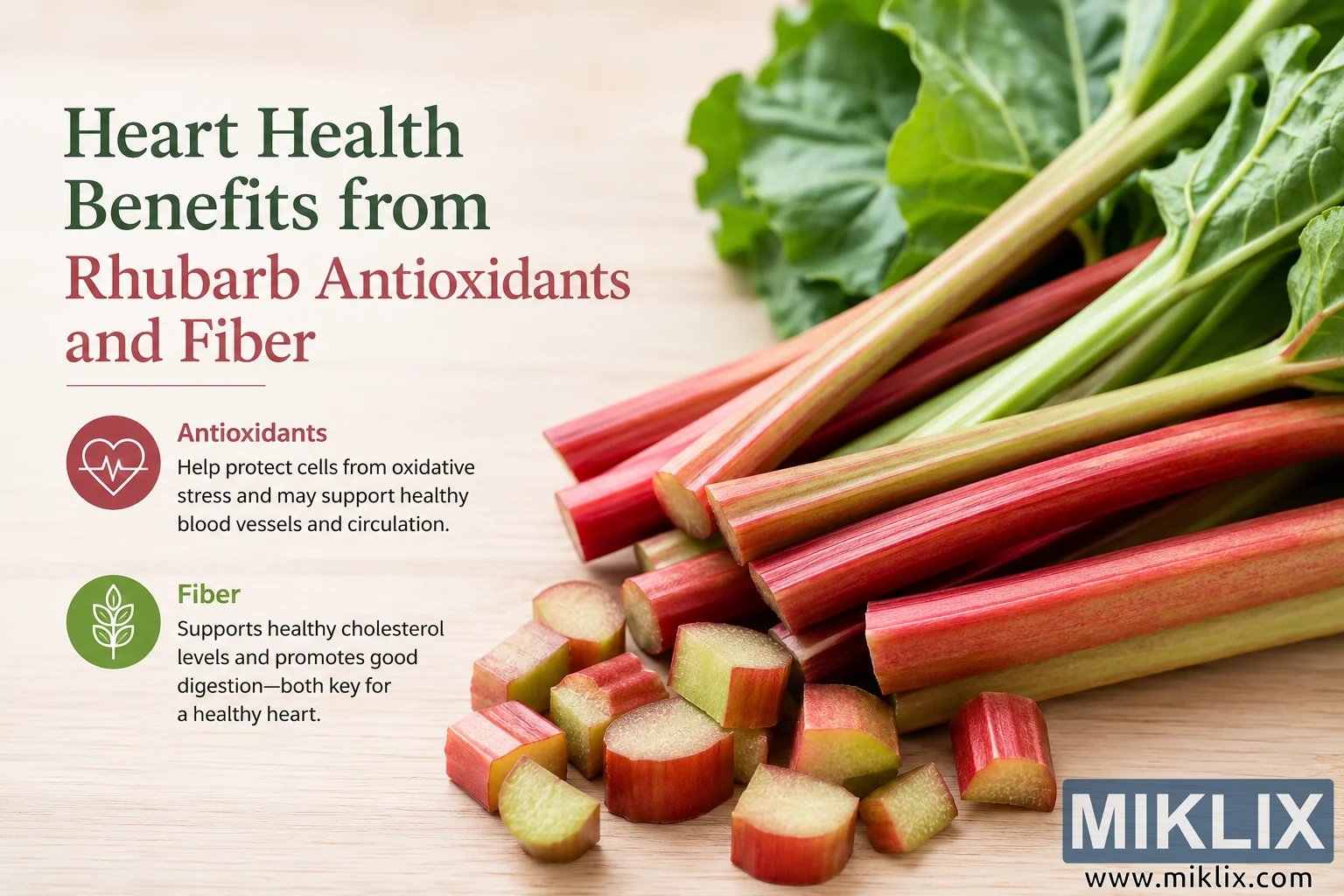
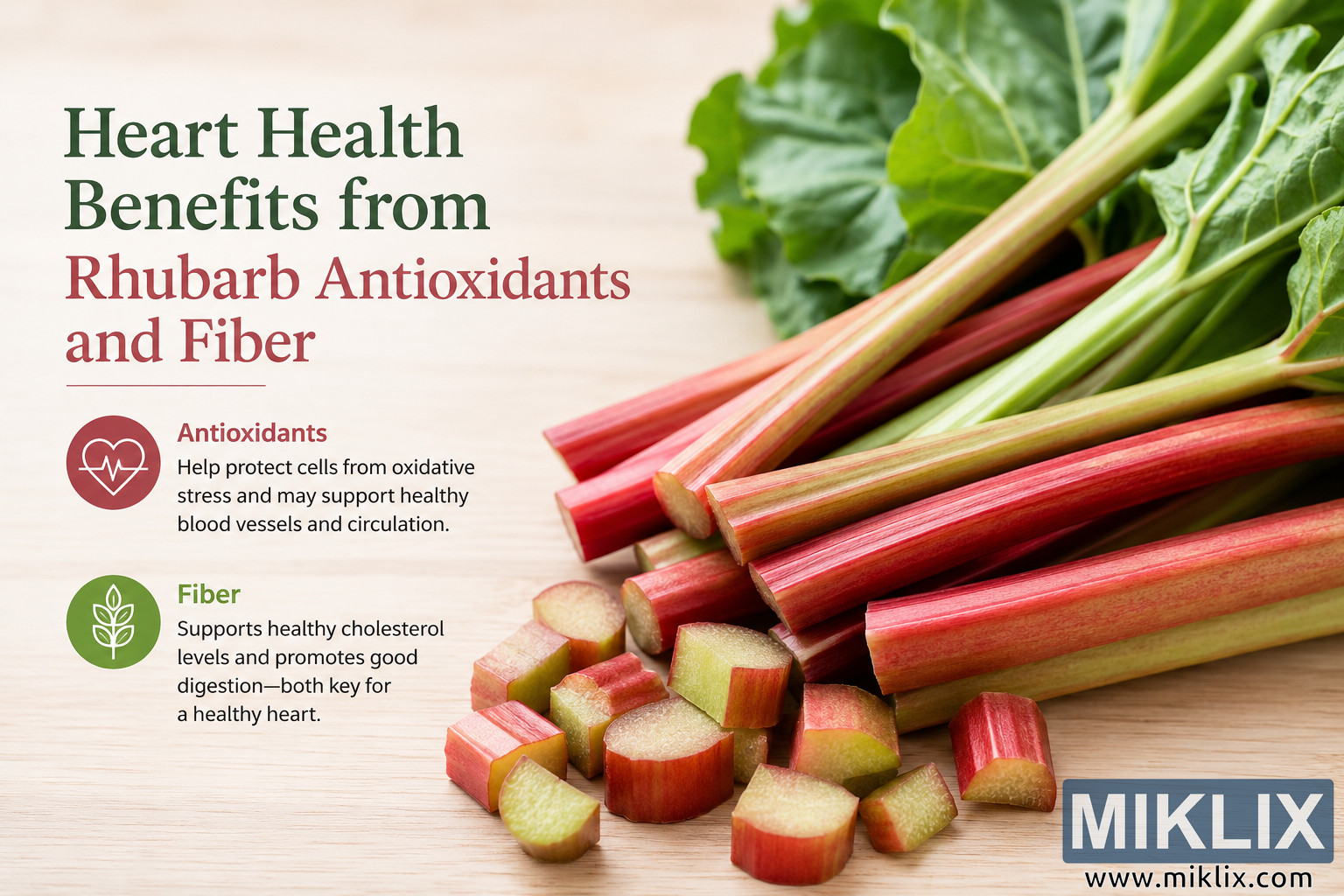
This high-resolution landscape infographic presents a clean, modern visual composition focused on the heart health benefits of rhubarb, particularly its antioxidant properties and dietary fiber content. The image is arranged with a balanced split layout that combines informative wellness messaging on the left side with a vivid food photography presentation on the right. The overall tone is calm, natural, educational, and health-oriented, using earthy colors and soft lighting to create a welcoming and trustworthy appearance.
The background of the image consists of a smooth beige-toned wooden tabletop and backdrop with subtle grain textures visible throughout. The light wood surface contributes warmth and an organic aesthetic, reinforcing themes of nutrition, wellness, and natural foods. The lighting is soft and diffused, without harsh shadows, giving the composition a polished editorial appearance similar to premium health magazines or nutrition-focused websites.
On the right side of the composition is a large arrangement of fresh rhubarb stalks placed diagonally across the wooden surface. The rhubarb is highly detailed and photorealistic, displaying vibrant shades of crimson red, rosy pink, pale green, and yellow-green along the stalks. Several stalks remain attached to large leafy green tops that extend upward and slightly out of frame, adding volume and freshness to the image. The leaves are textured with visible veins and natural curvature, emphasizing freshness and realism.
Near the bottom foreground, several chopped rhubarb pieces are scattered naturally across the tabletop. The sliced pieces reveal pale yellow-green interiors surrounded by red outer edges, adding color contrast and visual interest. The cut surfaces appear moist and crisp, enhancing the realistic food photography quality of the image. The arrangement of both whole and chopped rhubarb creates depth and dimension while clearly communicating the ingredient being highlighted.
The left side of the infographic contains the educational text and wellness icons. At the top left is a large headline set in elegant serif typography. The headline reads: “Heart Health Benefits from Rhubarb Antioxidants and Fiber.” The words “Heart Health Benefits from” appear in a deep muted green color, while “Rhubarb Antioxidants and Fiber” appears in a muted reddish-pink tone that visually matches the rhubarb stalks. The typography is refined, spacious, and easy to read, contributing to a professional health-publication style.
Below the title are two informational sections arranged vertically. Each section includes a circular icon and supporting educational text. The first section focuses on antioxidants. A dusty red circular icon contains a stylized white heart graphic combined with an electrocardiogram line, symbolizing cardiovascular health and circulation. Beside the icon is a heading labeled “Antioxidants” in bold reddish text. Underneath, a concise explanation states that antioxidants help protect cells from oxidative stress and may support healthy blood vessels and circulation. The text is written in a clean sans-serif font for readability.
The second informational section focuses on fiber. A muted green circular icon displays a stylized white plant or leaf illustration representing natural nutrition and plant-based dietary benefits. Beside this icon is the heading “Fiber” in bold green lettering. Supporting text explains that fiber supports healthy cholesterol levels and promotes good digestion, both of which are important for maintaining cardiovascular wellness and overall heart health.
The infographic maintains a carefully balanced visual hierarchy. The large rhubarb photography immediately attracts attention, while the headline and icons guide the viewer through the educational content in a logical order. Color choices throughout the design intentionally coordinate with the natural tones of rhubarb itself, using greens, reds, and warm neutrals to create harmony and consistency.
No commercial branding, product packaging, watermarks, or logos appear anywhere in the image. The design remains neutral and universally usable for health blogs, wellness articles, educational nutrition content, recipe websites, medical lifestyle publications, or social media campaigns discussing healthy foods and heart-supportive diets.
The overall impression is fresh, informative, natural, and visually calming. The composition successfully combines appetizing food photography with accessible health education, emphasizing rhubarb as a nutrient-rich plant associated with antioxidants, dietary fiber, healthy digestion, circulation support, and heart-conscious nutrition.
The image is related to: A Guide to the Health Benefits of Rhubarb