
Image: Wheatgrass Nutritional Composition Infographic Featuring Vitamins, Minerals, and Health Benefits
Published: June 16, 2026 at 2:07:13 PM UTC
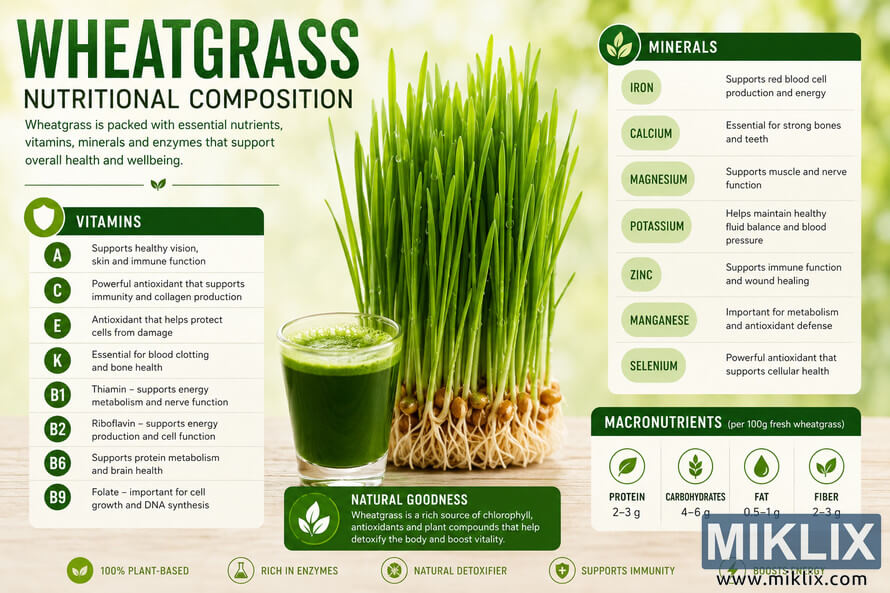
Explore a detailed wheatgrass nutritional composition infographic featuring essential vitamins, minerals, macronutrients, and health benefits. This vibrant wellness graphic highlights nutrients such as iron, calcium, magnesium, vitamin C, vitamin K, and antioxidants in a visually engaging landscape design.
Available versions of this image
The image files available for download below are less compressed and higher resolution - and as a result of that, higher quality - than the images embedded in articles and pages on this website, which are more optimized for file size in order to reduce bandwidth consumption.
Regular size (1,536 x 1,024)
Large size (3,072 x 2,048)
Very large size (4,608 x 3,072)
Extra large size (6,144 x 4,096)
Comically large size (1,048,576 x 699,051)
- Still uploading... ;-)
Image description
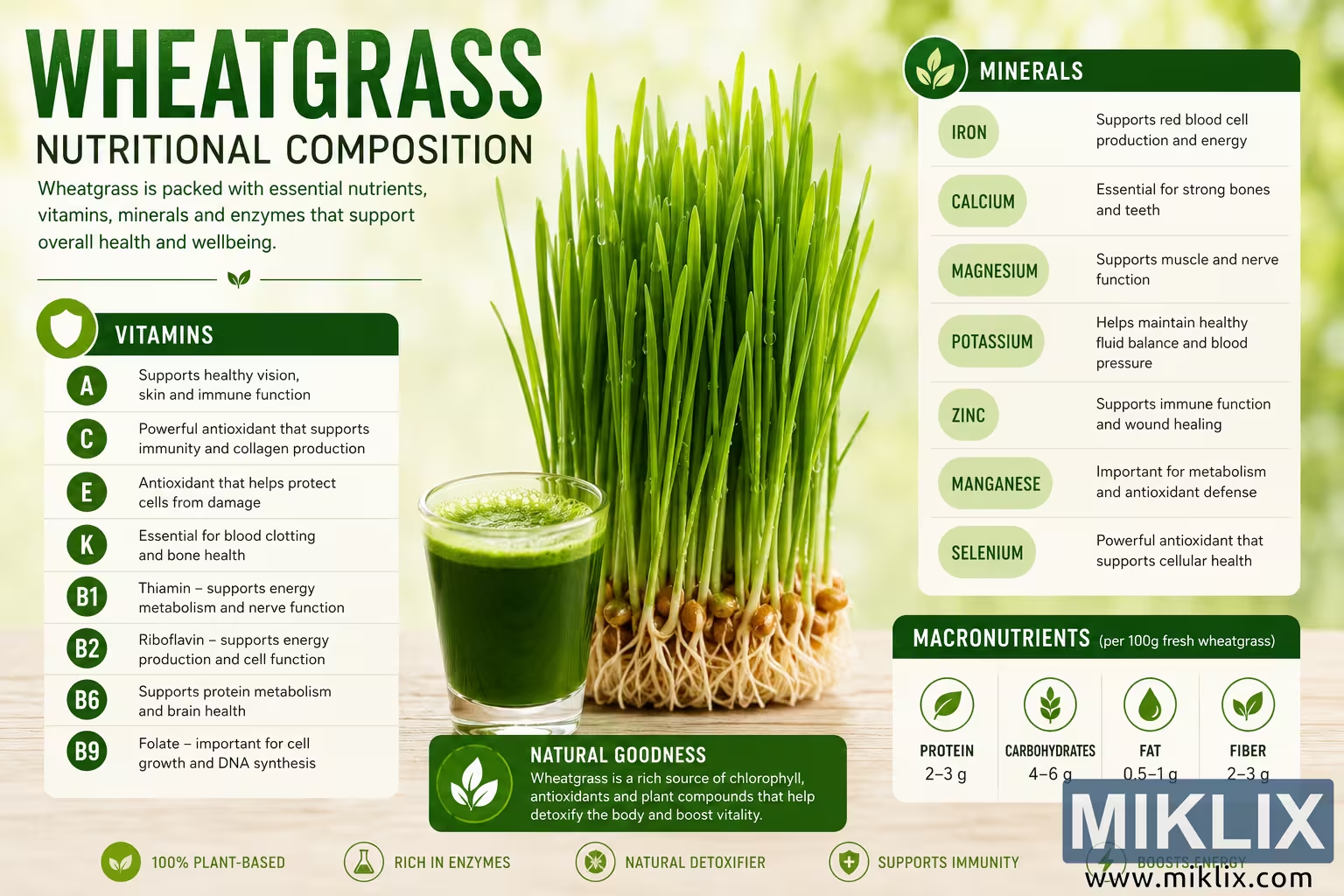
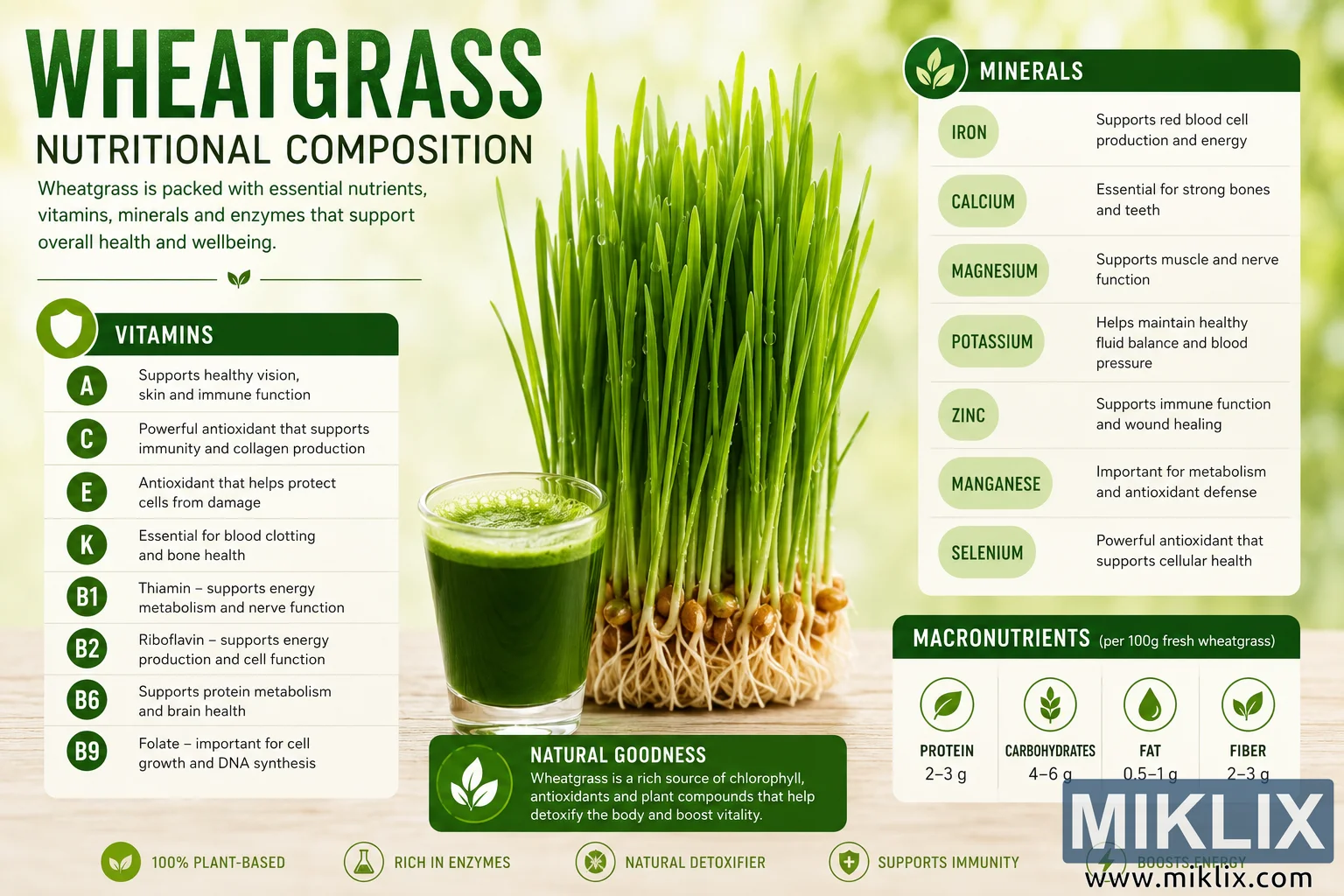
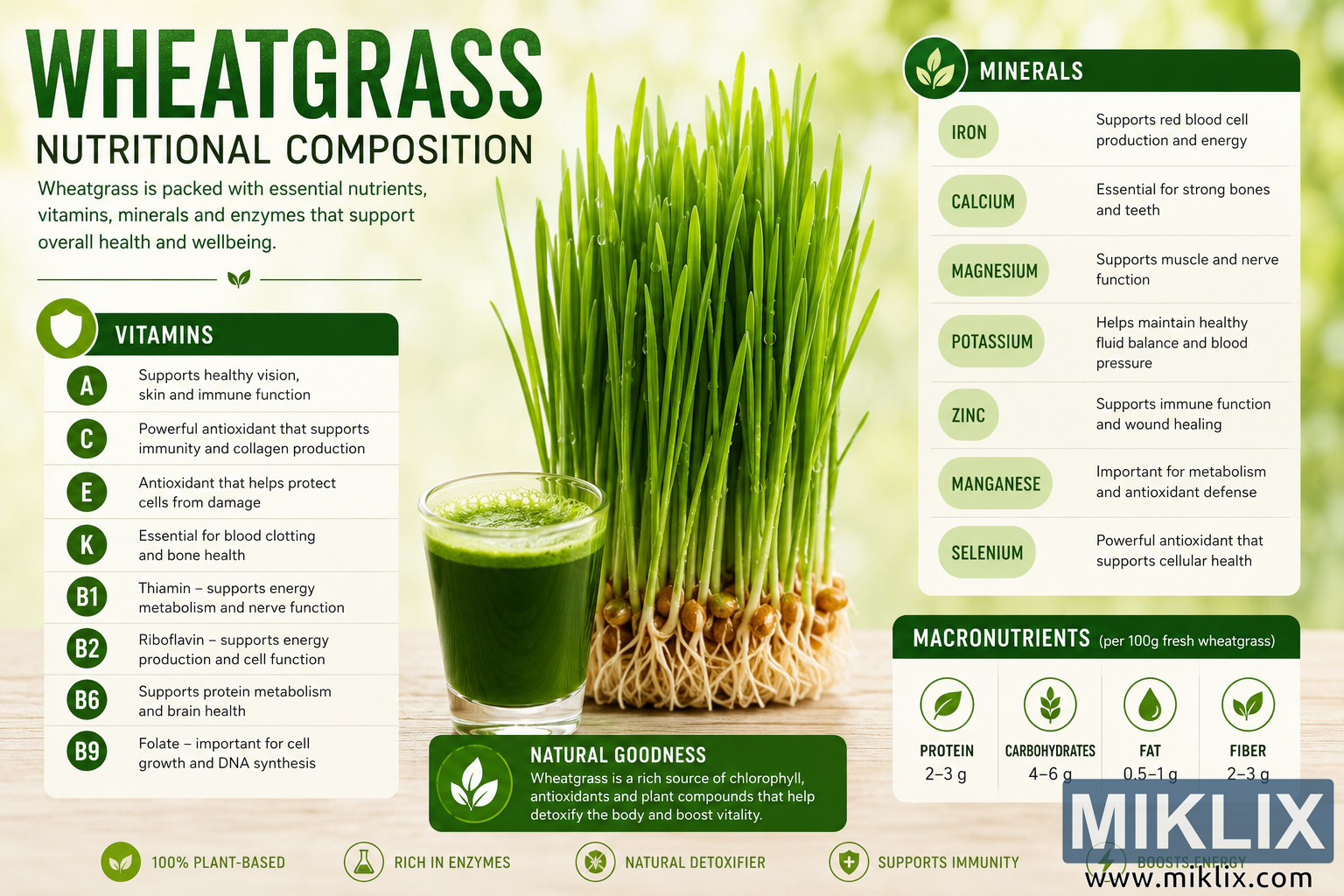
This high-resolution landscape infographic presents a comprehensive visual overview of the nutritional composition of wheatgrass in a clean, modern, health-focused design dominated by vibrant shades of green, soft cream tones, and natural organic textures. The layout is carefully structured into multiple informational sections that emphasize wheatgrass as a nutrient-dense superfood rich in vitamins, minerals, antioxidants, enzymes, and plant-based wellness compounds.
At the top left of the infographic, a large bold title reads “Wheatgrass Nutritional Composition” in dark green typography. Beneath the title is a short introductory paragraph explaining that wheatgrass contains essential nutrients, vitamins, minerals, and enzymes that support overall health and wellbeing. The typography uses a modern sans-serif style with strong readability, giving the design a professional nutritional-education appearance similar to a health magazine or wellness poster.
The center of the image is dominated by a vivid, highly detailed photograph-style rendering of fresh wheatgrass sprouts growing densely from exposed roots. The blades of wheatgrass are tall, glossy, and richly saturated in bright green hues, with subtle highlights and moisture droplets that communicate freshness and vitality. Positioned in front of the wheatgrass is a small transparent glass filled with dark green wheatgrass juice topped with light frothy foam, reinforcing the nutritional and detoxifying theme of the infographic.
On the left side of the composition is a vertically organized vitamins section framed in a rounded rectangular panel with dark green headers and cream-colored backgrounds. Circular green icons identify each vitamin category. The infographic lists several vitamins commonly associated with wheatgrass nutrition, including Vitamin A, Vitamin C, Vitamin E, Vitamin K, Vitamin B1, Vitamin B2, Vitamin B6, and Vitamin B9. Each vitamin entry is accompanied by a short explanatory sentence describing its potential wellness role, such as supporting immune function, vision, collagen production, antioxidant defense, blood clotting, bone health, energy metabolism, nerve function, protein metabolism, brain health, and DNA synthesis.
On the right side of the infographic is a matching minerals section styled with similar rounded panels and organized spacing. The minerals listed include iron, calcium, magnesium, potassium, zinc, manganese, and selenium. Each mineral entry contains a concise explanation of its biological importance, including support for red blood cell production, bone strength, muscle and nerve function, healthy fluid balance, metabolism, wound healing, antioxidant protection, and cellular health.
Near the bottom right corner is a macronutrient summary section labeled with nutritional values per 100 grams of fresh wheatgrass. Illustrated icons represent categories such as protein, carbohydrates, fat, and fiber. The values are displayed in a simplified educational format suitable for readers interested in health foods, dietary supplements, detox programs, or plant-based nutrition.
Across the lower middle portion of the infographic is an additional highlighted information panel emphasizing wheatgrass as a natural source of chlorophyll, antioxidants, and beneficial plant compounds. This section promotes concepts associated with detoxification, vitality, wellness support, and natural nutrition. Decorative botanical icons, leaf symbols, and wellness-inspired graphics are integrated throughout the layout to reinforce the organic theme.
Along the bottom edge of the image, a row of minimalist circular icons and labels summarize key wellness concepts associated with wheatgrass, including plant-based nutrition, enzyme richness, detoxification support, immunity support, and energy enhancement. These icons use a consistent visual style with green outlines and clean vector graphics.
The background of the infographic features a soft-focus natural gradient with light green bokeh effects that create a fresh, airy, and healthy atmosphere without distracting from the informational content. The overall composition balances realistic imagery with infographic-style educational design, making the image suitable for wellness blogs, nutrition articles, educational posters, dietary supplement websites, health presentations, fitness content, holistic medicine materials, or social media health campaigns.
No commercial logos, trademarks, or real-world brands appear anywhere in the image. The design maintains a neutral, universally accessible educational aesthetic while visually emphasizing freshness, nutrition, plant-based wellness, and natural vitality through cohesive color harmony, clean typography, structured information hierarchy, and highly polished infographic presentation.
The image is related to: A Guide to the Health Benefits of Wheatgrass