
Image: Parsnips and Immune System Health: Vitamin Content and Nutritional Benefits Infographic
Published: August 3, 2026 at 10:12:20 PM UTC
Learn about the immune system health benefits of parsnips with this informative infographic featuring fresh parsnips, key nutritional advantages, antioxidant support, gut health benefits, and a detailed vitamin content table for a 100 gram serving.
Available versions of this image
The image files available for download below are less compressed and higher resolution - and as a result of that, higher quality - than the images embedded in articles and pages on this website, which are more optimized for file size in order to reduce bandwidth consumption.
Regular size (1,536 x 1,024)
Large size (3,072 x 2,048)
Very large size (4,608 x 3,072)
Extra large size (6,144 x 4,096)
Comically large size (1,048,576 x 699,051)
- Still uploading... ;-)
Image description
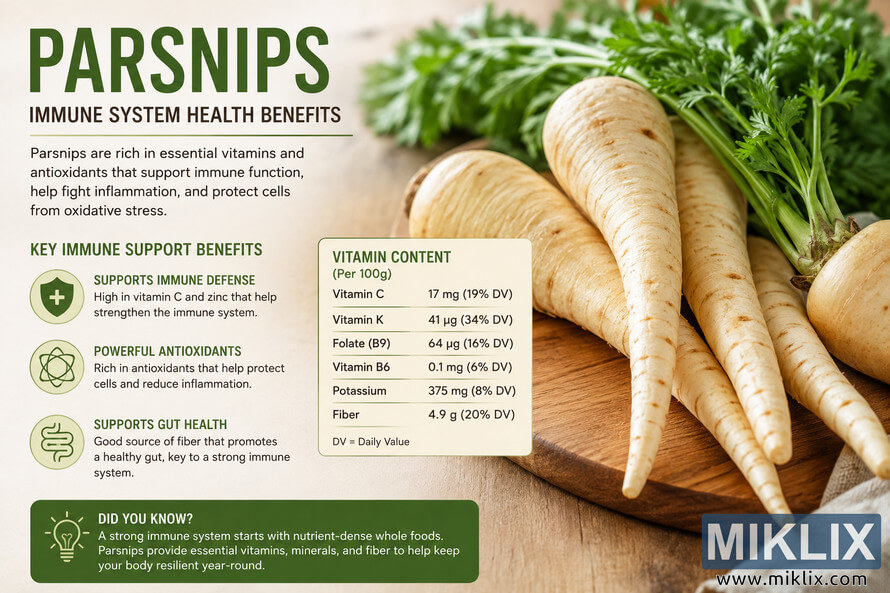
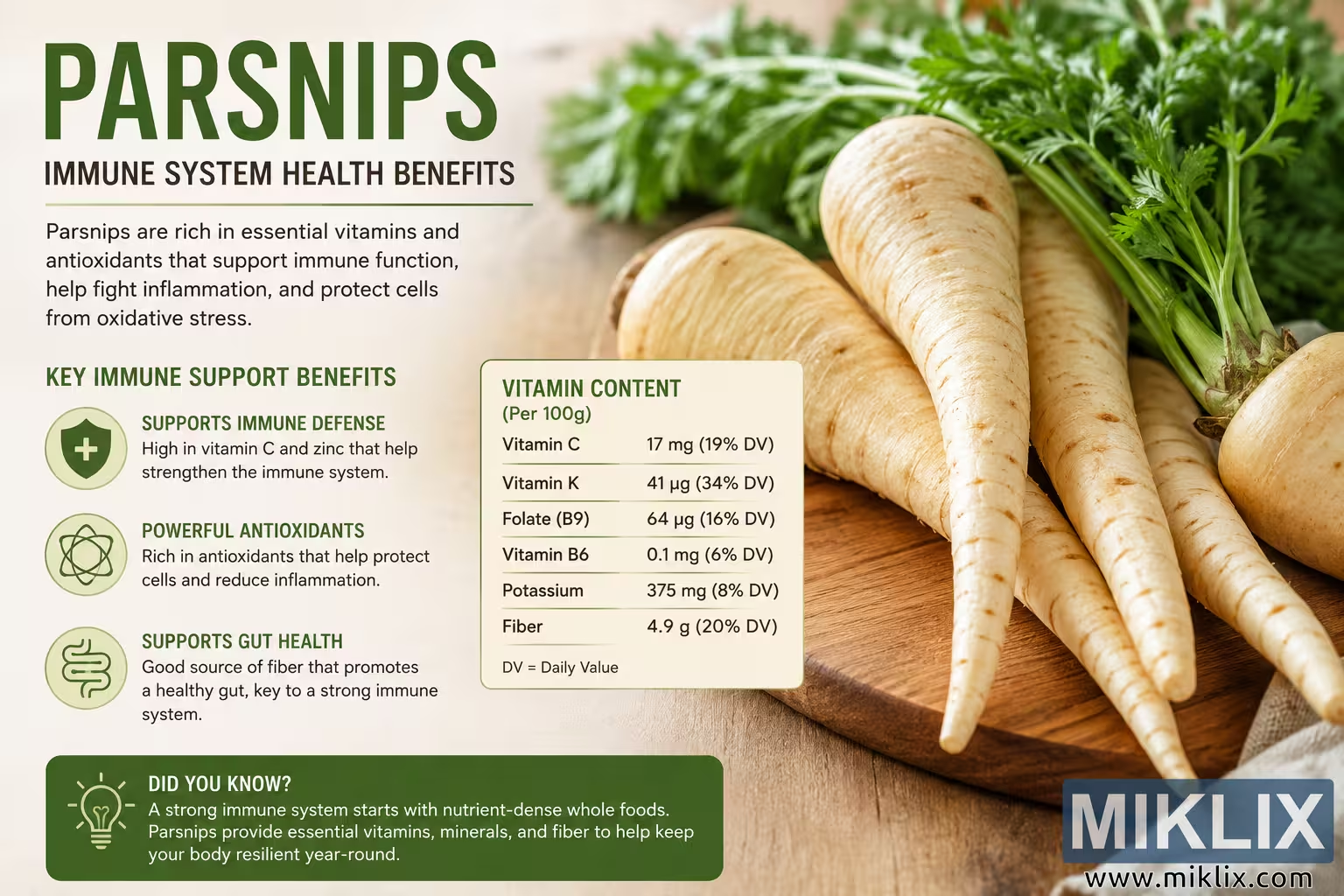
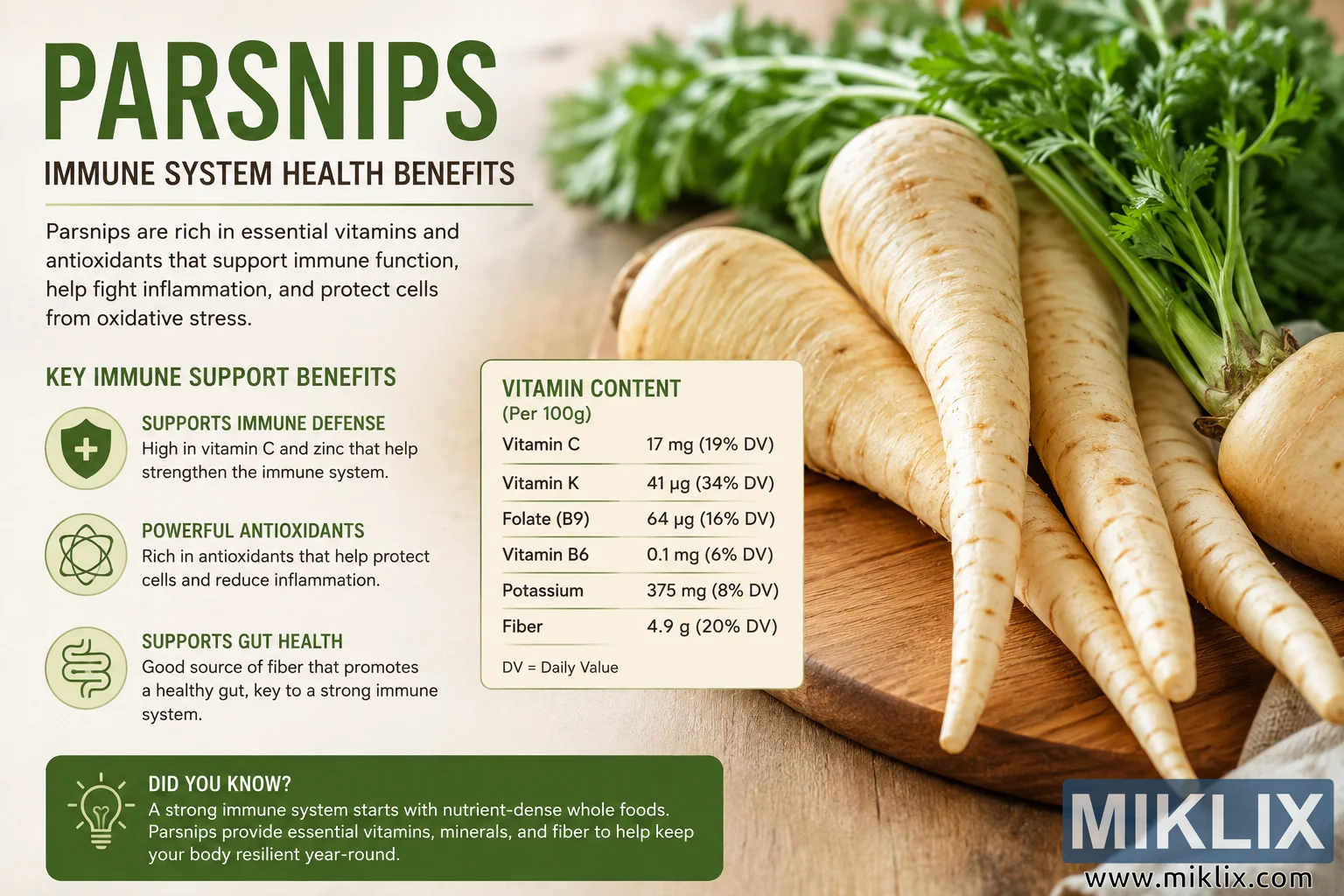
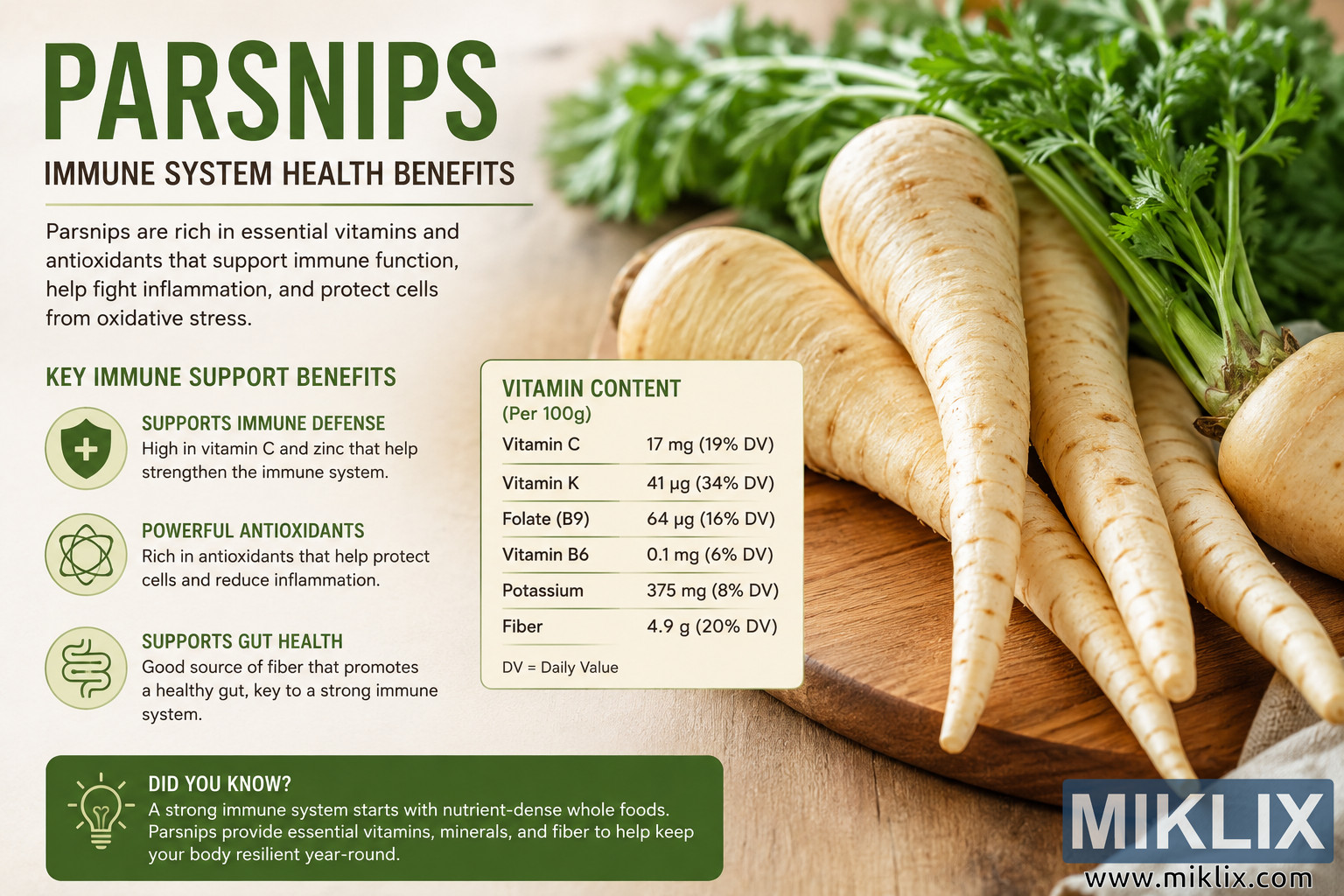
This landscape-oriented educational infographic presents a visually appealing combination of food photography and nutritional information focused on parsnips and their potential contribution to immune system health. The overall composition is divided into two primary sections. The left side contains structured educational text, icons, and nutritional callouts, while the right side features a high-quality photographic arrangement of several fresh parsnips resting on a round wooden serving board placed on a light wooden tabletop. The warm natural tones of the vegetables and wood contrast with rich green accents used throughout the informational elements, reinforcing a fresh and healthy visual theme.
At the top left, a large bold heading prominently displays the word 'PARSNIPS' in dark green capital letters. Directly beneath it appears the subtitle 'IMMUNE SYSTEM HEALTH BENEFITS,' also styled in a clean, highly legible typeface. A thin horizontal divider separates the heading from a short introductory paragraph. The introductory text explains that parsnips contain essential vitamins and antioxidants that may support normal immune function, help combat inflammation, and contribute to protecting cells from oxidative stress. The paragraph serves as a concise overview of the nutritional focus of the infographic while maintaining an educational presentation.
Below the introduction is a section labeled 'KEY IMMUNE SUPPORT BENEFITS.' Three circular green icons are aligned vertically beside descriptive text blocks. The first icon resembles a shield with a medical cross, visually representing immune defense. Its accompanying text explains that parsnips contain vitamin C and zinc, nutrients commonly associated with supporting normal immune function. The second icon uses an abstract atomic or molecular symbol to represent antioxidants. The accompanying description notes that antioxidants help protect cells from oxidative stress while supporting overall wellness. The third icon depicts a simplified digestive tract symbol, illustrating gut health. The associated explanation highlights the fiber content of parsnips and its role in supporting digestive health, which is presented as an important component of overall immune system function.
Positioned near the center-left is a cream-colored information panel titled 'VITAMIN CONTENT (Per 100g).' The table lists several nutrients along with their approximate quantities and daily value percentages. These include vitamin C, vitamin K, folate (vitamin B9), vitamin B6, potassium, and dietary fiber. The nutrient values are arranged in an easy-to-read tabular format with aligned numbers and percentages, allowing viewers to quickly compare nutritional information. A small note at the bottom explains that 'DV' refers to Daily Value. The design intentionally resembles a nutritional reference card that complements the educational nature of the infographic.
At the bottom left is a dark green rectangular information box titled 'DID YOU KNOW?' accompanied by a stylized light bulb icon. The text inside summarizes the concept that maintaining a strong immune system begins with nutrient-dense foods and notes that parsnips provide vitamins, minerals, and fiber that may contribute to overall health and resilience throughout the year. This section functions as a concluding educational takeaway and balances the overall composition visually.
The right half of the infographic is dominated by a bright, professionally lit food photograph. Several cream-colored parsnips with smooth tapered roots are arranged naturally on a circular wooden serving board. Some roots overlap one another, creating depth and dimension. Their attached leafy green tops remain fresh and vibrant, extending upward and outward to fill much of the background with lush green foliage. The shallow depth of field softly blurs portions of the leaves while keeping the foreground vegetables sharply detailed, emphasizing texture, freshness, and natural color. The wooden tabletop beneath the serving board contributes warmth and an organic kitchen aesthetic. A folded light-colored fabric napkin appears partially in the lower right corner, adding visual softness and reinforcing the impression of a food preparation setting.
The infographic maintains a cohesive visual identity throughout by consistently using shades of green for headings, icons, dividers, and highlighted content. The typography is clean and modern, employing large headings for readability and smaller body text for supporting explanations. The design balances photographic realism with informational graphics, making it suitable for educational articles, nutrition blogs, healthy eating resources, wellness websites, presentations, or social media posts discussing vegetables and balanced diets. Overall, the image communicates that parsnips are a nutrient-rich root vegetable while emphasizing vitamins, antioxidants, fiber, and general immune-support messaging through an accessible and attractive infographic layout.
The image is related to: Don't Overlook Parsnips: Here's Why They're So Good for You