
Image: Antioxidant Benefits of Parsnips Showing Cellular Protection
Published: August 3, 2026 at 10:12:20 PM UTC
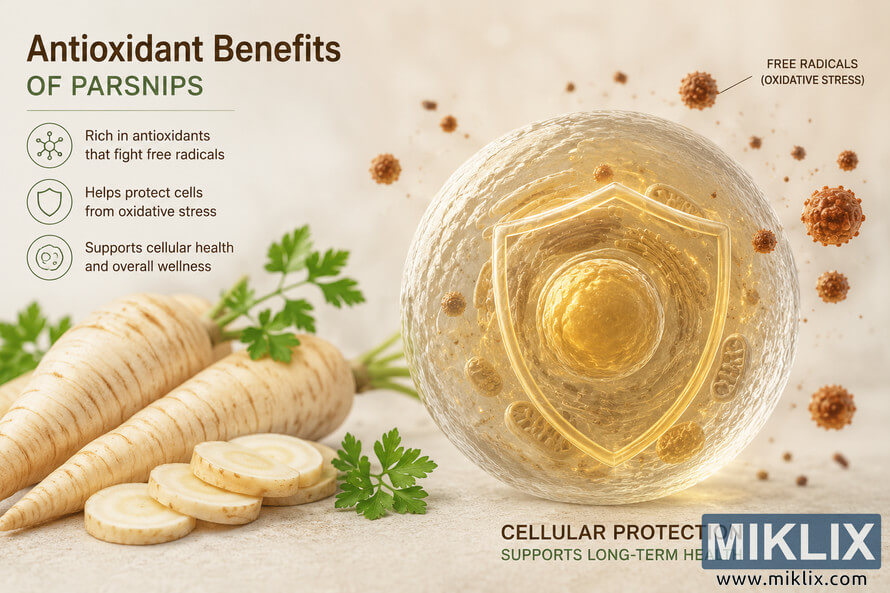
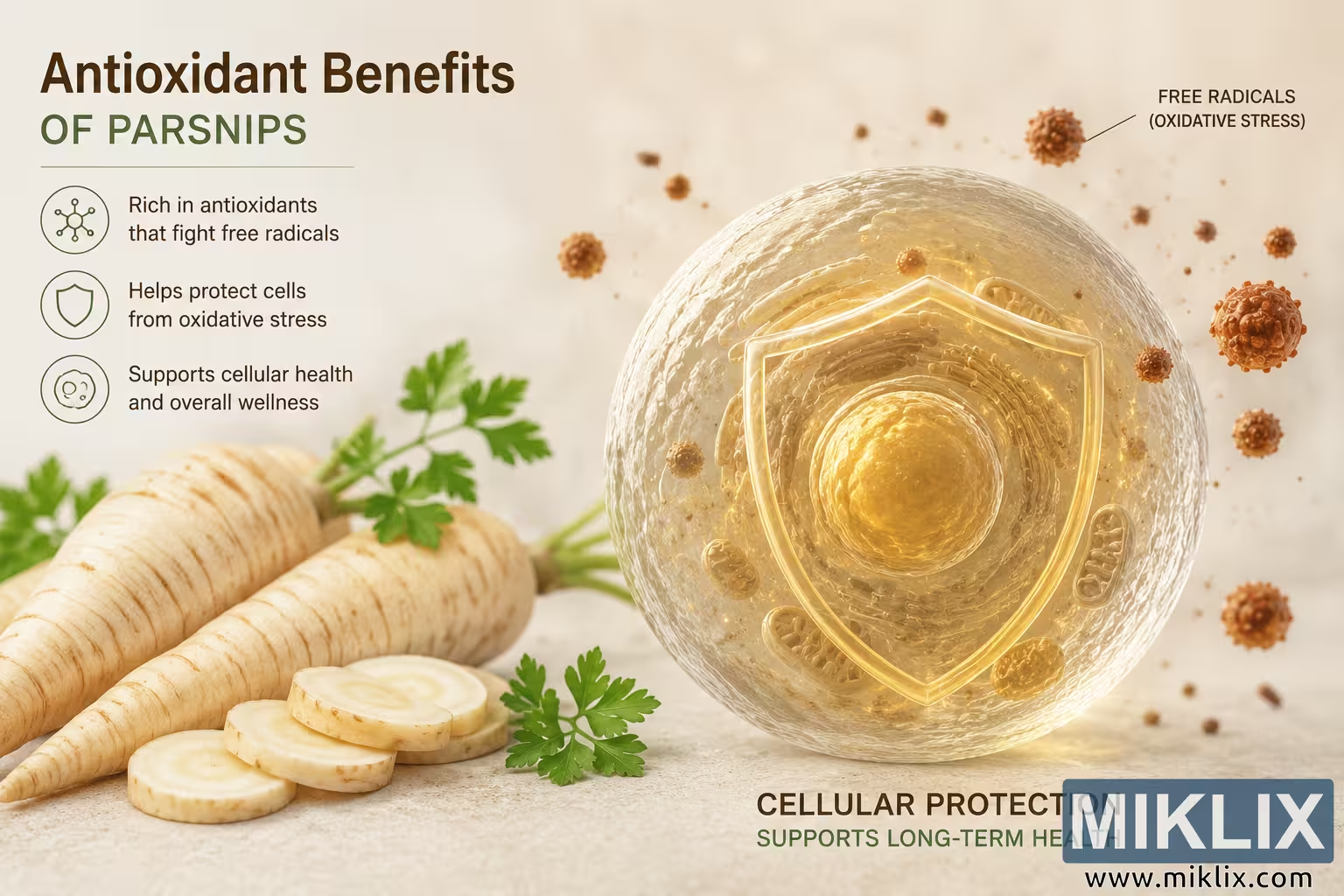
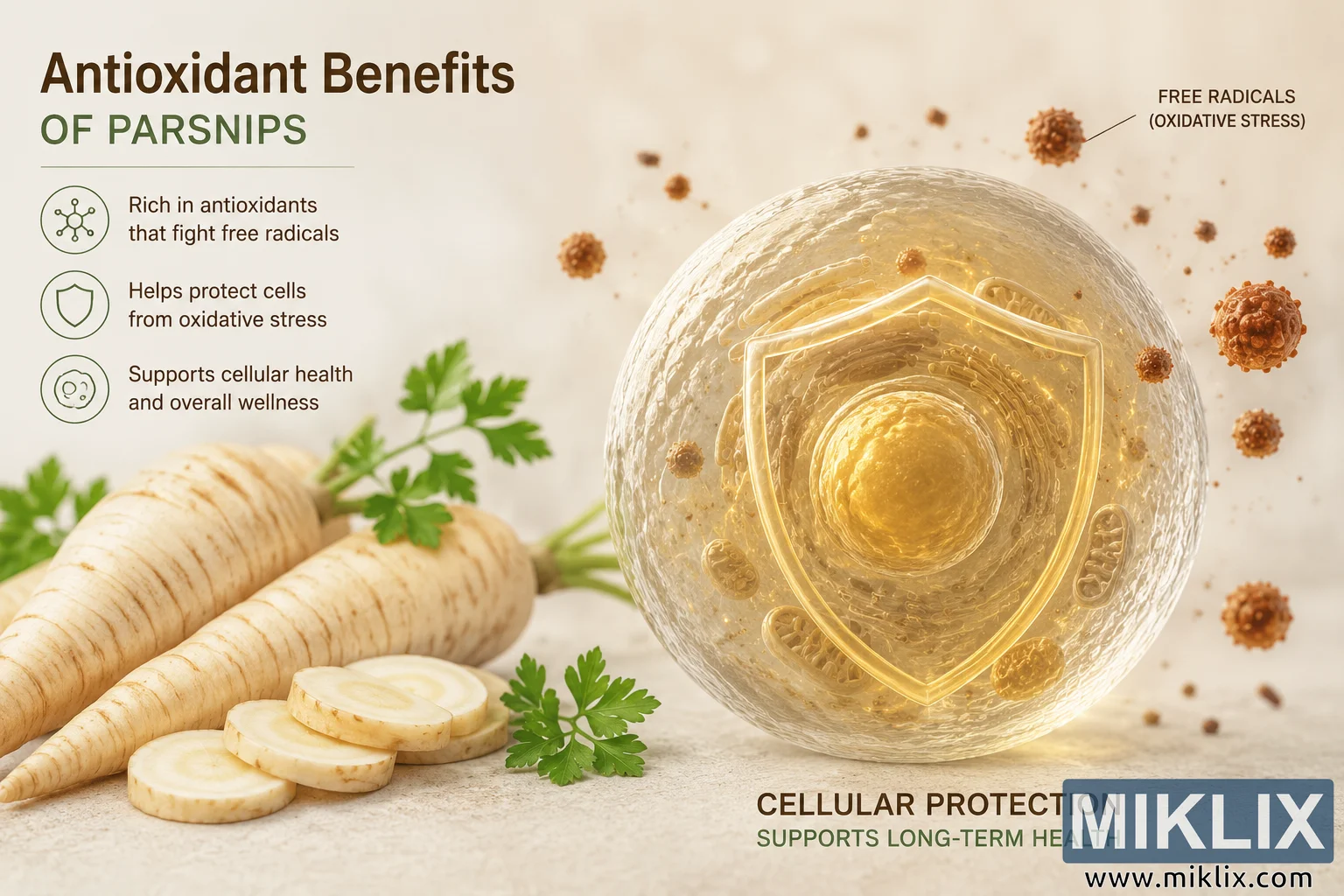
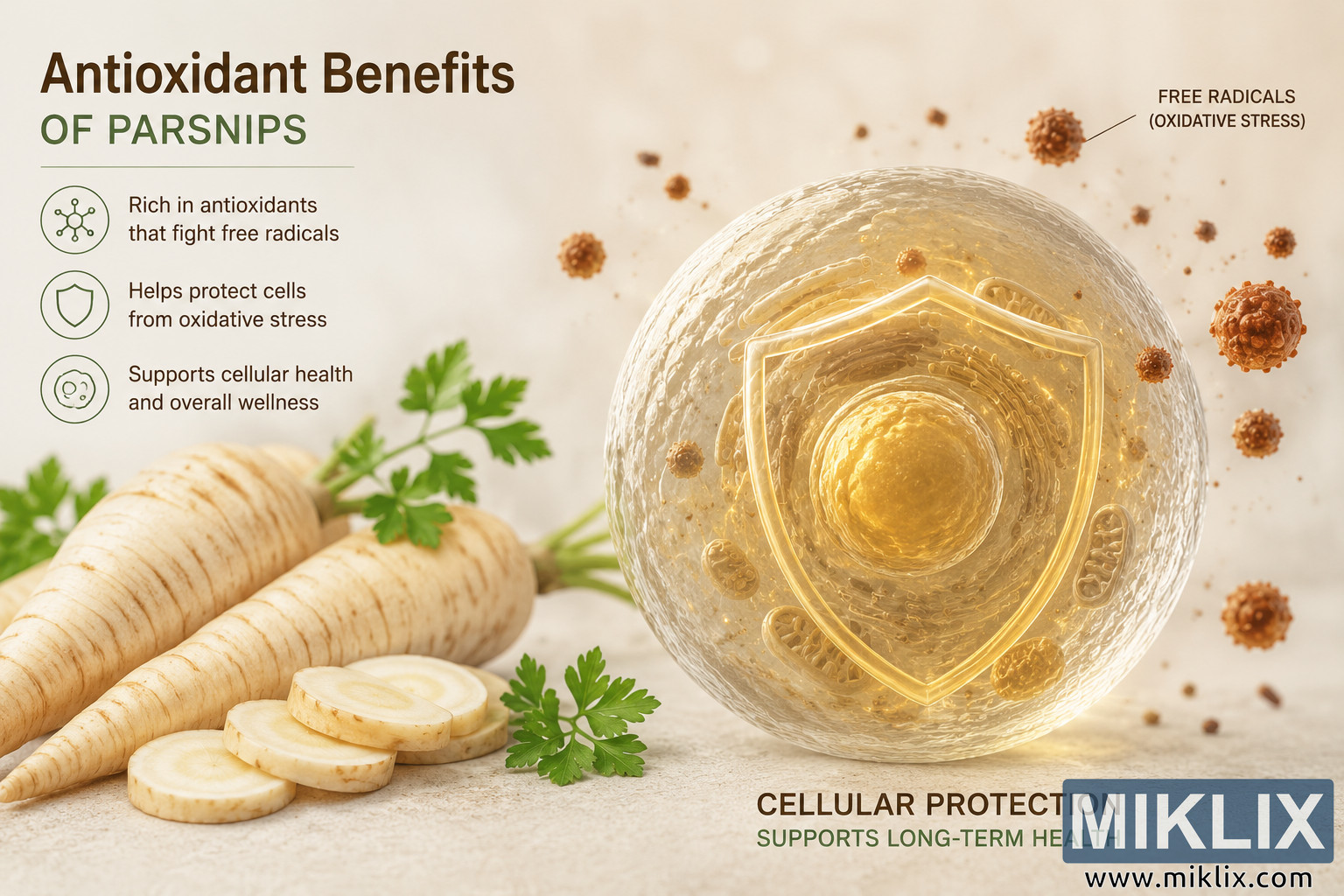
Science-inspired infographic illustrating the antioxidant benefits of parsnips through fresh vegetables and a protected biological cell, symbolizing cellular defense against oxidative stress and supporting long-term wellness.
Available versions of this image
The image files available for download below are less compressed and higher resolution - and as a result of that, higher quality - than the images embedded in articles and pages on this website, which are more optimized for file size in order to reduce bandwidth consumption.
Regular size (1,536 x 1,024)
Large size (3,072 x 2,048)
Very large size (4,608 x 3,072)
Extra large size (6,144 x 4,096)
Comically large size (1,048,576 x 699,051)
- Still uploading... ;-)
Image description
This landscape-oriented, science-inspired illustration presents a clean, modern visualization of the antioxidant benefits of parsnips with a strong emphasis on cellular protection and overall wellness. The composition is divided naturally into two complementary sections that connect the food source with its conceptual biological effect. On the left side of the image, several fresh parsnips are arranged on a light, neutral surface. Their creamy white skin displays subtle natural textures, faint horizontal ridges, and gentle earthy imperfections that communicate freshness without appearing dirty. A few round slices have been cut from one of the roots and are positioned in the foreground, exposing the pale interior with delicate concentric rings and a soft, fibrous appearance. Bright green parsley leaves are scattered around the vegetables, adding a contrasting splash of color while reinforcing the fresh, wholesome, plant-based theme.
Above the vegetables is a bold educational heading reading \"Antioxidant Benefits of Parsnips\" with a clean, modern typographic hierarchy. Beneath the title appears a concise vertical list of health-related statements, each accompanied by a simple circular line icon. The first icon symbolizes antioxidant activity and is paired with text explaining that antioxidants help fight free radicals. The second icon resembles a protective shield, illustrating cellular defense against oxidative stress. The third icon represents healthy cells and is associated with support for cellular health and overall wellness. These elements resemble an infographic while remaining visually balanced and uncluttered.
The right half of the composition transitions into a highly stylized scientific visualization of a single large biological cell rendered in warm golden and cream tones. The cell is semi-transparent, allowing internal structures to be visible, including a prominent central nucleus surrounded by softly illuminated organelle-like forms. The rendering combines realistic biological inspiration with artistic simplification, producing an approachable educational illustration rather than a medically exact diagram. Surrounding the cell are numerous small glowing particles that symbolize free radicals or oxidative stress. Their irregular distribution and warm amber coloration create a sense of motion and environmental challenge without suggesting danger or disease.
Overlaying the center of the cell is a luminous golden shield that appears integrated into the cell rather than floating separately. The shield is transparent enough to reveal the nucleus beneath while clearly representing protection. Its glowing edges suggest resilience, defense, and stability. The shield visually communicates the concept that antioxidants help defend cells from oxidative damage caused by reactive molecules. Nearby, a discreet annotation identifies the surrounding particles as representations of free radicals and oxidative stress, helping viewers understand the symbolic relationship between the particles and the protected cell.
Near the bottom right corner, a large caption reading \"Cellular Protection\" is followed by a smaller supporting statement emphasizing long-term health. This reinforces the educational theme by connecting antioxidant-rich foods with maintaining healthy cells over time. The typography remains modern, highly legible, and consistent with the infographic style used throughout the composition.
The overall color palette relies on warm creams, soft beige, gentle browns, muted greens, and glowing golden highlights. The neutral background contains subtle gradients and shallow depth-of-field effects that create a clean, premium appearance while avoiding visual distraction. Soft lighting illuminates both the vegetables and the cellular illustration, with gentle shadows grounding the foreground objects naturally. The visual balance between realistic food photography aesthetics and conceptual biomedical illustration makes the artwork suitable for nutrition education, wellness articles, healthcare presentations, healthy eating guides, educational websites, social media content, blog posts, scientific communication aimed at general audiences, or informational print materials. No recognizable commercial products, logos, trademarks, or brand identities appear anywhere within the composition. Instead, the design focuses entirely on communicating the relationship between antioxidant-rich vegetables and the symbolic protection of cells from oxidative stress using universally understandable visual metaphors. The overall impression is informative, optimistic, trustworthy, and visually polished, encouraging viewers to associate whole foods such as parsnips with healthy dietary patterns and long-term cellular wellness.
The image is related to: Don't Overlook Parsnips: Here's Why They're So Good for You