
Image: Roasted Parsnips Recipe with Health Benefits and Step-by-Step Preparation Guide
Published: August 3, 2026 at 10:12:20 PM UTC
Discover how to make perfectly roasted parsnips with this easy recipe infographic featuring step-by-step preparation instructions, nutritional highlights, cooking times, serving suggestions, and health benefits in a clean, easy-to-follow landscape layout.
Available versions of this image
The image files available for download below are less compressed and higher resolution - and as a result of that, higher quality - than the images embedded in articles and pages on this website, which are more optimized for file size in order to reduce bandwidth consumption.
Regular size (1,536 x 1,024)
Large size (3,072 x 2,048)
Very large size (4,608 x 3,072)
Extra large size (6,144 x 4,096)
Comically large size (1,048,576 x 699,051)
- Still uploading... ;-)
Image description
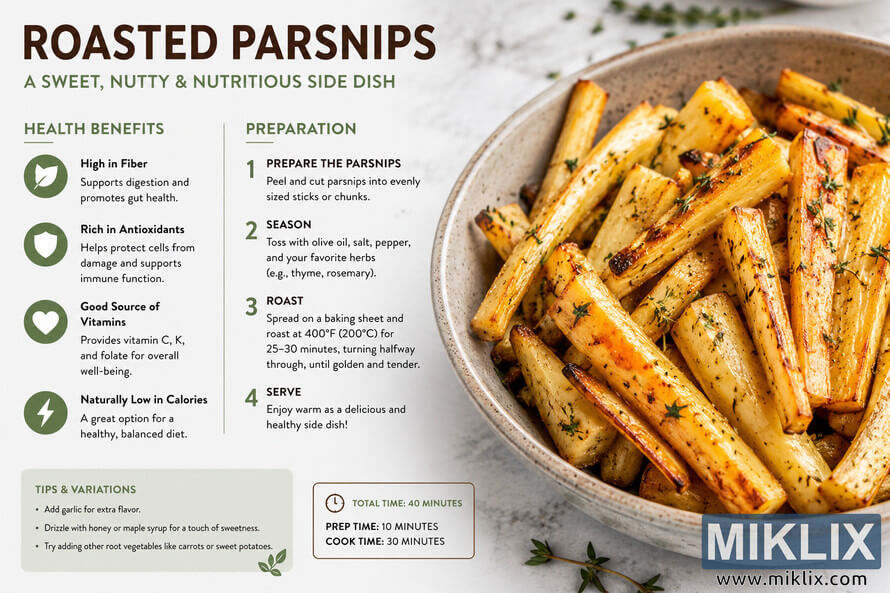
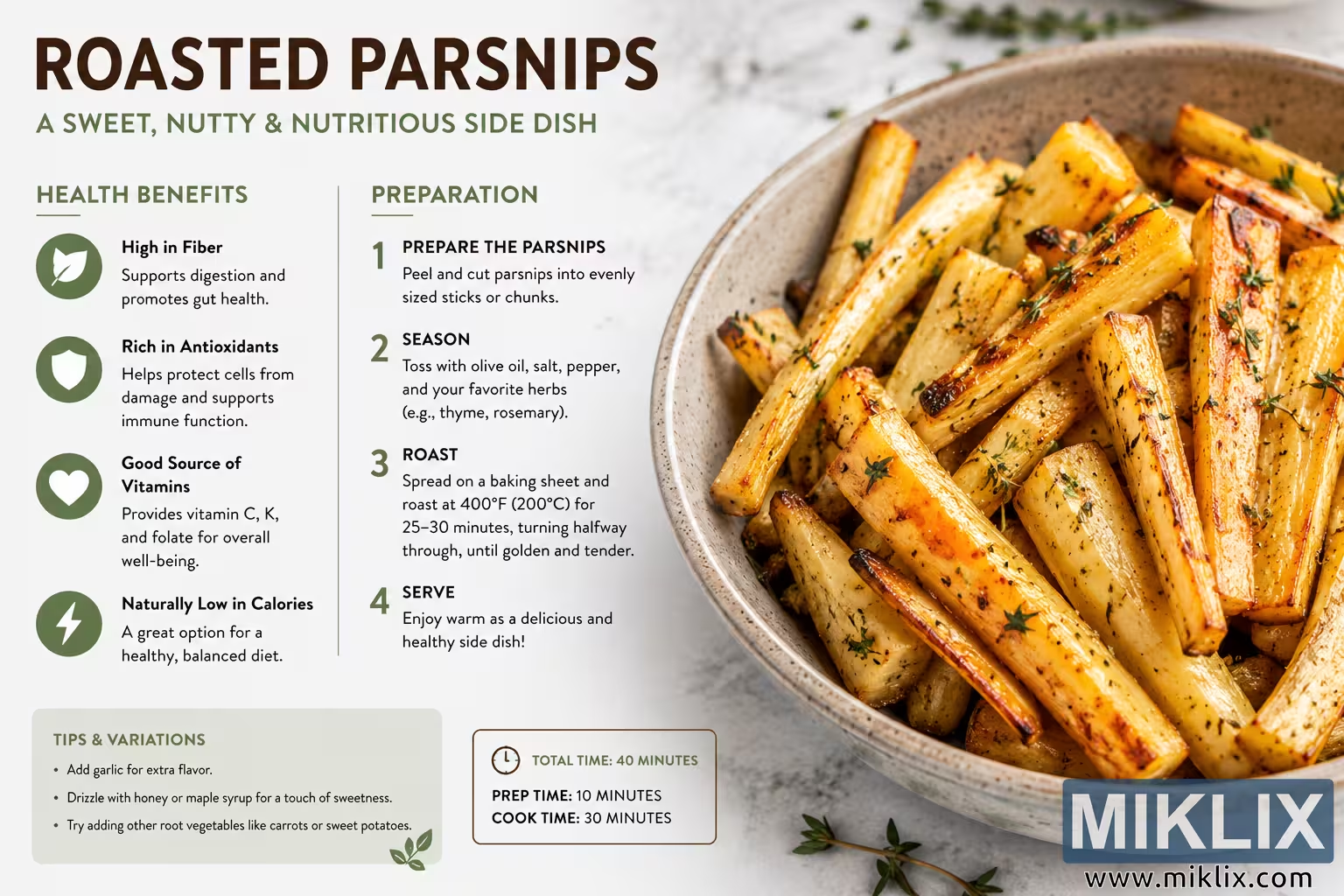
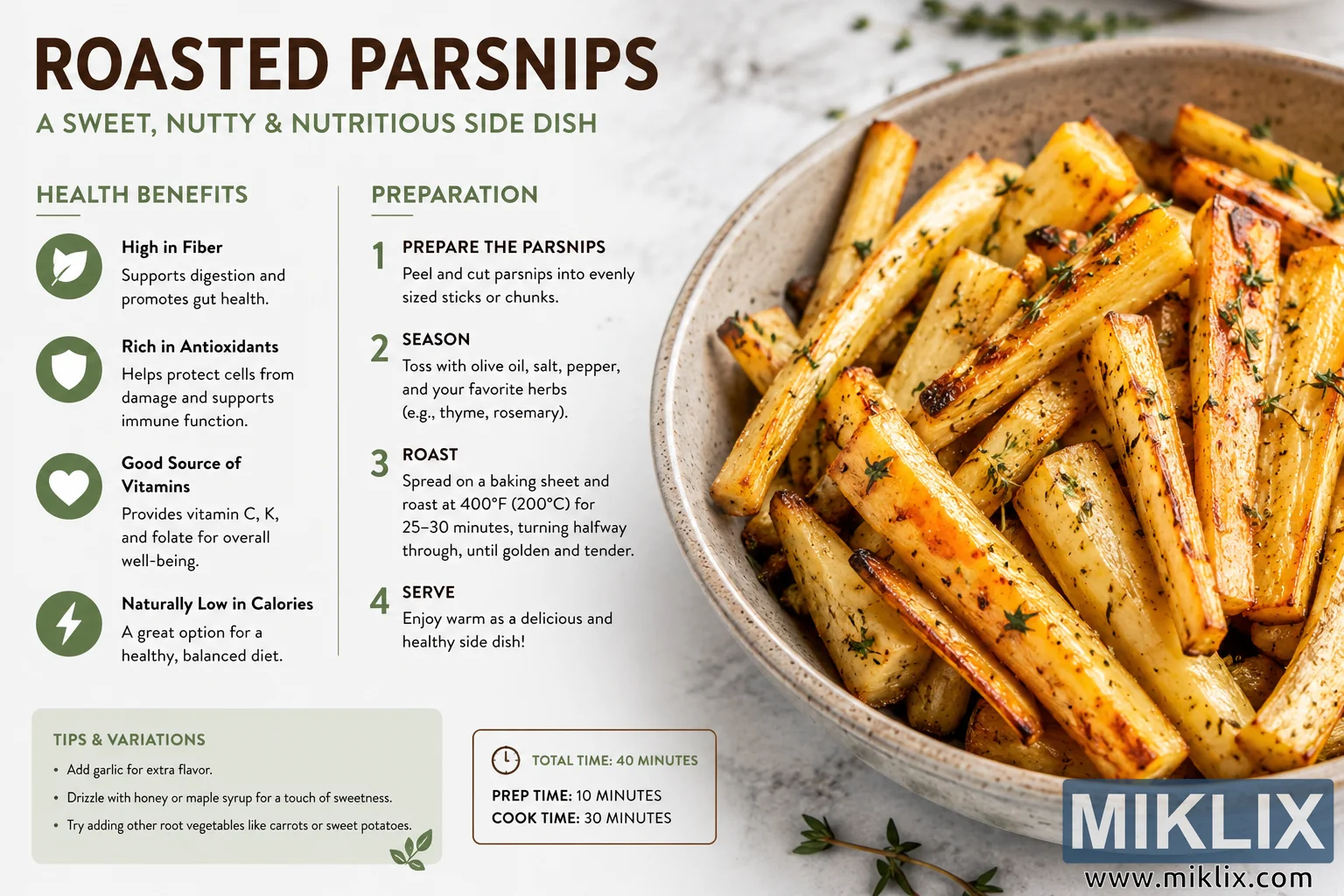
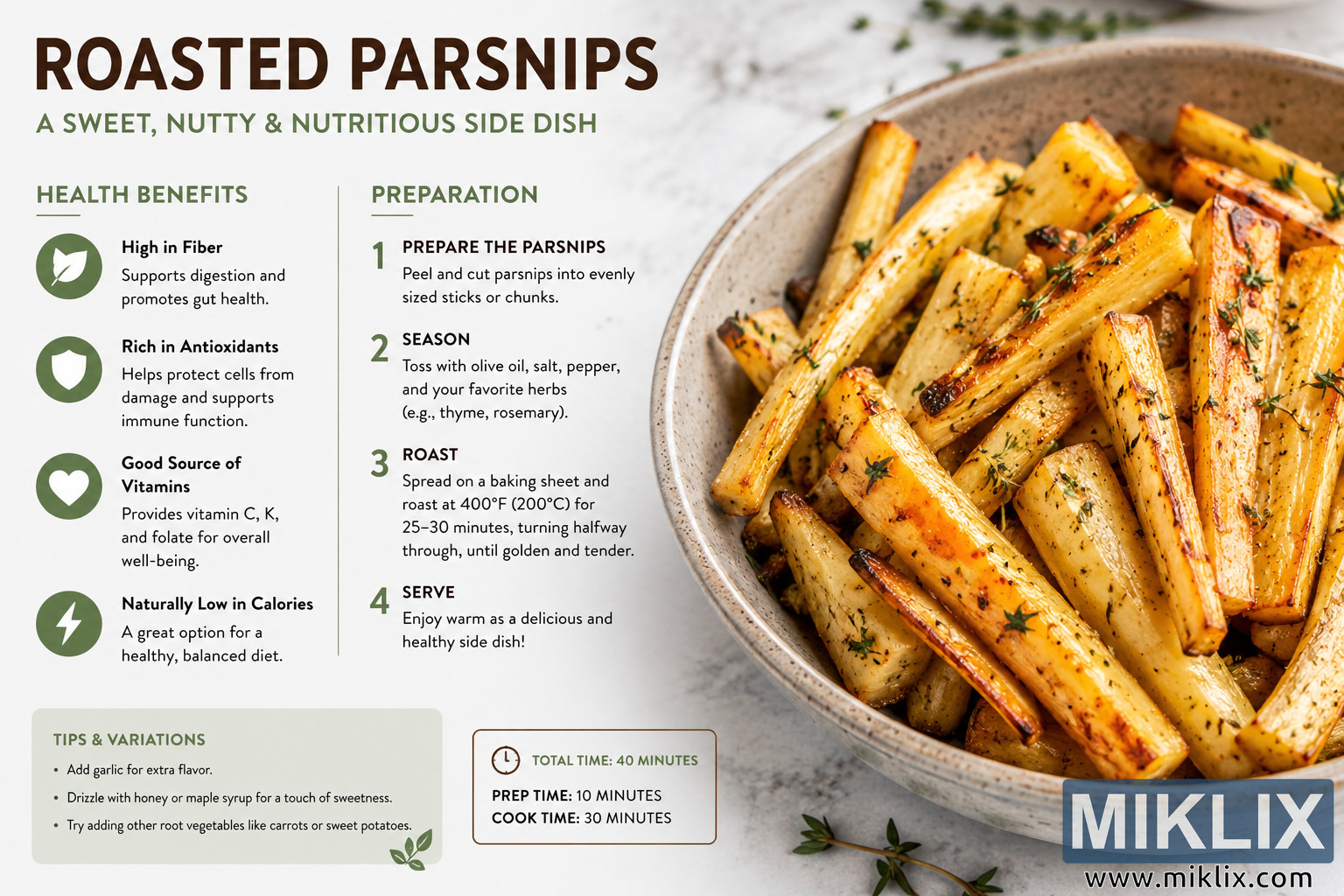
This landscape-oriented recipe infographic combines food photography with an organized instructional layout to present a complete guide for preparing roasted parsnips. The overall design uses a bright, clean background with subtle stone-like texture, allowing the warm golden colors of the roasted vegetables to become the visual centerpiece. The composition is divided into two primary sections. On the right side, a large, close-up food photograph showcases roasted parsnips served in a light-colored ceramic bowl. The parsnips are cut into evenly sized batons and roasted until they display caramelized golden-brown edges with darker toasted spots. Small green herb leaves are scattered throughout the dish, adding contrast and freshness. The lighting is soft and natural, emphasizing the crisp exterior and tender interior of the vegetables while creating an inviting homemade appearance. The bowl occupies a substantial portion of the image and is cropped naturally so the food remains the dominant visual element.
The left half of the infographic contains the recipe information arranged into clearly separated content blocks. At the top is a large headline reading "ROASTED PARSNIPS" in bold uppercase typography, followed immediately by a smaller subtitle describing the dish as a sweet, nutty, and nutritious side dish. The typography is modern, highly legible, and uses dark brown lettering paired with muted green accents that reinforce the natural, wholesome theme of the recipe.
Below the heading, the left column begins with a section dedicated to health benefits. Each benefit is accompanied by a simple circular icon rendered in green. The benefits emphasize that roasted parsnips are high in dietary fiber, rich in antioxidants, provide important vitamins including vitamin C, vitamin K, and folate, and are naturally low in calories. Short explanatory sentences accompany each point, describing digestive support, immune function, cellular protection, nutritional value, and suitability for a balanced diet. The icons are minimalistic and include stylized symbols such as a leaf, shield, heart, and lightning bolt that visually reinforce each nutritional concept without distracting from the text.
Adjacent to the health benefits section is a structured preparation guide organized into four numbered steps. Each number is displayed prominently in green, making the workflow easy to follow. The preparation instructions begin by describing how to wash, peel, and cut the parsnips into evenly sized pieces. The second step explains seasoning with olive oil, salt, pepper, and aromatic herbs such as thyme or rosemary. The third step describes arranging the vegetables on a baking tray before roasting them at approximately 400 degrees Fahrenheit or 200 degrees Celsius for roughly twenty-five to thirty minutes, turning them halfway through cooking to ensure even browning. The final step recommends serving the roasted parsnips warm as a flavorful and healthy side dish.
Near the bottom of the infographic is an additional tips and variations panel presented within a softly colored rounded rectangle. This area provides optional suggestions such as adding garlic for extra flavor, drizzling honey or maple syrup for sweetness, or combining the parsnips with other root vegetables like carrots or sweet potatoes. These recommendations encourage customization while maintaining the simple nature of the recipe. A small decorative botanical illustration reinforces the fresh ingredient theme.
Positioned beside the tips section is a compact cooking timeline enclosed within a bordered box. This timeline summarizes the total cooking duration, indicating a total preparation time of approximately forty minutes, including around ten minutes of preparation and thirty minutes of roasting. A small clock icon visually identifies this section, making the timing information easy to locate at a glance.
The color palette throughout the infographic consists primarily of earthy greens, warm browns, cream tones, and golden highlights that complement the roasted vegetables. The layout is spacious with generous margins and balanced alignment, allowing readers to quickly distinguish between nutritional information, cooking instructions, helpful tips, and timing details. The design avoids unnecessary visual clutter and instead relies on clean typography, simple iconography, and high-quality food photography to communicate information effectively. Overall, the image functions as both an attractive recipe presentation and an educational cooking guide, making it suitable for food blogs, healthy eating articles, printable kitchen references, recipe collections, or nutrition-focused educational materials.
The image is related to: Don't Overlook Parsnips: Here's Why They're So Good for You