
Image: Weight Management Benefits of Parsnips in a Balanced Diet
Published: August 3, 2026 at 10:12:20 PM UTC
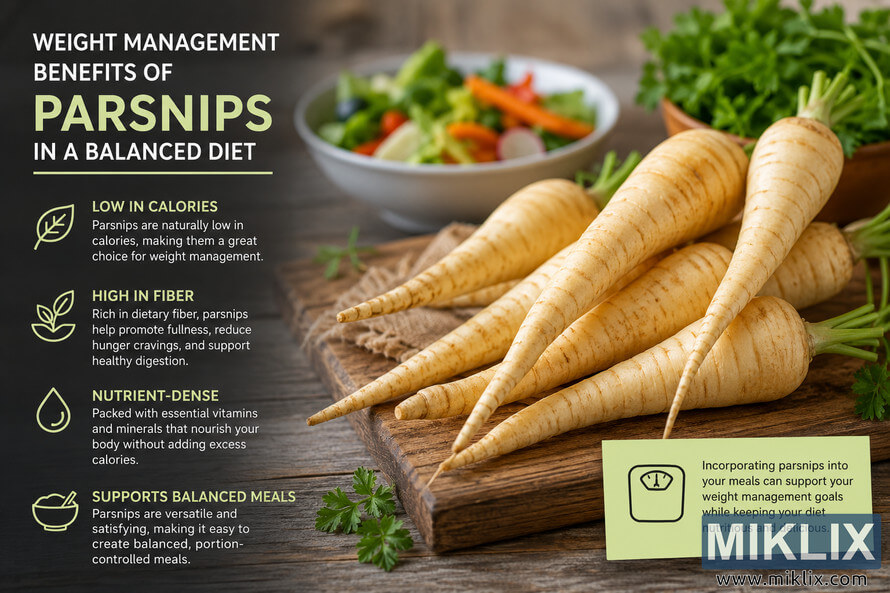
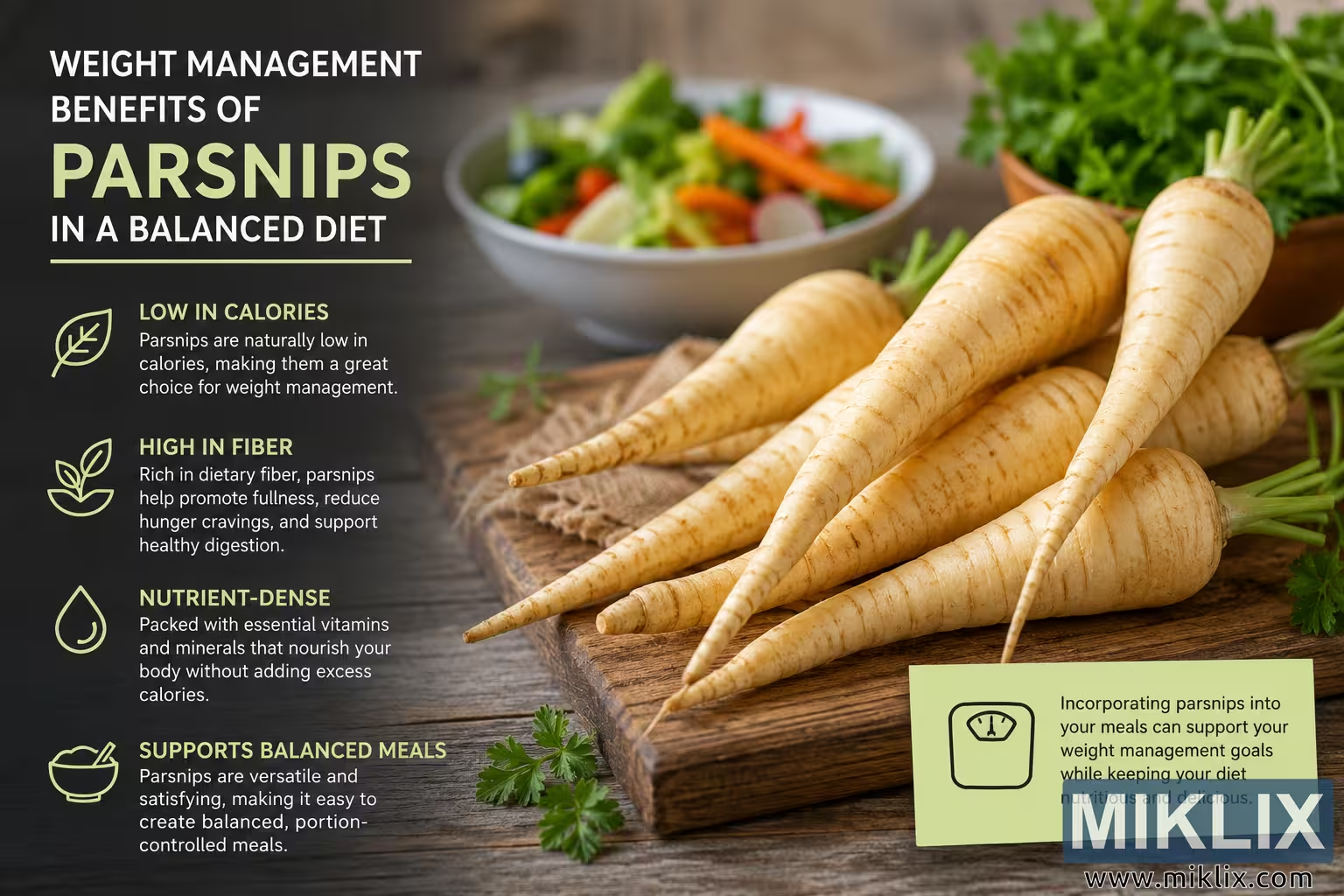
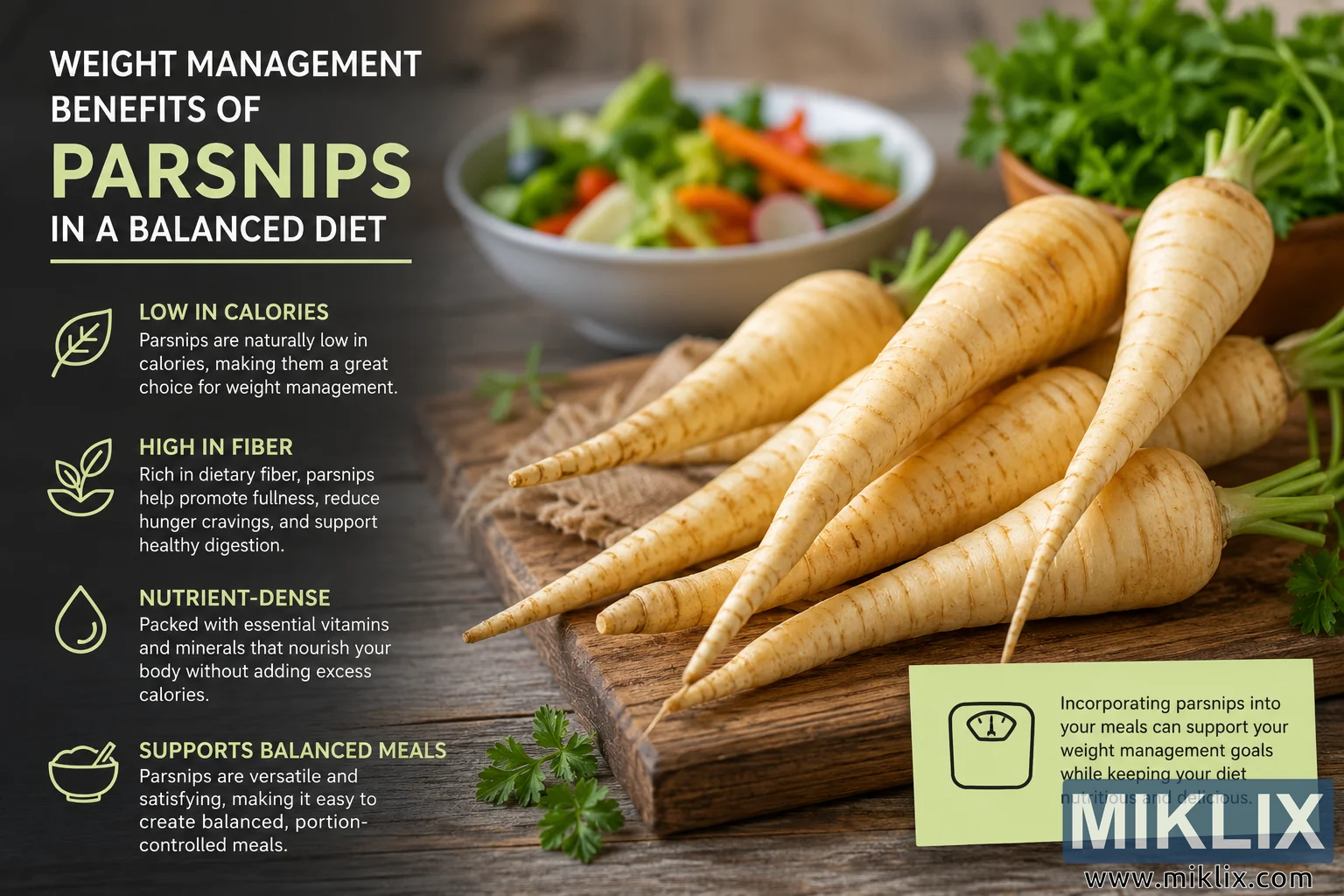
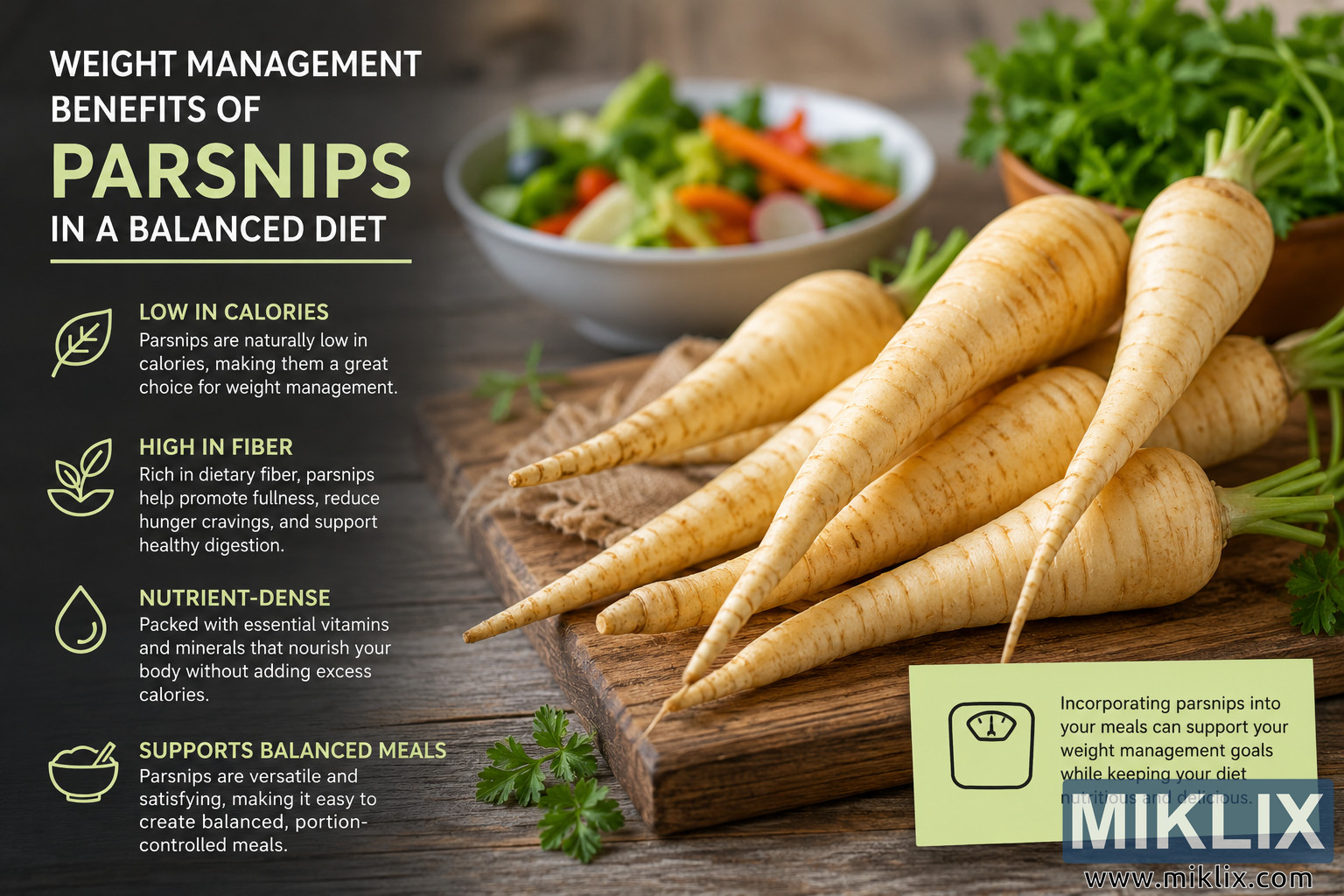
Learn how parsnips can support weight management as part of a balanced diet. This informative image highlights their low calorie content, high fiber, nutrient density, and versatility in nutritious meals alongside fresh vegetables in a warm, rustic kitchen setting.
Available versions of this image
The image files available for download below are less compressed and higher resolution - and as a result of that, higher quality - than the images embedded in articles and pages on this website, which are more optimized for file size in order to reduce bandwidth consumption.
Regular size (1,536 x 1,024)
Large size (3,072 x 2,048)
Very large size (4,608 x 3,072)
Extra large size (6,144 x 4,096)
Comically large size (1,048,576 x 699,051)
- Still uploading... ;-)
Image description
This landscape-oriented image presents a clean, visually engaging health and nutrition concept centered on the role of parsnips in weight management within a balanced diet. The composition combines food photography with infographic-style educational content, creating an image that is both informative and visually appealing. The overall atmosphere is warm, natural, and inviting, with soft daylight illuminating a rustic wooden tabletop that serves as the background for the featured vegetables and nutritional messaging. The color palette is dominated by earthy browns, creamy ivory tones from the parsnips, and vibrant greens from fresh herbs and leafy vegetables, reinforcing themes of freshness, wholesome eating, and natural ingredients.
On the right-hand side of the image, several freshly harvested parsnips are neatly arranged on a thick wooden cutting board. The vegetables appear clean and freshly prepared, displaying their characteristic tapered shape, creamy white skin, and subtle natural texture. Some still retain short green stems, emphasizing freshness. The parsnips overlap naturally, creating depth while directing attention toward the center of the composition. Around the cutting board are scattered sprigs of fresh parsley or similar leafy herbs, adding additional green accents and reinforcing the farm-fresh aesthetic. Behind the parsnips sits a shallow bowl filled with a colorful mixed salad containing leafy greens and sliced vegetables, softly blurred by a shallow depth of field that keeps the foreground vegetables as the primary focal point while providing context for balanced meal preparation.
The left portion of the image functions as an informational infographic panel placed against a darker section of the wooden background to maximize readability. A large headline prominently reads 'Weight Management Benefits of Parsnips in a Balanced Diet,' using a combination of white and light green typography with clear visual hierarchy. The word 'Parsnips' appears in larger lettering than the surrounding text, immediately identifying the featured ingredient. A thin horizontal divider beneath the title separates the heading from the educational content below.
Four illustrated icon sections are stacked vertically beneath the headline. Each section pairs a simple line-art icon with a bold subheading and a concise explanatory paragraph. The first section highlights that parsnips are low in calories, explaining that they can be a suitable option for individuals seeking foods that fit within weight management goals. The second section emphasizes their high fiber content, describing how dietary fiber contributes to feelings of fullness, supports digestive health, and may help reduce hunger between meals. The third section focuses on nutrient density, explaining that parsnips provide vitamins and minerals while remaining compatible with calorie-conscious meal planning. The fourth section explains that parsnips support balanced meals by serving as a versatile vegetable that complements portion-controlled dishes and nutritious recipes. Each icon uses a clean minimalist style, contributing to the modern educational appearance without distracting from the food photography.
Near the lower-right corner of the composition is a small note styled like a light-colored card placed on top of the wooden surface. It contains an additional message summarizing the overall nutritional theme, encouraging the inclusion of parsnips in balanced meals as one component of a healthy dietary pattern that supports weight management goals. A simple scale icon accompanies the text, visually reinforcing the topic without overwhelming the design.
The lighting throughout the image is soft and natural, with gentle highlights emphasizing the smooth texture of the parsnips and the grain of the wooden cutting board. Shadows remain subtle, helping create depth while maintaining an approachable and clean presentation. The shallow focus gently blurs the background salad and herbs, producing a professional food photography effect that naturally guides the viewer's attention toward both the vegetables and the educational content.
Overall, the image communicates healthy eating, nutritional education, and balanced lifestyle choices rather than promoting any quick-fix approach. It presents parsnips as one nutritious vegetable that can contribute to satisfying, fiber-rich meals when incorporated into an overall balanced diet. The combination of rustic food styling, modern infographic elements, legible typography, and natural color harmony creates an image well suited for articles, blog posts, educational resources, recipe collections, wellness websites, or nutrition-focused presentations discussing healthy eating patterns and weight management.
The image is related to: Don't Overlook Parsnips: Here's Why They're So Good for You