
Image: Recommended Daily Portion Size of Parsnips for Health Benefits
Published: August 3, 2026 at 10:12:20 PM UTC
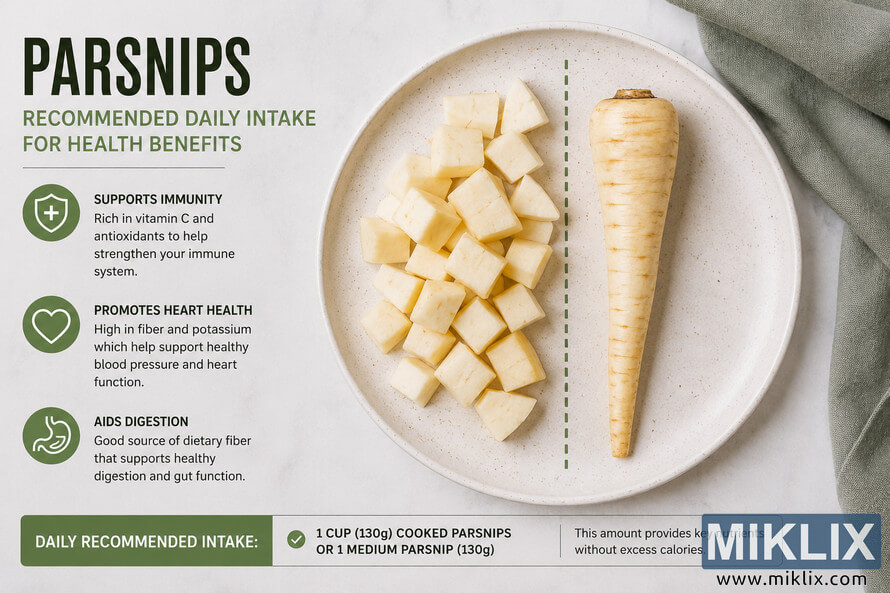
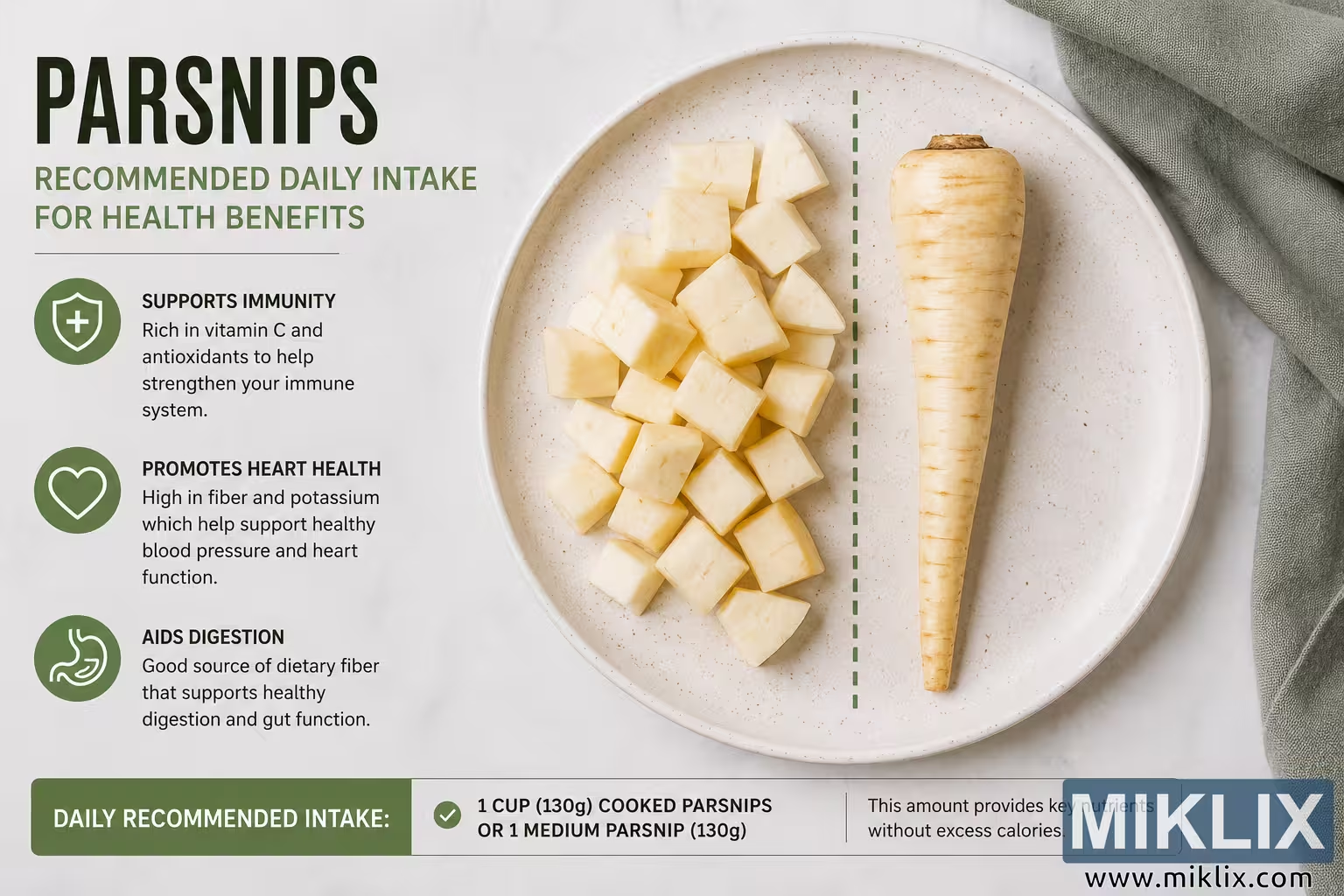
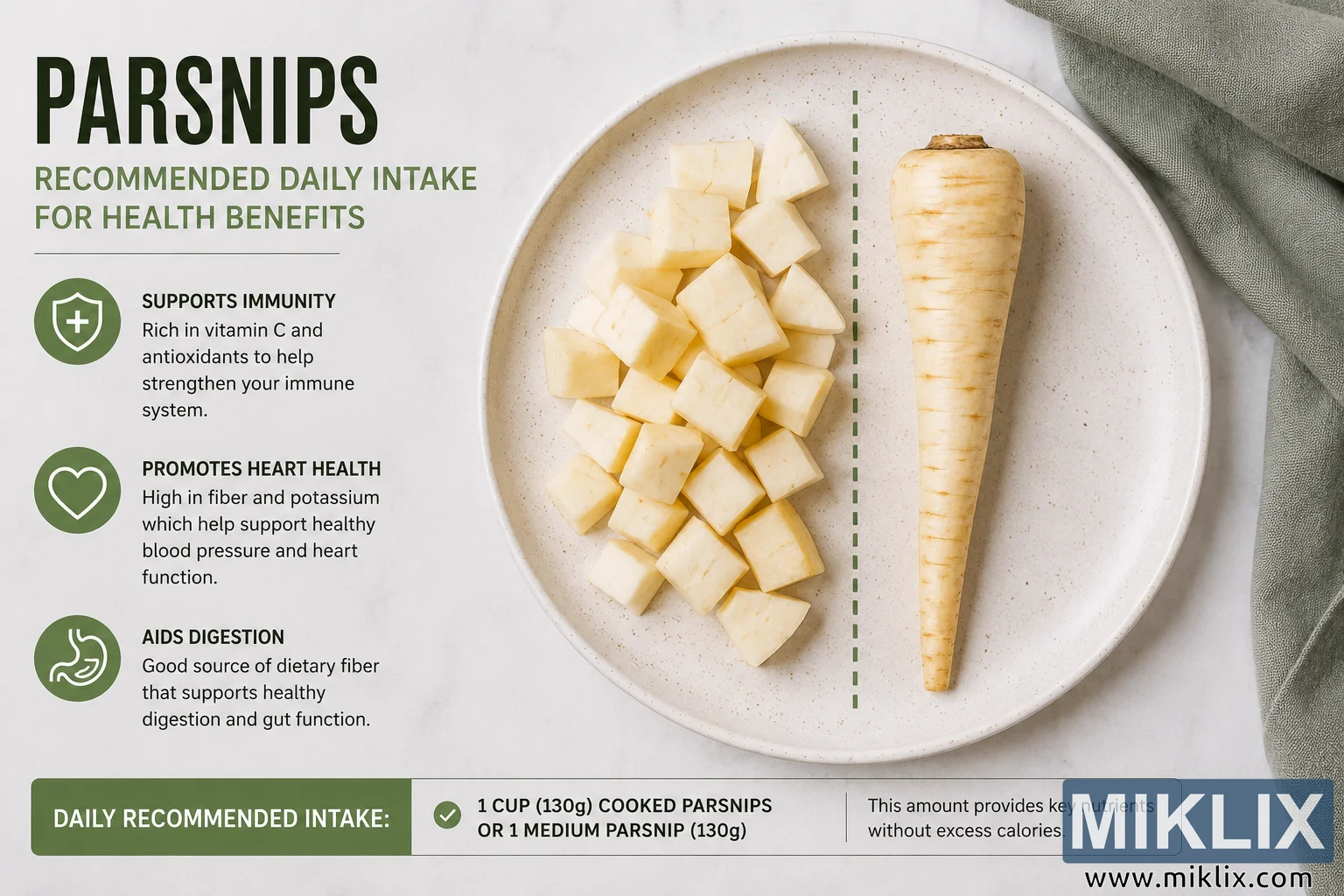
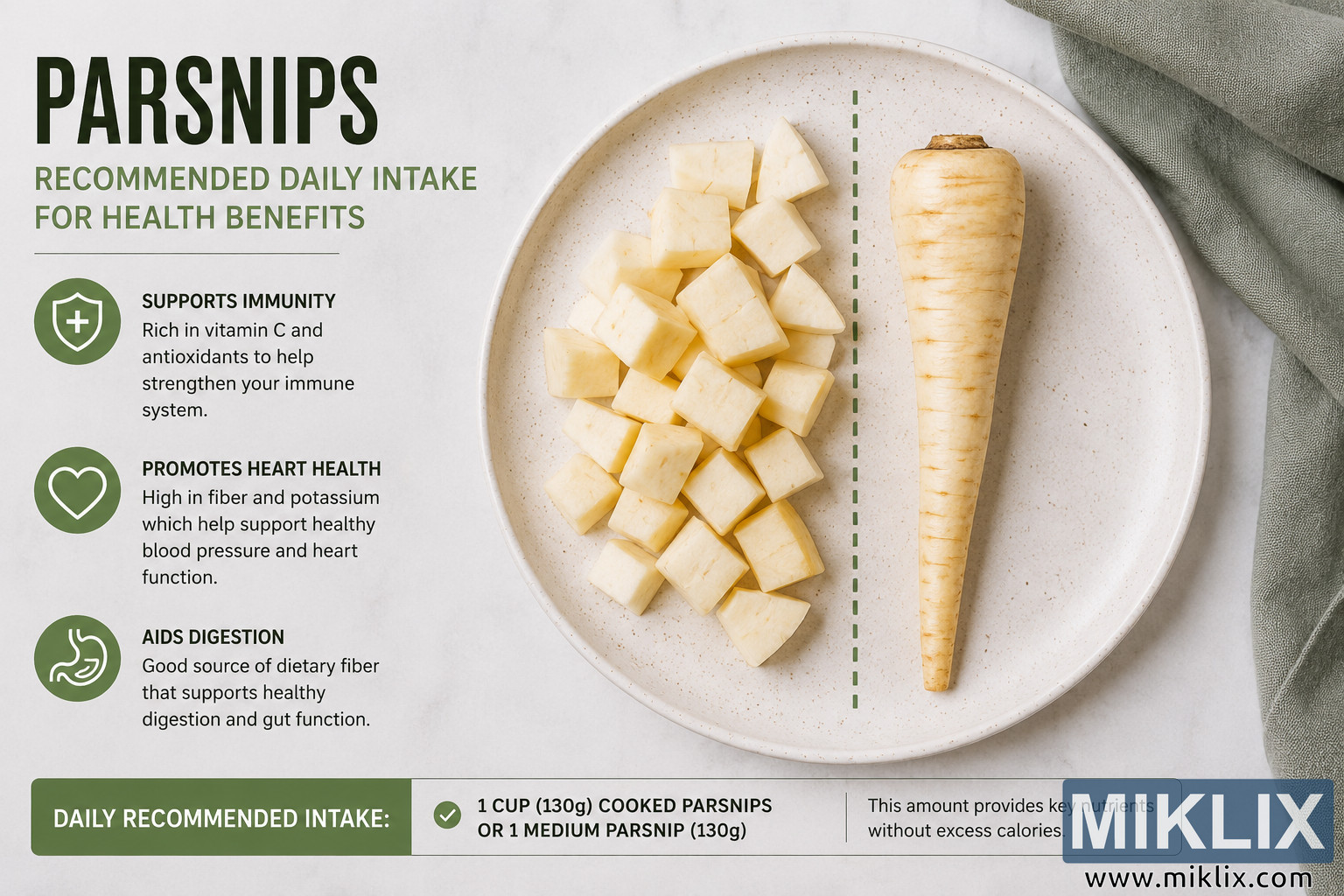
Educational infographic illustrating the recommended daily portion size of parsnips with a whole parsnip, diced serving, nutrition information, and health benefits including immune support, heart health, and digestive wellness.
Available versions of this image
The image files available for download below are less compressed and higher resolution - and as a result of that, higher quality - than the images embedded in articles and pages on this website, which are more optimized for file size in order to reduce bandwidth consumption.
Regular size (1,536 x 1,024)
Large size (3,072 x 2,048)
Very large size (4,608 x 3,072)
Extra large size (6,144 x 4,096)
Comically large size (1,048,576 x 699,051)
- Still uploading... ;-)
Image description
This image is a clean, modern, landscape-oriented infographic that combines food photography with educational nutrition design. The overall aesthetic is bright, minimal, and easy to read, using a neutral color palette dominated by soft white, cream, light gray, and muted green accents. The composition is divided into two primary sections: an informational panel on the left and a food photography display on the right, creating a balanced visual hierarchy that immediately communicates both the subject and its nutritional message.
On the left side, a large bold heading introduces the topic with the word "PARSNIPS" displayed prominently in dark lettering. Directly beneath it is a subtitle indicating that the infographic focuses on the recommended daily intake for health benefits. The typography is modern, highly legible, and arranged with generous spacing, contributing to a clean editorial appearance.
Below the heading are three informational sections, each accompanied by a simple circular green icon. The first icon depicts a medical-style shield with a cross, representing immune support. Adjacent to it is explanatory text describing how parsnips contribute nutrients that support normal immune function. The second icon contains a heart symbol, visually representing cardiovascular wellness. Its accompanying text explains that parsnips provide dietary fiber and potassium that contribute to heart health as part of a balanced diet. The third icon features a stylized digestive system, paired with text explaining that the vegetable is a good source of fiber that supports healthy digestion and normal gastrointestinal function. Each information block is evenly spaced, aligned vertically, and uses consistent typography for a polished educational layout.
The right side of the image features a large round ceramic plate viewed from directly above. The plate has a lightly speckled off-white glaze with subtle texture that complements the natural appearance of the food. On the left half of the plate is a neatly arranged pile of uniformly cut parsnip cubes. The pieces are peeled, pale cream in color, and have clean edges that suggest preparation for cooking. Their arrangement occupies roughly half of the plate, visually indicating the recommended serving size.
Running vertically near the center of the plate is a thin green dashed guideline that visually separates the diced portion from the whole vegetable. On the right half of the plate lies one whole peeled parsnip positioned vertically. The parsnip tapers naturally from a broader top toward a narrow tip, with subtle horizontal surface markings that provide realistic texture. Presenting both the diced portion and the whole vegetable allows viewers to compare two equivalent serving formats in a simple visual manner.
The plate rests on a light stone or marble-style surface with delicate gray veining that reinforces the clean kitchen aesthetic. In the upper-right corner of the composition, a folded muted green linen cloth introduces softness and visual balance while matching the green accent color used throughout the infographic. The lighting is soft and diffuse, producing gentle shadows that enhance depth without distracting from the educational content. The overall presentation resembles professional food photography commonly seen in nutrition guides or healthy eating publications.
Along the bottom of the image is a horizontal information banner with green and white sections. This banner highlights the recommended daily intake using bold typography. It communicates that an appropriate serving is approximately one cup of cooked parsnips or one medium parsnip weighing roughly 130 grams. Additional supporting text notes that this quantity provides valuable nutrients while fitting comfortably within a balanced eating pattern. A small green checkmark icon reinforces the recommendation visually.
No commercial branding, company logos, product packaging, trademarks, watermarks, or promotional elements are visible anywhere in the image. The design focuses exclusively on nutrition education, portion visualization, and healthy eating guidance. The composition is uncluttered, highly readable, and suitable for use in educational articles, wellness websites, dietitian resources, healthy lifestyle blogs, medical communication, or public health materials that discuss vegetable serving sizes and balanced nutrition.
The image is related to: Don't Overlook Parsnips: Here's Why They're So Good for You