
Image: DNA Protection and Cellular Repair Mechanisms
Published: July 16, 2026 at 8:43:36 PM UTC
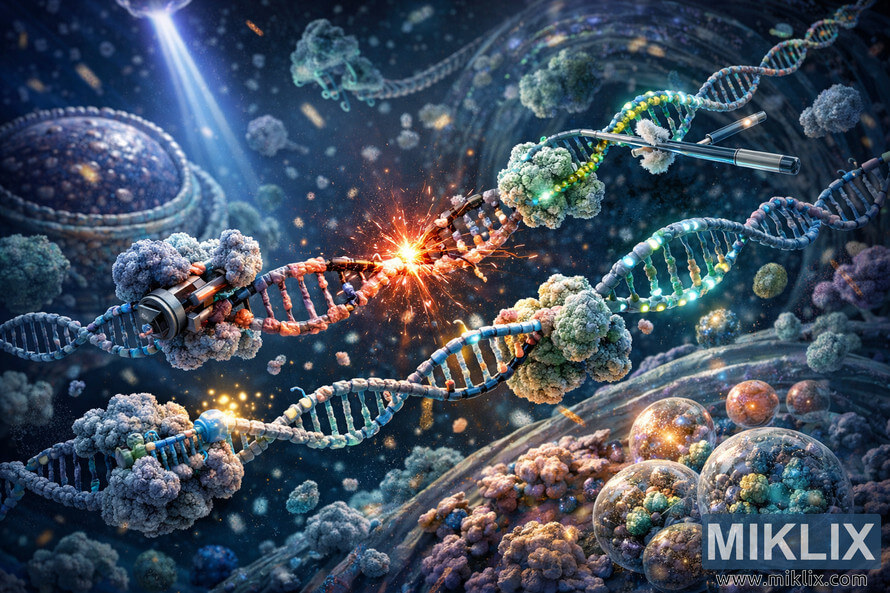
A detailed depiction of cellular DNA protection and repair mechanisms, illustrating molecular complexes restoring damaged genetic material through dynamic biochemical processes.
Available versions of this image
The image files available for download below are less compressed and higher resolution - and as a result of that, higher quality - than the images embedded in articles and pages on this website, which are more optimized for file size in order to reduce bandwidth consumption.
Regular size (1,536 x 1,024)
Large size (3,072 x 2,048)
Very large size (4,608 x 3,072)
Extra large size (6,144 x 4,096)
Comically large size (1,048,576 x 699,051)
- Still uploading... ;-)
Image description
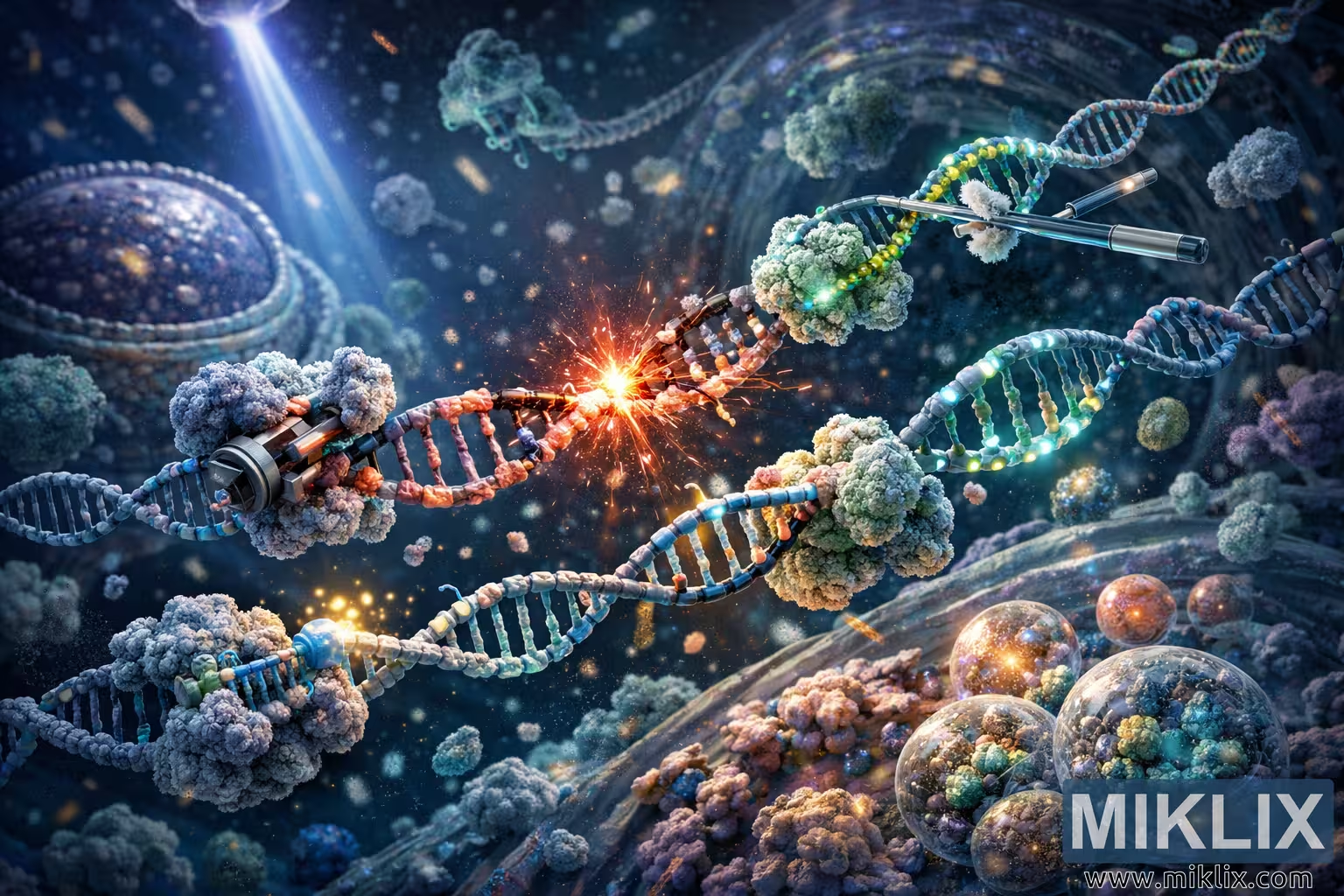
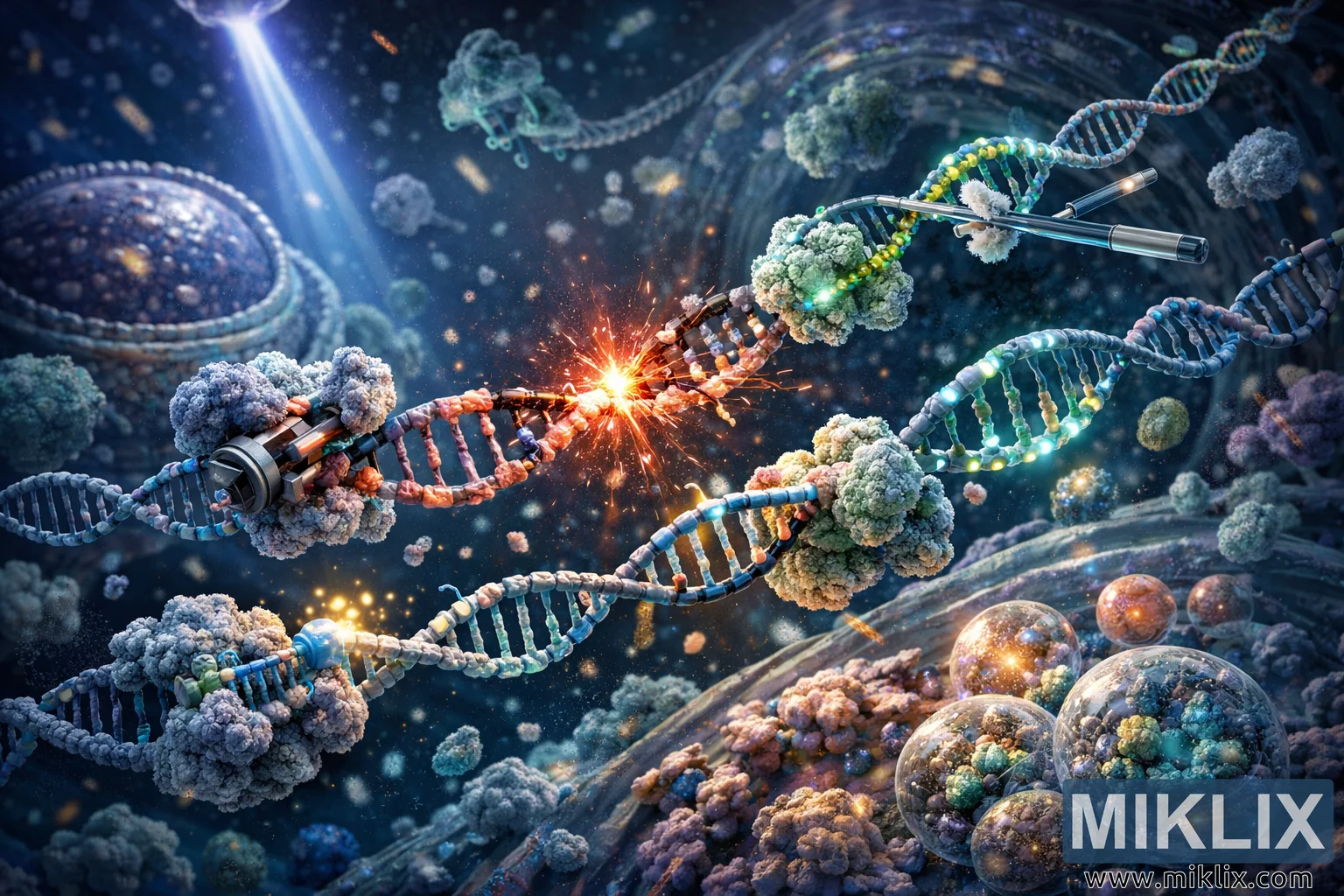
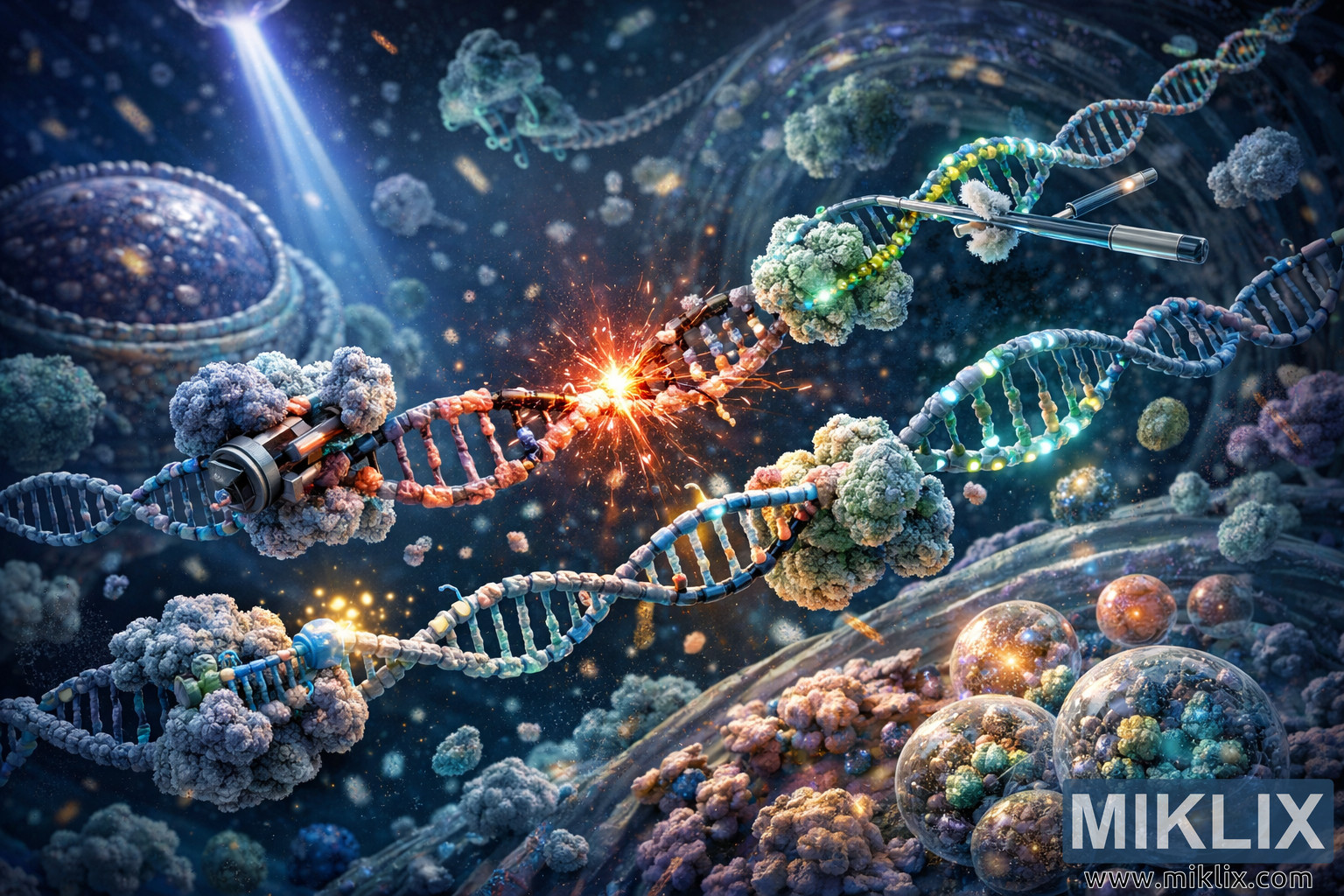
This image presents a breathtaking visualization of the microscopic world of DNA protection and cellular repair mechanisms, rendered in a high-resolution landscape format that immerses the viewer in the intricate choreography of molecular biology. At the center of the composition lies a damaged DNA double helix, its broken strands emitting a radiant red and orange glow that symbolizes the moment of genetic distress. Surrounding this focal point are numerous protein complexes, each portrayed as sophisticated molecular machines engaged in the delicate process of restoring genomic integrity.
To the left of the broken helix, a large clamp-like protein complex binds tightly to the DNA strands, its metallic surface reflecting the surrounding luminescence. This structure represents the initial recognition phase of DNA repair, where specialized enzymes detect and stabilize the damaged region. Nearby, a blue-glowing enzyme emits a focused beam of light toward the DNA, symbolizing the activation of repair pathways through energy transfer and molecular signaling.
On the right side, another protein complex is shown actively reconstructing the DNA, its green luminescent tendrils weaving new nucleotides into the broken sequence. This section captures the essence of nucleotide excision repair and homologous recombination, two of the cell’s most vital defense mechanisms against genetic instability. The newly synthesized strand glows with a soft green hue, representing the successful restoration of the genetic code.
In the foreground, a molecular assembly delicately inserts glowing blue bases into the DNA strand, each base representing a precise chemical correction. Below this, a yellow-illuminated protein interacts with the DNA, possibly symbolizing the role of polymerases or ligases that finalize the repair process by sealing the backbone of the molecule. To the lower right, spherical vesicles float gracefully, each containing shimmering particles that represent repair enzymes and signaling molecules transported through the cytoplasm.
The background expands into the broader cellular environment, where the nucleus looms on the left side, its double-layered membrane faintly visible under the soft glow of scattered photons. A beam of ultraviolet light descends from the upper left corner, signifying the external stress that triggered the DNA damage. In response, repair vesicles and protein complexes mobilize across the scene, their coordinated movement illustrating the cell’s resilience and adaptability.
Throughout the image, tiny glowing particles drift like cosmic dust, evoking the constant molecular activity within living cells. Floating DNA fragments and repair intermediates add depth and realism, while the interplay of cool blues and greens with warm reds and yellows creates a dynamic visual balance between injury and healing. The composition conveys both the fragility and strength of life at the molecular level, emphasizing how cells continuously monitor and mend their genetic material to preserve biological continuity.
This artwork not only captures the scientific precision of DNA repair but also transforms it into a poetic representation of cellular resilience. It celebrates the unseen guardians of life—the enzymes, proteins, and molecular complexes that tirelessly defend the genome against damage. The image invites viewers to appreciate the elegance of molecular biology as a symphony of light, color, and motion, where every photon and particle contributes to the grand narrative of survival and renewal.
The image is related to: Health Benefits of Chives: Nature's Nutritional Powerhouse