
Image: Assorted Allium Vegetables on Rustic Wooden Surface
Published: July 16, 2026 at 8:43:36 PM UTC
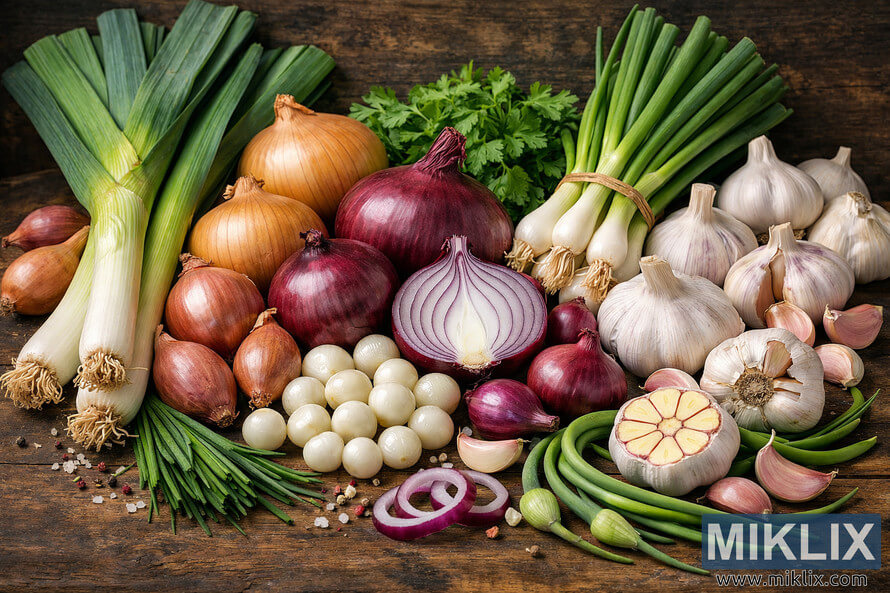
A high-resolution landscape photograph showcasing a diverse assortment of allium vegetables arranged on a rustic wooden surface. The image features red onions, brown onions, shallots, leeks, spring onions, garlic bulbs and cloves, pearl onions, garlic scapes, and chives, with sliced onion rings, cut garlic, coarse salt, and peppercorns scattered in the foreground. Warm, natural lighting and a softly blurred dark wooden backdrop highlight the colors and textures, creating a rich, organic still life perfect for food, cooking, or farm-to-table themes.
Available versions of this image
The image files available for download below are less compressed and higher resolution - and as a result of that, higher quality - than the images embedded in articles and pages on this website, which are more optimized for file size in order to reduce bandwidth consumption.
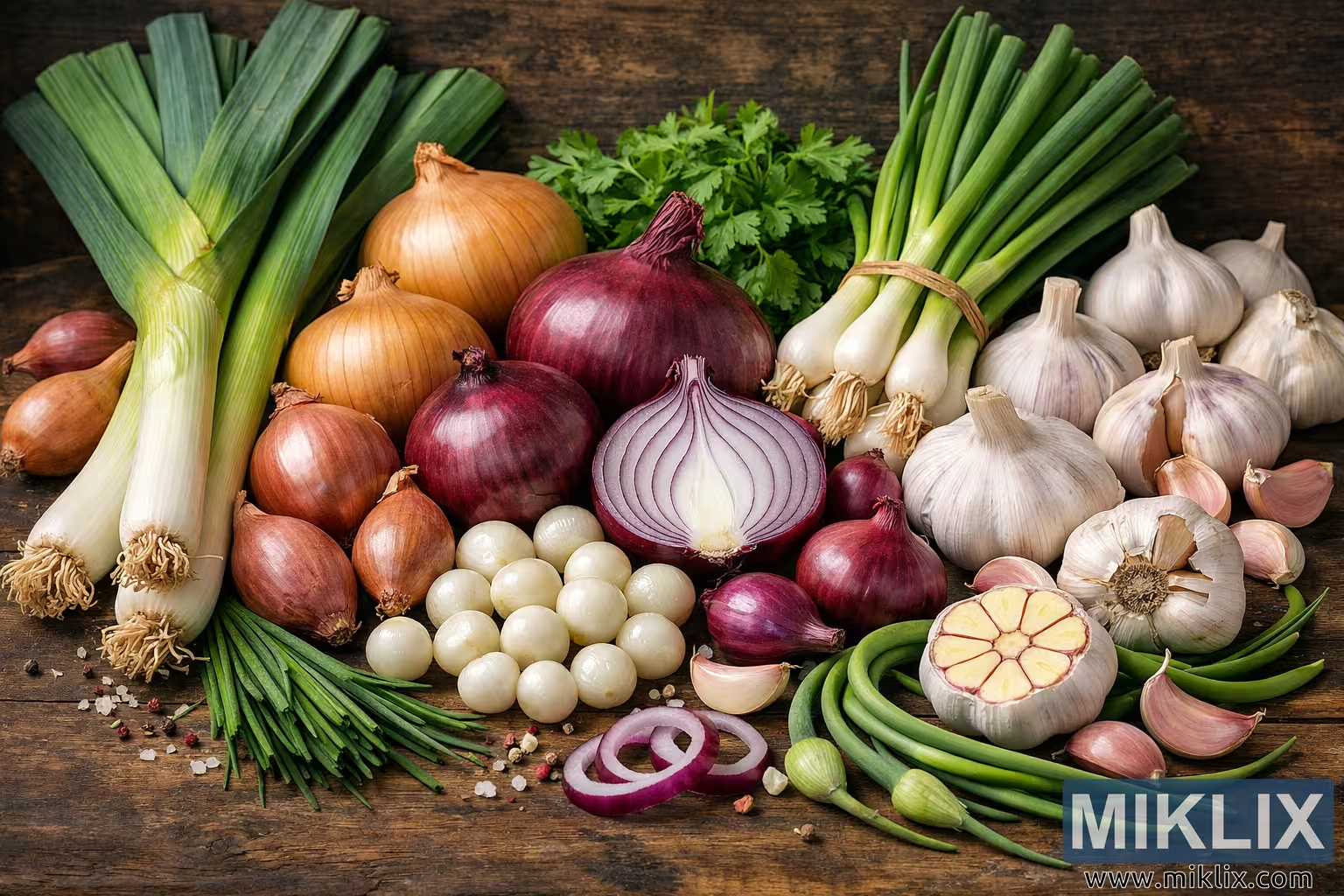
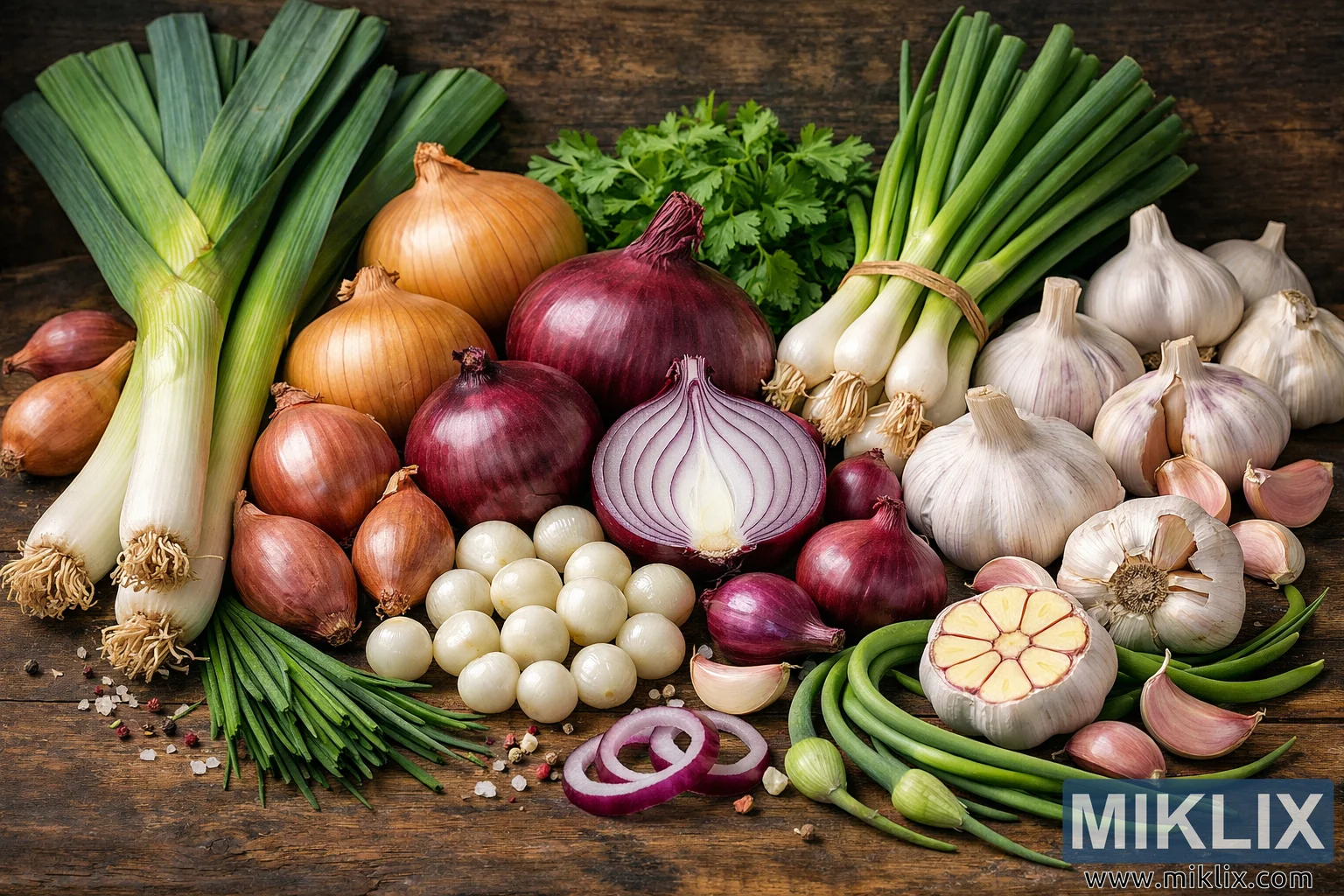
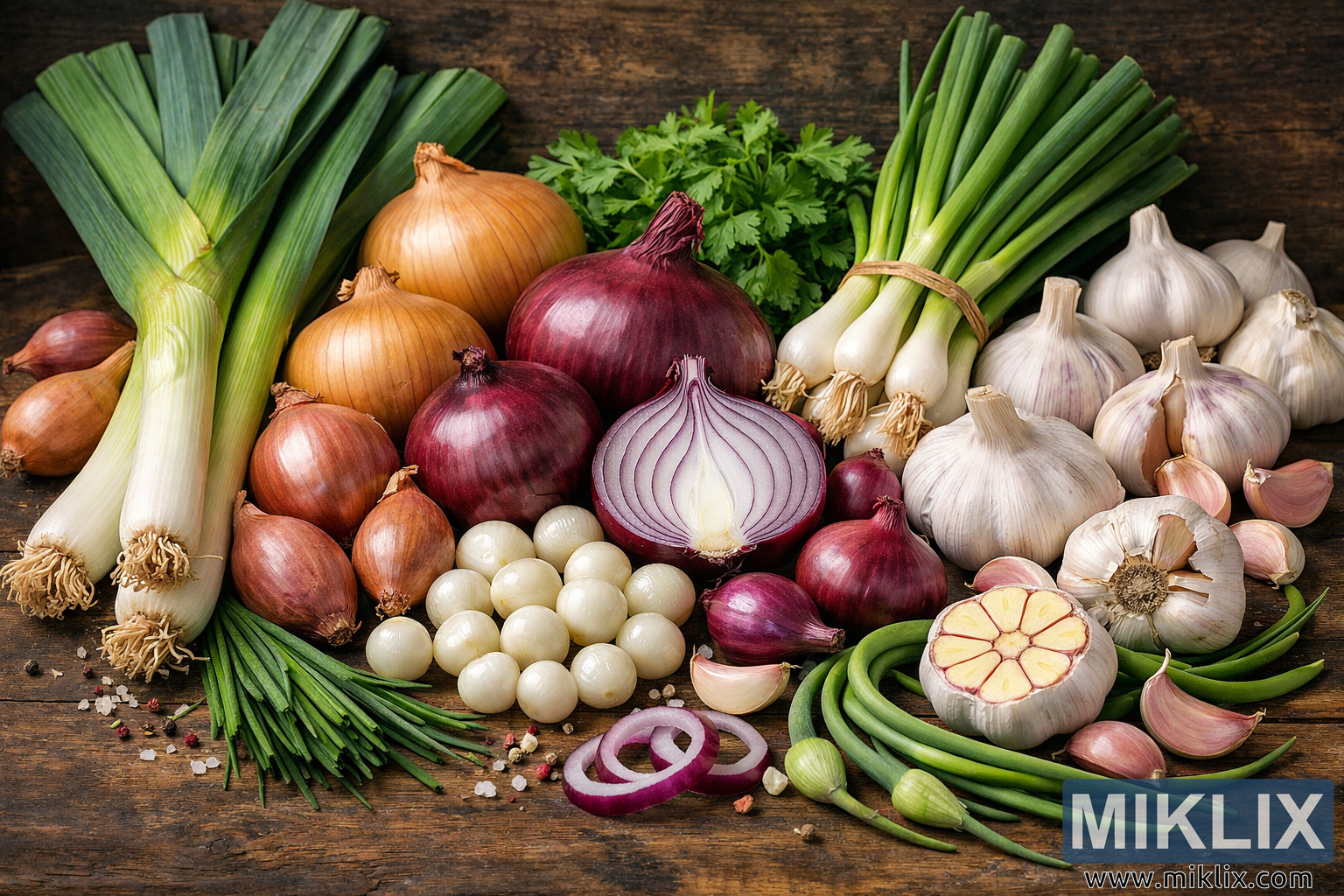
Regular size (1,536 x 1,024)
Large size (3,072 x 2,048)
Very large size (4,608 x 3,072)
Extra large size (6,144 x 4,096)
Comically large size (1,048,576 x 699,051)
- Still uploading... ;-)
Image description
A high-resolution digital photograph presents a carefully arranged assortment of allium vegetables displayed on a rustic wooden surface, creating a rich, organic still life that celebrates the diversity of this plant family. The composition is in landscape orientation, allowing the viewer’s eye to travel across the entire spread of vegetables, each one contributing its own color, texture, and form to the overall visual harmony.
At the center of the arrangement, a cluster of red onions immediately draws attention. Their deep purple-red skins gleam softly under the even, well-balanced lighting, suggesting freshness and a slight natural sheen. One of these red onions is sliced cleanly in half, revealing its interior structure: concentric rings of white and pale purple that form a striking pattern. The cut surface is smooth and moist, contrasting with the dry, papery outer layers. Nearby, several rings of sliced red onion are scattered on the wooden surface, adding a sense of casual realism and hinting at culinary preparation.
To the left of the red onions, a group of golden brown onions rests together. Their skins are papery and slightly crinkled, with subtle variations in tone ranging from light tan to deeper amber. These onions are round and robust, suggesting a hearty, earthy flavor. In front of them, smaller and more elongated shallots are arranged. The shallots have reddish-brown skins and a slightly tapered shape, their surfaces smoother and more refined than the larger onions behind them. This contrast in size and shape adds visual interest and emphasizes the variety within the allium family.
On the far left side of the image, a bundle of leeks extends horizontally, their long, thick green leaves fanning out gracefully. The leaves transition from deep green at the tips to lighter green and then to white near the base, where the stalks widen and the root ends are still attached. The roots are composed of fine, fibrous strands that spread out like delicate threads, reinforcing the sense of natural, freshly harvested produce. The leeks introduce strong linear elements into the composition, guiding the viewer’s gaze from one side of the image toward the center.
Behind the central red onions and slightly to the right, a bunch of fresh green spring onions is tied together. Their slender white bulbs sit at the base, while long, vibrant green tops rise upward and outward. The spring onions add a sense of vertical movement and a bright, lively green hue that contrasts with the deeper tones of the onions and garlic. The tied bundle suggests intentional arrangement, as though prepared for cooking or display.
On the far right side of the photograph, a generous pile of garlic bulbs occupies a prominent position. The bulbs are plump and rounded, with off-white, slightly textured skins that show faint lines and subtle imperfections. One bulb is partially separated into individual cloves, revealing the smooth, curved surfaces of the cloves beneath the outer layers. Several loose garlic cloves are scattered in the foreground, their pale, creamy color standing out against the darker wood. In the lower right portion of the image, a garlic bulb has been sliced horizontally, exposing a circular cross-section of tightly packed cloves. This cut surface forms a radial pattern, with each clove segment clearly defined, creating a visually compelling focal point.
In the front area of the composition, a cluster of white pearl onions is arranged together. These small, glossy onions have smooth, bright white skins that catch the light, making them appear almost luminous against the rustic background. Their diminutive size contrasts with the larger onions and garlic bulbs, emphasizing the range of scales present in the scene. Beside the pearl onions, a collection of green and purple garlic scapes curls around in gentle arcs. The scapes are slender and flexible, with green stalks that twist and loop, ending in pointed unopened flower buds. Some of the scapes display subtle purple tinges, adding another layer of color variation.
In the lower left corner of the image, a small pile of chives is placed neatly. The chives are thin, bright green leaves, cut to similar lengths and arranged in a loose bundle. Their fine, linear form echoes the shapes of the leeks and spring onion tops, reinforcing the theme of elongated green elements throughout the composition. The chives contribute a fresh, herbaceous note to the visual narrative, suggesting delicate flavor and garnish.
Scattered across the foreground, a few peeled garlic cloves and rings of sliced red onion lie casually on the wooden surface. Among them, coarse salt crystals and dark peppercorns are sprinkled, adding small, textural details that hint at seasoning and cooking. These tiny elements help bridge the gap between pure still life and culinary storytelling, implying that these vegetables are not only beautiful but also destined for use in the kitchen.
The wooden surface itself is rustic and weathered, with visible grain patterns, knots, and subtle scratches. Its dark, earthy tones provide a warm, natural foundation for the vegetables, enhancing their colors without overpowering them. In the background, a dark wooden backdrop is softly blurred, creating a shallow depth of field that keeps the focus firmly on the allium assortment in the foreground. The blurred backdrop adds depth and dimension to the image, making the vegetables appear more three-dimensional and tangible.
The lighting in the photograph is even and well-balanced, illuminating the vegetables from above and slightly to one side. This lighting reveals the textures of the skins, leaves, and roots, while avoiding harsh shadows or overly bright highlights. The overall color balance is warm and natural, with the greens of the leeks, chives, spring onions, and garlic scapes contrasting beautifully against the reds, whites, and browns of the onions and garlic. The interplay of these colors creates a harmonious palette that feels both inviting and authentic.
The focal points of the image include the sliced red onion at the center, the horizontally cut garlic bulb in the lower right, and the cluster of pearl onions in the front. Together, these elements form a visual triangle that guides the viewer’s eye around the composition. The arrangement of the vegetables is deliberate yet organic, suggesting both careful styling and natural abundance. Overall, the image conveys a sense of freshness, variety, and rustic charm, celebrating the many forms and flavors of allium vegetables in a single, cohesive scene.
The image is related to: Health Benefits of Chives: Nature's Nutritional Powerhouse