
Image: Nectarines and Peaches Side-by-Side Comparison on White Marble Background
Published: May 31, 2026 at 4:50:50 PM UTC
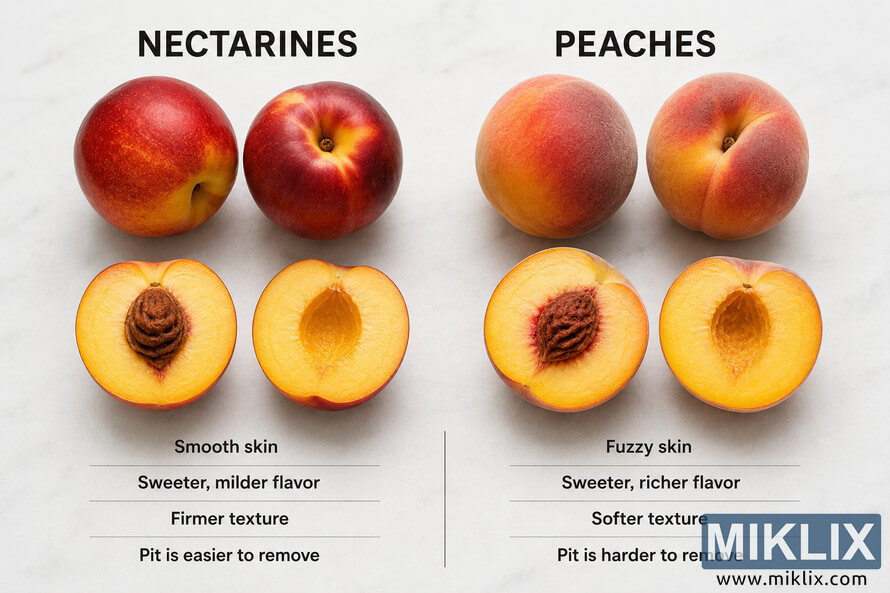
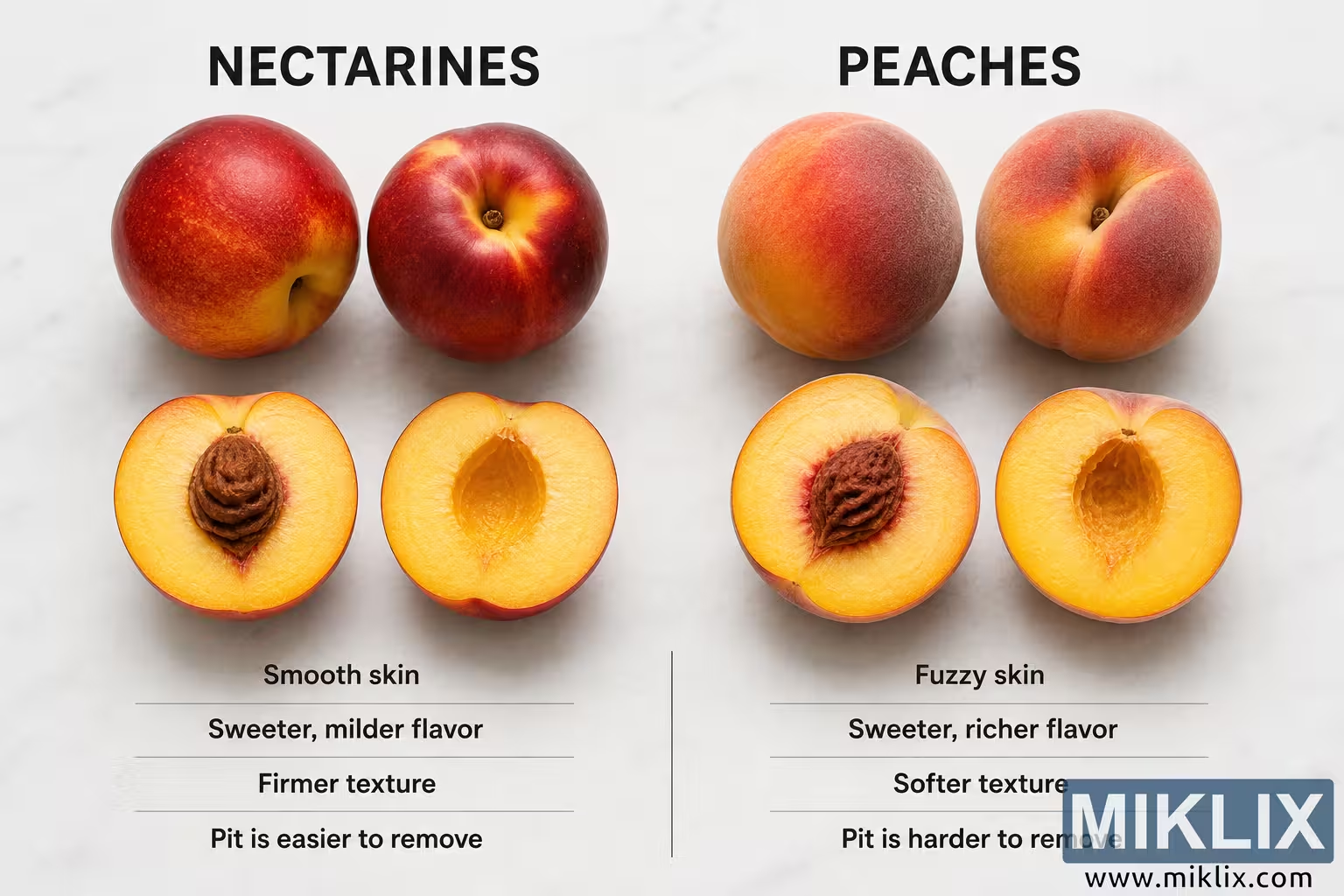
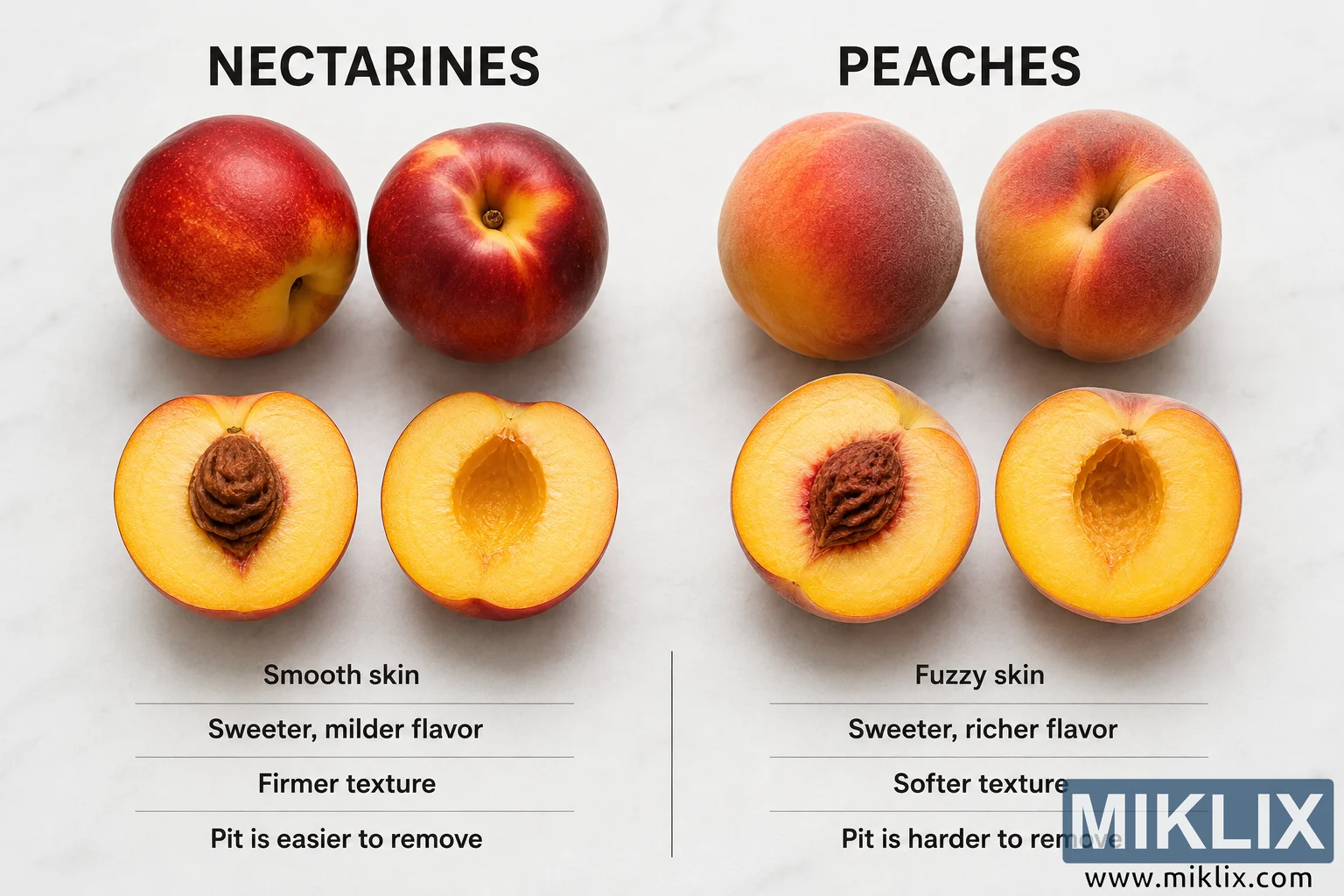
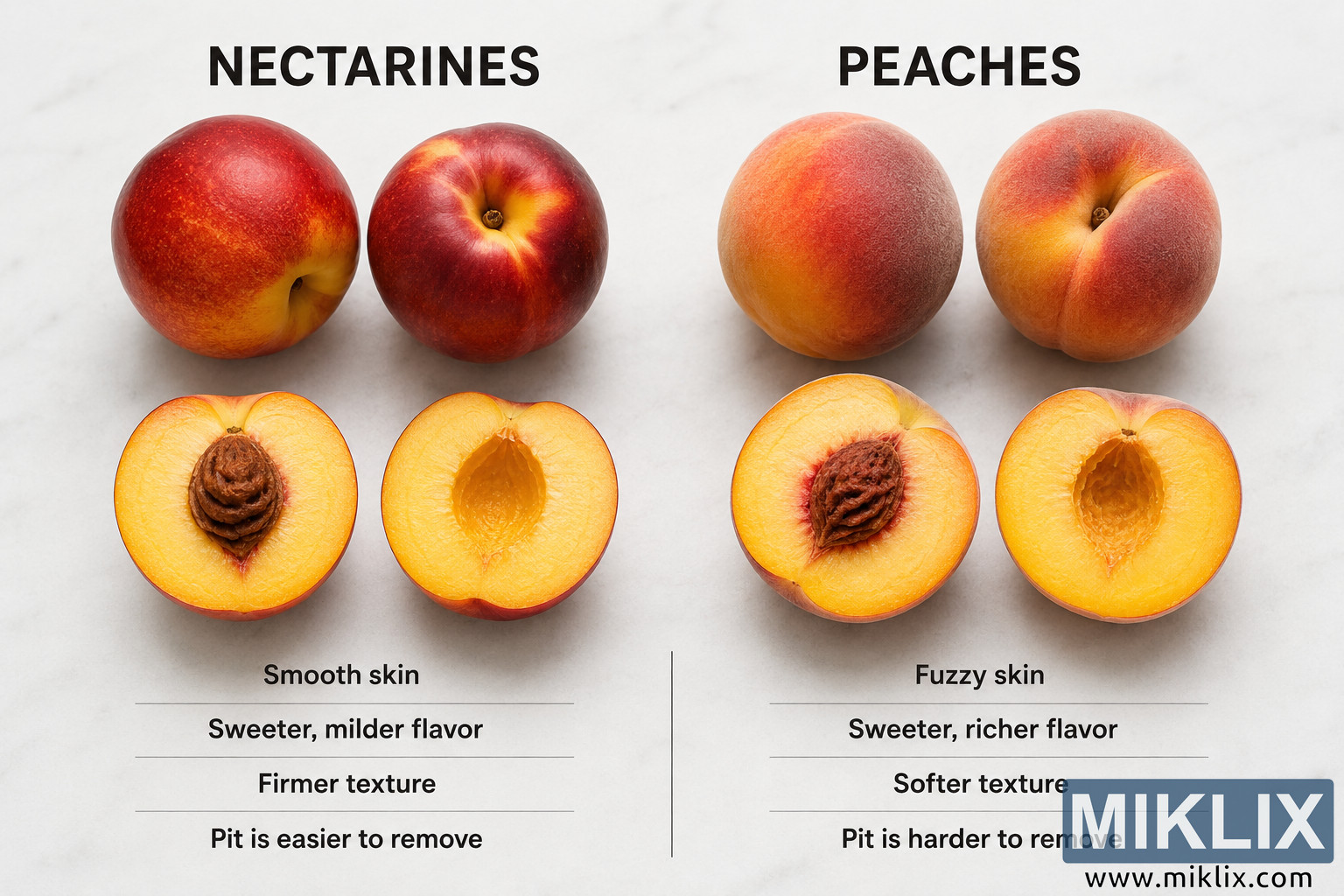
Detailed side-by-side comparison image of nectarines and peaches featuring whole and sliced fruit on a marble background. The infographic-style composition highlights differences in skin texture, flavor, firmness, and pit characteristics in a clean educational layout.
Available versions of this image
The image files available for download below are less compressed and higher resolution - and as a result of that, higher quality - than the images embedded in articles and pages on this website, which are more optimized for file size in order to reduce bandwidth consumption.
Regular size (1,536 x 1,024)
Large size (3,072 x 2,048)
Very large size (4,608 x 3,072)
Extra large size (6,144 x 4,096)
Comically large size (1,048,576 x 699,051)
- Still uploading... ;-)
Image description
This high-resolution landscape-oriented image presents a clean and visually balanced side-by-side comparison between nectarines and peaches in a modern infographic-inspired format. The composition is photographed from a perfectly overhead perspective, creating a symmetrical arrangement that emphasizes clarity, educational value, and visual appeal. The background consists of a subtle white marble surface with faint gray veining that provides a soft, elegant texture without distracting from the fruit itself.
On the left side of the image, the section dedicated to nectarines is prominently labeled in large bold black uppercase typography reading “NECTARINES.” Beneath the heading are two whole nectarines positioned side by side. The nectarines display glossy smooth skin with vibrant gradients of deep red, orange, and golden yellow tones. Their polished appearance reflects light softly, highlighting the naturally waxy surface characteristic of nectarines. The fruit appears fresh and ripe, with realistic dimples and natural imperfections that contribute to the authenticity of the image.
Directly below the whole nectarines are two halved nectarine pieces arranged horizontally. One half contains the textured brown pit, while the other half reveals the empty cavity where the pit has been removed. The interior flesh is a rich golden-yellow color with subtle orange shading near the center. The cut surfaces appear moist and juicy, with visible natural fruit fibers and realistic shading. The pit itself is deeply ridged and detailed, adding tactile realism to the composition.
Underneath the nectarine images is a cleanly organized list of comparison points separated by thin horizontal divider lines. The labels describe the nectarine’s distinguishing characteristics: smooth skin, sweeter and milder flavor, firmer texture, and a pit that is easier to remove. The typography is minimalist, modern, and easy to read, reinforcing the educational infographic aesthetic.
On the right side of the image, a matching section labeled “PEACHES” mirrors the nectarine arrangement. Two whole peaches are positioned side by side beneath the title. Unlike the nectarines, the peaches display a soft fuzzy texture visible across their skin. Their coloration features warm gradients of peach-orange, coral, pink, and muted red tones. The lighting accentuates the velvety surface texture, making the fuzziness visually apparent even from the overhead angle.
Below the whole peaches are two peach halves arranged similarly to the nectarines. One peach half contains the rough brown pit while the other shows the hollow center where the pit was removed. The flesh is golden-yellow with slightly softer and more delicate visual texture compared to the nectarines. Fine details in the fruit fibers and moisture create a realistic fresh-cut appearance. The peach pits are rugged and naturally irregular, complementing the authentic produce styling.
Beneath the peach halves is another neatly aligned text section listing key peach characteristics. The labels describe fuzzy skin, sweeter and richer flavor, softer texture, and a pit that is harder to remove. The layout mirrors the nectarine side exactly, creating a visually satisfying comparison between the two fruits.
A thin vertical dividing line runs down the center of the image, separating the nectarine and peach sections while maintaining the balanced composition. The lighting throughout the image is soft, bright, and evenly diffused, minimizing harsh shadows while enhancing the natural colors and textures of the fruit. The overall aesthetic combines food photography with infographic design, making the image suitable for educational articles, culinary blogs, nutrition guides, recipe websites, or visual learning materials.
The image contains no commercial branding, logos, packaging, or distracting props. The focus remains entirely on the fruit comparison and the educational information presented. The composition is minimalist, modern, and highly polished, designed to clearly communicate the visual and textural differences between nectarines and peaches while remaining aesthetically appealing and easy to interpret.
The image is related to: Health Benefits of Nectarines: A Complete Guide to This Nutrient-Rich Stone Fruit