
Image: Okra Plant Growing in a Sunlit Garden with Green Pods and Yellow Flowers
Published: July 30, 2026 at 6:37:08 PM UTC
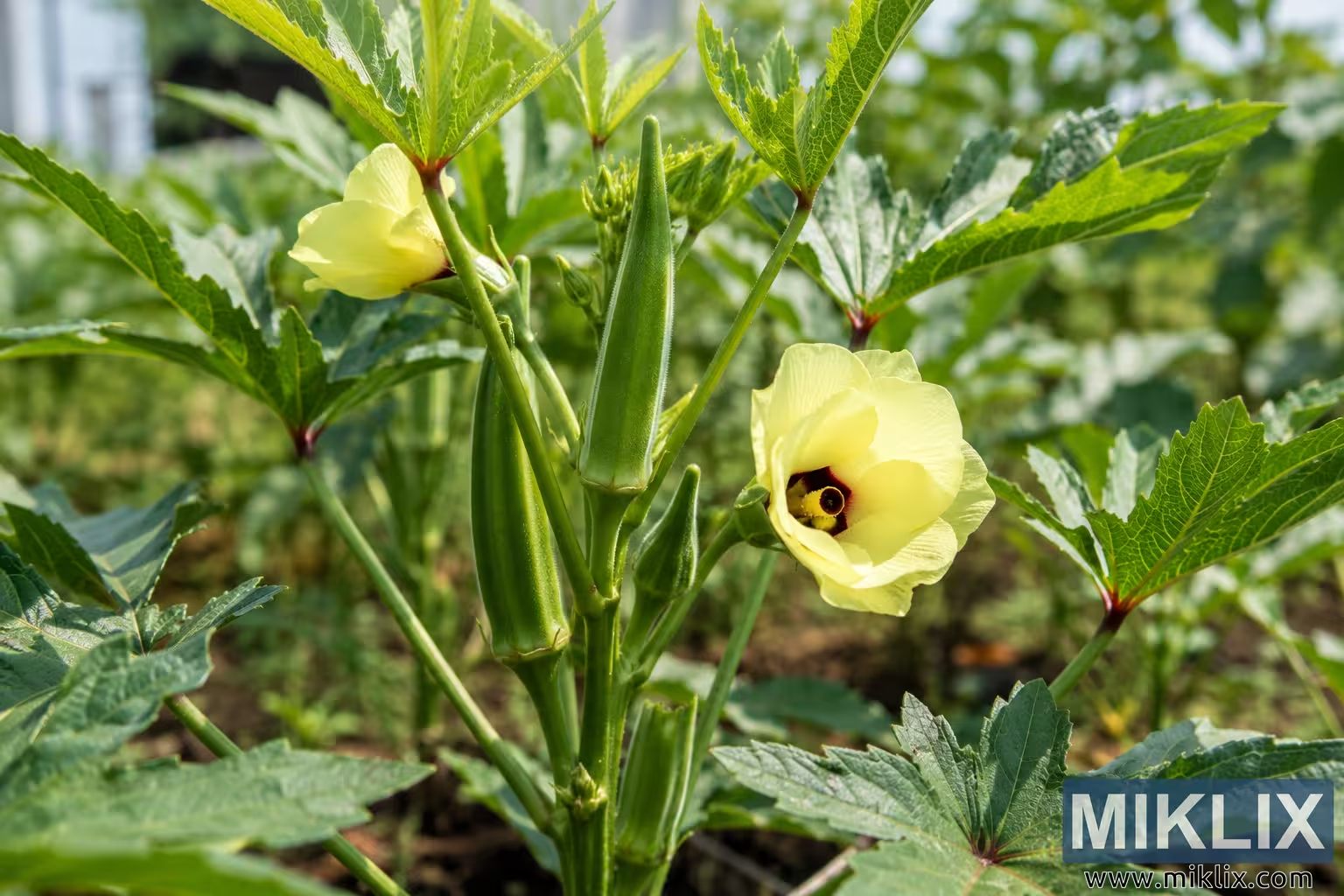
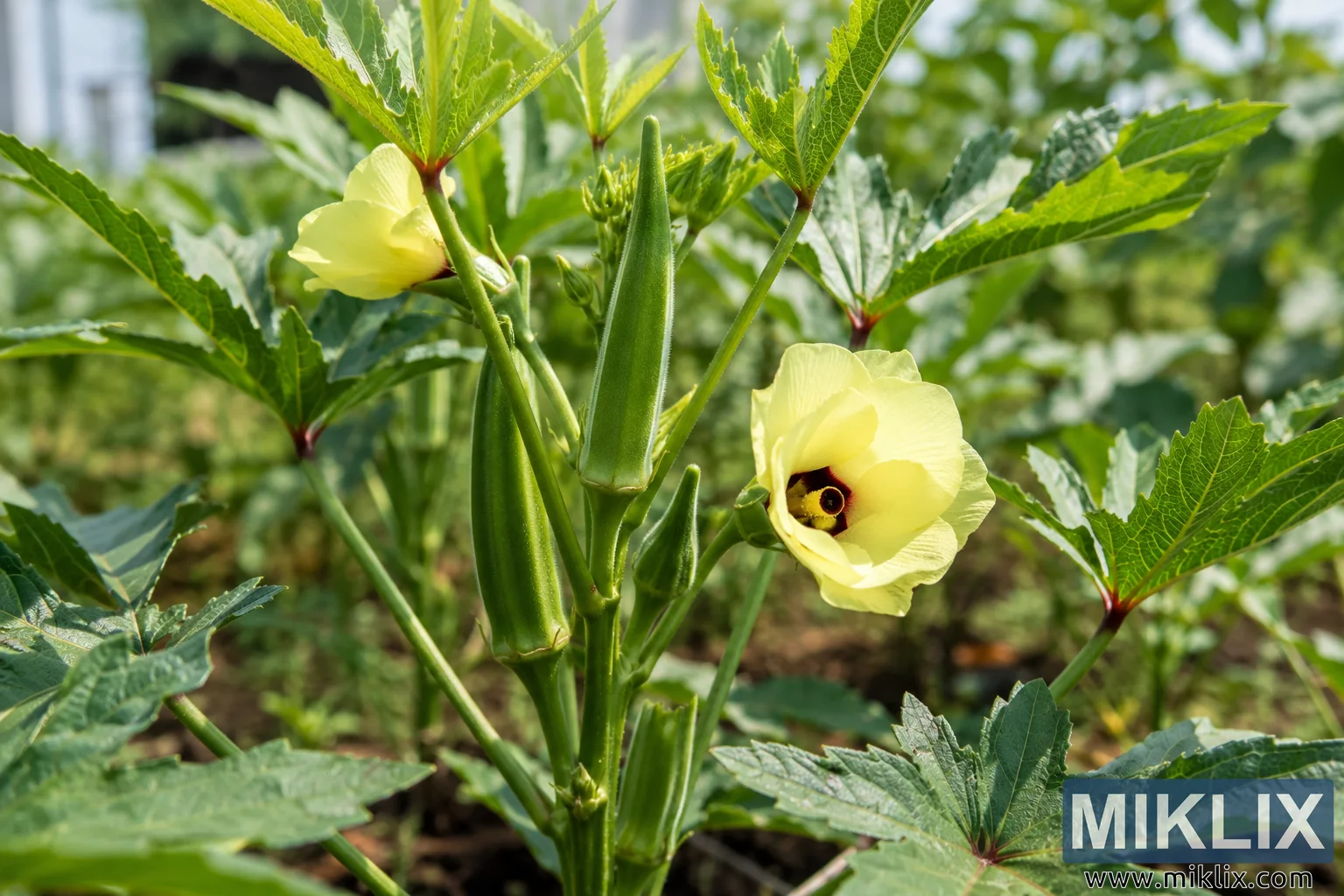
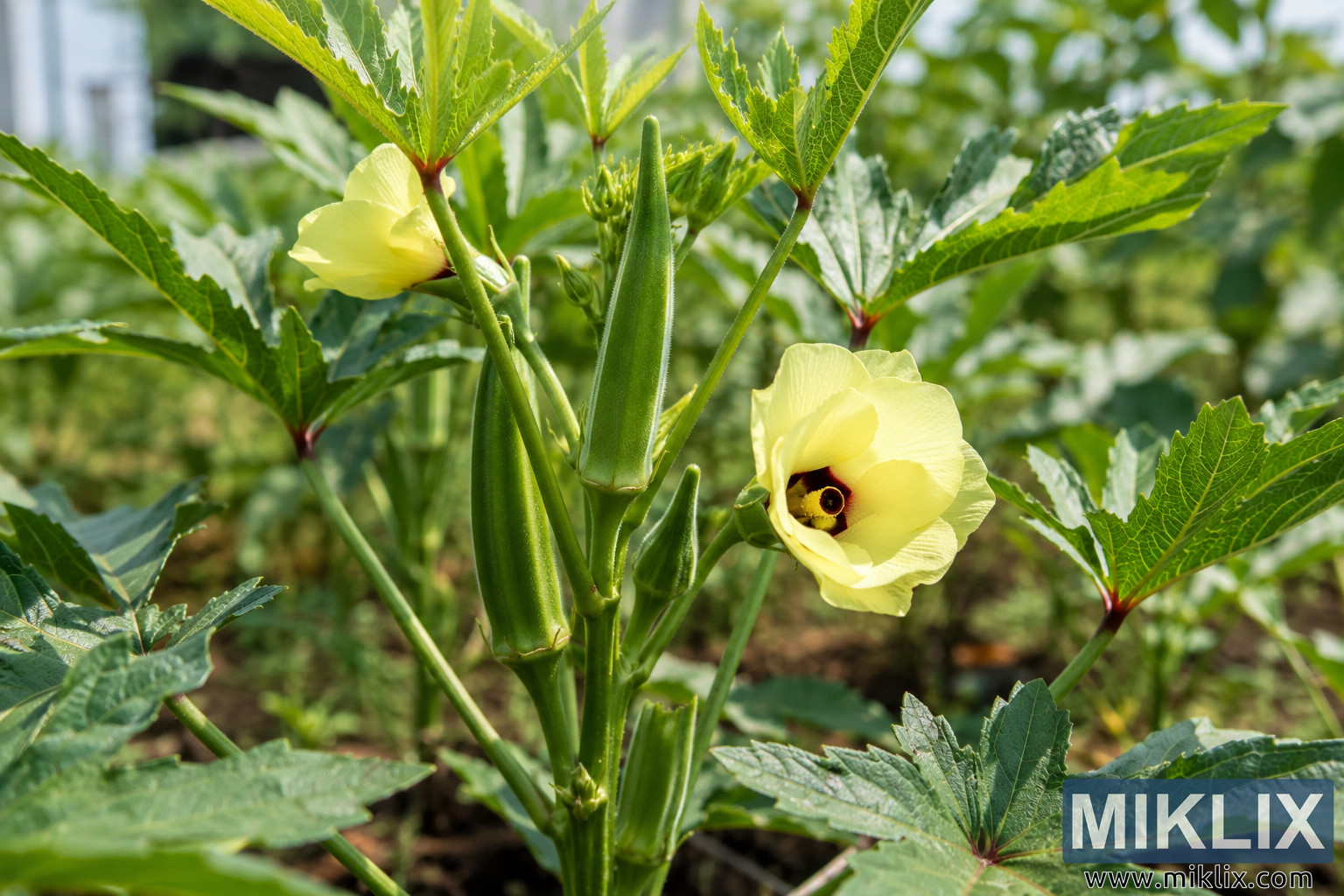
Detailed view of a thriving okra plant in a garden featuring vibrant green pods, lush foliage, and pale yellow blossoms illuminated by natural sunlight. Ideal for content about vegetable gardening, sustainable growing, edible plants, and home gardens.
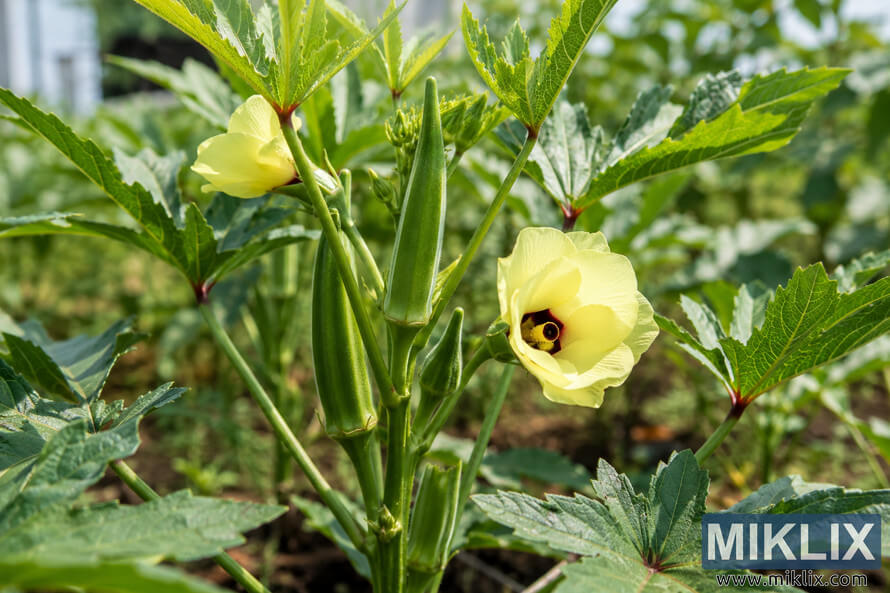
Available versions of this image
The image files available for download below are less compressed and higher resolution - and as a result of that, higher quality - than the images embedded in articles and pages on this website, which are more optimized for file size in order to reduce bandwidth consumption.
Regular size (1,536 x 1,024)
Large size (3,072 x 2,048)
Very large size (4,608 x 3,072)
Extra large size (6,144 x 4,096)
Comically large size (1,048,576 x 699,051)
- Still uploading... ;-)
Image description
This landscape-oriented image presents a highly detailed, close-up view of a healthy okra plant flourishing in a well-maintained garden under bright natural daylight. The composition centers on a tall, vigorous green stem that supports multiple developing okra pods and several large, deeply lobed leaves. The plant appears vibrant and productive, conveying the impression of a thriving vegetable crop during the peak of its growing season. The rich green coloration of the foliage contrasts beautifully with the soft yellow blossoms, creating a visually balanced and natural scene that highlights both the ornamental and edible qualities of the plant.
Several immature okra pods are clearly visible along the central stem. They display the characteristic elongated, tapered shape associated with fresh okra, with gently ridged surfaces and a smooth, slightly velvety texture. The pods vary in size, suggesting different stages of development, from newly emerging fruits to larger pods approaching harvest maturity. Their fresh green color indicates healthy growth and emphasizes the plant's productivity. Fine details in the pod surfaces and subtle natural shading contribute to the realistic appearance of the image.
Two delicate flowers stand out prominently among the foliage. Their petals are pale yellow with a soft, creamy appearance that catches the sunlight. At the center of each blossom is a darker, reddish-maroon throat surrounding the reproductive structures, a characteristic feature of okra flowers that resembles other members of the hibiscus family. The blossoms provide an attractive visual contrast against the surrounding green leaves while also illustrating the stage of flowering that accompanies ongoing fruit production.
The leaves are broad and deeply lobed with clearly defined veins radiating outward from their centers. Their textured surfaces display subtle variations in green tones ranging from lighter highlights where sunlight strikes directly to deeper shades in areas of partial shadow. The leaf edges are crisp and naturally irregular, enhancing the botanical realism of the scene. Smaller developing buds and emerging leaf shoots are also visible near the growing tips, further reinforcing the impression of active, healthy growth.
Natural sunlight illuminates the plant from above and slightly to one side, producing soft highlights along the stems, pods, and leaves while creating gentle shadows that add depth and dimensionality. The lighting is bright but not harsh, suggesting favorable outdoor conditions during the morning or early afternoon. The overall color palette consists primarily of rich greens accented by warm yellow flowers and subtle earthy brown tones visible beneath the foliage.
The background is intentionally rendered with a shallow depth of field, creating a pleasing bokeh effect that softly blurs additional garden plants, stems, and soil. This selective focus directs attention toward the central okra plant while maintaining enough environmental context to establish that the plant is growing outdoors in a cultivated vegetable garden. The blurred background contributes to the image's photographic realism without distracting from the primary subject.
The composition emphasizes the natural vertical growth habit of the okra plant while fitting comfortably within a landscape-oriented frame. The central stem acts as the primary visual anchor, with leaves extending outward in multiple directions to create balance and visual interest. The flowers are positioned to complement the developing pods, naturally guiding the viewer's eye through the image and illustrating the relationship between flowering and fruit development.
No people, tools, labels, containers, signage, logos, trademarks, or branded products appear anywhere within the scene. The image focuses exclusively on the botanical subject and its immediate garden environment. The setting appears clean, healthy, and well cared for, with no visible signs of disease, pest damage, or environmental stress. Every visible element contributes to an authentic representation of an okra plant growing successfully in favorable outdoor conditions.
Overall, the image conveys themes of home gardening, sustainable food production, healthy plant growth, seasonal agriculture, and botanical beauty. It serves equally well as an illustration for educational materials about vegetable cultivation, gardening guides, horticultural references, agricultural publications, seed catalogs, food production articles, or websites discussing edible plants and sustainable gardening practices. The combination of crisp detail, realistic lighting, vivid natural colors, and shallow background blur creates an inviting and informative depiction of a flourishing okra plant in its natural garden setting.
The image is related to: Okra Benefits: How This Nutritious Vegetable Supports Your Health