
Okra Benefits: How This Nutritious Vegetable Supports Your Health
Published: July 30, 2026 at 6:37:08 PM UTC
Okra stands out as a remarkable vegetable that delivers impressive nutrition while supporting overall wellness. This green pod vegetable contains powerful compounds that may help regulate blood sugar levels and promote heart health.
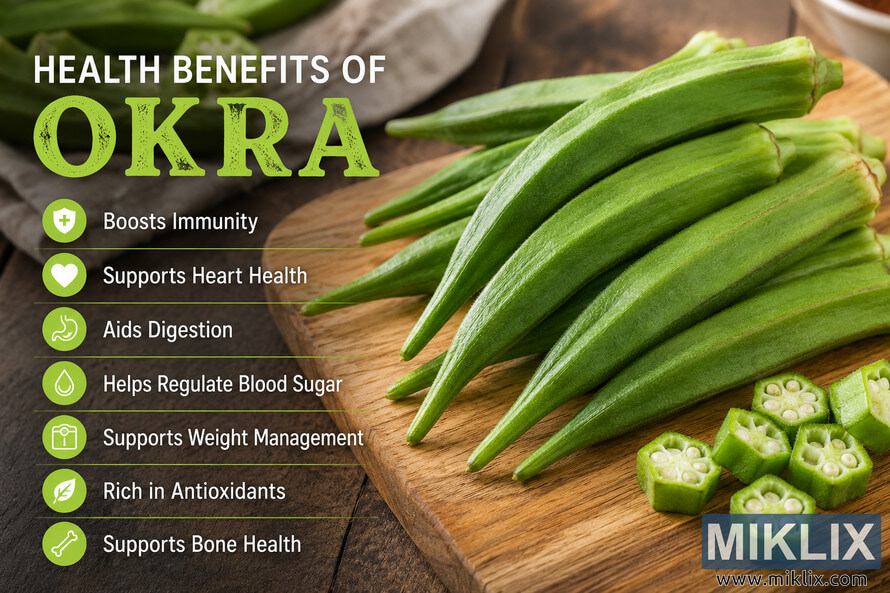
Click or tap the image for more information and higher resolutions.
Many people overlook okra in their diet. Yet this versatile fruit offers substantial health advantages backed by scientific research.
Understanding the health benefits of okra can transform your approach to nutrition. This guide explores how okra supports your body and practical ways to add it to meals.
What Is Okra and Why It Matters for Your Health
Okra is a flowering plant that produces edible green pods. This vegetable belongs to the mallow family alongside hibiscus and cotton. People around the world know okra by different names including lady's finger and bhindi.
The plant thrives in warm climates. Farmers grow okra extensively across Africa, South Asia, and the southern United States. The vegetable features a unique texture and mild flavor that works well in diverse cooking styles.
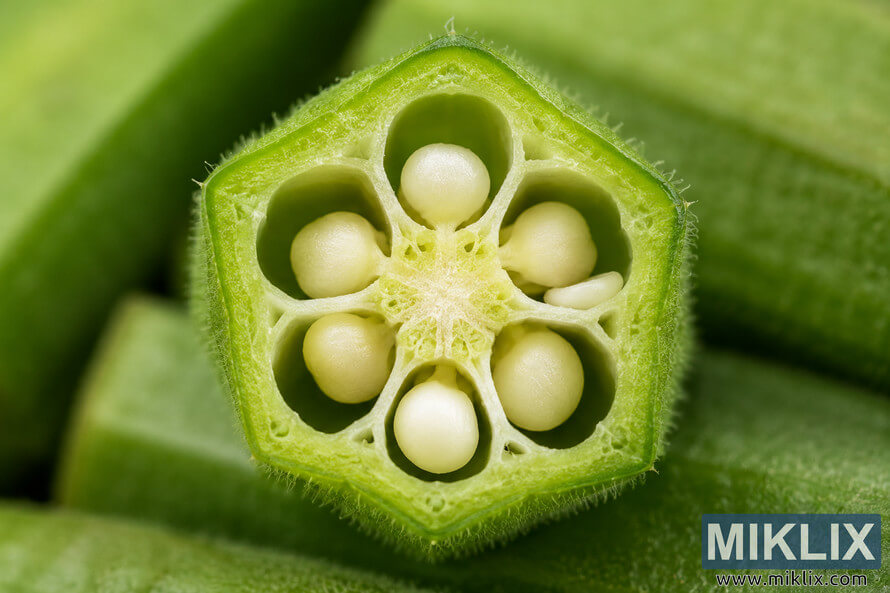
Each okra pod contains numerous small seeds surrounded by a mucilaginous substance. This natural gel gives okra its characteristic texture. The same compound provides many of okra's beneficial properties for health and digestion.

Click or tap the image for more information and higher resolutions.
Historical Significance and Cultural Uses
Okra has fed communities for thousands of years. Ancient Egyptians cultivated this vegetable along the Nile River. From Africa, okra traveled to the Americas during the colonial period.
Different cultures developed unique preparation methods. Southern cooking traditions feature okra in gumbo and fried preparations. Indian cuisine incorporates okra in curries and stir-fries. Middle Eastern recipes showcase okra in stews and tomato-based dishes.
Traditional medicine systems recognized okra's healing properties long before modern science. Practitioners used okra to address digestive concerns and support overall vitality.
Click or tap the image for more information and higher resolutions.
Complete Nutritional Profile of Okra
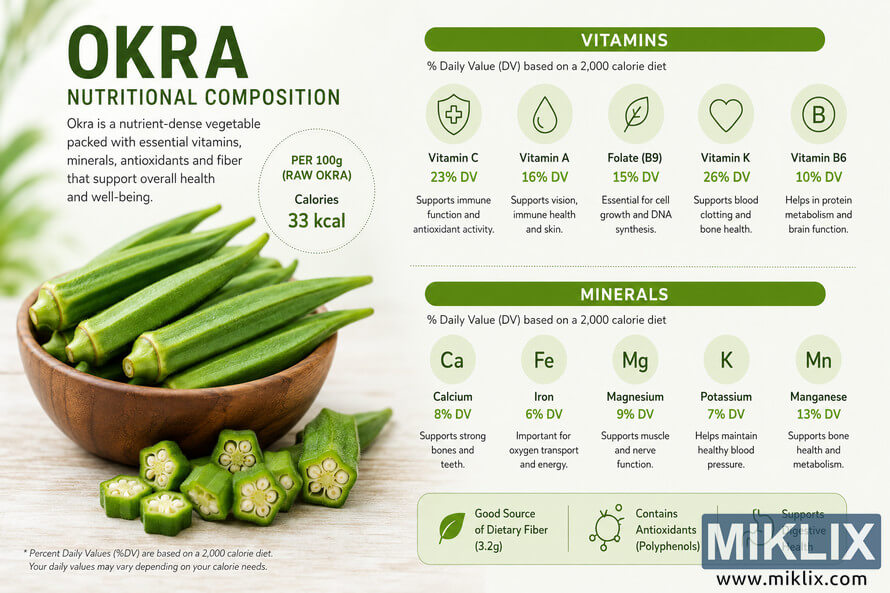
Okra delivers substantial nutrition with minimal calories. A 100-gram serving of raw okra contains only 33 calories. This low calorie count makes okra an excellent choice for weight management while providing essential nutrients.
The vegetable offers an impressive array of vitamins and minerals. Okra contains significant amounts of vitamin C, vitamin K, and folate. These nutrients support various body functions from immune health to blood clotting.
Click or tap the image for more information and higher resolutions.
Macronutrient Breakdown
| Nutrient | Amount per 100g | Daily Value |
| Calories | 33 kcal | 2% |
| Protein | 2 grams | 4% |
| Carbohydrates | 7 grams | 2% |
| Fiber | 3.2 grams | 13% |
| Fat | 0.2 grams | 0% |
| Sugar | 1.2 grams | - |
Vitamin and Mineral Content
Okra serves as a good source of multiple essential vitamins. The vitamin C content supports immune function and skin health. One serving provides approximately 23% of the daily value for this crucial antioxidant.
Vitamin K appears in significant quantities in okra. This nutrient plays a vital role in blood clotting and bone health. The vegetable also contains folate, which supports cell division and DNA synthesis.
B-Complex Vitamins
Okra provides several B vitamins that support energy metabolism:
- Folate for cell growth and pregnancy health
- Vitamin B6 for brain development
- Thiamine for nerve function
- Riboflavin for energy production
Essential Minerals
Key minerals in okra contribute to various body functions:
- Magnesium for muscle and nerve function
- Calcium for bone strength
- Potassium for heart health
- Iron for oxygen transport
Antioxidant Compounds
Okra contains powerful plant compounds that protect cells:
- Polyphenols that fight oxidative stress
- Flavonoids with anti-inflammatory properties
- Catechins that support heart health
- Quercetin for immune support
Fiber Components
The fiber in okra includes both soluble and insoluble types:
- Soluble fiber that slows digestion
- Insoluble fiber for digestive health
- Mucilage that soothes the digestive tract
- Pectin that may lower cholesterol
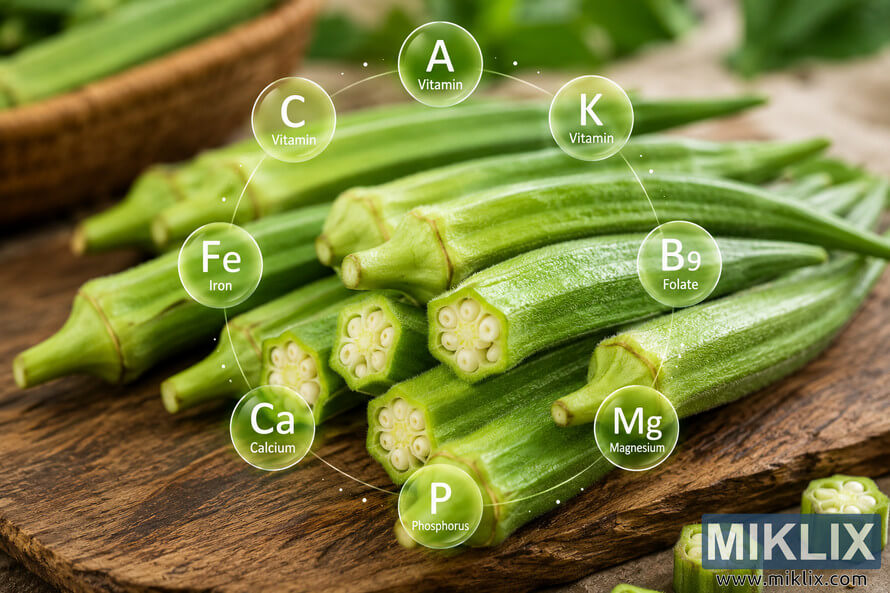
Click or tap the image for more information and higher resolutions.
How Okra Helps Regulate Blood Sugar Levels
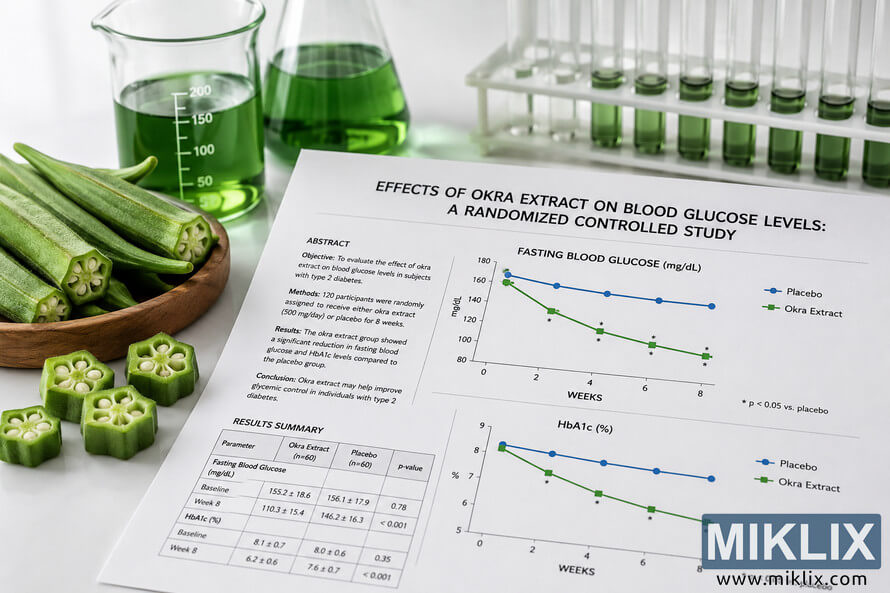
Research demonstrates that okra may help manage blood sugar levels effectively. The fiber content in okra slows the absorption of sugar in the digestive tract. This gradual absorption prevents rapid spikes in blood glucose after meals.
Multiple studies support okra's potential for blood sugar regulation. Scientists have observed that compounds in okra improve insulin sensitivity. Better insulin function helps cells absorb glucose more efficiently from the bloodstream.

Click or tap the image for more information and higher resolutions.
Mechanisms of Blood Sugar Control
Okra contains specific compounds that influence glucose metabolism. The mucilage in okra forms a gel-like substance during digestion. This gel slows down carbohydrate breakdown and sugar absorption in the intestines.
Polyphenols in okra also contribute to blood sugar management. These plant compounds help reduce glucose production in the liver. They may also enhance the activity of insulin receptors on cell surfaces.
Important Note: While okra may help support healthy blood sugar levels, it should not replace prescribed diabetes medications. Always consult healthcare providers before making dietary changes to manage type diabetes or other metabolic conditions.
Research Evidence for Diabetes Management
Studies involving people with type diabetes show promising results. Participants who consumed okra experienced lower fasting blood sugar readings. The vegetable appears to complement conventional diabetes management strategies effectively.
Animal studies provide additional insights into okra's mechanisms. Research indicates that okra extract reduces blood sugar levels in diabetic rats. The vegetable also shows potential for protecting pancreatic cells that produce insulin.
Click or tap the image for more information and higher resolutions.
Practical Application for Blood Sugar Management
- Add okra to meals that contain carbohydrates to slow sugar absorption
- Consume okra regularly rather than occasionally for consistent benefits
- Combine okra with other low-glycemic vegetables for optimal results
- Monitor blood sugar responses when introducing okra to your diet
- Prepare okra using cooking methods that preserve beneficial compounds
The soluble fiber in okra creates feelings of fullness. This satiety effect helps control appetite and prevents overeating. Better portion control supports stable blood sugar throughout the day.
Okra water has gained attention as a folk remedy for blood sugar control. Some people soak okra pods in water overnight and drink the liquid in the morning. While anecdotal evidence exists, more research is needed to confirm this specific preparation method's effectiveness.
Okra's Powerful Benefits for Heart Health
Heart disease remains a leading health concern worldwide. Okra offers multiple protective benefits for cardiovascular health. The nutrients in this vegetable work together to support heart function and reduce disease risk.
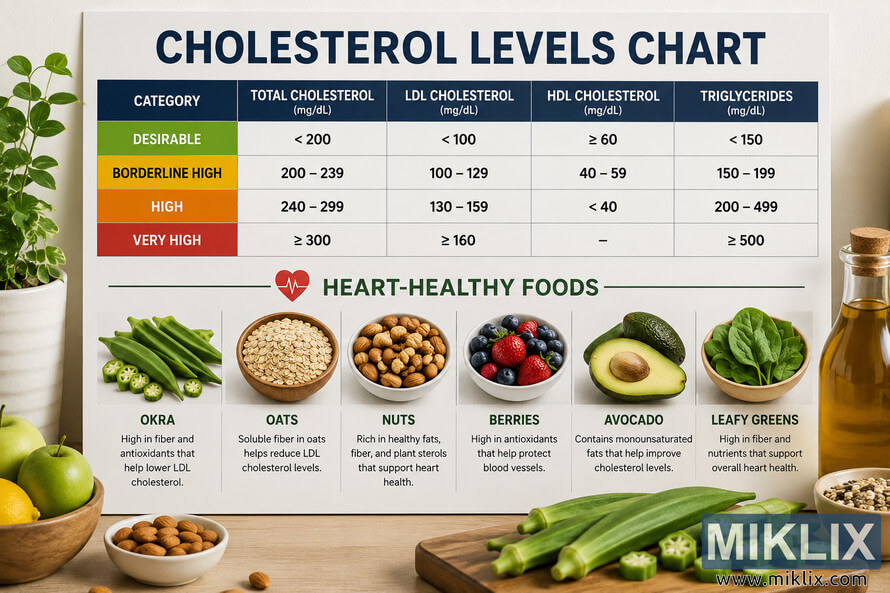
The soluble fiber in okra helps lower cholesterol levels naturally. This fiber binds to cholesterol in the digestive system. The body then eliminates this cholesterol before it enters the bloodstream.

Click or tap the image for more information and higher resolutions.
Cholesterol Management Through Okra
Studies demonstrate okra's ability to reduce bad cholesterol levels. Participants who consumed okra regularly showed decreased LDL cholesterol. The vegetable may also help increase beneficial HDL cholesterol in some individuals.
Okra contains compounds called sterols that resemble cholesterol structurally. These plant sterols compete with dietary cholesterol for absorption. This competition results in less cholesterol entering your bloodstream from food.
Click or tap the image for more information and higher resolutions.
How Okra Protects Your Heart
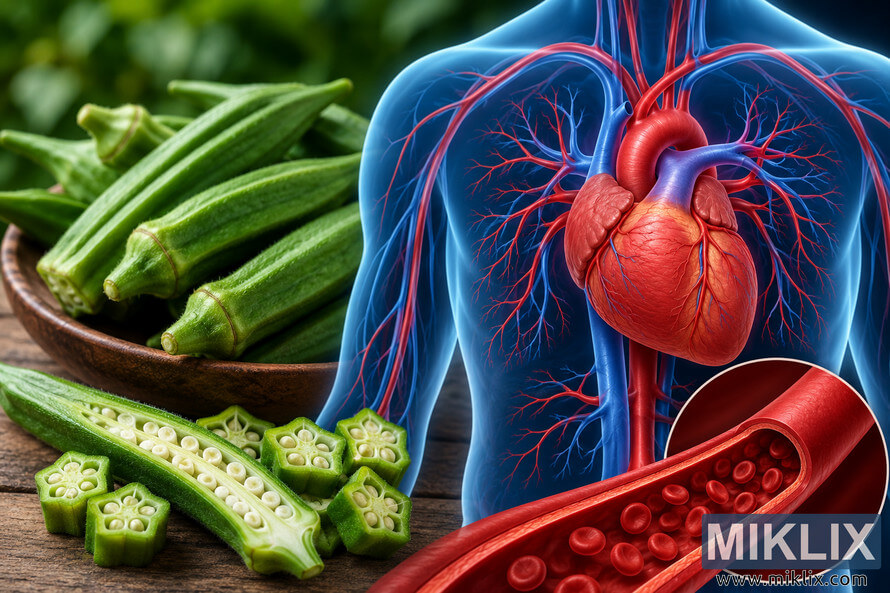
The antioxidants in okra protect blood vessels from damage. Polyphenols reduce inflammation in arterial walls. This anti-inflammatory effect helps prevent plaque formation and atherosclerosis.
Okra may help lower blood pressure through several mechanisms. The magnesium content supports blood vessel relaxation. Potassium helps balance sodium levels and reduces strain on the cardiovascular system.
Research indicates that okra consumption correlates with reduced heart disease risk. People who regularly eat okra and similar vegetables show better cardiovascular health markers. The cumulative effect of nutrients creates comprehensive heart protection.
Click or tap the image for more information and higher resolutions.
Blood Pressure Regulation
Hypertension affects millions of people globally. Okra provides nutrients that support healthy blood pressure levels. The vegetable's low sodium content makes it suitable for heart-healthy diets.
The fiber in okra may indirectly benefit blood pressure through weight management. Maintaining a healthy weight reduces cardiovascular strain. Okra's low calorie density supports weight control efforts effectively.

Click or tap the image for more information and higher resolutions.
Supporting Digestive Health with Okra
Digestive health forms the foundation of overall wellness. Okra provides exceptional support for the entire digestive tract. The unique properties of this vegetable benefit digestion from start to finish.
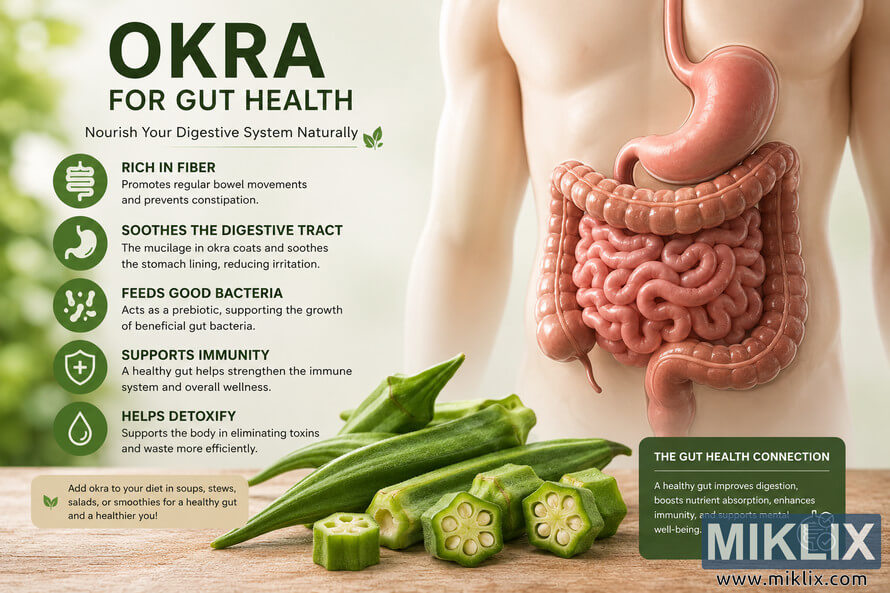
The mucilage in okra acts as a natural lubricant for the digestive system. This slippery substance coats the stomach and intestinal lining. The protective coating helps soothe irritation and supports comfortable digestion.
Fiber Content and Digestive Function
Okra ranks as a good source of dietary fiber. One cup of cooked okra provides approximately 3 grams of fiber. This amount represents a significant portion of the daily recommended intake.
The fiber in okra includes both soluble and insoluble types. Soluble fiber feeds beneficial gut bacteria and supports their growth. Insoluble fiber adds bulk to stool and promotes regular bowel movements.
Benefits of Okra Fiber
- Promotes regular bowel movements
- Prevents constipation naturally
- Feeds healthy gut bacteria
- Supports nutrient absorption
- Reduces bloating and gas
- Maintains colon health
Digestive Comfort
- Soothes stomach lining
- Reduces acid reflux symptoms
- Eases inflammatory conditions
- Supports healing of gut tissue
- Balances digestive enzymes
- Promotes comfortable digestion
Click or tap the image for more information and higher resolutions.
Supporting Gut Microbiome Health
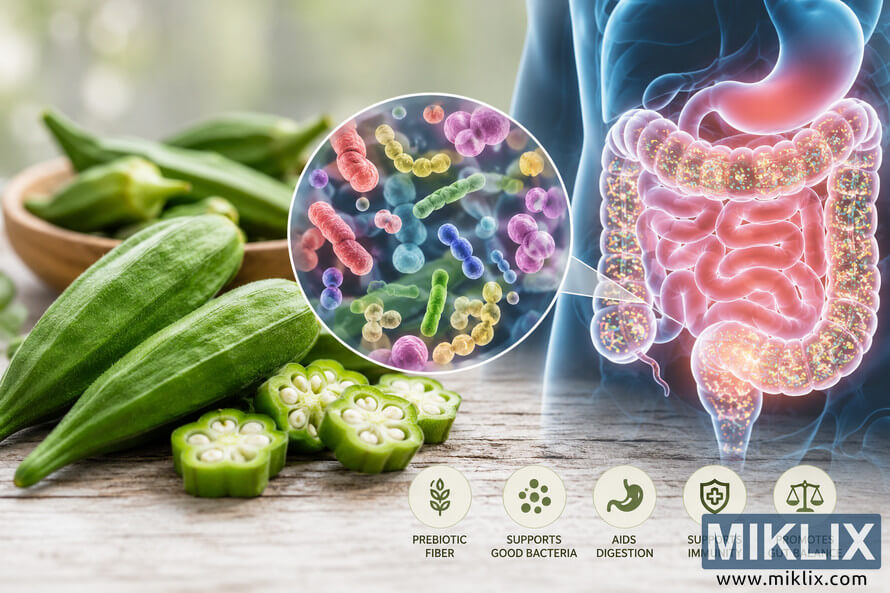
The gut microbiome plays a crucial role in health and immunity. Okra provides prebiotic fiber that nourishes beneficial bacteria. A healthy bacterial balance supports digestion and protects against harmful microorganisms.
Research shows that dietary fiber influences gut bacteria composition. People who consume adequate fiber from vegetables like okra have more diverse microbiomes. This diversity correlates with better digestive health and overall wellness.
Click or tap the image for more information and higher resolutions.
Managing Common Digestive Issues
Okra may help address several digestive complaints. The mucilage provides relief for people with acid reflux or heartburn. This natural coating protects the esophagus from stomach acid.
Individuals dealing with irritable bowel syndrome may find okra helpful. The gentle fiber supports regularity without causing harsh laxative effects. The anti-inflammatory compounds in okra may also reduce intestinal inflammation.
Additional Health Benefits of Okra
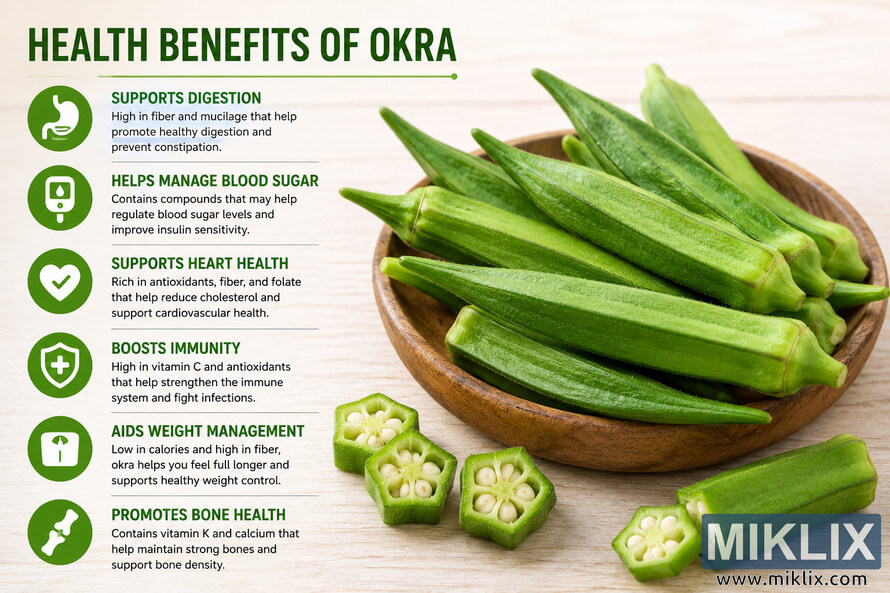
Beyond blood sugar and heart health, okra provides numerous other wellness benefits. The diverse nutrient profile supports multiple body systems. Research continues to reveal new advantages of regular okra consumption.
Click or tap the image for more information and higher resolutions.
Cancer Prevention Properties
Okra contains compounds that may help reduce cancer risk. The antioxidants in this vegetable protect cells from DNA damage. Studies show that people who eat more vegetables including okra have lower cancer rates.
Polyphenols in okra demonstrate anti-cancer properties in laboratory research. These compounds can slow the growth of certain cancer cells. The lectin in okra shows particular promise against breast cancer cells in preliminary studies.
The fiber content also contributes to cancer prevention. Adequate fiber intake reduces colorectal cancer risk significantly. Okra provides an excellent source of this protective nutrient.

Click or tap the image for more information and higher resolutions.
Supporting Bone Health and Strength
Okra contains vitamin K, which plays an essential role in bone health. This vitamin helps the body use calcium effectively. Proper calcium utilization supports bone density and reduces fracture risk.
The magnesium in okra also benefits bone structure. This mineral works alongside calcium to maintain skeletal strength. Adequate magnesium intake throughout life supports bone health as you age.
Immune System Support
The vitamin C content in okra strengthens immune function. This powerful antioxidant supports white blood cell production and activity. Regular vitamin C intake helps your body fight infections more effectively.
Okra also contains other immune-supporting nutrients. Folate plays a role in immune cell production. The antioxidants throughout okra reduce inflammation that can impair immune responses.
Pregnancy Nutrition
Okra provides folate that supports fetal development. This B vitamin prevents neural tube defects during early pregnancy. Pregnant women benefit from including okra in their diet regularly.

Click or tap the image for more information and higher resolutions.
Skin Health
The vitamin C in okra supports collagen production for healthy skin. Antioxidants protect skin cells from aging damage. Regular consumption may contribute to a clearer, more youthful complexion.

Click or tap the image for more information and higher resolutions.
Energy Production
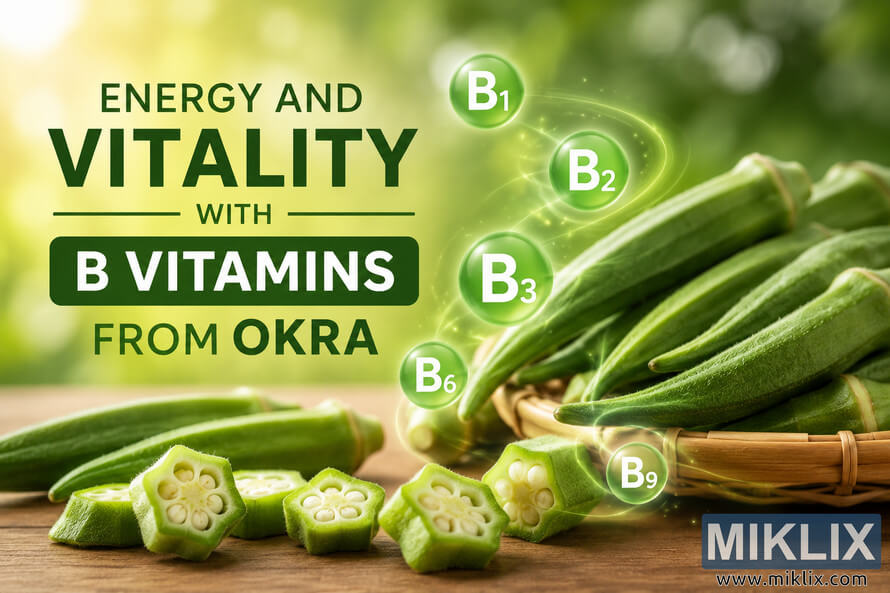
B vitamins in okra help convert food into usable energy. These nutrients support cellular metabolism throughout the body. Adequate B vitamin intake combats fatigue and supports vitality.
Click or tap the image for more information and higher resolutions.
Eye Health Protection
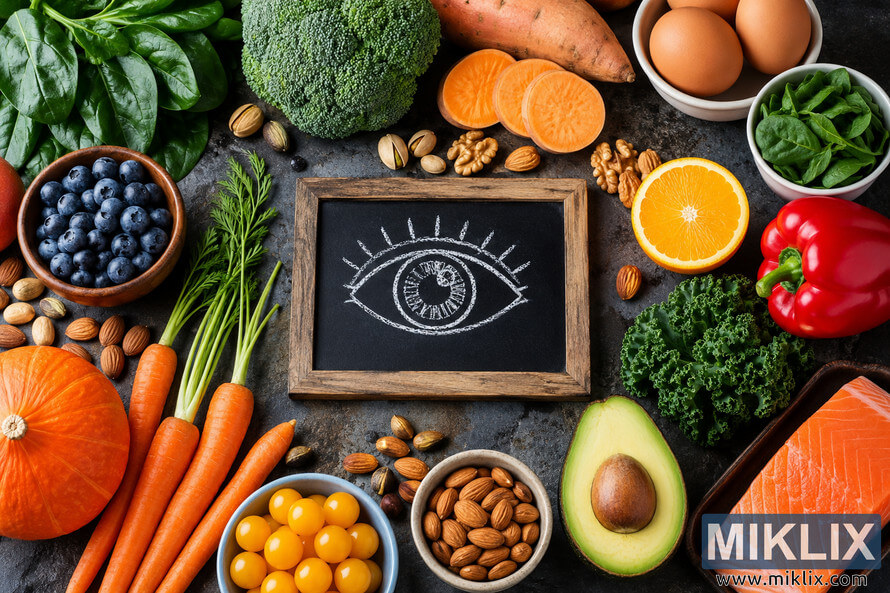
Okra contains antioxidants that benefit vision. Vitamin A and beta-carotene support retinal health. These nutrients help protect against age-related macular degeneration and cataracts.
The lutein and zeaxanthin in okra filter harmful blue light. These compounds accumulate in the eye and provide natural protection. Regular consumption of vegetables like okra supports long-term eye health.
Click or tap the image for more information and higher resolutions.
Weight Management Benefits
Okra supports healthy weight management through multiple mechanisms. The low calorie content allows generous portions without excessive energy intake. You can feel satisfied while maintaining a calorie deficit for weight loss.
The fiber in okra promotes satiety and reduces hunger between meals. Studies show that people who eat more fiber tend to weigh less. The nutrient density of okra provides essential vitamins without empty calories.
- Eat okra as a low-calorie side dish to replace higher-calorie options
- Include okra in meals to increase fiber and promote fullness
- Use okra in soups and stews to add volume without many calories
- Prepare okra with minimal added fat for the lowest calorie preparation
- Combine okra with lean protein and whole grains for balanced nutrition
How to Prepare and Cook Okra
Proper preparation maximizes okra's flavor and nutrition. Different cooking methods suit various preferences and dietary needs. Understanding preparation techniques helps you enjoy okra regularly in your diet.
Selecting and Storing Fresh Okra
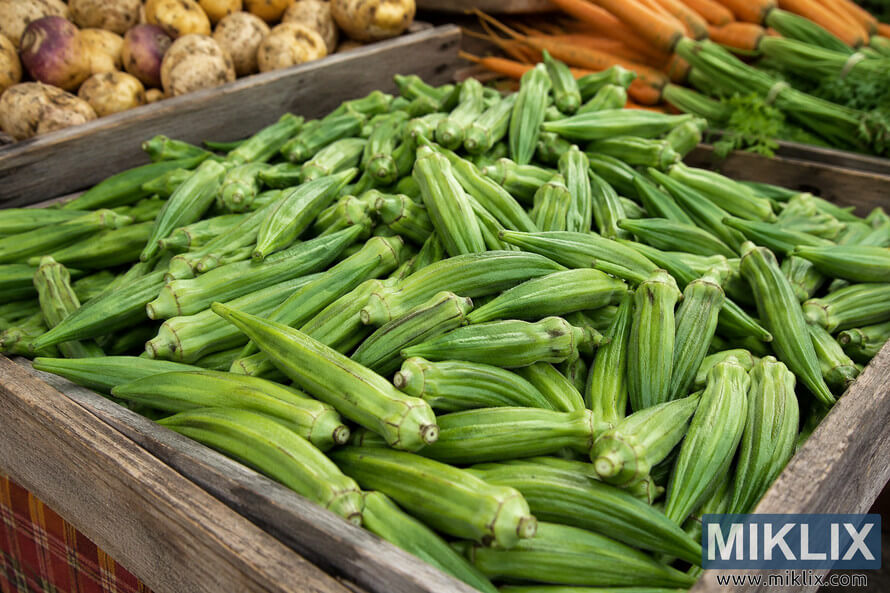
Choose okra pods that feel firm and snap easily. The best okra measures 2 to 4 inches in length. Smaller pods tend to be more tender and less fibrous than larger ones.
Look for bright green color without brown spots or blemishes. The pod should feel slightly fuzzy to the touch. Avoid okra that feels slimy or shows signs of mold.

Click or tap the image for more information and higher resolutions.
Storage Tips for Maximum Freshness
Store fresh okra in the refrigerator in a paper bag. This method maintains freshness for up to three days. Avoid washing okra until you're ready to use it, as excess moisture promotes spoilage.
You can freeze okra for long-term storage. Blanch the pods briefly in boiling water before freezing. Frozen okra maintains quality for several months and works well in cooked dishes.
Dried okra offers another preservation option. Slice okra pods thinly and dry them in a dehydrator or low oven. Dried okra can be stored for extended periods and rehydrated for cooking.
Click or tap the image for more information and higher resolutions.
Cooking Methods That Preserve Nutrients
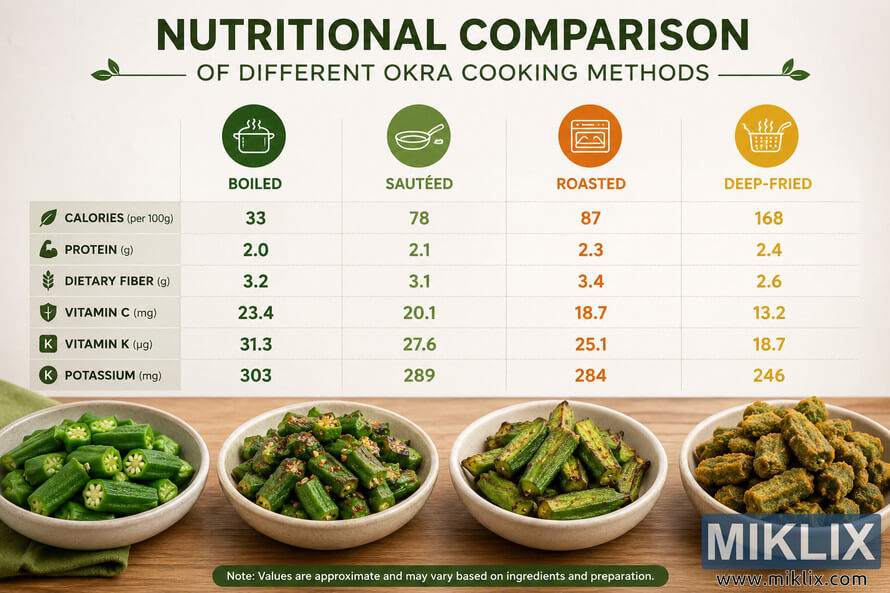
Different cooking techniques affect okra's texture and nutrient content. Gentle cooking methods preserve more vitamins and minerals. Understanding various approaches helps you prepare okra to suit your preferences.
Click or tap the image for more information and higher resolutions.
Roasting Okra for Crispy Texture
Roasting transforms okra into a crispy, delicious vegetable. Cut pods in half lengthwise and toss with a small amount of oil. Season with salt, pepper, and your favorite spices.
Spread okra on a baking sheet in a single layer. Roast at 425°F for 15 to 20 minutes. The high heat evaporates moisture and creates a pleasing texture while minimizing sliminess.
Grilling for Smoky Flavor
Grilled okra develops complex flavors from caramelization. Thread whole pods onto skewers for easier handling. Brush lightly with oil and season before grilling.
Place okra over medium-high heat for 3 to 4 minutes per side. The pods should develop grill marks and become tender. Grilled okra pairs excellently with summer meals and barbecue dishes.
Sautéing and Stir-Frying
Quick cooking over high heat reduces okra's mucilaginous texture. Heat oil in a pan until very hot. Add sliced okra and cook, stirring frequently, for 5 to 7 minutes.
The okra should brown slightly and become tender. Avoid overcrowding the pan, which causes steaming instead of browning. Work in batches if necessary to maintain high heat.

Click or tap the image for more information and higher resolutions.
Adding Okra to Soups and Stews
Okra naturally thickens liquid-based dishes. This property makes it perfect for gumbo, stews, and curries. The mucilage acts as a natural thickening agent without added starches.
Add okra during the last 15 to 20 minutes of cooking time. This timing prevents the vegetable from becoming too soft. Whole or sliced pods both work well in soup preparations.
Reducing Sliminess in Okra Preparation
Many people avoid okra due to its slimy texture. Several techniques effectively minimize this characteristic. Understanding these methods helps you enjoy okra more comfortably.
- Soak sliced okra in vinegar or lemon juice for 30 minutes before cooking
- Cook okra at high temperatures to evaporate mucilage quickly
- Avoid cutting okra into small pieces, which releases more slime
- Add acidic ingredients like tomatoes during cooking to reduce sliminess
- Pat okra dry thoroughly before cooking to remove surface moisture
- Freeze okra before cooking, which breaks down some mucilaginous compounds

Click or tap the image for more information and higher resolutions.
Delicious Ways to Include Okra in Your Diet
Okra adapts to numerous cooking styles and flavor profiles. This versatility allows you to incorporate okra into many different meals. Experimenting with various preparations helps you discover your preferred okra dishes.

Click or tap the image for more information and higher resolutions.
Traditional Southern-Style Preparations
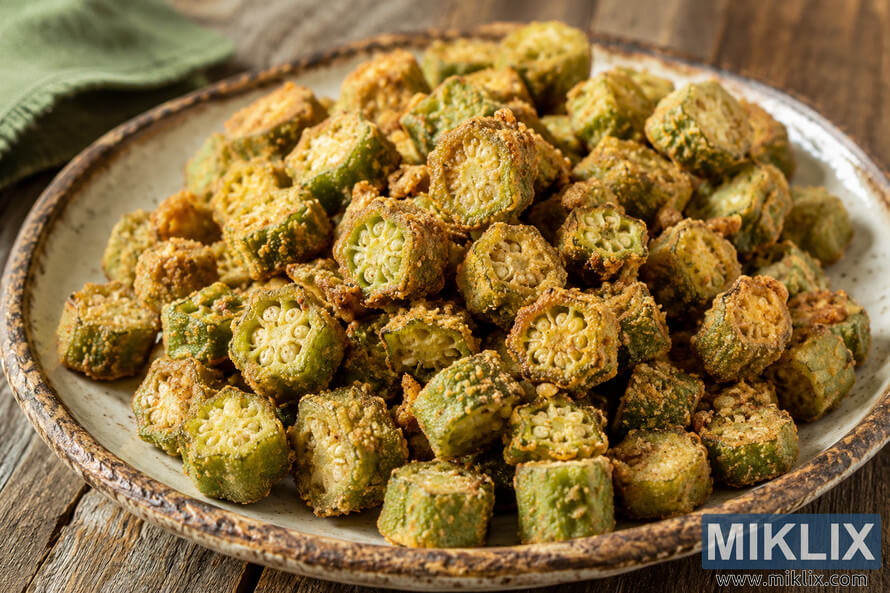
Southern cuisine features okra prominently in many classic dishes. Fried okra remains one of the most popular preparations. The coating creates a crispy exterior while the inside stays tender.
To make fried okra, slice pods into rounds. Dredge in cornmeal or breadcrumb mixture. Fry in oil until golden brown and crispy. While delicious, this preparation adds fat and calories to the vegetable.
Gumbo showcases okra as both a flavoring and thickening agent. This Louisiana stew combines okra with proteins, vegetables, and aromatic spices. The okra breaks down during long cooking to create the signature thick consistency.
Click or tap the image for more information and higher resolutions.
Indian and Asian Preparations
Indian cooking transforms okra into flavorful curries and stir-fries. Bhindi masala features okra cooked with onions, tomatoes, and aromatic spices. The dry preparation minimizes sliminess while maximizing flavor.
Stir-fried okra appears in various Asian cuisines. The high-heat cooking method keeps the vegetable crisp. Garlic, ginger, and soy sauce complement okra's mild flavor profile perfectly.

Click or tap the image for more information and higher resolutions.
Mediterranean and Middle Eastern Dishes
Mediterranean cuisines often stew okra with tomatoes and olive oil. This preparation creates a tender, flavorful side dish. The acidity from tomatoes balances okra's texture beautifully.
Greek cuisine features okra in bamies, a tomato-based stew. The dish includes onions, garlic, and sometimes meat. Lemon juice adds brightness and helps tenderize the okra pods.

Click or tap the image for more information and higher resolutions.
Modern and Creative Preparations
Contemporary recipes showcase okra in innovative ways. Pickled okra offers a tangy, crunchy snack or garnish. The pickling process preserves okra while adding complex flavors.
Okra can be spiralized into noodles for low-carb pasta alternatives. The vegetable works well in grain bowls and Buddha bowls. Roasted okra makes an excellent addition to salads for added texture and nutrition.

Click or tap the image for more information and higher resolutions.
Tangy Pickled Okra
Crispy pickled okra with garlic and dill. Makes a delicious snack or cocktail garnish.

Click or tap the image for more information and higher resolutions.
Incorporating Okra into Daily Meals
Adding okra to your regular meal rotation becomes easy with simple strategies. Start by substituting okra for other vegetables in familiar recipes. The vegetable works well in stir-fries, casseroles, and rice dishes.
Keep frozen okra on hand for convenient addition to meals. Frozen okra requires no preparation and cooks quickly. Add it directly to soups, stews, or sautés without thawing.
Breakfast Ideas
- Add diced okra to vegetable omelets
- Include okra in breakfast hash with potatoes
- Blend raw okra into green smoothies
- Top avocado toast with sautéed okra
Lunch and Dinner Options
- Toss roasted okra into grain bowls
- Add to pasta dishes for extra vegetables
- Include in tacos and wraps
- Mix into fried rice or pilaf
Important Considerations and Potential Side Effects
While okra offers numerous health benefits, some considerations apply. Understanding potential interactions and side effects ensures safe consumption. Most people can enjoy okra without any adverse reactions.
Medication Interactions to Consider
Okra may interact with certain medications. The vegetable contains vitamin K, which can interfere with blood-thinning medications. People taking warfarin or similar drugs should maintain consistent okra intake.
The fiber in okra can affect medication absorption. Take medications at least one hour before or two hours after consuming high-fiber foods. This timing ensures proper medication effectiveness.
Medical Advisory: Always consult your healthcare provider before making significant dietary changes, especially if you take prescription medications or have existing health conditions. This information does not replace professional medical advice.

Click or tap the image for more information and higher resolutions.
Allergic Reactions and Sensitivities
Okra allergies occur rarely but can develop in some individuals. Symptoms may include itching, swelling, or digestive upset. Stop consuming okra if you experience any allergic reactions.
The fuzz on okra pods can irritate sensitive skin. Wear gloves when handling fresh okra if you have skin sensitivities. Washing okra thoroughly removes most surface irritants.
Oxalate Content Considerations
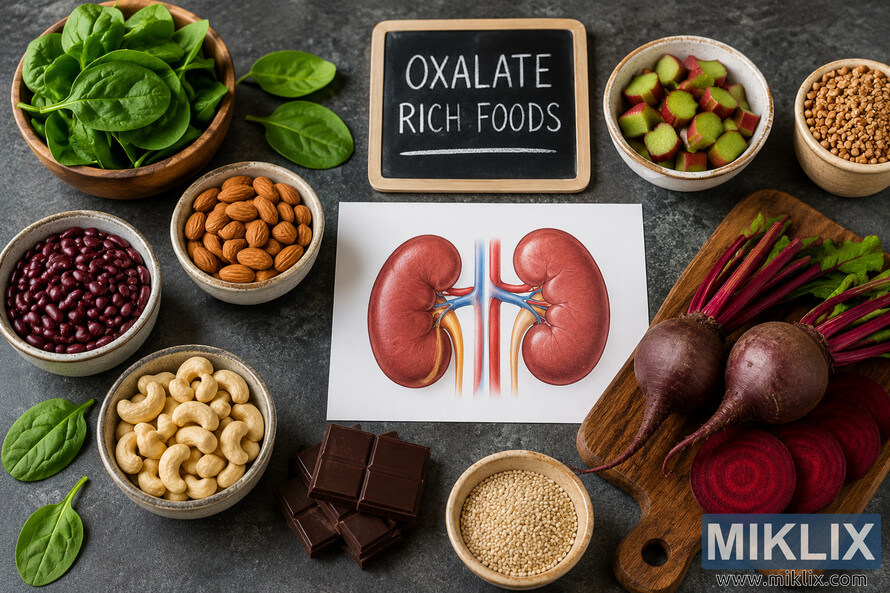
Okra contains oxalates, compounds that can contribute to kidney stone formation. People prone to calcium oxalate kidney stones may need to limit okra consumption. The oxalate content remains moderate compared to some other vegetables.
Cooking reduces oxalate content somewhat. Boiling okra and discarding the water removes more oxalates than other cooking methods. People with kidney concerns should discuss okra consumption with healthcare providers.
Click or tap the image for more information and higher resolutions.
Digestive Adjustments
Increasing fiber intake too quickly can cause digestive discomfort. Start with small amounts of okra and gradually increase consumption. This approach allows your digestive system to adjust to higher fiber intake.
Some people experience gas or bloating when eating okra. These symptoms typically resolve as your body adapts to increased vegetable consumption. Drinking adequate water helps fiber work effectively in your digestive system.
Pregnancy and Breastfeeding Safety
Okra is generally safe during pregnancy and breastfeeding. The folate content particularly benefits pregnant women and fetal development. However, pregnant women should wash okra thoroughly to remove any potential contamination.
The fiber in okra can help address pregnancy-related constipation. This natural approach avoids the need for laxatives during pregnancy. Moderate okra consumption supports maternal nutrition without concerns.
Complete Guide to Buying and Sourcing Okra
Finding quality okra ensures the best flavor and nutrition. Different sources offer various okra options. Understanding where and how to buy okra helps you make informed choices.
Seasonal Availability and Peak Harvest
Okra thrives in warm weather and reaches peak availability in summer. Fresh okra appears in markets from May through October in most regions. The vegetable tastes best during peak season when supplies are abundant.
Local farmers markets offer the freshest okra options. These venues often feature recently harvested produce. Building relationships with local growers can provide insights into the best okra varieties and preparation methods.
Fresh Okra
Look for firm, bright green pods at supermarkets and farmers markets. Fresh okra offers the best texture and flavor when properly selected and stored.
- Choose pods 2-4 inches long
- Avoid brown spots or soft areas
- Use within 2-3 days of purchase

Click or tap the image for more information and higher resolutions.
Frozen Okra
Frozen okra provides year-round availability and convenience. The freezing process preserves most nutrients effectively for long-term storage.
- Available in most grocery stores
- No preparation required
- Maintains quality for months
Canned or Pickled
Preserved okra offers extended shelf life and unique flavors. These products work well for specific recipes and as convenient pantry staples.
- Long shelf life
- Pre-seasoned options available
- Higher sodium content
Organic vs. Conventional Okra
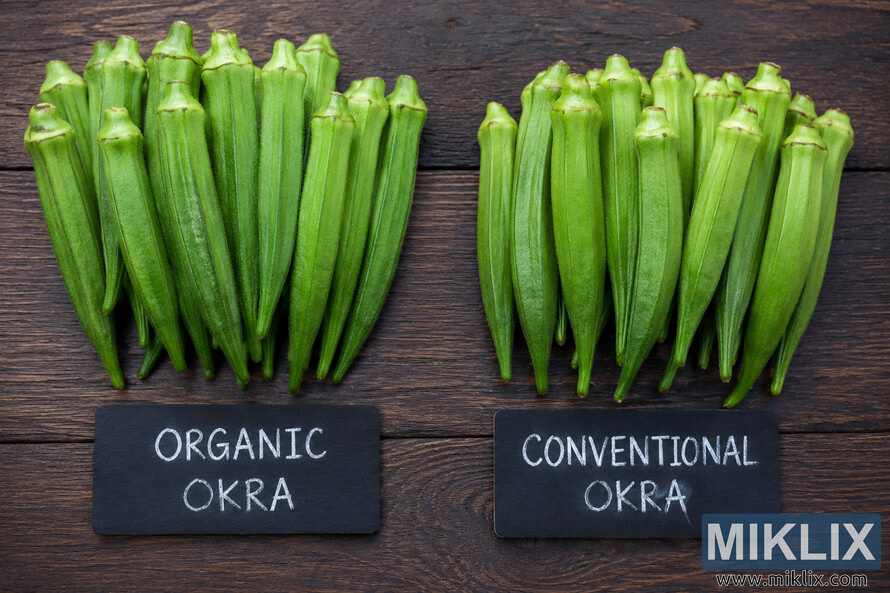
Organic okra is grown without synthetic pesticides or fertilizers. This option appeals to people prioritizing organic food choices. Okra doesn't typically appear on high-pesticide vegetable lists.
Conventional okra costs less than organic varieties. Both options provide similar nutritional benefits. Washing any okra thoroughly removes most surface residues regardless of growing method.
Click or tap the image for more information and higher resolutions.
Growing Your Own Okra
Home gardeners can easily grow okra in warm climates. The plant requires full sun and well-drained soil. Okra produces abundantly once established, often yielding more than a family can consume.
Seeds germinate quickly in warm soil temperatures above 70°F. Plants begin producing pods within 50 to 60 days. Regular harvesting encourages continued pod production throughout the growing season.
- Choose a sunny garden location with at least 6-8 hours of direct sunlight
- Plant seeds after all danger of frost has passed and soil warms
- Space plants 12-18 inches apart in rows 3 feet apart
- Water regularly, providing about 1 inch of water per week
- Harvest pods when they reach 2-4 inches for best tenderness
- Pick pods every 2-3 days to encourage continued production
How Okra Compares to Other Healthy Vegetables
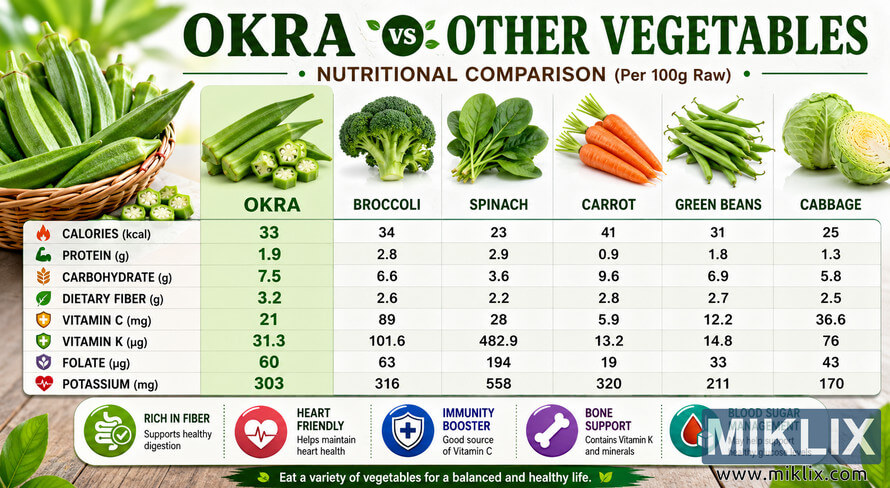
Okra holds its own among nutrient-dense vegetables. Comparing okra to similar vegetables highlights its unique advantages. Understanding these differences helps you build a varied, nutritious diet.
Okra vs. Green Beans
Both okra and green beans offer low-calorie nutrition. Okra contains more fiber per serving than green beans. The mucilage in okra provides unique digestive benefits not found in green beans.
Green beans offer slightly more vitamin A than okra. Both vegetables provide good sources of vitamin C and folate. Either choice contributes valuable nutrition to your diet.
Okra vs. Asparagus
Asparagus contains more protein per serving than okra. However, okra provides significantly more fiber. The vitamin K content is higher in asparagus, while okra offers more vitamin C.
Cost considerations favor okra in many regions. Asparagus typically commands premium prices, especially out of season. Okra provides similar nutritional value at a lower price point.
| Nutrient (per 100g) | Okra | Green Beans | Asparagus | Broccoli |
| Calories | 33 | 31 | 20 | 34 |
| Fiber (g) | 3.2 | 2.7 | 2.1 | 2.6 |
| Vitamin C (mg) | 23 | 12 | 5.6 | 89 |
| Folate (mcg) | 60 | 33 | 52 | 63 |
| Magnesium (mg) | 57 | 25 | 14 | 21 |
Okra vs. Broccoli
Broccoli contains significantly more vitamin C than okra. The cruciferous vegetable also provides unique cancer-fighting compounds. However, okra offers more magnesium and comparable fiber content.
Both vegetables deserve places in a healthy diet. The variety between okra and broccoli provides different beneficial compounds. Rotating between various vegetables ensures comprehensive nutrient intake.
Unique Advantages of Okra
Okra's mucilage sets it apart from other vegetables. This compound provides digestive benefits unavailable from most other plant foods. The combination of soluble and insoluble fiber in okra creates unique gut health advantages.
The specific polyphenol profile in okra differs from other vegetables. These antioxidants work synergistically with vitamins and minerals. Research suggests okra's particular compound combination offers distinct health benefits.
Click or tap the image for more information and higher resolutions.
Frequently Asked Questions About Okra
Can okra really help lower blood sugar levels?
Research indicates that okra may help regulate blood sugar levels through multiple mechanisms. The soluble fiber slows carbohydrate absorption, while specific compounds improve insulin sensitivity. Studies show promising results, though okra should complement rather than replace prescribed diabetes treatments. Always consult your healthcare provider before using okra to manage type diabetes or other blood sugar concerns.
How much okra should I eat daily for health benefits?
Most studies suggest consuming half a cup to one cup of cooked okra provides meaningful health benefits. This amount supplies approximately 3-6 grams of fiber along with significant vitamins and minerals. Start with smaller portions if you're new to eating okra, gradually increasing as your digestive system adjusts. Include okra as part of a varied diet rich in diverse fruits and vegetables for optimal nutrition.
Is okra safe during pregnancy?
Okra is generally safe and beneficial during pregnancy. The folate content supports fetal neural tube development during early pregnancy stages. The fiber helps address common pregnancy-related constipation naturally. Pregnant women should wash okra thoroughly and cook it properly to minimize any food safety risks. Discuss dietary changes with your obstetrician, especially if you have specific pregnancy complications.
Why does okra become slimy when cooked?
The sliminess comes from mucilage, a gel-like substance that okra releases when cut or cooked. This mucilage actually provides health benefits, particularly for digestive wellness. You can minimize sliminess by cooking at high temperatures, adding acidic ingredients like tomatoes or lemon juice, or soaking sliced okra in vinegar before cooking. Some preparation methods like roasting or grilling significantly reduce the slimy texture.
Can I eat okra raw?
Yes, you can eat okra raw, though it's less common than cooked preparations. Raw okra provides maximum nutrient retention and offers a crunchy texture. Slice young, tender pods thinly and add them to salads. Some people juice raw okra or add it to smoothies. The mucilage is more apparent in raw okra, which some find off-putting. Start with small amounts to determine your preference.
Does frozen okra have the same nutritional value as fresh?
Frozen okra retains most of its nutritional value effectively. The freezing process occurs shortly after harvest, preserving vitamins and minerals at peak levels. Some water-soluble vitamins like vitamin C may decrease slightly during freezing and storage. However, frozen okra often contains more nutrients than fresh okra that's been stored for several days. Both forms provide excellent nutrition and health benefits.
Will eating okra help me lose weight?
Okra can support weight loss efforts through several mechanisms. The low calorie density allows generous portions without excessive energy intake. High fiber content promotes satiety and reduces hunger between meals. Okra provides essential nutrients without empty calories. However, no single food causes weight loss. Include okra as part of a balanced, calorie-controlled diet combined with regular physical activity for effective weight management.
Can okra interact with my medications?
Okra can potentially interact with certain medications. The vitamin K content may interfere with blood-thinning medications like warfarin. High fiber content can affect medication absorption timing. People taking diabetes medications should monitor blood sugar levels when adding okra to their diet, as it may enhance medication effects. Always inform your healthcare provider about dietary changes and discuss potential interactions with your specific medications.

Click or tap the image for more information and higher resolutions.
Embracing Okra for Long-Term Health
The health benefits of okra extend far beyond basic nutrition. This remarkable vegetable supports blood sugar control, promotes heart health, aids digestion, and provides protective antioxidants. Research continues to reveal new advantages of regular okra consumption.
Incorporating okra into your diet doesn't require dramatic changes. Start with simple preparations and gradually explore different cooking methods. The versatility of okra allows integration into diverse cuisines and meal types.
Understanding proper selection, storage, and preparation ensures you enjoy okra at its best. Whether roasted, grilled, stewed, or pickled, okra delivers consistent nutrition and flavor. The key lies in finding preparation methods that suit your preferences.
Most people can safely enjoy okra as part of a balanced diet. The vegetable offers particular benefits for those managing blood sugar levels or supporting heart health. Combined with other nutritious foods, okra contributes to comprehensive wellness.
Take the first step today by adding okra to your next shopping list. Experiment with different recipes and cooking techniques. Your body will thank you for embracing this nutrient-dense vegetable and its many health-promoting properties.
Remember: Optimal health comes from overall dietary patterns rather than single foods. Include okra alongside other fruits, vegetables, whole grains, lean proteins, and healthy fat sources for comprehensive nutrition that supports your wellness goals.
Click or tap the image for more information and higher resolutions.
Further Reading
If you enjoyed this post, you may also like these suggestions:
- Unlocking Cognitive Clarity: The Remarkable Benefits of Lion’s Mane Mushroom Supplements
- Chamomile Health Benefits: Natural Wellness From an Ancient Herb
- From Detox to Digestion: The Amazing Health Benefits of Lemons