
Radicchio: The Bitter Leaf with Sweet Health Benefits
Published: September 8, 2026 at 8:39:56 AM UTC
That striking purple vegetable you've spotted at the farmers market holds remarkable secrets for your health. Radicchio, with its vibrant color and slightly bitter flavor, packs more nutritional punch than most leafy greens in your refrigerator today.
Click or tap the image for more information and higher resolutions.
This Italian chicory has traveled from Mediterranean gardens to become a staple in health-conscious kitchens worldwide. The deep purple leaves signal powerful compounds working inside your body right now.
Beyond its eye-catching appearance, radicchio contains specific nutrients that support your heart, strengthen bones, and may help prevent serious diseases. Understanding radicchio health benefits means discovering how one simple vegetable can transform your daily nutrition.
What Is Radicchio and Why Does It Matter for Your Health
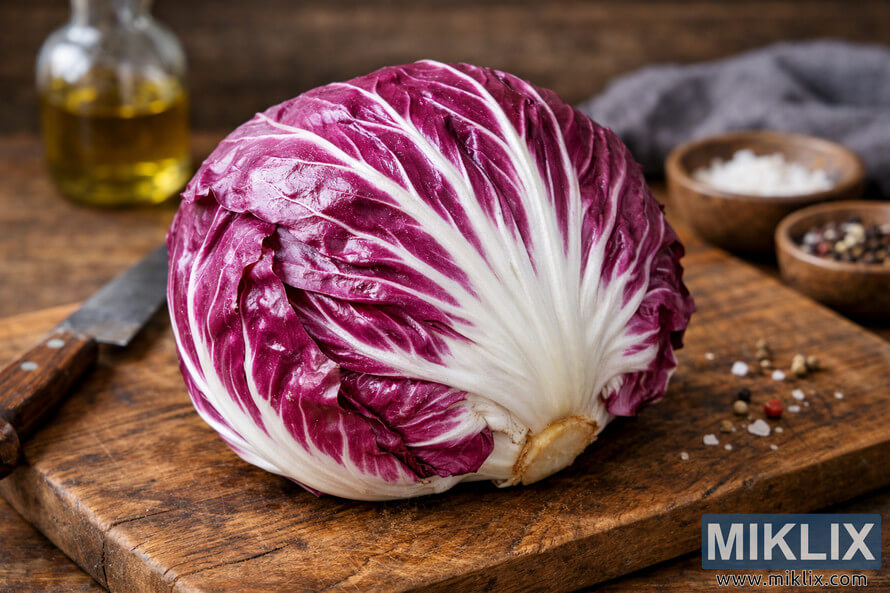
Radicchio belongs to the chicory family and grows primarily in the Veneto region of Italy. The vegetable looks similar to red cabbage but offers distinct characteristics that set it apart from other leafy greens.
The plant forms a compact head of leaves with deep purple to magenta color. White veins run through each leaf, creating beautiful patterns that make radicchio visually stunning on any plate.
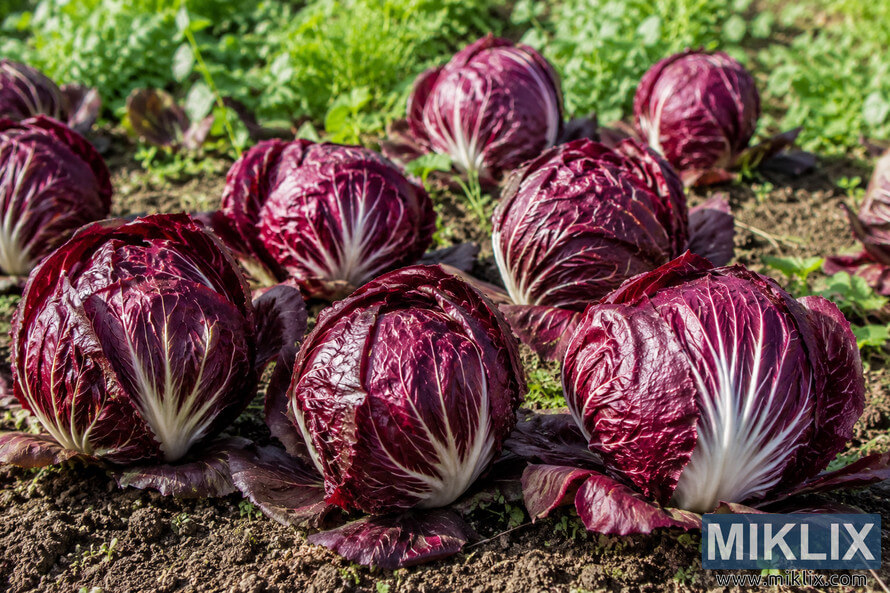
Farmers harvest radicchio during cool months when the plant develops its signature bitter taste. This bitterness comes from compounds called sesquiterpene lactones, which contribute to many health benefits.
Click or tap the image for more information and higher resolutions.
Types of Radicchio You Should Know
Several varieties of radicchio exist, each with unique flavor profiles and nutritional characteristics. Understanding these differences helps you choose the best type for your cooking needs today.
- Chioggia radicchio forms round, compact heads and offers the mildest flavor among all varieties
- Treviso radicchio grows elongated leaves resembling romaine lettuce with a more pronounced bitter taste
- Castelfranco radicchio displays cream-colored leaves with purple speckles and provides a delicate, sweet flavor
- Verona radicchio creates small, dense heads with intense bitterness perfect for grilling
How Radicchio Differs from Red Cabbage
Many people confuse radicchio with red cabbage due to similar purple coloring. However, these vegetables come from different plant families and offer distinct nutritional profiles that matter for your health.
Red cabbage belongs to the brassica family alongside broccoli and kale. Radicchio comes from the chicory family, sharing relatives with endive and escarole.
The flavor difference stands out immediately. Red cabbage tastes mild and slightly sweet, while radicchio delivers a characteristic bitter edge that intensifies when raw.
| Characteristic | Radicchio | Red Cabbage |
| Plant Family | Chicory (Asteraceae) | Brassica (Cruciferae) |
| Taste Profile | Bitter, peppery | Mild, sweet |
| Leaf Texture | Tender, delicate | Crisp, dense |
| Best Cooking Method | Grilling, quick sauté | Long braising, fermenting |
| Storage Time | 5-7 days refrigerated | 2-3 weeks refrigerated |
Complete Nutritional Profile of Radicchio
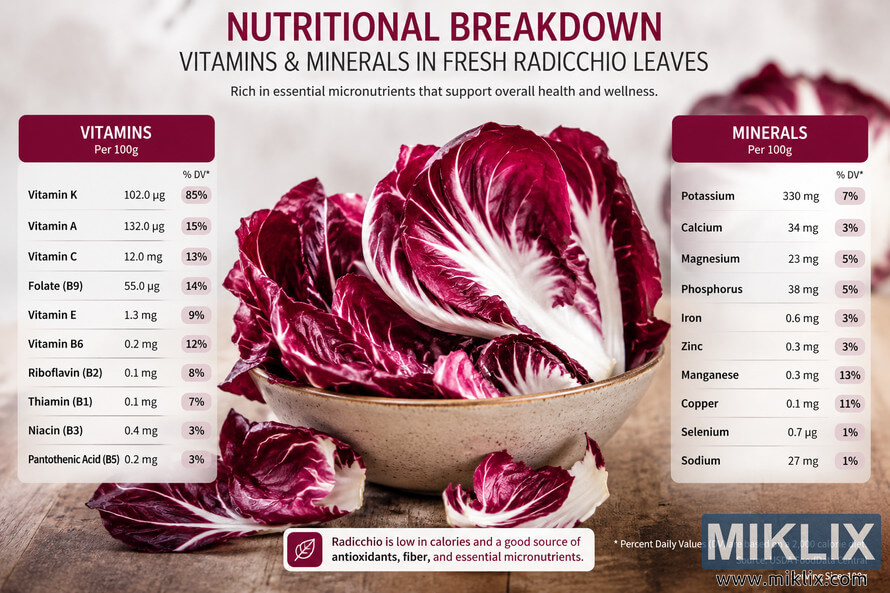
Radicchio contains an impressive array of nutrients packed into low-calorie servings. One cup of shredded radicchio provides essential vitamins and minerals your body needs for optimal function.
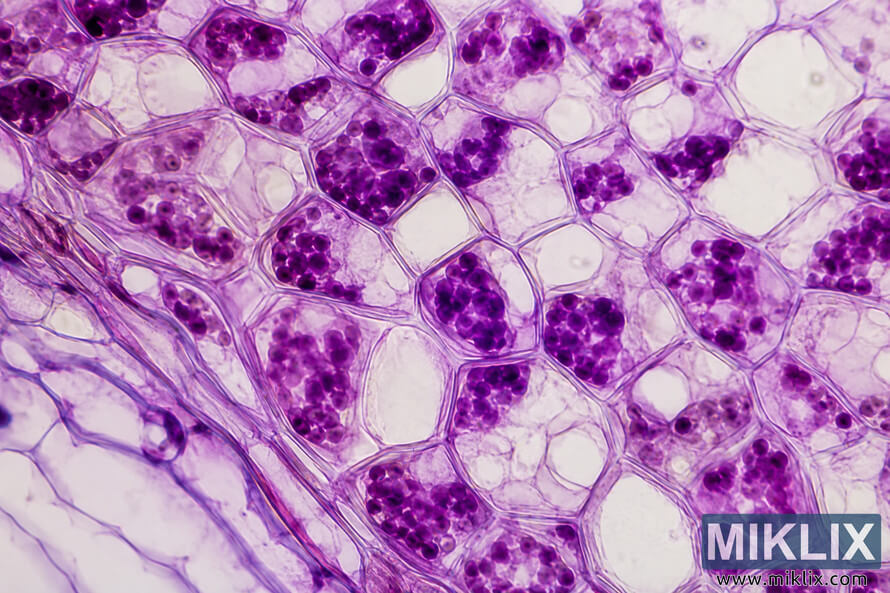
The deep purple color signals high levels of anthocyanins, powerful antioxidants that protect your cells from damage. These same compounds give blueberries and red wine their health-promoting properties.
Click or tap the image for more information and higher resolutions.
Vitamins in Radicchio
Radicchio delivers several crucial vitamins that support various body systems. The vitamin content in radicchio compares favorably to many popular leafy vegetables people consume today.
Vitamin K stands out as the most abundant vitamin in radicchio. This nutrient plays essential roles in blood clotting and bone metabolism. A single serving provides over 100% of your daily vitamin K needs.
The vegetable also contains meaningful amounts of vitamin C, supporting immune function and collagen production. Copper works alongside vitamin C to build strong connective tissues throughout your body.
- Vitamin K: 255% of Daily Value per cup
- Vitamin C: 10% of Daily Value per cup
- Vitamin E: 4% of Daily Value per cup
- Folate: 3% of Daily Value per cup
- B-complex vitamins in trace amounts
Minerals Found in Radicchio
The mineral content of radicchio supports bone health, heart function, and cellular processes. These minerals work together with vitamins to maintain your body's daily operations.
Copper appears in significant quantities within radicchio leaves. This mineral helps your body absorb iron and create red blood cells. Potassium contributes to healthy blood pressure levels and proper muscle function.
Antioxidants and Phytonutrients
The real power of radicchio lies in its phytonutrient profile. These plant compounds deliver protective benefits beyond basic nutrition, fighting inflammation and oxidative stress in your body.
Anthocyanins give radicchio its distinctive purple color and provide powerful antioxidant effects. Research shows these compounds may help prevent cancer cell growth and reduce inflammation markers.
Radicchio contains inulin, a type of prebiotic fiber that feeds beneficial bacteria in your gut. This fiber also helps regulate blood sugar levels and supports digestive health.
- Anthocyanins protect cells from free radical damage throughout your body
- Inulin fiber promotes healthy gut bacteria and improves digestion
- Polyphenols reduce inflammation and support cardiovascular health
- Lactucopicrin provides the bitter taste and offers liver-protective properties
Science-Backed Radicchio Health Benefits
Research reveals specific ways radicchio supports your body's functions. These benefits stem from the unique combination of nutrients, antioxidants, and fiber found in this purple vegetable.
Click or tap the image for more information and higher resolutions.
Supports Heart Health and Cardiovascular Function
The antioxidants in radicchio protect your heart and blood vessels from oxidative damage. Studies suggest regular consumption of anthocyanin-rich foods reduces cardiovascular disease risk significantly.
Radicchio may help maintain healthy blood pressure levels through its potassium content. This mineral balances sodium in your body and relaxes blood vessel walls.
The fiber in radicchio binds to cholesterol in your digestive system. This process helps remove excess cholesterol before your body absorbs it into the bloodstream.
Promotes Healthy Digestion and Gut Function
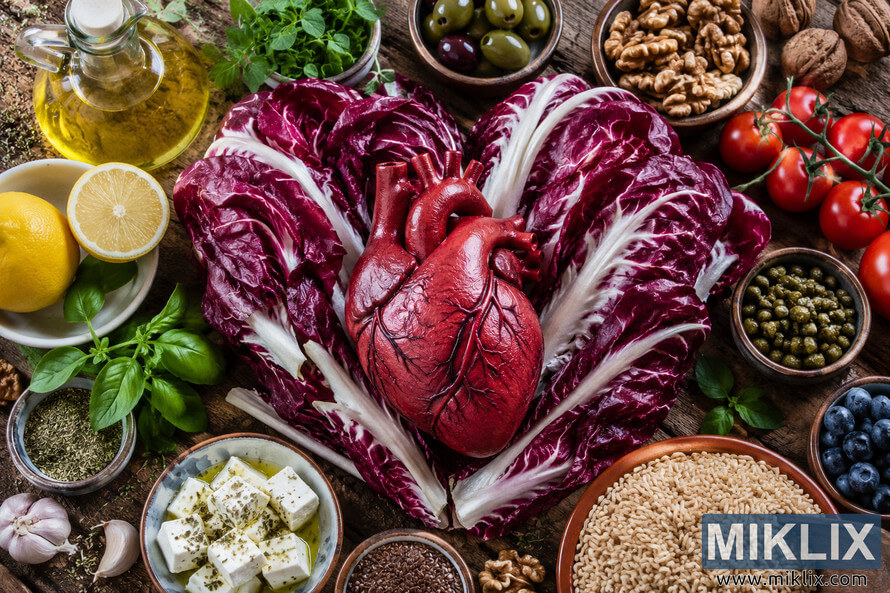
Your digestive system benefits tremendously from radicchio consumption. The inulin fiber feeds beneficial bacteria that colonize your intestines and support overall gut health.
Radicchio contains compounds that stimulate digestive enzyme production. These enzymes break down food more efficiently, reducing bloating and improving nutrient absorption.
The bitter compounds in radicchio leaves stimulate bile production in your liver. Bile helps digest fats and carries toxins out of your body through waste elimination.
Digestive Tip: The bitter taste of radicchio signals your body to prepare for digestion. Eating radicchio at the start of meals can improve overall digestive efficiency.
Click or tap the image for more information and higher resolutions.
Strengthens Immune System Response
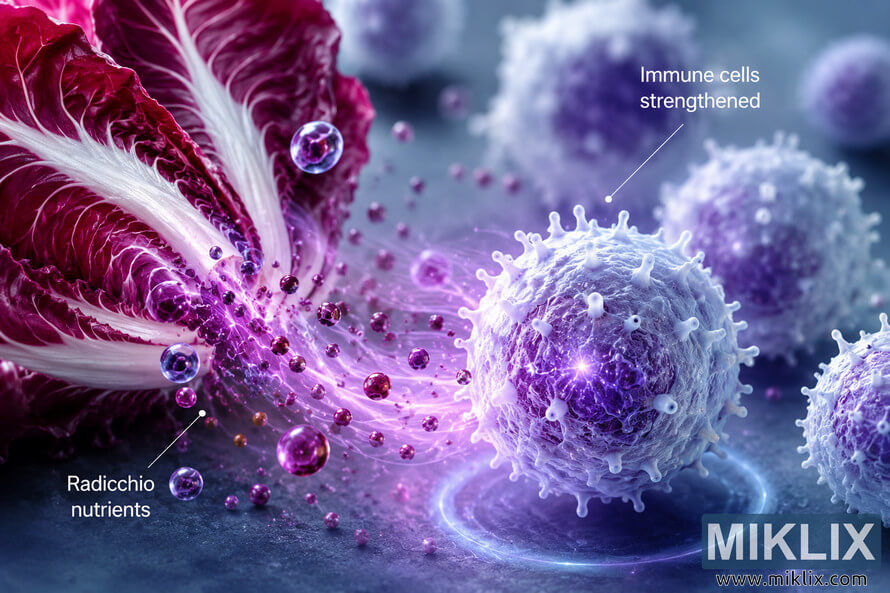
Radicchio provides vitamin C and other nutrients that bolster your immune defenses. These compounds help your body fight off infections and recover faster from illness.
The antioxidants in radicchio reduce inflammation throughout your body. Chronic inflammation weakens immune function and contributes to various health problems over time.
Copper from radicchio helps produce white blood cells that patrol your body for threats. This mineral also supports the production of antibodies that remember past infections.
Click or tap the image for more information and higher resolutions.
Supports Bone Density and Skeletal Health
Vitamin K in radicchio plays crucial roles in bone metabolism and calcium regulation. This vitamin activates proteins that bind calcium to your bone matrix.
Research shows adequate vitamin K intake correlates with reduced fracture risk in older adults. One cup of radicchio provides more than your entire daily vitamin K requirement.
Bone Health Benefits
- High vitamin K content supports calcium binding
- Copper aids collagen formation in bones
- Low calorie density allows generous servings
- Antioxidants reduce bone-damaging inflammation
Considerations
- Must combine with calcium-rich foods for maximum benefit
- Vitamin K can interact with blood-thinning medications
- Requires consistent consumption for long-term effects
May Support Weight Loss Efforts
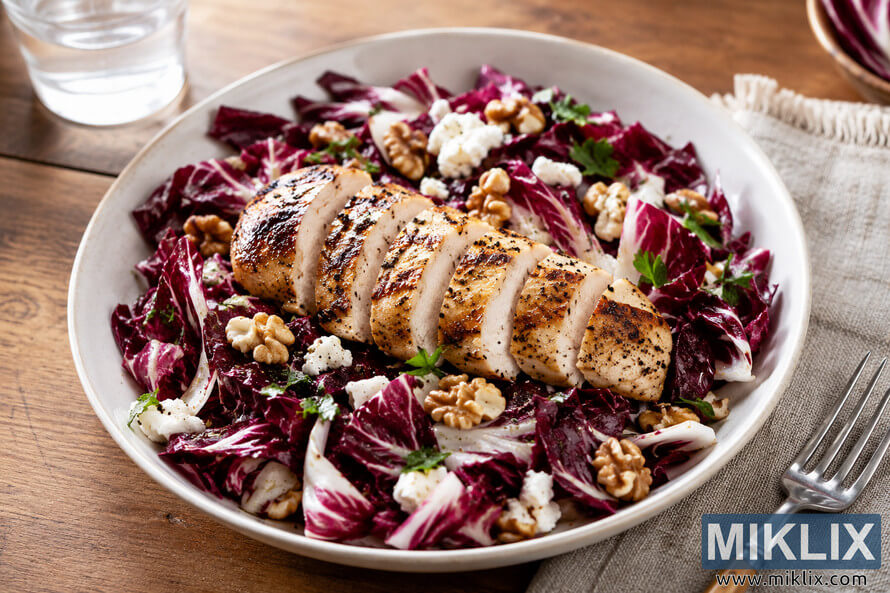
Radicchio fits perfectly into weight loss plans due to its low calorie content and high nutrient density. One cup contains only 9 calories yet delivers significant vitamins and minerals.
The fiber in radicchio promotes feelings of fullness after meals. This satiety effect may help you consume fewer calories throughout the day without feeling deprived.
Radicchio may support healthy blood sugar levels through its inulin content. Stable blood sugar reduces cravings and prevents energy crashes that lead to overeating.
Low-Calorie Volume
Radicchio provides substantial portion sizes for minimal calories. You can eat generous amounts without exceeding your daily calorie targets for weight loss.
Click or tap the image for more information and higher resolutions.
Blood Sugar Balance
The fiber and inulin in radicchio slow sugar absorption. This helps maintain steady energy levels and reduces hunger between meals today.
Mediterranean Diet Fit
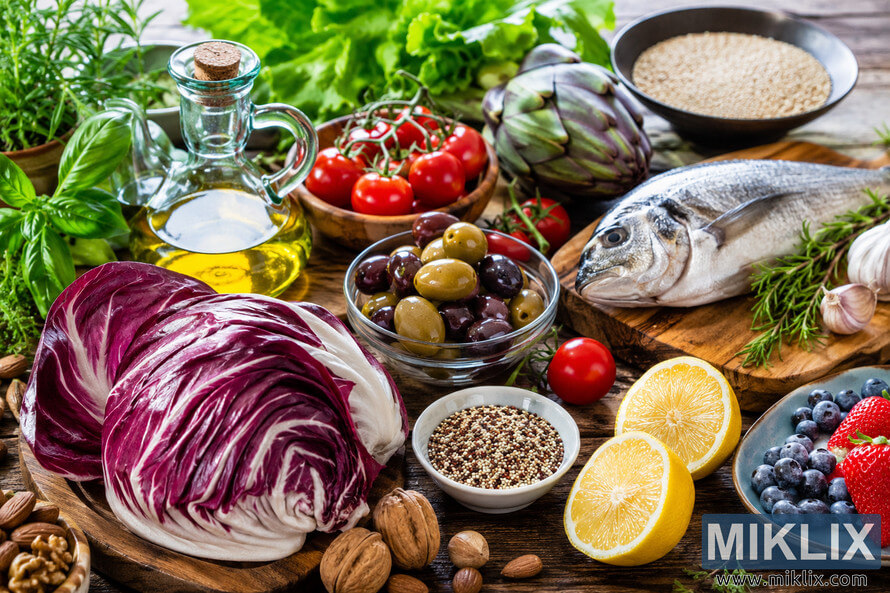
Radicchio appears frequently in the Mediterranean diet, a eating pattern linked to healthy weight maintenance and reduced obesity risk worldwide.
Click or tap the image for more information and higher resolutions.
Protects Eye Health and Vision
The antioxidants in radicchio protect your eyes from damage caused by blue light and oxidative stress. These compounds accumulate in eye tissues and filter harmful wavelengths.
Vitamin K supports blood vessel health in your eyes. Proper circulation delivers oxygen and nutrients to delicate eye structures that maintain clear vision.
May Offer Cancer Prevention Properties
Laboratory studies show compounds in radicchio may inhibit cancer cell growth. The anthocyanins and other antioxidants interfere with processes that allow abnormal cells to multiply.
Radicchio contains substances that trigger apoptosis in damaged cells. This programmed cell death prevents potentially cancerous cells from dividing and forming tumors.
The inulin fiber in radicchio supports colon health by feeding beneficial bacteria. A healthy gut microbiome correlates with reduced colorectal cancer risk in large population studies.

Click or tap the image for more information and higher resolutions.
Supports Liver Function and Detoxification
The bitter compounds in radicchio stimulate liver activity and bile production. Your liver uses bile to process fats and eliminate toxins from your body.
Radicchio may protect liver cells from damage caused by toxins and excess alcohol consumption. The antioxidants neutralize harmful substances before they injure liver tissue.
- Stimulates bile production for fat digestion and toxin elimination
- Provides antioxidants that protect liver cells from damage
- Supports Phase II detoxification pathways in the liver
- May help regenerate liver tissue after injury or stress
How Radicchio Compares to Other Leafy Greens
Understanding where radicchio stands among other vegetables helps you make informed choices for your diet. Each leafy green offers unique benefits worth considering today.
Radicchio vs. Red Cabbage Nutrition
Both vegetables provide anthocyanins and vitamin C, but radicchio contains significantly higher amounts of vitamin K. Red cabbage offers more fiber per serving and stores longer in your refrigerator.
The bitter compounds unique to radicchio provide digestive benefits not found in red cabbage. However, cabbage contains sulforaphane and other compounds linked to cancer prevention.
Radicchio Advantages
Radicchio delivers superior vitamin K content essential for blood clotting and bone health. The bitter taste stimulates digestion better than milder vegetables.
- Contains 255% daily vitamin K per cup
- Provides unique digestive-stimulating compounds
- Offers tender texture perfect for raw salads
- Features more intense antioxidant concentration
Red Cabbage Strengths
Red cabbage provides more fiber and stores significantly longer without losing nutritional value. The milder taste appeals to more people initially.
- Offers higher fiber content per serving
- Contains cancer-fighting sulforaphane compounds
- Stores fresh for 2-3 weeks refrigerated
- Provides mild flavor most people enjoy
Best Uses for Radicchio
Radicchio shines in applications where its bitter flavor and tender texture enhance dishes. Quick cooking methods preserve nutrients effectively.
- Raw in salads with sweet dressings
- Grilled as a side vegetable dish
- Quickly sautéed with garlic and olive oil
- Torn into grain bowls for color and nutrition
Best Uses for Red Cabbage
Red cabbage excels in preparations requiring longer cooking times or fermentation. The dense structure holds up to heat without becoming mushy.
- Fermented into nutritious sauerkraut
- Braised slowly for warm side dishes
- Shredded into coleslaw with vinegar dressing
- Pickled for long-term storage and use
Click or tap the image for more information and higher resolutions.
Radicchio vs. Other Chicory Vegetables
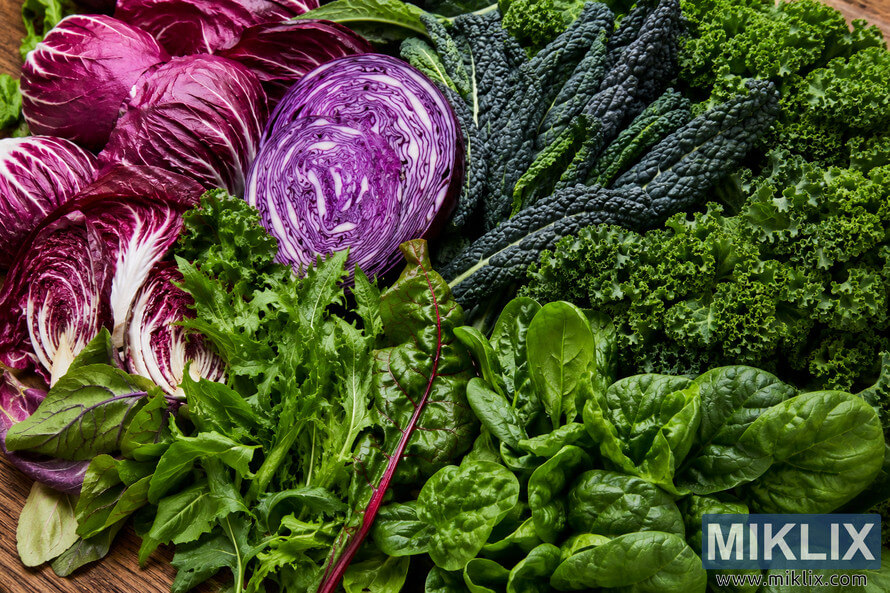
Radicchio shares family ties with endive, escarole, and Belgian endive. All chicory vegetables contain beneficial bitter compounds, but radicchio provides the highest concentration of anthocyanins.
The deep color of radicchio indicates greater antioxidant content compared to pale endive varieties. However, all chicory vegetables support liver function and digestive health.
| Vegetable | Vitamin K (% DV) | Antioxidant Score | Bitter Intensity | Best Season |
| Radicchio | 255% | High | Strong | Fall-Winter |
| Red Cabbage | 28% | High | Mild | Year-round |
| Kale | 684% | Very High | Moderate | Fall-Spring |
| Spinach | 181% | High | Mild | Spring-Fall |
| Arugula | 108% | Moderate | Peppery | Spring-Fall |
How to Incorporate Radicchio Into Your Diet
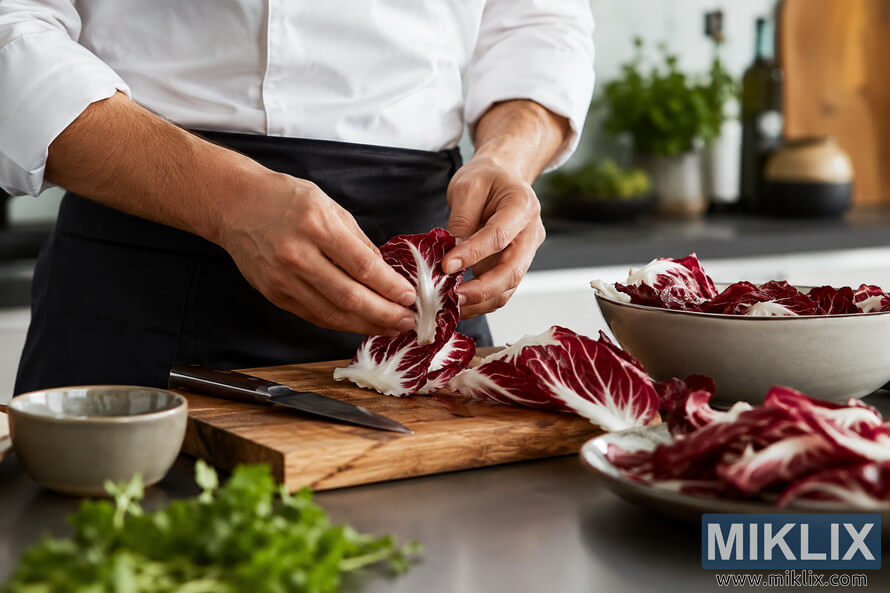
Adding radicchio to your meals requires understanding its unique flavor and how different preparation methods affect taste. Simple techniques transform this bitter vegetable into delicious dishes.
Click or tap the image for more information and higher resolutions.
Selecting and Storing Fresh Radicchio
Look for radicchio heads with vibrant purple color and crisp leaves. Avoid heads with brown edges or wilted outer layers that indicate age or poor storage conditions.
The leaves should feel firm when you gently squeeze the head. A slight give indicates freshness, while mushiness suggests the vegetable has passed its peak.
Store unwashed radicchio in your refrigerator's crisper drawer wrapped loosely in a plastic bag. Proper storage extends freshness for five to seven days after purchase.
- Choose heads with tight, compact leaves and vibrant color
- Avoid specimens with brown spots or wilted outer leaves
- Store wrapped loosely in plastic in the refrigerator crisper
- Wash only immediately before use to prevent premature wilting
- Remove outer leaves if they become damaged or discolored
Preparing Radicchio for Cooking
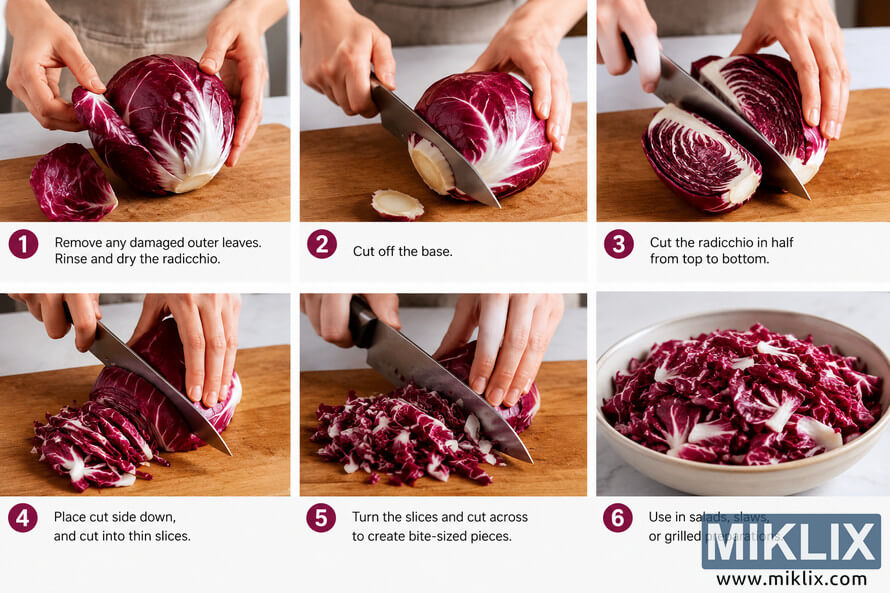
Rinse radicchio leaves under cold water immediately before use. Pat them dry with clean towels to remove excess moisture that dilutes dressings and seasonings.
Remove the core by cutting the head in quarters lengthwise, then slicing out the white center portion. This core tastes extremely bitter and has tough texture most people find unpleasant.
Slice, chop, or tear radicchio leaves depending on your recipe requirements. Smaller pieces distribute throughout dishes more evenly and reduce perceived bitterness.
Soaking chopped radicchio in cold water for 15 minutes reduces bitterness significantly. Drain thoroughly before using in recipes to prevent waterlogged results.
Click or tap the image for more information and higher resolutions.
Raw Radicchio in Salads
Raw radicchio works beautifully in salads when balanced with sweet or creamy ingredients. The bitter flavor contrasts deliciously with fruits, nuts, and rich dressings.
Tear radicchio leaves into bite-sized pieces rather than cutting them with a knife. Tearing creates irregular edges that catch dressing better than uniform cuts.
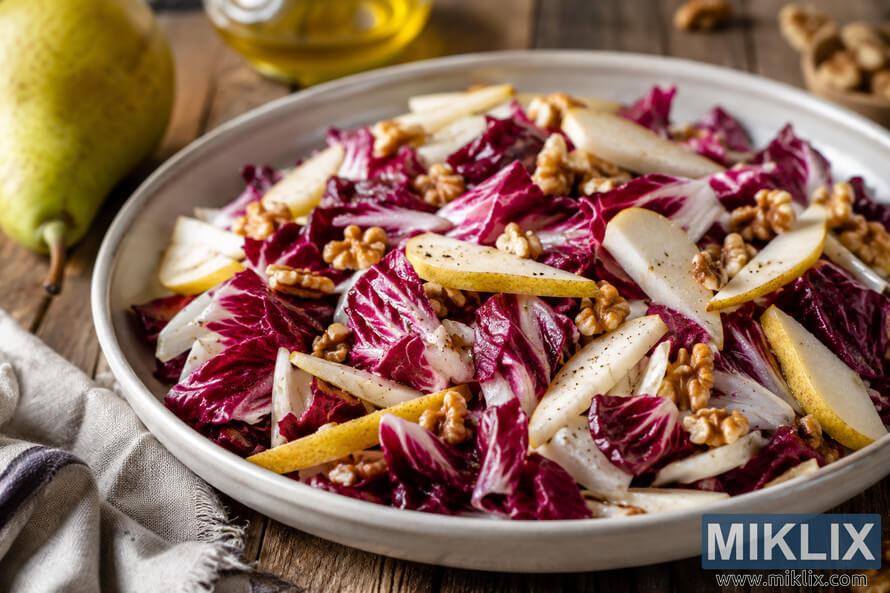
Sweet Balance Salad
Combine torn radicchio with sliced pears, toasted walnuts, and crumbled blue cheese. Dress with honey-balsamic vinaigrette to balance bitter flavors with sweet notes.
Click or tap the image for more information and higher resolutions.
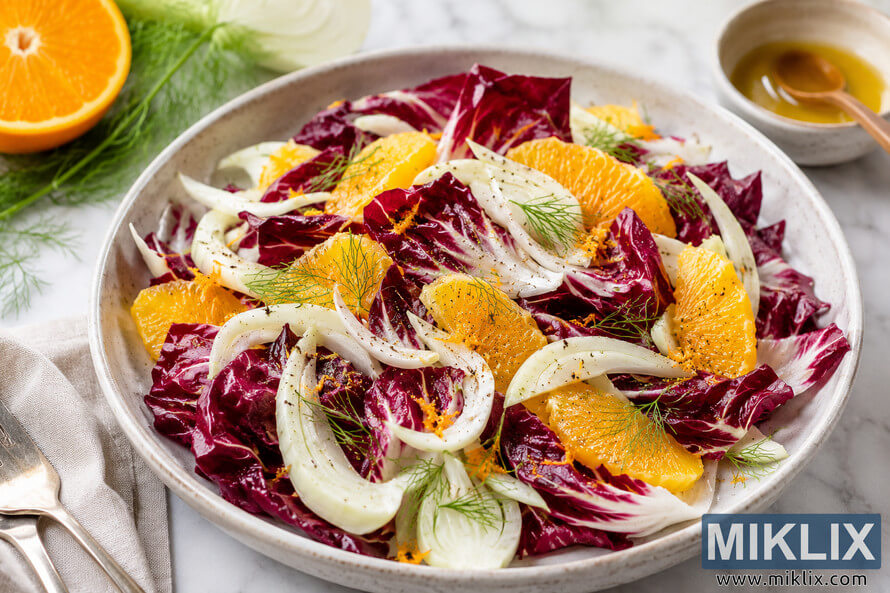
Citrus Brightener
Mix shredded radicchio with orange segments, shaved fennel, and pomegranate seeds. The citrus juice naturally mellows bitterness while adding vitamin C to your meal today.
Click or tap the image for more information and higher resolutions.
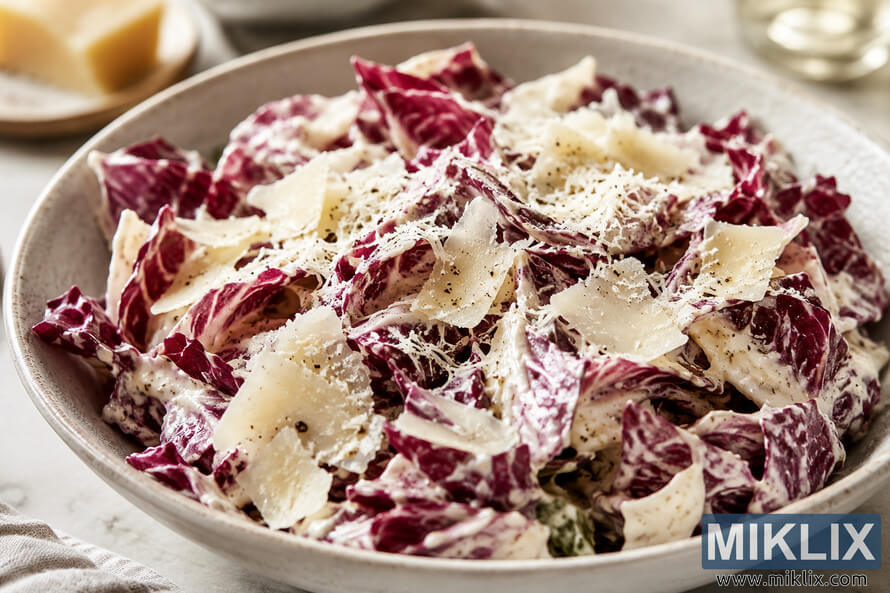
Creamy Caesar Style
Toss radicchio leaves with traditional Caesar dressing, parmesan shavings, and crunchy croutons. The rich, creamy dressing coats bitter leaves and creates satisfying flavor contrast.
Click or tap the image for more information and higher resolutions.
Cooking Methods That Enhance Flavor
Heat transforms radicchio's bitterness into pleasant, complex flavors. Grilling, roasting, and quick sautéing caramelize natural sugars while softening harsh bitter notes.
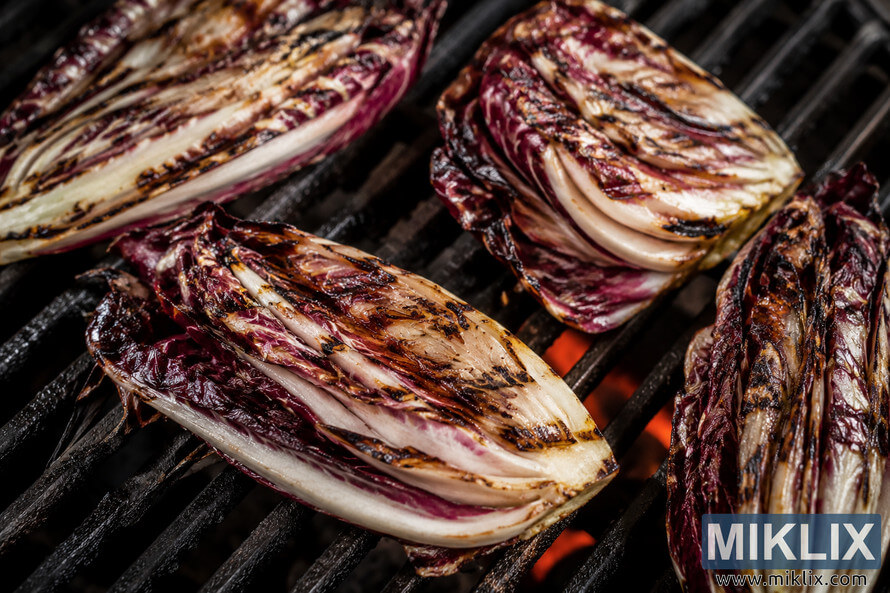
Grilling radicchio wedges creates sweet, smoky flavors that complement the vegetable's natural bitterness. Brush wedges with olive oil before grilling to prevent sticking and add richness.
Roasting radicchio at high temperatures concentrates flavors and creates crispy edges. The caramelization process converts bitter compounds into sweeter, more complex taste profiles.
Perfect Grilled Radicchio Technique
- Cut radicchio head into quarters, leaving core attached to hold leaves together
- Brush all sides generously with olive oil and season with salt and pepper
- Place cut-side down on preheated grill over medium-high heat
- Grill for 3-4 minutes per side until charred and slightly wilted
- Drizzle with balsamic glaze or lemon juice before serving immediately
Balancing Bitter Flavors in Dishes
- Understanding flavor balance helps you create dishes where radicchio complements rather than overwhelms other ingredients. Several techniques reduce perceived bitterness effectively.
- Sweet ingredients like honey, dried fruits, or caramelized onions counteract bitter notes naturally. Fat from olive oil, cheese, or nuts also mellows harshness and carries flavors across your palate.
- Acid from citrus juice, vinegar, or wine brightens radicchio dishes and balances the bitter edge. Salt enhances overall flavor while reducing the intensity of bitter compounds.
- Cooking Tip: Never overcook radicchio, as extended heat intensifies bitterness rather than mellowing it. Quick cooking methods preserve the best flavor balance.
Click or tap the image for more information and higher resolutions.
Radicchio in Traditional Italian Dishes
Italian cuisine features radicchio prominently in regional specialties. These traditional preparations showcase the vegetable's versatility and cultural significance in Mediterranean cooking.
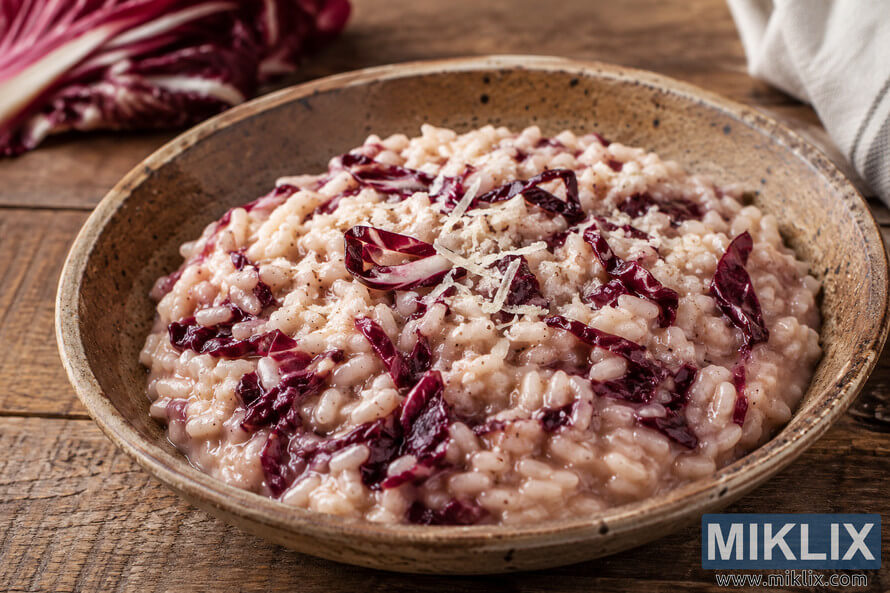
Risotto with radicchio combines the vegetable's bitterness with creamy rice and rich parmesan cheese. The contrast creates sophisticated flavor profiles beloved in Veneto region restaurants.
Pasta dishes incorporate radicchio for color, nutrition, and distinctive taste. The leaves wilt quickly when tossed with hot pasta and sauce, creating easy weeknight meals.
- Risotto al radicchio features the vegetable cooked into creamy rice with wine and stock
- Pasta e radicchio combines sautéed leaves with garlic, olive oil, and pasta shapes
- Radicchio alla griglia serves grilled wedges as a simple vegetable side dish
- Pizza toppings use raw or grilled radicchio for color and bitter-sweet contrast
Click or tap the image for more information and higher resolutions.
Creative Modern Applications
- Contemporary chefs incorporate radicchio into fusion dishes and innovative preparations. These modern techniques introduce the vegetable to new audiences and flavor combinations.
- Radicchio adds crunch and color to grain bowls alongside quinoa, farro, or brown rice. The bitter leaves balance sweet roasted vegetables and tangy dressings perfectly.
- Smoothie enthusiasts blend small amounts of radicchio with fruits for nutrition without overwhelming bitter taste. The purple color creates visually appealing drinks rich in antioxidants.
Radicchio Tacos
Shredded radicchio replaces traditional cabbage in fish or chicken tacos. The purple color looks stunning, while bitter notes balance rich proteins and creamy toppings.

Click or tap the image for more information and higher resolutions.
Grain Bowl Base
Use chopped radicchio as a nutrient-dense base for Buddha bowls. Layer with roasted vegetables, proteins, and tahini dressing for complete meals.

Click or tap the image for more information and higher resolutions.
Braised Side Dish
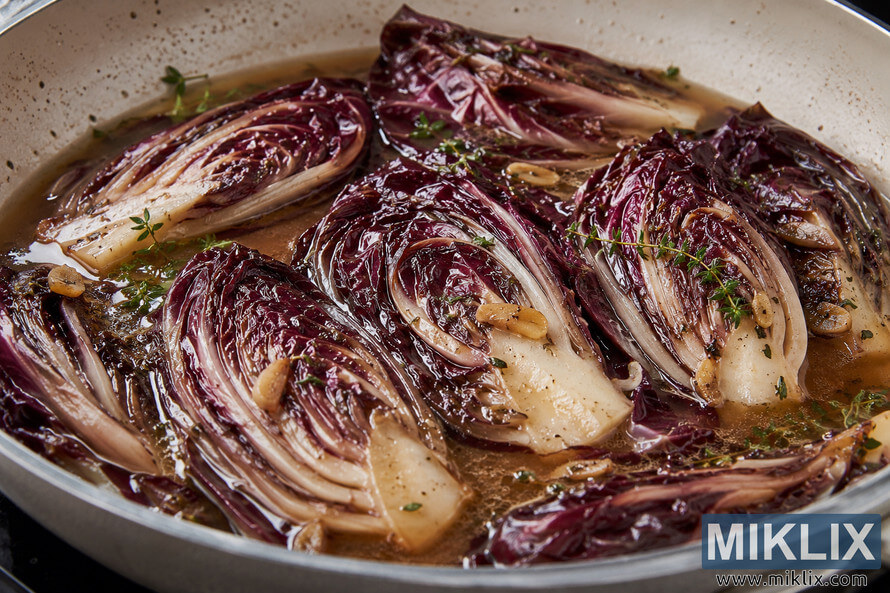
Braise radicchio wedges in broth with garlic and herbs. The gentle cooking mellows bitterness while creating tender, flavorful vegetables for any protein.
Click or tap the image for more information and higher resolutions.
Radicchio in the Mediterranean Diet
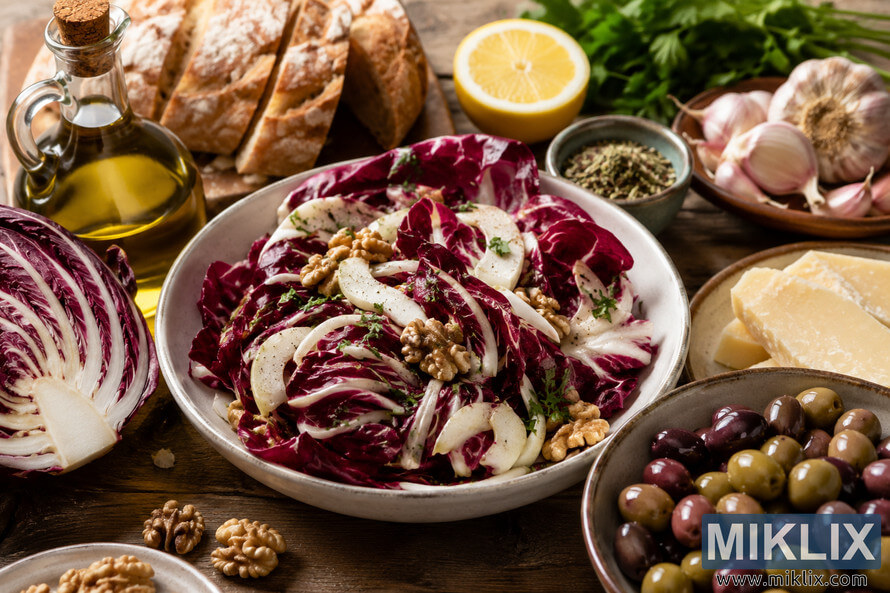
The Mediterranean diet consistently ranks as one of the healthiest eating patterns worldwide. Radicchio plays an important role in this plant-forward approach to nutrition and cooking.
Traditional Mediterranean cuisine emphasizes seasonal vegetables, whole grains, healthy fats, and moderate portions of lean protein. Radicchio appears frequently in Italian and Greek regional dishes.
The bitter greens category in Mediterranean eating includes radicchio, dandelion greens, and endive. These vegetables provide phytonutrients and support the diverse plant intake central to this diet pattern.
Click or tap the image for more information and higher resolutions.
Why Bitter Greens Matter in Mediterranean Eating
Mediterranean cultures value bitter vegetables for their digestive benefits and unique flavors. The bitter taste stimulates appetite and prepares your digestive system for the meal ahead.
Traditional meals often begin with bitter greens to activate digestion. This practice aligns with modern research showing bitter compounds trigger beneficial digestive responses.
- Stimulates digestive enzyme production before meals
- Provides diverse phytonutrients not found in sweet vegetables
- Balances rich foods common in Mediterranean cooking
- Adds complex flavors that prevent palate fatigue
- Contributes to the recommended variety of plant foods
The Mediterranean diet recommends consuming various plant foods daily. Radicchio contributes unique compounds that complement other vegetables in your diet rotation.
Research links Mediterranean eating patterns to reduced heart disease, diabetes, and cancer risk. The diversity of vegetables, including radicchio, contributes to these protective effects.
Combining Radicchio with Mediterranean Staples
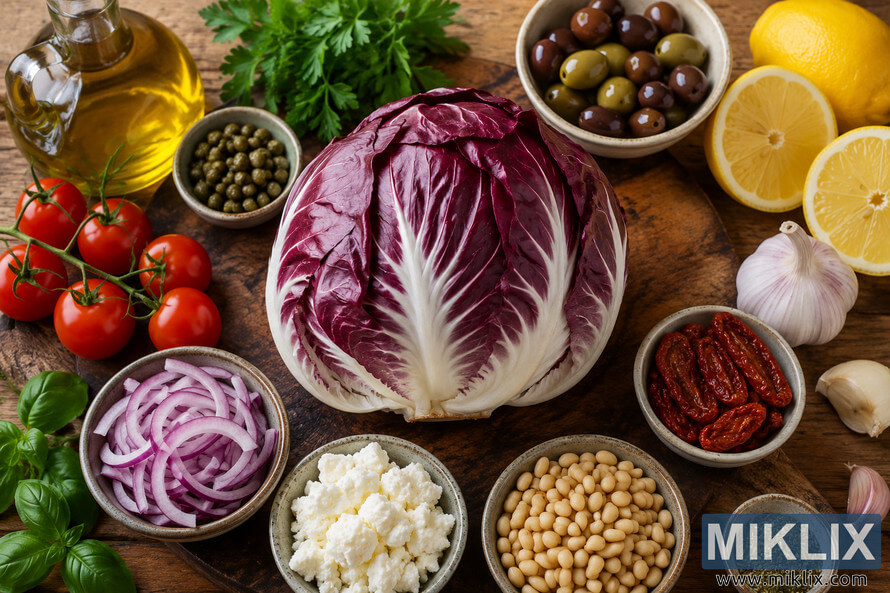
Radicchio pairs naturally with core Mediterranean ingredients like olive oil, garlic, and citrus. These combinations create dishes that taste delicious while delivering substantial health benefits.
Olive oil's healthy fats enhance absorption of fat-soluble vitamins in radicchio. The combination also improves the vegetable's flavor by mellowing bitter compounds with rich, fruity notes.
Legumes like white beans complement radicchio in warm salads and side dishes. This combination provides complete protein alongside the vegetable's vitamins and antioxidants.
Click or tap the image for more information and higher resolutions.
Potential Concerns and Considerations
While radicchio offers numerous health benefits, certain individuals should consider specific factors before consuming large amounts. Understanding these considerations helps you make informed dietary decisions.
Vitamin K and Blood-Thinning Medications
Radicchio contains very high amounts of vitamin K, which affects blood clotting mechanisms. People taking warfarin or similar blood-thinning medications need to monitor vitamin K intake carefully.
Medical Alert: If you take blood-thinning medications, consult your healthcare provider before significantly increasing radicchio consumption. Consistent vitamin K intake matters more than total amount.
Your doctor may recommend maintaining consistent daily vitamin K consumption rather than varying intake dramatically. This consistency helps keep medication dosing stable and effective.
You don't need to avoid radicchio entirely while taking these medications. Instead, incorporate it regularly in measured amounts so your doctor can adjust medication accordingly.
Digestive Sensitivity to Bitter Foods
Some people experience digestive discomfort when eating bitter vegetables like radicchio. The compounds that provide health benefits can also irritate sensitive digestive systems initially.
Start with small amounts of radicchio if you're not accustomed to bitter foods. Your palate and digestive system adapt over time, making the vegetable more tolerable.
Cooking radicchio thoroughly reduces its bitter intensity and makes it easier to digest. Grilling or roasting breaks down some compounds that cause digestive distress.
Allergic Reactions and Sensitivities
Allergies to radicchio remain rare but can occur in people sensitive to plants in the Asteraceae family. This family includes ragweed, daisies, and other common allergens.
Symptoms of radicchio allergy may include itching, swelling, or digestive upset after consumption. Stop eating radicchio and consult a healthcare provider if you experience these reactions.
Oxalate Content Considerations
Radicchio contains moderate amounts of oxalates, compounds that can contribute to kidney stone formation in susceptible individuals. People with history of calcium oxalate stones should monitor intake.
Cooking radicchio reduces oxalate content significantly compared to raw consumption. If oxalates concern you, favor cooked preparations over raw salads.
Drinking plenty of water when eating oxalate-containing foods helps prevent stone formation. Adequate calcium intake also reduces oxalate absorption in your digestive system.
Where to Find Quality Radicchio
Sourcing fresh, high-quality radicchio ensures you receive maximum nutritional benefits and best flavor. Several options exist for purchasing this Italian vegetable today.
Farmers Markets and Local Growers
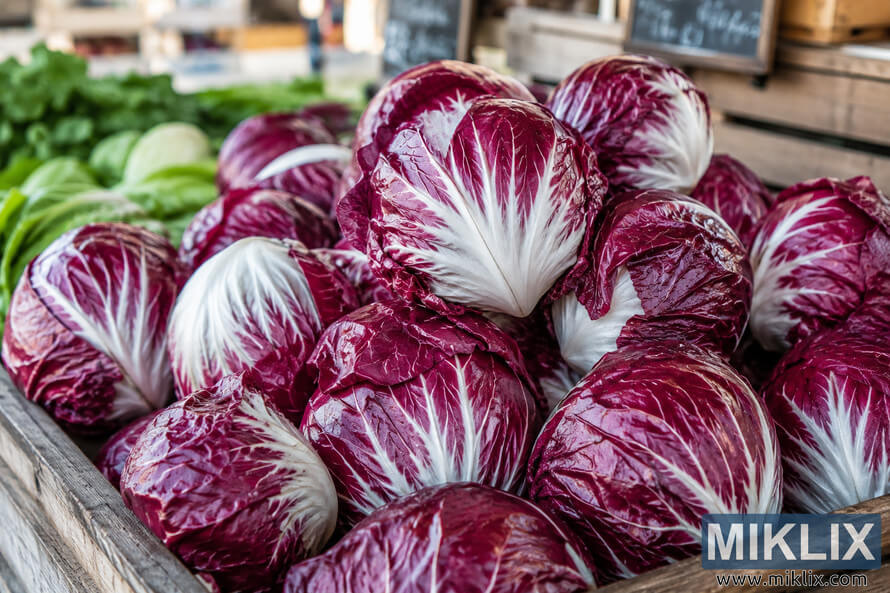
Local farmers markets often carry radicchio during fall and winter months. Buying directly from growers ensures peak freshness and supports your local agricultural community.
Talk with farmers about their growing practices and harvest dates. Many small farms grow heirloom radicchio varieties with superior flavor compared to commercial types.
Farmers market radicchio typically arrives within days or hours of harvest. This freshness translates to better texture, more vibrant color, and higher nutrient content.
Click or tap the image for more information and higher resolutions.
Grocery Store Selection Tips
Most well-stocked grocery stores carry radicchio in the produce section near other specialty greens. Look for it year-round, though quality peaks during cooler months.
Choose heads with vibrant purple color and no brown spots or wilting. The outer leaves should feel crisp, and the head should feel dense when you pick it up.
Organic radicchio offers benefits if you're concerned about pesticide residues. However, conventional radicchio also provides excellent nutrition when properly washed.
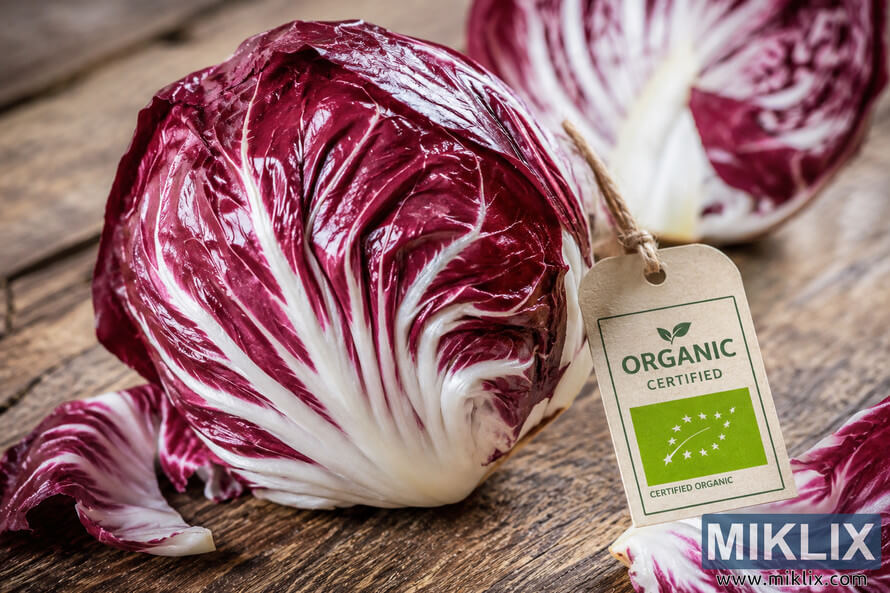
Click or tap the image for more information and higher resolutions.
Specialty Stores
Italian markets and specialty food stores often stock multiple radicchio varieties. These retailers understand proper handling and storage for optimal quality and flavor.
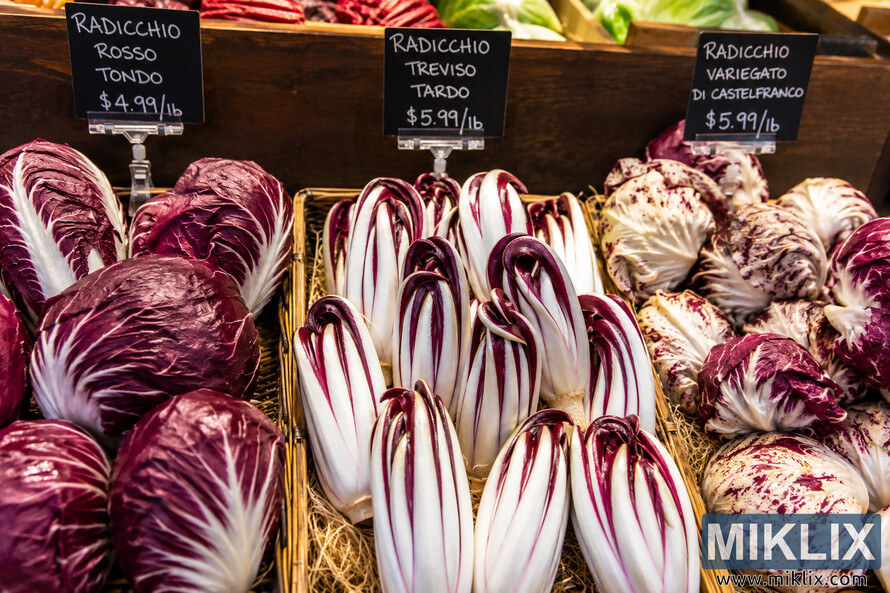
Click or tap the image for more information and higher resolutions.
Online Delivery
Several online services deliver fresh radicchio to your door. This convenience helps you access quality produce even without nearby specialty stores or farmers markets.
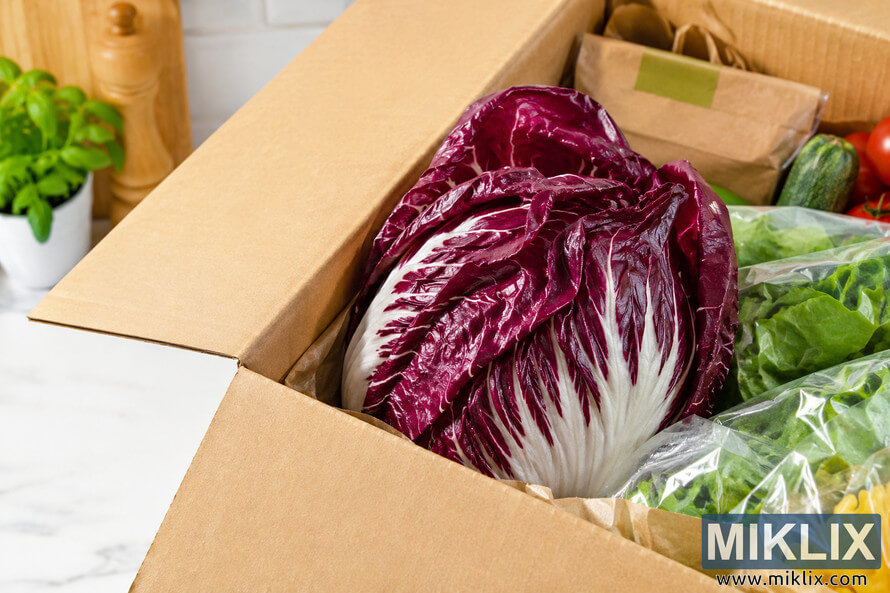
Click or tap the image for more information and higher resolutions.
Growing Radicchio at Home
Adventurous gardeners can grow radicchio in home gardens during cool seasons. The plant prefers temperatures between 45-65°F and matures in 60-90 days from transplanting.
Start seeds indoors 4-6 weeks before your last spring frost date. Transplant seedlings to the garden after hardening them off to outdoor conditions gradually.
Home-grown radicchio offers unmatched freshness and lets you try unique varieties rarely found in stores. The satisfaction of harvesting your own adds value beyond nutrition.
Frequently Asked Questions About Radicchio
Can you eat radicchio raw or does it need to be cooked?
You can safely eat radicchio both raw and cooked. Raw radicchio works beautifully in salads where its crunchy texture and bitter flavor add complexity. Cooking mellows the bitterness and creates sweet, caramelized notes that many people prefer. Choose preparation methods based on your taste preferences and the dish you're creating today.
How do you reduce the bitter taste of radicchio?
Several techniques effectively reduce radicchio's bitterness. Soaking chopped leaves in cold water for 15 minutes before use helps significantly. Pairing radicchio with sweet ingredients like fruits, honey, or caramelized onions balances bitter notes naturally. Cooking methods like grilling or roasting also mellow harsh flavors while adding pleasant complexity.
Is radicchio better for you than regular lettuce?
Radicchio provides significantly more nutrients than common lettuce varieties like iceberg or romaine. The deep purple color indicates high anthocyanin content not found in pale lettuces. Radicchio contains over 250% more vitamin K per serving compared to romaine lettuce. However, the best approach involves eating various leafy greens to maximize diverse nutrient intake.
How long does fresh radicchio last in the refrigerator?
Fresh radicchio stays good for 5-7 days when stored properly in your refrigerator. Keep it unwashed in a loosely closed plastic bag in the crisper drawer. Remove any damaged outer leaves before storage to prevent spoilage from spreading. Wash radicchio only immediately before use to maintain optimal freshness and crunch.
Can radicchio help with weight loss efforts?
Radicchio supports weight loss goals through several mechanisms. One cup contains only 9 calories yet provides substantial nutrients and fiber. The fiber promotes feelings of fullness that may reduce overall calorie consumption. The inulin in radicchio also helps regulate blood sugar levels, potentially reducing cravings and supporting healthy weight management over time.
What does radicchio taste like compared to red cabbage?
Radicchio tastes distinctly more bitter than red cabbage, with peppery notes and complex flavor. Red cabbage offers mild, slightly sweet taste that most people find immediately pleasant. The texture also differs, with radicchio providing tender leaves while red cabbage feels crisp and dense. Both vegetables work in similar dishes but require different flavor balancing approaches.
Is radicchio safe to eat during pregnancy?
Radicchio is generally safe during pregnancy when washed thoroughly and consumed as part of a balanced diet. The vitamin K supports blood clotting, which becomes important during childbirth. However, pregnant women should wash all produce carefully to remove potential bacteria. Consult your healthcare provider about appropriate serving sizes if you take any medications or have specific health concerns.
What nutrients make radicchio particularly healthy?
Radicchio contains exceptional amounts of vitamin K, providing 255% of your daily needs per cup. The anthocyanins give radicchio its purple color and offer powerful antioxidant protection. Copper, potassium, and inulin fiber round out the nutritional profile. This combination supports heart health, bone strength, digestive function, and may help prevent cancer cell growth.
Making Radicchio Part of Your Healthy Lifestyle
Radicchio deserves recognition as more than an attractive garnish on restaurant plates. This nutritional powerhouse delivers substantial health benefits when incorporated regularly into your diet.
The combination of vitamins, minerals, antioxidants, and beneficial compounds in radicchio supports multiple body systems. From heart health to cancer prevention, the research continues revealing new benefits of this ancient vegetable.
Starting small makes sense if you're new to radicchio. Add a few leaves to your next salad or try grilled wedges as a side dish. Your palate adapts to bitter flavors over time, making radicchio increasingly enjoyable.
The Mediterranean diet provides excellent models for incorporating radicchio into everyday meals. Pairing this vegetable with olive oil, whole grains, and lean proteins creates balanced, nutritious dishes your whole family can enjoy.
Remember that no single food creates perfect health. Radicchio works best as part of diverse, plant-forward eating patterns. Combine it with other colorful vegetables, fruits, whole grains, and quality proteins for optimal nutrition.
The modest investment in radicchio returns significant dividends for your health. Whether you choose organic varieties from farmers markets or conventional options from your local grocery store, you're making a positive choice for your body today.

Click or tap the image for more information and higher resolutions.
Further Reading
If you enjoyed this post, you may also like these suggestions:
- Small But Mighty: Unlocking the Health Perks of Chia Seeds
- Bok Choy Health Benefits: Transform Your Diet with This Nutritional Powerhouse
- A Guide to the Health Benefits of Marjoram