
Image: Cancer Research Laboratory Investigating Bioactive Compounds from Radicchio
Published: September 8, 2026 at 8:39:56 AM UTC
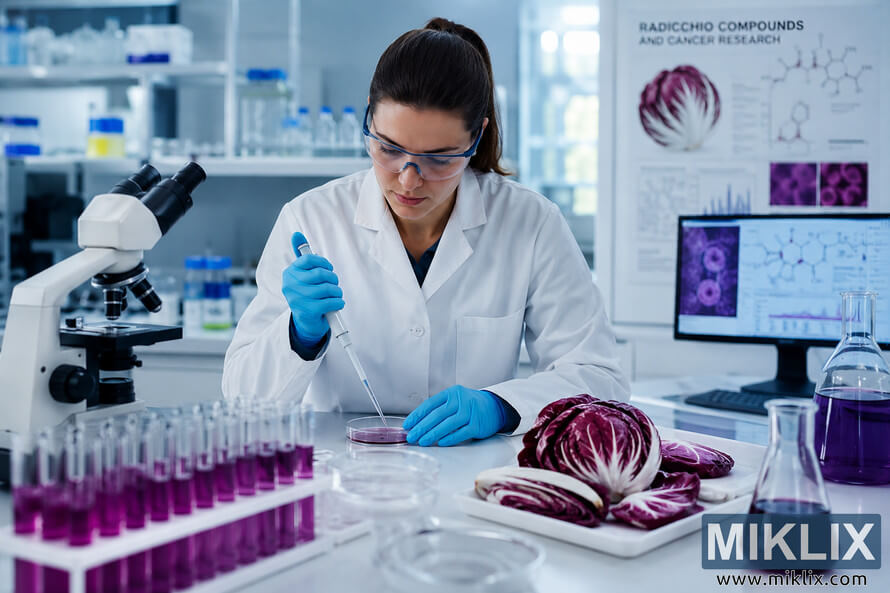
Landscape image of a modern cancer research laboratory where a scientist investigates radicchio-derived compounds using laboratory equipment, microscopes, purple sample solutions, and scientific analysis displays in a clean biomedical research environment.
Available versions of this image
The image files available for download below are less compressed and higher resolution - and as a result of that, higher quality - than the images embedded in articles and pages on this website, which are more optimized for file size in order to reduce bandwidth consumption.
Regular size (1,536 x 1,024)
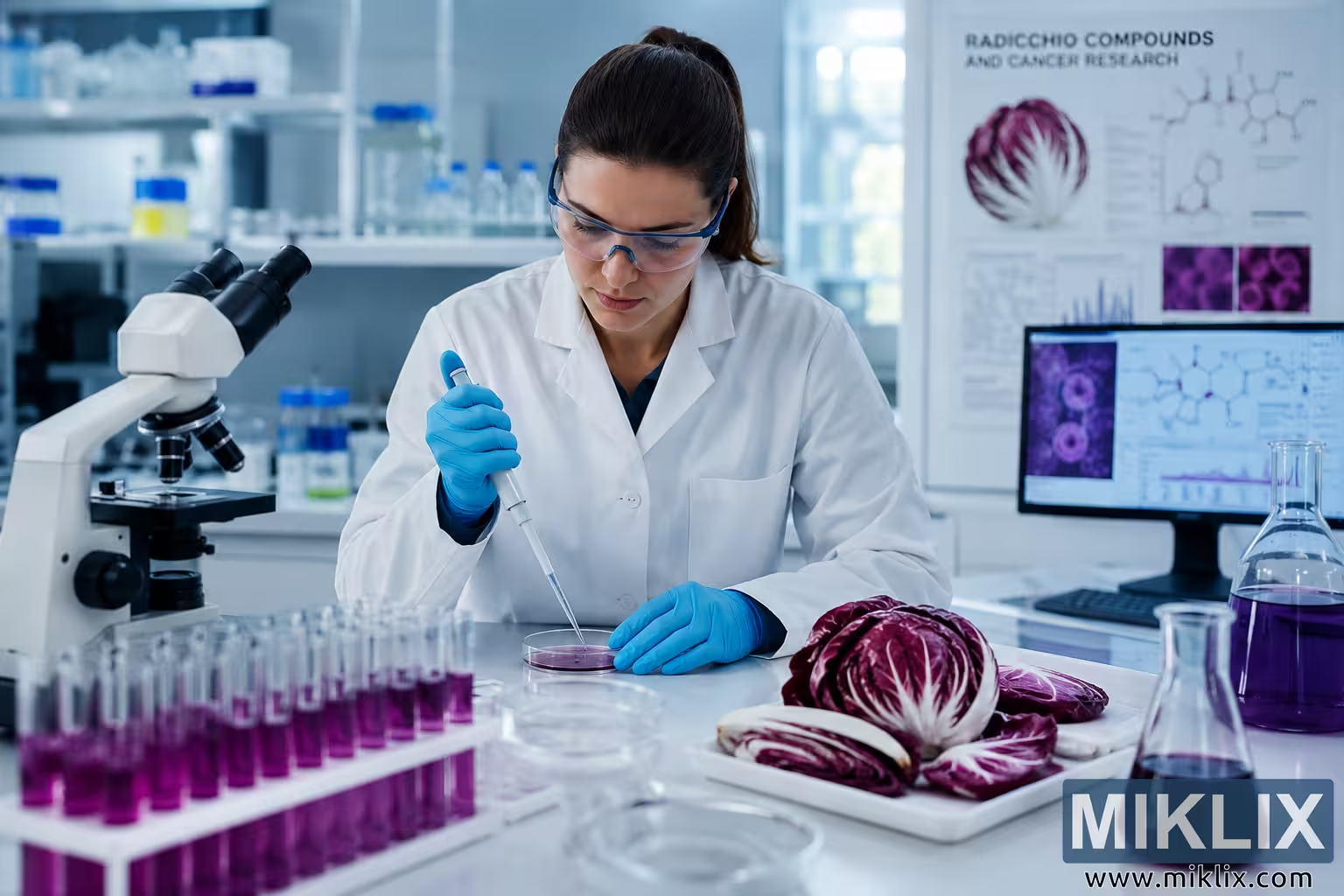
Large size (3,072 x 2,048)
Very large size (4,608 x 3,072)
Extra large size (6,144 x 4,096)
Comically large size (1,048,576 x 699,051)
- Still uploading... ;-)
Image description
This image depicts a bright, contemporary biomedical research laboratory where a scientist is conducting an experiment focused on naturally occurring compounds found in radicchio and their potential relevance to cancer research. The laboratory is illuminated by soft, cool-toned lighting that enhances the clean, sterile appearance of the workspace. The overall environment conveys professionalism, precision, and scientific rigor while maintaining a welcoming visual atmosphere.
At the center of the composition, a researcher wearing a white laboratory coat, protective safety glasses, and blue nitrile gloves is carefully using a precision micropipette to transfer a small amount of purple-colored liquid into a petri dish positioned on the laboratory bench. The scientist's concentrated facial expression and careful posture emphasize the meticulous nature of laboratory research, suggesting that the experiment requires accuracy and attention to detail. The laboratory attire reflects standard safety practices commonly observed in biological and chemical research environments.
The workbench contains numerous scientific instruments and laboratory materials that reinforce the research setting. On the left side of the image stands a modern compound microscope positioned for examining biological samples at high magnification. Nearby, multiple transparent test tubes are arranged neatly in a rack, each containing varying levels of vivid purple solution. Several clear petri dishes are visible in the foreground, indicating that multiple samples may be undergoing preparation or analysis. Glass laboratory flasks filled with dark violet liquid contribute additional visual interest while suggesting ongoing extraction, purification, or analytical procedures involving plant-derived compounds.
Prominently displayed on the right side of the laboratory bench are several freshly cut heads and slices of radicchio. Their deep burgundy leaves and crisp white veins create a striking contrast against the clean white laboratory surfaces. The vegetables appear intentionally prepared as research specimens rather than food ingredients, reinforcing the scientific context of the scene. Their placement close to the experimental equipment visually connects the natural plant material with the laboratory analyses taking place.
Behind the researcher, shelves stocked with laboratory bottles, sample containers, and scientific supplies further establish the authenticity of the environment. The containers are neatly organized, reflecting the structured workflow expected in professional biomedical laboratories. The background remains softly out of focus, allowing attention to remain on the researcher while still conveying depth and a fully equipped research facility.
A computer monitor positioned to the right displays scientific graphics, molecular diagrams, microscopic imagery, and analytical charts. Although the information shown is illustrative rather than intended as factual research data, it visually represents the type of computational analysis often associated with biomedical and phytochemical investigations. Adjacent to the monitor, a scientific poster includes an illustration of radicchio alongside stylized molecular structures and diagrams that symbolize ongoing investigation into plant-derived compounds and their biological properties. The graphics communicate the theme of nutritional science, natural product chemistry, and laboratory-based biomedical research without making definitive medical claims.
The color palette is dominated by cool whites, light blues, and metallic laboratory surfaces that communicate cleanliness and technological sophistication. These cooler tones are balanced by vivid purple laboratory solutions and the rich red-purple coloration of the radicchio, creating an appealing visual contrast that naturally guides the viewer's attention throughout the composition. Reflections on the polished laboratory surfaces add realism and reinforce the impression of a modern, well-maintained facility.
The composition is presented in a wide landscape orientation, allowing viewers to appreciate both the central research activity and the surrounding laboratory environment. Depth of field subtly separates the researcher from the background while preserving enough detail to communicate the presence of advanced equipment and scientific resources. Overall, the image conveys themes of biomedical innovation, plant-based scientific investigation, laboratory precision, interdisciplinary research, and the careful study of naturally occurring compounds in a professional scientific setting. The scene illustrates exploratory laboratory work related to radicchio-derived substances and cancer research in a visually engaging yet responsibly neutral manner, emphasizing investigation rather than established therapeutic outcomes.
The image is related to: Radicchio: The Bitter Leaf with Sweet Health Benefits