
Hops in Beer Brewing: Triskel
प्रकाशित:
आखरी अपडेट: 4 जून 2026 को 6:28:51 pm UTC बजे
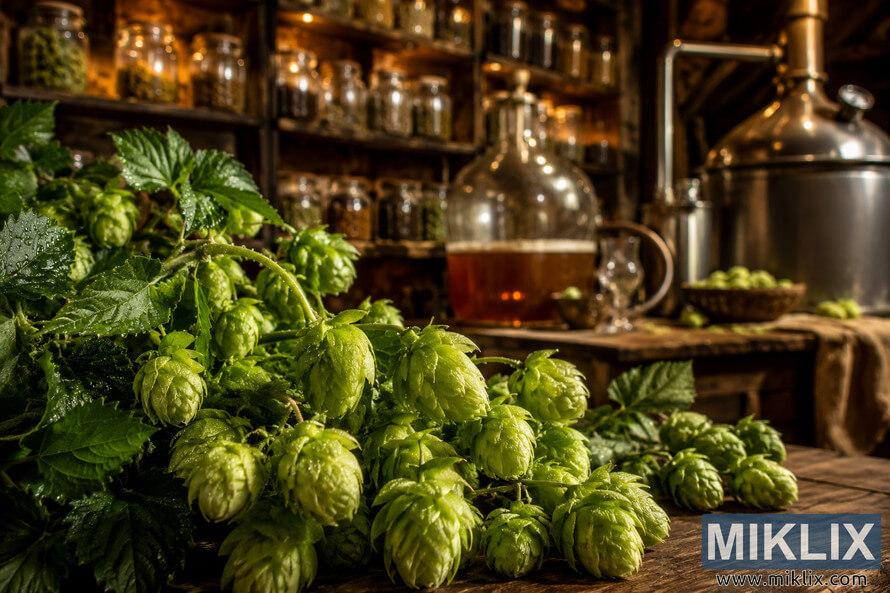
Triskel is a French aroma hop, developed by Comptoir Agricole's breeding programme. This hop variety, often referred to as TKL and owned by Hops France, is known for its delicate floral and citrus notes. It also offers smooth bitterness, making it suitable for both traditional ales and modern craft styles.
Hops in Beer Brewing: Triskel
अधिक जानकारी और बेहतर रिज़ॉल्यूशन के लिए छवि पर क्लिक या टैप करें।
Triskel hops are available from various suppliers. However, their quality and price can vary by harvest year. This means brewers in the United States often compare different lots when planning their Triskel brewing. The hop was developed around 2006 and has been used in hundreds of recipes. These recipes aim for a balance of aroma and subtle support.
For those formulating recipes or homebrewing, Triskel's alpha acids are in a modest range. This range emphasizes its use in aroma rather than bittering. This balance makes Triskel perfect for late additions, whirlpool aroma, and dry-hopping. It provides a soft citrus-floral lift without harsh bitterness.
Key Takeaways
- Triskel is a French aroma hop from Comptoir Agricole, listed as P 09-18 (TKL).
- It offers delicate floral and citrus notes with smooth bitterness for versatile brewing.
- Commonly used for late additions, whirlpool, and dry-hop applications.
- Suppliers and harvest years affect price and aromatic expression in Triskel brewing.
- Triskel alpha acids are modest, favoring aroma roles over heavy bittering.
Introduction to Triskel Hops and Their Role in Brewing
Triskel is a French-bred hop known for its delicate floral and citrus aromas. It offers brewers a subtle way to enhance beer flavors without dominating the malt or yeast. The hop's aroma profile is reminiscent of bergamot, white flowers, and light spice, making it ideal for beers where subtlety is key.
Triskel's unique blend of low-to-moderate alpha acids and rich oils makes it versatile in brewing. It excels as an accent hop in late additions and dry hopping, adding a floral or citrus touch without harshness. Its soft bitterness makes it suitable for first-wort use, too.
Developed through French breeding programs, Triskel's lineage is rooted in classic European aroma hops. This heritage explains its popularity in saisons, pale ales, and lighter lagers. The hop's aroma reflects the terroir of Alsace and the careful selection for aroma quality.
When brewing with Triskel, timing is crucial to preserve its volatile oils. It's best used in late additions, whirlpool or hop stand at gentle temperatures, and dry-hopping for a heady aroma. For those aiming for a nuanced nose, Triskel can be used alone or blended with mild European hops to add complexity without overpowering delicate notes.
- Late addition hops: add in the final 5–10 minutes or during whirlpool to preserve citrus and floral top-notes.
- Dry hopping: short contact times of 24–72 hours often yield the best aromatic lift without grassy flavors.
- First-wort hopping: use moderate rates to introduce a smooth bitterness while keeping the Triskel aroma profile intact.
अधिक जानकारी और बेहतर रिज़ॉल्यूशन के लिए छवि पर क्लिक या टैप करें।
Origin and Genetics of the Triskel Hop
Triskel's origins stem from a deliberate breeding effort. It aimed to merge classic French aroma with English vigor. This resulted in a hop with delicate floral and citrus notes, perfect for modern craft styles.
The Triskel hop's parentage is well-documented. It is a cross between the traditional Strisselspalt variety and a male Yeoman line. This combination aimed to enhance aroma clarity and field robustness. It resulted in a hop with distinctive sensory traits.
Its development and release were part of a formal program by Comptoir Agricole. The hop carries the breeder code P 09-18 and the international code TKL. Introduced in the early 2000s, it was the result of trialing and selection.
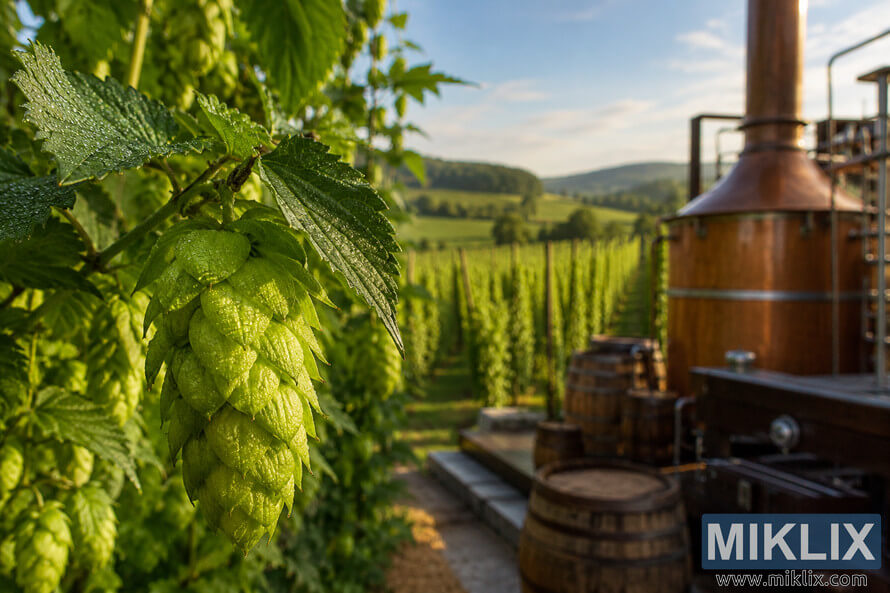
Alsace hop cultivation is crucial to Triskel's identity. The region's cool nights and calcareous soils preserve volatile oils. This ensures consistent alpha acid levels. Growers in Alsace note that terroir affects aromatic expression seasonally.
- Parent pair: Strisselspalt x Yeoman, chosen for complementary aroma genes.
- Breeding ID: P 09-18, international code TKL, released via Comptoir Agricole hops program.
- Regional focus: Alsace hop cultivation provides ideal conditions for this cross.
Understanding Triskel's parentage helps brewers and growers anticipate its aroma, yield, and field behavior. The documented lineage explains why this hop combines French perfume with English structural traits.
अधिक जानकारी और बेहतर रिज़ॉल्यूशन के लिए छवि पर क्लिक या टैप करें।
Chemical Profile and Brewing Values of Triskel Hops
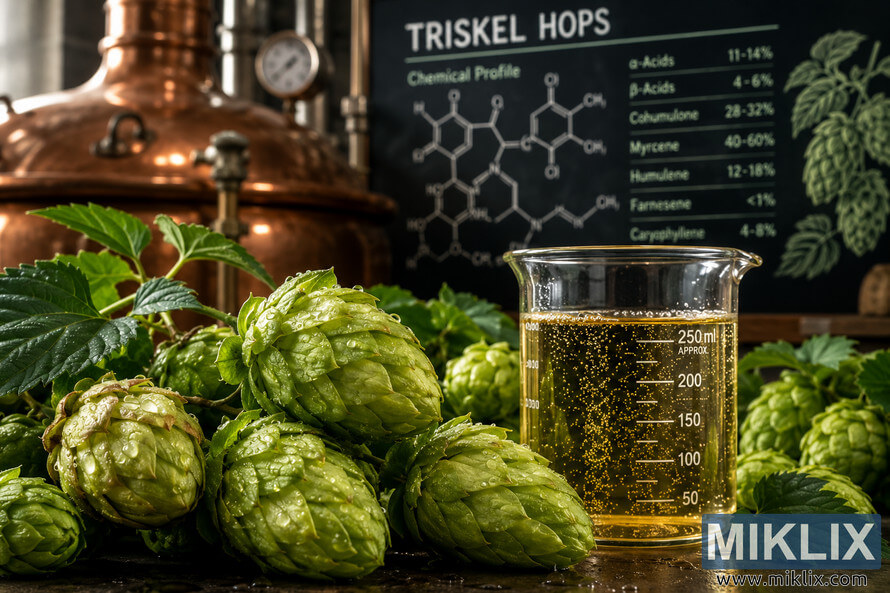
Triskel's chemical profile aligns with an aroma hop, boasting low-to-moderate bittering potential and a rich volatile oil fraction. Brewers use these characteristics to plan hopping schedules, adjust bitterness, and predict the aromatic impact of late additions and dry hopping.
Alpha acid levels for Triskel hover around 3–9%, with an average of about 6%. Crop year and analysis method can slightly alter these values. This range positions Triskel as ideal for aroma-forward additions, where a subtle bitterness is preferred. Discussing Triskel alpha acids helps brewers compare it to more bittering hops when crafting recipes.
Beta acid measurements typically range from 4–5.5%, averaging around 4.8%. The alpha-beta ratio often falls between 1:1 and 2:1, leaning towards parity on average. Monitoring Triskel beta acids is crucial for assessing oxidation risk and post-brew flavor stability.
Total oil content averages about 1.6 mL per 100 g, spanning from roughly 1.2 to 2.0 mL/100 g. This oil composition explains Triskel's effectiveness as an aroma hop rather than a high-alpha bittering variety. Including Triskel oil composition in recipe notes clarifies expected aromatic contributions.
- Myrcene: dominant at about 55–61% (avg ~58%), responsible for fresh, resinous and citrusy top notes.
- Humulene: roughly 10–16% (avg ~13%), adds woody, spicy facets that sit in the midrange.
- Caryophyllene: near 2–3% (avg ~2.5%), brings peppery and warm spice character.
- Farnesene: minimal, around 0–1% (avg ~0.5%), contributes subtle floral lift in some lots.
- Other volatiles such as β-pinene, linalool, geraniol, and selinene make up the remaining 19–33%, shaping complexity.
Co-humulone typically accounts for about 20–23% of the alpha fraction, averaging near 21.5%. This level helps predict perceived bitterness quality when using Triskel in bittering roles at low concentrations. Brewers who track hop chemistry can use these metrics to fine-tune bitterness balance and aroma outcomes.
Analytical ranges reported across studies vary, with some samples showing alpha spans from about 2.3–9.5% and beta spans from roughly 2.0–6.7%. These variations confirm Triskel's status as a low-to-moderate alpha aroma hop and underscore the importance of checking batch-specific lab data before scaling recipes.
अधिक जानकारी और बेहतर रिज़ॉल्यूशन के लिए छवि पर क्लिक या टैप करें।
Flavor and Aroma Profile for Brewers
Triskel presents a refined, approachable scent that many brewers cherish for its balance. They often highlight a clear floral top note that harmonizes with citrus and soft fruit. This blend elevates beers gently, without overpowering the malt or yeast.
Primary impressions reveal floral, citrus, and fruity notes. The floral citrus hops introduce white flowers, bergamot-like citrus, and light stone-fruit tones. Used in moderation, the hop flavor profile remains elegant and layered.
- Floral: white blossoms, delicate and bright.
- Citrus: bergamot, lemon peel, subtle zest.
- Fruity: soft stone fruit and sweet fruit undertones.
Secondary traits add depth and complexity. Subtle caramel, herbal hints, and a faint pepper or woody spice emerge beneath the main aromatics. These elements make Triskel ideal for beers that require subtle spice or warmth without harshness.
- Caramel: light sweet backing that supports malt.
- Herbal and peppery: delicate tonic notes and gentle spice.
- Woody and resinous: small traces that add structure.
Timing is crucial to preserve the nose. Late-boil additions enhance bright citrus and floral cues while softening the bitter bite. Whirlpool hops at lower temperatures coax oils out without volatilizing them. Dry hopping maximizes the direct expression of Triskel aroma notes and showcases the full hop flavor profile.
- Late-boil: emphasize bright citrus and soft floral top notes.
- Whirlpool: capture rounded fruit and herbal subtleties.
- Dry hop: maximize aromatic intensity and delicate nuances.
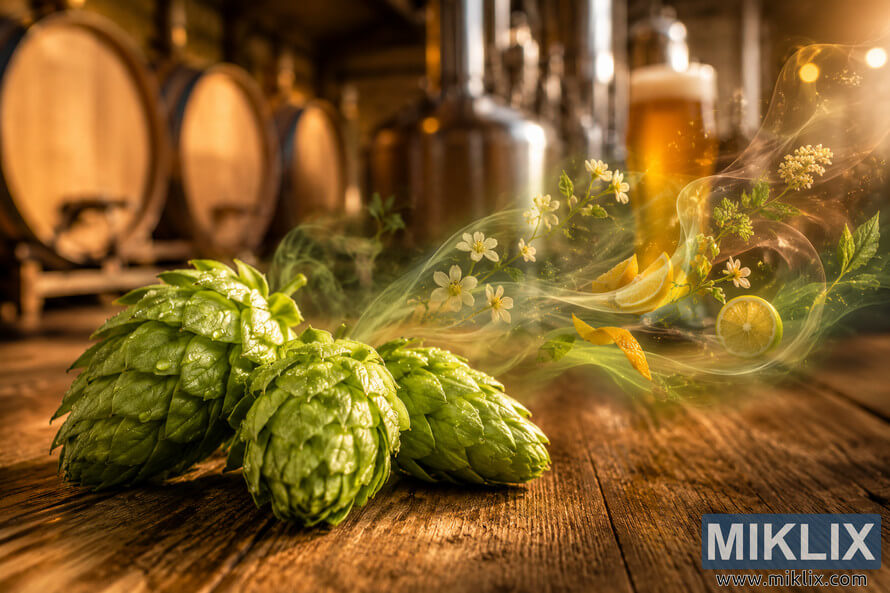
अधिक जानकारी और बेहतर रिज़ॉल्यूशन के लिए छवि पर क्लिक या टैप करें।
Practical Uses of Triskel Hops in Beer Recipes
Triskel excels in adding subtle floral and citrus notes without overpowering malt flavors. It's often used in late additions and dry hopping to preserve delicate oils. Its moderate alpha acids make it ideal for first-wort hopping, aiming for a smooth bitterness and saving aroma for later.
Timing is key for aroma-focused brewing. Add Triskel late in the boil or during the whirlpool to enhance floral and citrus aromas. Dry hopping brings out the hop's bright top-note fragrance. For a gentle bitterness, consider a first-wort addition, balancing bitterness and aroma.
- Late boil: target final 5–10 minutes to retain volatile oils.
- Whirlpool: add at cooler temperatures (120–80°F / 50–27°C) to capture aroma without driving off delicate compounds.
- Dry hop: 3–7 days contact for most ales; extend for lagers if you want subtler lift.
Dosage varies by style and desired impact. Light lagers and pilsners require lower rates to maintain crispness. Saisons and pale ales can handle moderate to higher rates, emphasizing floral-citrus notes. Plan Triskel dosages based on batch size and alcohol level, not a fixed number for every beer.
- Pilsners and lagers: low rates to avoid overwhelming the malt base.
- Pale ales and saisons: moderate rates to showcase Triskel aromatics.
- Single-hop beers: use higher percentage of the schedule when you want Triskel to be the star.
Choosing between single-hop and blended approaches depends on your goals. Single-hop brews highlight Triskel's subtle floral-citrus profile, showcasing its nuances. Blends offer complexity and balance, pairing Triskel with classic European hops for restraint or lighter New World hops for a brighter citrus layer.
Recipes in public databases showcase Triskel's versatility, from small fractions to the sole hop. This range allows brewers to experiment, creating single-hop showcases or blending Triskel with other hops. Small batches are ideal for finding the perfect balance for your recipe and taste preferences.
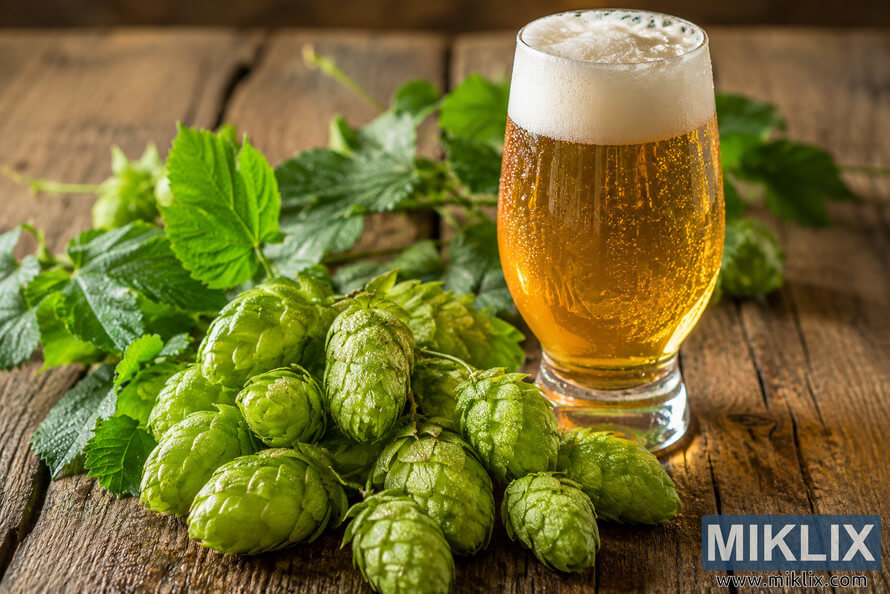
अधिक जानकारी और बेहतर रिज़ॉल्यूशन के लिए छवि पर क्लिक या टैप करें।
Beer Styles that Benefit from Triskel Hops
Triskel hops introduce a delicate floral-citrus character, ideal for beers that prioritize subtle aroma over bold bitterness. They are chosen for their ability to add bright topnotes without overpowering the malt and yeast. This hop variety complements a variety of European and modern beer styles, from light lagers to farmhouse ales.
- Triskel in saisons enhances peppery yeast and esters with a gentle citrus lift. It supports complex yeast-driven aromas while adding a refined floral edge.
- In Belgian ales, modest late additions highlight delicate fruitiness and retain yeast character. Triskel in Belgian ales pairs well with classic Belgian yeast strains and light pilsner malts.
Pilsner, Kölsch, and Lager uses
- For pilsners, Triskel in pilsner gives a restrained floral-citrus aroma that complements soft water profiles and crisp hop bitterness.
- Kölsch and other light lagers benefit from small whirlpool or dry-hop amounts to add aroma without changing clarity or balance.
- Use conservative rates and cool-temperature whirlpools to protect volatile oils and keep the beer elegant.
Pale Ale and IPA considerations for subtle aroma-driven IPAs
- Pale ales and session IPAs can showcase Triskel when the goal is finesse rather than hop punch. Use it late or as a dry-hop to keep aromas forward and balanced.
- Avoid relying on Triskel as the sole hop in West Coast or high-IBU IPAs. It excels in versions that favor aroma complexity over resinous intensity.
- Blending Triskel with brighter American varieties like Centennial or Citra can create layered citrus and floral notes while maintaining drinkability.
Pairing Triskel Hops with Malts and Yeasts
Triskel hops introduce delicate floral and citrus notes, requiring a grain bill that supports without overpowering. Opt for malts that enhance bergamot and white-flower aromatics, avoiding heavy caramel or roasted flavors that could mask them.
For a clean malt backbone, pilsner and pale two-row are ideal for their clarity and lightness. Wheat and Vienna malts contribute body and a soft bread character, maintaining a bright profile. Use biscuit or light caramalt sparingly for a hint of sweetness.
- Pilsner malt: clarity and crisp finish
- Pale two-row: neutral base for hop aromatics
- Wheat or Vienna: smooth mouthfeel without overpowering
Yeast selection is crucial in showcasing Triskel aromas. Choose strains that either display clean fermentation or complement with esters. For instance, saison and Belgian ale strains can enhance floral qualities, while lager yeasts provide a clean canvas for citrus.
- Mid-ester Belgian strains: accentuate fruity and floral notes
- Clean lager strains: let hop aromatics dominate
- Neutral ale strains (American or British): maintain balance
When planning a Triskel malt pairing, consider attenuation and ester profile. A highly attenuating yeast can increase perceived dryness, making hop aroma seem brighter. Match yeast with the beer’s desired body and ester presence to preserve delicate aromatics.
Adjuncts and spices can enhance Triskel without overpowering it. Light citrus peels, cracked coriander, and subtle floral adjuncts pair naturally with bergamot and white-flower tones. Keep adjuncts restrained to complement, not compete, with the hop.
- Light citrus peel (bergamot or orange): echoes hop citrus
- Coriander seed (light toast): adds floral-citrus spice
- Edible florals (lavender, chamomile in tiny amounts): deepen floral notes
For brewers seeking clear guidance, test small batches with one variable at a time. Try a base pilsner malt with a Belgian strain, then repeat with a lager yeast to compare. Track Triskel malt pairing choices, yeast for Triskel selections, and any adjuncts with Triskel hops to refine recipes that showcase the hop’s subtle charm.
Hop Combinations and Pairings with Triskel
Triskel is a delicate aroma hop, requiring careful blending. It adds floral and citrus notes, while other hops provide structure. Late additions and dry hopping are best to preserve its subtlety.
- European complements: Pair Triskel with Hallertau, Saaz, or Strisselspalt for a soft, nuanced profile. These European hops share gentle floral and spice notes. They complement pilsners, kölsch, and saisons well. Use them together for a layered aroma without harsh resin.
- New World complements: Centennial, Simcoe, and Chinook add brighter citrus, pine, and resin. Use them sparingly to keep Triskel as the floral-citrus focal point. This way, the aroma blend remains balanced.
- Bittering partners: Magnum and other high-alpha hops are great for early boil additions. They control bitterness, allowing Triskel to contribute aroma later. This approach manages IBUs without overpowering the delicate oils.
Keep proportions modest. Use Triskel primarily in late-boil or dry-hop additions, at 60–80% of total aroma weight. Stronger American or bittering hops fill the rest. This method preserves Triskel’s subtlety and prevents domination by piney or resin-forward hops.
When testing blends, run small pilot batches and stagger contact times. Observe how hop oils evolve in whirlpool and dry-hop phases. Track results to predict future Triskel pairings across styles and grain bills.
Substitutions and Alternatives for Triskel Hops
When looking for a Triskel substitute, it's crucial to match its aroma and brewing function. Brewers seek hop alternatives that replicate Triskel's floral, citrus, and fruity notes. They also aim to match the beer's bitterness and oil profile.
- Strisselspalt — a close aromatic cousin with delicate florals and fine spice. Many compare Strisselspalt vs Triskel when aiming for light, European-style aromas.
- Ahtanum — brings citrus and stone-fruit character that mirrors Triskel's fruitiness in pale ales and saisons.
- Centennial — offers brighter citrus and floral lift for versions needing slightly stronger aroma and a higher alpha acid.
- Chinook and Simcoe — used when a brewer wants more resinous or pine-citrus edges while still preserving a fruity backbone.
Choosing a substitute involves comparing alpha and beta acid ranges and total oil composition. For subtle, low-alpha aroma, favor Strisselspalt or Ahtanum. For higher alpha or stronger citrus, consider Centennial. Use Strisselspalt vs Triskel notes to decide when a vintage European aroma is required.
Adjust rates and timing when swapping hops. Scale weight down if the alternative has higher alpha acid to avoid excess bitterness. Maintain Triskel-style late additions and dry-hop placements to protect volatile oils and preserve aroma.
- Match aroma descriptors first: floral, citrus, fruity.
- Compare alpha acid percentages and reduce or increase weight accordingly.
- Keep hop additions late in the boil, in the whirlpool, or for dry hopping to maximize aromatic impact.
When experimenting, try small pilot batches and note differences in aroma intensity and bitterness. Thoughtful swaps among hop alternatives let brewers recreate Triskel character even when the original is hard to source.
Availability, Purchasing, and Sourcing Triskel Hops
Securing Triskel hops for brewing in the United States requires diligence. Growers in Alsace are the primary suppliers, but export challenges and harvest variations impact availability. Always verify the harvest year and lab results before making a purchase.
Options for where to buy include specialty hop merchants, national distributors, and large online marketplaces. Many brewers opt for importers that provide detailed alpha and oil profiles. This allows them to match specific crop years with their recipes. Online retailers and Amazon also offer Triskel hops, but product details and prices can vary.
- Check multiple Triskel hop suppliers for price and crop-year options.
- Confirm alpha acid and oil numbers with the supplier before purchase.
- Order samples or small packs when testing a new harvest.
Prices and quantities differ based on supplier and season. Homebrewers often purchase smaller lots, while commercial breweries prefer bulk orders. Market demand and occasional shortages can cause price fluctuations. Recipe databases showcase Triskel's versatility, driving consistent demand and occasional scarcity.
- Compare pack sizes and unit price from several suppliers.
- Ask about available crop years and request COAs (certificates of analysis).
- Plan lead time for imports to avoid production delays.
U.S. import considerations include customs clearance, transit time, and additional shipping costs. Partner with hop brokers or distributors familiar with French varieties to streamline delivery. To track Triskel availability in the USA, contact importers early in the year for the best lead times.
If you need to buy Triskel hops quickly, focus on suppliers that publish harvest-year data and offer reliable shipping. This approach minimizes surprises in aroma or alpha content, ensuring consistent recipe outcomes.
Processing Forms: Whole Cone, Pellets, and Lupulin Considerations
Triskel is available in formats that cater to various brewing needs. It can be found as whole cone bines or processed pellets. The choice of format impacts handling, extraction speed, and the beer's aroma.
- Available formats: Triskel cones are dried whole hops, ideal for gentle handling. Triskel pellets, on the other hand, are compact and easier to dose. They fit well with modern packaging lines. Both formats are suitable for late-boil, whirlpool, and dry-hop additions.
- Lupulin powder status: Currently, there is no commercial lupulin powder for Triskel. Major processors like Yakima Chief Hops, BSG/Haas, and Hopsteiner have not introduced a Cryo or Lupomax Triskel product. Brewers must rely on cones or pellets for aroma work.
- Practical implications: Without lupulin, extraction relies on full-particle contact. Triskel pellets offer faster extraction due to cell wall rupture during pelleting. Whole cones, however, are gentler and better for delicate aroma management.
Hop storage and handling
Preserving volatile oils requires cold, low-oxygen conditions. Vacuum-sealed packaging, refrigeration, or freezing are best practices to minimize aroma loss. It's crucial to limit hop exposure to air when transferring from storage to the kettle or fermenter.
- Short-term use: Keep opened packages chilled and use Triskel pellets or cones within days for optimal aromatic impact.
- Long-term storage: Freeze vacuum-sealed hops to retain their profile year to year. Proper storage reduces degradation of myrcene and other volatile oils.
- Handling tips: Minimize oxygen exposure during transfer, weigh in cold rooms when possible, and use gentle hop bags for dry-hopping. This avoids excessive breakage of Triskel pellets or cones.
When planning aroma additions, match your process to the form you have. Triskel pellets offer quick extraction, while Triskel cones provide a softer release. Without Triskel lupulin, proper hop storage and handling become crucial for preserving the hop's floral-citrus character.
Brewing Tips and Techniques to Maximize Triskel Aromas
To bring out Triskel's best, protect its volatile oils. Plan your additions to retain aroma and balance bitterness. Use Triskel as a late-hop aromatic, paired with Magnum for a neutral bittering hop.
Late boil and whirlpool techniques are key for floral and citrus notes. Aim for a Triskel whirlpool temperature between 120–180°F (50–82°C). This range helps extract aroma without losing delicate terpenes. Hold the whirlpool gently for 10–30 minutes, then chill quickly.
Dry hopping unlocks bright fruit and floral layers. Typical Triskel dry hop time is 3–7 days, depending on beer temperature and yeast activity. Colder conditioning requires longer contact, while warmer fermentations shorten it. Remove hops after the chosen contact time to avoid grassy or vegetal extraction.
- Use small, frequent late additions to maximize Triskel aroma while avoiding overpowering malt.
- Consider a short whirlpool at lower temperatures to boost hop oils that survive the boil.
- When dry hopping, monitor aroma daily after day three and package once the desired profile appears.
First-wort hopping can add a rounded bitterness when you need smooth support for Triskel’s aromatics. Add only a portion of Triskel or use a dedicated high-alpha bittering hop early in the boil, then reserve Triskel for late and dry-hop stages. This keeps bitterness clean while letting Triskel drive the aroma.
For session beers and saisons, use 0.25–0.75 oz per gallon for late additions and 0.1–0.4 oz per gallon for dry hopping as a starting point. For stronger pale ales, scale each stage up, but keep the same balance between early bittering and late aroma. Taste and adjust across batches to refine results.
Examples of Commercial Beers and Recipes Using Triskel
Triskel is increasingly featured in craft beers and homebrew recipes. Its unique qualities, such as gentle floral and citrus notes, are highly valued. These characteristics are particularly suited to lighter European styles and saison variations. Below, we explore real-world examples, practical recipe ideas, and dosage ranges based on commercial practices and recipe databases.
Urban Chestnut Brewing Company's Hopswitch Lager, brewed with Triskel hops from Comptoir Agricole in Alsace, is a prime example. This lager retains its crisp malt character while incorporating subtle floral and citrus notes. These are achieved through late additions and whirlpool hopping.
Homebrewers have enthusiastically adopted Triskel in their recipes. Currently, there are 335 Triskel homebrew recipes documented. These recipes span saisons, pilsners, and pale ales, showcasing common techniques and serving as a starting point for brewers.
- Pilsner idea: use light pilsner malt, add 15–25 g/L Triskel late for aroma, and a small first-wort addition for smooth bitterness.
- Saison idea: employ higher Triskel rates for late and dry-hop additions, often paired with Belgian saison yeast to enhance citrus and floral esters.
- Pale ale idea: blend Triskel with a neutral backbone hop at 20–30% of the aroma schedule to maintain steady bitterness while adding delicate lift.
Recipe databases reveal a wide range of hop usage percentages. Triskel can be used as 8.1% of the hop schedule or for 100% of aroma additions in single-hop trials. Brewers should adjust quantities based on batch size and desired intensity. For lagers, moderate additions are recommended, while saisons or blond ales benefit from stronger aroma loads.
- Dosage tip: for a 5-gallon (19 L) batch of lager, try 10–20 g of Triskel in a late boil and 10–15 g in whirlpool.
- Saison dosage: for a 5-gallon batch, consider 25–50 g late additions plus 20–40 g dry-hop, adjusting by yeast character.
- Single-hop trial: use 100% of aroma additions as Triskel at conservative rates to evaluate its full profile before blending.
Triskel's primary role is as an aromatic hop. When crafting beers with Triskel, refer to recipe repositories to align dosage with style and aroma goals. This practical approach facilitates the adaptation of Hopswitch Lager Triskel examples and Triskel homebrew recipes into your own creations.
Growing and Agricultural Notes on Triskel Hops
Triskel hops flourish in environments where meticulous vineyard management meets cool, continental climates. Growers in Alsace employ steady practices that emphasize low-input care and timely canopy management. This approach ensures optimal growth conditions.
Field performance of Triskel exhibits consistent yields and robust disease resistance, typical of French hop cultivation. Balanced pruning and proper drainage are key. They maintain the cones' cleanliness and aromatic quality.
Breeders and commercial growers closely monitor seasonal variations. Each harvest brings unique alpha and oil numbers. Lab sheets post-harvest are crucial for brewers to track quality and adjust their recipes accordingly.
- Yield trends: stable Triskel yield across multiple seasons with moderate variability by block and year.
- Disease profile: strong tolerance to common fungal pressures when trained and thinned correctly.
- Crop handling: gentle picking and rapid drying preserve volatile oils.
Alsace hops benefit from calcareous-clay soils, cool nights, and a dry late summer. These conditions support consistent cone development and the delicate floral-citrus aromatics Triskel is known for.
Hop terroir Triskel is a practical concept for buyers and brewers. Soil, microclimate, and harvest timing influence alpha-acid levels and oil composition. This variation is significant for aroma-focused additions.
For supply-chain clarity, requesting crop-year analysis and comparing certificates from Alsace suppliers is essential. This practice aligns brewing targets with the real-world variation in Triskel growing.
Conclusion
Triskel hops summary: Triskel is a French aroma variety (P 09-18) bred by Comptoir Agricole from Strisselspalt × Yeoman. It offers delicate floral, citrus, and fruity notes with a smooth bitterness. This makes it perfect for lagers, blond ales, and saisons. However, crop-year variation and terroir in Alsace can affect its alpha acids and aromatic intensity. Always check supplier reports before planning your batches.
Triskel brewing takeaways: For the best results, use Triskel for late-boil additions, whirlpool rests, and dry hopping. This preserves its bright, refined aromatics. It pairs well with light malt backs like Pilsner or Vienna and yeast strains that enhance floral-citrus traits. Consider blending with Hallertau, Strisselspalt, or restrained New World hops to add depth without losing finesse.
Using Triskel hops in recipes is straightforward: focus on late additions and short, cool whirlpool contact, or moderate dry-hop rates to avoid vegetal extraction. With its broad adoption across hundreds of recipes, Triskel is a reliable choice for brewers seeking subtle complexity. Keep batch records and compare harvest-year data to ensure consistent results from this versatile French aroma hop.
FAQ
What is Triskel and what are its primary brewing uses?
Triskel, with the international code TKL and cultivar ID P 09-18, is a French aroma-purpose hop. It's bred by the Comptoir Agricole programme. It's used for late-boil additions, whirlpool/first-wort hopping, and dry hopping. This captures its delicate floral, citrus, and fruity aromatics. It's ideal for lighter European styles, saisons, Belgian ales, pilsners, Kölsch, pale ales, and subtle IPAs.
What is the genetic origin and development history of Triskel?
Triskel was developed in France, as a cross between Alsatian Strisselspalt and English Yeoman. It's attributed to the Comptoir Agricole breeding programme (cultivar/brand ID P 09-18). It was developed in the 2000s, with records around 2006. Its name references the Triskelion motif tied to regional heritage in Gaul/Alsace.
What are the typical alpha and beta acid ranges for Triskel?
Triskel is a low-to-moderate alpha hop suited for aroma use. Alpha acid ranges are roughly 2.3–9.5%, with common ranges around 3–9% and an average near 6%. Beta acids span about 2.0–6.7%, with averages of ~4–5.5%.
How does Triskel’s oil profile influence its use?
Total oils are moderate, about 1.2–2.0 mL/100g, averaging ~1.6 mL/100g. Myrcene is dominant, roughly 55–61% with an average near 58%. Humulene follows, ~10–16%, averaging ~13%. Caryophyllene is ~2–3%, with minor farnesene and other components like linalool and geraniol. This oil composition produces volatile floral, citrus, and fruity aromatics, best preserved with late additions and dry hopping.
What flavor and aroma descriptors should brewers expect from Triskel?
Triskel is known for floral, citrus, and fruity notes, often described as white flowers, bergamot-like citrus, and sweet fruit. Secondary notes include light spice, herbal, caramel, peppery, resinous, woody, and sweet nuances. Its subtlety and refinement make it suited for beers where delicate aromatics are desired.
How should Triskel be added in the brew schedule for best results?
Use Triskel in late-boil additions, whirlpool at lower temperatures (roughly 120–180°F / 50–82°C) to capture aroma without stripping volatiles, or as a dry-hop addition (3–7 days contact depending on temperature and yeast activity). It can also be used in first-wort hopping for a smoother bitterness; when doing so, keep inclusion moderate to retain aroma character.
What dosages are recommended for different beer styles?
Dosages vary by style and desired aroma intensity. Use lower absolute rates in pilsners and lagers to avoid overpowering a clean malt backbone. Use moderate to higher late or dry-hop rates in saisons, blond ales, and pale ales to showcase floral-citrus aromatics. Recipe databases show wide use—from single-hop brews to minor percentages in blends—so scale by batch size and aroma target, and consult supplier analysis for crop-year strength.
Can Triskel be used as a single-hop variety?
Yes. Triskel appears in single-hop recipes and can showcase a refined, floral-citrus character in lighter beers. It is more commonly used as a late-hop or dry-hop accent, and many brewers combine it with neutral high-alpha bittering hops for boil bitterness while relying on Triskel for aroma.
Which beer styles get the most benefit from Triskel?
Belgian ales and saisons benefit from Triskel’s floral and bergamot-like notes. Pilsners, Kölsch, and light lagers can use it sparingly to add delicate aromatics. In pale ales and IPAs, Triskel fits subtle, aroma-driven approaches rather than extreme, resinous West Coast IPA profiles.
What malts, yeasts, and adjuncts pair well with Triskel?
Choose clean or lightly characterful malt backbones—Pilsner, pale ale malts, and lighter Belgian malts—so the aromatics remain clear. Yeasts that complement Triskel include clean lager strains and Belgian ale strains that produce complementary esters. Adjuncts such as light citrus peel, coriander, or mild floral botanicals pair well with Triskel’s bergamot and white-flower notes.
Which hops are good partners and which should be used for bittering when blending?
European hop partners include Hallertau, Saaz, and Strisselspalt for balanced, nuanced profiles. New World complements like Centennial, Simcoe, and Chinook can be used sparingly for contrast. For early-boil bittering, neutral high-alpha hops such as Magnum or other clean bittering varieties are commonly used to preserve Triskel’s delicate aroma in later additions.
What are common substitutes for Triskel and how should I adjust recipes?
Common substitutes include Strisselspalt, Ahtanum, Centennial, Chinook, and Simcoe, chosen for overlapping floral, citrus, or fruity character. When substituting, match aroma profile and oil content, and adjust weight or timing if the substitute has a higher alpha or a different oil concentration. Maintain late additions and dry-hop positioning to preserve aroma.
Where can U.S. brewers buy Triskel and what should they check when sourcing?
Triskel is available from multiple suppliers and specialty hop merchants, and it occasionally appears on marketplaces such as Amazon. U.S. brewers should check crop-year analysis sheets, alpha and oil numbers, formats (whole cones or pellets), harvest year, and supplier reputation. Import factors—freight, customs, and seasonal availability—can affect price and lead time.
In which forms is Triskel sold, and is there a lupulin powder or cryo version?
Triskel is typically sold as whole cones and pellets. There is currently no widely available lupulin powder or cryo-style product (no Cryo/LupuLN2 by Yakima Chief, Lupomax by BarthHaas/Haas, or equivalent from Hopsteiner) for Triskel, so brewers rely on pellets or cones for aroma extraction.
How should Triskel hops be stored to preserve aroma?
Store Triskel cold and oxygen-free: vacuum-sealed in refrigerated or frozen conditions is best. Minimize oxygen exposure and use pellets or cones promptly after opening, since moderate total oils (1.2–2.0 mL/100g) are volatile and degrade with heat, light, and oxygen.
What are practical brewing tips to get the most aroma from Triskel?
Add Triskel late in the boil or perform whirlpooling at lower temperatures (120–180°F / 50–82°C). Dry-hop for 3–7 days depending on beer temperature. If using first-wort hopping, keep inclusion moderate to add smooth bitterness without losing aromatic potential. Use neutral early bittering hops when needed to control IBUs and preserve Triskel’s delicate nose.
How much variability is there between crop years and growing regions?
There is noticeable variability by harvest year and terroir. Alpha, beta, and oil percentages can shift from season to season. Triskel is mainly grown in Alsace, France, with generally stable yields and disease resistance, but brewers should check supplier crop-year reports for precise values before finalizing recipes.
Are there examples of commercial beers brewed with Triskel?
Yes. One noted commercial example is Urban Chestnut Brewing Company’s Hopswitch Lager, brewed with Triskel sourced from Comptoir Agricole. Recipe databases also list hundreds of homebrew and commercial recipes (several hundred entries), showing active use across styles.
How do I scale Triskel additions when substituting a hop with a different alpha acid or oil profile?
When substituting, match the target aroma intensity rather than weight alone. If the substitute has higher alpha acids, reduce the weight for late/dry additions to avoid changing perceived bitterness and oil impact. Compensate with timing—keep the substitute primarily in late additions or dry hop to emphasize aroma. Consult alpha and oil numbers from supplier lab sheets to fine-tune quantities.
Does Triskel provide aggressive bitterness, or is it best as an aroma hop?
Triskel is primarily an aroma hop with low-to-moderate alpha acids; it provides smooth, gentle bitterness when used in the boil or as a first-wort hop due to moderate co-humulone and beta levels. For significant early bittering, pair it with a higher-alpha neutral hop early in the boil and use Triskel for aroma-focused late additions.
अग्रिम पठन
यदि आपको यह पोस्ट पसंद आई हो, तो आपको ये सुझाव भी पसंद आ सकते हैं: