
Slika: Vacuum-Sealed Hops Stored in a Freezer
Objavljeno:
Zadnje ažuriranje: 19. rujna 2026. u 10:22:43 UTC
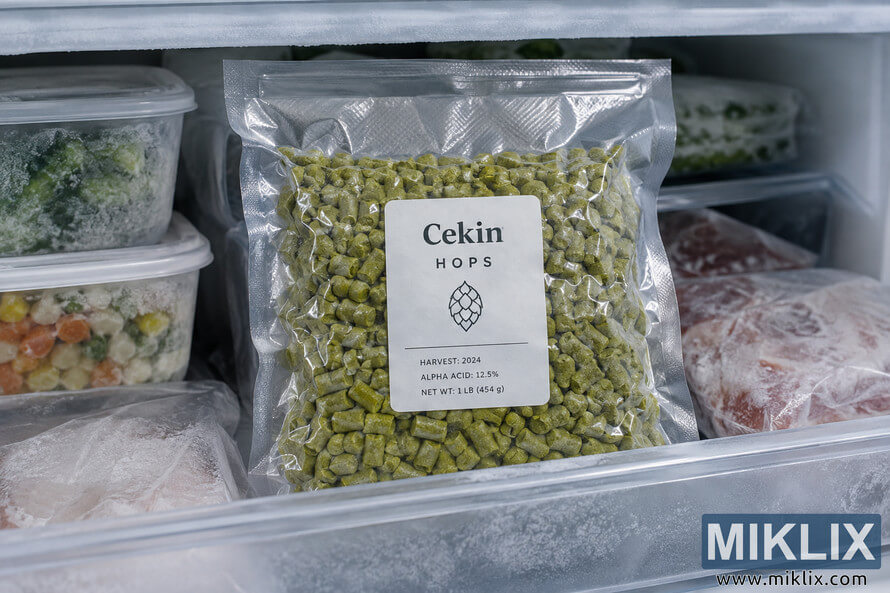
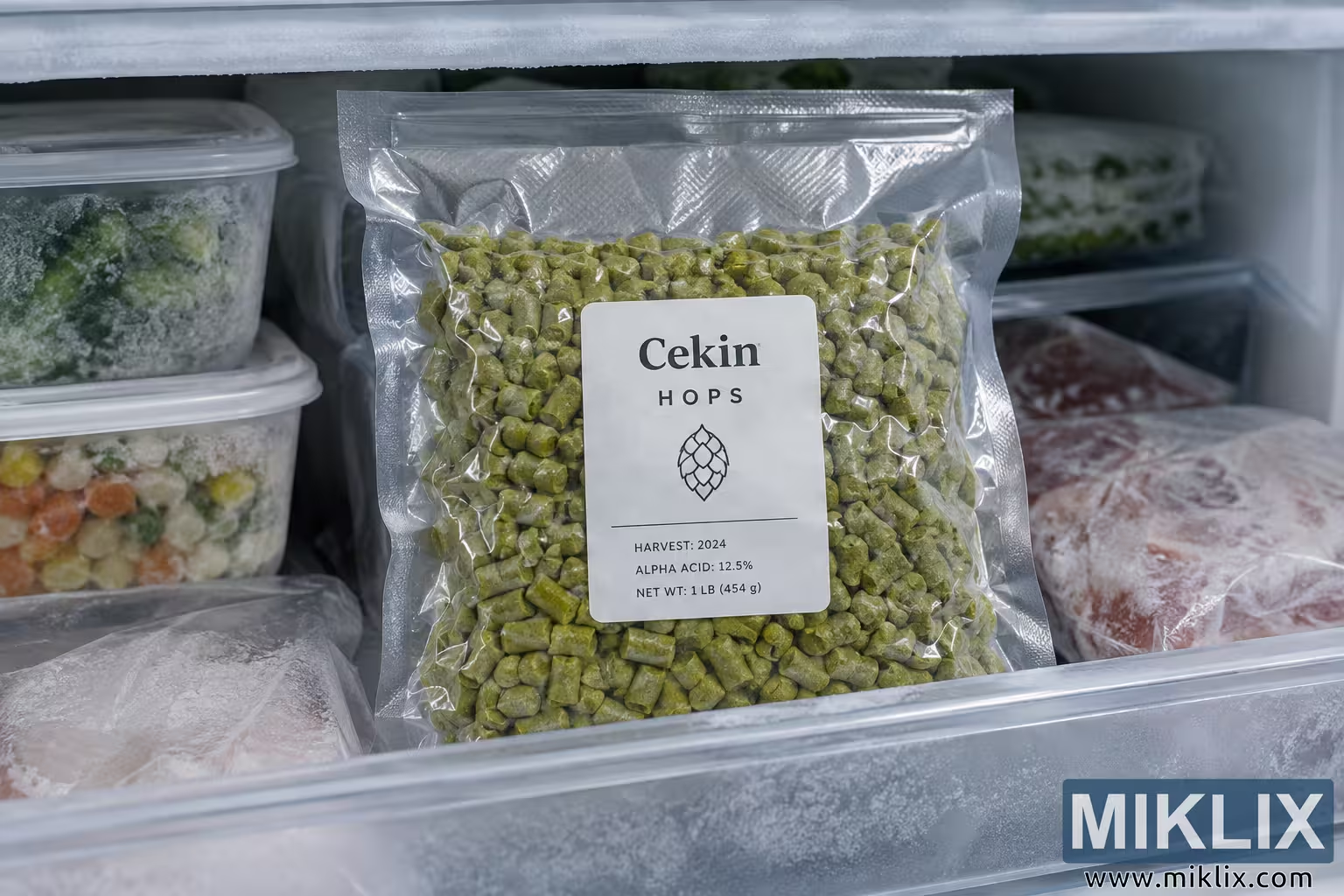
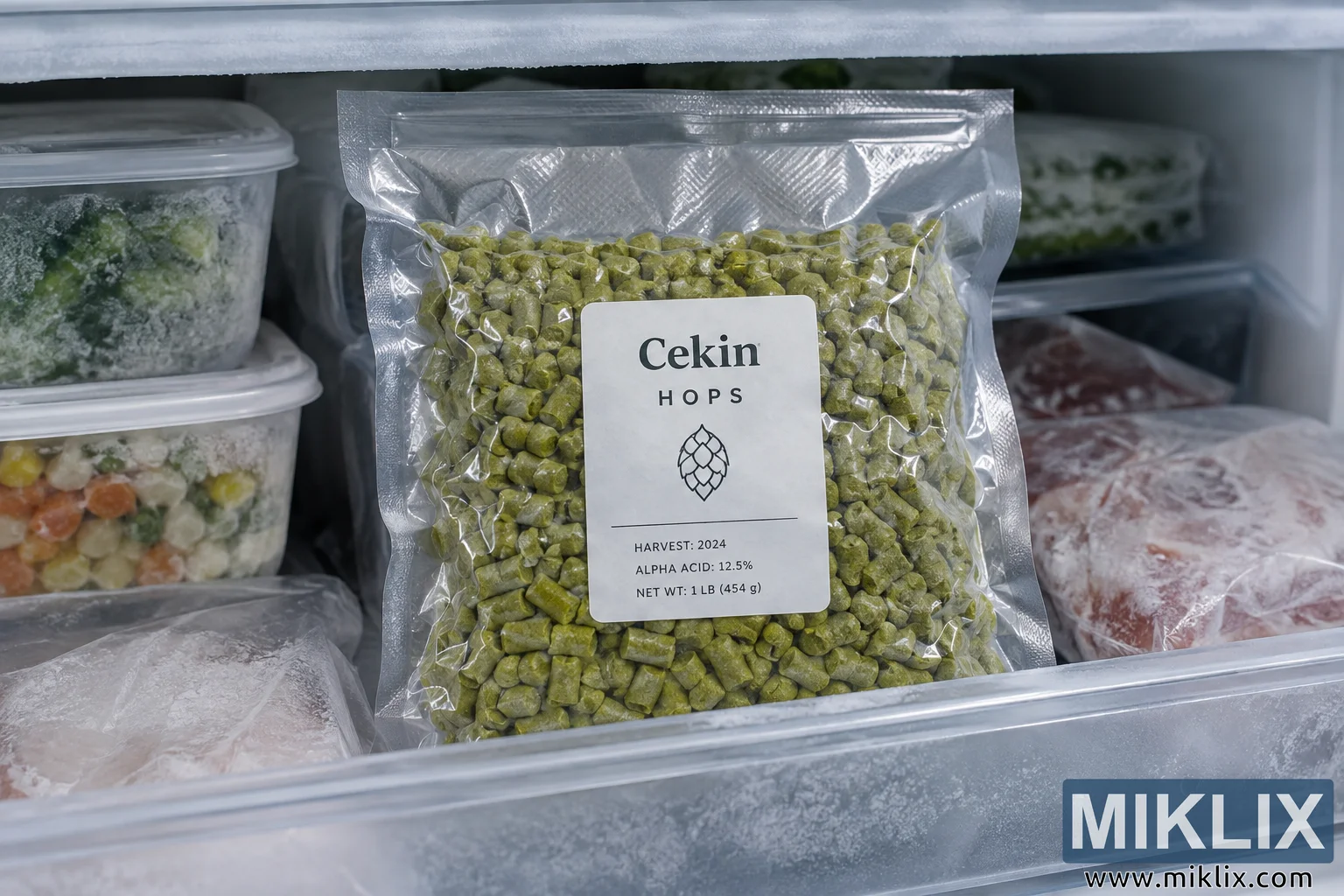
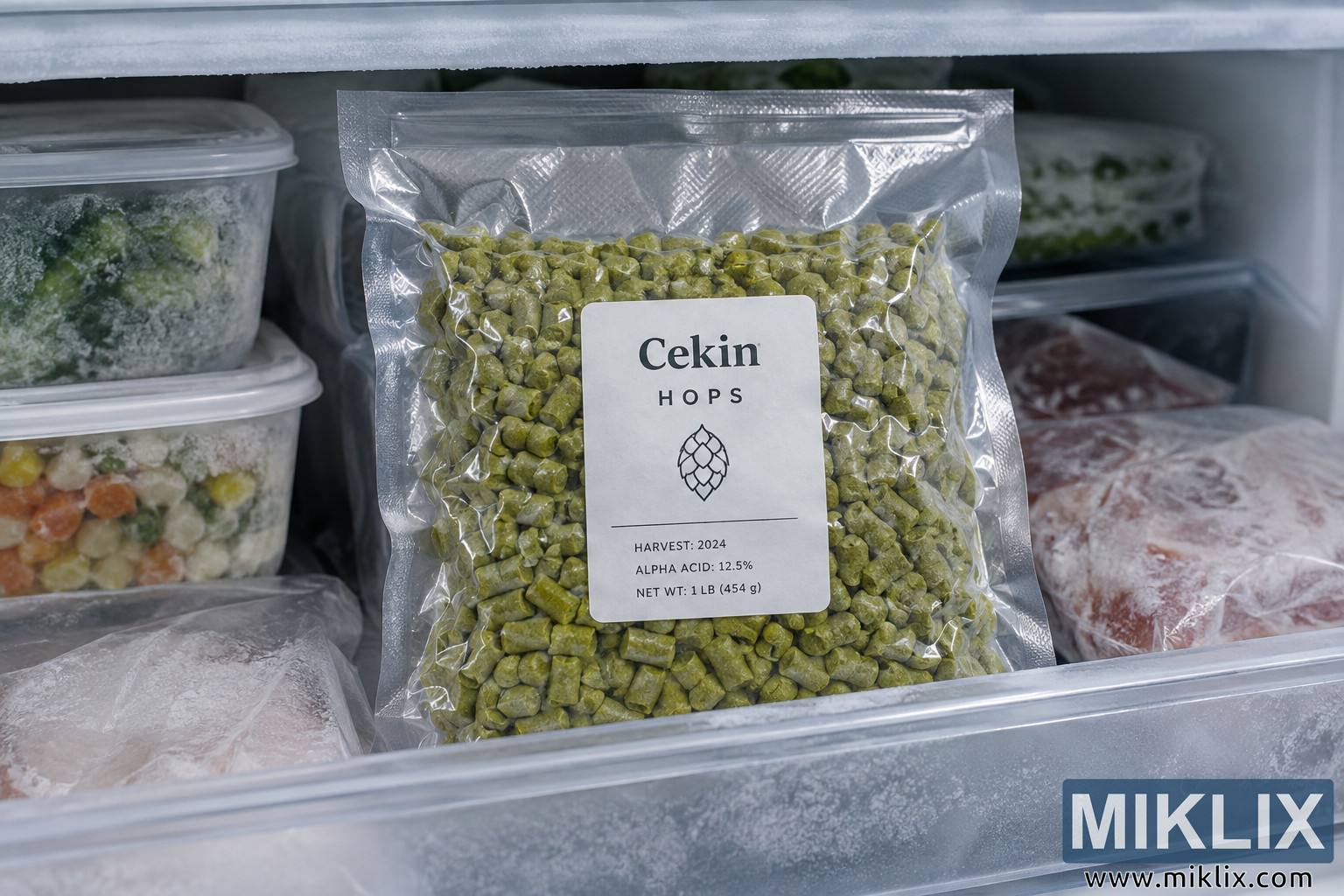
High-resolution close-up of vacuum-sealed green hop pellets stored properly in a cold freezer, illustrating protected, airtight storage for preserving brewing hops.
Vacuum-Sealed Hops Stored in a Freezer
Dostupne verzije ove slike
Slikovne datoteke dostupne za preuzimanje u nastavku su manje komprimirane i veće rezolucije - i kao rezultat toga, veće kvalitete - od slika ugrađenih u članke i stranice na ovoj web stranici, koje su optimiziranije za veličinu datoteke kako bi se smanjila potrošnja propusnosti.
Uobičajena veličina (1,536 x 1,024)
Velika veličina (3,072 x 2,048)
Vrlo velika veličina (4,608 x 3,072)
Iznimno velika veličina (6,144 x 4,096)
Komično velika veličina (1,048,576 x 699,051)
- Još uvijek se učitava... ;-)
Opis slike
A high-resolution, landscape-oriented photograph shows a vacuum-sealed package of green hop pellets stored inside a well-stocked freezer. The image is photographed from directly in front of an open freezer drawer, creating a realistic close-up view of how hops can be kept under cold, airtight conditions for longer-term storage. The central subject is a large, transparent vacuum-sealed pouch filled almost completely with compact green hop pellets. The pellets vary subtly in shape, size, and shade, ranging from muted olive green to slightly brighter yellow-green tones. Their compressed cylindrical forms are clearly visible through the transparent material, giving the viewer an immediate visual indication that the package contains processed brewing hops rather than whole hop cones.
The pouch occupies the center of the composition and is positioned upright against the frozen contents surrounding it. Its transparent plastic material has a glossy, slightly textured appearance, with numerous wrinkles, folds, and reflective highlights produced by the tight vacuum seal. The plastic conforms closely to the hop pellets, emphasizing that most of the air has been removed from the package. A broad sealed border surrounds the contents, and the upper portion of the pouch features a clearly defined closure and heat-sealed area. These visual details communicate careful packaging intended to minimize exposure to oxygen and moisture while the hops remain in frozen storage.
A simple rectangular white label is attached to the front center of the pouch. The label uses a restrained, minimal visual design with dark typography and a small line illustration of a hop cone. It identifies the contents as hops and includes additional harvest, alpha-acid, and package-weight information. The package presentation is clean and practical, resembling the type of labeling that might be used by a home brewer, small hop supplier, or brewing ingredient distributor. Although the label helps establish the identity of the contents, the overall scene is primarily focused on the physical storage method: an airtight package surrounded by the consistently cold environment of a freezer.
The freezer itself provides strong visual context. A thick, pale freezer shelf or compartment edge extends horizontally across the upper part of the image and carries a visible coating of white frost. Along the bottom foreground, the translucent front wall of the freezer drawer runs across the entire width of the frame. Its surface is slightly cloudy and covered with patches of frost and condensation, reinforcing the impression of a genuinely cold environment. The cool, bluish-white illumination inside the freezer contributes to the crisp refrigerated atmosphere and contrasts naturally with the earthy green color of the hop pellets.
Several frozen food items surround the hops package without obscuring it. On the left side, stacked translucent food-storage containers hold frozen vegetables. Frost crystals are visible on both the containers and their contents, and individual pieces of green, orange, yellow, and pale vegetables can be distinguished through the plastic. In the lower-left foreground, another frozen item is enclosed in a clear bag and appears heavily frosted. These objects help make the freezer look functional and routinely used rather than staged as an empty product display.
On the right side of the composition are additional frozen packages, including pale pink and reddish food items wrapped or sealed in clear plastic. Their surfaces are coated with a noticeable layer of frost, softening their details and creating a realistic frozen texture. A dark rectangular container sits farther back toward the upper-right portion of the freezer, partially concealed by the central hop package and the other stored foods. More green frozen contents can be seen in the deeper background near the top of the image. Together, these surrounding elements establish depth and make the hop package appear naturally integrated into ordinary freezer storage.
The photographic composition keeps the hops as the unmistakable focal point. The package is positioned close to the center and is larger and sharper than most surrounding objects. The camera angle is nearly level with the pouch, allowing both the pellet texture and the vacuum-sealed plastic to be examined easily. Background objects become somewhat softer and darker as they recede into the freezer, while the front of the hops package receives enough light to reveal fine surface details. Reflections on the plastic are controlled rather than overwhelming, so the green pellets remain clearly visible beneath the packaging.
The lighting is cool, clean, and realistic, resembling illumination from an integrated freezer light combined with soft ambient light entering through the open door. Highlights appear along the plastic seams, freezer edges, frost crystals, and container surfaces. Subtle shadows behind and around the package provide depth without making the interior appear dim. The overall tonal palette is dominated by cool whites, translucent grays, pale blues, and subdued greens, with small areas of orange, yellow, pink, and red from the surrounding frozen foods adding natural variation.
From a storage perspective, the scene visually emphasizes two important characteristics: the hops are tightly protected from air by vacuum-sealed packaging and are being kept at freezing temperature. The compressed pouch suggests reduced oxygen exposure, while the abundant frost and frozen neighboring foods make the low-temperature environment immediately recognizable. This combination makes the image suitable for illustrating proper storage practices for hop pellets used in home brewing or professional brewing contexts, particularly when hops need to be preserved after purchase or between brewing sessions.
The image has a documentary, practical quality rather than an overtly commercial appearance. Fine details such as irregular pellet shapes, creases in the vacuum bag, frost accumulation, cloudy freezer plastic, stacked containers, and partially visible frozen foods contribute to the realism. The freezer is organized enough that the hops package can remain upright and easy to locate, but it is not unnaturally pristine. This balance makes the scene feel like an authentic household or small-scale brewing storage setup.
Overall, the photograph presents a clear visual example of vacuum-sealed hop pellets being stored in a freezer. The prominent transparent pouch, densely packed green pellets, visible airtight seal, frosted surroundings, and ordinary frozen foods work together to communicate cold, protected storage immediately. The landscape framing provides enough environmental context to establish that the package is genuinely inside a freezer while maintaining strong emphasis on the hops themselves. The result is a detailed, realistic image appropriate for educational material, brewing guides, articles about hop freshness, ingredient-storage documentation, or web content explaining how brewing hops can be protected from heat, moisture, and excessive exposure to air during storage.
Slika je povezana sa: Hops in Beer Brewing: Cekin