
Gambar: Healthy Swiss Chard vs Common Growing Problems Comparison
Diterbitkan:
Terakhir diperbarui: 16 April 2026 pukul 19.41.12 UTC
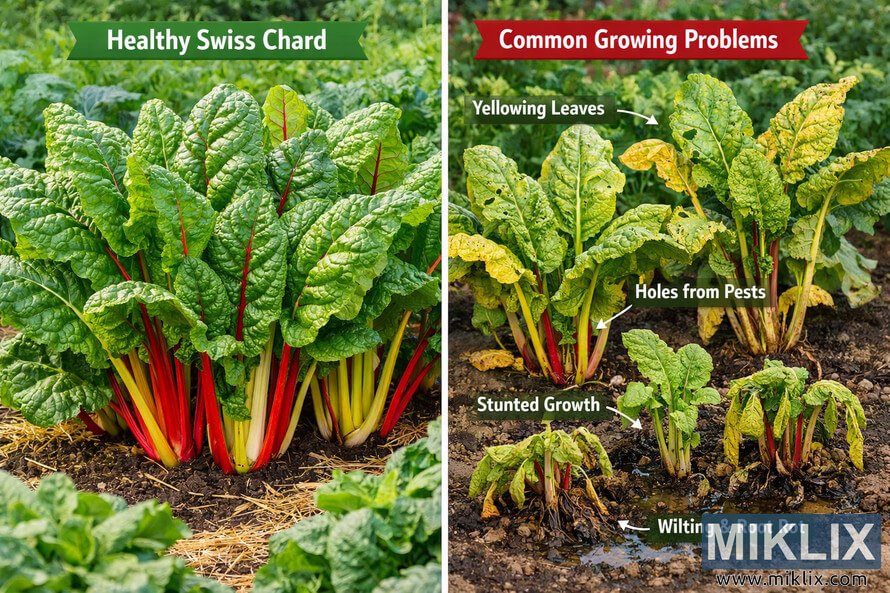
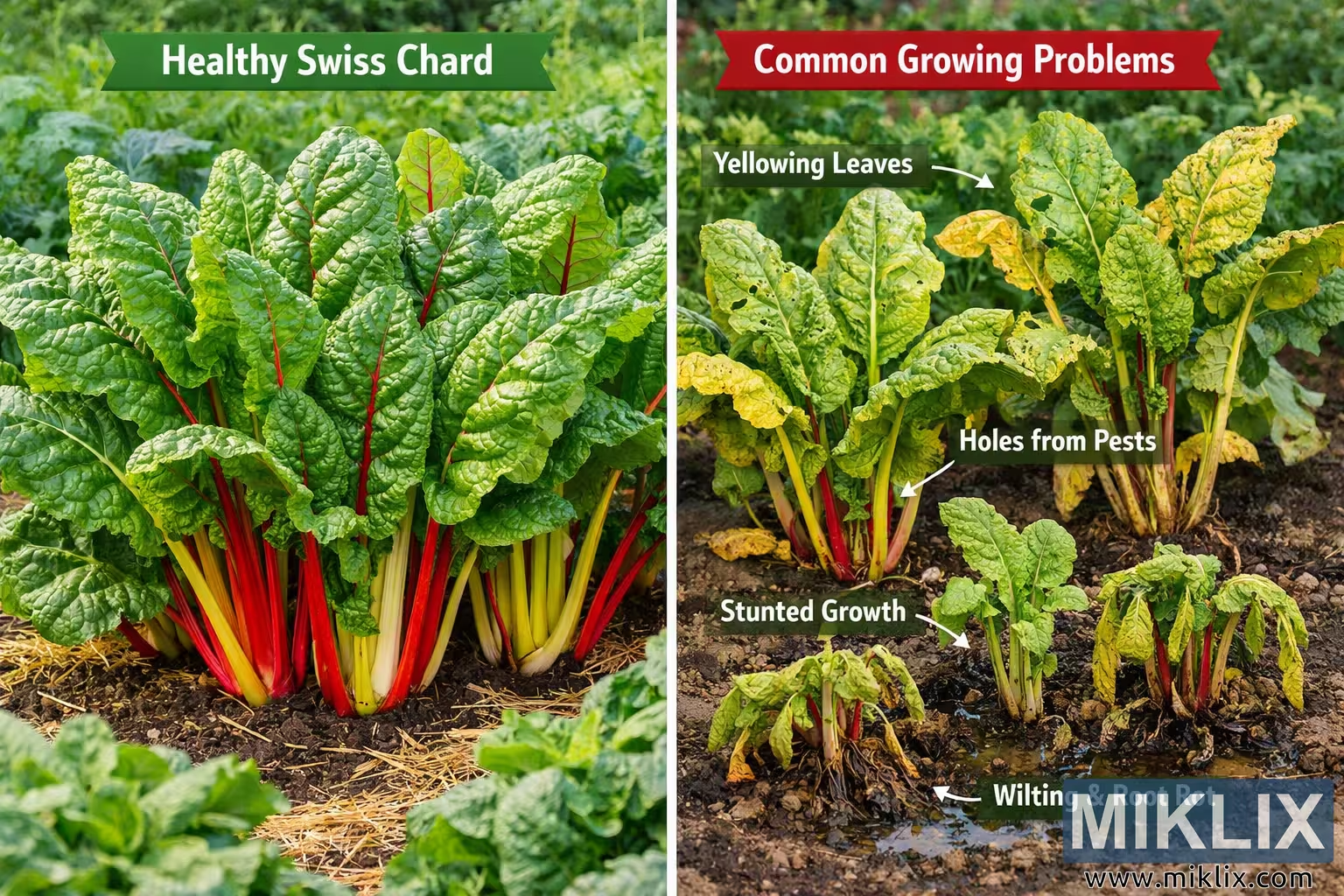
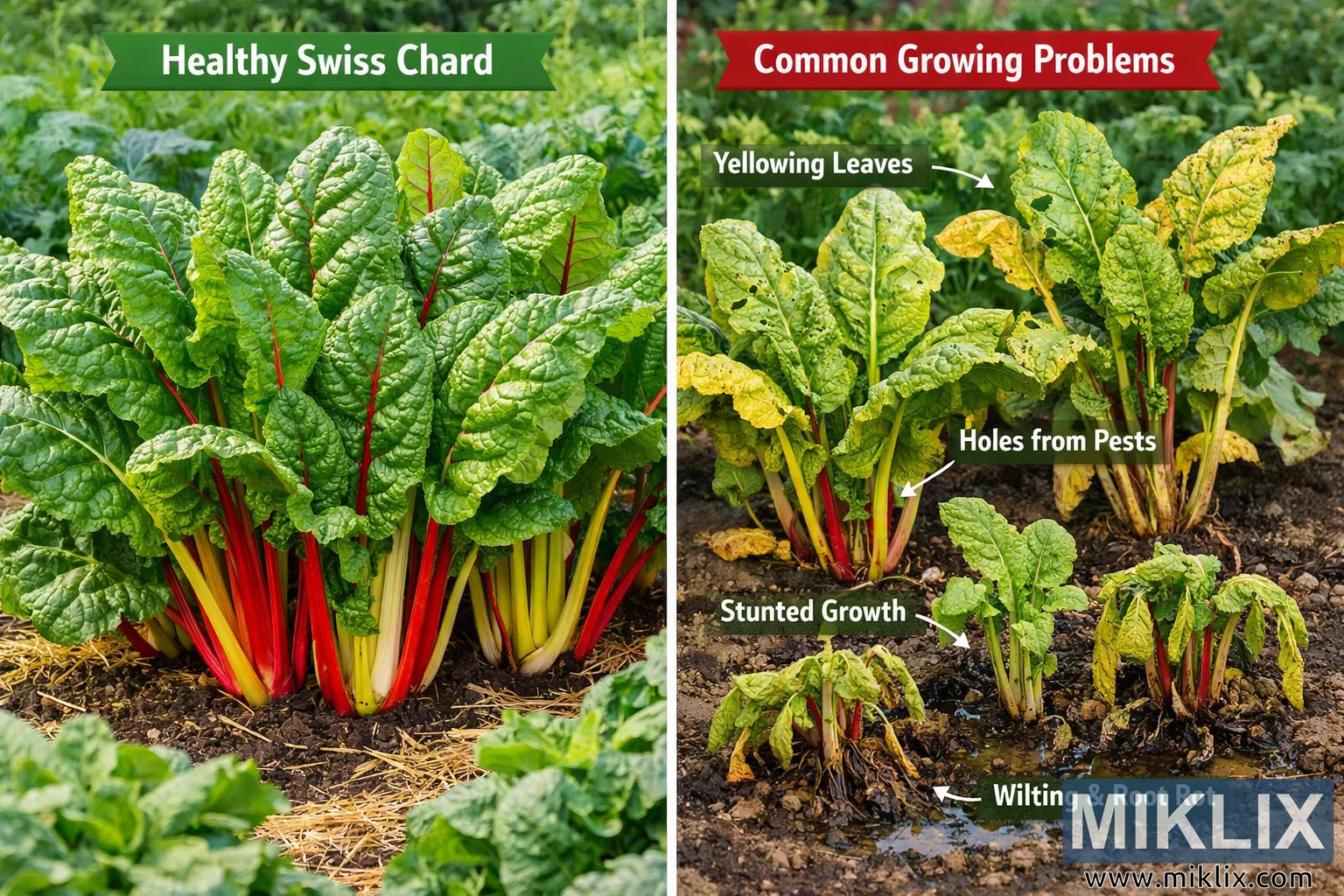
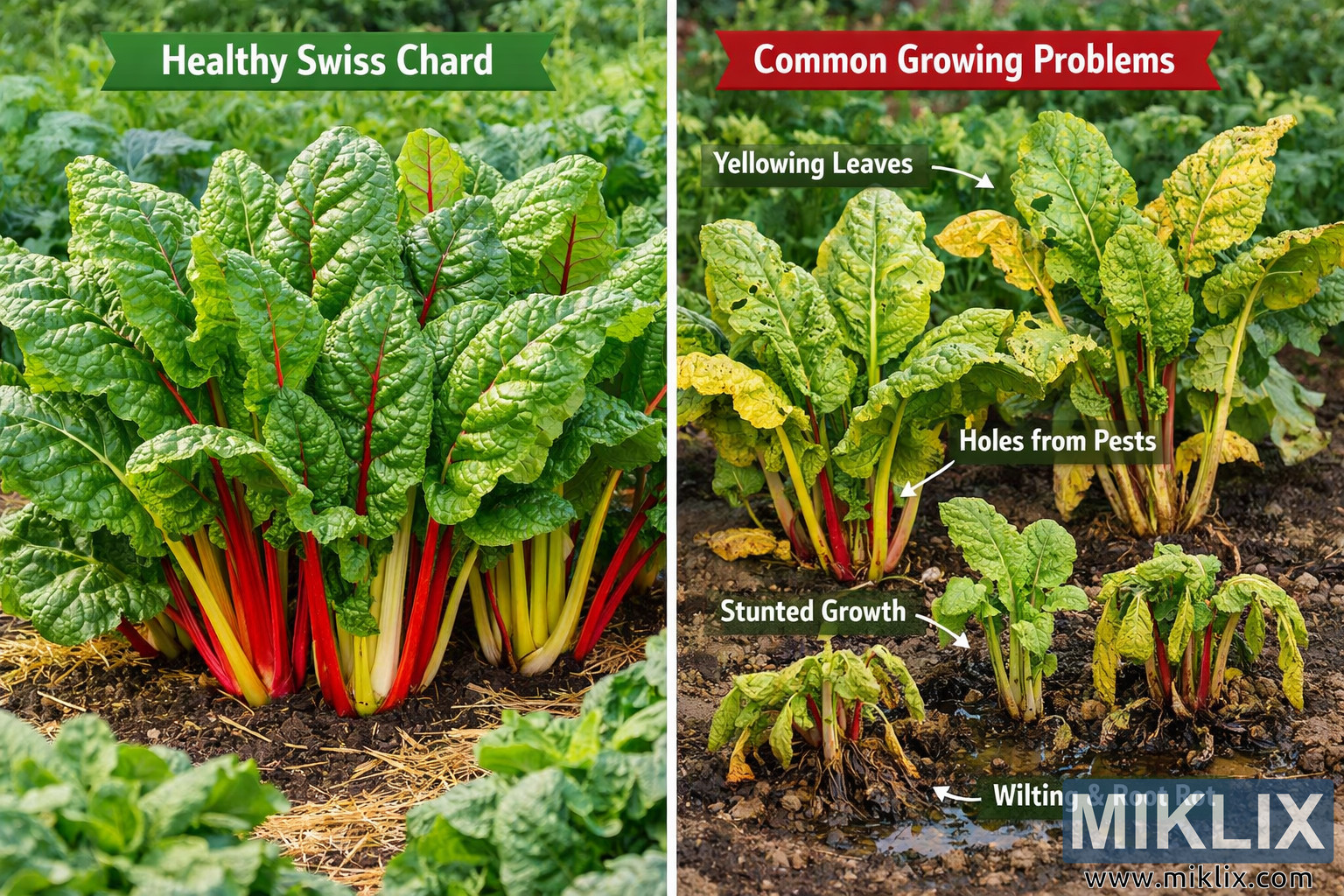
Visual comparison of healthy Swiss chard plants and common growing mistakes, highlighting yellowing leaves, pest damage, stunted growth, and root rot in garden-grown chard.
Healthy Swiss Chard vs Common Growing Problems Comparison
Versi yang tersedia dari gambar ini
File gambar yang tersedia untuk diunduh di bawah ini tidak terlalu terkompresi dan beresolusi lebih tinggi - dan sebagai hasilnya, kualitasnya lebih tinggi - daripada gambar yang disematkan pada artikel dan halaman di situs web ini, yang lebih dioptimalkan untuk ukuran file guna mengurangi konsumsi bandwidth.
Ukuran biasa (1,536 x 1,024)
Ukuran besar (3,072 x 2,048)
Ukurannya sangat besar (4,608 x 3,072)
Ukuran ekstra besar (6,144 x 4,096)
Ukuran besar secara komik (1,048,576 x 699,051)
- Masih mengunggah... ;-)
Deskripsi gambar
This educational comparison image shows the visual difference between healthy Swiss chard plants and Swiss chard affected by common growing mistakes. The image is arranged as a side-by-side split composition set in an outdoor vegetable garden. The left half is labeled "Healthy Swiss Chard" and presents a dense cluster of thriving plants growing in well-maintained soil. The leaves are large, glossy, and vibrant green with deeply textured surfaces and clearly defined veins. Thick stems in shades of red, yellow, and white emerge from the base, forming a full, upright rosette. The plants appear strong, evenly spaced, and well-hydrated, with no visible damage or discoloration. The soil around them looks loose and healthy, suggesting proper watering, good drainage, and balanced nutrients.
The right half of the image is labeled "Common Growing Problems" and illustrates several typical issues gardeners may encounter when growing Swiss chard. Multiple struggling plants are shown growing in darker, wetter soil. One section highlights "Yellowing Leaves," where older leaves have turned pale yellow with patchy discoloration, indicating possible nutrient deficiency, overwatering, or stress. Another plant is labeled "Holes from Pests," showing irregular bite marks and damaged leaf surfaces typical of insects such as beetles, caterpillars, or slugs.
Below those plants, a smaller Swiss chard is labeled "Stunted Growth." This plant appears significantly shorter and weaker than healthy specimens, with thin stems and undersized leaves that suggest poor soil conditions, overcrowding, or insufficient nutrients. Finally, the lowest section shows "Wilting & Root Rot." The plant’s leaves are drooping and limp, and the surrounding soil is visibly waterlogged with standing water. The base of the plant appears darkened and weakened, visually representing root rot caused by excessive moisture and poor drainage.
Together, the two halves create a clear visual learning tool for gardeners. The contrast between the vibrant, upright healthy plants and the stressed, damaged plants with common problems helps viewers quickly identify warning signs in their own gardens. The image emphasizes how proper care—such as balanced watering, pest management, and healthy soil—can make a dramatic difference in the growth and appearance of Swiss chard plants.
Gambar terkait dengan: How to Grow Swiss Chard: A Complete Beginner's Guide