
Gambar: Scientific Research Laboratory Studying Plant Compounds
Diterbitkan:
Terakhir diperbarui: 16 Juli 2026 pukul 20.44.01 UTC
Explore a detailed depiction of a scientific research laboratory dedicated to studying plant compounds, featuring scientists, advanced equipment, and vibrant green samples symbolizing innovation in botanical science.
Scientific Research Laboratory Studying Plant Compounds
Versi yang tersedia dari gambar ini
File gambar yang tersedia untuk diunduh di bawah ini tidak terlalu terkompresi dan beresolusi lebih tinggi - dan sebagai hasilnya, kualitasnya lebih tinggi - daripada gambar yang disematkan pada artikel dan halaman di situs web ini, yang lebih dioptimalkan untuk ukuran file guna mengurangi konsumsi bandwidth.
Ukuran biasa (1,536 x 1,024)
Ukuran besar (3,072 x 2,048)
Ukurannya sangat besar (4,608 x 3,072)
Ukuran ekstra besar (6,144 x 4,096)
Ukuran besar secara komik (1,048,576 x 699,051)
- Masih mengunggah... ;-)
Deskripsi gambar
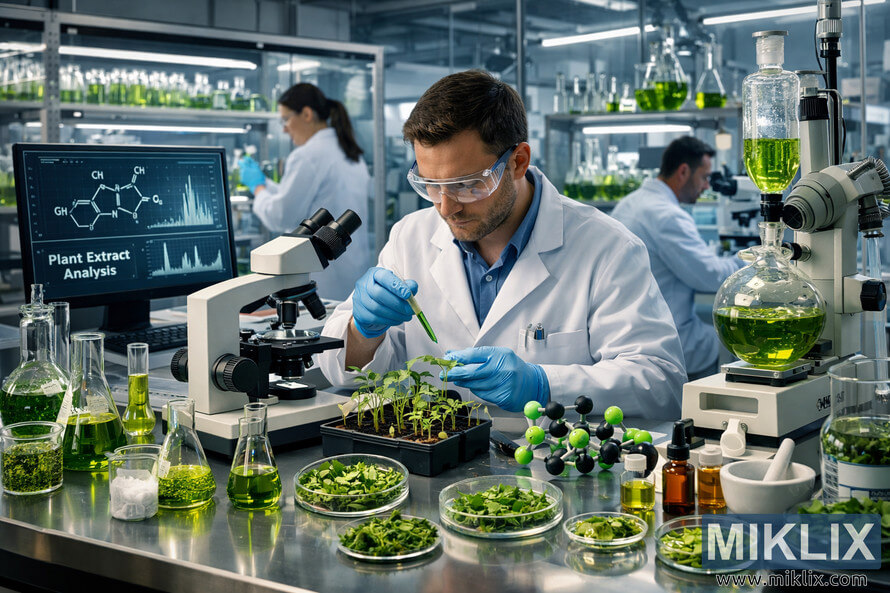
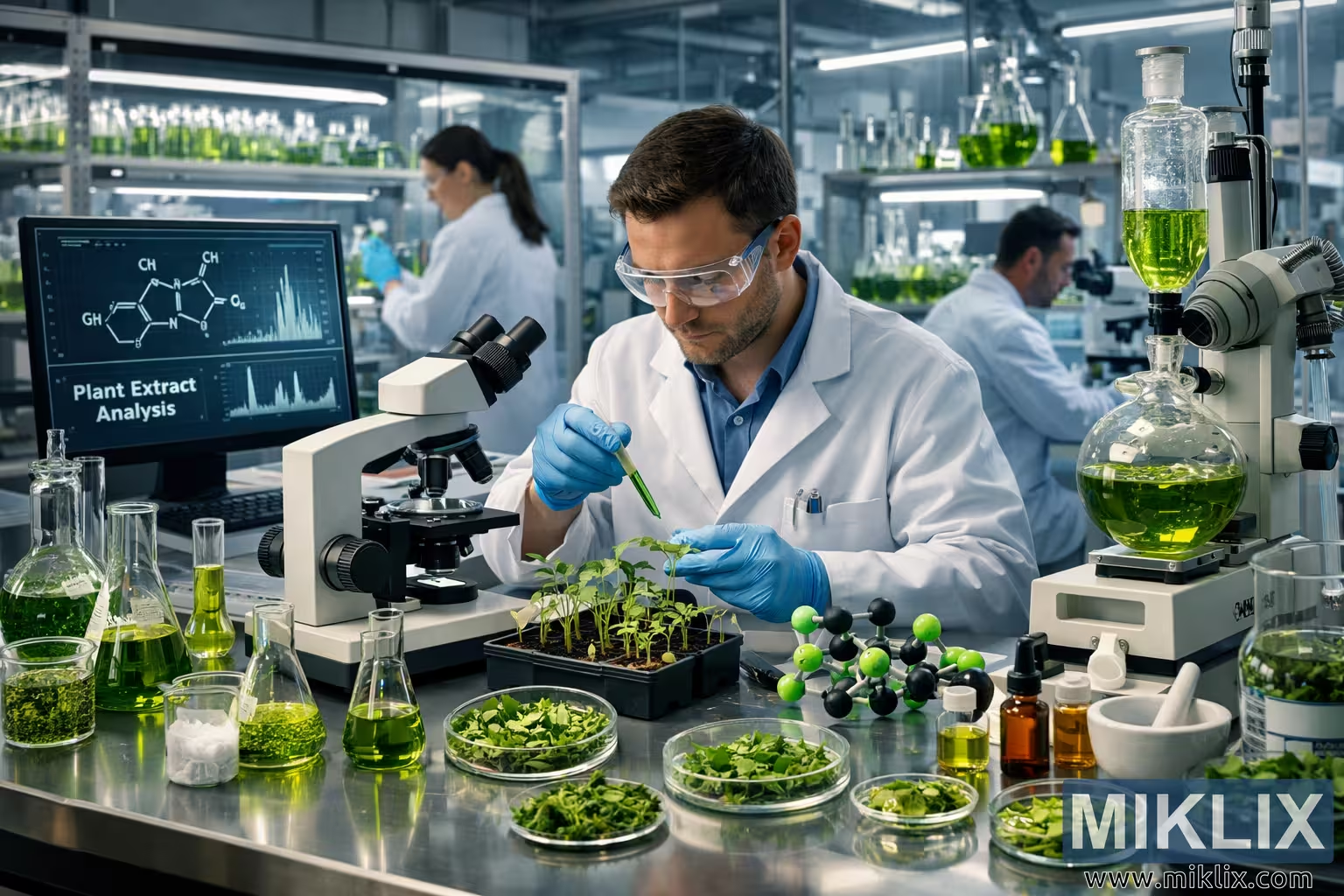
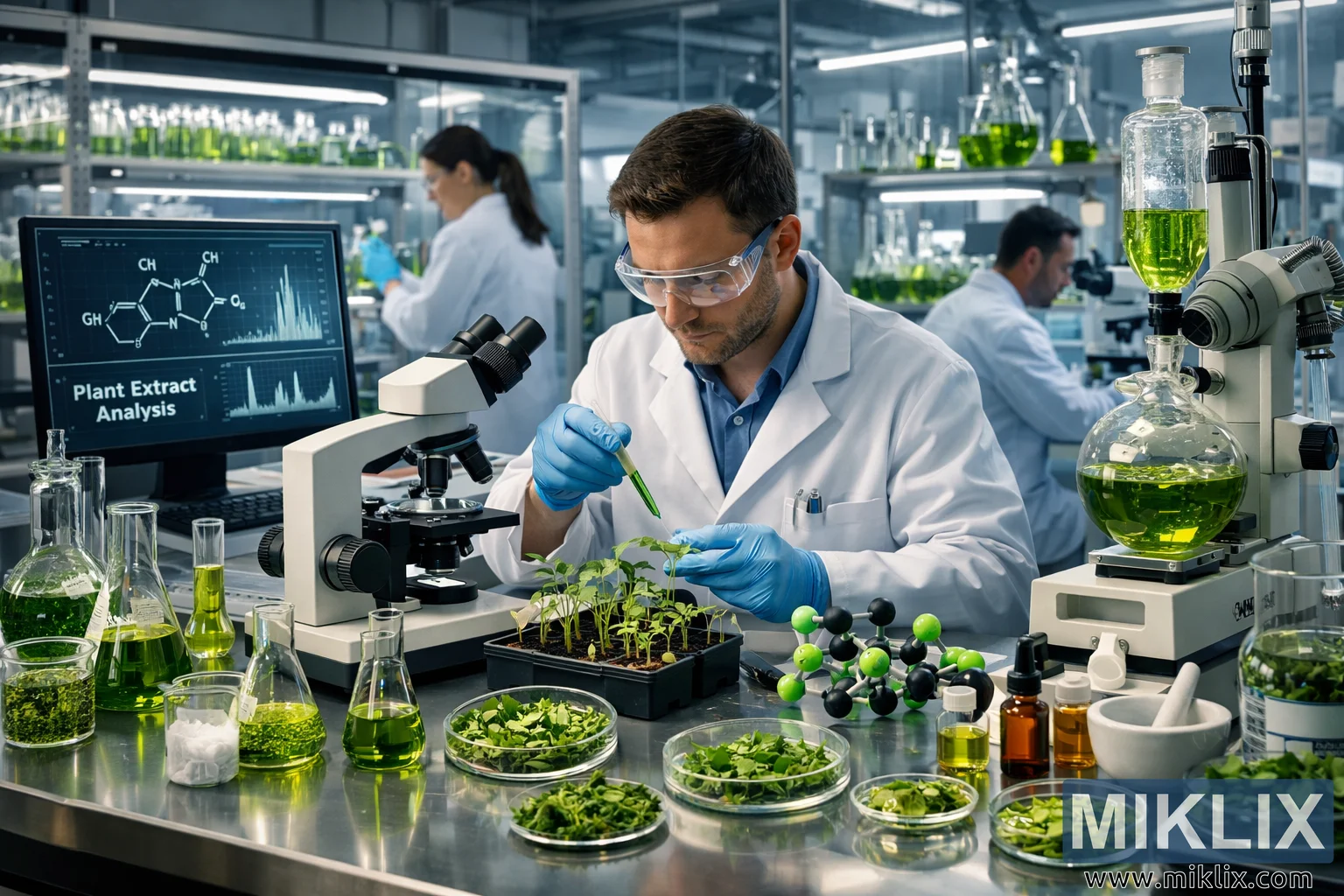
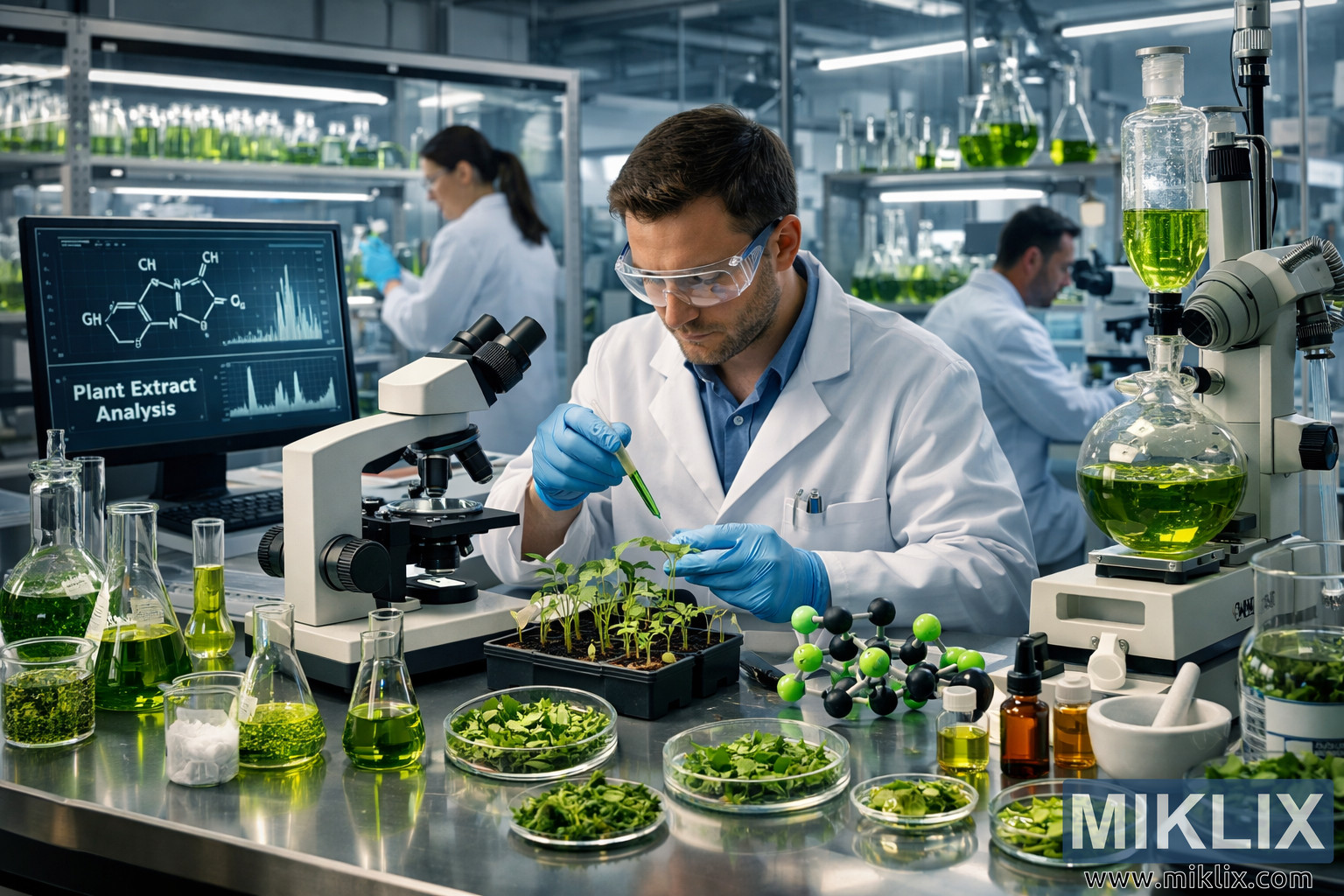
The image portrays a cutting-edge scientific research laboratory focused on the study of plant compounds, captured in a high-resolution landscape format that immerses the viewer in the world of botanical science and innovation. The composition is meticulously arranged to highlight both the human and technological elements of modern research. In the foreground, a stainless steel workbench gleams under bright, evenly distributed laboratory lighting. On this surface, an array of scientific instruments and plant samples are carefully positioned to convey precision and order. A compound microscope stands prominently on the left side, its objective lens directed toward a petri dish containing vibrant green plant tissue. A gloved hand, steady and deliberate, adjusts the sample beneath the lens, symbolizing the careful observation and analysis that define scientific inquiry.
To the right of the microscope, glassware of various shapes and sizes—beakers, test tubes, and Erlenmeyer flasks—contain liquids in shades of green and yellow, representing extracted plant compounds and chemical solutions. The transparency of the glass allows light to refract through the liquids, creating subtle reflections that enhance the sense of realism and depth. A small molecular model composed of green and black spheres connected by gray rods sits nearby, illustrating the structural complexity of the compounds under investigation. In front of the scientist, a tray of seedlings in small pots introduces a living element to the otherwise sterile environment, bridging the gap between nature and technology.
At the center of the image, a scientist wearing a white lab coat, safety goggles, and blue gloves is deeply focused on transferring a green liquid from a pipette into a test tube. The scientist’s expression conveys concentration and curiosity, embodying the spirit of discovery that drives scientific progress. Behind this figure, a computer monitor displays a detailed chemical structure diagram, a chromatogram with distinct peaks, and the words “Plant Extract Analysis.” This digital interface underscores the integration of computational tools in modern laboratory work, where data visualization and analysis are as vital as hands-on experimentation.
In the background, two additional researchers contribute to the dynamic atmosphere of collaboration. On the left, a female scientist works at a laminar flow hood, carefully pipetting samples under sterile conditions. On the right, a male scientist examines plant tissue images on a computer screen, his posture suggesting engagement with microscopic detail. Shelves behind them are lined with flasks containing green liquids illuminated by LED lights, creating a soft glow that contrasts with the metallic surfaces of the lab equipment. Glass containers hold small plants growing under controlled conditions, symbolizing the intersection of biology and chemistry.
To the far right, a rotary evaporator—a sophisticated piece of laboratory apparatus—features a round-bottom flask filled with green liquid connected to a condenser. This device represents the process of solvent removal and compound concentration, essential steps in the extraction and purification of plant-based materials. Nearby, petri dishes with plant samples, a mortar and pestle, and amber glass bottles containing tinctures and extracts complete the tableau, emphasizing the laboratory’s role in transforming raw botanical matter into refined scientific data.
The overall color palette of the image is dominated by cool tones—silvers, whites, and greens—that evoke cleanliness, precision, and vitality. The interplay of light and shadow enhances the three-dimensionality of the scene, while the reflections on glass and metal surfaces add realism and depth. The composition balances human presence with technological sophistication, illustrating the harmony between scientific curiosity and environmental awareness. Every detail, from the gloved hands to the molecular models, contributes to a narrative of progress and sustainability.
This depiction of a scientific research laboratory studying plant compounds captures the essence of modern science: a fusion of meticulous experimentation, advanced instrumentation, and a profound respect for the natural world. It celebrates the pursuit of knowledge through observation, analysis, and innovation, reminding viewers that even the smallest leaf or molecule can hold the key to transformative discoveries in medicine, agriculture, and environmental preservation.
Gambar terkait dengan: Health Benefits of Chives: Nature's Nutritional Powerhouse