
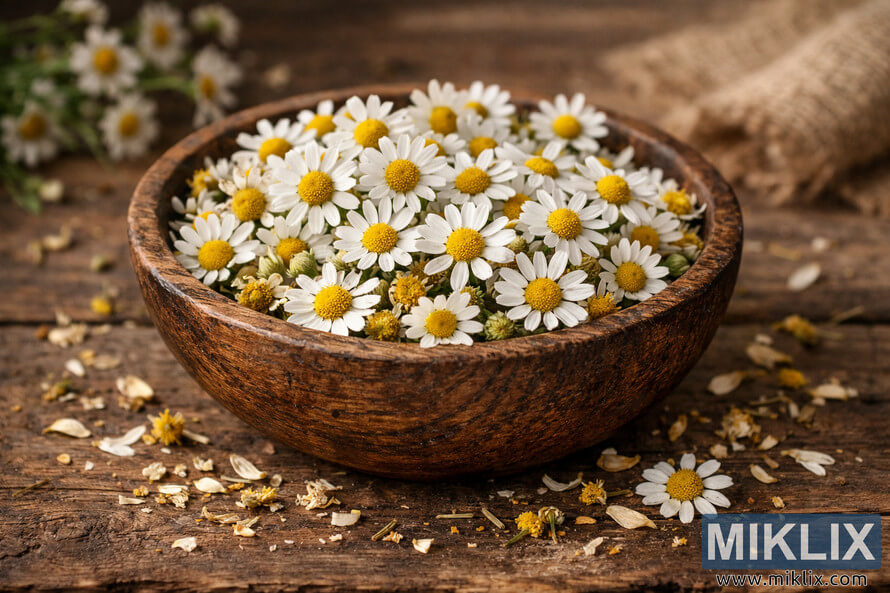
Immagine: Rustic Wooden Bowl Filled with Fresh Chamomile Flowers and Scattered Dried Petals
Pubblicato:
Ultimo aggiornamento: 14 luglio 2026 alle ore 20:26:16 UTC
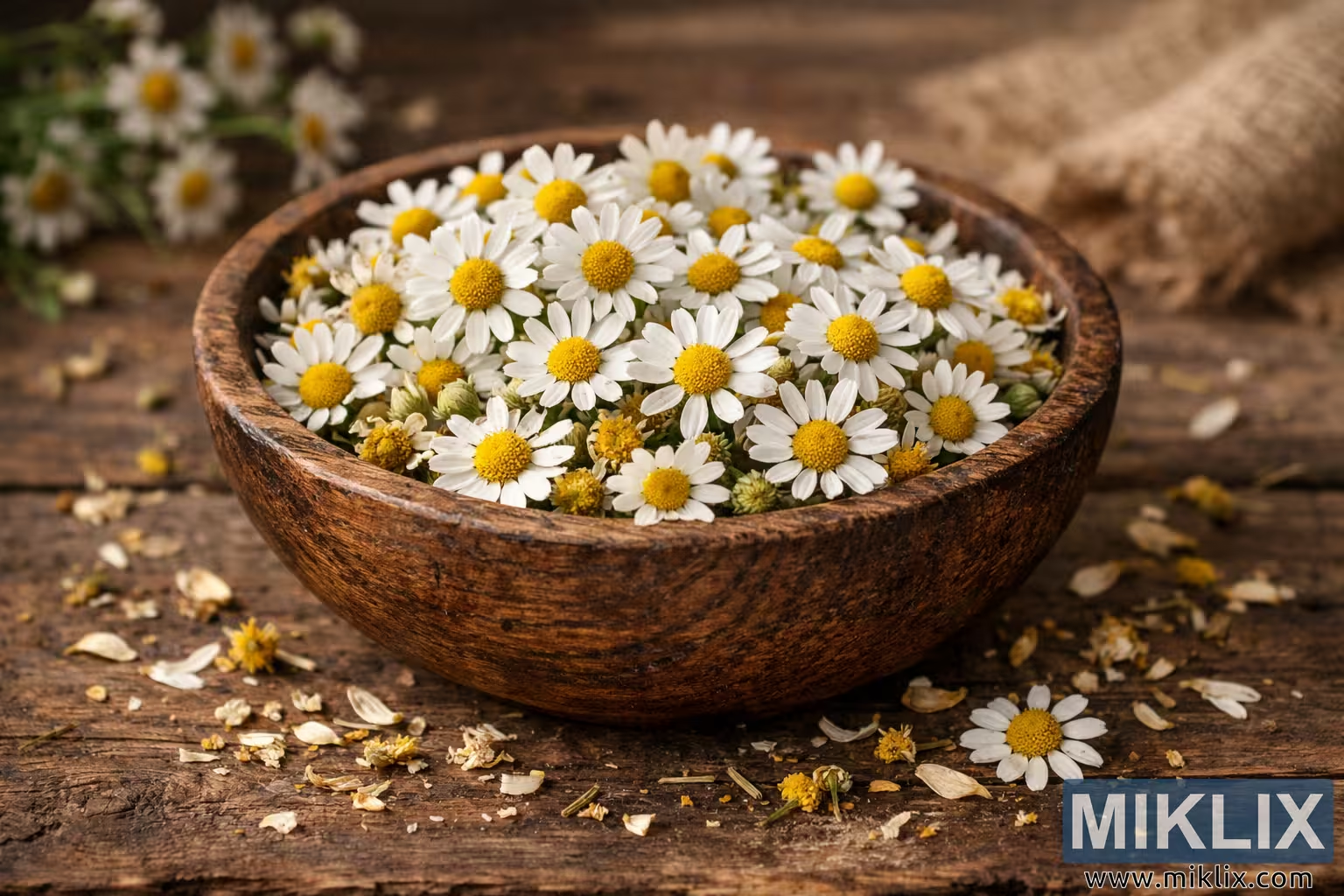
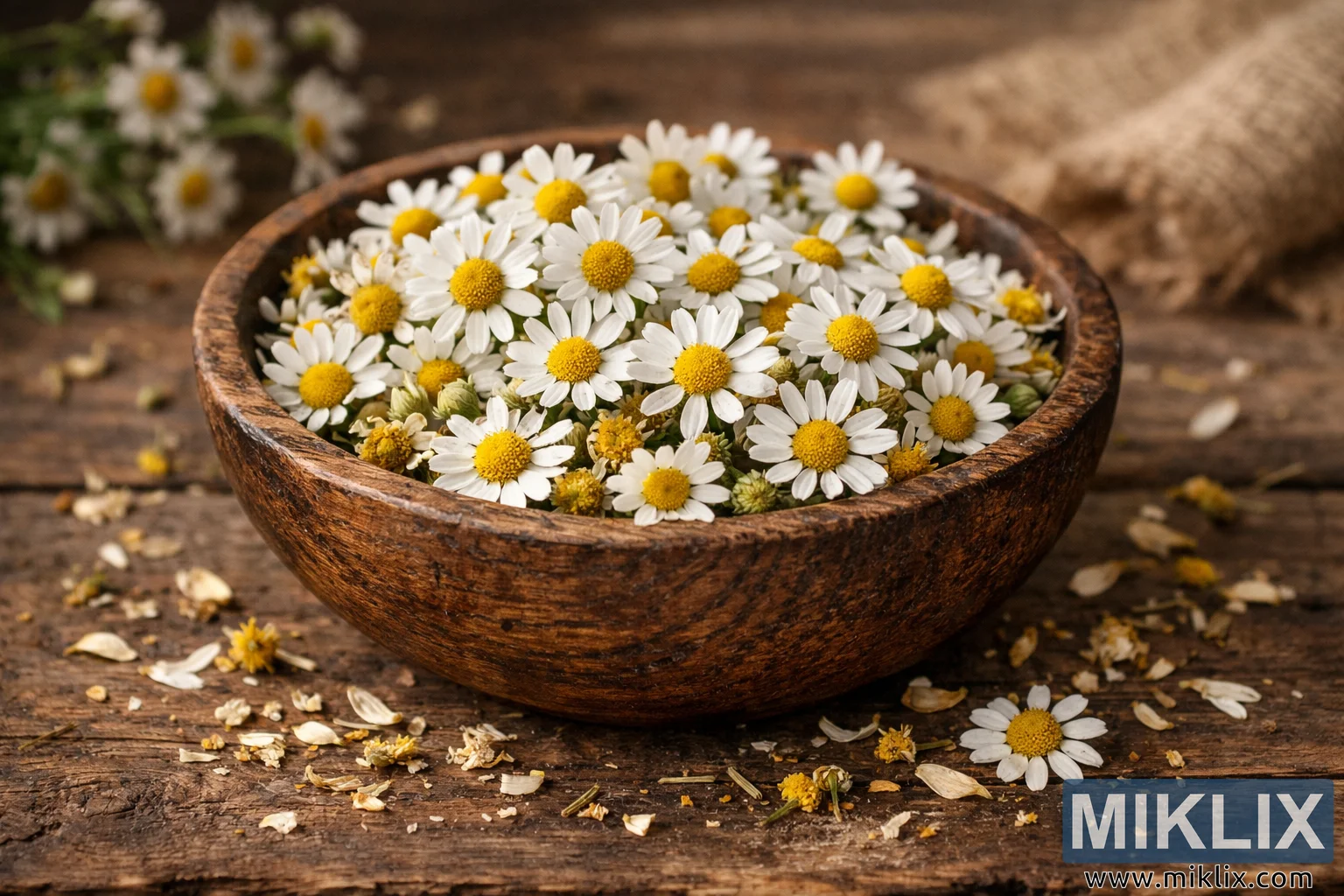
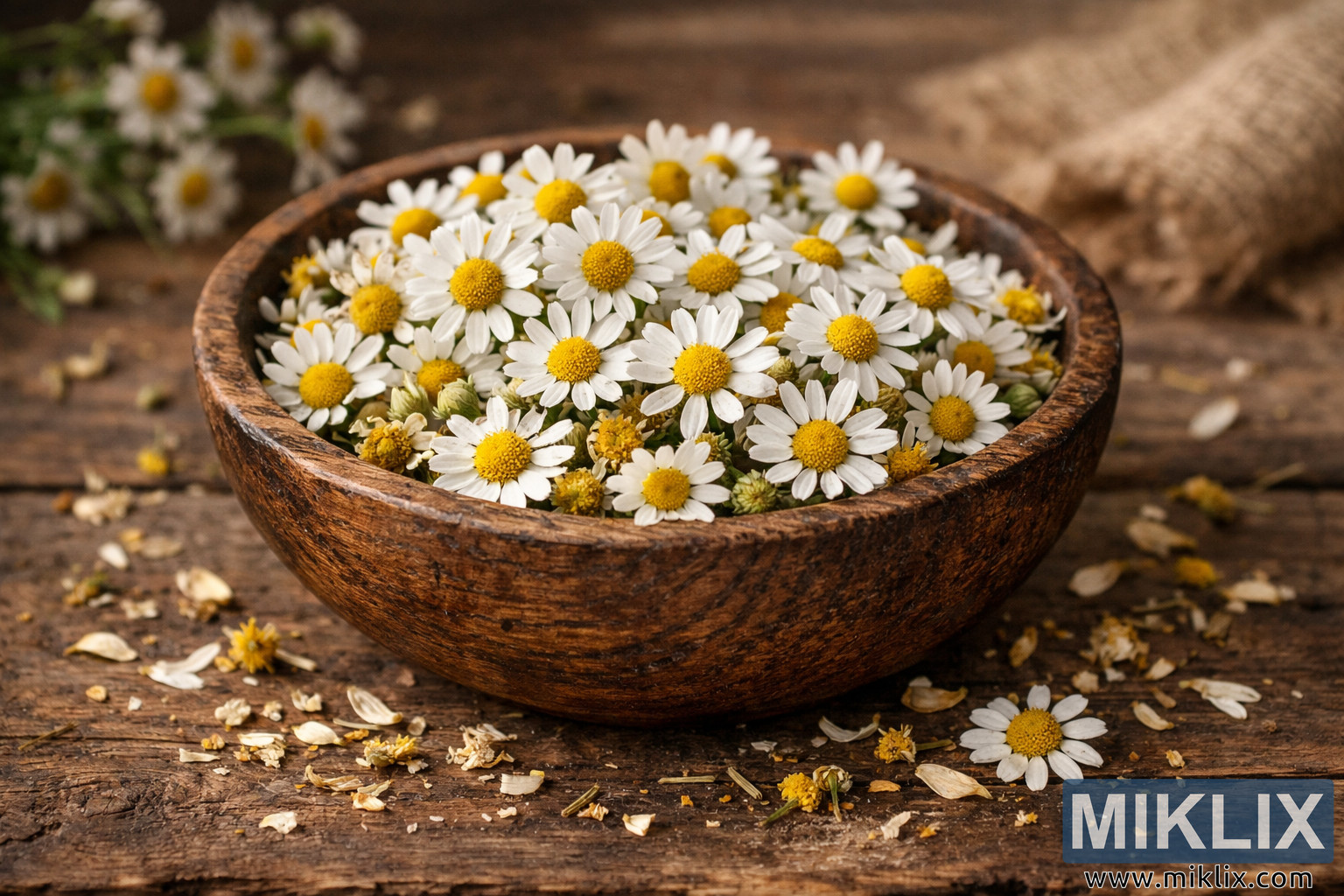
A high-resolution landscape photograph of a rustic wooden bowl filled with fresh chamomile flowers, surrounded by scattered dried petals and florets on an aged wooden surface. Warm natural lighting, soft focus background elements, and rich textures create a calming, rustic botanical scene ideal for themes of herbal wellness, relaxation, and organic living.
Rustic Wooden Bowl Filled with Fresh Chamomile Flowers and Scattered Dried Petals
Versioni disponibili di questa immagine
I file immagine disponibili per il download qui sotto sono meno compressi e ad alta risoluzione - e di conseguenza di qualità superiore - rispetto alle immagini incorporate negli articoli e nelle pagine di questo sito, che sono più ottimizzate per le dimensioni dei file al fine di ridurre il consumo di banda.
Taglia regolare (1,536 x 1,024)
Dimensione grande (3,072 x 2,048)
Dimensioni molto grandi (4,608 x 3,072)
Dimensione extra large (6,144 x 4,096)
Dimensioni comiche (1,048,576 x 699,051)
- Sto ancora caricando... ;-)
Descrizione dell'immagine
A high-resolution, landscape-oriented photograph captures a serene still life centered around a rustic wooden bowl brimming with fresh chamomile flowers. The bowl itself is made from dark, weathered wood, its surface marked by visible grain patterns, subtle scratches, and a slightly rough texture that suggests years of use. It sits on an aged wooden table whose warm brown tones and natural imperfections—fine cracks, knots, and uneven coloration—add to the overall sense of authenticity and rustic charm. The composition places the bowl slightly off-center, creating a natural visual flow that guides the viewer’s eye from the vibrant flowers in the foreground to the softer, blurred elements in the background. Inside the bowl, the chamomile flowers appear freshly picked, their delicate white petals radiating outward from bright yellow centers. Each bloom is distinct, with petals that vary slightly in length and curvature, giving the arrangement a natural, unstructured feel rather than a perfectly manicured bouquet. The yellow centers are rich and textured, hinting at the tiny florets that make up each disk. Slender green stems and small leaves weave through the cluster of blossoms, adding subtle touches of green that contrast gently with the white and yellow of the flowers. Some stems curve gracefully over the rim of the bowl, suggesting movement and a sense of abundance, as if the flowers are spilling outward. Surrounding the bowl on the wooden surface is a scattering of dried chamomile petals, florets, and small fragments. These dried elements introduce a second layer of texture and storytelling to the scene. The petals, once bright white, now appear slightly faded, with some curling at the edges or lying flat against the table. Their yellow counterparts—tiny dried florets and bits of the flower centers—are dispersed among the petals, creating a subtle mosaic of color and form. The dried pieces vary in size and shape, from small, almost dust-like fragments to more recognizable petal shapes, suggesting that they have been gently handled or perhaps used in herbal preparations. This interplay between fresh and dried chamomile hints at cycles of growth, harvest, and use, evoking themes of natural remedies, tea-making, and traditional botanical practices. The lighting in the photograph is warm and natural, as though coming from a soft, diffused source slightly above and to one side. It casts gentle shadows that emphasize the contours of the bowl, the layered petals, and the uneven surface of the wood. Highlights glint off the edges of the petals and the rim of the bowl, giving the flowers a luminous quality without appearing overly bright or harsh. The overall effect of the lighting is to enhance the earthy tones of the wood and the vibrant yet soothing colors of the chamomile, creating a harmonious palette of browns, whites, yellows, and greens. The depth of field is shallow, focusing sharply on the bowl of flowers and the immediate area of scattered dried petals, while the background fades into a soft blur. On the left side of the image, slightly out of focus, sprigs of chamomile flowers extend into the frame. Their presence reinforces the botanical theme and suggests that more flowers exist beyond the central arrangement, perhaps freshly gathered from a nearby garden or field. On the right side, also blurred, a piece of burlap fabric is visible. Its coarse weave and neutral color complement the rustic aesthetic, hinting at traditional uses such as wrapping herbs, lining baskets, or serving as a backdrop for natural products. The blurred background elements do not compete with the main subject; instead, they provide context and depth, making the scene feel grounded and real. The photograph’s composition is carefully balanced. The bowl, though off-center, acts as the primary focal point, anchoring the viewer’s attention. The scattered dried petals lead the eye outward, inviting closer inspection of the details on the wooden surface. The diagonal lines formed by the stems and the subtle curves of the petals create a gentle sense of movement, preventing the image from feeling static. The combination of fresh blossoms and dried remnants suggests a narrative of time passing—flowers that were once fresh now transformed into dried ingredients, perhaps for tea, tinctures, or aromatic sachets. This duality imbues the image with a quiet, contemplative mood, as if capturing a moment in a larger ritual of herbal preparation. The overall atmosphere of the photograph is calm and inviting. The warm tones and natural materials evoke a cozy, homely environment, perhaps a countryside kitchen or a small apothecary where herbs are cherished and carefully handled. The chamomile flowers, known for their gentle, soothing properties, reinforce this feeling of comfort and relaxation. Even without any visible human presence, the image suggests care and intention: someone has gathered these flowers, placed them in the bowl, and allowed the dried petals to remain scattered as a testament to their use. The high level of detail—visible in the fine lines of the wood grain, the subtle variations in petal shape, and the tiny fragments of dried plant material—makes the photograph feel tactile, almost inviting the viewer to reach out and touch the bowl or pick up a petal. In essence, this image is a celebration of simple, natural beauty. It combines the elegance of fresh chamomile blossoms with the humble charm of rustic materials, capturing a quiet moment that feels both timeless and intimate. The interplay of light, texture, and color creates a visually rich scene that speaks to themes of nature, tradition, and gentle comfort, making it suitable for contexts related to herbal wellness, organic living, relaxation, and rustic aesthetics.
L'immagine è correlata a: Chamomile Health Benefits: Natural Wellness From an Ancient Herb