
画像: Scientific Illustration of Yeast Attenuation in Lager Fermentation
出版された:
最終更新日 2026年3月27日 17:47:52 UTC
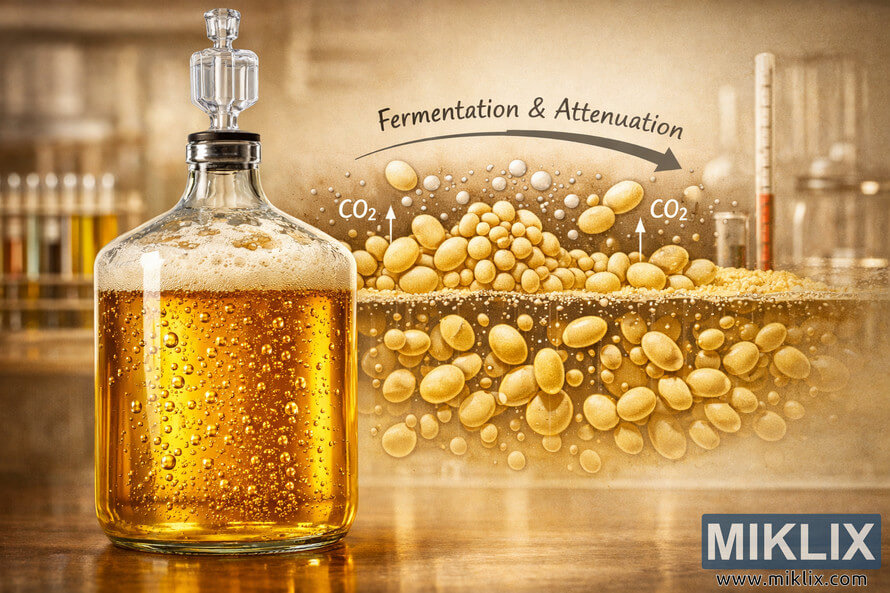
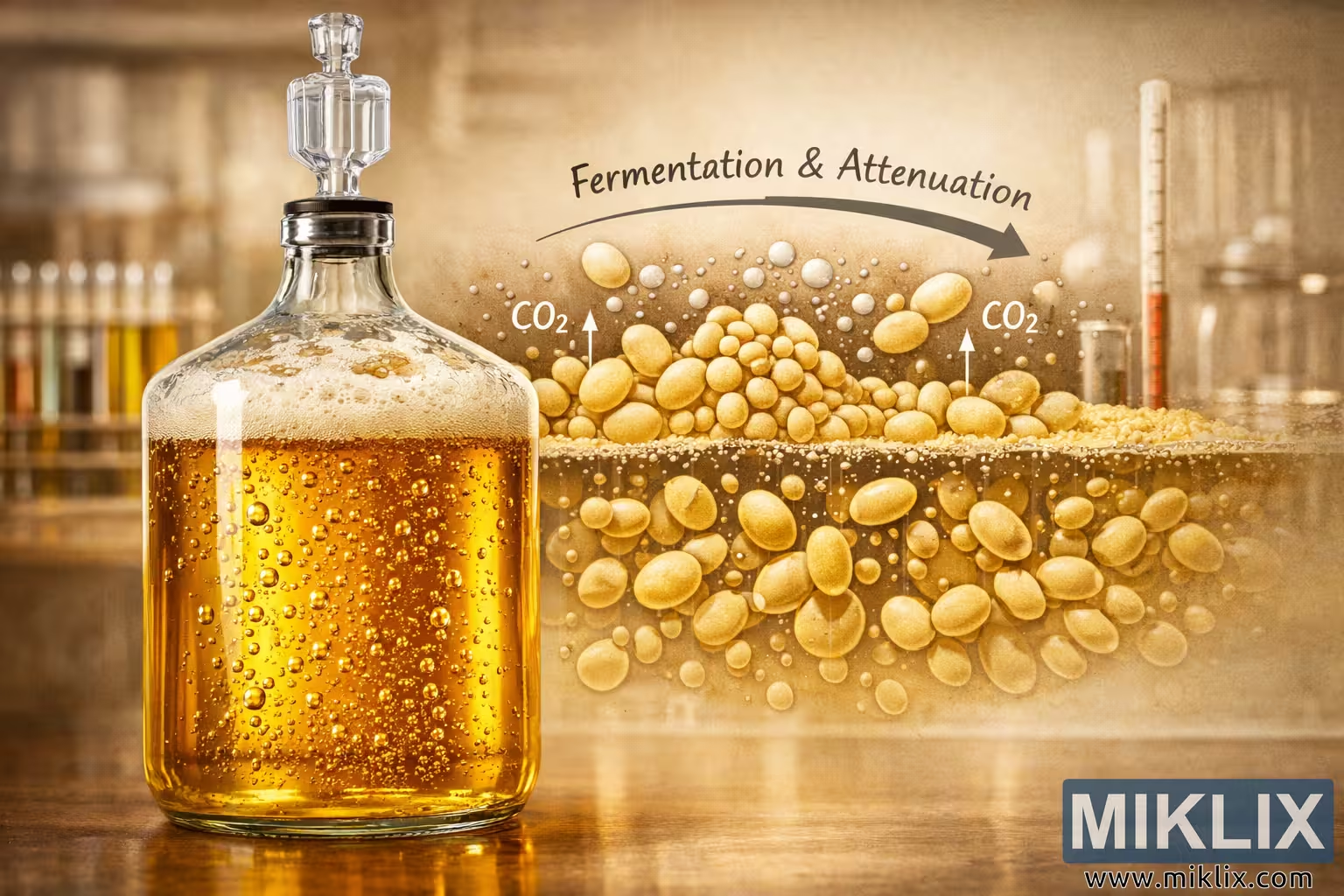
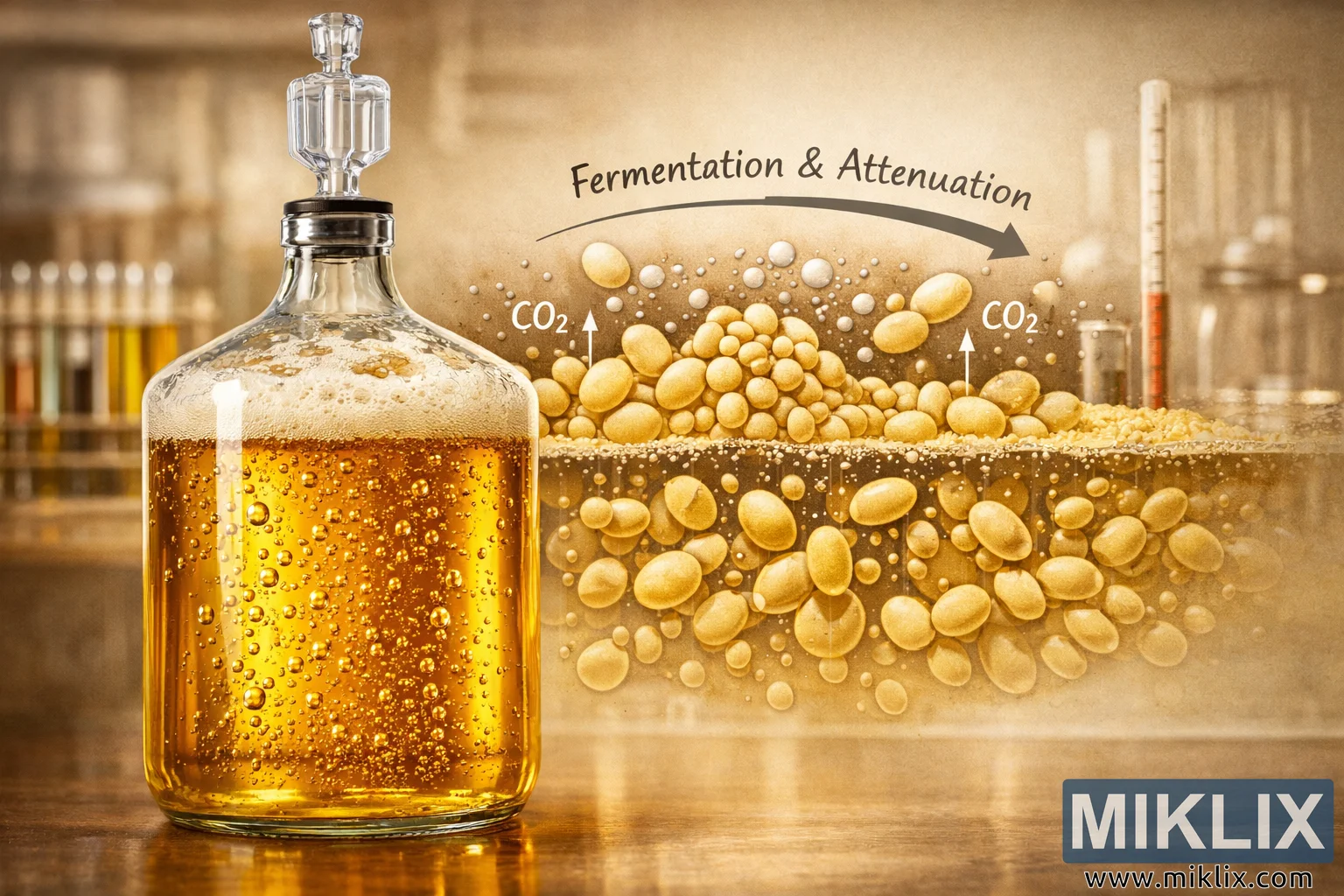
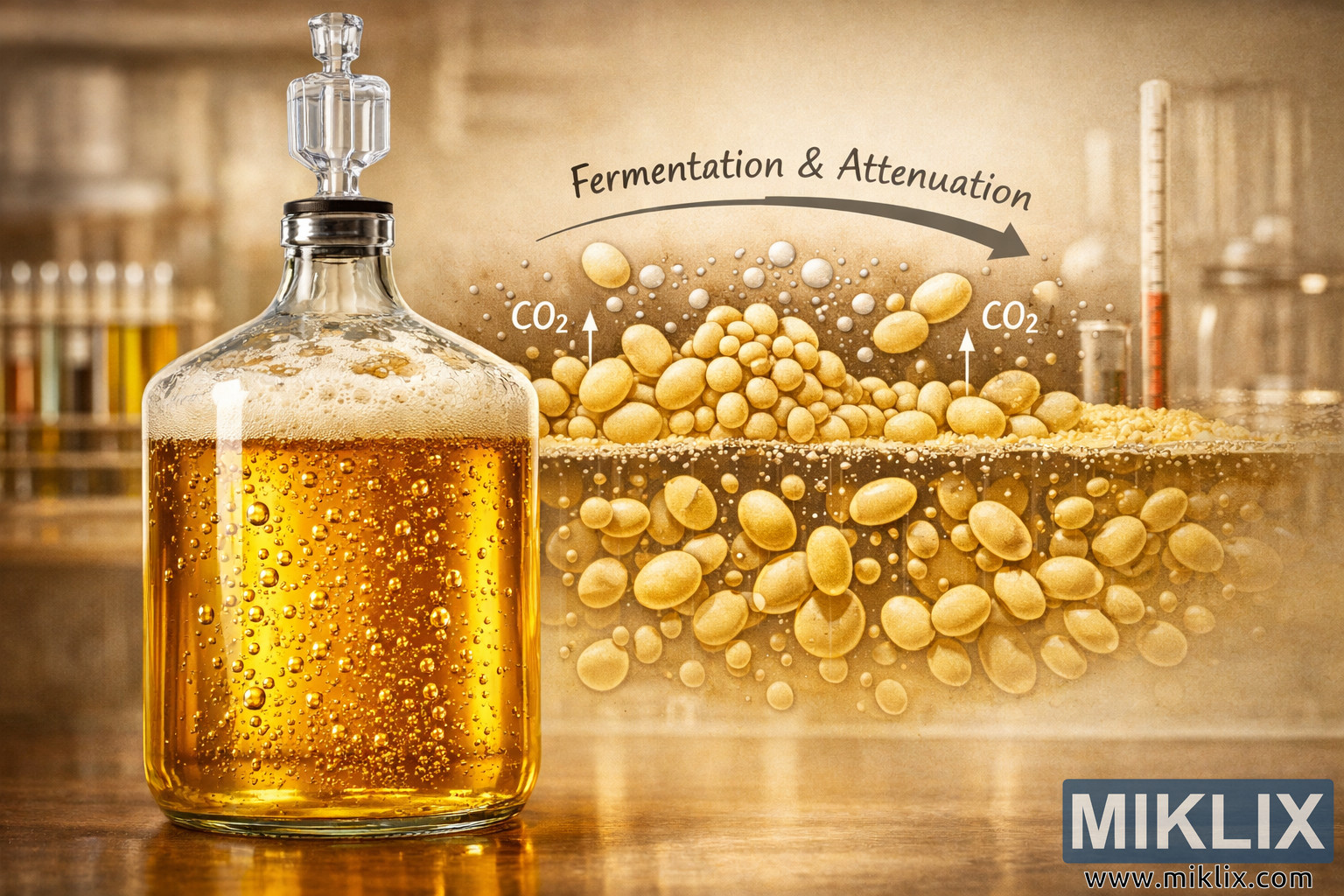
Detailed scientific illustration of brewing attenuation showing a fermenting lager in a glass carboy, magnified yeast cells flocculating, and softly blurred laboratory equipment in warm light.
Scientific Illustration of Yeast Attenuation in Lager Fermentation
この画像の利用可能なバージョン
以下のダウンロード可能な画像ファイルは、帯域幅の消費を抑えるためにファイルサイズが最適化されている当ウェブサイトの記事やページに埋め込まれている画像よりも、圧縮率が低く、解像度が高く、その結果、品質が高くなっています。
レギュラーサイズ (1,536 x 1,024)
大きいサイズ (3,072 x 2,048)
非常に大きなサイズ (4,608 x 3,072)
特大サイズ (6,144 x 4,096)
非常に大きなサイズ (1,048,576 x 699,051)
- まだアップロード中だ。)
画像説明
This landscape scientific illustration presents a carefully composed visual exploration of attenuation in brewing, with a specific emphasis on liquid yeast and active fermentation. In the foreground, a crystal-clear glass carboy stands prominently on a polished wooden laboratory bench. The vessel is filled with luminous golden lager, glowing warmly as light passes through the liquid. Fine streams of carbon dioxide bubbles rise continuously from the bottom to the surface, visually communicating vigorous fermentation. The glass surface reflects soft highlights, and subtle condensation suggests a controlled brewing environment. The clarity and sharp focus on the carboy establish it as the primary subject, reinforcing the central theme of attenuation in action.
Behind the carboy, occupying the middle visual plane, a detailed graphical representation of yeast cells appears as an educational overlay. The yeast cells are illustrated at a magnified scale, showing oval and round forms in warm golden and amber tones. Some cells appear isolated and actively budding, while others cluster together in small aggregates, demonstrating flocculation. This clustering visually symbolizes the later stages of attenuation, when yeast begins to settle after converting fermentable sugars into alcohol and carbon dioxide. The cellular forms are rendered with dimensional shading and gentle highlights, giving them a semi-realistic, scientific quality that bridges artistic interpretation and microbiological accuracy. Small bubbles interspersed among the cells reinforce the biochemical activity taking place.
In the softly blurred background, a laboratory setting subtly emerges. Rows of glass test tubes, faint measurement markings, and a tall thermometer can be discerned without drawing attention away from the central subject. These elements are illuminated by diffused, warm light that creates a calm and methodical atmosphere. The shallow depth of field ensures that the laboratory equipment remains gently out of focus, enhancing spatial depth while symbolizing controlled experimentation and scientific rigor. The warm color palette—gold, amber, and soft beige—unifies the composition and evokes both the richness of lager and the precision of laboratory study.
The overall mood is clean, crisp, and analytical. The composition balances realism with instructional clarity, making the process of attenuation visually intuitive. By layering the sharply focused carboy, the magnified yeast activity, and the softly diffused laboratory background, the image conveys both the tangible craft of brewing and the underlying microbiological science. The result is a refined scientific illustration that captures fermentation as both a natural biological process and a carefully monitored technical practice.
画像は関連するものです: Fermenting Beer with Wyeast 2105-PC Rocky Mountain Lager Yeast