
画像: Sage and Other Herbs: A Visual Comparison of Unique Herbal Benefits
出版された:
最終更新日 2026年6月8日 18:49:01 UTC
Explore a detailed comparison of sage and other popular herbs including rosemary, thyme, basil, and parsley. This botanical infographic highlights the unique health and wellness benefits of each herb in a clean landscape layout.
Sage and Other Herbs: A Visual Comparison of Unique Herbal Benefits
この画像の利用可能なバージョン
以下のダウンロード可能な画像ファイルは、帯域幅の消費を抑えるためにファイルサイズが最適化されている当ウェブサイトの記事やページに埋め込まれている画像よりも、圧縮率が低く、解像度が高く、その結果、品質が高くなっています。
レギュラーサイズ (1,536 x 1,024)
大きいサイズ (3,072 x 2,048)
非常に大きなサイズ (4,608 x 3,072)
特大サイズ (6,144 x 4,096)
非常に大きなサイズ (1,048,576 x 699,051)
- まだアップロード中だ。)
画像説明
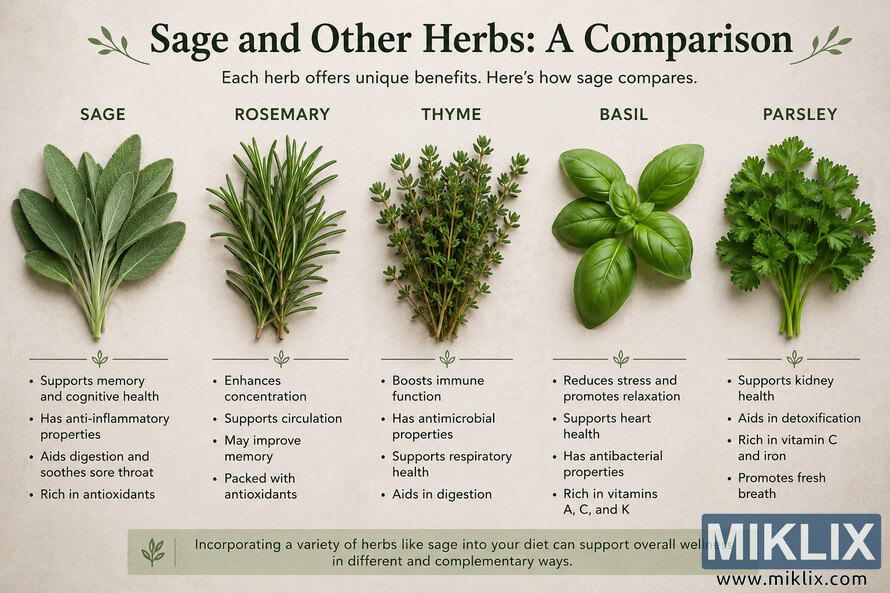
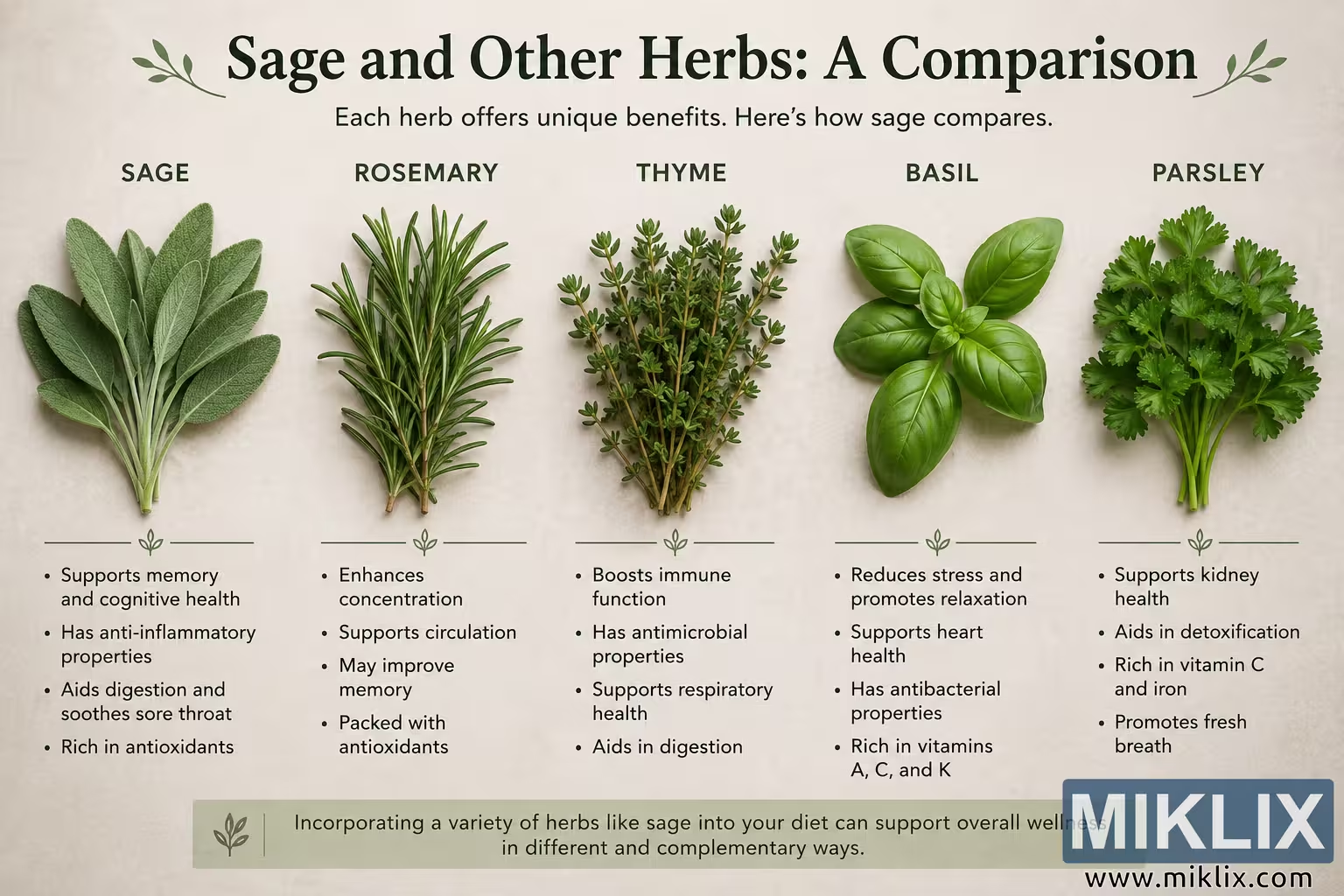
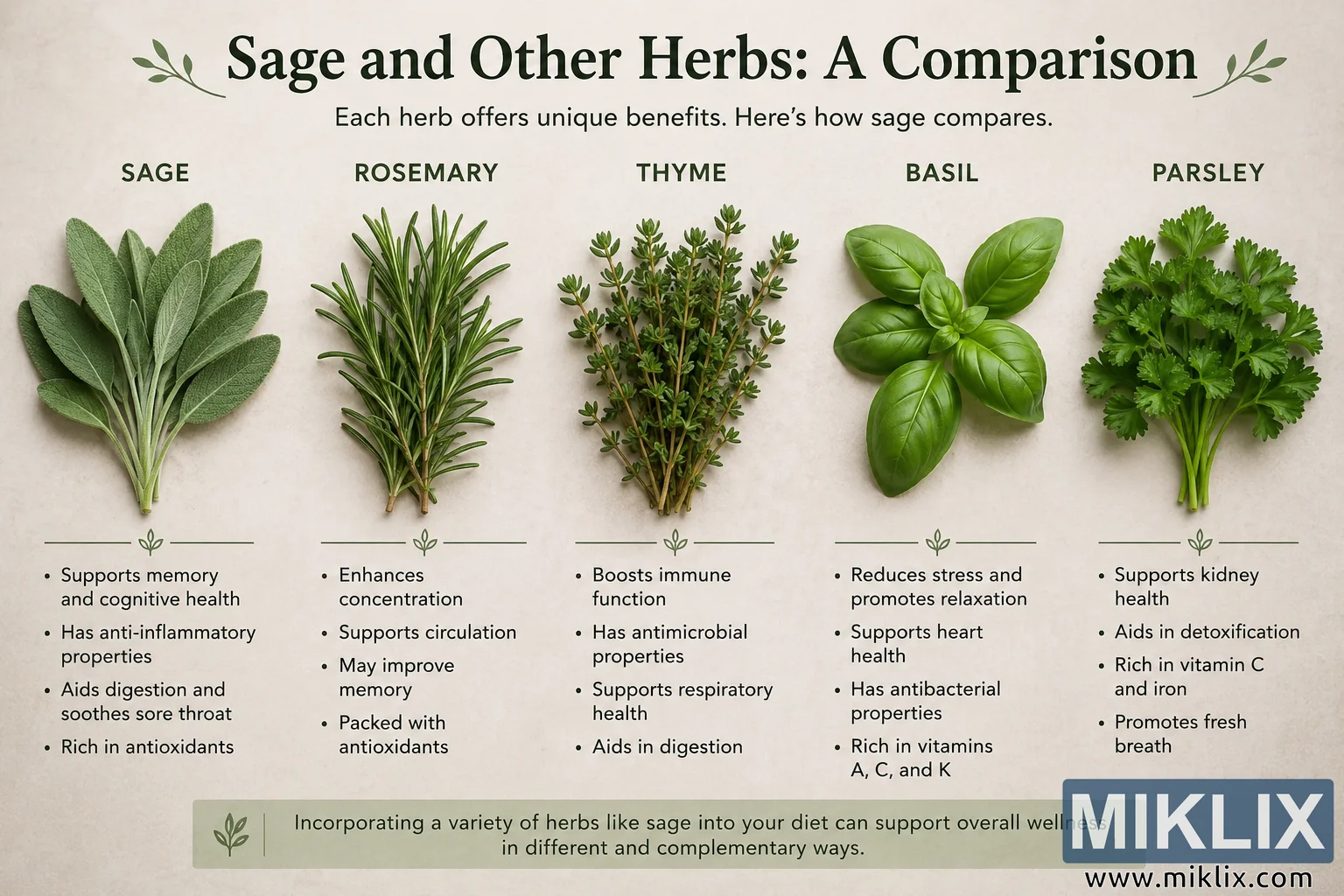
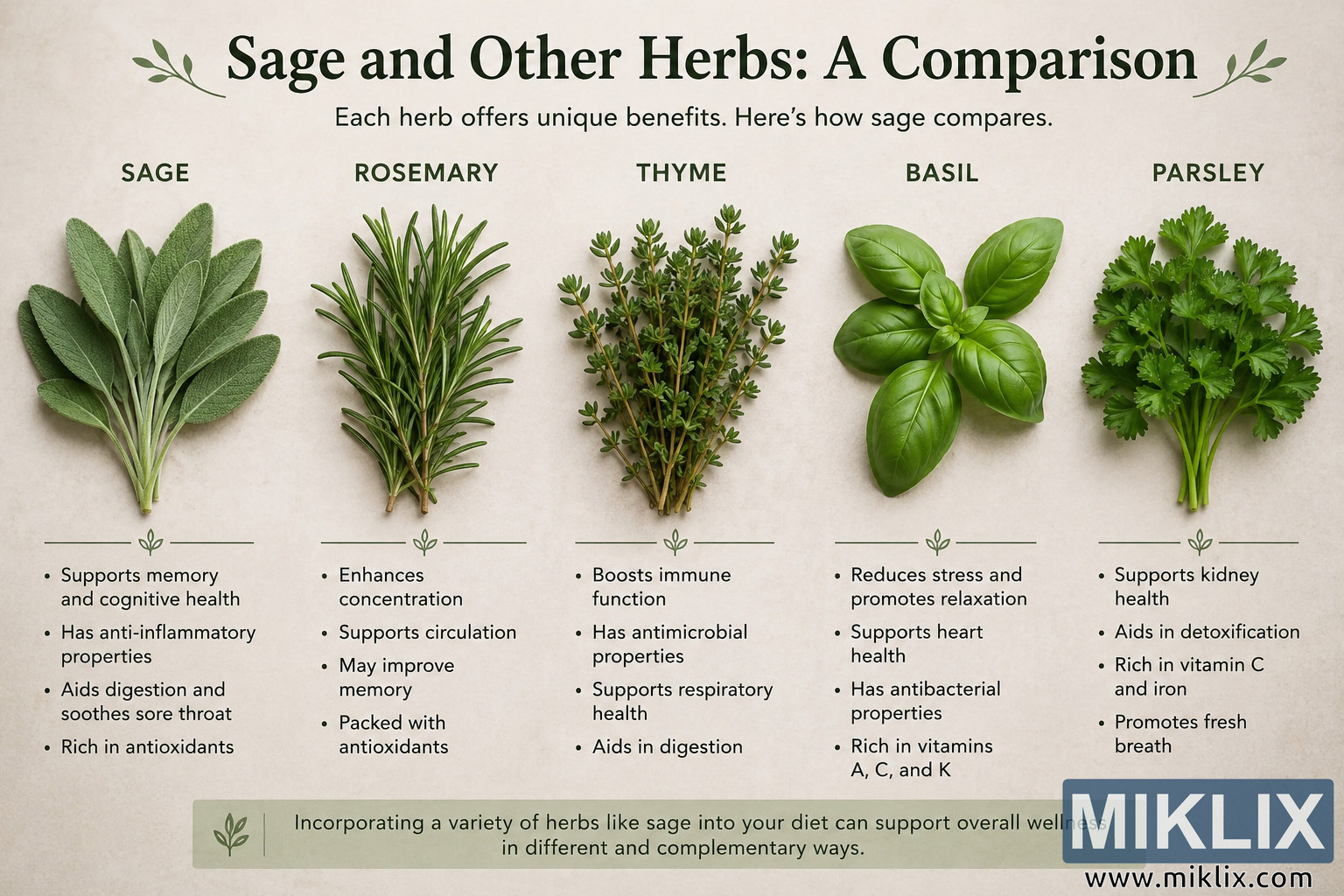
This high-resolution landscape infographic presents a visually balanced comparison between sage and several other widely recognized culinary herbs, including rosemary, thyme, basil, and parsley. The composition is arranged in a clean horizontal layout against a warm, lightly textured neutral background that resembles natural parchment or soft recycled paper. The overall visual tone is calming, botanical, and educational, combining realistic herb photography with modern infographic design principles.
Centered prominently at the top of the image is the headline, “Sage and Other Herbs: A Comparison,” displayed in a large elegant serif typeface with dark green lettering. Decorative botanical flourishes appear symmetrically near the title, reinforcing the natural and organic aesthetic of the design. Directly beneath the title is a concise subtitle explaining that each herb offers unique benefits and that the chart demonstrates how sage compares to the others.
The body of the infographic is divided into five evenly spaced vertical columns, each dedicated to one herb. From left to right, the herbs displayed are sage, rosemary, thyme, basil, and parsley. Every column contains a realistic, high-quality botanical image of the herb positioned above a concise list of health or wellness benefits. The herbs are photographed or rendered with high realism and vibrant natural coloration, appearing fresh and recently harvested.
The first column focuses on sage. The herb image shows soft green velvety leaves clustered in a small bundle with visible texture and subtle silvery undertones. Beneath the image is a list describing the herb’s notable qualities. The text states that sage supports memory and cognitive health, possesses anti-inflammatory properties, aids digestion and soothes sore throats, and contains antioxidants. The typography is clean and modern, using dark gray or muted green text that is highly readable against the pale background.
The second column highlights rosemary. The rosemary appears as long needle-like green sprigs with woody stems arranged vertically. The accompanying bullet points explain that rosemary may enhance concentration, support circulation, improve memory, and provide antioxidant compounds. The herb imagery contrasts visually with sage through its sharper leaf structure and darker green coloration.
The third column presents thyme. Small clustered leaves on thin branching stems create a delicate botanical texture. The informational text below states that thyme boosts immune function, possesses antimicrobial properties, supports respiratory health, and aids digestion. The visual styling remains consistent with the other sections, maintaining equal spacing and harmonious alignment.
The fourth column showcases basil. The basil leaves are broad, smooth, glossy, and bright green, creating one of the most visually vibrant sections of the infographic. The text beneath explains that basil may reduce stress and promote relaxation, support heart health, provide antibacterial properties, and contain vitamins A, C, and K. The basil imagery contributes softness and fullness to the overall composition.
The fifth and final column features parsley. The parsley is shown as a lush cluster of curly green leaves with crisp stems. The listed benefits include support for kidney health, detoxification support, vitamin C and iron content, and the promotion of fresh breath. The herb’s textured appearance adds visual diversity to the arrangement.
Separating the imagery from the text in each section are thin decorative horizontal divider lines accented with small botanical icons. These subtle details help unify the infographic and reinforce its herbal wellness theme.
At the bottom of the infographic is a horizontal green-tinted footer box spanning much of the width of the design. Inside this footer is a concluding wellness message explaining that incorporating a variety of herbs such as sage into one’s diet can support overall wellness in complementary ways. A small leaf icon appears to the left of the statement, visually connecting the footer to the rest of the botanical design language.
The color palette throughout the infographic relies heavily on natural greens, muted earth tones, and soft cream backgrounds. The composition avoids visual clutter and instead emphasizes clarity, educational readability, and calm visual harmony. The overall aesthetic resembles a premium health magazine infographic or an educational nutrition poster designed for wellness blogs, herbal education resources, natural food publications, or healthy lifestyle presentations.
The image contains no visible commercial branding, product packaging, watermarks, or corporate logos. The design is purely informational and decorative, focusing entirely on herbs, their visual characteristics, and their associated wellness properties. The landscape orientation and balanced spacing make the infographic suitable for websites, presentations, educational articles, print posters, or social media banners related to herbal medicine, nutrition, natural wellness, or culinary education.
画像は関連するものです: A Complete Guide to the Health Benefits of Sage