
画像: Cellular Illustration of Tarragon Supporting Reduced Inflammation in Body Tissues
出版された:
最終更新日 2026年6月20日 7:51:34 UTC
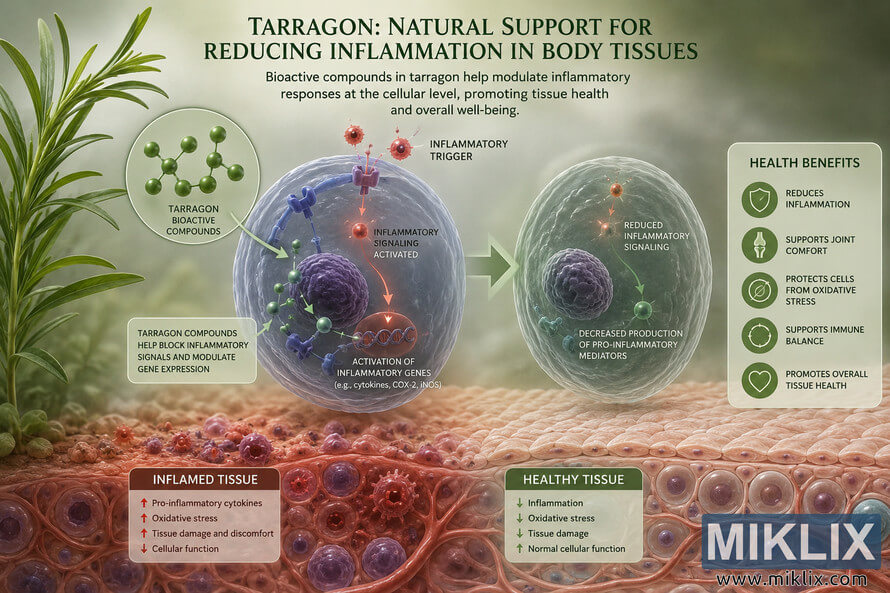
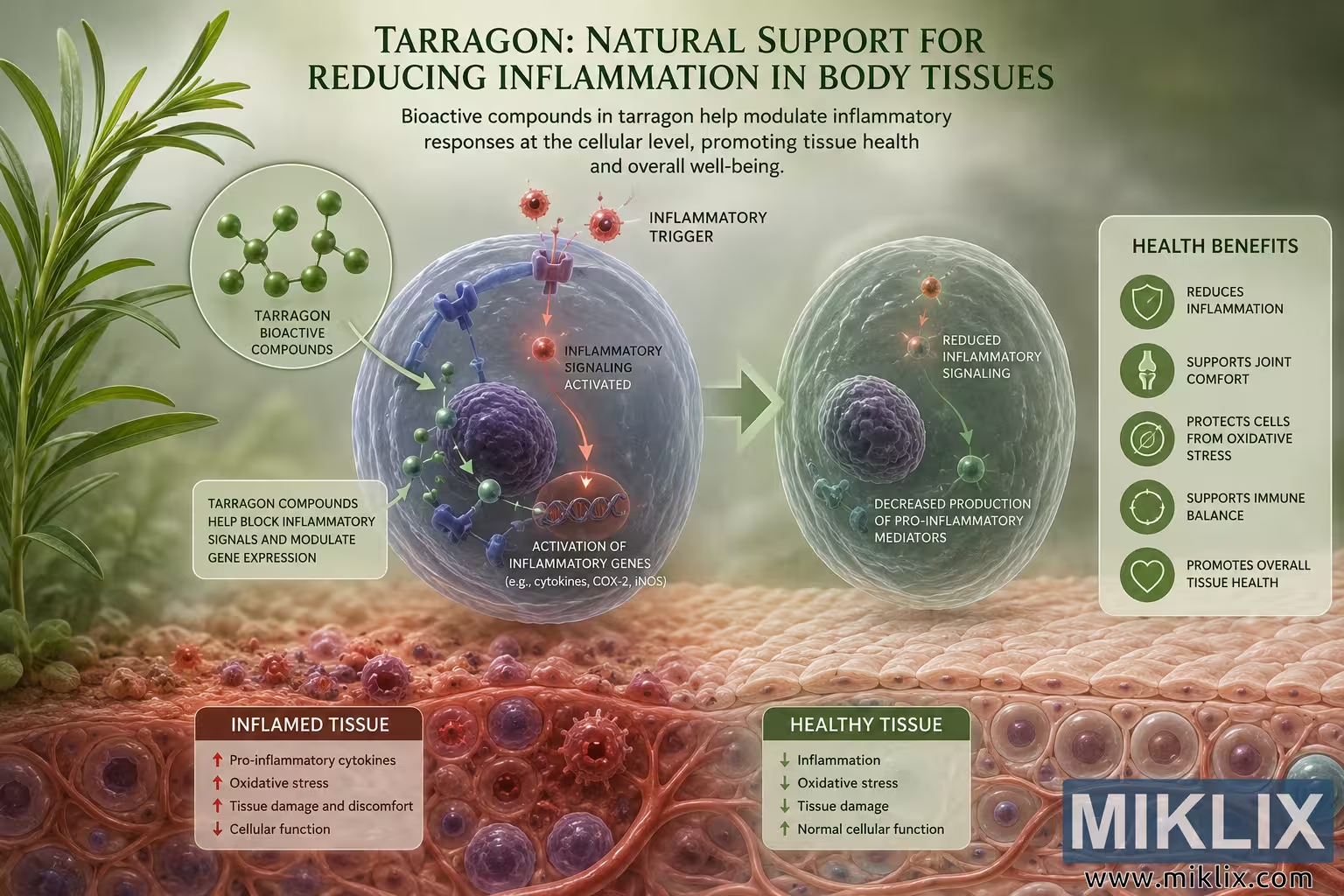
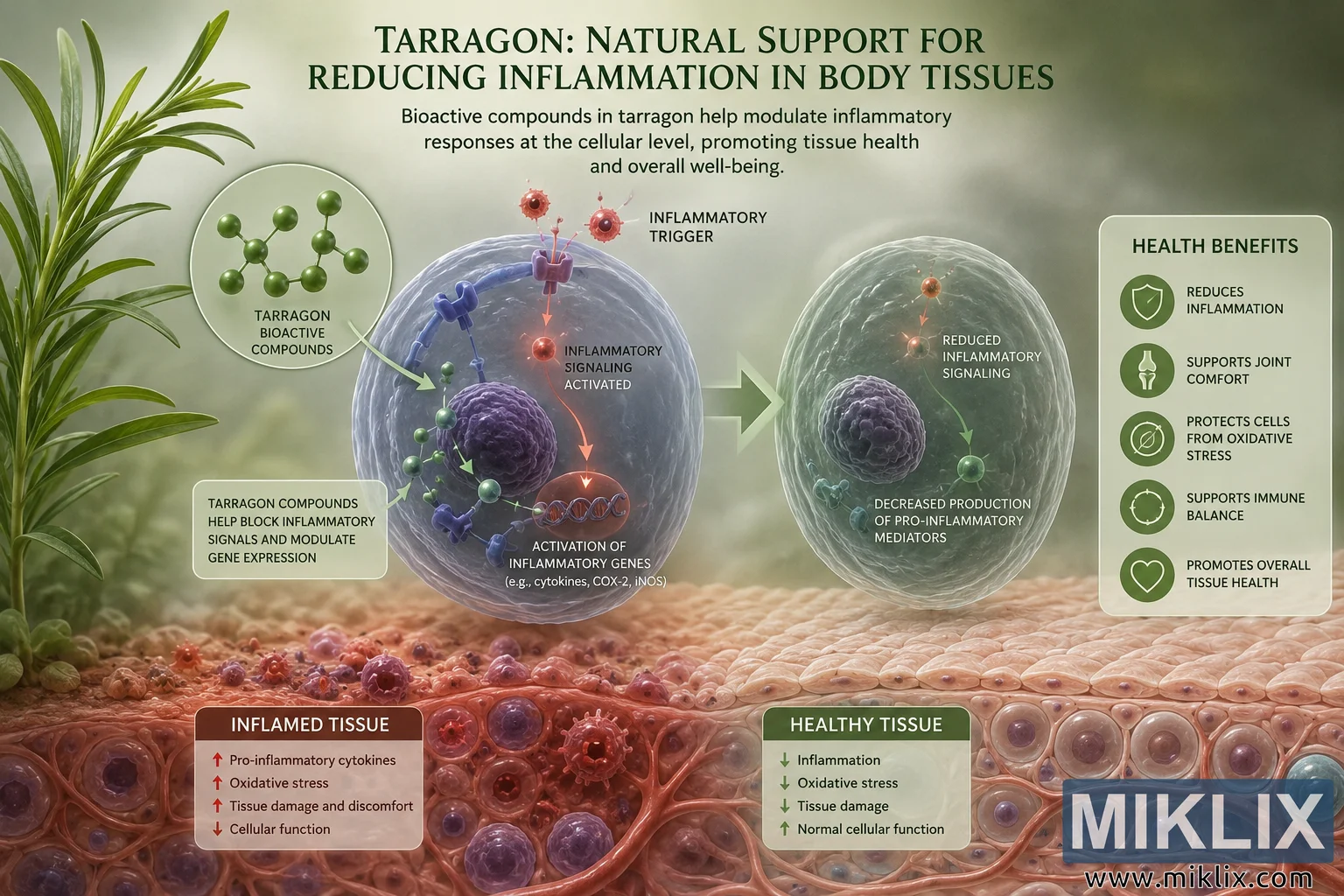
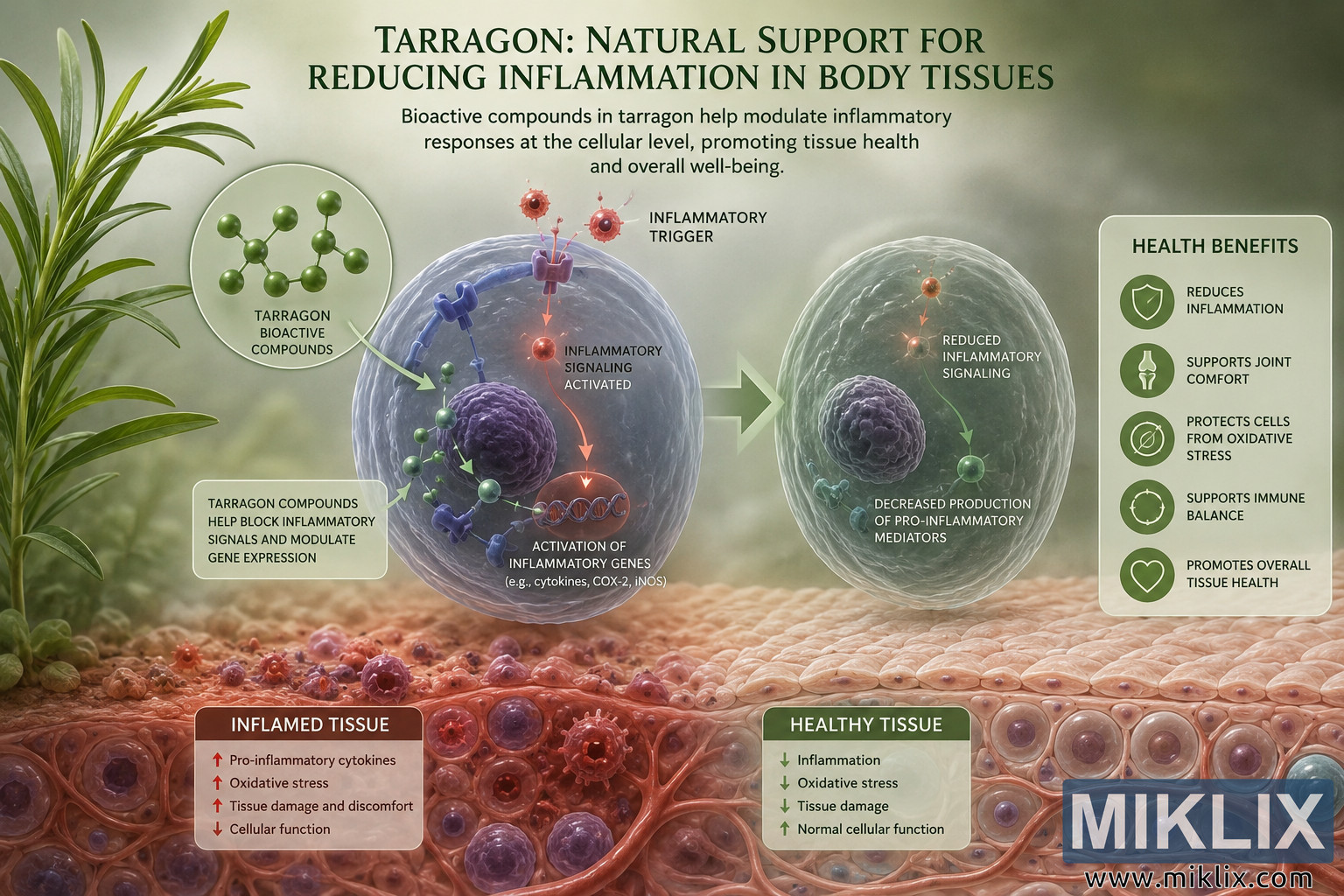
Explore a highly detailed medical-style illustration showing how tarragon bioactive compounds may help reduce inflammation in body tissues at the cellular level. The infographic contrasts inflamed tissue with healthier tissue and highlights cellular signaling pathways, oxidative stress reduction, and tissue health support.
Cellular Illustration of Tarragon Supporting Reduced Inflammation in Body Tissues
この画像の利用可能なバージョン
以下のダウンロード可能な画像ファイルは、帯域幅の消費を抑えるためにファイルサイズが最適化されている当ウェブサイトの記事やページに埋め込まれている画像よりも、圧縮率が低く、解像度が高く、その結果、品質が高くなっています。
レギュラーサイズ (1,536 x 1,024)
大きいサイズ (3,072 x 2,048)
非常に大きなサイズ (4,608 x 3,072)
特大サイズ (6,144 x 4,096)
非常に大きなサイズ (1,048,576 x 699,051)
- まだアップロード中だ。)
画像説明
This image is a highly detailed, landscape-oriented medical and scientific illustration designed in the style of a premium healthcare infographic. The composition visually explains the potential anti-inflammatory effects of tarragon at the cellular level inside human body tissues. The scene combines realistic microscopic anatomy, stylized molecular biology, and educational infographic elements to create an immersive and informative visual presentation.
The overall color palette uses soft greens, muted earth tones, warm tissue pinks, and translucent cellular blues to communicate themes of natural healing, biology, and wellness. The image background contains a subtle out-of-focus organic environment with diffuse lighting and soft gradients that help emphasize the foreground cellular structures.
On the far left side of the image, a realistic tarragon plant with elongated green leaves emerges from the frame. The plant appears fresh and vibrant, symbolizing the natural botanical source of the compounds discussed in the illustration. Adjacent to the plant is a circular molecular inset containing stylized green molecular structures labeled as bioactive compounds. Thin directional arrows extend from the molecular inset toward a large central cell, visually connecting the tarragon compounds to their biological effects.
The central portion of the illustration focuses on a large semi-transparent human cell rendered in detailed three-dimensional style. The cell membrane has a glossy, translucent texture that reveals internal biological structures. Inside the cell, a large purple nucleus occupies the center, surrounded by signaling pathways, receptors, and molecular interactions. Multiple small glowing particles and receptor-like proteins are embedded in the membrane to represent inflammatory signaling processes.
Above the cell, several red inflammatory particles descend toward membrane receptors. These particles symbolize inflammatory triggers or inflammatory signaling molecules entering the tissue environment. Bright red arrows inside the cell demonstrate the activation of inflammatory pathways. Near the lower interior of the cell, a DNA double helix is shown glowing with reddish-orange illumination, representing inflammatory gene activation. Additional arrows indicate signaling cascades that increase inflammation, oxidative stress, and tissue discomfort.
Green molecular particles associated with tarragon compounds move into the cell from the left side. Their directional flow visually opposes the red inflammatory pathways. Green arrows and softened lighting effects indicate that the compounds interfere with or suppress inflammatory signaling. The image depicts the transition from active inflammation toward restored cellular balance.
To the right of the inflamed cell is a second, healthier cell rendered with calmer colors and fewer inflammatory particles. This healthier cell contains softer green illumination and reduced signaling activity. The visual transition between the two cells is emphasized by a large directional arrow positioned between them, symbolizing the improvement from inflamed tissue to healthier tissue conditions.
The lower half of the image contains an expansive cross-sectional view of body tissue. On the left side beneath the inflamed cell, the tissue appears irritated and damaged. The tissue structures contain darker reds, swollen cellular formations, and clusters of inflammatory particles embedded between cells. Several enlarged immune-like structures and damaged-looking regions create the impression of chronic irritation and oxidative stress.
Toward the right side beneath the healthier cell, the tissue gradually becomes more organized and visually healthy. Cells appear smoother, more uniform, and less inflamed. The color palette transitions into softer peach and pink tones with subtle green highlights, symbolizing reduced inflammation and restored tissue health.
Along the right side of the infographic is a vertical panel summarizing potential wellness-related benefits associated with reduced inflammation. The panel uses clean iconography and organized layout elements to reinforce the educational style of the image. Circular icons symbolize concepts such as immune balance, joint comfort, cellular protection, oxidative stress reduction, and overall tissue wellness.
The top section of the composition contains a large educational title rendered in elegant typography. Beneath the title is supporting explanatory text describing how bioactive compounds from tarragon may help modulate inflammatory responses at the cellular level and support tissue health and overall well-being.
The image combines scientific visualization with polished healthcare infographic design. Its highly detailed rendering style, realistic cellular anatomy, soft volumetric lighting, and layered molecular interactions create a sophisticated educational illustration suitable for wellness articles, scientific content, healthcare presentations, nutritional discussions, or medical-themed educational materials focused on inflammation reduction and cellular health support.
画像は関連するものです: A Guide to the Health Benefits of Tarragon