
画像: Cruciferous Vegetables and Cancer Prevention Research Concept
出版された:
最終更新日 2026年7月21日 20:40:06 UTC
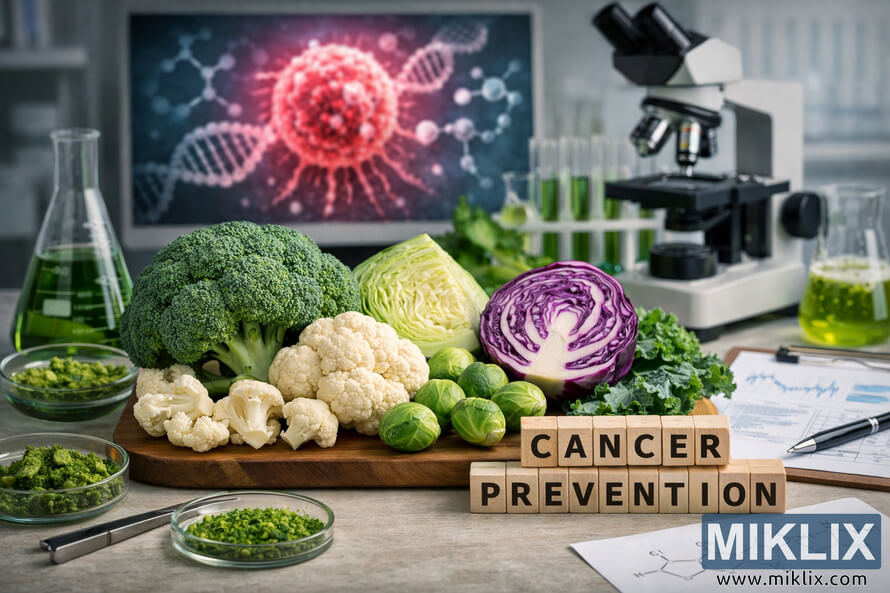
A detailed depiction of cruciferous vegetables in a scientific laboratory setting, illustrating the concept of cancer prevention research through nutrition and biochemistry.
Cruciferous Vegetables and Cancer Prevention Research Concept
この画像の利用可能なバージョン
以下のダウンロード可能な画像ファイルは、帯域幅の消費を抑えるためにファイルサイズが最適化されている当ウェブサイトの記事やページに埋め込まれている画像よりも、圧縮率が低く、解像度が高く、その結果、品質が高くなっています。
レギュラーサイズ (1,536 x 1,024)
大きいサイズ (3,072 x 2,048)
非常に大きなサイズ (4,608 x 3,072)
特大サイズ (6,144 x 4,096)
非常に大きなサイズ (1,048,576 x 699,051)
- まだアップロード中だ。)
画像説明
The image presents a meticulously arranged laboratory scene that visually explores the intersection between nutrition science and cancer prevention research, focusing on cruciferous vegetables. In the foreground, a wooden cutting board serves as the central platform for an assortment of vegetables known for their potential anticancer properties. A large, vibrant green broccoli head dominates the left side, its florets tightly packed and glistening under the laboratory lighting. Next to it, a halved green cabbage reveals its intricate layers of pale green leaves, while a halved purple cabbage displays a mesmerizing pattern of violet and white veins. Creamy white cauliflower florets are scattered nearby, accompanied by small, glossy Brussels sprouts and a few curly stalks of kale, their deep green hue adding texture and contrast.
The middle ground transitions from the natural to the scientific. A transparent Petri dish filled with crushed green vegetable extract sits beside a glass Erlenmeyer flask containing a vivid green liquid, suggesting biochemical analysis. To the right, a compound microscope with a sleek black and silver body stands ready for observation, its lenses reflecting the ambient light. Behind the vegetables, a white test tube rack holds several tubes filled with green solutions, and a glass beaker bubbles gently with a similar liquid, evoking an atmosphere of active experimentation.
In the background, a large digital screen displays a striking visual of a glowing pink cancer cell surrounded by DNA helices and molecular structures, symbolizing the cellular focus of cancer research. The screen’s illumination casts a subtle glow across the workspace, blending the organic and technological elements into a cohesive narrative. To the right of the screen, a clipboard holds a sheet of paper featuring DNA imagery and analytical graphs, with a pen resting diagonally across it, implying ongoing documentation and study.
In the foreground, wooden blocks spell out “CANCER PREVENTION” in two neat rows, serving as both a literal and symbolic anchor for the composition. The blocks are positioned prominently, their natural wood texture contrasting with the sterile laboratory environment. Nearby, a Petri dish containing crushed vegetable samples sits beside a pair of metal tweezers, tools of precision and inquiry. A sheet of paper with hand-drawn chemical formulas lies partially beneath the cutting board, connecting the visual theme of nutrition to the molecular level of scientific understanding.
The lighting is balanced and deliberate, emphasizing the freshness and vitality of the vegetables while maintaining the clean, clinical atmosphere of the laboratory. The depth of field is carefully controlled: the foreground elements—the vegetables and the “CANCER PREVENTION” blocks—are sharply focused, while the background equipment and digital display are slightly blurred, guiding the viewer’s attention toward the symbolic relationship between natural compounds and medical research.
The composition conveys a sense of harmony between nature and science. The vegetables represent the raw materials of life and health, while the laboratory instruments embody human curiosity and technological advancement. Together, they form a visual metaphor for the ongoing quest to understand how dietary components, particularly those found in cruciferous vegetables, may contribute to cancer prevention through biochemical pathways and cellular mechanisms. The image encapsulates both hope and rigor: hope in the potential of natural foods to combat disease, and rigor in the scientific processes that seek to validate those possibilities.
Overall, the photograph is a celebration of interdisciplinary research—where botany meets biochemistry, and nutrition meets oncology. It invites viewers to reflect on the power of everyday foods as subjects of profound scientific inquiry, emphasizing that the path to prevention may lie as much in the laboratory as in the kitchen.
画像は関連するものです: Collard Greens: The Leafy Green Your Diet Is Missing