
画像: Calorie Density Comparison Across Common Foods
出版された:
最終更新日 2026年9月7日 6:31:03 UTC
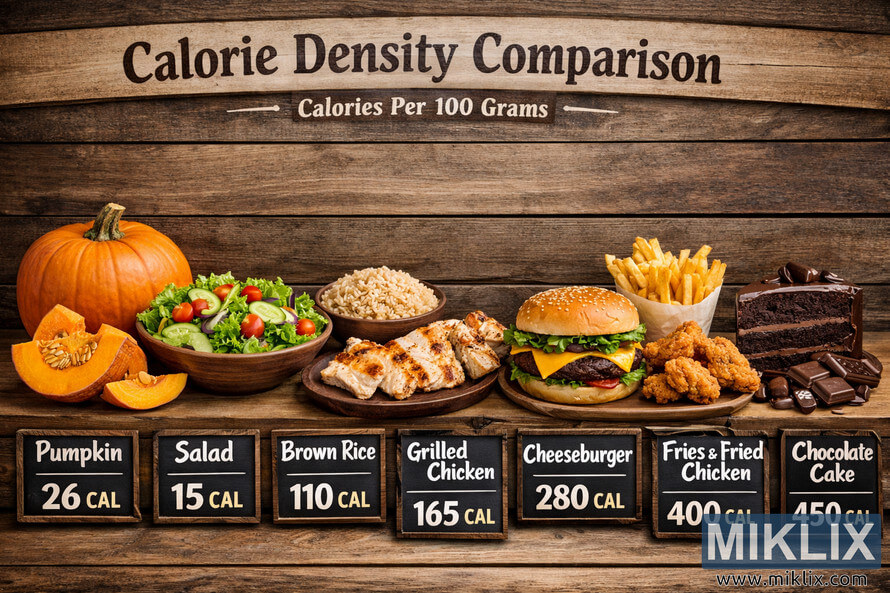
Explore a visual comparison of calorie density in various foods, from low-calorie pumpkins and salads to high-calorie chocolate cake, illustrating nutritional contrasts and energy content per 100 grams.
Calorie Density Comparison Across Common Foods
この画像の利用可能なバージョン
以下のダウンロード可能な画像ファイルは、帯域幅の消費を抑えるためにファイルサイズが最適化されている当ウェブサイトの記事やページに埋め込まれている画像よりも、圧縮率が低く、解像度が高く、その結果、品質が高くなっています。
レギュラーサイズ (1,536 x 1,024)
大きいサイズ (3,072 x 2,048)
非常に大きなサイズ (4,608 x 3,072)
特大サイズ (6,144 x 4,096)
非常に大きなサイズ (1,048,576 x 699,051)
- まだアップロード中だ。)
画像説明
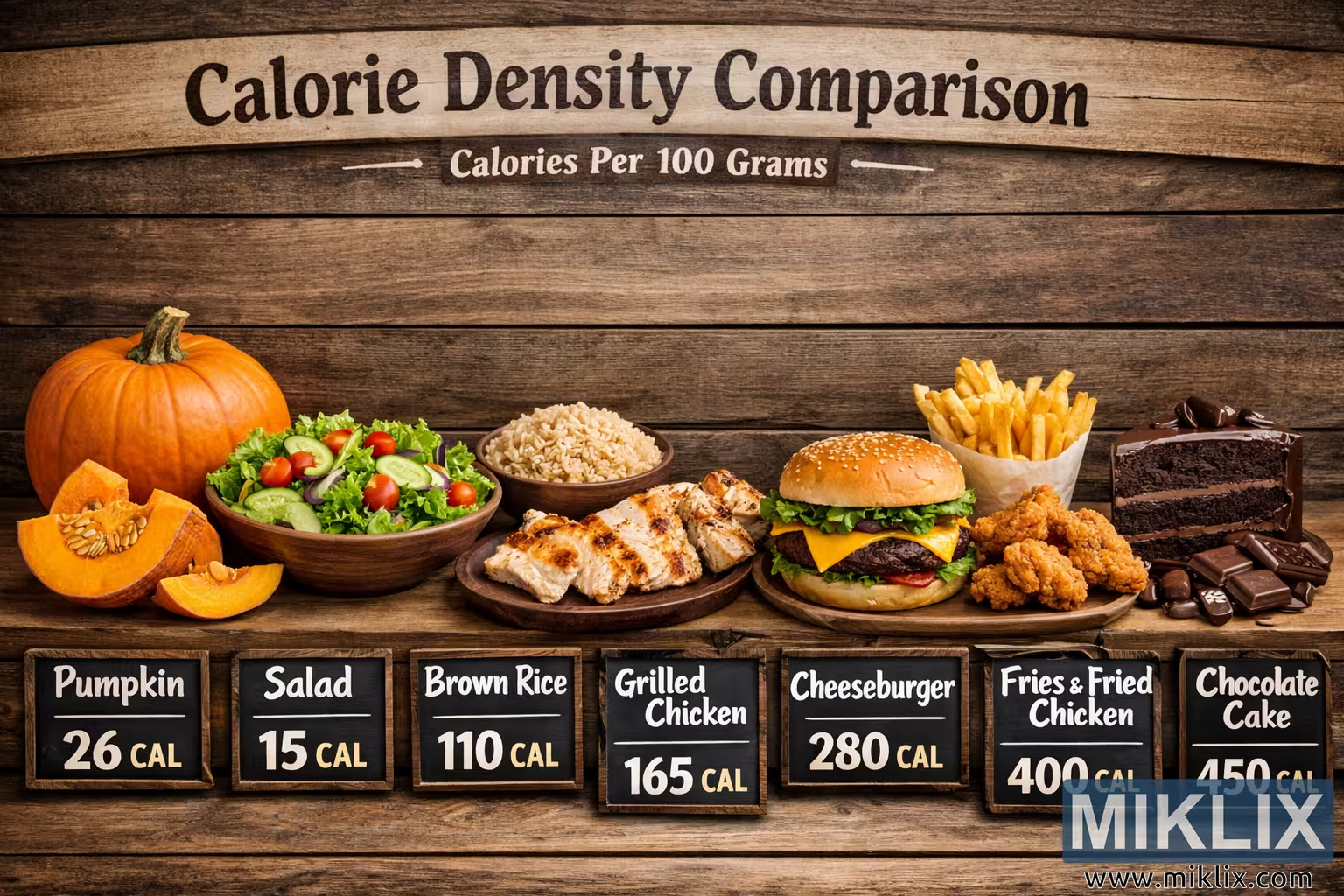
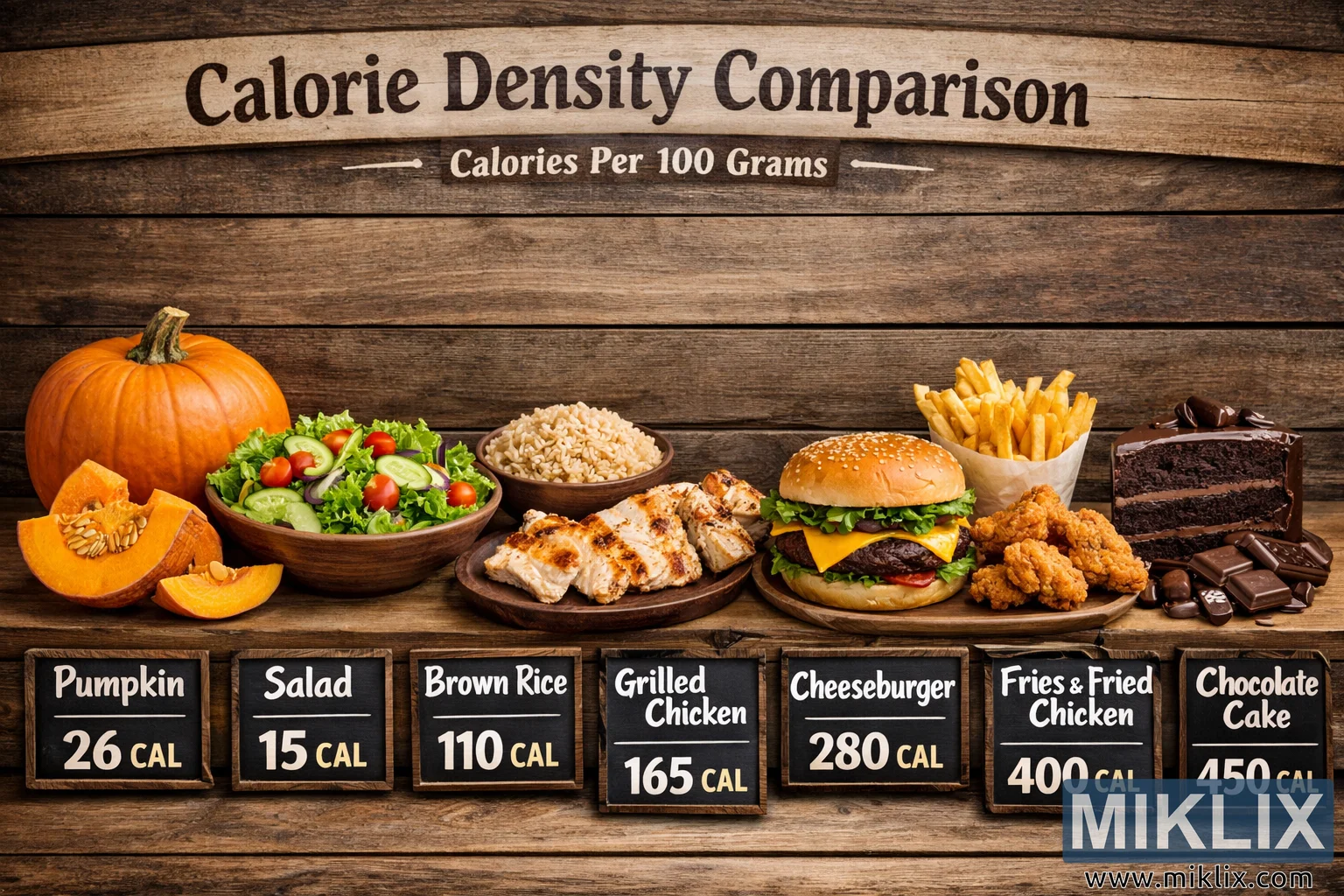
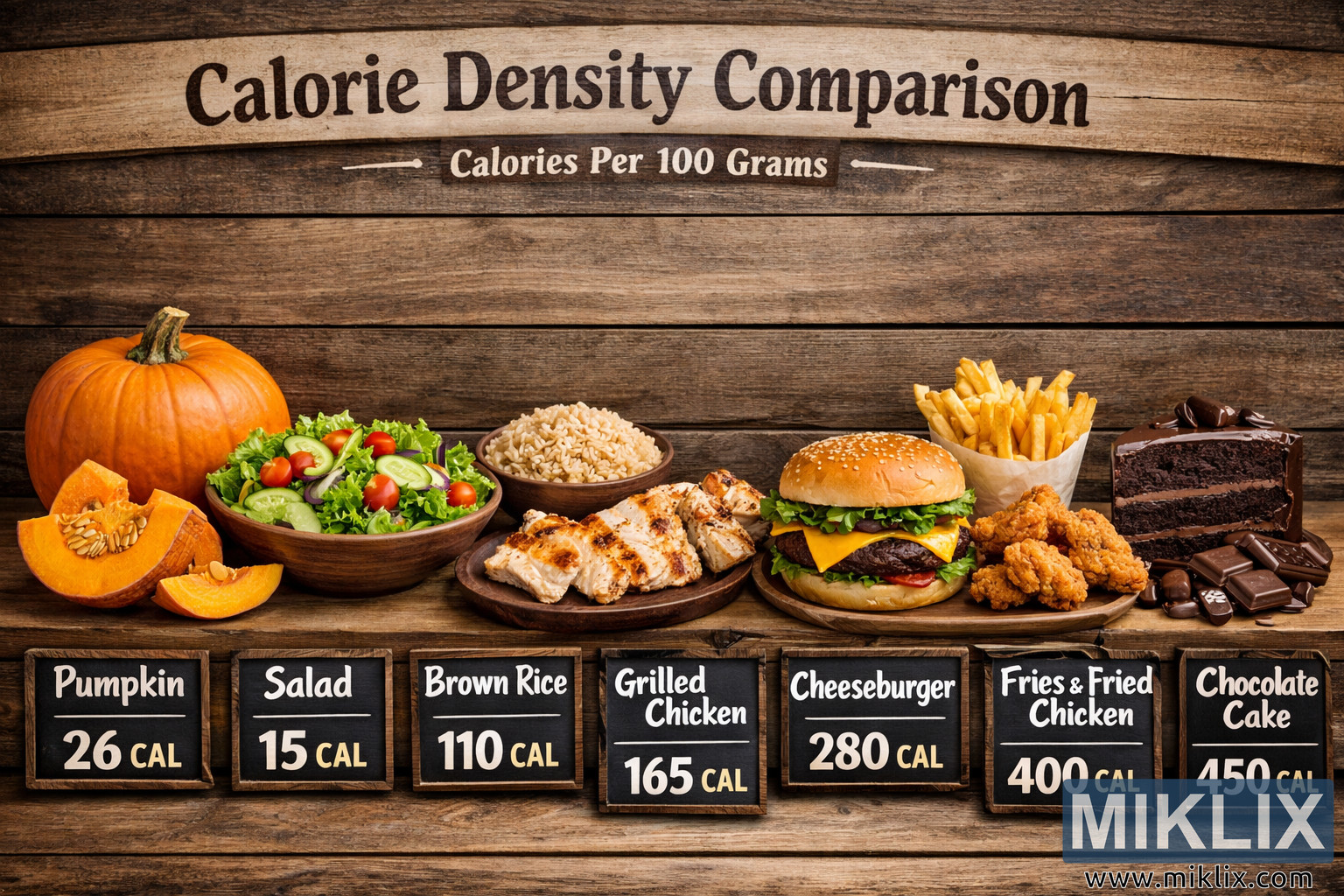
The image presents a visually engaging and educational composition titled "Calorie Density Comparison" that explores the concept of energy concentration in different foods. The scene is set against a rustic wooden background, evoking a natural and wholesome atmosphere. At the top of the image, the title is written in large, bold, rustic-style lettering, followed by the subtitle "Calories Per 100 Grams" in a smaller but clear font. This immediately establishes the purpose of the visual: to compare how many calories are contained in equal weights of various foods.
The arrangement of foods follows a logical progression from left to right, moving from low-calorie, nutrient-dense items to high-calorie, energy-dense indulgences. On the far left, a group of pumpkins rests on a wooden surface. The pumpkins vary in size and shape, including a large round orange pumpkin, a smaller one beside it, and several slices revealing bright orange flesh and seeds. The texture of the pumpkin skin and the fibrous interior are rendered with remarkable clarity, emphasizing freshness and natural appeal. Below the pumpkins, a small chalkboard-style sign reads "Pumpkin" with "26 CAL" written in bold white text, signifying that pumpkins are among the least calorie-dense foods in the lineup.
Next to the pumpkins, a bowl of fresh salad sits atop a wooden plate. The salad is vibrant and colorful, featuring crisp lettuce leaves, cherry tomatoes, cucumber slices, and thin rings of red onion. The colors—green, red, and purple—contrast beautifully against the neutral tones of the wooden background. The accompanying sign reads "Salad" with "15 CAL" beneath, reinforcing the idea that leafy vegetables and raw produce provide minimal calories per 100 grams while offering high nutritional value.
Moving toward the center, the image transitions to foods with moderate calorie density. A bowl of cooked brown rice appears next, its grains plump and slightly glossy, suggesting moisture and warmth. The rice is presented in a simple, earthy bowl, and the sign below reads "Brown Rice" with "110 CAL" in bold white text. To its right, grilled chicken breast is displayed on a wooden plate, with visible grill marks and a golden-brown surface. The chicken pieces are neatly arranged, and the sign below reads "Grilled Chicken" with "165 CAL." These two items represent balanced sources of carbohydrates and protein, commonly associated with healthy eating and moderate energy intake.
As the viewer’s eye moves further right, the foods become progressively richer and more indulgent. A cheeseburger occupies the central-right position, featuring a beef patty, melted cheese, lettuce, and a sesame seed bun. The textures are detailed—the glossy cheese, crisp lettuce, and toasted bun all contribute to a realistic depiction. The sign below reads "Cheeseburger" with "280 CAL," marking a significant increase in calorie density compared to the previous foods.
To the right of the cheeseburger, a serving of french fries and fried chicken is displayed. The fries are golden and crisp, piled in a paper cone, while the fried chicken pieces are crunchy and richly colored. The sign below reads "Fries & Fried Chicken" with "400 CAL," indicating that deep-fried foods pack a high energy load per 100 grams due to their oil content.
On the far right, the image culminates with a slice of chocolate cake accompanied by chocolate bars and candies. The cake features multiple layers of chocolate sponge and frosting, with a glossy surface that reflects light. The sign below reads "Chocolate Cake" with "450 CAL," representing the highest calorie density among the foods shown. The rich textures and deep brown tones of the cake contrast sharply with the bright orange of the pumpkins on the opposite end, visually reinforcing the calorie gradient.
The overall composition is symmetrical and well-balanced, with each food item occupying its own space and accompanied by a clear label. The lighting is even and warm, enhancing the natural colors and textures of the foods. The wooden background and chalkboard-style signs contribute to a cohesive aesthetic that feels both educational and approachable.
This image effectively communicates the concept of calorie density by juxtaposing foods that vary widely in energy content. It encourages viewers to consider how portion size and food choice affect overall caloric intake. The progression from pumpkins and salads to chocolate cake illustrates the spectrum from low-calorie, high-volume foods to high-calorie, low-volume treats. The visual clarity, realistic textures, and thoughtful arrangement make it an ideal educational tool for nutrition awareness, dietary planning, or health-related presentations. The absence of any branded items ensures that the focus remains entirely on the nutritional comparison rather than commercial associations. The image thus serves as a compelling reminder that while all foods can fit into a balanced diet, understanding calorie density is key to making informed and mindful eating decisions.
画像は関連するものです: Pumpkins: The Nutrient-Packed Superfood You Should Eat Year-Round