
画像: Fresh and Dried Thyme Side-by-Side Culinary Comparison
出版された:
最終更新日 2026年9月13日 17:32:07 UTC
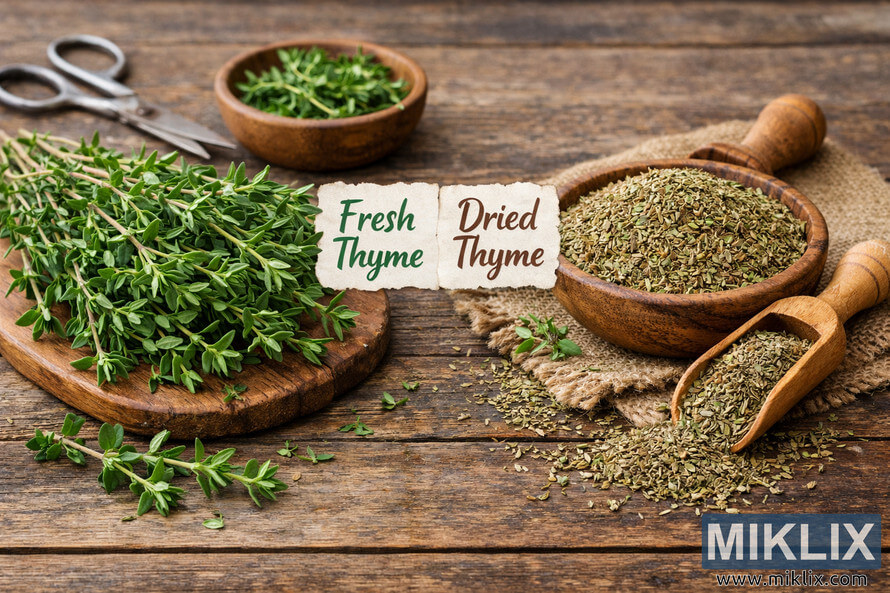
A detailed, high-resolution culinary comparison image featuring fresh thyme sprigs and dried thyme leaves displayed side by side on a rustic wooden surface. The left side shows vibrant green fresh thyme on a cutting board with herb scissors, while the right side presents dried thyme in a wooden bowl and scoop on burlap. Centered parchment labels clearly distinguish Fresh Thyme and Dried Thyme, making this image ideal for cooking blogs, herb guides, and food education content.
Fresh and Dried Thyme Side-by-Side Culinary Comparison
この画像の利用可能なバージョン
以下のダウンロード可能な画像ファイルは、帯域幅の消費を抑えるためにファイルサイズが最適化されている当ウェブサイトの記事やページに埋め込まれている画像よりも、圧縮率が低く、解像度が高く、その結果、品質が高くなっています。
レギュラーサイズ (1,536 x 1,024)
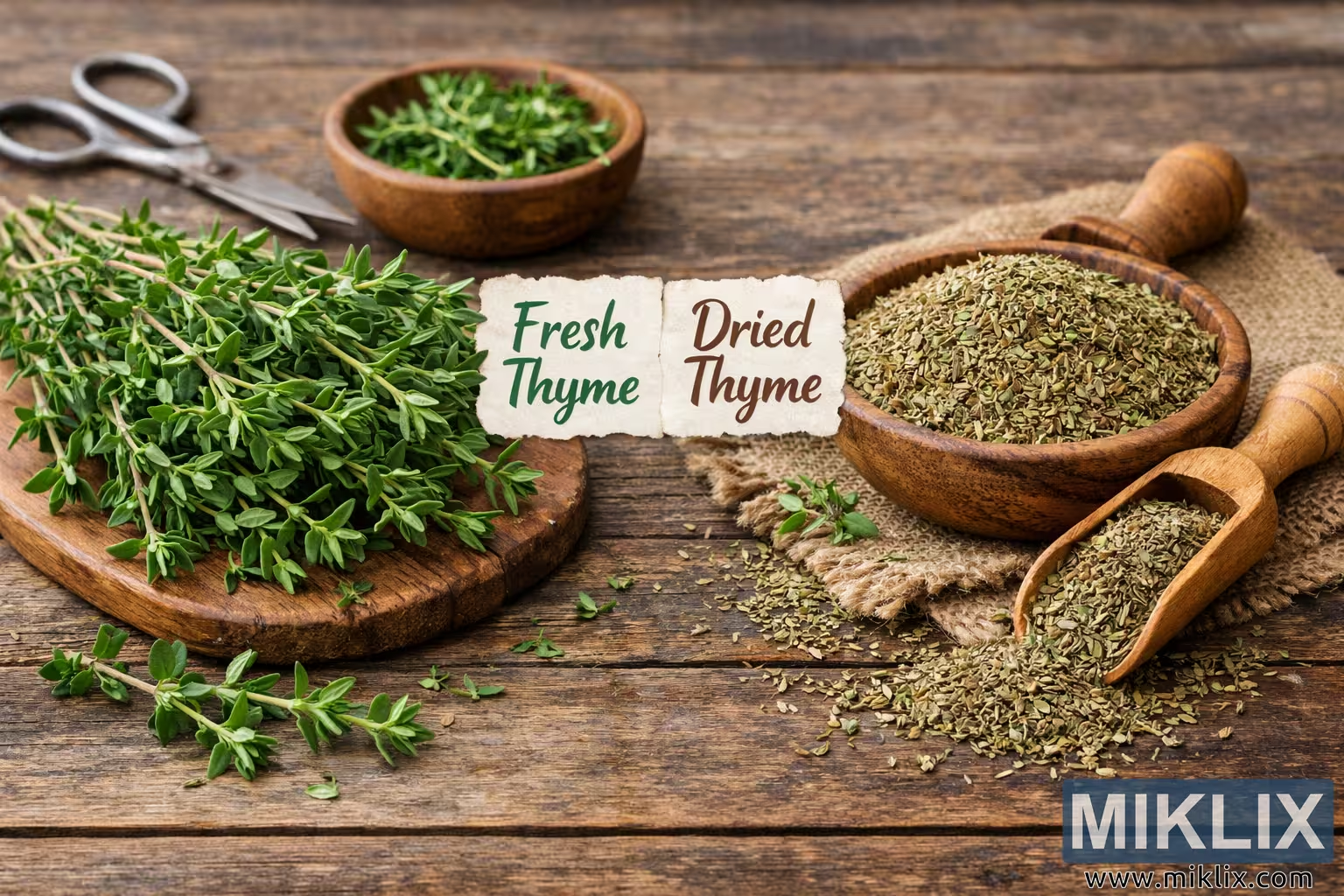
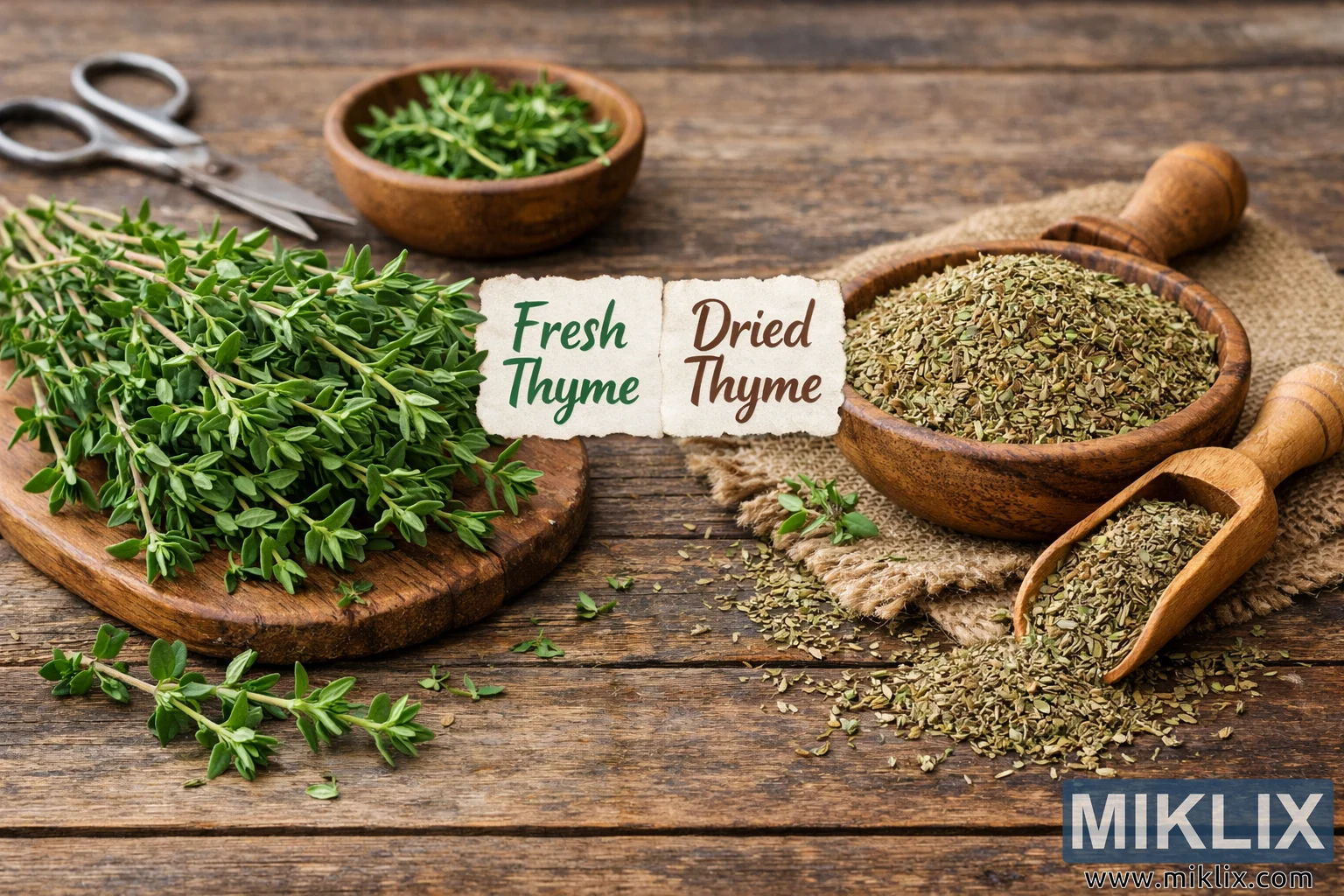
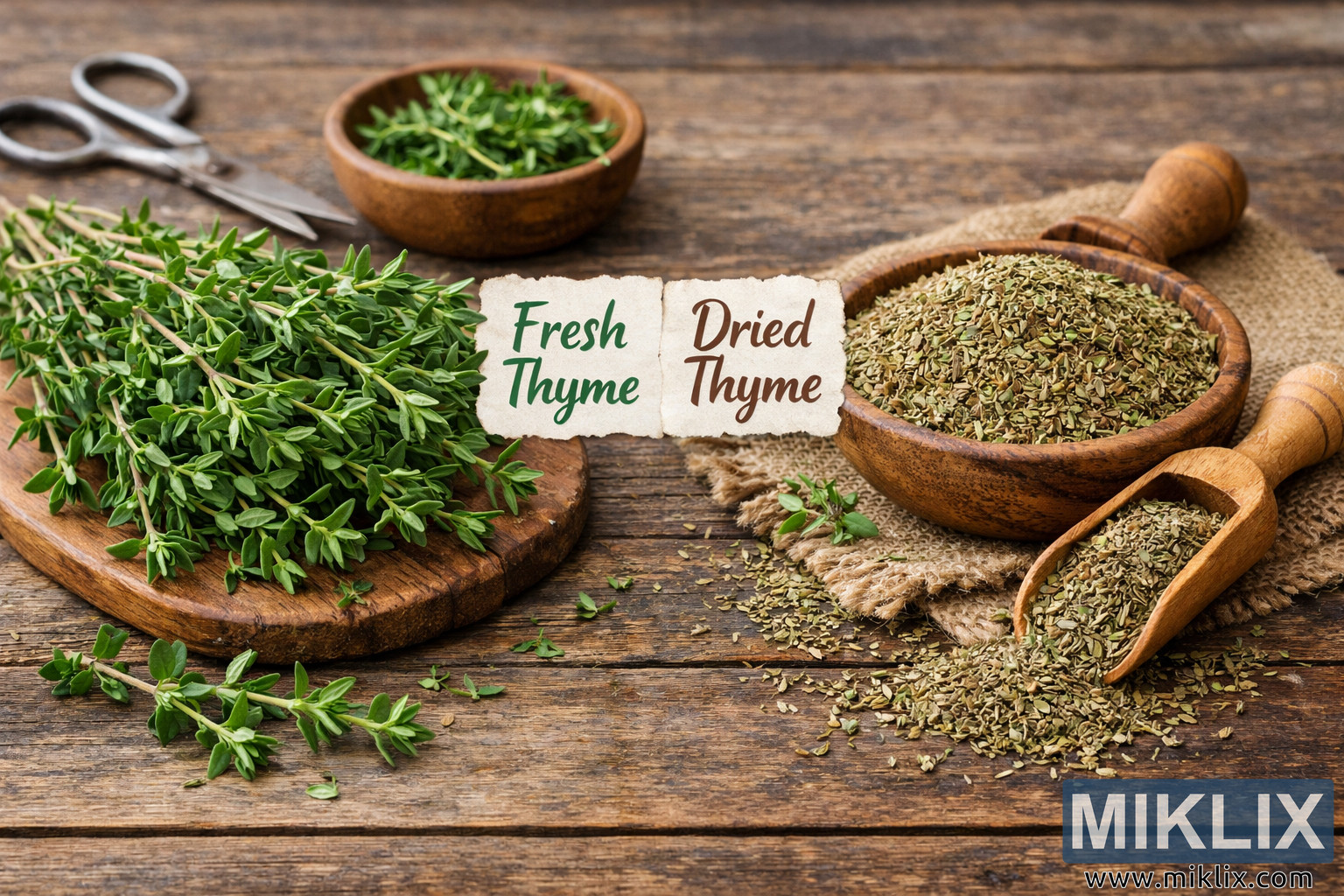
大きいサイズ (3,072 x 2,048)
非常に大きなサイズ (4,608 x 3,072)
特大サイズ (6,144 x 4,096)
非常に大きなサイズ (1,048,576 x 699,051)
- まだアップロード中だ。)
画像説明
The image is a high-resolution, landscape-oriented culinary photograph that presents a carefully arranged comparison between fresh thyme and dried thyme. The entire composition is set on a rustic wooden surface with a weathered texture, visible wood grain, and subtle imperfections that give the scene a warm, natural, and homely atmosphere. The wood is medium to dark brown, with lighter streaks and knots that add visual interest and depth, making it an ideal backdrop for the earthy tones of the herbs and the simple kitchen tools.
On the left side of the frame, fresh thyme is the main focus. A small, round wooden cutting board sits slightly off-center to the left, its surface smooth but still showing faint knife marks and natural wood patterns. Resting on this cutting board is a generous bunch of fresh thyme sprigs. The thyme leaves are vibrant green, tiny, and densely clustered along thin, woody stems that range in color from light green to soft brown. The sprigs are piled in a loose, organic arrangement, with some stems extending beyond the edge of the cutting board and spilling onto the wooden surface below. This creates a sense of abundance and freshness, as if the thyme has just been harvested or prepared for cooking.
Around the cutting board, a few individual thyme sprigs and scattered leaves lie on the wooden surface, adding a casual, natural feel to the scene. Behind the cutting board, slightly to the left, there is a small wooden bowl filled with more fresh thyme sprigs. The bowl has a simple, rustic design, with a rounded shape and a smooth rim, echoing the natural aesthetic of the cutting board and the wooden background. The thyme in the bowl appears freshly picked, with the same bright green leaves and slender stems, reinforcing the idea of freshness and readiness for use in cooking.
Near the fresh thyme, a pair of vintage-style herb scissors is placed on the wooden surface. The scissors are made of metal with a slightly tarnished silver finish, suggesting age and frequent use. Their blades are open, and the handles are rounded, giving them a classic, utilitarian look. Positioned behind or beside the thyme bunch, the scissors subtly imply the process of trimming or harvesting the herb, adding a narrative element to the composition. The presence of the scissors enhances the sense that this is a working kitchen scene, not just a static display.
On the right side of the frame, dried thyme is showcased in a way that contrasts clearly with the fresh thyme on the left. A small rustic wooden bowl sits prominently on the right, filled to the brim with dried thyme leaves. The dried thyme is light greenish-brown in color, with a slightly muted, earthy tone compared to the vivid green of the fresh thyme. The texture of the dried thyme is more fragmented and crumbly, consisting of tiny leaf pieces and fine stems that create a loosely packed, granular appearance.
Underneath the bowl of dried thyme, a piece of frayed burlap cloth is spread out on the wooden surface. The burlap is light beige or tan, with a coarse weave and frayed edges that contribute to the rustic, farmhouse-style aesthetic of the image. The cloth introduces a different texture to the scene, contrasting with the smoothness of the wooden surface and the fine granularity of the dried herb. Some dried thyme has spilled onto the burlap, forming small scattered piles and emphasizing the idea of an active, practical kitchen environment.
Beside the bowl, a wooden scoop with a rounded handle is placed on the burlap. The scoop is filled with dried thyme, and some of the herb spills out onto the cloth and the surrounding wooden surface. The scoop’s design is simple and functional, with a shallow bowl and a short handle that fits comfortably in the hand. Its presence suggests the act of measuring or transferring dried thyme, reinforcing the culinary context of the image.
In the foreground on the right side, a wooden spoon lies on the wooden surface, also filled with dried thyme. The spoon’s bowl is heaped with the herb, and small fragments of dried thyme spill over the edges and onto the wood. The spoon’s handle extends toward the bottom edge of the frame, guiding the viewer’s eye into the scene and adding another layer of depth and detail. The combination of the bowl, scoop, and spoon creates a cohesive visual story about the use and handling of dried thyme in cooking.
At the center of the image, between the fresh thyme on the left and the dried thyme on the right, two labels provide a clear visual and textual distinction between the two forms of the herb. Each label is made from a piece of off-white parchment paper with torn, irregular edges, giving them a handmade, slightly aged appearance. The parchment pieces are laid flat on the wooden surface, aligned horizontally.
The label on the left reads "Fresh Thyme" in a green cursive font. The lettering is smooth and flowing, with a color that echoes the vibrant green of the fresh thyme leaves. This label is positioned closer to the fresh thyme cutting board and bowl, visually anchoring the text to the fresh herb display. The green color of the text reinforces the idea of freshness, vitality, and natural flavor.
The label on the right reads "Dried Thyme" in a brown cursive font. The brown color of the text harmonizes with the earthy tones of the dried thyme and the wooden elements surrounding it. This label is placed nearer to the dried thyme bowl, scoop, and spoon, clearly associating the text with the dried herb. The cursive style of both labels adds a touch of elegance and warmth, while the parchment texture maintains the rustic, artisanal feel of the overall composition.
The lighting in the photograph is even and natural, likely resembling soft daylight. It gently illuminates both sides of the image without creating harsh shadows or overly bright highlights. The fresh thyme on the left appears crisp and lively, with the light accentuating the tiny leaves and the subtle variations in green. On the right, the dried thyme is equally well-defined, with the lighting revealing the fine texture of the dried leaves and the subtle color differences between the herb, the burlap, and the wooden elements.
The depth of field is moderate, ensuring that both the fresh thyme and the dried thyme are in sharp focus. The labels in the center are also clearly legible and well-defined, serving as a visual bridge between the two sections. Background elements, such as the more distant parts of the wooden surface, may be slightly softer, but they remain recognizable and contribute to the overall sense of depth and realism.
Color-wise, the image balances vibrant greens with warm, earthy browns and neutral tones. The fresh thyme’s bright green leaves stand out against the brown cutting board and wooden background, drawing the viewer’s attention to the left side. On the right, the dried thyme’s muted greenish-brown hue blends harmoniously with the burlap and wooden utensils, creating a cohesive, natural palette. The parchment labels, with their off-white color and colored text, provide a subtle but effective contrast that helps organize the visual information.
Overall, the photograph offers a clear, visually appealing comparison between fresh and dried thyme. The careful arrangement of herbs, tools, and labels, combined with the rustic setting and natural lighting, makes the image ideal for culinary education, recipe illustration, or any context where the differences between fresh and dried herbs are being explained or highlighted. The viewer can easily see the contrast in color, texture, and presentation between the two forms of thyme, while also appreciating the inviting, homely atmosphere created by the wooden surface, simple kitchen tools, and handcrafted labels.
画像は関連するものです: Thyme: The Fragrant Herb That Supports Better Health