
surati Side-by-Side Comparison of Sweet Potatoes and White Potatoes on a Marble Surface
გამოქვეყნებულია:
ბოლო განახლება: 4 აგვისტო, 2026, 13:57:28 UTC
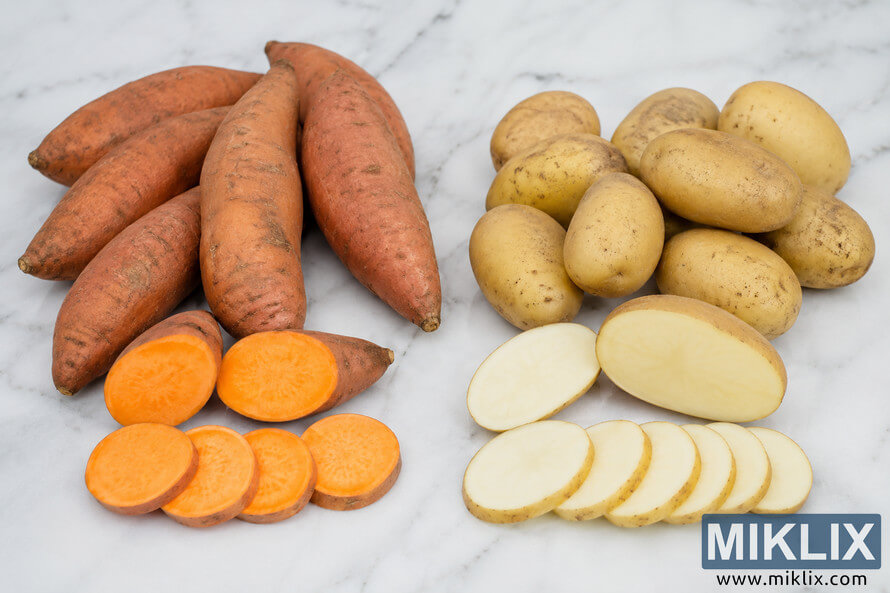
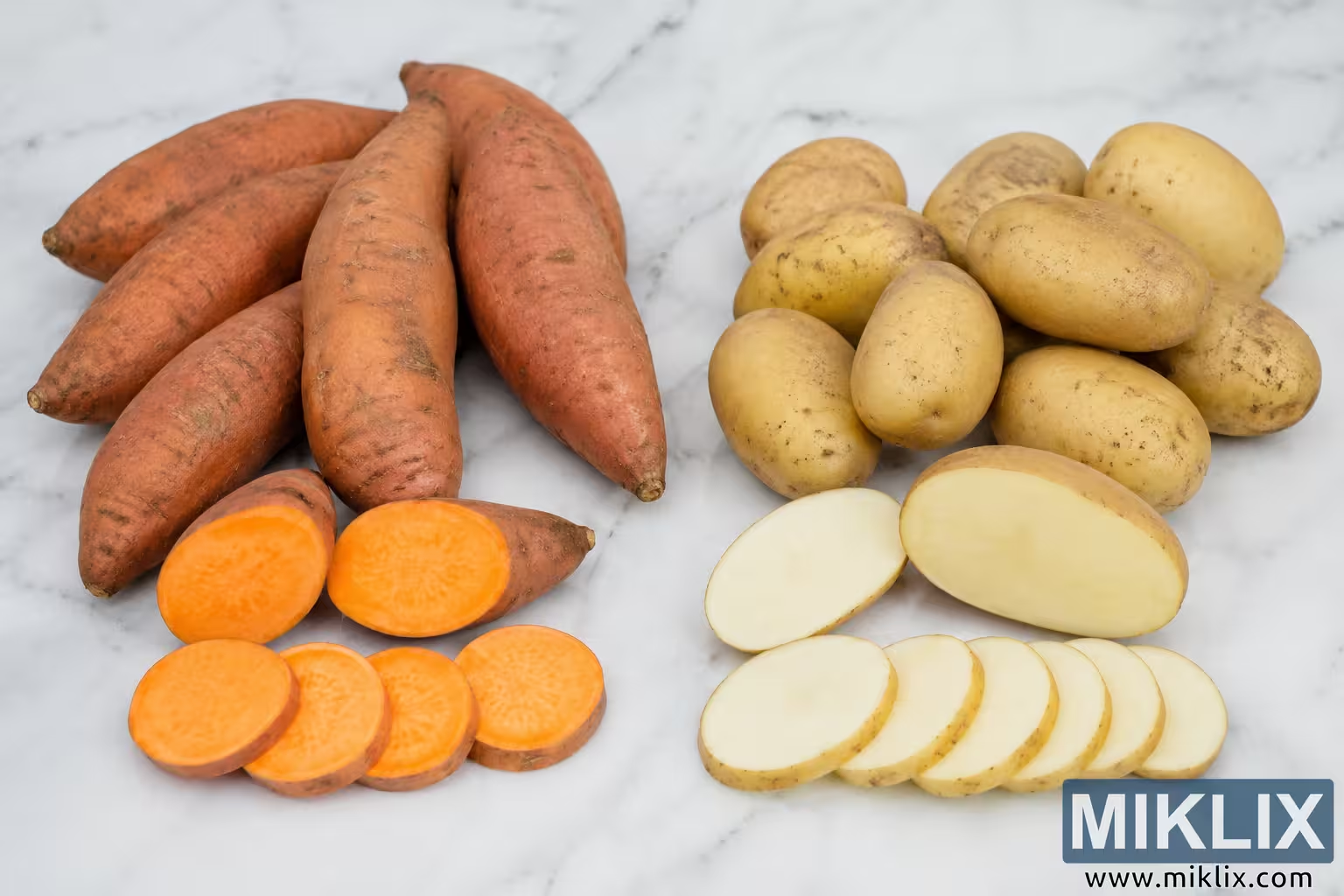
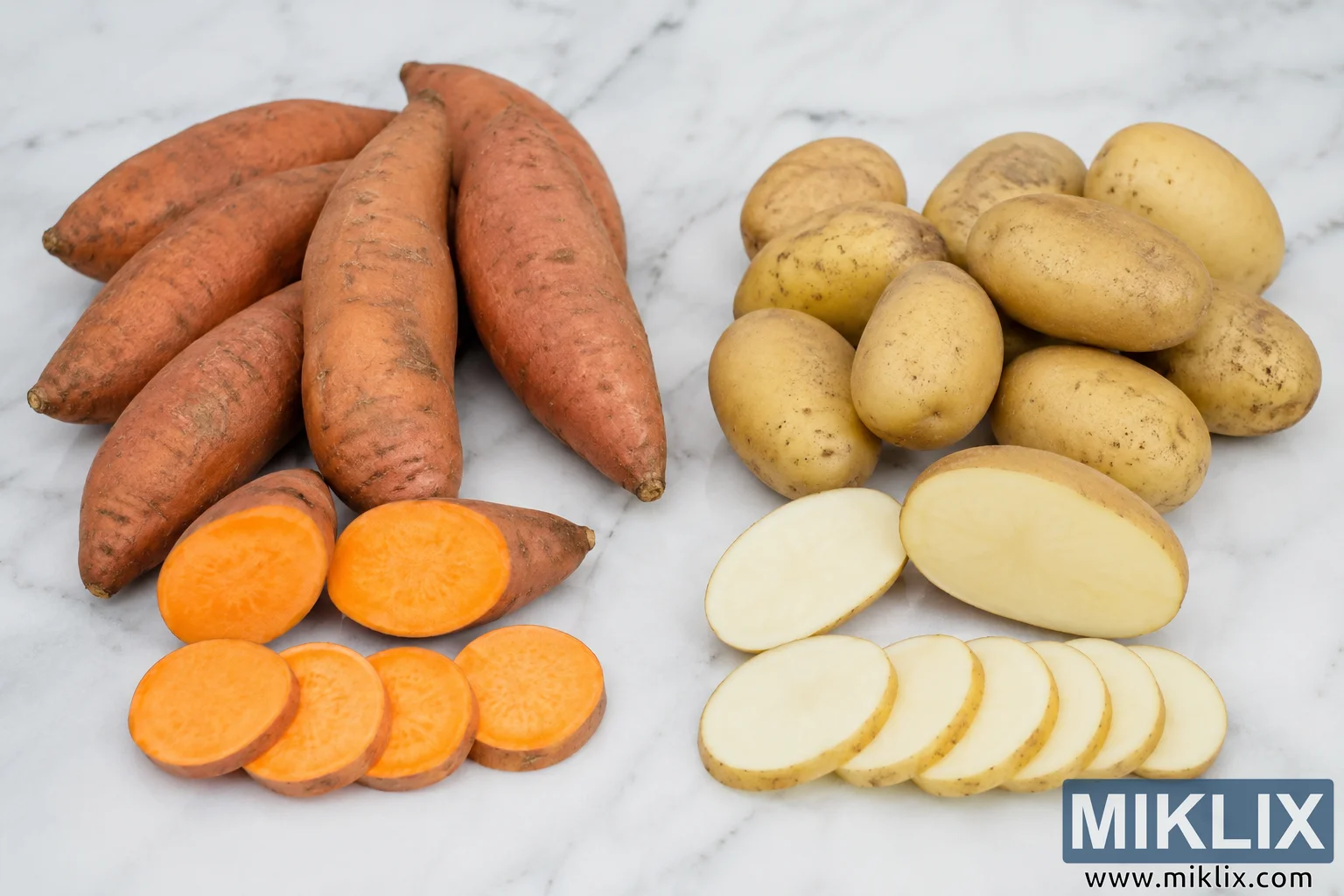
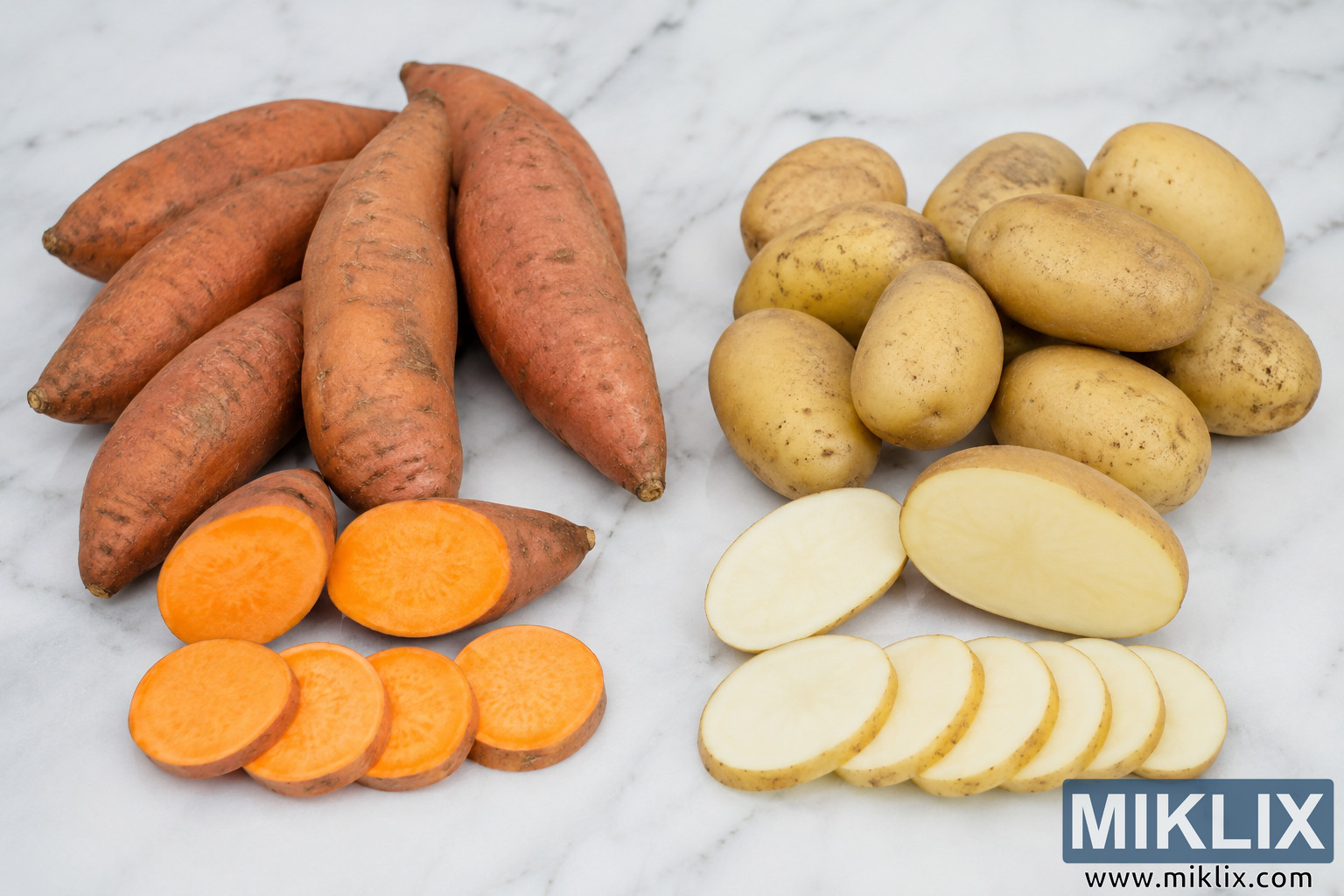
High-resolution landscape image comparing sweet potatoes and white potatoes side by side on a marble countertop, featuring whole vegetables and sliced cross-sections that clearly highlight differences in skin color, shape, texture, and interior flesh.
Side-by-Side Comparison of Sweet Potatoes and White Potatoes on a Marble Surface
ამ სურათის ხელმისაწვდომი ვერსიები
ქვემოთ ჩამოსატვირთად ხელმისაწვდომი სურათების ფაილები ნაკლებად შეკუმშული და უფრო მაღალი გარჩევადობისაა - და შესაბამისად, უფრო მაღალი ხარისხის - ვიდრე ამ ვებსაიტზე განთავსებულ სტატიებსა და გვერდებში ჩასმული სურათები, რომლებიც უფრო ოპტიმიზირებულია ფაილის ზომის მიხედვით, რათა შემცირდეს გამტარუნარიანობის მოხმარება.
ჩვეულებრივი ზომა (1,536 x 1,024)
დიდი ზომა (3,072 x 2,048)
ძალიან დიდი ზომა (4,608 x 3,072)
ძალიან დიდი ზომა (6,144 x 4,096)
კომიკურად დიდი ზომის (1,048,576 x 699,051)
- ჯერ კიდევ მიმდინარეობს ატვირთვა... ;-)
სურათის აღწერა
This high-resolution landscape-oriented food photograph presents a clean, organized side-by-side comparison between sweet potatoes and white potatoes. The composition is arranged on a light gray and white marble countertop with subtle natural veining that provides a bright, neutral background without distracting from the vegetables. The lighting is soft, even, and diffused, producing gentle shadows and preserving natural color while emphasizing the textures of the potato skins and freshly cut surfaces. The overall appearance is crisp, minimalistic, and suitable for educational, culinary, nutritional, or editorial purposes.
The left half of the image is dedicated to sweet potatoes. Several whole sweet potatoes are grouped together in a slightly overlapping arrangement. They display elongated, tapered shapes with reddish-brown to copper-colored skin that features natural imperfections such as faint scuffs, patches of soil residue, shallow grooves, and subtle variations in color. The vegetables appear fresh and unprocessed, with their organic forms contributing visual interest. Positioned near the bottom of the left section are multiple cut pieces of sweet potato. Two larger cross-sections prominently reveal the vibrant orange interior flesh, while several circular slices are arranged in a neat row below. The exposed flesh is smooth, moist-looking, and vividly saturated, creating a striking contrast against the darker exterior skin. The orange coloration immediately communicates the distinctive appearance typically associated with sweet potatoes and serves as the dominant visual element on the left side of the composition.
The right half of the photograph displays white potatoes arranged in a similar manner for direct visual comparison. A collection of whole potatoes occupies the upper-right portion of the frame. These potatoes have rounded to oval shapes with pale tan or light golden skin. Like the sweet potatoes, their skins exhibit natural agricultural characteristics, including faint dirt marks, tiny eyes, subtle surface blemishes, and gentle color variations that reinforce their authenticity. Near the bottom-right corner, several potatoes have been sliced open. Two larger halves reveal creamy white interiors with a smooth, dense appearance. In front of these halves, multiple evenly cut circular slices are laid out in sequence, displaying thin pale skins surrounding bright white flesh. Compared with the sweet potatoes, the interior color is significantly lighter, creating a clear visual distinction between the two varieties.
The composition intentionally places the sweet potatoes on the left and the white potatoes on the right, making comparison intuitive. Both groups occupy roughly equal visual space, with similar quantities of whole vegetables and sliced examples presented for each type. The arrangement emphasizes differences in shape, skin color, flesh color, and overall appearance while maintaining balance and symmetry throughout the frame. The marble background contributes brightness and cleanliness, allowing the vegetables to stand out through color contrast rather than decorative props or complex styling. There are no bowls, cutting boards, utensils, labels, packaging, logos, watermarks, or branded products visible anywhere in the image. Likewise, there are no people or hands interacting with the food.
The lighting direction creates subtle highlights on the cut surfaces while preserving detail within the skins. Shadows remain soft and unobtrusive, indicating controlled studio-style illumination. Fine details such as the porous texture of the potato flesh, slight irregularities in the skin, and the natural matte finish of the vegetables remain clearly visible. The image appears professionally composed for educational comparison, recipe websites, nutrition articles, grocery guides, agricultural references, or cooking demonstrations. The overall aesthetic is realistic, fresh, and informative rather than heavily stylized. The viewer's attention is naturally drawn first to the vivid orange interiors of the sweet potatoes before moving across the frame to compare them with the creamy white interiors of the regular potatoes. This deliberate visual contrast effectively communicates the primary distinguishing characteristics of the two vegetables while maintaining an uncluttered, highly legible composition. Every element within the frame contributes to a straightforward visual comparison that highlights color, texture, shape, and freshness in a balanced, appealing presentation.
სურათი დაკავშირებულია: The Surprising Health Benefits of Potatoes: A Complete Nutrition Guide